Stanbic Bank
Stanbic Bank
18.9 C
Kampala
Stanbic Bank
Stanbic Bank
Home Blog Page 1405

AfDB to borrow US$7.24b next year

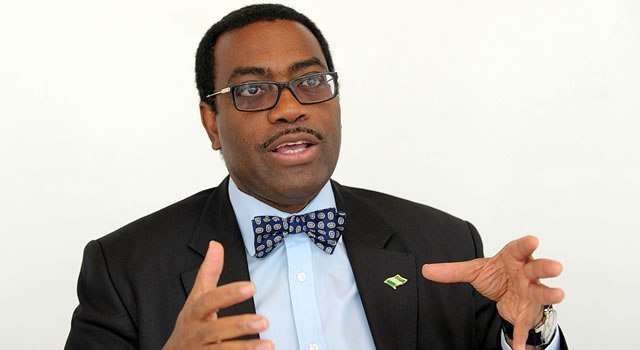
ADB President, Dr. Akinwumi Adesina

The Board of the African Development Bank (AfDB) has approved the institution’s 2019 borrowing program to the tune of US$7.24 billion to be raised from the capital markets.

AfDB accesses a wide array of capital markets with the majority of its borrowing in US dollars and Euros as well as issuances in other public markets such as Australian dollars and Pound sterling.

The Bank maintains an active presence in the socially responsible investment arena and continues to be a regular issue of Green and Social Bonds. These products serve to satisfy increasing demand for impact investment but also allow the Bank to highlight its development mandate and promote sustainable and inclusive growth.

The Institution has also used its ‘High 5’ operational priorities as a platform to continue the issuance of theme bonds, including an inaugural ‘Integrate Africa’ bond, a ‘Feed Africa’ bond awarded Asia Pacific Deal of the Year by mtn-i, more than forty ‘Improve the Quality of the Life for the People of Africa’ bonds, and two taps of its ‘Light Up and Power Africa’ bond.

The Bank is keen to innovate to diversify its product range and, as the financial markets continue to look to a future after Libor, was able to combine innovation with its social responsibility program and issue the first ever Green SOFR-linked bond, in November.

The African Development Bank will continue to promote the development of African Capital markets with the issue of local currency denominated debt to facilitate the financing of its local currency operations, alongside other initiatives.

“We continue to raise our profile in the capital markets to provide cost-effective resources to finance projects and programs on the African continent. We have a strong track record, a diversified funding profile, investors across the world and the benefits of a AAA rating to strongly support the African Development Bank mandate,” the Bank’s Treasurer, Hassatou N’Sele said.

The African Development Bank is rated triple-A by all the major international rating agencies and enjoys several solid ESG (Environmental Social and Governance) ratings.

Stories Continues after ad

Former Rwampara County MP Muzoora dead

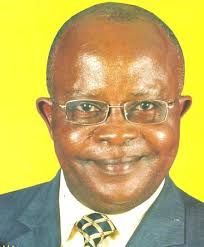
Amon Muzoora

Amon Muzoora, former Rwampara County MP (2001-2006) and Entebbe Municipality MP contestant (2016) has died today morning in the wee hours due to cardiac problems. He has been on oxygen life support for a week.

Muzoora held several positions in the government including being Entebbe Town Clerk. He is renowned for the Amon Muzoora loan scheme which aided many university students before collapsing. “He has been a great man, and a very generous one, the country has lost a very great man who has invested all he has in helping other people. May his soul rest in eternal peace,” read a post on Facebook.

Muzoora was father to Kampala socialite Doreen Kabareebe.

Stories Continues after ad

FAO and WFO to help farmers drive global agricultural agenda

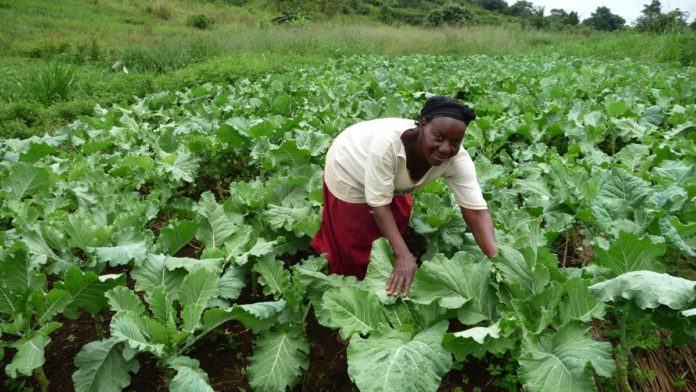
Ugandan farmer in her vegetable garden

The World Farmers’ Organisation (WFO) and the UN’s Food and Agriculture Organization (FAO) on Friday reaffirmed their commitment to help farmers become the drivers of the global agricultural agenda.

The new FAO-WFO agreement will focus on supporting and promoting the key role that farmers and their organizations play in efficient, inclusive and sustainable agriculture and food systems; reducing rural poverty; reaching food and nutrition security; and achieving the 2030 Agenda for Sustainable Development.

It will do so by building farmers’ capacity to lead decision-making processes on agricultural policies at all levels, based on best sustainable agricultural practices that farmers are already applying.

“This agreement will help build a farmers-driven agricultural agenda to bolster global Zero Hunger efforts, and better support the interests of millions of farmers worldwide. Farmers can bring a range of innovative solutions to the complex challenges we face today,” said Maria Helena Semedo, FAO Deputy Director-General for Climate and Natural Resources.

“We, as farmers, rely very much on the support of FAO for the creation of a global political environment in agriculture, which is favourable to our farming systems, our families and our communities. As economic actors, our expectation is to increase productivity, tackling climate change, and contribute to global sustainable development. We are ready to do our part and we are deeply grateful to organizations like FAO that support us in this ambitious agenda,” said Theo De Jager, WFO President.

The agreement will support joint initiatives aimed at:

strengthening collaboration on tackling climate change, responsible management of natural resources, sustainable livestock production, and safe and effective use of antimicrobials;

enhancing the capacities of farmers’ organizations that are inclusive of women and youth to deliver quality services to their members;

increasing farmers’ technical capacity and sharing of practical, workable solutions on climate change mitigation and adaptation, sustainable agriculture and responsible natural resource management;

enhancing farmers’ advocacy capacity and impact on global political dialogues on agriculture;

supporting family farmers and their organizations to have better access to markets and services; and implement guidelines and principles such as Voluntary Guidelines on the Responsible Governance of Tenure of Land, Fisheries and Forests (VGGT), Responsible Investment in Agriculture and Food Systems (CFS-RAI) and Small-scale Fisheries (VG-SSF).

FAO and WFO have a strong history of collaboration, and share common goals to support sustainable agricultural development, climate change mitigation and adaptation, and food and nutrition security.

FAO and WFO are also working closely together for the preparation and implementation of the UN Decade of Family Farming (2019-2028).

Stories Continues after ad

EU earmarks Shs150b for SMEs to boost coffee and cocoa exports

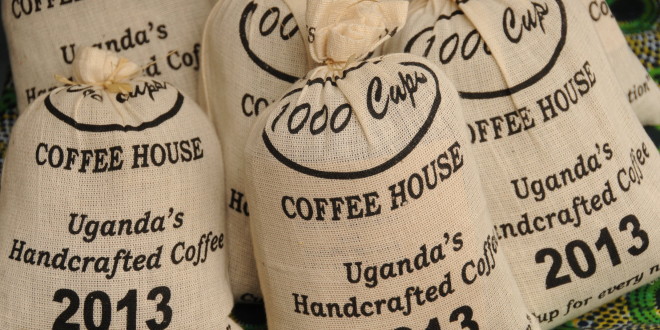
Uganda coffee for export

The European Union (EU) has agreed to provide Shs150 billion (EUR 35 million) to support Ugandan small and medium agri-businesses in the coffee and cocoa sector under the EU-EAC Market Access Upgrade Programme (MARKUP).

MARKUP aims to assist small and medium-size enterprises across the region to improve access to the EU market and increase interregional trade.

The programme is meant to address supply side constraints and help increase exports, especially to the EU. Interventions will target selected value chains and cover quality assurance and certification, value addition, trade facilitation and business promotion. In Uganda the focus is on coffee and cocoa vale chains in line with the current National Export Development Strategy.

According to EU data, in 2017 coffee exports from Uganda to the EU market increased to over Shs 1.3 trillion (EUR 312 million) and have more than doubled in 10 years. Cocoa exports from Uganda to EU countries peaked Shs153 billion (EUR 36 million) in 2015. The cocoa sector presents strong potential for further development.

Coffee and cocoa are predominantly grown as smallholder cash crops, providing income for thousands of households in Uganda. There is increased demand in specialty coffees from the region and, overall, long term global coffee demand is expected to outstrip global supply. The demand of cocoa is also constantly on the rise, as the EU accounts for over 60 percent of the world’s cocoa bean imports and more than 40 percent of the cocoa powder and butter import.

Currently any Ugandan product except for arms and ammunition can access the EU market duty-free, quota-free under the EU’s “Everything but Arms” preferential regime offered to all Least Developed Countries. In the long term Uganda can secure free access to the EU market under the EU-EAC Economic Partnership Agreement concluded in 2016 and waiting to be signed and ratified by all EAC countries.

“MARKUP supports Uganda’s and East African Community’s regional integration agenda. It aims to improve the competitiveness of SMEs based in EAC countries and assist them in increasing productivity, adding value and benefiting from preferential market access opportunities– said Attilio Pacifici, Head of the EU Delegation in Uganda. He added: “With growing demand in the EU for coffee and cocoa products, MARKUP will help create stronger market linkages between Europe and the EAC, and further contribute to job creation and sustainable investments in Uganda and the region.”

Stories Continues after ad

Cranes, Onyango shortlisted for 2018 CAF Awards

CAF 2018 awards

Confederation of African Football (CAF) Association has today released the final lists of nominees for the 2018 Awards.

The Uganda men’s national football team, known as the Cranes have been shortlisted for the 2018 Caf team of the year Award after qualifying for the 2019 African Cup of Nations.

Uganda will battle for the top accolade with Madagascar and Mauritania. Both Madagascar and Mauritania will be debuting at the 2019 Africa Cup of Nations while The Cranes qualified for the tournament without conceding a goal.

Cranes captain Denis Onyango has also been shortlisted in the category of the African Player of the year alongside notable nominees; Egyptian striker Mohamed Salah, Sadio Mane, Riyad Mahrez of Manchester City and Arsenal star Pierre-Emerick Aubameyang.

Uganda Cranes was voted the best team of the year at the 2016 CAF Awards as goalkeeper Dennis Onyango scooped the player of the year based in Africa accolade in the same year.

The shortlisted nominees were decided by votes from the members of the CAF Technical & Development Committee.

The final phase will involve votes from CAF Media Experts, Legends, Coaches of the quarter-finalists of the CAF Champions League and CAF Confederation Cup, and Coaches & Captains of the 54 Member Associations.

The Awards Gala, to honour footballers and officials who distinguished themselves during the year will be held on Tuesday, 8 January 2019 in Dakar, Senegal.

Shortlists for CAF Awards 2018

African Player of the Year

1. Alex Iwobi (Nigeria & Arsenal)

2. Andre Onana (Cameroon & Ajax)

3. Anis Badri (Tunisia & Esperance)

4. Denis Onyango (Uganda & Mamelodi Sundowns)

5. Mehdi Benatia (Morocco & Juventus)

6. Mohamed Salah (Egypt & Liverpool)

7. Pierre-Emerick Aubameyang (Gabon & Arsenal)

8. Riyad Mahrez (Algeria & Manchester City)

9. Sadio Mane (Senegal & Liverpool)

10. Walid Soliman (Egypt & Ahly)

Women’s Player of the Year

1. Abdulai Mukarama (Ghana & Northern Ladies)

2. Asisat Oshoala (Nigeria & Dilian Quanjian)

3. Bassira Toure (Mali & AS Mande)

4. Chrestinah Thembi Kgatlana (South Africa & Houston Dash)

5. Elizabeth Addo (Ghana & Seattle Reign)

6. Francisca Ordega (Nigeria & Washington Spirit)

7. Gabrielle Aboudi Onguene (Cameroon & CSKA Moskow)

8. Janine Van Wyk (South Africa & Houston Dash)

9. Onome Ebi (Nigeria & Hekan Huisanhang)

10. Raissa Feudjio (Cameroon & Aland United)

11. Tabitha Chawinga (Malawi & Jiangsu Suning)

Youth Player of the Year

1. Achraf Hakimi (Morocco & Borussia Dortmunmd)

2. Franck Kessie (Cote d’Ivoire & AC Milan)

3. Wilfred Ndidi (Nigeria & Leicester City)

Men’s Coach of the Year

1. Aliou Cisse (Senegal)

2. Herve Renard (Morocco)

3. Moine Chaabani (Esperance)

Women’s Coach of the Year

1. Desiree Ellis (South Africa)

2. Joseph Brian Ndoko (Cameroon)

3. Thomas Dennerby (Nigeria)

Men’s National Team of the Year

1. Madagascar

2. Mauritania

3. Uganda

Women’s National Team of the Year

1. Cameroon

2. Nigeria

3. South Africa

Stories Continues after ad

KCCA FC’s opponents in Uganda for Caf Confederations Cup clash

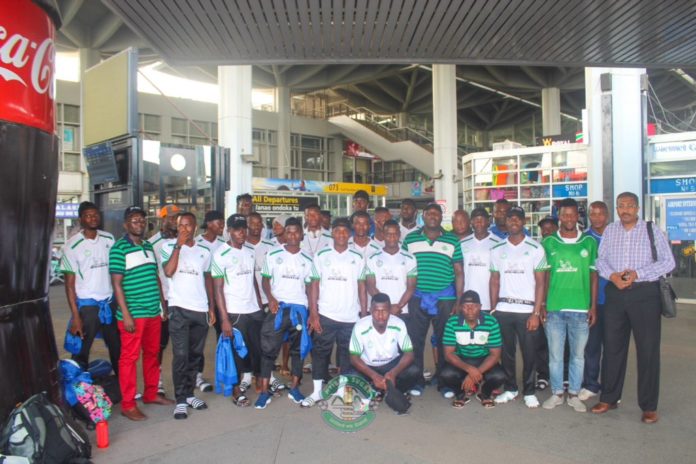
Mtibwa Sugar team

The Uganda Cup reigning champions, KCCA FC, who represent Uganda in the CAF Confederations Cup, will face the Tanzanian cup winners Mtibwa Sugar in the first round of the group stage qualifiers tomorrow at the StarTimes stadium In Lugogo.

Mtibwa Sugar arrived in Uganda yesterday and will hold a training session at the StarTimes stadium as per the CAF rules which dictate that the away side trains on the pitch the where the match will be played.

The officials in charge of the match will be from Comoros. Ali Adelaid will be the center referee and will be assisted by Soulaimane Amaldine and Mmadi Faissoil as the first and second assistants respectively.

The return leg is scheduled for a week later in Dar-e- Salaam at Manungu Stadium on 23rd December.

The victor of the fixture over the two legs will await a draw where they will face one of the sides that will have been eliminated from the Caf Champions League at the first round stage.

Mike Mutebi’s side received a bye into this stage of qualification due to improved performances on the continent over the years.

Opponents Mtibwa Sugar overcame Northern Dynamo of Seychelles with a 5-0 aggregate win to set up a tie with KCCA.

2018/19 Caf Confederations Cup

Saturday 15th December, 2018

KCCA FC vs Mtibwa Sugar

StarTimes stadium, Lugogo (4pm)

Stories Continues after ad

Egypt submit bid to host 2019 Afcon

Afcon Trophy

Confederation of African Football (CAF) is seeking a replacement for Cameroon, which was stripped of hosting rights last month due to poor preparations.

The Egypt Football Association (EFA) has put in an official bid and said that it is interested in bidding to host the 2019 Africa Cup of Nations.

“The Egyptian football federation (EFA) declares its candidacy to host the 2019 African Nations Cup which is scheduled to take place in June and should have been organised by Cameroon which is not prepared to host it.” The federation said in a statement on Twitter.

The Pharaohs expressed its interest in hosting the tournament after Morocco pulled out of contention in a surprise announcement.

Egypt said that it would not enter the race and compete with the expected bid from fellow North African nation. But Morocco’s decision not to bid appears to have led to Egypt’s change of heart.

Egypt have won the competition a record seven times and hosted the tournament three times in 1974, 1986 and 2006.

The shortlist of countries bidding to host the tournament is expected to be unveiled on December 25th.

The host of the 2019 Africa Cup of Nations will be chosen on 9th January 2019 in Dakar, Senegal, a day after the 2018 Caf awards.

Cameroon was accepted to host the 2021 Africa Cup of Nations and Ivory Coast would host the 2023 Africa Cup of Nations, but it is yet to be confirmed.

Fourteen countries have already confirmed their places at the 2019 tournament and they are; Kenya, Ghana, Senegal, Madagascar, Morocco, Mali, Algeria, Tunisia, Nigeria, Egypt, Uganda, Mauritania, Guinea and Ivory Coast.

The other ten places will be decided during the final qualifiers in March 2019.

The 2019 AFCON tournament will be the first to host 24 teams. The competition will be held from 15th June to 13th July.

Stories Continues after ad

BoU in trouble as former owners of Global Trust Bank demand Shs315b compensation

Global Trust Bank

Former directors and shareholders of the defunct Global Trust Bank are seeking Shs315.7 billion in compensation for the illegal closure of the bank in 2014 by the Bank of Uganda (BoU).

The directors are demanding full compensation equal to the direct cash equity investments of US$35.3 million with interest at the rate of 10 per cent per annum compound from July 25th, 2014 when the bank was closed and sold in one day.

The Nigerians also want payment of US $50 million in loss of goodwill inflicted on the directors and shareholders on account of the wrongful closure of their bank.

Led by Bayo Folayan the former Managing Director and Olusegun Oyeyemi a former Shareholder, the executives appeared before parliamentary committee on Commissions, Statutory Authorities and State Enterprises (Cosase) which currently is investigating BoU over the controversial closure of seven banks between 1993 and 2016.

Cosase is using the Auditor General John Muwanga’s special audit report which he released in late August highlighting irregularities in the closure and sale of the assets of the banks by BoU.

Global Trust Bank Uganda (GTBU) was closed by BoU on account of being insolvent and corporate governance weaknesses.

BoU officials while appearing before Cosase said the bank, which had 23 branches at the time of closure, had losses to a tune of Shs60 billion. The Bank which was valued at 75 billion Shillings was transferred to Dfcu Bank in a transaction that took one day. Former BoU executive director of bank supervision Justine Bagyenda told MPs she negotiated with the then Dfcu Bank Managing Director Juma Kisaame to take over the bank.

BoU officials maintain that the bank had no chance to continue operating in the future due to undercapitalization. Interesting BoU staff, under their staff retirement benefits scheme was a shareholder in GTBU. They are also shareholders in Stanbic Bank and Bank of Baroda.

The former owners yesterday said they complied with all the capital requirements as demanded by BoU.

“Our total direct cash equity investment as at July 25th, 2014 was US Dollars 35.2 million or Shs132 billion at today’s exchange rate. The committee is kindly requested to note that we injected over US$10.5 million (about Shs39.5 billion) between January 2013 and 31st May 2014. It is also important to note that the last equity capital investments were made on May 8, 2014,” said Folayan.

He said BoU forced the bank to invest the new equity capital injection strictly in treasury bills much as it could have used a portion of the equity funds to create new loan assets with higher returns or pay off expensive term deposits.

Olusegun Oyeyemi, a former Shareholder in GTB said that the opinion by the Central Bank that they could not make profits in future was extremely speculative. He told COSASE Chairperson Abdu Katuntu that the bank had met all capitalization schedules from the regulator and continued to pump money into the bank.

Elias Edu, the former Company Secretary told the committee that following a demand on the 4th of July 2014 to recapitalize the Bank, the shareholders were not given time to comply and the Bank was shut on the 25th.

They accused BoU selling Global Trust Bank 15 days before they closed it. Edu termed the actions of the BOU as highhanded, reckless and ill-motivated.

The GTB directors also requested the committee to come up with a resolution requesting BoU to release 4 land titles for the properties bought by them from borrowers of GTB.

The land includes 18 acres on Plot 43 and 45, Block 421, Ziru Entebbe, 0.118 acres on plot 13 B, Folio 17, Bugolobi, 4.36 acres on Plot 37, Block 171, Lugala, Gayaza and 0.413 acres on Plot 116, Kogero, Block 443, Entebbe.

Stories Continues after ad

South Africa joins Uganda, others to ratify tripartite free trade area agreement

South Africa’s Minister of Trade and Industry Rob Davies handing over the ratification to the current Chairperson of the EAC-COMESA-SADC Tripartite Taskforce Ms Chileshe Kapwepwe

South Africa has deposited the instrument of Ratification of the EAC-COMESA-SADC Tripartite Free Trade Area (TFTA Agreement) bringing the number of countries that have done so to four. The other countries that have ratified and deposited the instrument are Uganda Kenya and Egypt.

The handover ceremony of the instrument of ratification took place in Cairo, Egypt on the margins of the African Ministers of Trade Meeting at Al Manara International Conference Center. South Africa’s Minister of Trade and Industry Rob Davies handed over the ratification to the current Chairperson of the EAC-COMESA-SADC Tripartite Taskforce (TTF) Ms Chileshe Kapwepwe, who is the Secretary General of COMESA.

Minister Davies described the TFTA as an explicit development integration framework that will not only address trade but will also deal with significant barriers to trade that need to be resolved in turn increase intra-Africa trade.

“We as South Africa are delighted to be depositing this ratification instrument because we believe it is good for the country, region and entire continent. We need to trade more amongst ourselves without any barriers,” Minister Davies added.

He said the South African Parliament had ratified the instrument for the TFTA in order to open up the country to better and bigger opportunities which the Agreement will offer.

Davies noted that the TFTA will help the EAC-COMESA-SADC region address issues concerning removing barriers to trade, having adequate infrastructure and developing appropriate production structures.

Chairperson of the TFTA Taskforce Ms Chileshe Kapwepwe commended the government of South Africa for being the first SADC country to ratify and deposit the TFTA Agreement. She said the TFTA offers a bigger market and it will enable countries to trade more duty free a move that will increase
the levels of intra-Africa trade.

“It is therefore a day of celebration as we witness the deposition of the instrument of ratification by the Republic of South Africa and I can only urge the remaining countries to follow in these steps and ratify as
soon as possible,” Ms Kapwepwe added.

She revealed that six more countries will soon ratify the Agreements paving the way for the region to have ease movement of goods, services and people.

The TFTA was launched in June 2015 with the aim of bringing together, in one common market, countries in the three regional economic blocs namely the East African Community (EAC), the Common Market for Eastern and Southern Africa (COMESA) and the Southern African Development Community(SADC).

For the TFTA to enter into force, fourteen signatures and fourteen ratifications are needed. So far the taskforce has received 24 signatures and the Ratifications now become four.

The tripartite FTA brings together a population of 700 million people with an estimated Gross Domestic product of well over US $1.4 trillion.

Stories Continues after ad

Eight guiding principles for pursuing a winning venture

Martin Zwilling

By Martin Zwilling

Every entrepreneur has an idea for transforming a market with innovative new technology, or transforming society with a new process. But unfortunately, most of these ideas fail at the execution level, or are not truly innovative. Entrepreneurs who have been really transformative, like Steve Jobs and Walt Disney, seemed to know how to deal with all the right elements.

Jeffrey A. Harris, in his classic book “Transformative Entrepreneurs,” provides examples of key elements of transformative ideas and leadership abilities that separate the winners from the losers. I found his observations, like the following, to be inspirational for those of us chasing an entrepreneurial dream:

It’s all about the people. Ideas have to be implemented well to change a market, or the world. Good implementation requires a plan, and a great plan and great operational decisions come from great people. That’s why investors look for entrepreneurs who have true grit, dogged persistence, and a disdain for the status quo.

Seek innovation that begets invention. It doesn’t always work the other way around. According to an MIT study a while back, only about 10 per cent of patents granted in the United States have any meaningful commercial importance and less than one percent are of seminal importance. True business titans deliver both invention and innovation.

Find enough venturesome capital. Nearly all new businesses aspiring to reach meaningful scale require some sort of outside funding to finance a competitive growth trajectory. The objective must be to get sufficient capital, with experienced and motivated counsel, to make the venture succeed.

Create a formidable and durable business model. Your business model is your value proposition. “Free” sounds like a great model, but it doesn’t imply value. Look for customer-focused value creation. Make your business model your competitive differentiation, like Fred Smith with Federal Express, or Ingvar Kamprad with IKEA.

Grab the next-mover advantage. First-movers have an initial advantage, but this position is fraught with risk, and often comes with a high price. Herb Kelleher, who started Southwest Airlines, wasn’t the first in the airline business, but he saw the need for low-cost short hauls, with exemplary customer service, and transformed the industry.

Failure is an option. Building a business from a raw start is hard, risky work. That means that the process of innovation is not always pretty and rarely successful. The best entrepreneurs always regroup after a failure, learn from prior mistakes, persevere, and launch a new venture with considerably improved odds of success.

Government matters. Government policies, initiatives, and leadership set the stage for economic growth, and provide resources for improving living standards, and enabling technological advantage. Transformative entrepreneurs pay attention and capitalize on these cues, rather than ignore or fight them.

Innovate or die. In a world connected through a broadband Internet and mushrooming social networks, information flows quickly and relatively seamlessly, expediting the pace at which new innovations gain traction and speed. Standing still is tantamount to giving up. It is not an option.

These elements and the people stories in the Harris book highlight just how difficult it is to build a truly transformative business, yet at the same time illustrate that it can be done, and has been done many times, with no correlation to geographic, ethnic, age, or sexual boundaries.

In fact, I’m convinced that it needs to happen more often, with all the challenges we have in our modern world. So it’s up to each of you to assess your activities, and your potential, to be transformative. The investors I hear from want to see more innovation, and fewer “me too” startups. Can your idea generate some excitement to really change the world?

The writer is a veteran startup mentor, executive, blogger, author, tech professional, professor, and investor. Published on Forbes, Entrepreneur, Inc, Huffington Post.

Stories Continues after ad