Stanbic Bank
Stanbic Bank
27.6 C
Kampala
Stanbic Bank
Stanbic Bank
Home Blog Page 1411

Uganda named among top four African places with rich tourist attractions

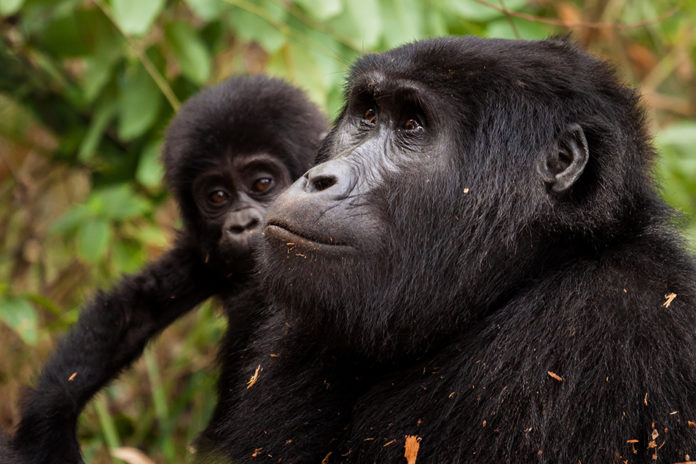
Gorillas, one of the major tourist attraction in Uganda.

Uganda has been listed among the four African destinations that have made it to National Geographic Traveler’s Cool List of 2019.

The list has 19 places a tourist would not miss in 2019. The list, according to a US based magazine, places feature everything from futuristic cityscapes and modernist architecture to pristine rain-forest and rehabilitated wildlife.

“We bring you the 19 destinations set to hit the headlines in 2019,” writes National Geographic Traveler magazine.

The magazine indicates that Eritrea, Kwazulu-Natal, Uganda and Zimbabwe make up the list which also looks at the destinations around the globe that will drive tourist numbers in the coming year, 2019.

Other Places include: Setouchi, Antarctica, Pittsburgh, Corsica, Cambodia, San Miguel de Allende, West Yorkshire, Hong Kong, Guyana, Oslo, Bhutan, Dundee, Matera, Indonesia, Sibiu.

Consideration of Uganda based at mountain gorillas noting that When Rwanda doubled the price of its gorilla trek permits from $750 to $1,500 (£572 to £1,144) in 2017, neighboring Uganda responded by freezing its own rates at $600 (£458) until mid-2019.

The magazine stressed that the steady growth of its gorilla population is one of Africa’s great conservation success stories, with tourists playing an important role.

“Almost 20 families can now be visited by guided groups of up to eight. Trekking fees raise funds not only for gorillas and their habitat, but also for Uganda’s other national assets including Queen Elizabeth, Bwindi Impenetrable Forest and Murchison Falls National Parks, home to chimps, giraffes and hippos,” reads in part of the released statement.

Stories Continues after ad

Sudan MPs back Bashir for third term

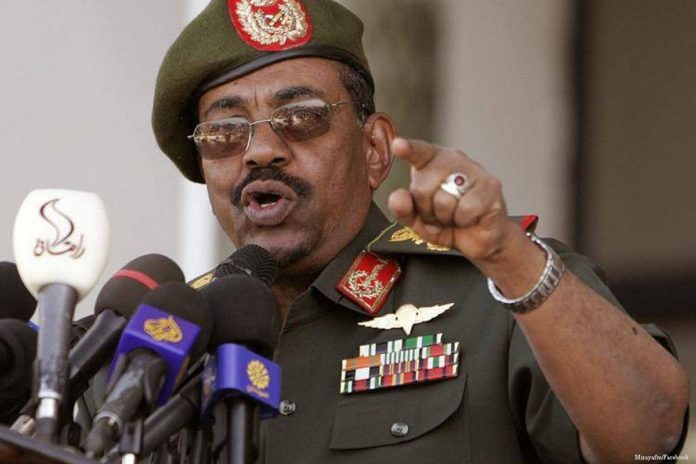
Former Sudan President Omar Al Bashir

Sudanese MPs have backed a move to amend the constitution to allow President Omar al-Bashir to run for a third term in 2020 elections.

Unless the constitution is changed, Mr Bashir, who came to power in a coup in 1989, will not be allowed to stand again – as a two-term limit was introduced in 2005.

Parliament speaker Ibrahim Ahmed Omar said he had received a letter signed by a majority of lawmakers backing an amendment that would extend the limit.

He said it came from 33 parties representing 294 deputies.

“I will abide by the constitutional and legal steps and the regulations necessary to discuss these amendments in parliament for it to take any decision on them,” Reuters news agency quotes him as saying.

The proposed constitutional changes would also give the president the power to sack elected governors.

Mr Bashir is wanted by the International Criminal Court (ICC) for alleged war crimes and genocide in the western province of Darfur. He denies the allegations.

In 2016, he told the BBC he would step down in 2020.

According to Reuters, a proposal to amend the constitution should be submitted by the president or via a memorandum submitted by at least one-third of the members of the 581-seat parliament.

Stories Continues after ad

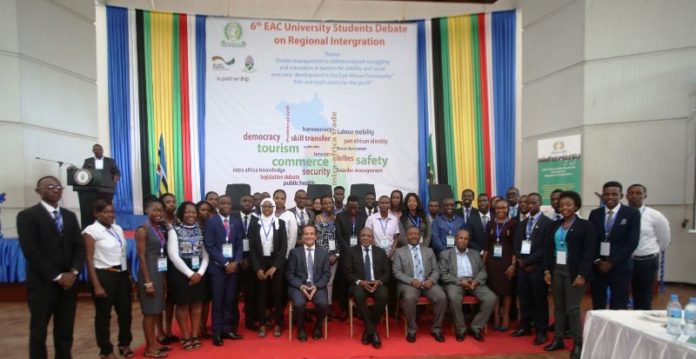
The 6th EAC university students debate underway in Tanzania

EAC DEBATE

The 6th East African Community University Students debate on regional integration has kicked off at the Nkrumah Hall, Julius Nyerere Campus of the University Of Dar es Salaam, Tanzania.

Speaking at the official kicking of the debate, the EAC Deputy Secretary General in charge of Political Federation, Mr Charles Njoroge, cautioned young people within the EAC against falling victim to migrant smuggling as they look for greener pastures across national borders.

Mr Njoroge said that crafty persons and cartels had taken advantage of young people seeking better opportunities out of their countries, the problem of migrant smuggling had been compounded by insufficient systems and corruption which hinder national and international efforts to combat transnational and cross-border crimes.

“As the integration deepens, there was an overwhelming movement of people across the borders, adding that this free movement comes with various challenges including trafficking of persons, migrant smuggling, drug trafficking and terrorism,” he said

He said that the EAC was undertaking various initiatives to promote continuous dialogue among the youth and enhance their participation in moving the regional integration process forward.

A total of 30 students from Uganda, Burundi, Kenya, Tanzania and Rwanda a are participating in the debate that is aimed at picking a Youth Ambassador and Deputy Youth Ambassador from each EAC Partner State. There were no participants from South Sudan.

The theme of this year’s debate is:

The debate is held under the theme “Border management to address migrant smuggling and corruption at borders for stability and social economic development in the East African Community, Role and Implications of the youth”

“Our Youth Ambassadors are a tested group of young leaders. The selection process is highly competitive and subsequent capacity building Programme ensures that the youth leaders are well nurtured and groomed for furthering personal and regional development of EAC,” said Mr Njoroge.

Speaking at the event, Prof. Cuthbert Kimambo, the Deputy Vice Chancellor-Research, at the University of Dar es Salaam, said the debate was a noble initiative that could be used to bring young people to discuss pertinent issued concerning the EAC.

“The University of Dar es Salaam firmly believes that the youth are a key stakeholder in the entire EAC integration process and we need to engage them in matters of East African integration at each step of the way,” said Prof. Kimambo.

Prof. Kimambo said the debate was a perfect venue for identifying young people who were passionate about the integration process and who would in turn sensitize their peers on the EAC integration process.

Stories Continues after ad

No change: BoU keeps CBR at 10% in December 2018

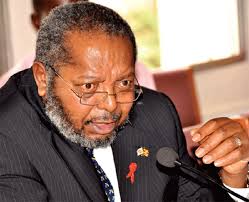
BoU Governor Emmanuel Tumisiime-Mutebile

Bank of Uganda (BoU) maintained its central bank rate (CBR) at 10 per cent on Wednesday saying the outlook for inflation had improved.

The BoU Governor Emmanuel Tumusiime-Mutebile said in Kampala while issuing the Monetary Policy Statement to the press. BoU raised the CBR for the first time in three years in October, citing concerns about rising inflationary pressures.

Core inflation, which the bank tracks, came down to 3.4 per cent last month from 3.5 per cent the previous month. The rate was expected to peak at between 6-6.5 per cent in the second half of next year, lower than the previous forecast, the governor said.

Domestic economic activity was projected to remain on a steady expansion path in financial year 2018/19 and over the coming years, keeping output slightly above the potential.

The BoU’s Composite Indicator of Economic Activity (CIEA) shows the first 10 months of 2018 had an annualised growth rate of 7-8 per cent, meaning the economic growth in 2018/19 could be higher than the previous projection of 6 per cent.

Tumusiime-Mutebile said the strong growth is in part supported by the accommodative monetary policy stance and rebound in private sector credit extension, ensuing domestic demand conditions, multiplier effects of public infrastructure investment and improvement in agricultural productivity.

“The medium-term Fiscal Framework indicates that public investment should remain at a high level, which should, in turn, continue to have positive spillover effects on private sector investment and spending,” said Tumusiime Mutebile.

Nonetheless, he warned that there were risks to the projected economic growth momentum which includes; slow execution of public investment projects, unpredictable weather conditions which affect agricultural productivity and the slowdown in global growth and global financial uncertainty, which could affect Uganda’s external position.

The governor further said private sector credit, though on a recovery path, is below historical trend and its contribution to economic growth could be weighed down by increased public borrowing and the further increase in prime lending rates.

Stories Continues after ad

NWSC commits stable water supply in Gulu Town

Eng. Silver Mugisha, NWSC Managing Director who is credited with the latest innovations.

GULU-The National Water and sewerage Corporation (NWSC) has committed to ensure stable water supply for the residents of Gulu municipality.

In a recent engagement with the stakeholders, Engineer Silver Mugisha, the Managing director of NWSC, assured the stakeholders that the corporation was more than ready to ensure that the piped water shortages in Gulu do not re-appear again, like it used to following the water crisis in 2015.

Eng. Mugisha said NWSC was at advanced stages to draw water from River Nile, besides rectifying the pipelines.

He was hopeful that Umeme will stabilise electricity supply in Gulu which is essential in water supply. He said distributing water to customers using generators is expensive.

Bishop Nelson Onono Onweng, the Chairman Acholi Religious Leaders and Peace Initiative (ARLPI) in his remarks urged NWSC to team up with other stakeholders to extend piped water to the rural areas.

“We want clean Water for all Ugandans and it should be extended to the rural areas,” he said.

Gulu district Chairman Martin Ojara Mapenduzi recalled that when in 2015 Oyitino Dam that supplies Gulu town dried up, NWSC came in fast to build more boreholes.

He appealed to the leadership of Gulu to leave behind their political differences and concentrate more in constructive engagements that attract more investors to the town.

George Labeja, the Gulu Municipal Mayor, said the town was not well planned initially but that as a municipal authority, they will do their best to have water and UMEME power lines laid in such a way that the lines don’t interfere with the development in the municipality which is preparing for the city status.

Mr. Labeja appealed to political leaders in the area to welcome development with one heart.

Stephen Gang, the branch Manager NWSC Gulu, said they have drilled six high hill motorized water pumps in the municipality as a way of stabilizing the water supply in town and the surrounding areas.

“The business of drying off of Oyitino dam and water crisis shall no longer be there,” he said

At the moment, 37.5 kilometers of the area in Gulu is covered with piped water lines within Gulu Municipality and the Corporation is expecting to cover 40 kilometers to avail constant water supply in Gulu.

Stories Continues after ad

MISS World 2018: Uganda’s representative Quinn Abenakyo repeats history!

Quinn Abenakyo

Great news coming in from Sanya, China where the Miss World 2018 Beauty pageant is being held, tells of a promising future for our very own Quinn Abenakyo 22, who is Miss Uganda and has bagged a position in the finals amongst 29 other contestants around the world.

Despite being a feat seldom achieved by African contestants, given the various circumstances that hinder third world countries it’s not entirely unheard since many a black girl have gone on to claim pageant titles around the world.

The re-vamp and re-direction of the Miss Uganda competitions caused quite a stir earlier this year as new figures such as Zari Hassan and Fabiola were enlisted, as well as the judges who mainly comprised of former Miss Uganda winners. The show also came under heavy scrutiny from the public when a video surfaced online depicting the judges berating the contestants.

Nonetheless, it seems former queens who also served as judges knew what they were doing and may have been able to unlock the true secret to being the world’s best beauty pageant queen contrary to what critics had to say. “Quinn is a very passionate young lady. She will do extremely well. My team and I wish her nothing but the best.” said Stella Nantumbwe, a judge and former Miss Uganda 2013.

The reigning African beauty who faced off against Argentina’s Victoria Soto won the hearts of the judges and the guests when she shared her dreams to fight girl-child pregnancies amongst the youths. Abenakyo stated that 1 in every 4 girls from the ages 14-19 is often pregnant or with child and hopes to change these statistics through her initiative, the ‘Beauty with a purpose project.’

“There is a certain story of a Daisy. Daisy was molested by her father at 12 years old. The father passed away and she had to go live with her grandfather, and the grandfather did the same thing. Now this girl gave birth – imagine giving birth to your grandfather’s child! And this is happening a lot in Uganda,” said the Ugandan representative, who managed to deliver her oratory under two minutes-the time allocated to each contestant to talk to the audience on the issues raised.

The last time a Ugandan made it beyond the first round in The Miss World contest was in 2001 when the title holder, Miss Victoria Nabunya made it to the semi-finals with 19 other girls out of 96 contestants. Miss Abenakyo’s progress in securing a place among the 30 finalists at the pageant was a win for all Ugandans but most especially for those behind the annual Miss Uganda competitions.

Despite taking a two year hiatus due to internal conflict, the Miss Uganda pageant returned with a bang after it was taken up by the Uganda People’s Defence Forces under the patronage of none other than Gen. Salim Saleh himself. The chief executive officer of the Miss Uganda foundation has also come out to caution Ugandans about ‘bogus websites’ being used to vote for Miss Quinn Abenakyo saying that this could forfeit their win and the official website for the Miss World voting are www.missworldvote.com/ and https://missworld.com/#/

Stories Continues after ad

Museveni’s impending new anti-corruption measures; what it means to BoU top gurus

President Museveni

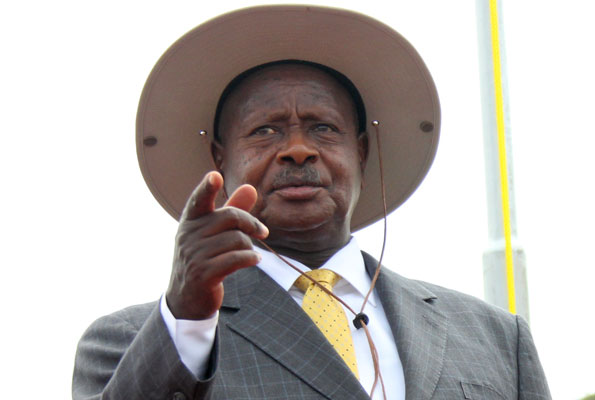
“All in all, we shall defeat corruption. Like I said, I will make major pronouncements on December 10th in our new fight against graft. I urge Ugandans to listen in,” President Museveni said on Tuesday while addressing the anti-corruption crusaders at Hotel Africana in Kampala.

The above quote is just one of those that Museveni uttered yesterday in his address to people who attended the function. The president mentioned that corruption exists in government agencies like Bank of Uganda (BoU), Uganda Revenue Authority (URA) and Kampala City Council (KCCA). But a look at BoU is paramount as of now as it continues to make headlines for the wrong reasons.

Museveni’s utterances on corruption in the country come at a time when BoU officials are being investigated over the controversial liquidation and sale of assets of seven defunct banks where proper guidelines were skipped and nor convincing reports were made on the disposal of some of the banks whose shareholders want compensation. The Parliamentary Committee on Commissions, Statutory Authorities and State Enterprises (Cosase) which is investigating BoU over the messy transactions has exposed the dirt within the bank.

Eagle Online on Tuesday reported that Museveni is in full support of Cosase after some minister suggested that the investigations be halted “to redeem the image of BoU.” According to sources, Museveni advised BoU not to close Crane Bank but they didn’t heed to his advice. Sources say some BoU officials benefited financially from the liquidation of CBL.

The same is said of other banks such as Global Trust Bank Uganda (GTBU) which was closed and sold in one day for being insolvent. More the loans of Greenland Bank, International Credit Bank (ICB) and Cooperative Bank which had a book value of about Shs135 billion were sold at Shs8.89 billion after a discount of 93 percent. Interestingly crucial documents related to the sale cannot be traced or are being hidden by BoU officials.

Sources say the president is perturbed that BoU claims to have spent Shs478.8 billion on CBL during the statutory management (October 20, 2016 to January 20, 2017). What surprised many is that BoU would later sell CBL’s assets to DFCU Bank at Shs200 billion, which money is being paid in installments. According to the Auditor General John Muwanga sold assets of CBL when there was chance to revive it, having spent all that money on it. Interestingly BoU said it sold CBL because it was insolvent.

Mr. Muwanga also does not approve of the Shs 478.8 billion that BoU says it spent due to the fact that some costs are difficult to understand. For instance about Shs720 billion was said to have been spent on “special exercise (CBL)”. BoU claims it spent about Shs5 billion as terminal benefits to former workers of CBL, but this figure is contestable by the workers. BoU also spent on different services thus legal. Surveying, audit but the sourcing of service providers is also questionable. About Shs290 billions of this money is not reflected anywhere in CBL accounts, analysts say.

During the disposal of CBL, BoU assured the public and government that its workers would keep their jobs but this never came to pass as many were laid off after DFCU Bank took over.

That aside, investigations have revealed that some of the former and current BoU officials who were involved in the disposal of some of the banks are very wealthy. For instance Deputy Governor Dr Louis Kasekende and former executive director of supervision Ms Justine Bagyenda have assets worth billions of shillings, with leaked documents showing billions of shillings stashed on their bank accounts. The two officials are under the scrutiny of the Inspector General of Government.

That Museveni is interested in Cosase probe, the BoU officials must be afraid, with some sources suggesting that some have been lined up for sacking even as the MPs continue with the probe from which they will write a report.

Stories Continues after ad

MPs question newly introduced East African electronic passport

Legislators have questioned the move by government to introduce the new international East African electronic passport to replace the current ones.

The Minister of State for Internal Affairs, Mario Obiga Kania, said that following an East African Community (EAC) directive by Heads of State, the government intends to roll out new passports on 20 January 2019.

He said that passports were to be rolled out in three regional centres in Mbarara, Mbale and Gulu and seven issuing centres abroad.

“These passports have chips that are easier to read by the micro-processor reader at border points; [and have] safety measures like biometric data which makes it hard to forge,” Obiga Kania said at parliament.

The Minister said the old passports will be phased out over a period of two years from launch of the new passport and will become invalid after 9 January 2021.

The ordinary passport (called a passport) with 48 and 64 pages will cost Shs250,000 and Shs300,000 respectively, the official passport (called a service passport) will cost Shs400,000 while the diplomatic passport will cost Shs500,000, while Shs150,000 will be charged as the express fee.

“The application process of the passport will be manual and online, the latter including filling out an online form. Applicants must have a national identity card,” Obiga Kania noted.

However, the Speaker of Parliament, Rebecca Kadaga and Members of Parliament raised concern over the entire process from its legality, ease with administration and costs.

Kadaga asked whether there is a country recognized as East Africa for it to be able to issue passports. She also wondered whether the Presidents’ directive was ever brought to the attention of Parliament.

“The protocol has not yet been read here, where is the legal authority changing the Ugandan passport to an East African passport?” Kadaga asked.

Isingiro South MP, Alex Byarugaba asked for the legal basis of action to adopt the East African e-passports. “I thought that these decisions and protocols need to be ratified and approved by Parliament. There is no need and hurry to migrate to the new passports especially without the consent of Parliament,” he said.

West Budama South MP Jacob Oboth said that the idea of introducing new passports was not well thought out and is not sensitive to the concerned of citizens.

“My passport goes up to 2028 and I will sue you for making me get a new passport as I just paid for what I have. The passports are expensive to acquire and now you want someone to pay the extra costs?” he said.

Minister Obiga Kania said that the e-passports will be issued by each of the EAC Partner States in their own names.

“The East African bit of the passport is in the design and a chip which are common across the member states,” he said.

He promised to present to Parliament the supporting documents responding to all the questions raised including the legality of the proposal to introduce the e-passports.

Stories Continues after ad

CAF Confederations Cup: KCCA to face Tanzanian cup winners

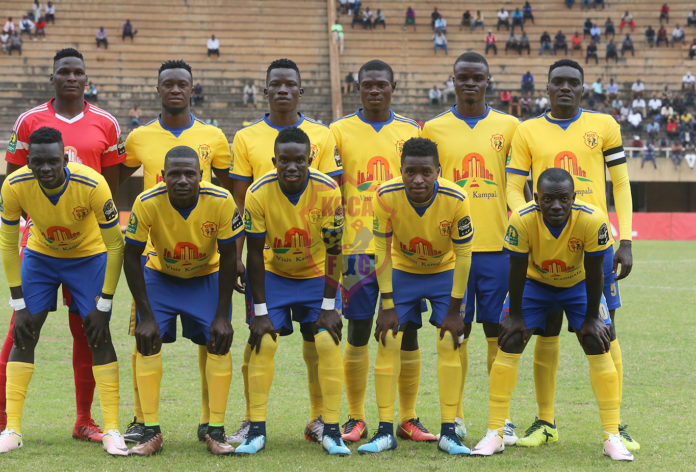
KCCA Team

The Uganda Cup champions, KCCA FC, who represent Uganda in the CAF Confederations Cup, received a bye to the first round of qualification due to improved performances on the continent over the years.

Kasasiro boys will face the Tanzanian cup winners Mtibwa Sugar in the first round of the 2018/19 Caf confederation group stage qualifiers.

Visiting Tanzanian club Mtibwa Sugar completed a double over Northern Dynamo of Seychelles with a narrow 1-0 win at Stad Linite in Mahe on Tuesday afternoon to register a 5-0 triumph in this preliminary round.

The first leg will be played on Saturday 15th December 2018 at StarTimes Stadium Lugogo with the return leg scheduled for a week later in Dar es Salaam.

The victor of the fixture over the two legs will await a draw where they will face one of the sides that will have been eliminated from the Caf Champions League at the first round stage.

Meanwhile in the Caf Champions league, Vipers SC prepare for the return leg of the CAF Champions League tie against Al Merrikh of Sudan on Wednesday afternoon at St Mary’s Stadium, Kitende.

2018/19 Caf Confederations Cup

15th December, 2018

KCCA FC vs Mtibwa Sugar

StarTimes stadium, Lugogo (4pm)

Stories Continues after ad

Co-exist peacefully with host, S. Sudanese refugees advised

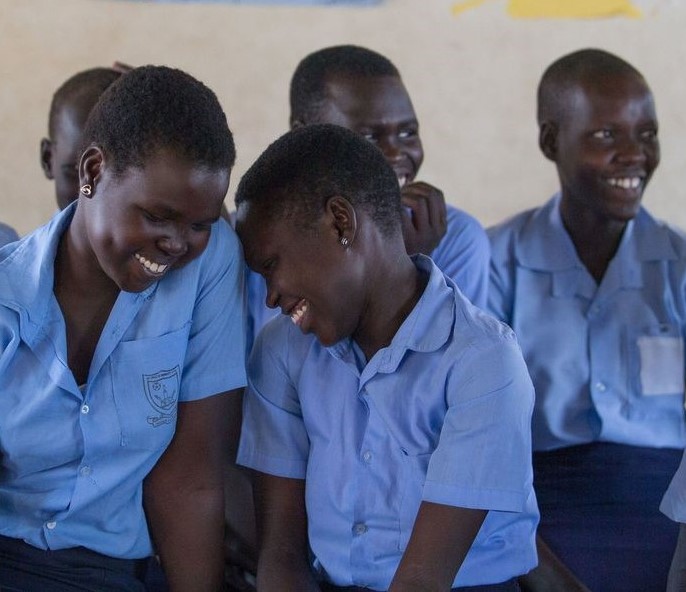
Children at Nyumanzi camp.

ADJUMANI– South Sudanese refugees living in Nyumanzi, a refugee camp in Uganda’s North-western district of Adjumani have been urged to co-exist peacefully with their host communities.

About 43,000 South Sudanese refugees live in Nyumanzi, officials say.

Speaking at an essay award giving ceremony for primary school pupils who excelled, Daud Gideon, the Executive Director for Remembering The Ones We Lost, lauded all those who participated in the contest, which attracted 89 pupils drawn from four schools.

“Involving pupils from the different schools enhances unity and togetherness,” said Daud, before he handed prizes to the winners.
The competition, managed by an essay organizing committee, covered various topics, ranging from the causes as well as effects of early marriage practices to the impact of conflict on peoples’ lives.

Bior Lual Bior, a primary six pupil of Nyumanzi II primary school emerged winner of the essay contest, followed by Deng Kuir Ariik. Others were Nyantich Abui Diing, Dau Abui Dau and Achol Mading.

All the recognized essay winners got cash prizes that ranged from Shs200,000 ($55) to Shs50,000 ($15), story books as well as novels.

Daud appreciated the essay organizing committee members, teachers and camp leaders for allowing the organization carry out its activities in support of the refugees in Nyumanzi settlement camp.
Moses Nyang, the Refugee Welfare Council (RWC) secretary, said the essay writing completion not only enhanced pupils’ learning ability, but further consolidated the reading and writing skills in them.

Gabriel Ajak, the chairperson of the essay writing competition, said the exercise promoted harmony, unity and peaceful co-existence.
Meanwhile, the host community defeated refugees in a football tournament Remembering The Ones We Lost organized in Nyumanzi.

The winning team won a new trophy, a cash prize and a set of soccer uniform. Prizes also went to the runners up and the third placed team.

After opening in January 2014, Nyumanzi has become the largest refugee settlement in Adjumani district in terms of population size. Despite their relatively recent arrival, residents are already well-established and a strong community has emerged in which refugee households actively collaborate with each other to share resources.

However, although many of the refugees are resilient, gaps in critical sectors, such as education and water, health and sanitation, persist and undermine refugees’ ability to cope with their displacement.

Stories Continues after ad