Stanbic Bank
Stanbic Bank
18.3 C
Kampala
Stanbic Bank
Stanbic Bank
Home Blog Page 1410

Airtel seeks to buy Telkom Kenya in bid to catch up with Safaricom

Airtel

Bharti Airtel has commenced talks with view to buying out Telkom Kenya. Sources in government say the talks involve Helios, the majority shareholder, and top officials from both the ministry of Information, Communications and Technology as well as Telkom Kenya.

Bharti Airtel chairman Sunil Bharti Mittal is in the country to take part in the talks. Bharti Airtel initiated the move after a proposal to merge the two telcos in order to take on market leader Safaricom collapsed last year.

President Uhuru Kenyatta is also said to be keenly following the matter. The deal is expected to be completed by the end of this quarter, according to sources.

Helios Investment Partners, an Africa-focused, London-based equity fund, owns 60 per cent of Telkom Kenya, which it acquired from France’s Orange in 2016. The Government owns the other 40 per cent.

Both Airtel Kenya, a subsidiary of Indian-based Bharti Airtel and Telkom Kenya have long been seeking to have Safaricom declared a dominant player to no avail.

M/S Analysys Mason revealed Safaricom, which was tasked by the Communications Authority of Kenya to conduct a Telecommunications Competition Study, last year concluded that Safaricom enjoys an upper hand based on strong presumption of dominance based on market share of subscribers, volume and value confirmed by analysis of qualitative factors. It, among others, proposed a reduction of M-Pesa charges.

The report showed that apart from boasting of more subscribers, minutes and revenue, Safaricom also benefits from a very high share of on-net traffic, paying out less than Airtel.

It also recommended prohibition of on-net discounts and individually tailored loyalty schemes so as to reduce the barriers to entry for smaller players.

Its proposal to split Safaricom from M-Pesa, its most profitable unit, was flatly rejected by the government with ICT Cabinet Secretary Joe Mucheru saying it would have been tantamount to punishing success.

Safaricom, Airtel and Telkom have, however, since implemented M/S Analysys Mason’s proposal for mobile money interoperablity by agreeing to allow subscribers transfer cash without incurring any charges.

The sector has been difficult to manoeuvre for small players with Yu Mobile being forced to cease operations in 2014, selling off its assets and subscribers to its competitors, Airtel and Safaricom for around US $100 million from its parent company, the Indian group Essar.

The deal saw Airtel take over Yu’s 2.7 million connections, while Safaricom took control of Yu’s network.

Safaricom PLC boasts of 64.2 per cent of the market share while Airtel Networks has 22.3 per cent and Telkom Kenya 9.0 per cent, according to latest statistics from Communications Authority of Kenya.

Stories Continues after ad

Uganda’s oil and why U.S. companies face long odds in Africa as they compete against Chinese loans

US Ambassador to Uganda Deborah Malac

Growing up in suburban Ohio, Rajakumari Jandhyala never imagined she would end up in the oil business, much less on the front line of America’s global competition with China. She spent two decades as a policy adviser on Africa, most recently as an aid official in the Obama administration.

But in 2016, she heard about a call for proposals to build an oil refinery in Uganda that could be the largest in East Africa, and she put together a bid. She landed an investor in Kenya. She recruited oil and gas executives from General Electric. An Italian contractor joined the group of companies that formed a consortium, too.

The main problem was the big advantages enjoyed by the competition: two Chinese energy companies, one of them a state oil giant with Beijing’s support.

China is aggressively seeking investments and contracts around the world, and perhaps nowhere is this more visible than Africa, where Chinese companies have won contracts to build dams, roads, stadiums, airports and railways. In country after country, governments have borrowed heavily from China to pay for these projects.

China’s investments in Africa are central to President Xi Jinping’s signature Belt and Road Initiative, a trillion-dollar program to build infrastructure and extend Beijing’s influence around the globe.

The Trump administration has accused China of engaging in predatory lending aimed at trapping countries in debt, acquiring strategic assets like ports, and spreading corruption and authoritarian values. In response, the United States has announced an effort to help American businesses compete.

“We’re streamlining international development and finance programs, giving foreign nations a just and transparent alternative to China’s debt-trap diplomacy,” Vice President Mike Pence said in a speech in October. The White House has also unveiled an Africa strategy aimed at China.

The idea is to challenge China’s infrastructure program while also pushing back against its trade practices, cybertheft and expanding military facilities and presence in the Pacific and Indian Oceans. But the threat posed by the Belt and Road Initiative to American interests is debatable, and it is unclear how far the United States should — or can — go to compete. The funds set aside by the Trump administration amount to just a fraction of Beijing’s commitment.

Ms. Jandhyala’s bid for the $4 billion refinery project was a case study in the long odds the United States faces as it tries to go head-to-head against China in infrastructure development — and in the conditions under which American companies could prevail.

The competition came to a head early last year, when Ms. Jandhyala and other consortium executives faced off in a conference room above Lake Victoria against Ugandan officials backing the Chinese companies. Uganda’s strongman president for the past 33 years, Yoweri Museveni, had called the meeting in his compound to try to resolve the bitter dispute.

In a sign of the intense infighting, Uganda’s domestic intelligence agency investigated three officials believed to favor the American consortium and questioned its ability to finance the project, according to a copy of the agency’s report reviewed by The New York Times.

In an April speech, Mr. Museveni praised Western companies for finally “waking up” to Africa. But he also noted that “the Chinese have already woken up — they are really, really, really very active and fast.”

“So why not take advantage of both?” he asked.

Scramble for a Prize

The African Great Lakes have long tempted outsiders seeking riches, including the European nations that began plundering the continent in the 19th century. But in 2006, four decades after the end of British rule in Uganda, a prize untapped by the colonialists was discovered: oil deposits by Lake Albert that are among the largest in East Africa, enough to transform parts of impoverished Uganda.

Mr. Museveni’s government negotiated for years with foreign companies before agreeing to a plan for extraction and the construction of a pipeline southeast to the Tanzanian coast, where the oil could be shipped around the world.

But Mr. Museveni also insisted on building a refinery in Uganda to ease the region’s dependence on imported fuel. The contract went to Russians at first, but they withdrew.

In Africa, American businesses have been largely absent while Chinese companies have put down roots, nurturing powerful allies through both legitimate and illegal means. Some target individual African officials and their family members with cash bribes or deals for services, like legal representation or insurance.

Ms. Jandhyala, 53, heard about the plans on a scouting trip to Uganda in 2016, her first visit since working for the Ugandan prime minister’s office a decade earlier as an adviser on a peace process to end an insurgency.

From a shared work space in Washington, she recruited partners for what she hoped would be the first project for Yaatra Ventures, which she founded in 2015 to invest in African infrastructure.

“With G.E., here was an American company that could bring capabilities,” she said.

She was not alone in sensing the opportunity. Uganda received more than 40 proposals to build the refinery.

Leading one bid was Dongsong, a private hydropower and mining company in the southern Chinese city of Guangzhou. A proposal made outside formal channels came from the China National Offshore Oil Corporation, or CNOOC, the country’s third-largest state oil company.

Both companies had offices in Kampala, the capital of Uganda, and had worked closely for years with the Ministry of Energy and Mineral Development. Dongsong was building a $620 million phosphate mine and fertilizer factory in eastern Uganda. CNOOC was one of three foreign companies that had struck deals to extract oil.

But their proposals included tough terms, according to interviews and an internal government assessment reviewed by The Times.

Dongsong wanted a sovereign loan guarantee — making the Ugandan government responsible for the project’s debt if it failed — and insisted that 60 percent of labor and materials come from China. CNOOC, meanwhile, wanted greater access to the oil fields themselves.

The American consortium tried to set itself apart, proposing that Uganda’s state oil company and other East African nations own up to 40 percent of a new private company that would build and run the refinery. The consortium would finance the project by selling shares to investors as well as by borrowing, but it was not asking for a sovereign guarantee.

The American proposal meant less debt risk for Uganda, but there were questions about the consortium’s ability to raise the money. The Chinese bids, by contrast, promised immediate financing from Chinese state banks. And at the energy ministry, officials were longtime proponents of Chinese companies.

“At the end of the day, we are developing a lot of capital-intensive projects,” said Robert Kasande, a top energy official. “We need the financing. The Chinese can do that.”

‘Remember My Name’

Ugandan soldiers with Kalashnikov rifles stand guard at Dongsong’s headquarters in Kampala, a hilltop villa with a swimming pool and sweeping views of the capital. Lü Weidong, the company’s founder, flies in several times a year.

“My biggest ambition is that when I walk into Ugandan villages, villagers line up and welcome me with applause,” he said at his China office, seated behind a rosewood tea table inlaid with carved dragons. “I hope to drive the industrial development of Uganda, and let the history of East Africa and Uganda remember my name.”

Slim, bald and vegetarian, Mr. Lü personifies Beijing’s “going out” strategy, which encourages Chinese businesses to establish footholds around the world. After focusing on domestic hydropower projects, Dongsong sought opportunities in mining overseas.

Mr. Lü, 50, a former bank manager who belongs to a political advisory body controlled by the Communist Party, said he ventured to Uganda after a chance meeting with the country’s consul general in Guangzhou. Soon, he got the mine deal. “Every decision is made by heaven,” he said.

But Dongsong’s presence in Uganda has been laced with controversy.

In 2016, the Ugandan inspector general’s office concluded that its mining license had been acquired through fraud and recommended it be revoked, according to the inspector general’s report. (Officials never did.)

Dongsong has also been accused of fraud in a lawsuit by one of Mr. Lü’s early partners in Uganda, and it is mired in property disputes around the mine. In 2017, two finance ministry officials were arrested on suspicion of demanding and accepting bribes from Dongsong.

The company has faced problems in China as well. A court in Hebei Province said last year that Mr. Lü had set up a shell company to pay bribes to two state bank officials who were convicted on corruption charges.

Mr. Lü denies any wrongdoing, and his legal problems do not appear to have bothered Ugandan officials. They put Dongsong’s refinery proposal on their short list and traveled to Guangzhou in 2017 to conduct due diligence interviews.

Mr. Lü impressed the team with slick presentations and punctual shuttle buses, an official on the trip said. The team noted that Dongsong’s consortium included a Chinese state company with experience building refineries in Africa.

Dongsong also secured a promise of financing from one of China’s largest state banks — as long as Uganda guaranteed the loan.

The model is common across Africa, where loans from Chinese state banks have financed a construction boom, largely by Chinese companies and workers. These loans generally have tougher termsthan World Bank aid packages. Though interest rates can be low, recipients must repay the loans much faster, according to AidData, a research center at William and Mary, a university in Williamsburg, Va.

That has left some nations at high risk of debt distress, analysts say. In Kenya, for example, a Chinese bank could take over a port if Nairobi defaults on a $3.2 billion loan for a railway project.

Uganda’s debt burden is manageable, analysts say, though the country has increased borrowing. From 2000 to 2014, it received at least $1.24 billion in Chinese loans, AidData said. In 2015, it agreed to borrow an additional $1.9 billion for two dams to be built by Chinese companies, and it now seeks a $2.2 billion loan for a railway.

Still, Mr. Museveni and other officials appear to be rethinking the nation’s reliance on China. While Western energy companies have also been implicated in Ugandan corruption cases, China took a hit in the most recent big scandal: In 2016, officials uncovered shoddy construction at the two dams, which remain unfinished.

And yet, Dongsong enjoyed unique advantages in the refinery competition.

Since 2013, it has retained Abmak Associates as legal counsel in Uganda, according to corporate filings.

The law firm’s chief executive is Henry A. Kaliisa, the son of Fred Kabagambe Kaliisa, who for more than two decades was Uganda’s most powerful energy official. He lost his job in the fallout from the dam scandal but still wields enormous influence.

Americans in the Arena

The Ugandan team put the American consortium on its short list as well and also flew to Washington. Ms. Jandhyala and a financing partner, Ronald Mincy, hosted them in a shared work space. One official asked them, “Do you have money?”

In an internal report afterward, the team gave Dongsong a higher rating but also recommended inviting the Americans and Chinese to Kampala for parallel negotiations. The government set a date in June 2017.

But Mr. Lü asked whether Dongsong was the preferred bidder and declined to attend or send anyone. The Ugandan officials decided to enter final talks with just the Americans after they appeared.

In a letter to the Ugandan energy minister reviewed by The Times, Mr. Lü responded by threatening to challenge the process.

Around that time, the other Chinese bidder, CNOOC, quietly emerged with a late push to build the refinery and take control of additional oil fields. (CNOOC did not respond to written questions on the project.)

Ms. Jandhyala sought help in Washington.

The Overseas Private Investment Corporation, the American government’s development finance agency, could not commit to the kind of billion-dollar financing offered by Chinese banks, but it provided a letter saying it would consider lending $250 million and providing loan insurance.

“That lent confidence to other people,” Ms. Jandhyala said.

The Commerce Department also determined the project was in the “national interest,” giving the United States Embassy in Uganda permission to lobby for it.

The United States ambassador, Deborah Malac, said she made the case for the American consortium with the energy minister, Irene Muloni, whom she described as resistant. She also spoke to Mr. Museveni a dozen times, she said. Commerce Secretary Wilbur Ross sent two letters and called.

“There were a lot of interested parties beholden to the Chinese who tried to derail the process,” Ms. Malac said.

Among the skeptics was Sam Kutesa, the foreign minister, she said.

Last December, a New York court convicted a representative of a Chinese energy company of paying bribes to African officials, including $500,000 to Mr. Kutesa. In an interview, Mr. Kutesa described the payment as a donation to his foundation and said he did not have a strong view on who should win the refinery project.

In Uganda, all major decisions end up before Mr. Museveni. Officials jockey for his ear, and the president is adept at playing them off one another.

That gave the Americans an opening. Despite naysaying by energy officials, Mr. Museveni liked the idea of balancing the Americans and Chinese in the oil industry, and he was intrigued by G.E.’s involvement, Ugandan officials said.

Last January, he called the meeting at Lake Victoria and forced energy officials to sit down with Ms. Jandhyala and her partners. He then got cabinet approval. The deal was signed in April.

“I think the big lesson is that we have to be aggressive,” Ms. Malac said. “We have to be willing, as the U.S. government, to find our opportunities to advocate on behalf of our companies.”

Abigail Grace, a researcher at the Center for a New American Societywho worked on the White House National Security Council, said American diplomats around the globe should be trained to deal with China issues.

“This example shows that despite the idea that China might prevail, we can win if we get our act together,” she said.

In October, President Trump signed a bill creating a new agency to replace the Overseas Private Investment Corporation and give out $60 billion in financing — double the previous amount, though still a fraction of what China has pledged to spend.

Meanwhile, G.E. has begun selling its stake in the oil field services company in Ms. Jandhyala’s consortium. Its exit could weaken Ugandan confidence in the deal, and there is still uncertainty about the group’s ability to secure financing.

The Chinese appear to have moved on. Mr. Lü said he planned to open a mine in Mozambique. And in September, CNOOC got what it really wanted: Uganda agreed to give it a new parcel to explore at Lake Albert.

At the Beijing signing, Mr. Museveni and Mr. Kutesa smiled as they shook hands with Chinese executives.

Lydia Namubiru contributed reporting from Kampala, and Keith Bradsher from Guangzhou, China. Research was contributed by Ailin Tang from Guangzhou and Shanghai, Luz Ding from Beijing, and Kitty Bennett from Washington.

In October, President Trump signed a bill creating a new agency to replace the Overseas Private Investment Corporation and give out $60 billion in financing — double the previous amount, though still a fraction of what China has pledged to spend.

Meanwhile, G.E. has begun selling its stake in the oil field services company in Ms. Jandhyala’s consortium. Its exit could weaken Ugandan confidence in the deal, and there is still uncertainty about the group’s ability to secure financing.

The Chinese appear to have moved on. Mr. Lü said he planned to open a mine in Mozambique. And in September, CNOOC got what it really wanted: Uganda agreed to give it a new parcel to explore at Lake Albert.

At the Beijing signing, Mr. Museveni and Mr. Kutesa smiled as they shook hands with Chinese executives.

Adopted from the New York Times

Stories Continues after ad

High Court sets date for ISO boss son’s plea bargain option

Brian Bagyenda

High Court Judge, Anthony Ajok has granted an adjournment to allow Brian Bagyenda, the son to the ISO boss’ two co-accused who hadn’t decided on the plea bargaining option to make final decision or go for the full trial.

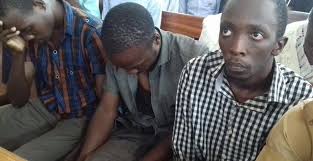
Bagyenda, Innocent Bainomugisha, a cleaner and Vincent Rwahwire a casual labourer from Kimwanyi zone in Luzira are grappling with charges of murdering Twijukye the then 22year old former student at Ndejje University.

The three were in 2017 produced before Nakawa Court Grade one Magistrate, Annyu Margaret before committing them to High Court IN 2018.

IN High Court, Bagyenda pleaded guilty to the offence, however sought a lighter sentence in exchange for an admission of guilt.

Appearing before Court this morning, justice Anthony Ajok set 21st January for Brian Bagyenda to plead guilty to the offense allowing him a week’s time for conclusion of the terms and processes of plea.

It is alleged that on January 3, 2017, the pharmacist, Brian Bagyenda, invited his girlfriend Twijukye to his apartment in Luzira and on checking her phone on January 4, 2017, Bagyenda found pictures that his girlfriend Twijukye had taken with another man.

This raised jealousy, and with the help of Innocent Bainomugisha and Vincent Rwahwire they suffocated her, put the body in a green Ipsum car and drove to Namanve where she was dumped.

Stories Continues after ad

Ugandan, Isaac Mujasi appointed the new WAZA/IZE Director of Education

Isaac Mujaasi

The World Association of Zoos and Aquariums (WAZA) and the International Zoo Educators (IZE) have appointed Ugandan educator Isaac Mujaasi to lead their joint education programmes.

Mujasi will work with the WAZA Executive Office, IZE Board of Directors, and Zoo and Aquarium educators from WAZA and IZE member institutions to ensure that effective conservation education programmes and messages are an integral part of the global zoo and aquarium agenda. He will develop a compelling conservation curriculum for on-line and in-country training that is engaging and creates positive conservation change.

“We are delighted to have Isaac Mujasi on the team,” said Doug Cress, WAZA Chief Executive Officer. “I have known Isaac for over 15 years and have always been impressed by his ability to inspire and motivate others to learn. He is a gifted teacher, and a dedicated conservationist. Isaac will have an important role in ensuring conservation education is a priority for WAZA and its members.”

“Working closely together, WAZA and International Zoo Educators Association (IZE) are focusing on developing international education and interpretive standards which will help create conservation changemakers around the world,” said Debra Erickson, President of IZE. “Our new Director of Education, Isaac Mujasi, will help lead this charge as well as provide more training and mentoring opportunities for our members. We are very excited to have Mr. Mujasi on our team and have no doubt he will help grow our profession and its impact.”

Mujasi previously worked for the Uganda Wildlife Conservation Education Centre (UWEC), based in Entebbe, as the Programs and Public Relations Officer. Mujasi’s professional conservation experience spans 18 years, starting as an Animal Keeper at Ngamba Island Chimpanzee Sanctuary. Three years later, he made the switch to conservation education. His previous experience also includes managing community development programmes. He has always had a lifelong passion for conservation, and at the age of 13 started a tree planting project in his village.

Mujasi obtained an MSc in Education for Sustainability from London South Bank University, a Post Graduate Diploma in Education, and a degree in Tourism and History from Makerere University in Kampala.

“I am very excited to have joined WAZA and the IZE as the Director of Education,” Mujasi said. “To me, it is an absolute privilege and honour to be able to share my perspective and skills, and to be in the position to help influence behaviour and mindset change through education, to help conserve biodiversity,”

Stories Continues after ad

Businessman Patrick Bitature sends fresh graduates passionate message

Businessman Patrick Bitature

Ugandan tycoon Patrick Bitature in a passionate message on his blog has congratulated students who are poised to graduate from Makerere University and other academic institutions in the country. Makerere students are set to graduate this week.

On his blog Bitature said that the world can be very harsh to everyone regardless whether you were the hottest student in class. “Harsh? Yes! But it’s a truth we need to internalise. You might be the hottest kid in your class, in the country. Regardless, you are entering a stage in life where practical results are everything regardless of what you did at school,” Bitature said.

Bitature , one of the richest Ugandans also advised the fresh graduates to learn continuously as a way of getting ahead, saying the world is an ever changing environment. He went ahead to give his example of beginning as a sugar seller to currently overseeing huge businesses in real estate, hotels and power generation plants among others.

“The world is changing at a faster and faster pace and to keep up or stay one step ahead of these changes your ability to learn continuously will hold you in good stead. As businessman who has started from the ground, I have had to learn to grow from selling sugar as a teenager to currently overseeing businesses that range from retail outlets to power generation plants to hotels to real estate developments.” Bitature he said.

He urged the graduates to celebrate their newly achieved education milestones but not for so long because there is a lot of work to be done. “Congratulations to our graduates. Celebrate your success. But not for too long, because there is work to be done,” he said.

“The graduates have already had a taste of the real life, having finished their studies mid last year and tried to get employed. Many know by now that the world can be harsh and unforgiving. I hope many are tightening their belts in readiness for the struggle ahead. Some may have decided to kick the tin down the road by continuing with school. And others may have given up altogether. My prayer is that there are more of the first and less of the last kind,” he said.

He advised the new entrants into the job market to set up an independent program of learning about the world, especially to know where it is going. “This self-initiated quest for knowledge will come by reading books, exploring the internet and through regular interaction with mentors. The world demands that you become an insatiable knowledge sponge. If this is the only thing you take away from this, my work will have been done,” he said.

The businessman said fresh graduates are and that the world is literally at their feet. “You have the advantage of time. Use it well, make every day count. One important thing you will need to learn is financial literacy. This will not only help you spend your money wisely but will eventually lead to having your money work for you, which is the ultimate goal of financial literacy,” he said.

Stories Continues after ad

NSSF kicks off 2019 blood donation drive

NSSF logo

The National Social Security Fund (NSSF) in partnership with Uganda Blood Transfusion Services (UBTS) kicked off the six-day Annual NSSF Blood Donation Drive aimed at collecting 4,500 units of blood in response to a nationwide appeal for safe blood.

The drive will take place at Workers House, Constitutional Square and other areas around the city as well NSSF Kampala branches in Kireka, Mukono, Kawempe, Bakuli, Bugolobi and Entebbe. Outside Kampala, the drive will take place in major regional towns of Mbale, Mbarara, Gulu, Arua, Fort Portal, Jinja, Mukono, Kabale, Masaka as well as NSSF branches in the respective towns.

According to World Health Organization, (WHO), Uganda needs about 340,000 units of blood annually although less than 200,000 units are collected annually. It should be noted that only 1% of Uganda’s population that is eligible to donate blood regularly do so, causing blood shortages.

Through NSSF’s partnership with UBTS in the last six years, over 10,000 units of blood have been collected to-date.

To donate blood, a donor needs to be between the ages of 17 and 65 years, weigh above 45 kgs and must not be on medication. The donor must of infectious diseases like Hepatitis B and C, HIV/AIDS and other diseases like cancer, diabetes and high blood pressure.

Stories Continues after ad

Uganda awards Gemalto contract to supply new e-immigration solution

Gemalto

World leader in digital security, Gemalto, in cooperation with local partner SCINTL, has been awarded the contract by the government of Uganda for the supply of a Border Management System (BMS) including airport self-service eKiosks at Entebbe, creating a faster and more convenient border-crossing experience for travelers and strengthening homeland security.

The said e-immigration solution uses Gemalto’s state-of-the-art fingerprint and facial recognition technology, combined with a passport scan to ensure swift and accurate identification of passengers leaving the country. It is built on the Gemalto Visa Management System (VMS) that was first deployed in 2014 by the Directorate of Citizenship and Immigration Control (DCIC), part of Uganda’s Ministry of Internal Affairs.

Entebbe International Airport, servicing Uganda’s capital, Kampala, welcomed over 1.5 million travelers in 2017, and the new eKiosks will further boost its capacity to handle the growing number of business and leisure visitors heading to Uganda, a progressive east African state with a population of over 40 million. Once implementation of the e-Immigration solution is complete in 2019, passengers will enjoy the option of a rapid, self-guided pathway through border control, whilst authorities are provided with comprehensive, real-time data on departures from Uganda.

Gemalto is an established technology partner for DCIC. The existing VMS combines applications, processing and issuance for all pre-paid visas and permits, and incorporates a secure and convenient online portal, and biometric enrolment facilities in foreign missions and on arrival in the country. In December 2017, the VMS won the Uganda Government’s JLOS ICT Innovation Award.

Gemalto is a proven and valued partner of DCIC,” said General Jeje A. Odongo, Minister of Internal Affairs for the Ugandan Government. “The new ABC – Automated Border Control Solution marks the latest step forward in the modernization, enhancement of security of border control management in Uganda, delivering important benefits for visitors and citizens alike.”

“Rapid growth in international air travel is going hand in hand with profound cross-border threats such as terrorism, illegal immigration and organized crime,” said Thierry Mesnard, VP Sales Africa for Gemalto. “With the introduction of advanced automated kiosks at Entebbe Airport, the Ugandan authorities are once again demonstrating their commitment to addressing all these challenges.”

“SCINTL will provide vital local support and know-how for a solution that encompasses supply, installation and maintenance,” said Cephas T. Bushuyu, Managing Director for SCINTL. “Overseas visitors are playing a key role in Uganda’s economic development, and many will now enjoy the option of a safe, fast-track border crossing experience.”

Stories Continues after ad

22 Ugandan referees receive their 2019 FIFA badges

FIFA-Referees-Group-photo-2019

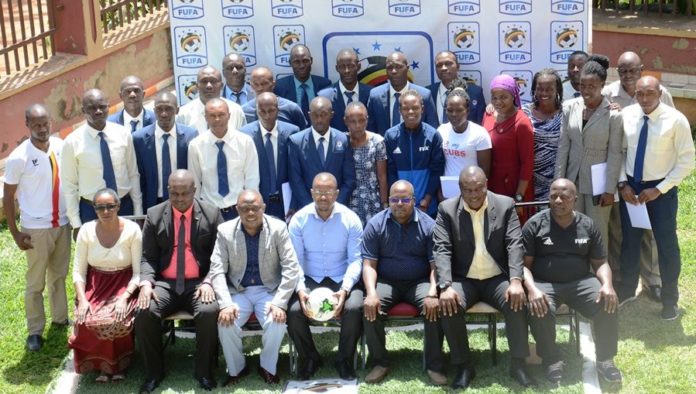
The 22 Ugandan referees at the Federation of International Football Association (FIFA) level received their badges over the weekend at Jevine Hotel, Rubaga in Kampala.

The Federation of Uganda Football Associations (FUFA) President, Eng. Moses Magogo witnessed the handover of the badges.

Eng. Magogo urged the referees to defend the prestigious FIFA badge at all times.

“FUFA has a vision of becoming the number one football Nation in Africa on and off the field. Our mission is about development, promotion and protection of football in Uganda. Referees have a role to play in development of the game. Defend this badge at all times” said FUFA President.

FUFA Football Development Director Ali Mwebe communicated the key means that FUFA is undertaking to uplift the standard of refereeing in Uganda.

He said, “The FUFA refereeing department is working within all the means to protect the three key pillars; Integrity, fitness and performance. Development of referees now falls under the football development department.”

FUFA also revealed that classes for French Language will be organised for the FIFA referees.

“There is a development path way for the rise of referees, just like referees. We shall maintain the courses, medical and fitness tests which are mandatory as well starting French lessons for the international referees.” Mwebe added.

The full list of Ugandan FIFA Referees 2019

Referees (Men): Brian Miiro Nsubuga, Mashood Ssali, Alex Muhabi, Ali Sabilla Chelangat, William Oloya

Assistant referees (Men): Mark Ssonko, Dick Okello, Ronald Katenya, Lee Okello, Musa Balikoowa Ngobi, Issa Masembe

Referees (Women): Shamirah Nabadda, Diana Murungi, Florence Ayaro

Assistant referees (Women): Lydia Nantabo Wanyama, Catherine Cynthia Nagaddya, Marex Nakitto Nkumbi, Jane Mutonyi

Beach Soccer: Ivan Kintu Bayige, Shafic Mugerwa, Muhammad Ssenteza, Keneddy Kawagga Bazirio

Stories Continues after ad

Uganda Cubs in Burundi for international friendly

Uganda clubs

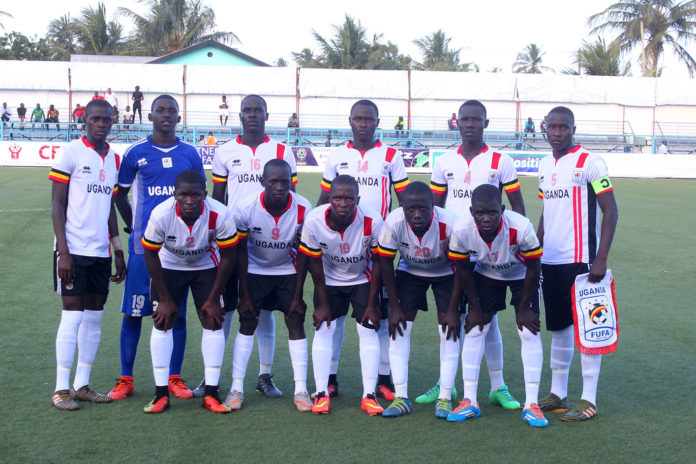
The Uganda U-17 football team (The Cubs) are in Bujumbura for an international friendly match with Burundi scheduled for Tuesday 15th January 2019.

A 28 man contingent of twenty players and eight officials led by Executive Member Chrispus Kalibbala travelled by road and arrived on Monday morning.

The team had spent a week in residential camp at the FUFA Technical Center Njeru preparing for the CECAFA U20 tournament which was postponed to an unknown date.

Uganda will host the regional tournament. Eleven nations – Kenya, Uganda, Tanzania, Somalia, Rwanda, Burundi, Eritrea, Djibouti, Ethiopia, Sudan and neighbours South Sudan – confirmed participation.

The Cubs are also preparing for the upcoming AFCON under 17 in April in Tanzania while the hosts Burundi are gearing up for the AFCON U20 in Niger next month

Contingent to Burundi:

Goalkeepers: Delton Oyo (Kirinya-Jinja S.S Junior Team), Jack Komakech (Ndejje University Junior Team)

Defenders: John Rogers (Onduparaka Junior Team), Kevin Ssekimbega (Express Junior Team), Innocent Opiro (Ndejje University Junior Team), Ibrahim Juma (KCCA Soccer Academy), Gavin Kizito Mugweri (Vipers Junior Team), Samson Kasozi (Bright Stars Junior Team)

Midfielders: John Kokas Alou (URA Junior Team), Ronnie Ziraba (Express Junior Team), Davis Sekajja (Bright Stars JT), Thomas Kakaire (Bright Stars JT), Andrew Kawooya (Vipers SC JT), Polycarp Mwaka (Ndejje University JT)

Forwards: Isma Mugulusi (KJSS JT), Ivan Asaba (Vipers SC JT), Najib Yiga (Vipers SC JT), Rogers Mugisha (Mbarara City JT), Yasin Abdul Owane (Vipers SC JT), James Jareiko (Paidha Black Angels FC JT).

Leader of Delegation: Chris Kalibala

Technical Team: Jackson Magera- 1st assistant coach, Hamuza Lutalo – 2nd Assistant Coach and Mubarak Kiberu – Goalkeeping coach

Officials: Bashir Mutyaba -Team Cordinator, Nsereko H Kawuma- Media Officer, Emmanuel Nakabago- Team Doctor, Frank Bumpenje- Kits Manager and Ahmed Kabali- Team Driver

Stories Continues after ad

Museveni pushes team to launch Uganda Airlines

Uganda Airlines

President Yoweri Museveni has intervened in the Uganda Airlines saga after the launch date was pushed back by a further two months, thus from April to June 2019.

Sources say President Museveni called for a meeting in an attempt to heal a widening rift between the airline’s interim board and the implementation team as it is stalling progress.

Initially slated to launch in April, the carrier’s start date has now been pushed to June, after key milestones such as securing an Air Operators Certificate (AOC) — which is contingent on having key post holders in place — were missed.

Five in total, the key posts, which include chief pilot, director of operations and director of maintenance, are responsible for compliance with the terms of the AOC at the airline level.

The Civil Aviation Authority (CAA) cannot issue an AOC in the absence of those office holders and in turn an aircraft cannot be registered to the airline unless it holds an AOC.

This has impacted aircraft delivery and, at one point, registering them under the government’s name was considered as a stopgap measure.

New slots

The EastAfrican has learnt that initial slots for training pilots at manufacturer Bombardier’s facility in Montreal, Canada, were missed and new slots are now being sought at alternative facilities in the US and Europe.

Uganda Airlines will need 36 pilots for its four Bombardier jets and training slots had been secured for September, October and November.

Talk of a revised launch date was confirmed by Chief Executive of Uganda Airlines Ephraim Bagenda last week.

Speaking at a press conference at the Ministry of Works and Transport on Wednesday, Mr Bagenda said the launch of commercial services had been moved from April to June.

Delivery of aircraft was scheduled to start this month, with the first handover of a CRJ 900 jet now pushed to February 23. This will be followed by others in March, July and September.

DEFER DELIVERY

Sources say that, embarrassed by the prospect of idle aircraft parked at the Entebbe International Airport, the interim board wanted to defer delivery to a later date — since they are being blamed for occasioning the delays in the project.

The move was opposed by the management team, which was concerned about the high demurrage costs if the aircraft were to be kept at the manufacturer’s facilities.

The delays are being blamed on the interim board — which is made up mostly of by civil servants — missing targets such as recruitment and training of pilots, and installing key position holders.

Although September 2018 was the deadline for concluding recruitment, the 10-man board is being accused of laxity after interviewing only four candidates in a day.

While the management team wanted the board to only interview for the top positions, they have insisted on interviewing for all cadres of workers.

Although the interviews for all positions were completed, delays have been occasioned by the need to have pilots validated and security clearances obtained.

Validation was done in Nairobi, but security vetting has not been completed for pilots and other key positions.

The delays are proving to be frustrating and, now, sources say a highly billed candidate who had been headhunted from the US for a technical position has instead been poached by the CAA.

A concerned Bombardier, which has had to seek new training slots at facilities in the USA and France for the Uganda Airlines pilots, has in recent weeks also put pressure on the implementation team, calling for weekly meetings to track the progress on the aircraft delivery matrix.

Efforts to reach interim board chair Captain Gad Gasatura were unsuccessful.

KEY MILESTONE

Separately, the implementation team achieved a key milestone when the MoU signed with Airbus for two A330-800Neos last June was converted into a firm commitment at the end of December.

“The MoU was due to expire on December 23 and we were told that if we did not make a commitment by that date, we would lose an $800,000 deposit and there would also be cost escalation,” said a source familiar with the matter.

Delivery slots would also have been missed. The government is understood to have made top-up payments towards the purchase last month, but we could not establish the amount.

Airbus released its 2018 sales and production figures on January 9, but the Uganda Airlines order is not reflected.

Airbus declined to comment on the purchase, only saying, “We are making good progress towards concluding that transaction.”

Stories Continues after ad