Stanbic Bank
Stanbic Bank
19.3 C
Kampala
Stanbic Bank
Stanbic Bank
Home Blog Page 1411

Due diligence in loan contraction pre-empts dire consequences – Lessons from Kawempe, Kiruddu Hospital

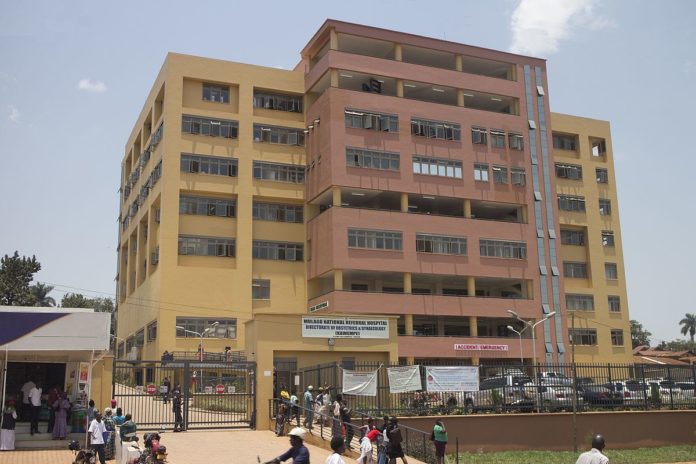
Kawempe General Hospital.

By UDN

To solve overcrowding at Mulago Hospital, the Government secured a US $21.3 Million (about Shs79.3 billion) loan to construct Kawempe, Kiruddu hospital which was completed in 2016 with funding from the African Development Bank (AfDB) and the Nigeria Trust Fund.

However, an internal probe carried out by Compliance Review and Mediation Unit (CRMU) a department of AfDB that deals with complaints and fraud revealed that Uganda did not fulfill some key requirements and construction was hurried to shroud an ownership wrangle that prevailed on the 0.99 acres where the current Kawempe, Kiruddu hospital sits.

Family claims Kawempe, Kiruddu Hospital

The family of the late DR Sembeguya petitioned AfDB over the land in Kawempe, “It is my plea that you urgently investigate the gross and apparent fraud and suspend funding, until the matter of ownership is resolved. We could seek a permanent injunction, unless we are paid all due arrears of 41 years, since KCC took over the old hospital, are recompensed for the demolished buildings which belonged to the late Dr. Sembeguya plus the cost of land.”

The Director of CRMU, Mr Sekou Toure in his report faulted the Bank’s Quality Assurance and Results Department for breach of the “Bank’s rigorous due diligence” requirements, especially regarding the borrower providing proof of ownership of land on which infrastructural projects are to be established with the Bank’s loan funding.

CSO Concerns

UDN cautions that the alleged Kawempe- Kiruddu scam has a potential to downgrade the country’s credit worth, making it difficult for Uganda to procure affordable credit from lenders and attract foreign investment in future since Uganda relies heavily on aid cash to finance its development projects. According to records from the finance ministry, about shs7 trillion is expected to come from external sources to finance Uganda’s Shs32 trillion 2018\19 budget. UDN asserts that it is improper for citizens to continue to bleed Uganda’s economy because of limited due diligence and inadequate supervision from those paid by tax payers.

There seems to have been an oversight in verifying adherence to bank procedures. If the procedures had been followed, management would have been alerted about some anomalies, regarding the documentation necessary for project approval. The borrower (Uganda government) was as well supposed to provide such evidence (Ownership).

Way forward

The Public Finance Management Act 2015, Part VI Section 36 confers powers upon the Minister of Finance to raise money by loan, issue guarantees and receive grants for and on behalf of the Government. Upon identification of a project, a feasibility study must be conducted and the project is then formulated by examining the economic, financial and technical requirements and the likelihood that these factors will be realized. After the identification, planning and programming process, negotiation and approval then follows and negotiations must be conducted in line with the Guidelines for Loan and Grant Negotiations stipulated by the Ministry of Finance. Approval of loans is then done by Parliament as stated in Part VI Section 36(5) which mandates the Minister to lay the terms and conditions of a loan before Parliament and the loan shall not be enforceable except where it is approved by Parliament, by a resolution.

In line with the above legal prerequisites, both Government and lenders must open up loan acquisition and implementation processes to the public to allow input and feedback status of particularly the intended recipient populations of loan-funded projects so that these projects can somewhat moderate unnecessary land ownership and other problems.

Beyond possible reparations arising from omission of such necessary procedural checks, citizens are already con-strained by the untenable public debt burden. For instance, debt repayment in the financial year 2018/19 alone will consume a whopping 12 per cent of the national budget or even higher. In context where Uganda’s debt burden (even when suppressed) stands in excess of US $15.2 billion (about Shss96 trillion), no loan should fail to meet its intended objectives.

Stories Continues after ad

Swedish support of Makerere nears end

Prof. Buyinza Mukadasi

Uganda’s oldest public university, Makerere University is devising a new sustainability strategy in anticipation of the end of 20 years of Swedish support for research and human resource development at higher education institutions in Uganda.

The Swedish International Development Cooperation Agency (SIDA) has been a primary source of funding for researcher training and research in Uganda under a bilateral research collaboration programme initiated in 2000.

The bilateral research programme, aimed primarily at enhancing capacity of public higher education institutions to conduct and sustain strategic and quality research by building a critical mass of independent researchers, has seen the Swedish government invest more than US $100 million into institutional building, scientific research and human resource development in five public universities: Makerere University, Kyambogo University, Busitema University, Gulu University and Mbarara University of Science and Technology.

Funding is channelled through Makerere University.

Professor Buyinza Mukadasi, director of research and graduate training at Makerere University, confirmed the funding will end in 2020. “In an effort to formulate a sound sustainability strategy, Makerere University commissioned a mid-term review from November 2015-February 2018,” he said.

The review will evaluate the academic quality and management of local PhD training, the management of cross-cutting courses as well as the programme partnership with Ugandan public universities.

Mukadasi says there is still no separate budget line for research at Makerere University and attempts to supplement donor and government funding with internally raised funds for research – for example by increasing tuition fees and by regulating and charging a fee on consultancies – have added marginal resources.

Both the university administrators and researchers recognise the need for a new approach.

“Donor financing does not form a good basis for the maintenance of the quality of research capacity in the long term,” said Mukadasi.

According to Dr Peter Waiswa, a public health doctor and beneficiary of the joint doctoral programme between the Karolinska Institute in Sweden and Makerere, the Ugandan government needs to step up. “The government needs to up its game. One hundred percent of my research is funded externally,” he said.

According to the Swedish Ambassador to Uganda, Per Lindgärde, during the annual review meeting for the programme held in October, the issue of public funding of research at universities was recognised as a development issue which needs to be steered nationally.

“The funding of universities cannot be left to donors in order to be sustainable,” Lindgärde said.

“Sweden would like to build on, encourage and welcome the Ugandan government and public universities to build on the substantive results that have been achieved in order to maintain a sustainable research environment that can underpin and support the socio-economic transformation,” said Lindgärde.

Mukadasi said the research programme, which had forged strong links with 11 Swedish universities through the PhD sandwich training, has produced “phenomenal results”. Since PhD students spent most of their time at the home university, all Ugandan PhD graduates had also remained in the country, minimising the so-called brain drain.

“The most important [contribution of the collaboration] is possibly our capacity to train and supervise masters and PhD students with internal resources. The programme has also helped to build a stronger research culture at Makerere University,” said Mukadasi.

He said organisational capacity and sustainability at Makerere University have been strengthened with the university now able to formulate, introduce and implement a broad range of policies and guidelines, and financial as well as administrative procedures, making it more efficient, effective and sustainable.

Under the programme, more than 350 academic staff completed PhDs, 249 earned masters degrees, and more than 75 postdoctoral researchers completed fellowships. Out of a total of 668 scholarships, 278 went to women and 8,000 papers were published in local, regional and international journals.

The collaboration also facilitated research contributing to policy formulation at national, regional and international levels.

Sweden has supported the development of curricula for PhD programmes in mathematics and information sciences, and for the MSc programme in disaster and risk management.

Makerere University had become a centre of excellence in library and ICT resources, providing capacity building for universities in Uganda and the region, including the University of Juba. A joint centre of excellence for non-communicable diseases had been established between the Karolinska Institute and Makerere.

Mukadasi said the university’s sustainability plan will revolve around levels of institutional preparedness, capacity in terms of human resources, physical infrastructure and financial mechanisms, policies and structures to continue implementing the research activities beyond 2020.

He said the other universities under the programme are also working on institutional sustainability plans. However, they had collectively agreed on priority areas which include institutional and research infrastructure; efficient management of local PhD training; mechanisms to sustain research; and the nurturing of a publication culture through multidisciplinary teams.

Stories Continues after ad

Controversy as MMAKS Advocates admit Masembe entered BoU but say video clips doctored

Lawyer Timothy Masembe Kanyerezi

Kampala law firm, MMAKS Advocates, on Saturday came out to deny that one of its partners Mr. Timothy Masembe was present on the date and at the time that Ms Justine Bagyenda allegedly took documents out of the Bank of Uganda (BoU).

MPs on the Parliamentary Committee on Commissions, Statutory Authorities and State Enterprises (Cosase) that is probing BoU senior staff over the controversial sale of seven commercial banks have established that some of the documents related to the closure and liquidation of the banks are missing, worsened by the fact that BoU officials being probed do not know where the documents are.

But CCTV Cameras installed at BoU show Mrs. Bagyenda and her aiders ferrying out materials believed to have been some of the documents, out of BoU. The video clips show Mr. Masembe at BoU premises on a given date.

But the law firm says the video clip was intentionally edited. “The video clip showing Mr. Masembe was deliberately edited to exclude the date of February 14, 2018 which clearly appears in the non-edited original and then merged with a video clip of a subsequent date when the alleged document removal occurred being the February 10 2018,” it says in the press release .

“The factual position and sequence of facts is as follows. Mr. Masembe was asked by Mrs. Margaret Kasule, the BoU Head legal and Mrs. Justine Bagyenda, the Executive Director Bank supervision to attend urgent meeting in Bank of Uganda on February 14, 2018. Mrs. Kasule was scheduled to travel out of the country that Sunday evening but required urgent advice on a matter before she left. Mr. Masembe attended the premises of the Bank of Uganda ta the appointed time and met with Mrs. Bagyenda. Mrs. Kasule failed to make it in time and the discussion was held physically with Mrs. Bagyenda and MRS. Kasule on phone,” the firm said in a press release.

However, MMAKS does not show their original and non edited video. MMAKS has been at the centre of investigation for their deep involvement in the closer of commercial banks.

The firm says; “the video clip clearly indicates the events of the alleged removal of documents from the Bank of Uganda happened six days later on February 10, 2018. This was after the Governor announced the reshuffle of senior officials of the Bank of Uganda on the 7th February 2018 which reshuffle included the retirement of Mrs. Bagyenda.”

The firm has threatened to suit the editor or the instigator of the edited video showing Mr. Masembe in the company of Bagyenda. “We reserve our rights to legal action against the creator and / or instigator of this video clip which is defamatory and intended to divert public attention from the real matters in controversy in the wider back story,” the frim says.

Most documents missing relate to those of Teefe Trust Bank, Greenland Bank, International Credit Bank, Cooperative Bank, Global Trust Bank Uganda and Crane Bank Limited. The documents missing include valuation reports, minutes of meetings related to the sale of banks and others.

Stories Continues after ad

Hunt for illegal aliens in Tanzania goes door-to-door

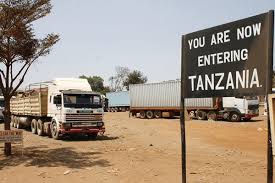
Sign post marking entry into Tanzania from Kenya

Tanzania has initiated yet another crackdown on illegal immigrants, targeting its borders with the Great Lakes region neighbours.

Mr. Kangi Lugola, the Home Affairs minister has ordered immigration officials to conduct house-to-house searches in Kagera and Kigoma regions, which border Uganda, Rwanda, Burundi, and the Democratic Republic of Congo.

The operation is expected to be accomplished in time for local government (civic) elections in the targeted regions, which are scheduled for July, Mr Lugola said in his directive to Commissioner General of Immigration Anna Makakala.

The operation involves a fresh verification of national identity cards issued to residents of those regions over the past few years.

Dealing with illegal immigrants has been a thorny problem in Tanzania’s border regions, with Kagera in the northwest, Kigoma in the west, Rukwa in the southeast and Mara in the north as the most affected.

Last week, police in Morogoro detained 11 illegal migrants from Somalia being transported to Iringa in a Toyota minivan.

On December 10, Ethiopian illegal migrants were intercepted crammed behind the driver’s seat of a cargo truck in Songwe region. The truck was transporting imported petrol from Dar es Salaam to Zambia.

Days earlier, 26 immigrants from the same country — half of them already dead —had been found abandoned in a cargo container on the Morogoro-Iringa highway.

Most of the immigrants enter Tanzania through official and unofficial channels, including unregistered entry points, but there have been many cases of human trafficking.

Some escape from refugee camps while others enter the country as nomadic pastoralists. In most cases, they are hired by the local communities as domestic or farm workers.

There has been a proposal that immigrants who have resided in Tanzania for a long time be subjected to “special screening” to determine their levels of loyalty and potential for citizenship.

Authorities say they are endangering the country’s social and economic stability, while also posing security risks.

Figures released by the Immigration Department last week show that 12,600 illegal migrants were arrested in various parts of the country between January and November last year, the majority being Burundian and Mozambican. Of those, 6,918 were repatriated while 2,499 were charged in the courts for violating the country’s immigration laws.

“The illegal immigration problem is not just confined to Tanzania… it’s worldwide, and that’s why we deport most of them to their home countries rather than prosecute them in court for breaking the law,” said Immigration Department spokesman Ally Mtanda.

The department cited Burundi, DRC and Nigeria as countries whose nationals were denied entry into Tanzania between January and November last year. Kenya was fourth on the list, with 32 denied entry.

In January last year, immigration authorities in the northern Kilimanjaro region carried out a rare mass deportation of verified illegal immigrant settlers who included 71 Kenyans, seven Rwandans, seven Congolese, five Ethiopians, two Ugandans, one Somali, and one Nigerian, saying they would only be allowed back if they followed lawful migration procedures.

Stories Continues after ad

ERA threatens to impose penalties on Umeme over power outages

Umeme Limited logo

The Ugandan government has threatened to impose financial penalties on Umeme from the month of March for any frequent and prolonged supply outages, the Electricity Regulatory Authority (ERA) has warned.

The warning follows the recent complaints about high tariffs and long power cuts that have added extra costs to businesses in the country as owners use stand-by generators to keep operating.

ERA said in a notice published on its website recently that it intended to set targets for “reliability and quality” of power supplied by Umeme, which secured a 25-year licence in 2005 as the sole distributor of electricity in the country.

“Frequent and long power outages/interruptions impose a cost on consumers in terms of the cost of energy not supplied,” the notice said. “The licensee will incur a financial penalty for failing to achieve the targets,” the notice read in part

However ERA did not give details of the proposed penalties.

ERA spokesman, Julius Wandera, said they planned to impose the new terms in March, after a public consultation.

Umeme is majority owned by the state-controlled pensions fund NSSF, while South African funds including Allan Gray, Kimberlite Frontier Africa Master Fund and Investec Asset Management Africa Fund also have stakes.

Uganda’s electricity grid cover just 23 percent of the population of 40 million.

Umeme plans to spend $1.2 billion over seven years to expand and upgrade the grid to cope with additional supplies from new dams being built that will double the country’s generation capacity from about 800 megawatts now.

Stories Continues after ad

Bagyenda footage of sneaking into BoU goes viral

The three heavily implicated in the video.

The CCTV Camera video footage of the embattled former executive director for bank supervision at Bank of Uganda (BoU) Justine Bagyenda has gone viral after she evaded security check at the bank’s premises as she ferried out materials in bags believed to be some documents related to the liquidation of commercial banks.

The footage retrieved from BoU premises shows Ms Bagyenda and his bodyguard Ms Juliet Adikot (bodyguard) and her driver Mr. Job Turyahabwe ferrying what is believed to be documents in and out of the bank premises into her car without being checked by the security at the bank.

MPs on Parliamentary Committee on Commissions, Statutory Authorities and State Enterprises (Cosase) who are probing BoU senior staff over the controversial sale of seven commercial banks are furious that vital documents related to the sale of the banks are nowhere to be seen, pointing to the fact that officials who participated in the liquidation of the banks could have financially benefited from the transactions.

Click to view video

Ms Bagyenda is suspected to have carried out the vital documents even though she insists she only carried her private documents. The MPs say BoU has officials have failed to present valuations reports as well as minutes of meetings related to the sale of banks.

“All the things I took out were personal and the day I was coming from the airport and the things I was carrying were reading material, gifts for staff. I have been working in the bank for 35years, the things I took out weren’t the ones I returned. I had gifts I got from South Africa,” she said.

Director of Security at BoU Milton Opio days ago told MPs that Bagyenda should tell where the missing documents are since she evaded security check at the premises in violation of the BoU’s security policy where workers are supposed to present themselves at the check point.

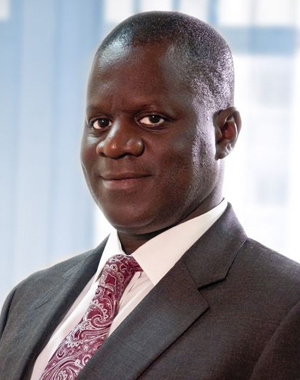
The footage also shows Bagyenda meeting MMAKS Lawyer Timothy K.Masembe who was the private lawyer of BoU, Crane Bank Limited, PwC and Dfcu. Dfcu Bank bought of Global Trust Bank Uganda and Crane Bank Limited in July 2017 and January 2017 respectively. MPS have argued that Masembe’s involvement in the closure of banks created a conflict of interest.

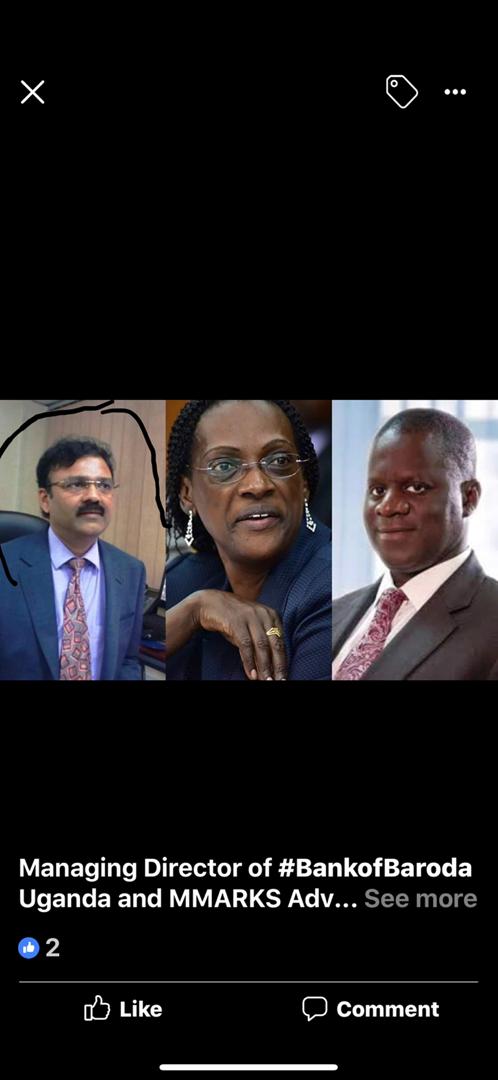
Masembe and Bank of Baroda Managing Director Ashrin Kumar met MS Bagyenda inside the central bank premises on a Sunday.

The incident, in which the BoU security directorate has admitted was a blatant breach of the central bank security guidelines came up on Thursday as MPs analysed the CCTV footage as it investigated how Ms Bagyenda stole loads of documents from the bank under the watch of the security personnel at BoU.

Stories Continues after ad

Alibaba extends into rest of East Africa

Alibaba

Alibaba has decided to extend its unique e-Founders Fellowship Program beyond Rwanda to the rest of East Africa as it plans to kick start it in next month. The programme is dubbed Alibaba Netpreneur Training.

“The Alibaba Netpreneur Training Rwanda program will welcome entrepreneurs and business leaders who currently operate in the Rwandan market, as well as those from the wider East African community,” reads part of the email.

But the consideration for businesses in the rest of East Africa is limited to those who will show actionable interest in expanding into the Rwandan market”.

According to Alibaba, the goal of the programme is to help African entrepreneurs learn more about the company’s story.

“The Alibaba Business School has created the Alibaba Netpreneur Training program to share the story and takeaways of Alibaba’s growth with entrepreneurs and business leaders around the world. We hope to inspire more businesses to embrace [the] digital economy, creating more opportunities for inclusive growth around the world.”

In the previous announcement meant for Rwanda only, the first batch dates were from February 16 -27, 2019, but has since been adjusted to accommodate the new applicants from other countries in the region. The program will now take place from March 2-13, 2019 in Hangzhou, China while the new deadline for application is January 20, 2019.

According to the organisers, entrepreneurs and business leaders will have the opportunity to spend ten days in Alibaba to hear from our founders and business leaders our own experience in building the ecommerce ecosystem in China.

Attachments area

Stories Continues after ad

Uganda has over 140,000 labour workers in Middle East

UAERA Chairman Andrew Tumwine Kameraho noting a point on paper.

Ugandan migrant labour in the Middle East are over 140,000, according to the Uganda Association (UAERA) for External Recruitment Agencies.

Mr.Andrew Tumwine Kameraho, the Chairman of UAERA says about 3000 Ugandans travel to the Middle East to work as arranged by 110 member companies of UAERA recognised by government of Uganda to export labour.

Mr. Tumwine says US$500 million is remitted to Uganda by migrant workers in the Middle East compared to US$870 million remitted to the country from other parts of the world. “This accounts for US$1.37 billion of remittances from all over the world to Uganda,” he says, noting that labour migration/placement as an industry is worth US$613 billion.

According to Tumwine, Uganda exports about 10 categories of labourers to the Middle East namely; professionals, technicians, skilled, semi-skilled, security personnel, porters, drivers, cleaners, housekeepers and catering and hospitality personnel.

However, much as Ugandan exports labour to the Middle East, the country has bilateral labour agreements with only Saudi Arabia and Jordan, meaning that its nationals who work in the two countries are recognised by the governments of the two nations and therefore are safer compared to those who work in countries with which the country has no bilateral labour agreements. Such countries which Uganda has no bilateral labour countries are; United Arab Emirates, Qatar, Bahrain, Oman and Kuwait, among others.

As the number of Ugandans most of them, the youth go to work in the Middle East, concern has been that some have died in those countries, some allegedly tortured by their employees, more especially domestic workers.

There are also concerns that some Ugandans are being ferried out of the country to the Middle East for work without the knowledge of government.

Stories Continues after ad

MPs strip off Bagyenda BoU car and security

Justine Bagyenda

The former Executive Director for bank supervision at Bank of Uganda (BoU) Ms Justine Bagyenda was on Friday left in shock when MPs on Parliamentary Committee on Commissions, Statutory Authorities and State Enterprises ordered that she be stripped of a government car and security.

The MPs took decision while quizzing Bagyenda and Mr. Denis Kakembo, lead counsel of M/S J.N Kirkland Associates over the controversial sale of loan assets of defunct Greenland Bank, International Credit Bank and Cooperative Bank at 93 percent discount.

Bagyenda continued to use the BoU vehicle and security even after retiring in July 2018. The BoU Governor Prof. Emmanuel Tumusiime-Mutebile had ordered that she be stripped of the vehicle and security by end of December last year.

The MPs were shocked that despite Bagyenda contributing to the mess in the liquidation of some banks, and had retired, she was still enjoying government facility as if she was still serving government.

Stories Continues after ad

KCCA FC in Congo Brazzaville for Caf Confederations tie

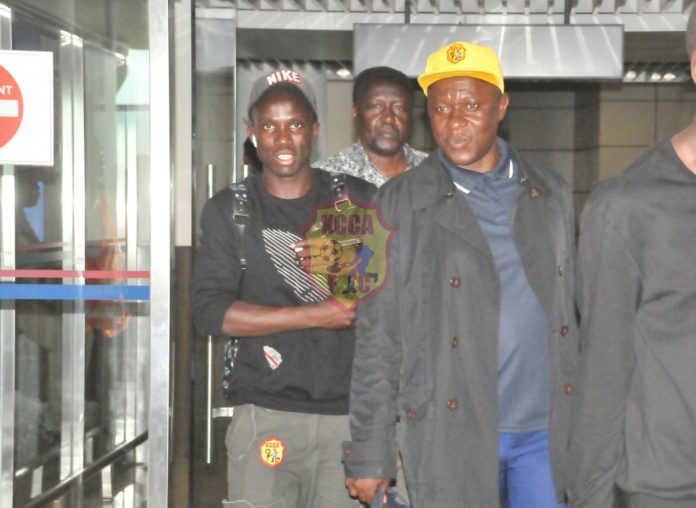
Coach Mike Mutebi and Julius Poloto arrive at Maya Maya international airport, Congo.

Kampala Capital City Authority FC have touched down in Congo Brazzaville for the upcoming Caf Confederations Cup match against AS Otoho on Sunday.

Nunda who was KCCA FC’s top scorer in last year’s CAF Champions League edition with two goals that he scored away against edition Champions Esperance and runners up Al Ahly sustained a hip injury in a recent game against URA FC in the Startimes Uganda Premier League and did not participate in the final practice match before the team’s travel to Congo Brazzaville.

Nunda who joins Sadam Juma in the sick bay remains hopeful to return in time for the 2nd leg next week on Sunday 20th January 2019 at Startimes Stadium, Lugogo.

Tacticiab Mike Mutebi and Co. will be looking at the available options in Lawrence Bukenya and Steven Sserwadda to fill the void in midfield.

The centre referee will be Adissa Abdul Raphiou Ligali and will be assisted by fellow countrymen Gbèmassiandan Narcisse Kouton (Assistant referee 1) and Eric Ayimavo Ayamr Ulrich (Assistant referee 2) and Djindo Louis Houngnandande (Fourth Official). Jean Claude Niyongabo will be the match commissioner.

The match will take place at the Stade Omnisport Marien Ngouabi in Owando, Congo on Sunday 13th January 2019 1730 EAT.

KCCA FC will host the return leg on Sunday 20th January at StarTimes stadium Lugogo, 1600 EAT.

The winner over the two legs qualify for the group stages of the 2018/19 Caf Confederations Cup.

Players:

Goalkeepers: Charles Lukwago (GK), Malyamungu Jamil (GK)

Outfield players: Bukenya Lawrence, Awany Dennis Timothy, Gift Ali Abubakar, Musana Hassan, Kaddu Henry Patrick, Mutyaba Muzamiru, Kyambadde Allan, Kizza Mustafa, Achai Herbert, Ssenjobe Eric, Mutyaba Mike, Sserwadda Steven, Kirabira Isaac, Poloto Julius, Okello Allan, Obenchan Fillbert.

Stories Continues after ad