Stanbic Bank
Stanbic Bank
18 C
Kampala
Stanbic Bank
Stanbic Bank
Home Blog Page 1438

Bagyenda absconds parliament for second time, MPs extend summons ordering her back into country

Embattled former Executive Director in charge of Supervision at Bank of Uganda Justine Bagyenda.

The former Bank of Uganda (BoU) Executive Director for supervision, Justine Bagyenda has for the second time not appeared before Parliament’s Committee on Commissions, Statutory Authorities and State Enterprises (Cosase) as demanded that she appears on Tuesday (Today).

The MPs were bitter that they wanted a warrant of arrest issued against Bagyenda on account of contempt of Parliament but Committee Chairman Abdu Katuntu thought otherwise.

Instead Katuntu extended summons for Bagyenda to Thursday this week and failure to appear again before the Committee, a warrant of arrest will be automatically issued against her.

On November 23, Ms Bagyenda wrote an email saying she was unlikely to appear before Cosase on Tuesday as MPs continue to quiz BoU top officials over the controversial closure of seven commercial banks. The exact whereabouts of Bagyenda are not known, though it was said she had traveled to Amsterdam, Netherlands while other sources say she is in Nairobi.

Last Friday Bagyenda did not appear before the committee, having flown out of the country on Thursday evening ostensibly to attend to private engagements. Ms Bagyenda is a key witness in the on-going probe, having participated in the liquidation of some of the defunct banks which were under her jurisdiction.

“Hon. Sir, the current engagement …I am on was planned long before the Governor’s communication and it is core to my private life,” Ms Bagyenda said in her email to Katuntu on November 23.

“On account of my said engagement and the fact that my air ticket is restricted, I strongly regret my inability to appear before the COSASE on Tuesday November 27, 2018. My schedule date of return is 13th December 2018,” she wrote.

Ms Bagyenda’s failure to appear before the committee last Friday forced Katuntu to order that she be issued summons to come back in the country and appear before the committee on Tuesday (Today) and failure to return would attract a warrant of arrest.

MP Beatrice Anywa said Bagyenda has taken the committee for the ride and called on Katuntu to contact Interpol immediately. She suggested that witnesses needed should not fly out of the country or their passports be withheld.

On the same Friday last week, Ms Bagyenda claimed she handed over quarterly progressive reports of defunct Greenland Bank to her successor Dr. Tumubweine Twinemanzi but he denied he ever received such reports during the handover. BoU Governor also denied he ever received the reports in his office. Bank of Uganda’s Director for Financial Markets Development Coordination, Benedict Sekabira said during the probe last Thursday that he forwarded documents to Bagyenda

Greenland Bank’s loans were sold together with loans of International Credit Bank (ICB) and the Cooperative Bank at Shs8.89 billion, following a 93 percent discount, to mysterious company Nile River Acquisition.

Stories Continues after ad

UTB to hold coffee and tourism symposium

UTB Executive Director Stephen Asiimwe.

The Chief Executive Officer of Uganda Tourism Board, Stephen Asiimwe has revealed that Uganda Local Government Association, is set to organize the first Coffee and Tourism Symposium slated to happen on December 6 at Golden Tulip Hotel, Kampala.

Under the theme, ‘Unlocking Uganda’s Coffee Tourism Potential’, Asiimwe said the exhibition will bring key stakeholders in the coffee and tourism sub-sectors to deliberate on how the gains and potential in can be achieved.

“Coffee and tourism are some of the biggest contributors to Uganda’s GDP. Where there is tourism attraction, coffee grows. It is from this that we have been motivated to organize this symposium,” he said.

Despite being a major coffee supplier on the world stage, Uganda’s coffee does not feature in the world’s 15 top value earning coffee exporting countries. At least 180 delegates and 20 exhibitors are expected at the inaugural event, including tour operators, coffee farmers, hoteliers and others involved in the hospitality and coffee industry.

Mr Asiimwe said, the symposium is bringing consumers to the farms and ensuring they have all amenities they need in terms of transport and on-farm experiences, “this will encourage incremental earnings as farmers, hospitality and tourism industries,” he added.

Uganda Tourism Board is a statutory organization established with a mandate reviewed in the Tourism Act of 2008. It’s to market Uganda internationally, promote quality assurance in tourist facilities through training, grading and classification.

Stories Continues after ad

Vipers head to Sudan for Caf Champions League clash

Vipers players

Vipers Sports Club manager Javier Martinez Espinoza named an 18-man squad to travel to Sudan ahead of the crucial CAF Champions League qualifier encounter against Al-Merreikh SC.

Team captain Taddeo Lwanga and his assistant Moses Waiswa who sat out in the 2-1 win against Paidha Black Angels on Friday, return from National duty and are part of the travelling contingent.

With Fabien Mutombora ruled out due to an injury picked up during the international break with Burundi, Bashir Ssekagya and Derrick Ochan will be the two goalkeepers that will be available for selection.

The team departed on Tuesday morning aboard Ethiopian Airlines.

Vipers travelling squad to Sudan

The technical team consists of: Javier Martinez Espinoza – Team Manager, Abu Wamboya Mubarak – Assistant Coach, Moses Oloya – Goalkeeping Coach and Mathias Kasagga – physiotherapist.

Algerian referees; Aderazzek Arab, Abbes Akram Zerhouni and Brahim El Hamiaoui have been assigned to handle the Wednesday tie in Khartoum.

The return leg will be played at St. Mary’s stadium in Kitende on 5th December 2018.

The victors of the fixture will face either Algerian side CS Constantine or GAMTEL from Gambia in the next round of the champions league group stage qualifiers.

The winners of the next round of the qualification round will be a total of 15 clubs that will join CAF Champions League Winner (Season 2018) in the group matches of the 2018-2019 season.

Club that have were given a bye into the next round include; Al Ahly (Egypt), AS Vita Club (DR Congo), Esperance (Tunisia), TP MAzembe (DR Congo) and Morocco’s Wydad AC).

Meanwhile, KCCA FC, Uganda’s representatives in the CAF Confederations Cup, received a bye to the first round and will wait for the next round of qualification.

Vipers Travelling Squad

Goalkeepers: Bashir Ssekagya, Derrick Ochan.

Defenders: Ibrahim Kiyemba, Livingstone Mulondo, Geoffrey Wasswa, Bashir Asiku, Halid Lwalilwa, Yayo Lutimba.

Midfielders: Taddeo Lwanga, Moses Waiswa, Rahmat Ssenfuka, Duncan Sseninde, Brian Nkuubi, Abraham Ndugwa.

Strikers: Tito Okello, Brian Kalumba, Noah Wafula, Dan Sserunkuma.

Caf Champions League

Wednesday, 28th November 2018

Al-Merreikh SC vs Vipers SC

Stories Continues after ad

20th Ordinary Meeting of the EAC Heads of State set for Friday in Arusha

President Museveni

The 20th Ordinary Meeting of the Summit of the East African Community (EAC) Heads of State is set for Friday, November 30, 2018 at the Arusha International Conference Centre (AICC) in Arusha, Tanzania.

The Meeting of heads of state was preceded by the 38th Ordinary Meeting of the EAC Council of Ministers that runs from November 25-28, 2018, also in Arusha, Tanzania.

Among the items on the Provisional Agenda of the 20th Summit of the EAC Heads of State are: the status of ratification of various protocols; the status of resolution of long outstanding non-tariff barriers, and; the progress report on the adoption of Political Confederation as a Transitional Model to the East African Political Federation.

Other items on the Agenda include: the roadmap for the accelerated integration of the Republic of South Sudan into the EAC, and; the verification exercise for the admission of the Republic of Somalia into the Community.

The Summit will also consider reports on modalities for the promotion of Motor Vehicle Assembly in East Africa aimed at reducing importation of used vehicles into the Community, and; the review of the textile and leather sector with a view to developing a strong and competitive domestic sector that gives consumers better choice than imported textile and footwear.

At their 19th Ordinary Meeting held in Kampala, Uganda on 23rd February, 2018, the Summit directed the EAC Council of Ministers to explore the possibilities of developing the automotive industry in East Africa by reducing the importation of used vehicles from outside the region and thereby make the region more competitive.

The Summit, at the same meeting in Kampala, directed the Council to make the region more competitive by prioritising the development of a competitive domestic textile and leather sector that will give East Africans a wider range of choices in terms of affordable, new and quality clothes, shoes and other leather products.

The forthcoming Summit will also review progress report by the Council of Ministers on the Summit Directive on having two (2) Deputy Secretaries General at the Community recruited competitively on a rotational basis among the Partner States.

The Summit at its 19th Ordinary Meeting held in Kampala, decided that there will only be two Deputy Secretaries General at the EAC who shall be recruited competitively on a rotational basis.

The Summit is expected to assent to various Bills passed by the East Legislative Assembly, namely: the EAC Polythene Materials Control Bill, 2016; the Administration of the East African Court of Justice Bill, 2018; the EAC Monetary Institute Bill, 2018, and; the EAC Customs Management (Amendment) Bill, 2018.

The Summit will further consider the implementation status of the EAC Customs Union and Common Market Protocols in addition to the current financial status of the Community.

The EAC is of six countries: Burundi, Kenya, Rwanda, South Sudan, Tanzania, and Uganda.

Stories Continues after ad

Over 1000 graduate from Uganda College of Commerce Aduku

Vice Presidents Edward Kiwanuka Ssekandi congratulates some of the best students of Aduku College who excelled in various disciplines during their graduation.

Uganda College of Commerce Aduku over the weekend held its eighth graduation where over 1000 students graduated with diplomas and certificates in various disciplines at the college campus in Kwania District.

A total of 581 students graduated with diplomas, ranging from Accounting, Business Administration, Hotel and Institution Catering, Procurement and Secretarial Studies while 446 students were awarded Certificates in ICT, Accounting, Finance Management and Logistics.

In a speech read for him by the Vice President Edward Kiwanuka Ssekandi at the function, President Yoweri Museveni urged the graduands to put to use the knowledge and skills they have acquired to generate jobs without necessarily waiting for others to employ them.

He said the college has over the years done a commendable job in training student and producing capable students who have contributed to Uganda work in responding to challenges of the country. He said that Uganda now needs a workforce of individuals with the right capacity and attitude to serve community and commended teachers and parents of the college for supporting the students.

Museveni said that government has positioned education as an engine of development by making accessible at all levels saying education plays a central role in the transformation of society by instilling in professionals the relevant and right skills and attitude capable of responding to the challenges any society.

He said government would continue to prioritise skills development in the training of the labour force for the county to be able to achieve its vision 2040 saying Africa cannot develop if it continues importing technical ability from out if it cannot to develop its own capacity while creating conditions that curb the brain drain.

He commended the college for introducing practical based skill programs saying one of the biggest challenges facing Africa is the high level of un employment of many of university graduates blaming it on Africa’s education system which he said produces students with limited or no skills making them job seekers.

The President urged graduands to be role models in community by promote high moral standing even if it means standing alone and always treasure integrity, honesty and hard work saying they are values to and drivers to success.

The Principal, Sam Nabwana, said the training at the college is based on skills acquisition even though he said they are currently challenged by limited funding, saying the government provision of Shs500 per student per day was not sustainable, given the increasing food prices, utilities and other necessities.

Founded in 1983 alongside four other colleges of commerce like; Kabale, Tororo, Pakwach and Soroti, Uganda College of Commerce Aduku trains secondary and high school leavers in various business and management skills for certificate and diploma levels.

Stories Continues after ad

Becoming a Papal awardee: Professor Noble Banadda’s story

Prof. Noble Banadda receiving the Pius XI medal from Pope Francis at the Vatican on November 12, 2018.

Professor Noble Ephraim Banadda grew up dreaming of becoming a medical doctor like some of the close relatives he grew up admiring. Born in May 1975, his early childhood was spent around doctors of the Mulago National Referral hospital in Kampala (Uganda). He vividly remembers afternoons spent in the doctors’ cafeteria surrounded by doctors in pristine white lab coats, discussing difficult cases of the day around a white table while taking tea from white teacups.

The young Noble admired these intelligent folks and wanted to be like them. This attraction towards medicine was cemented by his cousins and brothers who later studied human and animal medicine.

During his mid-teens, in the 1980s, however, Noble decided he was not cut out for the field of medicine after all. The allure of prestige associated with being a doctor was surpassed by the horrendous scene of HIV/AIDS patients he now saw at the hospital. HIV/AIDS was a new disease then and patients experienced dire symptoms and stigma. It did not help matters that he feared the sight of blood. That marked the end of his medical dream.

Starting his career

Even though Noble now knew he did not want to be a medical doctor, his general interest in the sciences did not wane. His passion shifted to engineering and for his first degree he applied to join Makerere University from Kyambogo College School where he had completed his high school education studying Physics, Chemistry and Mathematics. He eventually joined Sokoine University in Tanzania as an exchange student for a Bachelor’s Degree in Food Science and Technology. At the time (1994), all engineering courses and practicals were conducted at University of Dar-es-Salaam so he spent time in both universities. Studying in Tanzania also helped him fulfill his ambition of travelling at an early age and gaining exposure to the world.

For his master’s and PhD degrees, he attended the prestigious Katholieke Universiteit Leuven, Belgium, a university established in 1425 and colored with a rich scholarly and theological history including training philosophers that later became Popes. Noble was the first black student to be admitted to study a PhD in Chemical Engineering at the university. Upon completion of his studies, he was offered a job at BASF, one of the biggest chemical engineering companies in the world, but he turned it down to return home to Uganda even though he had no job there. Uganda was home and he loved his country. In 2007, Noble undertook post-doctoral training in chemical engineering at Massachusetts Institute of Technology (MIT) in the USA.

Back in Uganda, finding a job was not easy for him, for although he had impressive academic credentials, he lacked work experience. He eventually got a job at Makerere University through one of his former lecturers at Sokoine University of Agriculture who knew the then-head of Department of Food Science and Technology, H.E. Professor Joyce Kikafunda, now Uganda’s High Commissioner to the United Kingdom.

Noble started out as a part-time lecturer at Makerere University’s Department of Food Science and Technology on 1 June 2006, and was only confirmed a full-time lecturer in 2012 when the college system was instituted and he was subsequently elected head of the newly created Department of Agricultural and Bio-systems Engineering. In the same year, he was fast tracked to the position of Professor at just the age of 37. In 2016, he was also appointed a visiting Professor at Iowa State University in the USA.

Among the many feathers in his cap, Noble is a Next Einstein Fellow, fellow of the Uganda National Academy of Sciences, Co-chair of the Uganda National Young Academy, registered Engineer with the Institute of Engineers Tanzania, alumnus of the Global Young Academy, registered member of the American Society of Agricultural and Biological Engineers, member of the Malabo Panel of Experts, and member of Makerere University Senate.

Receiving the Pius XI Medal from Pope Francis

How he came to be selected to receive the Pius XI medal, Noble has no clue. The selection process is a well-kept secret, but is done by a team from the Pontifical Academy of Sciences, headquartered in the Vatican City. The Pontifical Academy of Sciences is one of the oldest academies in the world and is comprised of strictly 80 members. Membership is for life.

Award of the medal was done by Pope Francis himself during a meeting held in the Papal wing at The Vatican on 12 November 2018. For Noble, meeting the Pope was an unforgettable moment. He described it as, “an experience I had never had before and perhaps never will again”. Noble was awarded for his outstanding scientific research and publication, but was himself amazed at the caliber of researchers at the Pontifical Academy of Sciences. He aspires to one day join the prestigious academy whose alumni include Galileo Galilei and a number Nobel Prize winners in the fields of medicine, physics, space engineering, mathematics and stem biology.

Research profile

With 104 peer reviewed journal publications in 2017 alone, Noble is competitively one of the top ranked researchers at Makerere University where he is still serving. His research profile includes research awards from RUFORUM which he first won in 2011 through the RUFORUM Competitive Graduate Research Scheme. His research was to investigate contamination risks associated with wrapping indigenous foods in plastic bags during cooking. In 2015, he won a second grant to carry out research on producing ethanol from low cost agricultural biomass. Outside RUFORUM funding, Noble has engaged in other researches that have resulted in innovations such as the Makerere University MV Mulimi a multi-purpose farmer’s tractor capable of threshing maize, pumping water for irrigation, charging phones, hauling agricultural produce up to one tonne, and ploughing fields; a new technology of making diesel from heavy plastics; an organic pesticide from agricultural waste; and a low cost solar-powered Irrigation pump.

Ingredients for Success

Noble accredits RUFORUM for having contributed significantly to his research profile acknowledging that sometimes as a scientist, one can have great research ideas, but miss out on funding because of poorly written proposals, non-compliant budgets, or failure to secure partnerships. He is grateful to RUFORUM for stepping in to fill this role through organizing scientific writing workshops, brokering partnerships and other support.

His first interaction with RUFORUM was when he first applied for a grant and he has never looked back. One of the greatest benefits he considers from this engagement is international exposure which he would like to see RUFORUM continue to do through activities like mobility grants, exchange programmes and internationalization of research teams. He also enjoys working with Prof Adipala whose tenacity and dynamism he admires. “The first time we met, we hit it off immediately at a personal level. I like working with people who are tenacious and dynamic. Prof Adipala is that and more.”

Although he has won many research awards over the years, Noble is quick to point out that this comes neither easily nor by accident. Three key ingredients stand out for him for one to succeed as a researcher: working with winners, mentorship, and internationalization. He is particularly passionate about internationalization of one’s education and networks and encourages researchers to seek international exposure. “Even it is a 2-day training and there is no per diem for participation, attend, for you will not return the same.” He adds that for young researchers who want to follow in his footsteps, they should be focused, exercise self-discipline and start young, noting that the average age of achievers is now below 30 years.

Stories Continues after ad

Contribute to restore hope, dignity and lives of inmates- Jennifer Musisi

KCCA ED Jennifer Musisi

The Executive Director of Kampala Capital City Authority , Jennifer Musisi Semakula, has appealed to Ugandans to always make a contribution for restoration of hope, dignity and improving lives of inmates at various detention centers.

Musisi remarked during Corporate Social Responsibility (CSR) drive at Luzira Maximum Security Prison aimed at supporting, sharing love and a word of encouragement with prisoners at the facility.

“During my earlier visit in June this year, I learnt that the Prison school system has unique challenges, is resource constrained, and that, the learning environment and facilities have a negative effect on their academic achievement,” she said

The team donated school furniture, coupled with other amenities which include water systems to access clean water, stationery, cleaning equipment, scholastic materials among other supplies peddled at making their learning experience and environment conducive to subsequently improve grades for a chance to give them a better life once they are out of prison.

“The people at the facility are part of us and we should not forget them. It’s in our interest as Citizens to contribute to the welfare of the Prison Community. We are happy to make a contribution to their education, give them the support they need to thrive as they get reformed to enable them attain their Life dreams,” she said.

Stories Continues after ad

KCB, partners commit to ensure transparency, responsible banking

The KCB logo

The Kenya Commercial Bank (KCB) Group with outlets in Uganda and the rest of East Africa said Monday it partnered with 28 other global banks to launch the Principles for Responsible Banking in Paris, France.

Over 12 CEOs attended the launch of the Principles to initiate public participation during the first day of the Global Roundtable meeting, the bank said in a statement sent to newsrooms.

The Principles will define the banking industry’s role and responsibilities in shaping a sustainable future. The six principles selected (alignment, impact, customers and clients, stakeholders, governance and culture, transparency and accountability) speak to banking business and culture aligned to Climate Change, Sustainable Development Goals (SDGs), and relevant national and regional frameworks themes.

The Principles set the global standard for what it means to be a responsible bank and will ensure that banks create value for both their shareholders and society. They provide the first global framework that guides the integration of sustainability across all business areas of a bank, from strategic, portfolio to transaction level.

KCB said it has been actively involved in the drafting of the Principles alongside other global banks over the last eight months.

Speaking at the launch of the principles, KCB Group CEO Joshua Oigara said that his organisation believes in responsible business which according to him is about establishing and nurturing the foundation of growth for the next generation.

By signing the Principles for Responsible Banking when they are launched in September 2019, banks will commit to being publicly accountable for their significant positive and negative social, environmental and economic impacts. They agree to set public targets on addressing their most significant negative impacts and scaling up their positive impacts to align with and contribute to national and international sustainable development and climate targets.

“We believe responsible business is about establishing and nurturing the foundation of growth for the next generations. To succeed, banks need to bring their written policies into action through strategy for creating long-term value through sustainable banking. KCB Group believes that these principles will create a path towards achieving sustainable financial success and widen the door to financial freedom,” he said.

By developing the set of principles, the banks set out a clear purpose for the banking industry itself aimed at enabling investors, policy makers, regulators, clients and civil society to compare banks and hold them accountable for their environmental, social and economic impacts and their contribution to society’s goals.

Stories Continues after ad
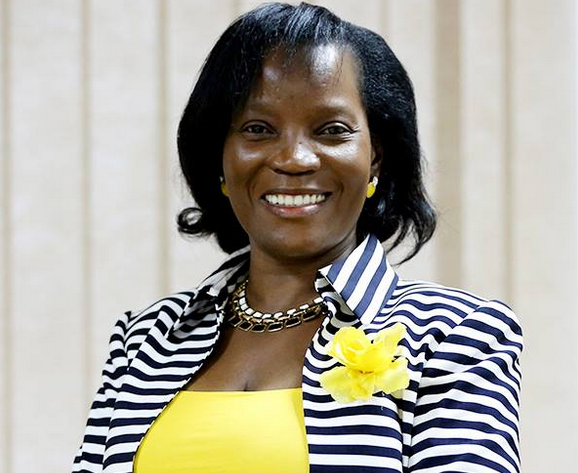
Battle lines drawn at Dfcu Bank as pro-Kisaame staff scorn new MD, Sekabembe

William Sekabembe Dfcu-Bank-Uganda’s-Chief of Business and-Executive Director-William-Sekabembe

All is not well with new Dfcu Bank Managing Director, William Sekabembe, who faces resistance from some of the staff that didn’t want his predecessor and now Chief Executive Officer (CEO) Juma Kisaame to leave the bank.

Kissame officially leaves in the first quarter of 2019, according to a recent statement from the bank. He will be succeeded by Mathias Katamba. Katamba will take over the leadership role at Dfcu Bank as CEO starting from January 2, 2019. He formally worked with Housing Finance Bank as a MD.

On the other Sekabembe was Chief Of Business & Executive Director at Dfcu Bank but is now expected to work closely with Katamba.

An inside source says about six senior staff have tendered in their resignation letters because they don’t want to work under Mr. Sekabembe, who denied to join Kenya Commercial Bank (U) Limited, as MD.

The source says the stubbornness of the pro-Kisaame staff is making things difficult for Sekabembe who has been given targets that he must achieve.

Dfcu Bank has not had a smooth running since it took of Crane Bank Limited in a controversial transaction with the Bank of Uganda (BoU). Committee on Commissions, Statutory Authorities and State Enterprises (Cosase) is probing BoU top officials over the controversial sale of seven commercial banks

Kisaame has had notable achievements some of which include playing a key role in assisting Dfcu Limited, the holding company, realign the shareholding that brought on board strategic partners like Arise Investments BV that include Rabobank, Norfund (later NorFinance) and FMO. He also led the most successful acquisitions in the banking industry in Uganda when Dfcu Bank acquired some assets and took over some liabilities of Global Trust (U) Ltd Bank (In liquidation) in 2014 and later in 2017 acquired some assets and assumed some liabilities of Crane Bank Limited (In Receivership).’

The Chairman went on to express his appreciation to Kisaame for his professional and personal commitment during his tenure as CEO and his extraordinary leadership that increased shareholders value; saw Dfcu Bank rise to become the second largest bank in the country; resulting in three-fold balance sheet growth to over three trillion Uganda shillings, a customer base of close to one million and a network of 65 branches.

Stories Continues after ad

Uganda’s export receipts hit US$300 in September

Uganda’s export receipts in September 2018 amounted to US$ 300.12 million compared to USD 298.84 million in August 2018, according to the latest Performance of the Economy Report, published by the Ministry of Finance Planning and Economic Development (MFPED).

The report attributes the increase majorly to increased volumes of gold and tobacco by 36.9 percent and 55.1 percent respectively compared to the previous month.

“Compared to the same month in 2017, the improvement in export receipts in September 2018 was on account of increased volumes of gold, tobacco, fish and sugar,” the report reads.

However, according to monthly the report, export receipts from coffee Uganda’s main export earner, declined both in value and volume compared to the previous month and the same month in 2017. The decline is due to mainly low international prices following higher production in Brazil; as well as lower production volumes especially from Masaka and South-Western regions which are the main coffee growing regions.

Destination of Exports

The East African Community (EAC) remained the major destination for Uganda’s exports in September 2018, followed by the Middle East and Rest of Africa. Exports to the EAC region grew by 11.6 percent from US$ 104.94 million in September 2017 to US$ 117.09 million in September 2018. Kenya took the largest share of EAC exports (48.3 percent), followed by Rwanda (19.4 percent) and South Sudan (18.3 percent).

Merchandise Imports

Meanwhile Uganda’s value of imported merchandise declined to US$ 462.4 million in September 2018, from US$ 501.60 million recorded in the previous month. “The decline was driven by a decrease in the values of both Government and private sector imports Volumes and prices of non-oil imports dropped by 6 percent and 2 percent, respectively, partly explaining the decline in the value of imports,” the report reads.

Compared to the same period the previous year, the value of imports declined by 3.2 percent. Whereas the value of private sector imports increased by 19.4 percent, the decline in the value of Government imports more than offset the increase.

Origin of Imports

Asia remained the largest source of imports during the month, contributing 42 percent of the total merchandise imported. Middle East and EAC contributed 20 percent and 15 percent respectively of the total imported merchandise, making them the second and third largest sources. Of the imports from Asia, 77 percent was from India, China and Japan while of the merchandise imported from the EAC, 89 percent was from Kenya and Tanzania.

Stories Continues after ad