Stanbic Bank
Stanbic Bank
18 C
Kampala
Stanbic Bank
Stanbic Bank
Home Blog Page 1439

Uganda’s economic activity improves in October

Construction attracted biggest share of private sector credit.

During October 2018, economic activity is seen to have improved as indicated by the high frequency indicators of economic activity, according to the latest performance of the economy report published by the Ministry of Finance, Planning and Economic Development (MFPED).

According to the report, the composite indicator of economic activity (ciea) increased by 0.9 per cent in the month compared to a 0.8 per cent improvement in August 2018. The business tendency index (BTI) and Purchasing Managers Index (PMI) were above the 50.0 threshold at 56.7 and 56.6 in October 2018, up from 56.5 and 54.2 respectively in the previous month.

The report shows that annual headline inflation declined to 3.0 per cent in October 2018, from 3.7 per cent recorded in September 2018, largely on account of a deceleration in food crops and related items inflation. Food crops and related items inflation dropped due to lower prices of fruits as a result of increased supply. Annual Core and annual Energy, Fuels and Utilities (EFU) inflation also declined to 3.5 per cent and 6.9 percent in October, 2018 from 3.9 per cent and 10.1 per cent in September 2018, respectively.

On the other hand, The Ugandan Shilling appreciated by 0.6 per cent against the US dollar; recording an average midrate of Shs3,777.98/US$ in October 2018, compared to an average midrate of Shs3,800.68/US$ in September 2018. This was on account of higher supply of the US dollar due to increased inflows to NGO’s, coffee export receipts and offshore players.

According to the report, the stock of total outstanding private sector credit continued to expand in September 2018, recording a growth of 2.5 per cent compared to the previous month. Total stock of PSC in September was Shs13.89 billion which was higher by Shs338.68 billion compared to August 2018, due to pick up in economic activity.

By sector, the largest holders of private sector credit stock were: building, mortgage, construction & real estate; and trade- each of which accounted for 20 per cent share of outstanding private sector credit. The other sectors with big shares are personal and household loans (18 per cent), agriculture and manufacturing each with 13 per cent shares.

Meanwhile, Interest rates on treasury bills edged upwards across all tenors. The average weighted yields to maturity for October were 11.5 per cent, 13 per cent and 13.7 per cent for the 91, 182 and 364 day tenors higher than 10 per cent, 11.9 per cent and 12.3 per cent respectively in September 2018.

Uganda`s merchandise trade deficit narrowed both compared to the previous month and the same month in 2017, owing to simultaneous reduction in value of imports and increase in export receipts, says the report.

The merchandise trade deficit improved to US$162.3 million in September 2018 from US$202.8 million registered in August 2018.

Stories Continues after ad

Germany boosts African continental trade deal

African Continental Free Trade Area

Germany has donated 1.6 million euros to United Nations Conference on Trade and Development (UNCTAD), to help the agency work with African partners to implement the landmark African Continental Free Trade Agreement (AfCFTA) meant to commerce across borders.

“This is a big new step forward in the economic development of Africa,” said Ambassador Hans-Peter Jugel, Germany’s deputy envoy to the United Nations in Geneva, adding that the African Union had sought UNCTAD’s support to meet the aims of the AfCFTA.

“We trust in UNCTAD’s competences and expertise in making trade facilitation operational,” Jugel said.

“Germany is already a leading supporter of UNCTAD’s work. This fresh funding is a clear sign of the country’s commitment not only to making trade work for development, but also to multilateralism. That sends a strong signal in challenging times,” UNCTAD Deputy Secretary-General Isabelle Durant said.

“The projects that Germany is backing will play a key role in helping Africa meet the new trade objectives that the continent has set itself,” she said.

UNCTAD provides policy advice and technical cooperation to help poorer countries reap more benefits from the global economy, and regional integration is a key part of that process.

The German funding, which runs from November 2018 to December 2020, focuses on enhancing trade by building the capacity of African stakeholders to address the key objectives of the AfCFTA’s Protocol on Trade in Goods.

Among the areas in the UNCTAD projects are non-tariff measures (NTMs). While tariffs make headlines and are generally recognized as a blunt instrument used by protectionists, they are far from the only phenomenon influencing trade flows across borders – and not even the most important, some analysts say.

Regulations on imported goods and products, either with the intention of limiting them, like quotas, or controlling them, like health and safety requirements, comprise a broad category of measures which can impact the scale and shape of trade with and between developing countries.

Helping the authorities and firms in developing countries to understand NTMs and adapt to them in order to trade across borders is an important part of UNCTAD’s work.

NTMs are estimated to be three to four times more restrictive than current tariffs. This importance has been reflected in the ambitious AfCFTA Appendices on Non-Tariff Barriers, Sanitary and Phytosanitary Measures and Technical Barriers to Trade.

The German-funded project will scale up the existing, UNCTAD-supported NTM reporting, monitoring and elimination mechanism of the Tripartite – a grouping formed by the Common Market for Eastern and Southern Africa, the East African Community and the Southern African Development Community. It uses an online tool to enable private sector operators to report trade barriers, which are then addressed and resolved in an intergovernmental mechanism.

Furthermore, the project aims to increase transparency about all NTMs, in particular regulatory and behind-the-border measures, through comprehensive data collection and dissemination to the public and private sector.

The project aims to help African countries increase their capacity to trade knowledge-based products and handle intellectual property rights, thus assisting them to become less dependent on commodities and raw materials.

Stories Continues after ad

Eight steps to assembling the most talented startup team

Martin Zwilling

By Martin Zwilling

With the pace of change ever escalating, entrepreneurs today can’t afford to acquire talent through traditional hiring alone, and need to revise the perception that “talent” is only full-time employees. At the same time, more people in the workplace don’t want to be “employees.” According to an Intuit study, that number is quickly rising and will approach 40 percent by 2020.

The answer to both is a new fast and flexible talent strategy based on freelancers, consultants, experts, and specialists, who are part of the new “1099 economy” including Baby Boomers and Millennials. For the full picture, see the classic book, “Navigating the Talent Shift,” with convincing arguments by Lisa Hufford, Founder of Simplicity Consulting talent solutions.

The author outlines eight necessary steps for every business and entrepreneur to capitalize on this movement to on-demand project teams, versus permanent hires. These steps are the new keys to driving business innovation, controlling costs, staying nimble, and getting better results:

Build teams to meet goals rather than organization charts. Too many entrepreneurs, as they grow their business, are focused on hiring to fill a traditional organization chart, rather than acquiring skills and talents to meet their current goals and needs. They use generic job descriptions and plan for long-term business stability, which rarely happens.

Focus on deliverables and skills required right now. Conventional hiring strategies usually follow a vanilla approach to talent acquisition. It’s a numbers game of filling positions, without clarity on the expertise needed to deliver now. With contract players, you assume a project duration, with easy transition to new players for the next campaign.

Prioritize objectives and seek expert talent to match. For example, if your first scaling effort is a global one, you should be prioritizing “global launch experience.” The notion of holding out for the “expert in all domains” wastes too much time, effort, and money. In fact, you will never predict required pivots, and generalists rarely outperform specialists.

Build an on-demand team of strategic do-ers. The most effective people to execute strategic initiatives are likely ones who have recently led similar activities in multiple related environments, not ones who have been grown and trained inside. This team of specialist consultants is then easily tuned as your strategy evolves based on the market.

Think in terms of projects to keep up with an evolving strategy. Each strategic priority should be managed as a project. Some projects are big and long-term, while others are small and more tactical. Projects need not be constrained by organizational boundaries, long-term budgeting, or conventional staffing and training practices.

Stay nimble by quickly filling gaps in the existing team. When you identify a skills gap or feel you need additional expertise or insight, signing up on-demand help is the only timely solution. Assigning an existing team member who isn’t qualified, or is already overloaded, will likely delay both projects, and kill existing team member motivation.

Leverage the broadest possible network. The on-demand specialized talent pool already includes 65 million people not interest in being full-time employees. By leveraging this broader network, you will improve your probabilities of finding the right skills and experience for your current project, and bring fresh ideas and solutions into your team.

Maintain budget flexibility as the business changes. By leveraging on-demand experts, you pay only for the vital work you need immediately, not the overhead and ongoing costs (development, training, severance, benefits) that go along with hiring full-time employees. It’s the best way to handle budgetary restrictions and cuts.

This on-demand talent model, dubbed SPEED by the author (Success, Plan, Execute, Evaluate, Decide), is good for the company, and good for all specialized, dedicated, and high performing people in the workforce today. Your company gets the flexibility to adapt quickly to the needs of a rapidly changing marketplace, and workers get to broaden their experience in the work they love.

We are living in an on-demand world and an on-demand economy, ranging from the movies we watch, to manufacturing and delivery, to the computer resources we need. Welcome now to the on-demand workplace. It’s here to stay.

The writer is a veteran startup mentor, executive, blogger, author, tech professional, professor, and investor. Published on Forbes, Entrepreneur, Inc, Huffington Post, etc.

Stories Continues after ad

Independent Geoffrey Wandera declared winner of Busia LCV amidst bribery allegations

Geoffrey Wandera being declared unopposed.

The race for Busia LCV seat has been cut short with the Electoral Commission declaring independent candidate, Geoffrey Wandera unopposed winner.

This follows the pulling out of the race by the other two independent candidates; Tonny Ojambo and Chrispus Bwire this morning.

Wandera, a former district speaker has been declared by the district returning officer, Umar Kiyimba. Kiyimba said: “The law providea that when all other candidates pull out of the race, the remaining ine is declared unopposed and sworn in.”

Initially five candidates were nominated for the race but the two leading candidates; Boniface Paul Oguttu (NRM) and Deogratius Njoki (DP) were last Friday pulled out of the race by the electoral commission on technical grounds.

The opposition was the first to run to the Electoral Commission seeking disqualification of the NRM candidate from the race. Later, the NRM did the same. The NRM candidate is reported to have lacked the required academic qualifications.

The electoral commission later realised that, the DP candidate was nominated under the names Hasubi Deogratius Njoki, yet on the national voters register as well as his national ID his names are Hasubi Deogratius.

Although Njoki had formally changed his names with the National Identification and Registration Authority (NIRA), he did not present the papers from NIRA to the EC on time.

“In view of the above, the commission resolved that the person nominated under the names Hasubi Deogratius Njoki is not a registered voter under the National Voters Register and thus over turned the Returning Officer’s decision to have you nominated for the position of Busia District Chairperson,” EC boss, Byabakama stated in a letter.

On the other hand, the NRM candidate was removed from the race because his names, Oguttu Boniface Paul didn’t match the names on the requisite academic documents accompanying his nomination papers.

The three who remained in the race, campaigned at the weekend as rumour spread in Busia town that Wandera was persuading his two rivals to pull out of the race in his favour. Sources allege that ruling National Resistance Movement party through its deputy Secretary General, Richard Twodong lured the two with promises that the party would give them jobs on top of refunding all the funds used in the campaigns.

The Electoral Commission has denied knowledge of such talks. The district Returning Officer said he only recieved Ojambo and Bwire’s official withdrawal from the race.

“When a candidate chooses to withdraw from the race, you don’t ask them why. Because it is their constitutional mandate,” Kiyimba told this Eagle Online.

The seat fell vacant in May this year after the Court of Appeal nullified the election of the incumbent, Mr. Ouma Adea, on grounds that he had been convicted of corruption in 2013.

Stories Continues after ad

Museveni in Nairobi for first global conference on the sustainable blue economy

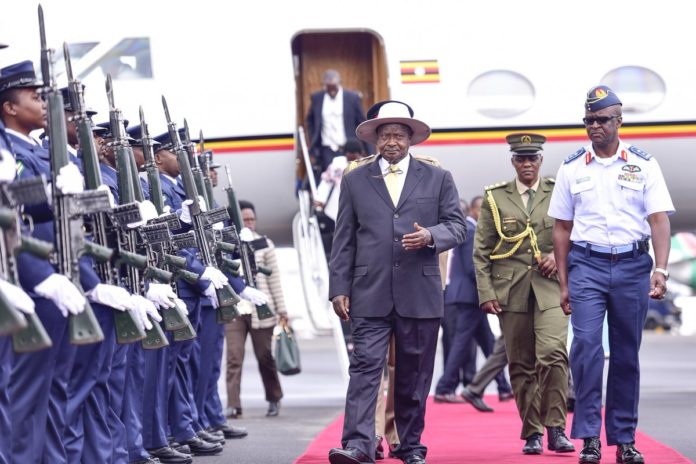
President Museveni has jetted into Kenya to attend the first global conference on the sustainable blue economy that is aimed at harnessing the potential of oceans, seas, lakes and rivers to improve lives of people in developing states.

The Sustainable Blue Economy Conference builds on the momentum of the UN’s 2030 Agenda for Sustainable Development, the 2015 Climate Change Conference in Paris and the UN Ocean Conference 2017 ‘Call to Action’.

The three days conference is slated to end of Wednesday and is expected to attract over 4,000 participants from around the world to learn how to build a blue economy that Leverages the latest innovations, scientific advances and best practices to build prosperity while conserving our waters for future generations.

The conference will capture concrete commitments and practical actions that can be taken today to help the world transition to the blue economy. Kenya with its co-hosts Canada, Japan, south Africa, china European union, UK are rallying around the enormous pressures facing oceans and waters, from plastic pollution to the impacts of climate change.

The meeting will also identify how to harness the potential of the blue economy to create jobs and combat poverty and hunger, Show how economic development and healthy waters go hand in hand, Capture commitments and practical actions that can be taken today.

Stories Continues after ad

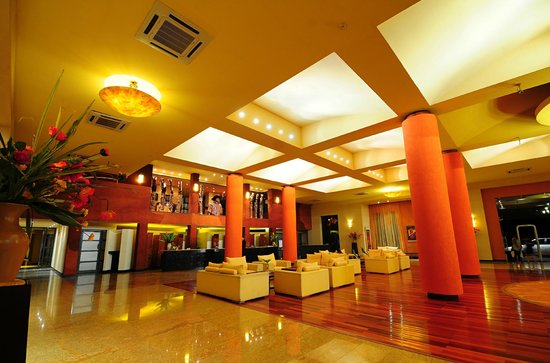
Speke Resort Munyonyo offers friendly accommodation packages for festive season, boat ride inclusive

Speke Resort Munyonyo has done it again for its clients and new visitors who will celebrate the Christmas festive season on December 24th and 25th at the hotel that offers one of the best accommodation services in the country.

The hotel for the two days is offering best rates in town ranging from US $176 for a single Deluxe room to US$ to US $832 for a Presidential Suite (4 guests). The hotel has eight room types from which visitors can choose depending on their pockets. But an extra person is allowed in a room with an extra charge.

From December 14-23 and December 26 -January 6, 2019, the same rooms go for US $139 (Single Deluxe Room) and US $684 for Presidential Suite (four guests). An extra person is allowed in a room with an extra charge.

All the different room rates are on full board basis-they cater for breakfast, lunch and dinner; drinks exclusive. On December 25, (Christmas Day), there will be an Around The World Grand Christmas Buffet at the Olympic Swimming Pool.

The offer includes 30 minutes boat ride and 10 minutes pony ride for kids.

Resident guests are entitled to access swimming pool, gym, steam and sauna

Stories Continues after ad

FUFA sets guidelines and schedule for the 2018/19 Uganda Cup

Uganda cup trophy

The 45th edition of the Uganda Cup guidelines and schedule have been released by FUFA with registration for league and non-league teams at the Regional Football Associations underway until 30th November 2018.

FUFA says the competition will begin with a preliminary round at the regional level for teams from 3rd division and below, however the Regional Associations are authorized to stage the preliminary round fixtures that will be played from 1st to 23rd December 2018.

26 teams from the eight Regional Associations will qualify for the round of 64. Buganda and Kampala have 4 slots for qualification while the rest of the Regional Associations retained 3 slots each.

The StarTimes Uganda Premier League and StarTimes FUFA Big League teams will join the competition at the round of 64. The draws for the 64 teams will be held on 2nd January 2019.

Participation of top flight teams 2nd division teams and 3rd division teams (Regional teams) in the competition is mandatory, FUFA further states.

The Round of 64 ties will be played between 18th and 22nd January 2019 and other schedules for the competitions shall be provided in line with the FUFA Calendar.

According to FUFA, StarTimes Uganda Premier League Clubs will register with UGX 300,000, StarTimes FUFA Big league teams at UGX. 250,000 while the regional league clubs are required to pay UGX. 150,000.

The host region and ground for the final will be communicated.

The winner of the competition represents Uganda in the CAF Confederation Cup. KCCA FC are the defending champions.

The competition started in 1971. KCCA FC and Express FC are the most successful clubs in the Uganda cup winning on 10 occasions each.

FUFA Uganda Cup 2018/2019

Preliminary Round: 1st-23rd December 2018

Round of 64 Draws: 2nd January 2019

Round of 64 kickoff: 18th January 2019

Stories Continues after ad

MPs bitter as Kasekende is also reported out of country

Former Deputy Governor, Dr. Louis Kasekende.

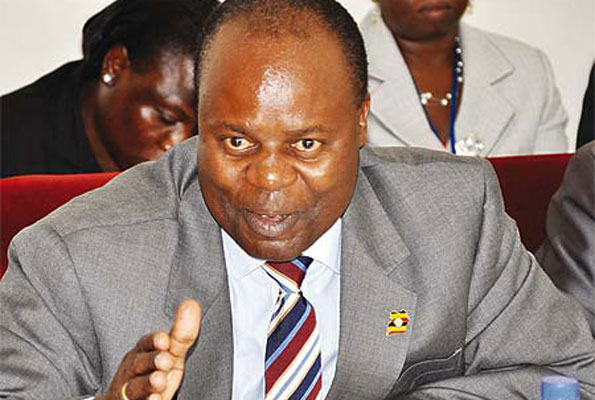
As the MPs on Parliament’s Committee on Commissions, Statutory Authorities and State Enterprises (Cosase) were coming to the terms that the former Bank of Uganda (BoU) executive director for supervision, Justine Bagyenda, is out of the country, it also emerged that the BoU deputy governor Dr Louis Kasekende, flew of the country a day before Bagyenda left on the evening of November 22.

Dr. Kasekende who is said to have traveled to China via Ethiopia and Bagyenda worked closely in the liquidation of some of the banks and are said to have kept away some of the documents concerning banks from the eyes of the MPs.

Last week when MPs asked Bagyenda about the quarterly reports concerning the liquidation process of Greenland Bank, she said she had handed them over to her successor Dr. Tumubweine Twinomanzi but he denied he ever received such reports from his predecessor.

The BoU governor Prof. Emmanuel Tumusiime-Mutebile also denied he has ever seen such reports in his office, something that pissed off Ms. Bagyenda who is said to be wealthy at the movement.

The MPs are probing BoU top officials based on the Auditor General John Muwanga’s special audit report of BoU on seven defunct commercial banks whose closure is controversial. They include; Teefe Trust Bank, International Credit Bank, Greenland Bank, Cooperative Bank, Global Trust Bank Uganda, National Bank of Commerce and Crane Bank Limited.

It should be remembered that Kasekende did not buy the idea of the Auditor General (AG) investigating BoU following an order by parliament that he (AG) carries out a forensic probe against the central banks after whistleblowers and owners of closed banks came out crying.

The wealth of Bagyenda and Kasekende has forced the Office of the Inspector General of Government (IGG) to launch an investigation into how the acquired such wealth that comprise billions of shillings on bank accounts and well as properties also worth billions of shillings.

Investigators says Bagyenda and Kasekende could have gotten some of the wealth through dubious deals related to their positions at BoU, though they have always denied the accusations. The IGG is following the Leadership Code 2002, to probe the wealth of the two officials.

Stories Continues after ad

Learning digital App for primary school learners launched

Katrina Stensson, the chief executive officer of Checheza, the organization that has developed the application

A new digital learning application (App) for primary school learners in Uganda was days ago launched in Kampala, which government said will help children in lower primary better understand literacy and mathematics.

Michael Ochero, who represented the ministry of Information and Communications Technology (ICT), at the launch of the application said technology has come up as a fundamental tool that is taking the world toward digitalisation.

He observed that having interactive learning tools for the children is a good step towards development in Uganda.

“If this App is fully utilized, it will be a way of keeping children alert and creative. It will also be a good way of encouraging children to use the Internet for better reasons. Checheza has the full support from the ministry of ICT and we shall work hard to ensure that its applicability spreads to the rest of the country, especially rural areas, so that the education ground is levelled for both urban and rural schools,” he said.

While Humphrey Mukooyo, who represented the Education ministry, said the integration of ICT in teaching and learning will create equality by enabling disadvantaged learners and teachers in rural areas to access the same information in real time like their urban counterparts.

He added that education institutions will be empowered to utilise more than one teaching method.

Mukooyo said the government would provide affordable computers to schools and connect them to the Internet to demystify ICT and prevent innovations such as Checheza from atrophying.

Katrina Stensson, the chief executive officer of Checheza, the organization that developed the application, said it will allow learners to read, write, count and play games anywhere on smartphones or tablets without an Internet connection.

There are currently 150 pupils at a digital learning center in Bududa District to pilot how the digital platform works.

“Many children leave school without essential skills. It is time to look for new solutions,” said Stensson, adding: “When we make learning practical and fun, it will improve the learning effects. Playing the learning game on a smart phone at home makes it possible to improve performance in school.”

The new application is currently available in English and Kiswahili, Uganda’s two official languages, but will be upgraded with time to include other local languages so that its content is localised for the children.

Stories Continues after ad

Victoria Beckham urges people to test for HIV and to seek treatment

UNAIDS International Goodwill Ambassador Victoria Beckham

A little over one week before World AIDS Day, UNAIDS International Goodwill Ambassador Victoria Beckham has visited the organization’s Geneva, Switzerland, headquarters to support calls for people to know their HIV status and to seek treatment for HIV if necessary.

“I am really happy to be in Geneva to support UNAIDS in the run-up to World AIDS Day,” said Ms Beckham during her visit. “We need to make sure that people feel supported to take an HIV test by ending the stigma and discrimination still too often associated with the virus. Today, we have the medicines to keep people healthy and to stop the virus being transmitted. AIDS isn’t over yet, but it can be.”

UNAIDS estimates that there were around 36.9 million people living with HIV worldwide in 2017, with around 21.7 million people accessing life-saving medicines that keep people alive and well and stop the transmission of the virus. However, UNAIDS also estimates that around one in four people worldwide continue to be unaware that they are living with HIV.

During the visit, the UNAIDS Executive Director, Michel Sidibé, met with Ms Beckham to thank her for her support and to discuss the latest developments in the AIDS response.

“We have made a lot of progress in expanding access to treatment, but the number of people who don’t know their HIV status is still far too high,” said Mr Sidibé. “We have to make sure that people have access to testing services and are provided with treatment immediately if they need it. We also have to make sure that people have access to the full range of HIV prevention options to bring down the number of new HIV infections.”

Thanks to antiretroviral therapy, AIDS-related deaths have been reduced by more than 51% since the peak in 2004. In 2017, 940 000 people died from an AIDS-related illness worldwide, compared to 1.9 million in 2004. In 2017, however, there were 1.8 million new HIV infections.

In many regions of the world, women continue to be the worst affected by the epidemic and every week 6600 young women aged 15–24 years become infected with HIV. In sub-Saharan Africa, three in four new infections among adolescents aged 15–19 years are among girls, and young women aged 15–24 years are twice as likely to be living with HIV than men.

In other regions, the epidemic is concentrated among key populations, such as gay men and other men who have sex with men, sex workers, transgender people, people who inject drugs, prisoners and other incarcerated people and migrants.

It is estimated that around 35.4 million people worldwide have died from an AID-related illness since the start of the epidemic.

Stories Continues after ad