Stanbic Bank
Stanbic Bank
24.6 C
Kampala
Stanbic Bank
Stanbic Bank
Home Blog Page 1463

Global coffee body celebrates role of women across coffee value chain

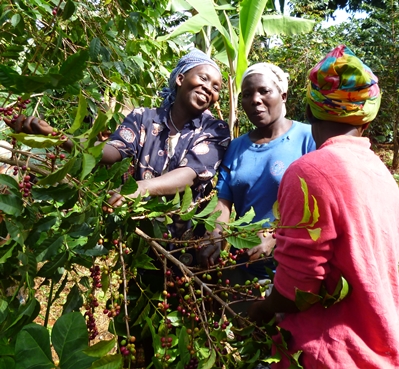
Smallholder coffee farmers

By George Mangula

To mark International Coffee Day this year, the International Coffee Organization (ICO) to which Uganda is a member is celebrating the role of women across the value chain, and calling on both public and private sectors to empower women to achieve gender equality and increase productivity, supply and sustainable consumption.

In its new report – Gender equality in the coffee sector – published on October 1 2018, the ICO confirms with hard data that women make a crucial contribution to the global coffee sector. Depending on the region, around 25 percent of farms are operated by female growers and up to 70 percentof on-farm labour is provided by women. However, there is a gender productivity gap.

According to the ICO’s Executive Director, Mr José Sette, “Women are often held back by limited access to quality land, leadership opportunities, quality education, input and output markets, and finance. Our research has shown, however, that closing the gender gap by empowering women and improving their access to resources would not only contribute to gender equality, but also generate a wide range of social and economic benefits, including improved health and nutrition for the household, helping to eradicate poverty and increasing prosperity”.

Fostering gender equality is recognized as a crucial element of rural development and sustainable agricultural supply chains, and can contribute to building female farmers’ resilience to the challenges of volatile coffee prices and climate change. With a predicted increase in consumption of another 40 to 50 million 60kg bags by 2030, closing the gender gap could also unlock an increase in coffee production by an additional 4 to 6.5 million bags – the equivalent of an extra 30 billion cups of coffee per year.

He adds: “Due to its economic importance in many tropical low income countries, the coffee sector can make an important contribution to achieving the United Nations Sustainable Development Goals. At the ICO we are calling on both the public and private sectors to work together to empower women in the coffee sector and to implement more gender-sensitive approaches to help close the gender gap.”

“As a global community we simply cannot afford to deny women equal opportunities if we are to meet future demand for coffee. We want coffee to have a strong future. For this reason fostering gender equality is not only the right thing to do, but also the smart thing to do,” he said.

Along with encouraging all parties to celebrate the role and empowerment of women in coffee on International Coffee Day, the ICO will be holding a webinar exploring gender equity in the coffee sector, in conjunction with Global Coffee Platform, the International Women’s Coffee Alliance and the Partnership for Gender Equity.

To formally launch its Gender equality in the coffee sector report the ICO will also be partnering with the Brazilian Embassy in London in a panel discussion and reception Celebrating and Supporting Women in Coffee with Brazil.

Stories Continues after ad

WHO calls for increased investment to reach the goal of a toilet for all

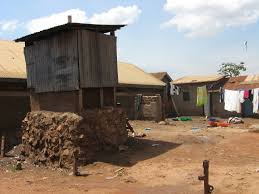
Pit latrine in a Kampala slum

The world will not reach the goal of universal sanitation coverage, where every person in the world has access to toilets that safely contain excreta by 2030 unless countries make comprehensive policy shifts and invest more funds, the World Health Organisation (WHO) on Monday said in a press release as it launched in Geneva the first global guidelines on sanitation and health.

WHO says its new guidelines can help countries to significantly reduce the 829 000 annual diarrhoeal deaths due to unsafe water, sanitation and hygiene. For every US $1 invested in sanitation, WHO estimates a nearly six-fold return as measured by lower health costs, increased productivity and fewer premature deaths.
Worldwide, 2.3 billion people lack basic sanitation (with almost half forced to defecate in the open). They are among the 4.5 billion are without access to safely managed sanitation services – in other words a toilet connected to a sewer or pit or septic tank that treats human waste.

“Without proper access, millions of people the world over are deprived of the dignity, safety and convenience of a decent toilet,” said WHO’s Dr Soumya Swaminathan, Deputy Director-General for Programmes.
“Sanitation is a fundamental foundation of human health and development and underpins the core mission of WHO and ministries of health worldwide. WHO’s Sanitation and Health Guidelines are essential to securing health and wellbeing for everyone, everywhere,” he said.
WHO developed the new guidelines on sanitation and health because current sanitation programmes are not achieving anticipated health gains and there is a lack of authoritative health-based guidance on sanitation.

“Billions of people live without access to even the most basic sanitation services,” said another WHO official Dr Maria Neira, Director, Department of Public Health, Environmental and Social Determinants of Health. “The transmission of a host of diseases, including cholera, diarrhoea, dysentery, hepatitis A, typhoid and polio, is linked to dirty water and inadequately treated sewage. Poor sanitation is also a major factor in transmission of neglected tropical diseases such as intestinal worms, schistosomiasis and trachoma, as well as contributing to malnutrition,” she said
The new guidelines set out four principal recommendations:
Sanitation interventions should ensure entire communities have access to toilets that safely contain excreta.

The full sanitation system should be undergo local health risk assessments to protect individuals and communities from exposure to excreta – whether this be from unsafe toilets, leaking storage or inadequate treatment.

Sanitation should be integrated into regular local government-led planning and service provision to avert the higher costs associated with retrofitting sanitation and to ensure sustainability.
The health sector should invest more and play a coordinating role in sanitation planning to protect public health.

Some countries have recently taken significant actions:
India has elevated the challenge of ending open defecation to the highest level. Under the Prime Minister’s leadership, the Swachh Bharat Mission (Clean India Programme) is coordinating action across many sectors to ensure basic sanitation rapidly reaches and improves the lives of millions.

Senegal is a leader in Africa that recognizes the role of pit latrines and septic tanks in ensuring services for all. The government is providing innovative solutions with the private sector to ensure pits and septic tanks are emptied and contents are treated to ensure affordable services and clean communities.

Implementing the WHO Guidelines on Health and Sanitation will be key to meeting the SDGs. In 90 countries, progress towards basic sanitation is too slow, meaning they will not reach universal coverage by 2030, officials say.

Sustainable Development Goal 6 is to ensure availability and sustainable management of water and sanitation for all. WHO, together with UNICEF, monitors progress on the following targets?
By 2030, achieve universal and equitable access to safe water for all.
By 2030, achieve access to adequate and equitable sanitation and hygiene for all and end open defecation, paying special attention to the needs of women and girls and those in vulnerable situations.
In order to meet these targets, the World Bank estimates investments in infrastructure need to triple to US $114 billion per year – a figure which does not include operating and maintenance costs.
Safe water, sanitation and hygiene are also essential to SDG 3 “Ensuring healthy lives and promote wellbeing for all at all ages”. Under SDG target 3.3, countries are working to end the epidemics of major diseases, including water-borne diseases.

Under SDG 3.9, countries are working to substantially reduce the number of deaths and illnesses from hazardous chemicals and air, water and soil pollution and contamination by 2030. Additionally, safe water, sanitation and hygiene are needed to reduce maternal mortality and to end preventable deaths of newborns and children as called for in SDG targets 3.1 and 3.2.

Stories Continues after ad

Building capacity and professional collaborations for Uganda tour operators

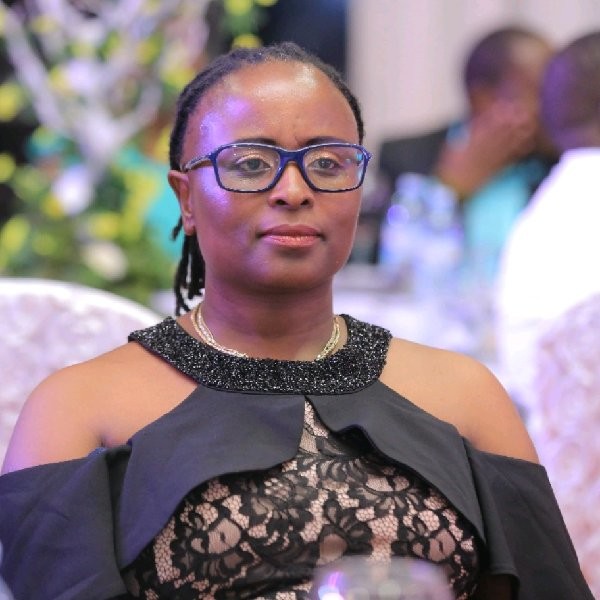
Babra A. Vanhelleputte

By Babra A. Vanhelleputte
I have served as the Board Chair for the Association of Uganda Tour Operators (AUTO) for about four years now. During this time, I have seen the association grow exponentially, not only its membership numbers but its contribution to Uganda’s tourism industry. AUTO is Uganda’s leading tourism trade association representing the interests of the country’s most trusted tour companies.

With over 23 years since its inception in 1995, AUTO today stands at the helm of the tourism private sector providing an avenue through which tour operators can voice their concerns, while concurrently supporting government in tourism development. Key among the things we strive to do as an association, has been the establishment of support systems, a fine and clear structure, the launch of our strategic plan, and having a secretariat comprised of dedicated staff members. These four factors have, and will, continue to guide the association’s path forward.

In addition, our corporate governance practices, the development of a board charter, consistently organizing annual general meetings, and clear Building Capacity and Professional Collaborations: Association of Uganda Tour Operators Photo credit: Uganda Tourism Board accountability have continued to present AUTO as the fastest developing association in Uganda. In general, tourism in Uganda has also continued to grow with the increase in tourist arrivals, attraction of more investors, engaging a more vibrant private sector, and increased tourism revenue.
But, this has also presented several demands such as the need to improve on the quality of service delivery in the sector. Therefore, AUTO has prioritized supporting members through capacity-building trainings, and programs. We have conducted trainings on itinerary planning and costing, winning techniques for travel expos, digital marketing, first aid, corporate communication, and much more. These programs complement on the job, and classroom learning for the benefit of the industry.

AUTO has also continued to offer its members the opportunity of collaborating on joint promotions, which normally come with discounted rates, and benefit the entire sector with Destination Uganda being promoted in single foil. Yet, our initiative to create an enabling environment for our members to carry out business has been the closest to tangible. This has involved signing Memorandums of Understanding (MoUs) with different agencies like the Uganda Wildlife Authority and Uganda Tourism Board, through which AUTO members have positively and directly seen an impact.

For example, only AUTO members have the opportunity of purchasing discounted gorilla permits, and they are given preferential treatment when selecting participants for trade shows. We have also signed an MoU with World Travel Market Africa to get better exhibition rates for our members. Lobbying for incentives and tax exemptions has been an ongoing agenda item, but the direct engagements with banks, insurance companies, credit bureaus, and fuel companies have resulted in better rates for the members eventuating in a relatively better business environment.

Together, with the Presidential Investors’ Round Table (PIRT), AUTO managed to lobby for a reduction in the tourist visa fee from US$ 100 to the current US$ 50. In the same accord, we were able to push the government to reconsider refurbishing the tourism training institutes, which the ministry of tourism is currently enhancing as a key priority area. We have lobbied for the creation of a proper statistics collection unit at the ministry of tourism to capture accurate tourist statistics, so that we can measure our growth, and identify trends. Through our negotiations, we continue to advocate for a gender-balanced sector with commitment to equal opportunities to employees of all sexes. This gender-balanced model is in line with the Millennium Development Goals (MDGs) set by the UN member states. We are currently in the advanced stages of creating a members’ bonding scheme, which will provide basic insurance coverage for the members and resultantly improve bargaining power when engaging with international buyers, and travel agents.

Knowing that our members’ businesses anchor on a well-conserved environment, we continue to work closely with the Uganda Wildlife Authority in advocating for conservation through different events, and through our communications channels.

Conclusively, there are exogenous challenges that still face the tourism sector, like negative travel advisories, seasonal political disruption, as well as sector-internal challenges like the unregulated tourism industry, inadequate marketing, poaching, human-wildlife conflicts, and negative media publicity, among others. Yet, generally, the tourism sector in Uganda continues to exhibit the potential to make even greater strides as an even greater foreign exchange earner, and a larger provider of employment.
Babra A. Vanhelleputte, is Board Chair, Association of Uganda Tour Operators (AUTO), Founder, Asyanut Safaris and Incentives

Stories Continues after ad

Five Keys to minimizing the burn rate for your startup

Martin Zwilling

Cash flow is a basic survival metric for every startup. Investors check your burn rate to assess your efficiency, and project your remaining runway before you run out of money and into a brick wall. Don’t wait until you are almost out of cash before managing every dollar spent, or looking for the next refueling from investors. Desperate entrepreneurs lose their leverage and die young.

It doesn’t take a financial genius to recognize that you need to keep your burn rate low. Yet it always amazes me that I can find two different startups, seemingly working on the same problem, with one having a burn rate several times higher than the other. Of course, their answer is that the second intends to get to market faster, but every engine has limits regardless the fuel applied.
If your runway is less than a year, it’s time to either begin looking for a new cash infusion or defining and implementing a Plan B to assure survival. Your goal is that magical breakeven point and hockey-stick profit-growth curve. Raising money from professional investors, even friends and family, takes time. Count on six months from beginning the funding process until a new check is cashed.
As a mentor to many entrepreneurs and startups, here are my best recommendations for keeping the burn rate low, planning ahead and maintaining credibility with investors:
Manage cash flow personally every day. A big influx of orders may feel like success, but can kill your business if you don’t have the cash to produce, deliver and wait for payment. The best entrepreneurs manage cash flow ruthlessly and never delegate decisions about spending money. Cash flow out equates to burn rate, and the runway depends on your reserves.
Buffer your projected resource requirements. You will make mistakes. Things will cost more than you expect. Always add 20 percent to your best estimate of funding requirements when approaching investors. They understand startup realities. Better to ask for more early. Going back to investors for more money ahead of the plan is high in terms of credibility and leverage.
Use future cash for payments where possible. Deferred payments start with stretching the payables period but, more importantly, include giving employee equity in lieu of a higher salaries and negotiating vendor deferred payments out of future revenues. Think of these alternatives as paying interest on a loan, and manage them wisely.

Be a miser with contract services and facilities. One of the main reasons that former corporate executives often fail as startup CEOs is that they expect a big office and an entourage of expensive professionals to do the real work. Cash flow can be drastically reduced by working out of your garage. Tackling most of the support tasks yourself.

Use social media for early marketing. Hire a professional marketing and public relations agency once you have a good revenue stream but you don’t need them to start a free blog, establish Facebook and Twitter accounts with initial content and complete the basics of search engine optimization. Social media is not rocket science.
The timing of cash flow is everything. Waiting until you have something to sell before bringing on a sales and operations staff. Getting a sales contract before manufacturing inventory. Match your office, facilities and computer equipment to the size of the staff you have today, and intend to have in the next six months.

As a rule of thumb, your monthly burn rate should be less than 10 percent of your last funding raise or starting cash in the bank. For example, a software development startup raising $250,000 from angel investors better be able to operate on $25,000 per month. This could equate to two technical founders (with a minimal salary), funding two developers for a year.

In this case, the primary cash outflow would be for product development and operating expenses, with potentially enough runway to build the initial product, get a patent, attract some early adopters, and build the initial revenue stream. That should equate to an adequate valuation for a $2 million follow-on Series-Around, without giving away all the equity.

Overall, managing cash flow and burn rate is more critical to your business success than having the right idea and the right product. It’s why most investors proclaim that they invest in people, more than the idea. If you adequately manage your burn rate, your startup is much less vulnerable to flaming out before you get to that elusive break-even point.
The writer is a veteran startup mentor, executive, blogger, author, tech professional, and Angel investor. Published on Forbes, Entrepreneur, Inc, Huffington Post, and others.

Stories Continues after ad

42 doctors trained under the EADB METAF Programme aimed at reducing the burden of cancer

Prof. Walter Mwanda (centre), Oncology & Gynecology Lecturer at the University of Nairobi & also the Course Convener for Oncology in Kenya, with, Resident Obstetrician & Gynecologist- University of Nairobi, Dr. Grace Kanyi (left), British- Royal College of Physicians- Medical Oncology Consultant, Dr. Ruth Board.

The East African Development Bank in partnership with the British Council and the Royal College of Physicians (London), has completed a week long Oncology Training under the EADB Medical Training and Fellowship Programme for 42 doctors from Kenya at Ole Sereni Hotel.

The current cascade is geared towards boosting the medical fraternity capacity in fighting noncommunicable diseases in particular cancer and neurological disorders in East Africa.
The 42 doctors from Bomet, Homabay, Isiolo, Kitui, Mandera, Marsabit, Kwale, Meru, Murang’a, Nyamira, Trans-Nzoia, Turkana, Vihiga, Kirinyaga, Nakuru, Wajir, Tana River, Nairobi and Kakamega counties representing a total of 19 counties were trained on acute cancer presentation triage and management of cancer symptoms under the tutelage of Prof. Walter Mwanda, Course Convener for Oncology for Kenya, Dr. Ruth Board from the Royal College of Physicians & Trainer Doctors.

The doctors join their predecessors making a total of 394 doctors across the four East Africa countries who have been trained since the inception of the program in 2016. EADB METAF program intends to train 600 East African physicians by 2020.

On a letter read during the closing and certification ceremony of the Oncology Training, Ms. Vivienne Yeda, EADB’s Director General wrote that, “The burden of disease and particularly the prevalence of non-communicable diseases (NCDs) is a growing concern in the region. NCDs such as cardiovascular diseases, cancers, diabetes, and chronic respiratory diseases, are now the leading cause of death in most regions of the world. Of the most pressing NCD concerns, the burden of cancer has been increasing in Africa.”

“The partnership with the British Council and the Royal College of Physicians brings 500 years of medical experience, global reach and programme quality and expertise that is comparable to few. For Kenya this cohort brings to life the core aim of this programme. You as the doctors working in the counties were the primary focus of the programme. We believe that you will interact and challenge the content and approach of the training, giving feedback based on your contextual realities, “read the letter.

The training comes at a time when about 50 Kenyans die daily from various forms of cancers and of these, 80-90 per cent arrive in hospital too late. This trend is common across East Africa and is associated with lack of treatment facilities and expertise for treatment, prevention and early detection. Kenya has a population of about 50 million people.
The ratio of doctor to population is at 1:17000 with only 17 cancer specialists and 2 palliative care specialists covering the entire population.

“We are pleased that the partnership with EADB and the Royal College of Physicians brings global expertise into the East African Region and will lead to a rich exchange of skills, expertise and experience. The programme will lead to better health for the people of East Africa,” said George Kogolla, Director Programmes and Partnerships at British Council.

Dr. Ruth Board from the Royal College of Physicians added that, “We are proud that we have this opportunity to use our expertise to support our colleagues in the East African region. This programme is an excellent example of the Royal College of Physician’s aim to improve care for patients and to develop physicians throughout their career by increasing access to high quality postgraduate training.”

Stories Continues after ad

Ease the process of acquiring work permits- Museveni tells UIA

Museveni touring Liao Shen Industrial Park

President Museveni has implored Uganda Investment Authority to ease the process of acquiring work permits by investors, saying that will improve the investment climate in the country.
Museveni remarked at the commissioning of Good Will Ceramics Company Limited, in Kapeeka.

“It is not right to make working permits so expensive, UIA must automatically resolve these matters for all factories instead of making investors beg and lobby.
Situated in the Liao Shen Industrial Park, the company was established in May last year with an investment capital of US $30million. It commenced production in April this year with an output capacity of 40,000 square meters of tiles per day and about 200 different tile designs.

The factory manufactures and supplies well coated tiles made from over 90 per cent locally sourced raw materials from all corners of Uganda to serve both local and neighboring countries’ markets. The enterprise has been able to create about 2,000 jobs for both skilled and non-skilled employees.
Museveni appreciated the Chinese people for the big contribution made in Ugandan industries adding that with the new ceramic industry, Uganda has been able to save US $35 million that would have been lost through using imported tiles.

Trade, Industry and Cooperatives Minister, Amelia Kyambadde lauded President Museveni for equipping the rural and urban youth with capital and equipment that has helped them get jobs. She commended Goodwill Ceramics Company for the good quality products that it is producing affordable price.
“I encourage Ugandans to buy their products. I have already bought these products. Ugandans must change their mindsets of thinking that local products are not good. We used to talk about commodity trade, now we talk about value addition” she said.
The Managing Director of Goodwill, Frank Yang applauded Museveni and the government of Uganda for clearly demonstrating support to investors by allowing them to grow development roots in the country.

He hailed Museveni for the peace and security that he has created which has been conducive for the ceramic company to be established. He also hailed the people of Kapeeka for their loyalty, professionalism and support and appreciated Gen. Salem Saleh, for having offered tremendous support during the early days of the company.

He assured Museveni that production of tiles from Uganda will contribute to industrialization, increased revenue and creation of jobs in Uganda.

Stories Continues after ad

Marriott announces rapid expansion plans across Africa

NAIROBI, Kenya, October 1, 2018/ — From the Africa Hotel Investment Forum (AHIF) in Nairobi, Kenya, Marriott International today announced rapid expansion plans across Africa. Strong demand for select-service brands and conversion opportunities are driving the momentum of growth for the company, amplified by five new hotel signings. The new signings will further consolidate Marriott International’s presence in Ghana, Kenya, Morocco and South Africa and mark the company’s entry into Mozambique. The signings put Marriott International on track to increase its portfolio by 50 percent with over 200 hotels and 38,000 rooms by 2023 estimated to generate 12,000 new job opportunities.

Marriott International’s planned growth reinforces its commitment to Africa and underscores the substantial emphasis that countries across Africa are placing on the travel and tourism sector. The company estimates that the five new projects signed will drive investment of over $250 million by the property owners and will generate substantial economic activity.

“Marriott International’s acquisition of Protea Hotels followed by the acquisition of Starwood Hotels & Resorts Worldwide has given an impetus to our organic growth on the continent. Today we are seeing strong owner interest in our brands, backed by our combined loyalty program, the collective strength of our global platform and our highly-experienced, local teams,” said Alex Kyriakidis, President and Managing Director, Middle East and Africa, Marriott International. “African economies have sustained unprecedented rates of growth, which have mainly been driven by a strong domestic demand, improved macroeconomic management and increased political stability. The continent is still under capacity as far as branded hotel supply is concerned, presenting us with a fantastic opportunity to grow our brands and enhance our footprint,” he added.

Today, Marriott International is present in 21 countries on the African continent: Algeria, Djibouti, Egypt, Ethiopia, Gabon, Ghana, Guinea, Kenya, Malawi, Mali, Mauritius, Morocco, Namibia, Nigeria, Rwanda, Seychelles, South Africa, Tanzania, Tunisia, Uganda and Zambia. The company is set to expand into new markets including Benin, Botswana, Ivory Coast, Mauritania, Mozambique and Senegal.

Conversion strategy spurs growth

Marriott International continues to see increased interest from owners looking to maximize the value of their assets quickly, with many conversion opportunities across Africa. “The increasing demand for conversion deals from new and existing partners is a strong reflection of Marriott International’s powerful network, loyal customer base and commitment to deliver value for owners,” said Kyriakidis. “We’ve developed a conversion-friendly strategy, which allows us to deliver value to our partners through a flexible, cost-efficient process that yields almost immediate results. That strategy gives our partners access to world-class reservation systems and our loyalty program.”

Recent conversions to the company’s brands include Four Points by Sheraton Nairobi, Hurlingham, Four Points by Sheraton Arusha, The Arusha Hotel, Tanzania and the iconic Mena House, Cairo which joined the Marriott Hotels and Resorts global brand portfolio earlier this year.

Amongst new conversion deals, Marriott International has signed the Marriott Marrakech Hotel in Morocco. With over 360 rooms, the hotel is slated to be rebranded in 2020.

Select-Service brands in high demand

Marriott International’s select-service brands, including Four Points by Sheraton, Protea Hotels by Marriott and AC Hotels by Marriott, are experiencing unprecedented demand with vigorous expansion in both mature and emerging markets.

Marriott International has signed two new hotels under the Protea Hotels by Marriott brand including Protea Hotel by Marriott Accra Kotoka Airport, Ghana and Protea Hotel by Marriott Nairobi, Kenya. Protea Hotel by Marriott Accra Kotoka Airport is planned to be a 200-room hotel strategically located in the prestigious airport residential area of Accra offering a restaurant, a lobby bar and lounge, small conference and meeting facilities, an air crew lounge, a gym and a roof-top pool bar and lounge with uninterrupted views of the city. Protea Hotel by Marriott Nairobi will be located approximately 5 km from Jomo Kenyatta International Airport on Mombasa Road. Expected to open in 2021, the 250-room hotel will include a restaurant, a bar, a fitness center, a pool and 600 square meters of meeting space. Earlier this year, Marriott International signed Protea Hotel by Marriott Pretoria Loftus Park, South Africa, which is slated to open later this year.

The company also signed Four Points by Sheraton Nampula, Mozambique, which will be its first hotel in the country. The hotel, expected to open in 2023, is part of a mixed-use development comprised of a shopping center, apartments, residential homes, a hospital, offices and the hotel. The 185-room property includes 100 hotel rooms and 85 extended stay units, food and beverage facilities, conferencing facilities, a fitness center and a pool.

Later this year, Marriott International will debut the AC by Marriott brand into Africa with the opening of the 188-room AC by Marriott Cape Town, Waterfront, conveniently located just minutes away from the buzzing Victoria & Alfred Waterfront and just a 25-minute drive from Cape Town International Airport. The company has also signed its second AC by Marriott hotel in Africa, AC by Marriott Umhlanga Ridge, Kwazulu Natal, Durban. The 205-room hotel will be a part of a mixed-use development comprised of offices and high-end residential apartments and boasts dramatic views of the Indian Ocean. Slated to open in 2023, the hotel is within easy access from major highways and in close proximity to the King Shaka International Airport.

The company expects to introduce some of its other well-known select-service brands like Aloft Hotels, Element, Courtyard by Marriott and Residence Inn by Marriott with hotels already under development. It is also looking for opportunities to bring Fairfield by Marriott to the continent.

Speaking on the increased interest in mixed-use development projects, Kyriakidis said, “As cities evolve and grow into flourishing urban centers, we will continue to see a lot of activity in this space. An international hotel brand can bring cachet to a project that positions it significantly above its peers. Our portfolio of diverse brands lends itself to grow in all markets providing developers the flexibility and choice to identify the right brand for the right location. We believe this also provides an incredible opportunity to develop branded residences with our luxury brands such as The Ritz-Carlton, St. Regis and W Hotels and we are actively pursuing this. Today our brands account for nearly 60 percent of the global hospitality-branded residences market.”

“Africa is a very compelling story for us. With our history on the continent, our footprint and strong pipeline, a diverse portfolio of brands and a robust management infrastructure, we believe that we enjoy the trust and the confidence of Africa’s hotel development community,” he added.

Marriott International is enjoying a strong year of new hotel openings in Africa, which includes its first hotel in Mali – Sheraton Bamako – as well as the first Marriott Hotel in Accra. The company also debuted the Protea Hotel by Marriott brand in North Africa with the opening of Protea Hotel by Marriott Constantine.

Stories Continues after ad

MPs ready to quiz BoU’s Mutebile, Kasekende on sale of defunct banks

By Our Reporter

Members of Parliament on Commissions Statutory Authorities and State Enterprises (Cosase) committee headed by Bugweri County legislator, Abdul Katuntu, expect this this month to open an inquiry into the suspected mismanagement of closed commercial banks by the central bank-Bank of Uganda (BoU), a source has said.

The Mps want BOU Governor Prof. Emmanuel Tumusiime-Mutebile and his deputy Dr. Luise Kasekende, among others to testify under oath with regard to the payment of billions of shillings to external lawyers.

For the expenditures on Crane Bank Ltd, only Shs4 billion was disclosed as the money BoU used in hiring of two external law firms. MMAKs (Shs3.9 billion); Cohen and Collins Solicitors and Notaries (Shs17.4 million).BoU sold Crane Bank to Dfcu Bank at only Shs200 billion paid in installments.

However, there is no expenditure revealed on MMAKS Advocates and AF Mpanga Advocates who were hired by BoU in Crane Bank saga before court kicked them out over conflict of interest. It is also not clear how much BoU officials spent on external lawyers who handled Greenland Bank and others.

MPs want Mutebile and his juniors respond to queries under oath because the Auditor General John Muwanga in his August 27 report to Parliament said that some key documents which he could have used in the audit of closed banks were not availed to him by BoU officials.

For instance Muwanga in the report in regard to Shs200 billion liabilities transferred to Dfcu says: “I could not establish how the consideration of Shs200 billion was derived from the bad book of Shs570.38 billion. I was also not provided with the schedule of loans and the corresponding collateral transferred to Dfcu, therefore I was not able to establish the values and categories of loans transferred.”

Mutebile and others will be tasked to provide details on the BoU expenditures on external law firms hired during the liquidation of Teefe Bank (1993), International Credit Bank Ltd (1998), Greenland Bank (1999), The Co-operative Bank (1999), National Bank of Commerce (2012), Global Trust Bank (2014) and the sale of Crane Bank Ltd (CBL) to dfcu (2016).
For instance, under Global Trust Bank, Cosase will ask Mutebile to explain the payment of Shs409.3 million in legal fees.

Before Cosase halted investigations in September last year, the committee had found from previous AG reports that BoU officials paid Shs1.4 billion in legal fees to private law firms, despite having a fully-fledged legal department. The MPs have since queried the expenditure and demanded details.

Stories Continues after ad

Ruparelia Group among best private sector exhibitors at Tax Appreciation Week 2018

The Ruparelia was among the best private sector exhibitors at the recently concluded Tax Appreciation Week 2018 organised by the Uganda Revenue Authority (URA).

The Group that runs businesses in education, real estate, horticulture, hospitality and among others was awarded for being First Runner-up behind Roko Construction Limited but beat Tembo Steels that was the third in the category that had a considerable number of private firms exhibit their products and services.

Some of the companies under Ruparelia Group include Victoria University, Resort Hotel Munyonyo, Meera Investments, Rosebud Limited and Kabira Country Club, among others.

Ruparelia Group received the award during the Tax Payers Appreciation Dinner at the Kololo Independence Grounds where the top tax payers in various categories were awarded for their tax compliance.

However, the Excel Award, the biggest award of the Taxpayers Appreciation Awards Gala was bagged by Pepsi Uganda. Pepsi Uganda has been at the pinnacle of tax compliance for the FY 2017/18.

The Commissioner General’s Strategic Partner Professional Body Award has been shared by Uganda Clearing Industry and Forwarding Association (UCIFA) (UCIFA) and Uganda Freight Forwarders Association (UFFA). The two entities have been instrumental in the improvement of the clearing and forwarding industry.

The Commissioner General’s Strategic Award in the Ministries, Departments and Agencies category went to judiciary.

The Regional Non Individual Vantage Award Winners are: Warchild Holland from Northern Uganda, Mbarara Cosmetics Stores from Western Uganda, World Education Inc (WEI) from Eastern Uganda and Azam Trading Ltd from Central Uganda. War Child Holland employs 37 people, have reached over 5000 youth. They contribute to the national coffers mainly through pay as you earn (PAYE).

The Regional Vantage Individual Award Winners are: Willy Oloya from Northern Uganda, Kushemererwa A from Western Uganda, Martin Tibalira from Eastern Uganda and Virani Amin from the Central Region.

Stories Continues after ad
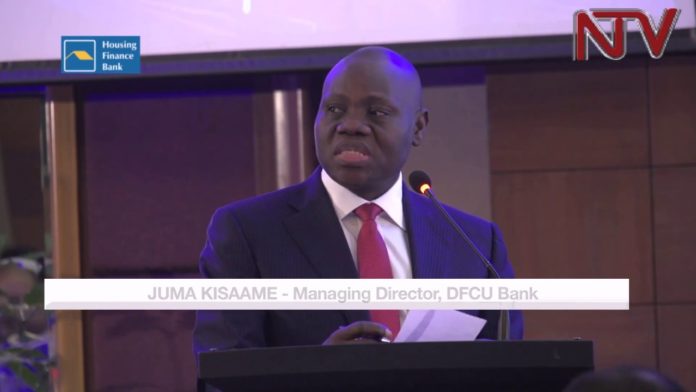
Shareholders doubt Shs1.8b construction cost for Dfcu Financial Centre in Namanve

Dfcu CEO, Juma Kisaame, photo credit, NTV-Uganda.

The Managing Director Dfcu Juma Kisaame is under pressure to explain to the banker’s shareholders how Shs1.8 billion was spent on the construction of the Dfcu Financial Centre located on the plot of 50×100 at Namanve Industrial and Business Park, an insider has told Eagle Online.

According to the source, shareholders think the project cost Shs700 million. Roko won the contract to build the building is said to have subcontracted Kisame’s construction company to do some of the work.

The shareholders are also not happy that office space remains vacant, meaning the bank is not gaining some rental fees from it. The insider says Kisaame has been tasked to identify a tenant that can occupy it or even buy the building, having spent 3-4 years without a tenant.

The insider also says that Dfcu is doing badly on forex as most of top managers who resigned went away with customers who exchange big volumes of currency. Dfcu’s competitors like KCB, NC, Tropical Bank are said to have benefited from this shift. The banks are said to have recruited former Dfcu workers based on the number clients they were personally relating with.

The insider says Dfcu’s liquidity in Bank of Uganda (BoU) has lowered, forcing it to borrow from other commercial banks.

He says Dfcu plans to close more branches it acquired from Crane Bank to cut expenditure. DFCU controversially bought Crane Bank at Shs200 billion in January 2017.

The insider continues that BoU is worried that Dfcu has only advertised not fully advertised its services to customers as awareness stands at only 65 per cent.

He says Dfcu has failed to increase all salaries of workers as promised in the recent management meeting to prevent them from going to other banks. The insider said currently some staff in Dfcu do work of three people.

The top workers who recently resigned from the bank are now hired by management as consultants in fear of seeing them join competitors. Some workers who resigned have not had their savings paid by Dfcu.

Eagle Online has already reported on mass exodus of workers from DFCU, with at least over 70 workers in the last two months leaving the bank under unclear circumstances. They further say even the human resource department that used to announce entry and exists at the bank have this time refused to announce exist because it is alarming.

This development also comes at the time when Deepak Malik who has been a director on the board of the bank resigned and left the board.

Malik’s resignation as a non-Executive Director means the Dfcu board is now left with five other non-executive directors led by All Elly Karuhanga as Chairman. Others directors are; Albert Jonkergouw, Winifred Tarinyeba- Kiryabwire, Frederick Kironde Lule and Michael Alan Turner.

Analysts say the Malik’s decision to resign confirms reports that Arise B.V. intends to leave especially that Britain’s Commonwealth Development Corporation (CDC) Group intends to exit, following Dfcu Bank’s controversial acquisition of Crane Bank Limited at only Shs200 billion yet Crane Bank had assets worth over Shs1 trillion.

Reports indicate that CDC is leaving for various reasons which include poor economy but some sources say CDC wants to dodge paying taxes on its dividends.
Financial analysts say with the revelation by Auditor General that Dfcu acquired Crane Bank Limited and yet it was the valuer and at the same time a buyer could land top Bank of Uganda executives in trouble as big shareholders of Dfcu are spending sleepless nights. The situation is made worse as the case is also in court.

DFCU Shareholding percentages
Arise BV 58.71 per cent
CDC Group of the United Kingdom 9.97 per cent
National Social Security Fund (Uganda) 7.69 per cent
Kimberlite Frontier Africa Naster Fund 6.15 per cent
2 undisclosed Institutional Investors 3.22 per cent
SSB-Conrad N. Hilton Foundation 0.98 per cent
Vanderbilt University 0.87 per cent
Blakeney Management 0.63 per cent
Retail investors 11.19 per cent
BoU staff retirement benefit scheme is 0.59 per cent

Stories Continues after ad