Stanbic Bank
Stanbic Bank
20 C
Kampala
Stanbic Bank
Stanbic Bank
Home Blog Page 1477

African Agric. ministers and private sector leaders push for more investment

Uganda's Minister of Agriculture, Vincent Ssempijja

Several African agriculture ministers joined public and private sector
representatives calling for more investment in agriculture at a
Leadership4Agriculture event held at the African Green Revolution Forum (AGRF) in Kigali, Rwanda.

Organized by the African Development Bank, the Leadership4Agriculture session facilitated partnerships between policy makers, private investors, institutions and offered participants opportunity to learn more about the Leadership4Agriculture network’s agenda to drive
action-oriented, growth enabling investments.

Several ministers at the event criticized what they said was a culture of talk without action. “Too many of the same declarations are made but are never carried out at the African Union level,” said Côte d’Ivoire Minister of Agriculture, Mamadou Coulibaly.

The African Union’s Comprehensive African Agriculture Development Program in 2003 set a target for African governments to allocate 10 per cent of national budgets to agriculture. According to AGRF, only 13 African nations have reached or surpassed this goal.

Jennifer Blanke, African Development Bank Vice-President for
Agriculture, Social and Human Development, and the Rockefeller
Foundation’s Managing Director for Africa, Mamadou Biteye, earlier set the tone for the session. They charged their organizations to advance the Leadership4Agriculture mission.

“With [Bank] partners the Rockefeller Foundation, now we have funding for a Secretariat for Leadership4Agriculture, which will allow us to track progress,” said Blanke. “Let us all, together, make Africa shine,” she added.

Agriculture ministers from across the continent, including from
Zambia, Nigeria, Uganda, Kenya, Gabon, Mozambique, South Sudan, Togo and Mauritius. Rwanda’s former Minister of Agriculture and Animal Resources, who now serve as President of the Alliance for a Green Revolution in Africa (AGRA), said ministers need to campaign harder for increased budget funding for smallholders.

“(Agriculture) is a government’s most important industry,” AGRA
President Agnes Kalibata told the audience. “Nobody is going to give you money because you are Minister of Agriculture – there are 20 other ministries competing for money. It is (an agriculture minister’s) responsibility to make the case,” she said.

AGRF research indicates farming remains a key source of income for 60 to 65 per cent of the labor force in sub-Saharan Africa and will continue to be a major source of employment for a decade or more.
Leadership4Agriculture session attendees said the mentality that
agriculture is more of a traditional career for those who don’t have
alternative r work options, has to change.

Edward Mabaya, Manager of the African Development Bank’s Agribusiness Development Division, said government leaders and farmers should replace the word “agriculture” with “agribusiness.”

Vice-President Blanke announced that the next Leadership 4Agriculture event will be held during the African Development Bank’s historic Africa Investment Forum, to be held from 7-9 November in South Africa.

Five African Ministers of Agriculture and Finance, the Rockefeller
Foundation and the African Union Commission established
Leadership4Agriculture, or L4Ag. The African Development Bank secured support from the Rockefeller Foundation for the establishment of the platform.

Stories Continues after ad
Mayweather coming out of retirement to fight Pacquiao in rematch

Mayweather vs Pacquiao in 2015.

American professional boxer Floyd Mayweather Jr says he is coming out of retirement once again for a rematch with Filipino boxer Manny Pacquiao later this year.

The pair came face to face at a concert in Tokyo, Japan on Saturday, prompting Mayweather to take to Instagram and declare he is planning yet another return to the ring.
“I’m coming back to fight Manny Pacquiao this year. Another 9 figure pay day on the way”, Mayweather posted.

Various reports indicate that talks are at an advanced stage and contracts will be sent out this week for the fight to take place in December.

Since facing Pacquiao, Mayweather has fought against Andre Berto in 2015 and his August 2017 knockout of Conor McGregor in the UFC star’s boxing debut, winning all of them. The 41-year-old professional boxer said after McGregor that “this was my last fight.”
Pacquiao has fought four times since losing to his great rival; beating Tim Bradley, Jessie Vargas and most recently Lucas Matthysse.

Floyd Mayweather Jr. and Manny Pacquiao first met in 2015 in a fight billed as “The Fight of the Century.”
It took place on May 2, 2015, at the MGM Grand Garden Arena in Las Vegas, Nevada. Mayweather won the contest by unanimous decision, with two judges scoring it 116–112 and the other 118–110.
Mayweather is still unbeaten in his professional boxing career, having won all the 50 fights with 27 knock-outs.

Pacquiao is the first boxer in history to win major world titles in four of the original eight weight classes of boxing: flyweight, featherweight, lightweight, and welterweight.

Stories Continues after ad
Crane Bank saga: BoU top bosses in trouble over Shs478.8b reckless expenditure

A confidential ‘Special Audit Report of Bank of Uganda on defunct banks’ authored by the Auditor General (AG) upon the request of
Parliament of Uganda reveals many details regarding the closure and sale of seven commercial banks but the most interesting detail by far is BoU’s expenditure of Shs478.8 billion of the taxpayers’ money for liquidity support and other intervention costs as it prepared the sale of Crane Bank Limited (CBL), which it eventually sold to rival Dfcu Bank in January 2017 at Shs200 billion.

The AG, John Muwanga in his report alludes to the fact that the BoU senior managers used the money without following certain guidelines, which brings in question whether BoU bosses that handled the transaction did not involve themselves in corruption, specifically using the taxpayers’ money for their own selfish interests.

For instance, MMAKS Advocates who acted as transaction adviser were paid about Shs914.3 million for legal advice during the intervention, resolution of CBL and advice on the sale of CBL assets and assumption of liabilities. Such expenditure by the BoU top managers was reckless and did not consider the interest of the taxpayers. This transaction was followed by another careless payment of about Shs3.07 billion to the same law firm as 5 per cent commission of the monies recovered from CBL shareholders. One wonders why the same law firm was given the two jobs at such a high cost. One cannot rule out the cases of connivance to defraud taxpayers’ money.

Further, KPMG was paid by BoU for three services whose cost was so expensive to the taxpayers, yet sources say other competent firms could have done one of the assignments at relatively cheaper costs compared to what KPMG offered. Specifically BoU paid KPMG for; information Technology Security Testing and Disaster Recovery Gap Assessment, Provision of Information Technology Technical Support and Provision of IT Technical Support. The services appear to be the same
though BoU paid KPMG about Shs428.9 million, Shs190.5 million and Shs302.3 million respectively for each of the services.
“Following the takeover, BOLI engaged KPN4G to provide IT support to BoU team because BoU IT team did not have a competent and experienced resource with requisite expertise regarding CBL’5 core banking system (T24). The confidentiality of the information could mostly be guaranteed by using an independent resource. It was also difficult to rely on the staff of CBL,” the AG quotes BoU managers he interviewed as they spent about Shs190.5 million on KPMG for the provision of
Information Technology Technical Support. But such explanation,
according to sources is contestable.
Sources further told Eagle Online that three individuals who are likely to be held liable are Deputy Governor, Louis Kasekende, former Executive Director in charge of Supervision, Justine Bagyenda and former Deputy Director for Supervision Benedict Sekabira.

They argue there is more behind these figures and that the public should not believe them. Relatedly about Shs302.3 million spend on “Provision of IT Technical Support” support is confusing as that money should have formed part of “Provision of Information Technology Technical Support”. BoU top managers claim the Shs302.3 million was paid to KPMG as work progressed and that was based on the time required by the individuals assigned to the engagement plus direct out of pocket expenses and VAT.

The BoU top managers further spent about Shs720.4 million as facilitation for the “special exercise (CBL)”. According to sources such an item is confusing and cannot be relied on for purposes of transparency and accountability. BoU managers who handled the transaction will have to shade more light on why they spent that money on that “special exercise” that they cannot name.
BoU also paid auditing firm PwC about Shs345.09 million for compilation of an inventory of assets, liabilities and equity of CBL and an extra about Shs936.5 million for carrying out investigation and forensic review of CBL upon which BoU relied on to sell CBL to Dfcu Bank. BoU top managers are expected to tell the public why they relied on PwC advice to sell off CBL, when an avenue for reviving CBL existed, as heighten in the report.

Stories Continues after ad

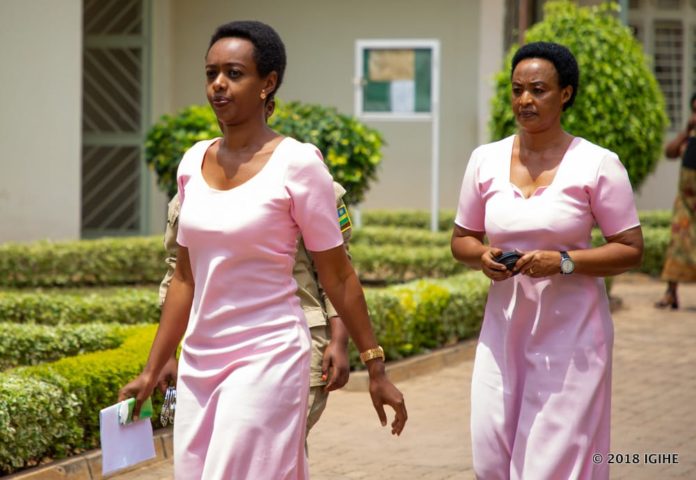
Victoire Ingabire: Rwanda frees 2,000 people including opposition figure

Victoire Ingabire

Rwanda has pardoned more than 2,000 prisoners, including a top opposition figure.
Victoire Ingabire, of the FDU-Inkingi party, has been serving a 15-year jail term for threatening state security and “belittling” the 1994 genocide.

She has been a leading critic of President Paul Kagame and says her trial was politically motivated.
Mr Kagame has won praise for reforming Rwanda’s economy but has also been accused of human rights abuses.

He won re-election for a third time last year with 98.8% of the vote, in an election observers said was a sham.
In parliamentary elections earlier in September though, two opposition candidates from the Democratic Green Party won seats for the first time.

 Paul Kagame – visionary or tyrant?
The release of Ms Ingabire and 2,140 other convicts was announced by the government following a cabinet meeting.

No reason was given for the move, but a statement said that Mr Kagame had exercised mercy under his prerogative as president.
Singer Kizito Mihigo was also freed, having been jailed for 10 years in 2015 for plotting to kill President Kagame.

Ms Ingabire smiled as she left jail, dressed in the colours of her party.
She thanked the president and said she hoped her release marked the opening of “political space” in Rwanda.

Justice Minister Johnston Businge sought to play down the significance of Ms Ingabire’s release.
“There is nothing political about her release – there is nothing political about her imprisonment,” he told Reuters.

Who is Victoire Ingabire?
Ms Ingabire returned from exile in the Netherlands in 2010 to take part in presidential elections.

She was arrested and barred from standing soon after, and has been in jail ever since.
Ms Ingabire, a member of the Hutu ethnic group, had questioned why Rwanda’s official memorial to the 1994 genocide did not include any Hutus.

Most of the 800,000 people killed were ethnic Tutsis but Hutu moderates were also slaughtered by the Hutu extremists.
Mr Kagame’s Tutsi-dominated Rwandan Patriotic Front put an end to the genocide.

Stories Continues after ad

Confusion as Auditor General’s report says Crane Bank is still under receivership

The Former Crane Bank Ntinda branch, which DFCU took over and illegally rebranded in its name, was ordered by the court to vacate and compensate Meera Investments because the property belongs to Meera.

A Special Audit Report of Bank of Uganda (BoU) on Defunct Banks
compiled by the Auditor General (AG) Mr. John Muwanga now says defunct
Crane Bank Limited (CBL) is still under receivership and has not
progressed into the liquidation process, despite of its assets being
transferred to dfcu Bank at Shs200 billion, with a big percentage of
the money still yet to be paid.

The revelation came as Mr. Muwanga asked to look at the financial
reports of Crane Bank for the period it was under Bank of Uganda as
the manager between October 20, 2016 and January 25, 2017.
As BoU as the liquidator was expected to prepare a statement of
affairs for CBL in receivership but this was not done.

“BoU management explained that CBL is still under receivership and has
not yet progressed into liquidation, at the appropriate time,
following completion of the current court cases, a statement of
affairs will be prepared in accordance with the law,” Muwanga said in
the report he signed on August 27, 2018.

Section 99(3) of the FIA 2004 states that notwithstanding anything in
the Companies Act, where any proceeding for the liquidation of a
financial institution is commenced under this Section, the Central
Bank or any other person appointed by the Central Bank shall be the
liquidator of the financial institution.

On the other hand, Section 106(1) of the FIA 2004 requires the
liquidator to keep proper financial ledgers and financial records in a
manner prescribed by the Central Bank in which shall be recorded all
financial transactions relating to the liquidation.

BoU in the report says it injected into CBL a sum of Shs478.8 blillion for
liquidity support and other intervention costs, including questionable
Shs914,272,722 for legal services provided by lawyers of MMAKS
Advocates as transaction adviser.
The firm is said to have offered legal advice during intervention, resolution of CBL and advice on the sale of CBL assets and assumption of liabilities. The firm was also
paid Shs3, 073, 678, 67 4 as commission received from CBL shareholders.

There is also Shs 720,406,401 paid as “facilitation for special exercise (CBL).”

In the event that Central Bank intervenes in the failed bank, Secton
93 of the FIA 2004 guides that all costs of management by the Central
Bank shall be payable by the financial institution and shall be a debt
due from the financial institution to the Central Bank, in this case
CBL.

Sources say some of the costs BoU claims to have incurred are
unrealistic especially the legal fees paid to MMAKS Advocates that are
exorbitant especially that it comes from taxpayers’ money.

The AG says that: “In assessing the above, I was unable to examine CBL
operations during Statutory Management to determine that the funds
injected reflected the liquidity shortfall at the time.”

The AG report is a result of a letter ref A8:70/288101 dated November
28, 2017, the Parliamentary Committee on Commissions, Statutory
Authorities and State Enterprises (COSASE); requested the AG to
undertake a special audit on the closure of commercial banks by BoU.

The committee specifically requested the AG to provide assurance on;
the status of the banks at closure, cost of liquidation, status of
assets and liabilities of the aforementioned banks from closure to
date, non-performing assets, non-recoverable assets and liquidators.
Meanwhile all is not well at dfcu Bank. Eagle Online understands some
staff there are leaving following disagreements over a sharp cut in
their salaries. A source says staff unwilling to have their salaries
cut have been advised to resign.

In what looks like loss of confidence and interest, Britain’s
Commonwealth Development Corporation (CDC), months ago expressed
interest to sell their commercial interests in DFCU Bank, leading to
the suspicion that there could be disagreements amongst major
shareholders in as far as the bank’s business deals is concerned even
though top officials at the bank came out to say all was fine.

Eagle Online previously reported leaked agreement between Bank of Uganda and Dfcu that indicated the external owned bank got Crane Bank with assets valued at Shs1.3 trillion for just Shs200 billion (payment for liabilities).
The Agreement did not state the amounts of money paid by Dfcu as a net purchase price; or the payment terms for monies, or the assets (outside branches) that Dfcu was taking over.

DFCU Shareholding percentages

Arise BV 58.71 per cent
CDC Group of the United Kingdom 9.97 per cent
National Social Security Fund (Uganda) 7.69 per cent
Kimberlite Frontier Africa Naster Fund 6.15 per cent
2 undisclosed Institutional Investors 3.22 per cent
SSB-Conrad N. Hilton Foundation 0.98 per cent
Vanderbilt University 0.87 per cent
Blakeney Management 0.63 per cent
Retail investors 11.19 per cent
BoU staff retirement benefit scheme is 0.59 per cent

Stories Continues after ad

How Djibouti like Zambia is about to lose its port to China

Port Djibouti

Beijing’s cumulative loans to Africa since 2000 amounted to $124-billion by 2016, according to figures compiled by the China-Africa Research Initiative (CARI).

Djibouti is projected to take on public debt worth around 88 per cent of the country’s overall $1.72 billion GDP, with China owning the lion’s share of it.

On March 2018, Djibouti signed a partnership agreement with a Singaporean company that works with China Merchants Port Holdings Co. or CMPort—the same state-owned corporation that gained control of the Hambantota port in Sri Lanka—to build the Doraleh Multipurpose Port.

In recent years, China has emerged as a key investor and a generous, ready and easy lender to African countries.

Beijing’s cumulative loans to Africa since 2000 amounted to $124-billion by 2016, according to figures compiled by the China-Africa Research Initiative (CARI) at Johns Hopkins University School of Advanced International Studies in the United States.

Angola, Ethiopia, Sudan, Kenya and the Democratic Republic of Congo respectively, were the top beneficiaries of these loans. Angola’s oil-related loans worth $21.2 billion since 2000 total roughly a quarter of cumulative Chinese loans to the entire continent.

“Half of those loans were given in the past four years,” Janet Eom, an associate researcher at CARI, told DW. “So Africa’s debt to China is becoming more of a concern moving forward.”

While African Presidents are at least this time round somehow exempted from the indignity of being talked down while clutching their begging bowls at western capitals before a few notes is thrown into their bowls, the readily available Chinese loans are not entirely risk free.

Economists and other international financial institutions are becoming increasingly worried that the East Asian giant under a careful disguised “debt trap” diplomacy is burying many developing and poor countries in massive debt and then forcing the highly indebted countries to hand over some of their key infrastructures’ such as the case of Sri Lanka.

One such African country that is exhibiting all the red flag signals of going Sri Lankan and now Zambian way is Djibouti.

Djibouti lies more than 2,500 miles from Sri Lanka but the East African country faces a predicament similar to what its peer across the sea confronted in 2017, after borrowing more money from China than it could pay back.

In both countries, the money went to infrastructure projects under the aegis of China’s Belt and Road Initiative.

Sri Lanka racked up more than $8 billion worth of debt to Chinese sovereign-backed banks at interest rates as high as 7 per cent reaching a level too high to service. With nearly all its revenue going toward debt repayment, in 2017 after being pushed to the wall, Sri Lanka threw in the towel and handed over the Chinese-built port at Hambantota under a 99-year lease with China having a 70 per cent stake.

Djibouti is projected to take on public debt worth around 88 per cent of the country’s overall $1.72 billion GDP, with China owning the lion’s share of it, according to a report published in March by the Center for Global Development.

At the end of 2016 China owned 82 per cent of Djibouti’s external debt.

On March 2018, Djibouti signed a partnership agreement with a Singaporean company that works with China Merchants Port Holdings Co. or CMPort—the same state-owned corporation that gained control of the Hambantota port in Sri Lanka—to build the Doraleh Multipurpose Port.

That project was completed in May 2017.

The port is significant not only because it sits next to China’s only overseas military base but also because it is the main access point for American, French, Italian and Japanese bases in Djibouti and is used — because of its strategic location — by parts of the U.S. military that operate in Africa, the Middle East and beyond.

One concern is that the Djibouti government, facing mounting debt and increasing dependence on extracting rents, would be pressured to hand over control of Camp Lemonnier to China.

In a letter to National Security Advisor John Bolton in May, Sen. James Inhofe (R-Okla.) and Sen. Martin Heinrich (D-N.M.), two members of the Senate Armed Service Committee, wrote that Djibouti’s President Guelleh seems willing to “sell his country to the highest bidder,” undermining U.S. military interests.

“Djibouti’s now identified as one of those countries that are at high risk of debt distress. So, that should be sending off all sorts of alarm bells for Djiboutians as well as for the countries that really rely on Djibouti, such as the United States,” said Joshua Meservey, a senior policy analyst at the Heritage Foundation.

And that’s not all, China is not done yet with Djibouti, Beijing has been earmarked the country as one of 68 countries set to be involved in its ambitious One Belt and One Road Initiative (OBOR).

Problem is eight of the 68 countries involved in the Belt and Road Initiative currently face unsustainable debt levels, according the Center for Global Development’s report.

The eight nations are Djibouti, Kyrgyzstan, Laos, the Maldives, Mongolia, Montenegro, Pakistan, and Tajikistan.

As past experiences have shown the eight nations will certainly be enticed to chew more than they can swallow and by the end of it end up being even poorer than they are now.

As the cradle of mankind continues to sink deeper into debt condemning future generations to economic slavery, the late Whitney Houston feat Deborah Cox classic ‘Same Script, Different Cast’ has never rang truer.

Stories Continues after ad

Staple crops processing zones will transform African agriculture- ADB

ADB President, Dr. Akinwumi Adesina

Africa pays more than a crippling $35 billion annually to import food, a figure that could rise to $110 billion by 2025, if current trade trends continue. To reverse this, the

African Development Bank (ADB) is set to create staple crops processing zones (SCPZs) to help African countries become net exporters of processed foods and commodities.

The Bank is already making investments to develop the SCPZs in a number of African countries. Togo will receive US$S29.5 million through the Togo Agro-Food Processing Zone Project (PTA-Togo). Plans are also under way to reach 15 countries in the next five years, including Ethiopia, Democratic Republic of Congo, Zambia, Guinea, Burkina Faso, Madagascar, Cote d’Ivoire, Senegal, and Mozambique.

“I am convinced that just as industrial parks helped China, so the SCPZs will contribute to creating new economic zones in rural areas that will help lift hundreds of millions out of poverty through the transformation of agriculture into a viable and profitable business that will unleash new sources of wealth,” said Bank President, Akinwumi Adesina.

The processing zones are projected to create new markets for farmers’ produce and raw materials, which will become production centres for finished value-added products. The SCPZs are also expected to reduce post-harvest losses and integrate agricultural value chains with supportive logistics, such as warehousing and cold chains. Development of agricultural value chains based on SCPZs could potentially create market opportunities for millions of African farmers.

“These zones will be set aside and managed for agribusinesses and food manufacturing industries and other agro-allied industries. They will be enabled with the right policies and infrastructure such as roads, energy, irrigation, rail, ICT, waste management, and ports to help reduce business transaction costs and could benefit from government subsidies. SCPZs can transform the rural areas from zones of misery into zones of economic prosperity,” Adesina said,

Agriculture in Africa provides employment to 61 per cent of the population but only accounts for 25 per cent of its GDP. SCPZs are expected to reduce the gap and create increased opportunities for rural and commercial farmers.

Stories Continues after ad

EAC to launch Gender Policy in Arusha

Isabelle Kubwimana (Youth Think Tank Researcher)

The East African Community (EAC) Secretariat will launch a Gender Policy that seeks an inclusive community which guarantees equal rights and opportunities for women and men, boys and girls. The launch of the EAC Gender Policy is scheduled to take place on September17, 2018 at the EAC Headquarters in Arusha, Tanzania.

The EAC Gender Policy is anchored in Article 6 (d) of the Treaty for the Establishment of the EAC where Partner States committed to adhere to the principles of democracy, the rule of law, accountability, transparency, social justice, equal opportunities, gender equality, as well as recognition, promotion and protection of human and people’s rights in accordance with the provisions of the African Charter on Human and People’s Rights of 1986.

The EAC Gender Policy has been developed to provide guidance on institutionalizing gender strategies in the EAC integration agenda in order to ensure that the rights of women and men, boys and girls are promoted, protected and realized on an equal basis.

The policy further aims at strengthening the mainstreaming of gender concerns in the planning and budgetary processes of all sectors in the EAC Organs, Institutions and Partner States

The launch will be followed by the regional training of trainers on the EAC Gender Policy and Gender mainstreaming to the staff in the EAC Organs, Institutions and Partner State Ministries for effective policy implementation with a lens of gender equality.

The training is based on the recommendation of the Participatory EAC Gender Audit conducted in 2013 that emphasizes the review of the current Training Strategy/Program at the Secretariat to enhance gender mainstreaming capacities for the EAC Staff.

The expected outcome of the training will be to increased knowledge, skills and level of awareness among the participants; Clear recommendations for EAC Organs, Institutions and Partner States on Gender mainstreaming adopted and implemented, and; changes in work practices within the EAC Secretariat, Organs and Institutions among other.

The development of the EAC Gender Policy was in compliance with the directive of the 25th Meeting of the Council of Ministers (EAC/CM25/Dir25) of August 2012 whereby the Council directed the Secretariat to develop policies on Gender Equality, Youth, Children, Social Protection and Community Development.

The EAC Gender Policy has been developed to provide guidance on institutionalizing gender strategies in the EAC integration agenda in order to ensure that the rights of women and men, boys and girls are promoted, protected and realized on an equal basis.

For instance, Uwezo Uganda in its Fifth Annual Learning Assessment Report established that here was a major gender gap in adult literacy rates in Uganda, thus; 79 per cent literacy rate for men compared to 66 per cent literacy rate for women in 2012.

Stories Continues after ad

Six steps to creating a business legacy that you love

Martin Zwilling

By Martin Zwilling

Before you start down the long hard road of an entrepreneur, it pays to look inside yourself to see what you love to do, and what would fit your definition of success. For some, it’s all about the chance to run your own show, or advance a cause that you are passionate about. Others dream of being a billionaire, or proving that they can satisfy a need by starting and growing a business.

In my experience, you will have the most satisfaction and success if you can combine a strong sense of “purpose” with a quantifiable business opportunity. Some founders are so passionate about their cause that ignore the business realities, while others are so driven by money that they sacrifice their ethics. Both ends of this spectrum will likely result in more long-term pain than fun.

One example of a startup with a good balance seems to be Whole Foods, whose focus on healthy foods and a sustainable environment is legendary, yet their business success recently attracted Amazon with a $13.7 billion buyout. On the other hand, I worked with an entrepreneur who really wanted to cure world hunger, but forgot that hungry people rarely have any money.

The challenge is to do the right homework and ask yourself the right questions to find a personal purpose and a business model that are complementary, and will likely provide you with a good shot at business success as well as personal satisfaction. Here are some key steps I recommend to get you started on the right foot:

Identify a “higher purpose” that embodies your passion. Do you feel strongly about a social or environmental issue where you would love to make an impact as part of your legacy? Keys to this would be something that matches your values, and could benefit from your strengths. Write it down and validate it though friends and social media.

Set some specific goals and milestones for a business. Setting a business goal requires the conceptualization of an idea into structured deliverables, and formalizing that idea into one to five specifics. Ideally, that formalization is the start of a business plan. It’s hard to know when you have arrived, if you have never figured out where you are going.

Start networking to pull together a complementary team. Contrary to a popular myth, entrepreneurship is not a solo lifestyle. We all have strengths and weaknesses, so we need people around us who can fill in the gaps. Your ability to motivate other people along the lines of your passion will dictate future success, as well as satisfaction.

Define your target customer set and value proposition. Without customers, there is no business, and no higher purpose can be satisfied. If you can envision and size a set of customers that will be delighted with the value you bring, in concert with your higher purpose, then you are well on your way to an entrepreneur lifestyle that you will love.

Look beyond today to your long-term career aspirations. Even entrepreneurs need to think about their career. Some are perennial “startup” people, who can’t wait to hand off a successful creation to a business professional, and start the whole process over again with another idea. Others, like Bill Gates, want to run a great company as their purpose.

Solidify your values and expectations for workplace culture. In today’s environment, the workplace culture you crave is a key factor in the type of business you will fit. Every businesses requires a high level of employee engagement, as well as customer-sensitive processes. Be sure you understand the issues of remote workers and global operations.

Contemplating these steps should convince you that identifying your sweet spot in the entrepreneurial spectrum is not a simple exercise. It requires deep introspection, and making some hard choices. These can be painful now, but I assure you they will be more painful if ignored or pushed into the future. It’s better to decide now if being an entrepreneur is not for you.

Timing is everything. You may decide to start now, or take some time to build your skills and your experiences, as well as resources, for a later entrepreneurial effort. There is no right or wrong time to start. I see successful entrepreneurs who started in their teens, like Mark Zuckerberg, and others, including Colonel Sanders, waited until well after some more conventional business roles.

The great thing about being an entrepreneur is that you can shape the business to be more you, rather than let the employee role in a corporation drive you to be someone you don’t even like. It’s up to you. Take control of your destiny today.

The writer is a veteran startup mentor, executive, blogger, author, tech professional, and Angel investor. Published on Forbes, Entrepreneur, Inc.

Stories Continues after ad

Policy reforms necessary to boost state of the economy

Samantha Byarugaba

By Samantha Byarugaba

Bank of Uganda (BoU) released its State of the Economy report for the second quarter ended June, 2018, highlighting and detailing various key economic issues in Uganda. The report indicates the major economic trends and such as; inflation, public debt, domestic revenue and interest rates, among others.

According to the said report, the interest rates for commercial banks have had a very slow downward adjustment compared the BoU’s adjustment of the Central Bank Rate (CBR) which has been kept as low as 9 per cent only since February 2018 and yet matched with a reduction to 21 per cent by commercial banks. This trend has been attributed to the high operating costs of financial institutions and heightened risk aversion as a result of provisioning for bad debt during the year.
The agricultural sector has been the most affected by this sticky transition especially since banks are hesitant to give out agricultural loans hindering the economy’s transition from largely subsistence to modern farming.

Uganda’s Public debt

The provisional total public debt stock at nominal value as at end April 2018 stood at Shs39.7 trillion which counts for about 39.3 per cent of GDP. Of this total debt, external debt stood at US $7.2 billion (Shs25.6 trillion) and domestic debt stood at Shs13.2 trillion which represents 26.1 percent and 13.2 per cent of GDP respectively. This new stock value represents an increase of Shs1.8 trillion from the Shs37.9 trillion recorded at the end of December, 2017.

Uganda’s Looming Debt trap

Bank of Uganda states that the Present Value of total public debt to GDP is within the Public Debt Management Framework but there are potential risks associated to the ever increasing debt figures that could result into a debt trap.

As evidenced by the high total debt exposure of US $12.2 billion (Shs45.4 trillion) including committed but undisbursed debt which amounts to 44 per cent of GDP. This is worrisome to Uganda’s debt portfolio, if not sustainably managed.

Low levels of resource mobilization

The situation is further worsened by the low levels of domestic resource mobilization which continue to hamper potential growth levels that could be attained with sufficient revenue levels and also allow the economy to curb over dependence on debt. Domestic resource mobilization however continues to experience a shortfall, and there is slow absorption by government projects.

Total government revenue including grants was Shs642.6 billion lower than the budget amount. Relative to the approved budget, domestic revenues underperformed by Shs390 billion attributed to an under performance in almost all tax heads.

Direct and indirect taxes and licenses and fees recorded shortfalls of Shs450.8 billion, Shs187.4 billion and Shs5.4 billion respectively while international taxes registered a surplus of Shs8.4 billion.

Domestic Tax collections

According to the Annual Revenue Report by URA, June 2018 the gross domestic tax collections in June 2018 were Shs 1174.74 billion contributing 13.9 per cent to the cumulative collections of Shs8448.92 billion in FY 2017/18 with a growth of 12.59 per cent in the same period. However World Bank records show that in the period from 1993 to 2013, Uganda’s tax to GDP ratio grew by an average annual rate of 0.2 percentage points and only recently increased to the recorded 12.59 per cent.

Uganda is lagging behind her regional peers with Kenya reaching 18 per cent, Rwanda about 16 percent and Tanzania 14.5 per cent.

With such low levels Uganda is unlikely to experience the productivity gains associated with better public service delivery since low domestic revenue mobilization affects the ability of government to effectively provide basic services, and also hampers the goal of keeping public debt trajectory on a sustainable path. It is important to note however that Uganda is on the right path to growth in revenue mobilization as shown by the recorded increase to 12.59 per cent which is closer to the desired 12.75 per cent.

Conclusion

With all these factors in consideration, Uganda’s economy is in dire need of policy reforms that aim at increasing productivity and revenue mobilization to shift from dependence to self-sustainability for the citizens and economy at large. In light of the recent security threats, these policies must also be matched with a more secure political and economic environment without which any efforts to increase economic returns will be hampered.

The Writer works with Uganda Debt Network ( UDN ) as Research Assistant

Stories Continues after ad