Stanbic Bank
Stanbic Bank
25 C
Kampala
Stanbic Bank
Stanbic Bank
Home Blog Page 1488

Court confirms Mnangagwa’s presidential election victory

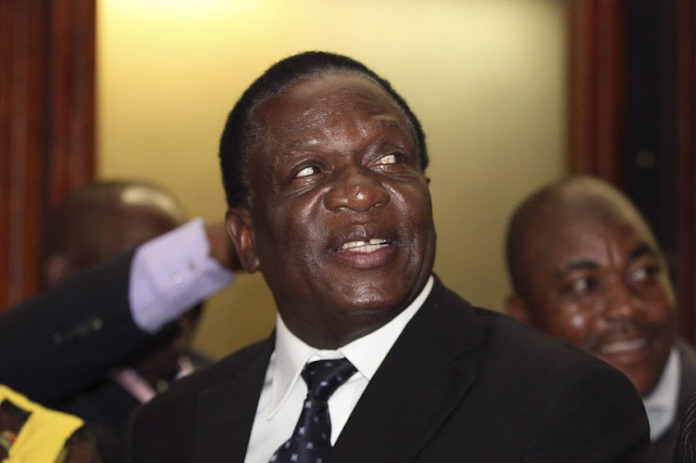
Emmerson Mnangagwa

Zimbabwe’s Constitutional Court confirmed President Emmerson Mnangagwa’s disputed July 30 election victory on Friday, dismissing an opposition challenge that had held up his inauguration.

In a unanimous ruling of the nine judges of the country’s top court, Chief Justice Luke Malaba said opposition leader Nelson Chamisa had failed to prove allegations of fraud during the presidential vote.

“Emmerson Dambudzo Mnangagwa is duly declared the winner of the presidential elections held on the 30th of July 2018,” Malaba said in his ruling.

The election, in which Mnangagwa and Chamisa were the main contenders, was touted as a crucial step towards economic recovery and shedding Zimbabwe’s pariah reputation, but instead has left the nation deeply polarized.

An army crackdown in response to post-election violence by opposition supporters left six people dead on Aug. 1, recalling the heavyhanded security tactics that marked the 37-year rule of Robert Mugabe, who was removed in a coup last November.

Mnangagwa now faces the challenge of persuading the international community that the army crackdown and lapses in the election process will not derail his promise of reforms needed to fix the economy.

Police blocked roads around the court, a 19th century British colonial building just opposite Mnangagwa’s offices in central Harare. Vehicles carrying water cannon reappeared on streets near the court house while riot police patrolled the city center in groups.

Stories Continues after ad

Coffee exports decline 8.01 percent in July

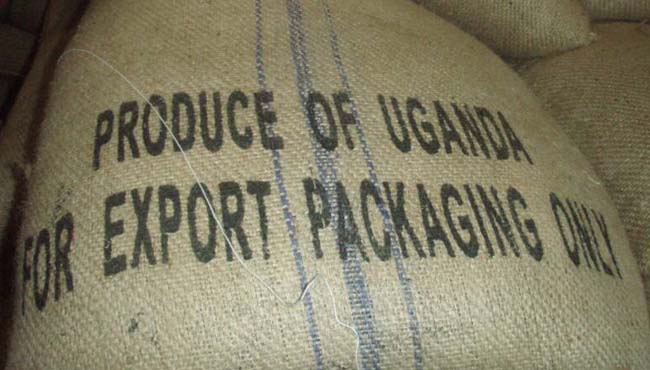
The packaging of Uganda coffee for export

Coffee exports in July 2018 declined by 8.01 per cent to 393,022 60-kilo bags worth US$ 40.67 million, according to Uganda Coffee Development Authority.

The earnings in July 2018 showed a decline of 17.49 per cent from the same month last year.
Coffee exports for 12 months (August 2017 to July 2018) totaled to 4.42 million bags worth US $483 million comprising Robusta 3.34 million bags worth $346 million and Arabica 1.08 million bags worth US $138 million. 76.36 per cent of the total volume was exported by 10 exporters, out of 34 who performed during the month compared to 78.37 per cent in June 2018.

By comparing quantity of coffee exported by type in the same month of last year (July 2016/17 and 2017/18), Robusta registered a percentage decrease in both Quantity and Value. (10.47 per cent and 21.06 per cent respectively).

Arabica registered a percentage increase in both quantity and value (7.97 per cent and 2.27 per cent respectively). Coffee exports in 10 months (Oct-July) were 4.8 percent and 13.4 per cent lower than the previous year.

Some of the factors that led to the above figurers were low global prices on account of higher crop in Brazil which affected export prices as well as lower production from the main harvest in Masaka and South-Western regions compared to the previous year, new trees coming into production notwithstanding.

Cumulatively, coffee exports for 12 months (August 2017-July 2018) totaled to 4.42 million bags worth US $483 compared to 4.34 million bags worth US $512 million in the previous year (August 2016-July 2017). This was an increase of 1.77 per cent and a decrease of 5.66 per cent in quantity and value respectively.

Uganda is Africa’s biggest exporter of coffee though Ethiopia, the continent’s biggest producer of the crop consumes of it domestically.

Stories Continues after ad

Work towards reducing risks of global developments- Mutebile tells EAC governors

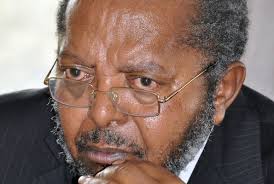
BoU governor, Emmanuel Tumusiime Mutebile

The Governor Bank of Uganda Prof Emmanuel Tumisiime Mutebile has called for monetary policies that will guide the east African community (EAC) against dollar and measures that will mitigate depreciation of local currencies.

Governor remarked in the 22nd meeting of Monetary Affairs Committee (MAC) of the East African Community that convened to review and prepare a report on the progress of implementation of priority areas towards the operationalization of the region’s Monetary Union in 2024.

He asked members states to draw policies that are in with the management of money supply, interest rate, grounded on to the achievement of macroeconomic objectives like inflation, consumption, growth and liquidity.

“Weaker currencies rises a lot of costs, we should work towards the integration of the region’s economy, carry out micro-economic businesses, encourage exportation of products for strengthening of local currencies,” he said at Serena hotel.

He cautioned fellow governors from the six member states of Uganda, Kenya, Rwanda, Burundi, and the newly appointed members of Tanzania and south Sudan’s to work towards reducing risks that arise from global developments.

“MAC meeting will avail us opportunities to discuss the previous decisions made for economic integration of East African community (EAC)”

Despite civil wars that raged in the county, Governor for bank of south Sudan Dier Ngor noted they are ready to learn from the past experiences of monetary affairs committee to improve on their economic and monetary performances.

He applauded this year’s host Uganda and the entire community for considering them to join diversification and integration line that will see their country elevating from one step to another.

Governor bank of Burundi Jean Ciza, revealed that on top of higher inflation and rending rate in the country, government is doing its best towards restoration of monetary value for transformation of the economy.

Stories Continues after ad

Kayihura appears in General Court Martial pleads not guilty

Former IGP, Gen Kale Kayihura, in picture with black beret, arriving at Court Martial

Former Inspector General of Police Gen. Kale Kayihura has on Friday appeared at the Makindye General Court Martial and denied all the three charges read against him by its Chairman Lt.Gen. Andrew Gutti.

The charges against Kayihura are; failure to protect war materials, particularly that between 2010-2018 allowed the guns to be used by Bodaboda 2010 gangsters led by Abdullah Kitata.

Gen. Kayihura was also charged with failure to protect war materials or failure to supervise and account for guns as IGP under flying squad department.

He also charged on the account of aiding and attempting to kidnap Rwandan nationals and patronage. Kayihura has denied all the charges.

Kayihura arrived at Makindye General Court Martial this morning to hear the charges against him. He was arrested at his country home in Katebe village, Kashagama sub-county Lyantonde district in June. He has spent 2 months in detention at the Makindye Military Barracks.

Kayihura was arrested then alongside senior police and other officials who were close to him. Some of those arrested and charged earlier are Boda Boda 2010 patron Kitatta, Senior Commissioner of Police Joel Aguma, and Senior Superintendent of Police Nickson Agasirwe. The officials were arrested on the allegations of espionage, murder, brutality, kidnapping and theft

Stories Continues after ad

NSSF total assets rise 26 percent in June 2018 as compliance improves

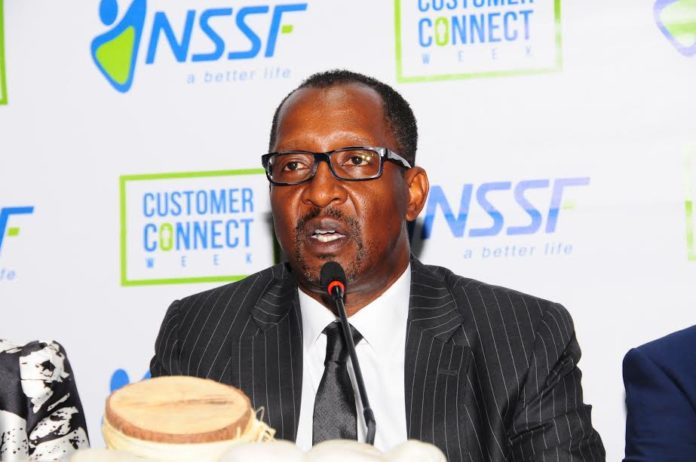
NSSF Managing Director Richard Byarugaba

The National Social Security Fund (NSSF)’s total assets Under Management (AUM) hit Shs9.8 trillion as of June 2018, a 26 percent increase from 7.2 trillion the previous financial year, the Fund said as it reviewed its 2017/18 financial performance.

Richard Byarugaba, the MD of NSSF, attributed the Fund’s impressive performance to a favourable investment climate and aggressive yet prudent investment approach.

According to the statement released by Byarugaba, income hit a record Shs1.6 trillion in 2017/18 growing by 77 percent, from Shs912 billion in 2017.

Member contributions also increased by 14 percent to Shs1.05 trillion in 2018 from Shs917 billion in 2017.

The Fund collected Shs7 billion in voluntary contributions from 10,000 new members largely driven by mobile money. Turnover of Shs553 million was registered from mobile money collections. Voluntary contributions were introduced to attract new members and grow contributions.

He says compliance level has risen to 81 percent in 2018 from 80 percent in 2017 leading to improved contributions.

“The cost to income ratio has declined by 1 percent to 12.6 percent for the Financial Year 2017/2018 from 13.4% the previous Financial Year,” Managing Director Richard Byarugaba

“We have not grown more efficient in the way we do business, but we have maintained the required discipline we made and we continue to focus on creating value for our members at a low cost,” said Byarugaba

The Fund will hold the 6th Annual Members Meeting on August 28, 2018 at the Pearl of Africa Hotel where members are expected to attend in big numbers. Managers hope to hear from members regarding management of their savings.

Stories Continues after ad

Challenges When Scaling Your New Venture Worldwide

Martin Zwilling

By Martin Zwilling

Market opportunities for your new venture are now immediately worldwide, thanks to the pervasive access to the Internet and social media communication. But this doesn’t mean that you can treat the world as one big homogeneous market, ignoring the vastly different geographic cultures, economic, and political realities. Scaling worldwide is like hyperlocal on steroids.

Many businesses, large and small, have stumbled in this area. For example, Starbucks’ first efforts to expand to Israel and the Middle East failed miserably due to a totally different “coffee culture” there, not accommodated adequately. Even the venerable McDonald’s failed to recognize that in Bolivia, their price per meal was off the charts compared to indigenous alternatives.

Thus, as an advisor to small businesses and startups, I have put together my own list of strategy recommendations to get you off on the right foot, and keep you on track as you expand your business outside your local environment, and outside your country around the world:

Don’t let experience in local markets drive global assumptions. Global expansion is never simply a multiplier applied to local results. Do your homework in each new market and validate it with a controlled experiment before spending big money on a rollout. In foreign markets, this may require feet on the ground, due to lack of available data.

Check historical data for economic and political stability. Many international markets have a history of sudden or cyclic changes that could dramatically increase your risk, or cut your opportunity. This expectation of sudden change, or their inability to deal with economic shocks means that you should prepare backup plans to minimize the risk.

Evaluate local transportation, energy, and financial services. These factors can totally change your customer value proposition, or your cost of doing business in that geography. In fact, you may need to tune your business model, such as the elimination of free shipping, or adding a customized support contract, to accommodate local issues.

Factor in currency exchange costs and variability. Smart business owners have learned to lock in exchange rates, manage accounts receivables carefully, and engage local financial organizations who know how to manage transactions in this environment. Currency exchange considerations are especially critical in local contract negotiations.

Accommodate the local cultural traditions and ethics. The local culture affects not only the decisions a business owner must make, but also how the customers view your business. Failure to accommodate these will cost you money could leave you red-faced. I recommend that you hire people in the local market to manage your business there.

Investigate local alliances and partnerships. One of the most effective ways to expand your business and grow in unfamiliar markets is to join forces with another company of similar size and market presence that’s located in a territory where you would like to be. Don’t forget to evaluate your competitors for “coopetition” alternatives that benefit both.

Proactively engage a local expert to build a rollout strategy. The last thing you need in a new market is dealing with early mistakes and trying to repair a tarnished reputation. Uber and Airbnb have both been hurt by tough local barriers and labor laws which can have lasting consequences. Don’t skimp on the cost of using overseas legal counsel.

Enjoy the challenges and learning opportunities. International expansion is often seen as one of the best learning experiences for business owners, as well as an enjoyable travel opportunity for you and the family. Don’t forget that you are your most important business asset, and that your business must to be satisfying and fun.

Don’t look for any magic formulas to expand your business globally. The challenges are continually evolving and are, at their root, a product of social interaction, economic evolution, and political dynamics. It will always take smart business owners, armed with the latest knowledge, proper homework, and modern analytic tools, to minimize the risks and maximize opportunities.

Tapping into global markets, especially the large and under-developed ones, not only promises market growth beyond your most optimistic vision, but also empowers people around the world to share in a better economic future. It’s time to make the global opportunity part of your business plan today.

The Writer is a veteran startup mentor, executive, blogger, author, tech professional, and Angel investor. Published on Forbes, Entrepreneur, Inc.

Stories Continues after ad

98 per cent of regional non-tariff barriers cleared

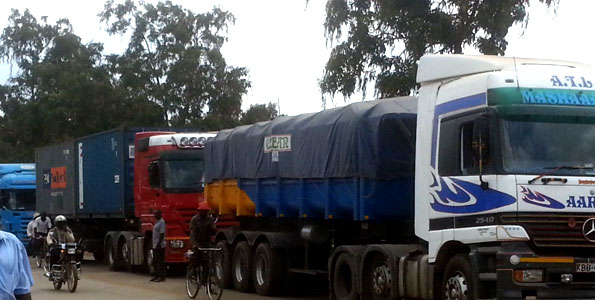
Non-tariff barriers affect truckers

A total of 199 out of 204 non-tariff barriers to regional trade that have been reported among the COMESA Member States since the establishment of the Tripartite NTB Online Reporting Mechanism in 2008, have been resolved. This represents a success rate of 97.5 per cent.

That notwithstanding, a disturbing phenomenon is that reports of NTBs keep coming to the COMESA Secretariat and this frustrates the efforts to enhance intra-COMESA Trade, says the COMESA Secretary General Chileshe Kapwepwe.

Recently the SG observed that though member States had, upon signing the COMESA Treaty agreed to abolish all non-tariff barriers to trade among themselves, new ones kept cropping up thus affecting intraregional trade.

“Most Member States have taken long to remove certain NTBs and to operationalize the COMESA Customs Union and the launch of the Common Market,” she said in the statement presented by the Assistant Secretary General Dr Kipyego Cheluget.

The SG appreciated the progress made in implementing regional programmes with substantial support from International Cooperating Partners. However, she noted that little progress has been achieved in domesticating trade facilitation instruments at national level as Member States took their time to ratify and implement them.

Since the establishment of the Free Trade Area in 2000, intra-COMESA exports have increased from US$1.5 billion to US $7.9 billion in 2017. The global COMESA exports stand at US $86 912.7 million while the share of intra-COMESA exports to COMESA global exports remains low at 9.1 per cent.

The trade and customs committee meeting considered the reports of the 3rd Trade and Trade Facilitation Sub-Committee and the 4th Heads of Customs Sub-Committee that met earlier in the week. The meetings were attended by a record 21 Member States including Tunisia and Somalia which were admitted to COMESA on 18 July 2018.

High on the agenda of the TCM was the implementation of the COMESA Digital Free Trade Area (DFTA) which is being rolled out in Member States. The DFTA has three aspects: e-trade, e-logistics and e-legislation. E-trade will promote online commerce by providing a platform for traders in COMESA region to do business online. E-logistics targets improvement in transportation of goods from suppliers to customers, while e-legislation address the readiness of laws in Member States to cater for digital transactions.

Other key issues in regional integration that were discussed were reports by Member States that are not participating in the COMESA Free Trade Area, Non-Tariff Barriers in the COMESA Region, the Kenya Sugar Safeguard and updates on the Tripartite FTA Negotiations and the African Free Trade Africa Free Area.

Speaking at the same forum, the Principal Secretary, State Department of Trade in Kenya, Dr Chris Kiptoo, called for scaling up and sustaining awareness campaigns of the COMESA protocols and the intended benefit of regional integration.

“Ultimately trade and investment are spearheaded by the private sector and this is the audience we need to sensitize for them to have the utmost confidence in the opportunities created by regional integration,” Dr Kiptoo said in a speech delivered by the Director of Administration Mr. Samson Wangusi.

Dr Kiptoo cited the COMESA Yellow Card, the COMESA Customs Document, the Simplified Trade Regime, Non-Tariff Barriers Regulations, the COMESA Fund, and the Regional Customs Transit Guarantee as some of the most successful trade facilitation instruments which stakeholders need to know about.

Stories Continues after ad

Fashion, ecstasy to take centre stage at Royal Ascot Goat Races

Naiya K ,Sheena Ruparelia , UBL brand Manager, Brenda Namutebi, singer Bebe Cool, and Elvis Sekyanzi pose with the Goats.

Tomorrow Saturday all roads will lead to Speke Resort Munyonyo for the Royal Ascot Goat Races that are back after five years of inactivity.

The event sponsored by Tusker Malt will attract who is who in town will be epitomized with fashion and ecstasy as fans cheer up their favourite goats during the races.

Gates to the event will open at noon with seven sets of goat races with 10 goats participating in each starting at 1.30pm and proceeding throughout the day.

Fashion is important as the organisers have prepared prizes for the fans and couples with the most attractive costumes.

The best dressed couple will win the biggest prize of a return ticket to Dubai courtesy of Emirates Airlines while the best dressed man and lady will spent a night with their partner at Speke Resort Munyonyo and Protea Entebbe respectively.

For the best dressed kid, a free pony camp treat at Speke Resort Munyonyo awaits.

Fans at the event like it was in the past are expected to arrive with hats on their heads and the fan with the best hat will win an outfit from offered by Halo collections.

More, the owner of the goat with the best name will win a special dinner for two at Serena Kigo.

There will also be other competitions throughout the day coming from a selection of photo uploads that will be posted online. The best group selfie will win a gift hamper from Uganda Breweries. The best goat impression will have the owner win a dinner for two at Sips and Bites as Calabash Spa will give a couple with the best selfie a massage.

The event will have a glam cam area run by Posh Junction where they will award the best female pose with a prize of hair and nail treatment worth Shs250, 000. The best male pose will walk away with a free men’s grooming worth Shs100,000 and the best mother and daughter pose will be treated to a free hair and braiding session.

According to Brenda Namutebi, brand manager, Premium Beers at Uganda Breweries Limited, The goat races are a must attend show for everyone who wants to have fun and win prizes. “As Tusker Malt, we are happy to be a part of the team that has brought this unique package that is surely going to be talked about for the rest of the year,” she says.

There will be food and drinks, including a silent disco to be hosted by Kampala socialite Sue Ochola. There will be Posh Junction VIP treatments, a champagne bar and fans will enjoy eats and drinks by the lakeside.

Musicians Bebe Cool, Fik Fameika, alongside Simples Entertainment are lined up to entertain the revelers. Bebe Cool’s goat named ‘A Pass’ will participate in the races. At the end of the activities there will be fireworks display.

Fans be informed that tickets are being sold at Shs50,000 at selected selling spots like; Kabira Country Club, Speke Hotel, The Cube, Speke Apartments, Speke Resort Munyonyo, and Liquid Silk plus online on Quicket.

Stories Continues after ad
Tycoon Nzeyi in trouble over Temagalo land, stands to pay back Shs11 billion to NSSF

Justice Bamugemereire

Tycoon Amos Nzeyi is in trouble for selling the Tamangalo land to the National Social Security Fund (NSSF) without proper documentation. The Indian family is determined to take back the land, meaning Nzeyi could be forced to pay back Shs11 billion and annual interest to NSSF.

Nzeyi has argued that when he bought the land, he didn’t know that the 366-acre land belonged to M/s Temangalo Tea Estate, a company owned by the family of Muhammad Hassanali Moosa before they were expelled with several other Indians by the late Iddi Amin in August 1972.

The family recently sought the help of the Commission of Inquiry into Land Matters chaired by Justice Catherine Bamugemereire and accused Nzeyi of fraudulently acquiring and occupying their land. The land in question is located on Block 296 Plot 20 in Busiro in 1993.

Nazim Moosa, based in Vancouver, Canada, appeared before the land probe and presented an original lease title saying his parents acquired the tea estate from the late Daniel Mugwanya Kato and held it until they were expelled in 1972. He testified that at the time Mr Nzeyi acquired the land, the family of Muhammad Hassanali Moosa had a running lease.

According to Moosa, upon visiting it in 1993, part of the disputed land was bushy with some structures, a dairy farm and a watershed and that when they contacted Mugwanya’s family, which leased the land to their parents, they denied knowledge of Nzeyi’s claim on the land.

According to Ebert Byenkya, the commission lead counsel, investigations into accusations of Temangalo land grabbing and further explained that the matter is pending hearing of more evidence from other witnesses.

The witnesses to be heard before the land probe include retired banker, Abbas Mawanda, who allegedly sold the disputed land to Mr Nzeyi.

It is not clear when and how Nzeyi acquired the disputed land, how he signed a joint mutation form for sub division of the land and how he transferred it to NSSF. NSSF paid Shs24 million per acre of land to Nzeyi upon providing land titles that were believed to be genuine although the family insists that the title in question was forged.

Asked about the running lease at the time of him acquiring the land, Nzeyi testified that any questions can best be answered by Mawanda and his former lawyers of M/s Sebalu and Lule.

Nzeyi admitted that at the time of acquisition of the disputed land, there was existence of tea on the land but said it had grown wild but denied knowledge of the 1993 court case against him.

Nzeyi when asked by the Commission recently said that he took interest in the disputed land in 1988 with a view of establishing a dairy farm but acquired it in phases from former managing director of Uganda Development Bank, Abbas Mawanda who he knew in 1975.

Asked about the running lease at the time of him acquiring the land, Nzeyi testified that any questions can best be answered by Mawanda, who allegedly sold him the disputed land and his former lawyers of M/s Sebalu and Lule.

Stories Continues after ad

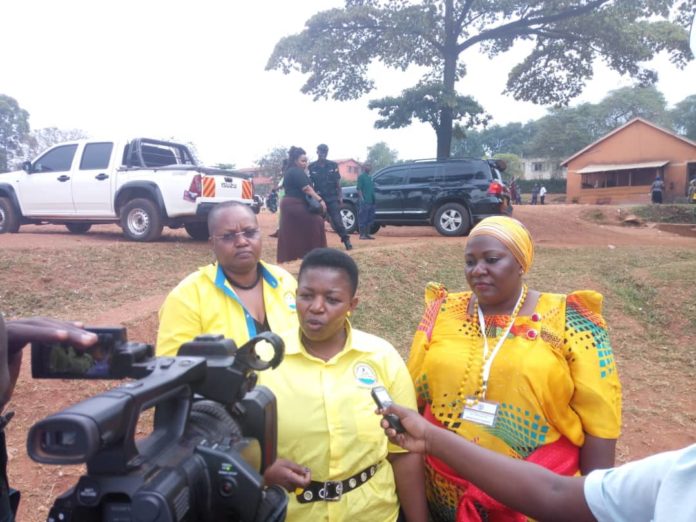
NRM sweeps national women council seats

NRM Secretary General, Justine Lumuba talking to the press after the elections

All the four positions for the National Women Council Executive have been won unopposed by the NRM Flag bearers. This comes after the failure by other political parties to field candidates during the Thursday 23 August 2018 nominations.

The four flag bearers who were presented for nomination by party Secretary General, Justine Kasule Lumumba, were at 5:00pm declared unopposed by the Returning Officer, Hajji Ibrahim Kakembo. The exercise was conducted from Kibuli Secondary School.

The successful NRM female leaders included; Hajat Faridah Kibowa (Chairperson), Auma Lyndah Agnes (Vice Chairperson), Akwi Norah Robinah (Secretary for Finance) and Namatovu Mastula who takes the docket of the Secretary for Publicity.

Deputy Electoral Commission Chairperson, Hajat Aisha Lubega, who addressed the Candidates and delegates on behalf of the National Electoral Commission, commended the women for sailing through unopposed and urged them to serve the women with all the fairness.

Addressing the Media shortly after nominations, SG Lumumba congratulated the Flag bearers and thanked them for delivering a ‘Massive Victory’ for the ruling party.

Ms Lumumba commended the NRM Women League headed by Hon Lydia Wanyoto for the perfect coordination of the women programs.

Stories Continues after ad