Stanbic Bank
Stanbic Bank
25.7 C
Kampala
Stanbic Bank
Stanbic Bank
Home Blog Page 1489

Museveni writes to Finance Minister Kasaija, asks him to suspend URA officials

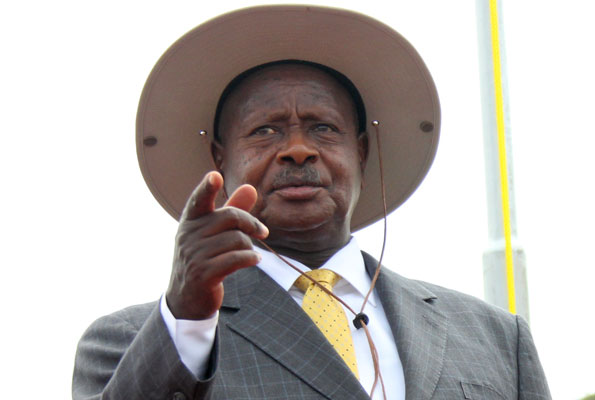
President Museveni

President Yoweri Museveni has written to Finance, Planning and Economic Development Minister, Matia Kasaija directing him to suspend Uganda Revenue Authority officials for supposedly ‘frustrating’ investors.

In a letter dated August 14, 2018, Museveni wonders why just a mere staff who have power to frustrate an investor. The president says URA is supposed to facilitate, assist and expedite that but instead URA staff, either out of ignorance, malice or corruption are tossing investors endlessly.

“I am writing to you to, with immediate effect, suspend the officers in URA that have been involved in frustrating our good investors Dongsong, by refusing to clear some of his machinery for the phosphates and steel processing plants in Tororo worth US $650 million. These two factories will employ 2,000 workers”.

“I therefore, direct that all those involved in this scandal must be  suspended immediately, starting with Okaka whose signature i saw on a number of documents in this case. anybody who does not understand the mission of modersing and industrialising Uganda must leave the URA. I have heard od similar sabotage actions by elements in the URA”

Museveni says in addition to the steel and  fertilizer factories, Dongsong is such a serious investor who intends to turn the waste of the steel factory into construction blocks and also wants to import sewing machines for sealing the bags of the fertilizers.

“These useless ura crowd would have nothing of this. A gentleman by the name of Okaka in different correspondence, maintained that  the operation in Sukulu was a mining operation and it did not require air compressors and block makers.” Museveni wrote

He continued “Amazing, Honourable Minister, how can such a person  be even a junior officer in Uganda’s URA let alone acting on behalf of the Commissioner Customs.”

Museveni emphaised that the Sukulu operations is not only about mining but also about processing  and producing many items out of the minerals like fertilizer, steel, rare earth, construction blocks and sulphuric acid.

Stories Continues after ad

NRM has no preferred candidates in the national Women Council election—SG Lumumba

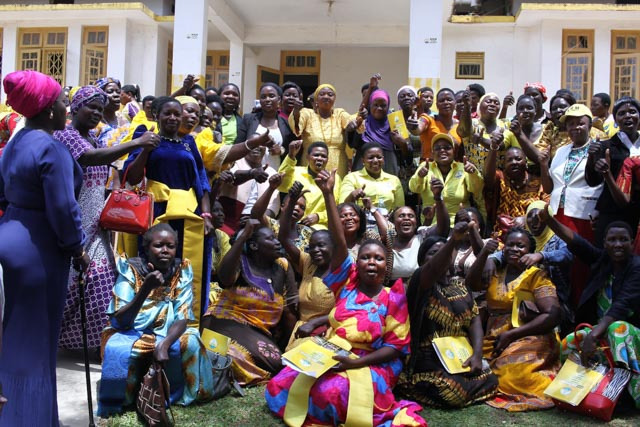
NRM Secretary General, Justine Lumuba, with a group of NRM women members

Secretary General of the ruling National Resistance Movement, Rt. Hon. Justine Kasule Lumumba has refuted allegations that some aspirants in the National Women Council primaries were being supported by the party leadership.

Lumumba has clarified that the Secretariat she heads will only own the candidates after the primaries to be held later this Wednesday afternoon.

She was meeting over 120 District Women Council Chairpersons at the party headquarters in Kampala.

The meeting was also attended and addressed by the National party treasurer, Rose Namayanja Nsereko and the Women League Chairperson Hon. Lydia Wanyoto.

About 14 aspirants have showed interest in different seats that include Chairperson, Vice Chairperson, Secretary for Finance and Publicity.

Reports had started circulating that some individuals were claiming to have favours from the party.

Lumumba advised the female leaders to avoid using their political leadership positions to cause discomfort in their homes but instead live exemplary to those they lead.

“As you do your political work, remember your family. Your fallback position is always your family. Don’t run away from your responsibilities, they didn’t vote you to become a problem to your families” the SG advised.

NRM commands majority support with 125 out of 128 district chairpersons being NRM. The remaining three are independents.

Stories Continues after ad

Opposition lacks tolerance and accommodation of divergent views

Sam Evidence Orikunda

By Sam Evidence Orikunda

One of the reasons that has kept NRM in power for the last 30 years is being accommodative and allowing different people with different ideas. Our strategy has always been clear, to accept that everyone can’t agree with you politically and what you have to do is sit with your opponent talk to him nicely, sell your ideas to him and convince that person to join your side, that’s how we have been able to have  strong opposition people join NRM and some are already Ministers.

I first heard the word “mole” from FDC and they used to refer to Mugisha Muntu and team whom they accused of being in bed with NRM. Many people in FDC party up to now do not recognise Gen Mugisha Muntu as a real opposition man. They think he has two sides, this is because the general believes in politics of peace and doesn’t embrace violence.. I do not think it would be bad for Mugisha Muntu to be close to NRM because after all this would allow him to fish from the NRM side and hence widening  his force and achieving his primary intentions.

How many of opposition people would allow an NRM person to attend their  gatherings? In fact if they realized that he is part of the gathering he would be killed, unless the person goes disguised, that’s a very bad sign because when you want to become president you look for support of people in order to vote you, all votes count in Uganda, there will not be any person who will vote and his or vote isn’t counted because he is NRM or FDC.

Out of these bad signals of lack of tolerance and accommodating different people with different ideas, the opposition has now involved in violence, politics of threatening opponents and thuggery, this started with Besigye when he introduced defiance where people would break laws intendedly as a way of getting  into power. The people who now call themselves new political force has taken it up and its becoming to heavy for them with a number of their leaders in coolers already. With violence you cannot rule out loss of Lives, destruction of property and suffering.. The situation looks as though its a war yet in actuality its violence.

If I could borrow something from religion, when Jesus Christ came on earth he found people when they had their gods, they were so much into evil acts, Jesus a great leader and politician would have defied laws of the then leaders but he didn’t, in fact he encouraged his followers to respect their leaders and the laws that govern their society those leaders could have been having a number of problems just like Opposition accuse NRM, they could have overstayed in power, but he ignored this perhaps he valued peace and love between people. Jesus Christ recruited people one by one, he did this by sitting them down and telling them what he was going to offer to them if they believed in him, people appreciated and followed him and by the time he died we believe he had recruited the whole world and that movement through Christianity has stayed for two thousand years and still growing.

This kind of abusing the people you’re against publicly and on campaigns doesn’t work. Ugandans remember well that during age limit removal debate the opposition resorted to violence, some decided to endlessly sing the national anthem and make sure they stop peaceful debate in the house, this ended into fights in Parliament and security came in to restore sanity. At the end of the day the constitution was amended and the former lost. Sobber analysts described the opposition as unserious people after all these events. Those who were calm and peaceful achieved what they supported, this would have taught them that violence has no place in Uganda and Ugandans do not believe in it.

Social media especially Facebook is the Evidence of what am talking about, thousands of people on Facebook believe that when you don’t support Bobi Wine and Besigye you shouldn’t live. That’s why anything posted against Bobi wine or Besigye will attract thousands of insults some will threaten to kill you if they come across you just because of your views, they forget that each person is entitled to their ideas and if you disagree you prove him wrong you don’t insult.
In fact most of the NRM cadres are now threatened and scared they cannot freely express their views on Facebook, any opposition person who reads this will say they have achieved and they will be so happy.

The opposition should know that if at all they need power, they will have to takeover a country that is in good state, they will need to take up a country with people who live together in peace and who peacefully talk and eat together, when you’ve killed all that you will have to start with reconciliation which is not very easy by way, the NRM took up a Ugandan society which was divided basing on tribes and religion but later people reconciled and agreed to live and work together that’s why we have recorded development and a number of achievement.

Accept different persons  and the way they’re. Appreciate the fact that they hold different views on what you believe in. They are entitled to their ideas and its their right, if you mistreat, insult, or manhandle any of them because of that then you’re losing credibility of becoming a leader and you shouldn’t waste people’s time.

Stories Continues after ad

Everyone in gov’t are slow, public service is corrupt and people in public service don’t care Co

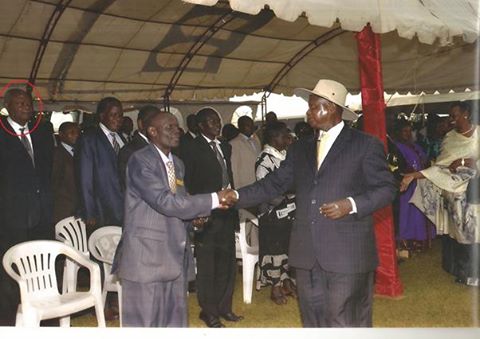
HULLO: President Yoweri Museveni greets the author Mr Nabende Wamoto.

Guest writer/letters’ editor

State house and office of the president like every institution/organization private or public must have a strict way of managing its communication and information systems, channels and personnel.

Here below are problems of not following prescribed communication channels:

  1. Failure to follow proper channels of communication can lead to breakdown of co-ordination and accordingly cause confusion.
  2. Failure to follow what is prescribed may lead to policy distortion and bring the government into disrepute or be cast in bad light in the eyes of the masses (public)
  3. Disciplinary action must be meted out to any officer who fails to follow prescribed communication channels and proper information management.
  4. Non-effective communication can lead to generalization and stereotypes such as everyone in government are slow, the public service is corrupt and people in public service don’t care

Communication means the process of sharing ideas, exchanging information and feedback, it can be verbal or non-verbal like one of the laws of physics that says that every action produces reaction, so is communication. On the other hand, information according to the Longman Dictionary of Contemporary English means “something which gives knowledge in the form of facts, news extra”.

For example, one can call a press conference and announce or promise that one has discovered a cure for HIV/AIDS; this becomes information to the media people but not necessarily facts.

Of late however, His Excellency the President personally abandoned his communication manager(s) and taken to communicate to the population by himself.

Communication in the public service is largely done on written exchange of official memos and or letters both within and without a particular Ministry, Agency or Department of Government. Communication within is between the political leadership, public servants and between civil servants.

The permanent secretary is responsible for ensuring that the line Minister is made aware of, and consults upon any administrative decisions which may have Political Ramifications. In the matter of the two recent Presidential messages on the Arua By-election fracas in which communications, the Head of State labours to explain away the situation and condition of singer-cum politician Hon. Robert Kyagulanyi Sentamu (Bobi Wine) and other injured politicians should have ordinarily been handled by relevant Permanent secretaries for they (PSs) provide the link between public servants and political leadership while relevant ministers provide the link between ministries/agencies/departments with the Prime Minister and or the President. This seems to have collapsed leaving the President vulnerable to contradictions. Similarly PSs normally communicate with each other by memorandum or demi-official letter, and not by passing files. Each ministry including that of Presidency is required to have its own record of correspondences.

Communication between officers of different ministries must be done through that Ministry’s Permanent Secretary. If a Minister in a particular ministry wants to deal with a staff matter in his/her Ministry, he/she normally raises the issue with the PS who then raises the matter with that staff.

Communications to superior officers must be done through immediate supervisors, head of section/division in case of the army/department to the superior officer. Officers in different departments/divisions/sections should whenever they want to communicate with each other do so through the head of department.

Nabendeh Wamoto S.P (0752658433)

simonwamoto@yahoo.co.uk

Stories Continues after ad

How to find money based on your new venture progress

Martin Zwilling

By Martin Zwilling

Time is too precious to waste trying to close a deal with the wrong investors at the wrong time. Luckily, not all investors are looking for the same thing, so it pays to know what type of investors are most interested in what your startup brings to the table.

The key is understanding how potential investors see you, and especially how they view the maturity stage of your startup. For example, if you have a proven product, real revenue, a big potential market, and are ready to scale up the business, every investor will be interested. On the other hand, if you are a new entrepreneur, still in the idea stage, professional investors will only tell you to come back later when you have traction (customers and revenue).

Thus your startup maturity and growth stage is the primary key to success with potential funding sources. Different types of investors tend to specialize in capitalizing on businesses at different stages. Venture capital firms look for the most mature companies they can find, Angel investors typically deal a tier lower, while friends and family are most likely to help you get started.

It never hurts to start networking personally with all levels of investors early, but sending out teasers and business plans to every name you can find on the Internet is a waste of your time and theirs. It will be much more productive to categorize your startup in one of the following five stages, and limit your investor focus accordingly:

“I have a great idea and I need money to turn it into a business.” For investors, this is the idea stage, where you may have a great idea, but no plan, product, or customers, and probably no success record in this business domain. No professional investor will be interested at this point, so count only on yourself, friends, family, and fools for money.

“My invention and prototype works, but I need funding to continue.” Investors call this the seed stage, where money is required to build a market and a real product. Government grants and industry partners are you best bet here, but Angel investors might give you $250,000 to $1 million, if you have the right business case and credentials.

“The final product works great, and all the early users love it.” You are now entering the rollout stage, with money required for marketing, hiring a full-time team, and a production process. At this point, most Angel investors and a few early-stage VCs will be happy to talk, assuming you have the business model validated, and a large opportunity.

“It’s time to scale up and I need money to keep up with demand.” Congratulations! Every investor wants to be part of your growth stage, after your first $1 million in revenue. They call first investments at this stage the “A-round,” and often follow with a B-round through G-round. Growth stage investments from VCs are usually $5 million and up.

“The ride has been fun, but I need my money out to start the next big thing.” This is the exit stage for the entrepreneur, and for all earlier investors. The new investors you need at this stage are investment bankers, private equity, or competitors, to buy you out via merger or acquisition (M&A), or to go public with an Initial Public Offering (IPO).

Obviously, maturity and growth are a continuum, so the rules are never absolute. My message is that your startup will attract a different class of investors, as it passes through each stage, just as it has to supplement and tune the team, process, and product to keep up with the needs of a growing company and customer base. Tune your investor pitch and funding expectations accordingly.

Another good indicator of your real stage is the valuation you can set for your company at any given moment, to determine what portion of your equity an investor will expect of his money. Prior to the growth stage, your company valuation is limited to goodwill based on intellectual property and team experience, since you have no revenue. Future opportunity size doesn’t count in the early stages.

Contrary to popular opinion, all investor money is not the same. Friends and family believe in you, and only want to see you achieve success. Angel investors probably will know your business, and want to be mentors along the way. VCs normally come with the highest expectations of board seats, controlling votes, and milestones to meet.

Don’t sign up for one, expecting the other. If you want to avoid all these stage and investment considerations, you can always bootstrap the business (fund it yourself, and grow organically). Otherwise, be sensitive to first impression you leave on every investor, and the efficiency of your time spent on funding. You will enjoy the lifestyle a lot more when you find the right investor.

The Writer is a veteran startup mentor, executive, blogger, author, tech professional, and Angel investor. Published on Forbes, Entrepreneur, Inc.

Stories Continues after ad

Umeme earmarks Shs20.6 billion for dividend pay-out

UMEME CEO Selestino Babungi.

Uganda’s electricity distributor, Umeme Limited, has announced a Shs12.7 dividend pay-out per ordinary share to all its shareholders for the six months ended 30 June 2018.

 A top official said the total interim dividend pay-out of Shs20.6 billion was based on the stellar performance of the company over the period of January to June 2018.

 The dividend subject to deduction of withholding tax, where applicable, will be paid on or about 11 January 2019 to shareholders in the books of the company at close of business on December 20, 2018.

Commenting on the results, Umeme Managing Director, Selestino Babungi said the sector was on a steady growth after the demand by industrial consumers grew by 8.6 per cent, up from the 7.5 per cent registered in the same period the previous year.

“In simple terms, the sector is growing. Maximum demand grew just slightly under 600MW. The main drivers are the large industrial customers who are registering high annual growth rates of up to 13 percent,” Babungi said.

 He said that the industrial demand for electricity was in line the GDP growth, which is projected to grow at 6 percent in the 2018/2019 financial, up from 3.9 per cent in 2017, adding that GDP growth goes hand-in-hand with electricity demand.

Babungi pointed out that the setting up of National Cement Company and the new Hima Cement plant, the two new cement plants in Tororo and the expansion of Tororo Cement Industries, all of which were fully commissioned, boosted the industrial sales.

 “Existing industrial consumers like Coca-Cola and Roofings have also boosted their production. The Buy Uganda, Build Uganda drive is helping a lot. The South Sudan and DR Congo markets have also reopened. Commercial use of electricity is fundamental. Industrial use is essential in up taking the increasing generation capacity,” he said.

The giant utility also registered progress in the energy loss reduction targets in the six months of 2018 to 16.7 per cent compared to 17.5 per cent for the same period in 2017.

“We focused the half-year loss-reduction efforts on commercial losses and are in dialogue with the Electricity Regulatory Authority on specific approvals required for technical loss reduction investments,” he said.

He disclosed that for these efforts, delegations from Nigeria and Mozambique, were expected to visit the utility to benchmark on how they are doing this when the regional utilities are struggling to tame their losses figures.

The company has also maintained an average collection rate of 99.2 per cent over the last three years, while the revenue collection rate for the period under review stood at 102.8 percent, attributed to the rollout of prepaid metering, recoveries of past unpaid bills, timely payment by industrial customers, government agencies and provision of payment systems available 24 hours per day. 

 During the first half of 2018, the company added up to 82,373 customers to the grid, increasing our total customers to a record 1,207,664. The firm targets to add a total of 200,000 new customers to the grid by end of 2018.

Customers on prepaid metering increased to 76.3 per cent of the customer base. Prepaid revenue from these customers represents 24 per cent of the total revenue.

Stories Continues after ad

Meet the team steering Miss Uganda North America, Seattle 2018!

Beka Wangusi Beka

Here is the team that will be running things at Miss Uganda North America, Seattle 2018. The deserve a round of applause!


Adoch Acemah. Miami-based Adoch is the founder of headwraps company Latam Wic. She’s also a model and has appeared various high profile photoshoots. She has also been featured as Face of Ankara Miami.

Anita Fabiola. Anita is a Ugandan Media Personality, Events Host, former Beauty Queen, Business Woman and Philanthropist. She’s one of Africa’s most sought after red carpet hosts, having hosted some of the continent’s biggest red carpet events.

Alex Muhangi. Alex Muhangi is a Ugandan Comedian that has graced comedy stages across Africa, Europe and North America. He is also the host of Comedy Store, a popular comedy night in Kampala.

Alex Muhangi
Derreck Kayongo. Derreck Kayongo is a Ugandan philanthropist and motivational speaker, best known as the founder of the Global Soap Project. He has received a CNN Hero award and a recognition from Georgia’s State Senate.

Judith Heard. Radio host, international runway model, fashion icon and one of Africa’s most sought-after media personalities. Judith Heard also runs a charity foundation that helps underserved communities in Uganda.

Hasifa Kivumbi Agbolabori. Hasifa is a former Miss UNAA (Ugandan North American Association). She founded a Clean Water for Uganda project during her reign. The project builds wells in impoverished areas in Uganda.

Maureen Francisco. Maureen is the co-executive producer of NW Productions and Pageants NW. She oversees four state pageant qualifiers to Miss USA and Miss Teen USA in the Pacific Northwest. (That’s Idaho, Montana, Oregon and Washington)

Zeynab Koroma. Senegalese-born Zeynab is the founder of the Miss Africa Washington State pageant. As an activist, her focus is on increasing awareness of problems that impact children and women,
such as FGM – female genital mutilation, Domestic Violence, Depression and Early Childhood
Marriage.
Aida Doris Kinkufi and Dorothy Leticia Nakibirige return as former contestants (Class of 2017) to help the Class of 2018 prepare.

Yvette Kibwika was the last Miss UNAA Beauty Queen before the pageant was rebranded as Miss Uganda North America. She is very much a part of our family. Iryn Nakitende is the founder of Different, Better with a Purpose, a charity organization that brings together influential young women for good causes across Uganda. Our nomination for Africa’s Top 30 Women under 30.


Beka Wangusi Beka is the Founder and Director of the Miss AfriCaribe Pageant, a scholarship, service and cultural pageant established for young women of the African Diaspora. Meiko Parton, this year’s pageant coach, is a fashion runway consultant based in Seattle, Washington.
Stories Continues after ad

Currency manipulation: Theory versus reality

Uganda Shilling notes

By Mark Sobel

Willie Sutton, the famous US bank robber, when asked why he robbed banks allegedly said, ‘Because that’s where the money is.’ He was a master in sleuthing how banks operated before he robbed them. The same spirit of forensic analysis is needed in assessing whether countries – as often stated by US politicians, including President Donald Trump – are ‘manipulating’ their currencies. Trump repeated the charge by telling Reuters on 20 August, ‘I think China’s manipulating their currency, absolutely. And I think the euro is being manipulated also.’

The International Monetary Fund recently estimated that global imbalances are 3.25 per cent of world GDP, and 40 per cent-50 per cent of these are ‘excessive’. In the spirit of Sutton, let’s go where the money is.

Leading the list of key current account balances in 2017 was the euro area, with a surplus of US $442 billion (3.5 per cent of GDP), two-thirds of which was accounted for by Germany ( US $297 billion, around 8 per cent of GDP). Japan and China had surpluses of US $195 billion and US $167 billion respectively (4.0 per cent and 1.2 per cent of GDP), while the US ran a deficit of US $615 bILLIOn (2.4 per cent of GDP).

China is perhaps the most interesting alleged ‘manipulation’ case. The IMF projects that China’s 2018 current account surplus will be under 1 per cent of GDP. Even if China’s trade balance is around 3.3 per cent of GDP, that is far less than half of Germany’s trade surplus. Reserves, while extremely high, are generally unchanged over the last year and intervention appears to have been scant. The Fund sees the real value of the renminbi as broadly consistent with underlying fundamentals.

China is where the screams about ‘manipulation’ are the loudest. But the case is by far the weakest.

In recent months, a new line of argumentation has emerged. Analysts argue China is letting the renminbi fall to compensate for current account losses, arising from Trump’s higher tariffs; and/or that Chinese authorities are snubbing Trump to send Washington a message.

These arguments are not persuasive. The dollar has risen across the board. The renminbi’s decline against the dollar since mid-April is broadly in line with the dollar’s general rise. The reasons are clear – US growth is solid and interest rates are rising; China’s growth appears to be moderating; and the Chinese authorities have been easing monetary policy. Washington’s continued harsh rhetoric about tariffs against China further exacerbates renminbi selling. It is argued capital controls allow China to tightly manage the currency, but the capital controls are not hermetic.

The authorities’ response to renminbi depreciation suggests they are trying to limit it. Reports indicate the central bank has been calling banks to warn against herd behaviour that could increase renminbi volatility. The authorities imposed a 20 per cent reserve requirement on forward renminbi positions, raising the cost of short positions. They have called for the currency to remain broadly stable.

If one turns to other countries on the ‘manipulation’ radar, the euro area’s large surplus reflects the huge surpluses of Germany and several northern European countries, and the demand compression that previously large deficit countries experienced in past years. It is hard to apply the concept of currency manipulation here. The European Central Bank hasn’t intervened on the foreign exchange market; its monetary policy is appropriately accommodative, aimed at achieving its inflation objective.

Euro area member states neither conduct monetary policy nor have exchange rate policies. But they do control the other policies that are relevant to the question of ‘excessive’ surpluses. Which brings us to Germany, which has by far the world’s largest individual current account surplus in nominal terms. At 8 per cent of GDP, the relative level is also very high. Further, it almost all consists of the trade surplus. The IMF puts Germany’s ‘excessive’ current account surplus at a whopping 5.5 per cent of GDP, and the ‘German euro’s’ undervaluation at 10 per cent-20 percent.

The ECB’s stance is too accommodative from a German perspective, but monetary policy must be formulated for the monetary union as a whole. Germany cannot ‘manipulate’ its exchange rate, as it doesn’t have one. But imbalanced economic policies can yield the same result.

Germany’s national saving is high, underpinned by strong household and robust corporate saving, plus fiscal surpluses bolstering public saving. To reduce its excessive surplus, Germany could increase fiscal spending for infrastructure and so on. But it is instead committed to the ‘schwarze Null’ (‘black zero’) or balanced budget. The authorities could also take a good look at policies underpinning why private household and corporate saving is so strong.

Japan is in a less problematic position. It has a current account surplus of 4 per cent. But, according to the IMF, the current account norm is above 3 per cent, implying a small ‘excess’. The Fund sees the yen’s value as broadly consistent with underlying Japanese fundamentals.

Were Sutton alive, espying such large sums stuffed in a bank, he would surely salivate. But before he struck, he’d apply keen analysis to casing the joint. My advice on the currency issue to Trump is that he needs to take similar precautions.

Mark Sobel is US Chairman of OMFIF. He is a former Deputy Assistant Secretary for International Monetary and Financial Policy at the US Treasury and until earlier this year US representative at the International Monetary Fund.

Stories Continues after ad

VIDEO: Bobi Wine meets Deputy Speaker, talks with difficulty

Robert Kyagulanyi aka Bobi Wine


Video of Kyadondo member of parliament Robert Kyagulanyi meeting with Deputy Speaker of Parliament has emerged showing the legislator in jovial mood but laughs with difficulty.

Eagle Online couldn”t established where the video was shot from but it shows a background of a well neat house

Oulanyah  whois the Omoro County constituency MP says the detained Kyagulanyi is in a uniquely humorous mood despite great pain that he is going through.

The speaker remarked after paying a courtesy visit to Kyagulanyi and bedridden Mityana municipality MP Francis Zaake Butebi at Makindye Military and detention facility and Rubaga hospital respectively.

Mr Oulanyah said the according Gideon Nuwagaba, a doctor responsible for Kyagulanyi’s treatment, said the still suffers from a back pain originating from severe beating they went through at the time of their arrest.

“MRI was conducted at both MPs and it indicated that both MPs didn’t suffer from internal injury nor bleeding, all injuries are external, and they were all attained during their arrest,” said deputy speaker of parliament.

He said what happened in Arua should not have happen it was not brutal assassination of MP Ibrahim Abiriga, “what happened was unnecessary, we should all sit back and reflect on what happened,” he added.

Oulanya who was allowed to enter with electronic gadgets said they jokingly laughed with the Kyagulanyi and soon he will be fine.

Kyagulanyi who is currently held at Makindye military facility is grappling with charges of illegal possession of fire arms and rounds of ammunitions and is due to re-appear in general court martial on Friday.

Kyagulanyi was facing charges of illegal possession of fire arms and rounds of ammunitions was arrested along with Mityana Municipality MP Francis Zaake, Ntungamo Municipality MP Gerald Karuhanga, Jinja East MP Paul Mwiru, and former MP Michael Mabikke, MP elect for Arua municipality Kassiano Wadri, journalists and others.

The group is alleged to have smashed president’s car wind screen that was in procession after holding their final rallies a head of the concluded Wednesday by-election to fill Aura municipality parliamentary seat that fell vacant after the gun down of MP Ibrahim Abiriga.

Click to watch video

Stories Continues after ad
Don’t side with oppressors in gov’t- Gen. Muntu warns army, police

Gen. Muntu

The former President of the Forum for Democratic Change (FDC) Maj.Gen. (rtd.) Mugisha Muntu has warned Ugandan security forces of siding with government leaders to Ugandans.

“If you choose today, to side with those oppressing the people, you will not only have failed in your duty to serve and protect, but you will also have thrown away your conscience as a citizen,” he wrote.

Muntu’s warning to the security forces comes at the time when the country’s image has been tainted following the brutal arrest of legislators and others by the security forces on Monday. Prominent among those tortured are MP Robert Kyagulanyi a.k.a Bobi Wine and Francis Zaake, both of who are nursing serious wounds with Bobi Wine being held at the Makindye Military Barracks.

Muntu who once served as the army commander said that the sole purpose of the army and the police is to serve the people. He said power belong to the people and not to any government present or past.

Muntu says that the armed forces should respect the badge of citizenship and do what is right as opposed to acting on the ‘orders from above’. “You had better make decisions in uniform that will ensure your safety when you are out of it,” he warns.

Muntu in his letter argues the security personnel to avoid brutalising Ugandans and instead protect them.

“There is nothing more rewarding, more fulfilling than leaving the army and finding that you don’t need guns on your shoulders to live peacefully with your neighbours,” he says, saying that Bobi Wine is fighting for the soldiers and police officers as well much as the forces have detained him on allegations of possession of illegal guns, but many say these are trumped-up charges.

Human rights activists and the international community have condemned the brutal arrest of the MPs and other civilians.

There have been protests in Kampala, Mityana and Jinja among other towns. Ugandans leaving abroad have held similar demos in Canada, South Africa.

Some Kenyans at Busia border  reportedly blocked the road letting in trucks from Uganda and have urged regional governments to reign on President Museveni’s government to stop human rights abuses.

Stories Continues after ad