Stanbic Bank
Stanbic Bank
27.6 C
Kampala
Stanbic Bank
Stanbic Bank
Home Blog Page 1495

We did not give KACITA grace period to import fake products-UNBS blasts lawyers

UNBS Eexcutive Director Dr Ben Manyindo

Following yesterday’s statement by the Uganda Law Society (ULS) that the country’s standards regulator, the Uganda National Bureau of Standards recently granted members of the Kampala City Traders Association to import fake products, the agency has come out to deny that it ever issued such grace period to traders.

“As the Uganda National Bureau of Standards (UNBS), we are greatly perturbed and dismayed by the statement issued today by Uganda Law Society (ULS) and signed by its President, Simon Peter Kinobe, about the apparent “grace period granted to Kampala City Traders Association (KACITA) to import fake products. The statement is full of inaccuracies, innuendos, and gross misrepresentation of facts. We would like to urge the public to treat with contempt it deserves,” UNBS statement says.

UNBS in the statement has blasted ULS for not seeking clarity with them before making the statement on the purported grace period given to KCITA. “It is unfortunate that the ULS did not make any effort to seek clarity from UNBS or carry out basic research to establish the facts but they instead rushed to issue a statement based on misinformation being propagated on social media,” reads part of the statement.

UBBS should not have used fake news on social media to make its statement but rather that is should have consulted with the agency first. “Some people on social media misconstrued this to mean that UNBS had given “KACITA a grace period to import fake products” which was the basis of ULS Statement,” the statement says.

UNBS defends itself by saying that July 9, 2018, it only issued an administrative directive containing new guidelines for importation of garments into the country which require that all consignments of imported garments should be accompanied by the PVoC Certificates of Conformity.

As a result, it continues, all imported garments will have to be tagged for UNBS inspection and clearance, at Customs clearance points, before they are allowed on the market.

The statement partly says that on August 7, 2018, as part of our standard working procedures, UNBS met with importers of garments to raise awareness and ensure compliance to the new guidelines for importation of garments into the country and that the traders were thus given up to September 15, 2018 to comply with the new PVoC directive. “After deadline, all garments must be accompanied by PVoC Certificates of Conformity,” statement reads further.

The agency says that all products covered by compulsory standards have to undergo inspection for compliance to Uganda Standards before they are imported into the country through the Pre-Export Verification of Conformity (PVoC), which has been and continues to be the practice since 2013 when the programme was first introduced.

Fighting substandard products requires a concerted effort involving UNBS working together with manufacturers, traders, consumers, and other government agencies, it says.

UNBS says it will continue to perform its mandate of enforcing standards to protect consumer health and safety and the environment against dangerous and sub-standard products. “As result of the PVoC programme, last financial year, UNBS was able to stop 33 million substandard products from being imported into the country,” it says.

Stories Continues after ad

MP Robert Kyagulanyi’s driver shot dead

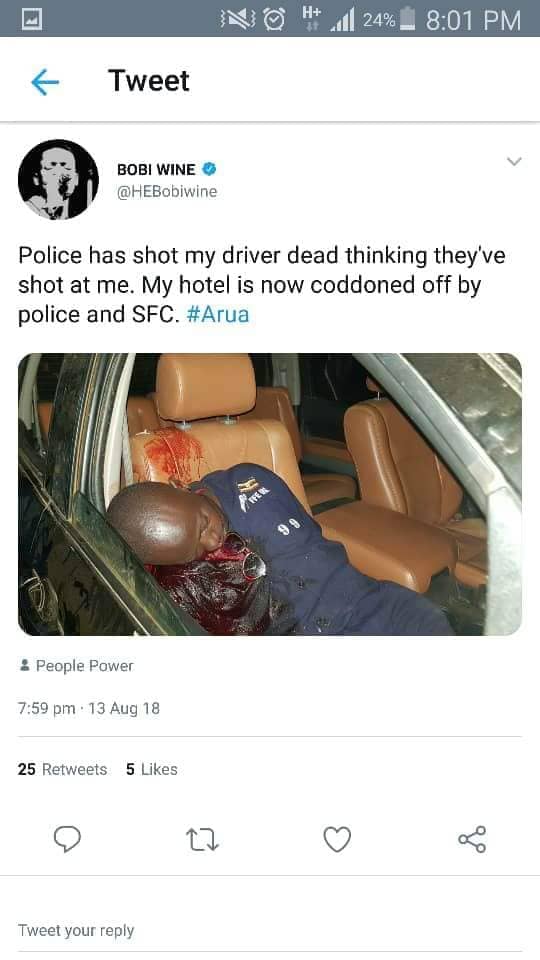
Bobi Wine's Tweet after the shooting of his driver

Yasin Kawooya, the driver of Kyadondo East Member of Parliament, Robert Kyagulanyi has been shot dead.

Kawooya was killed from from inside his car in Arua Municipality by unknown gunmen.

Kyagulanyi is in Arua to campaign for independent Candidate Kassiano Wadri.

Some sources say, Kyagulanyi’s hotel has been cordoned off by Police.

MP Bobi Wine tweeted moments after the incident that police shot his driver thinking they were shooting at him. His said his hotel had been cordoned off.

More to follow.

Stories Continues after ad

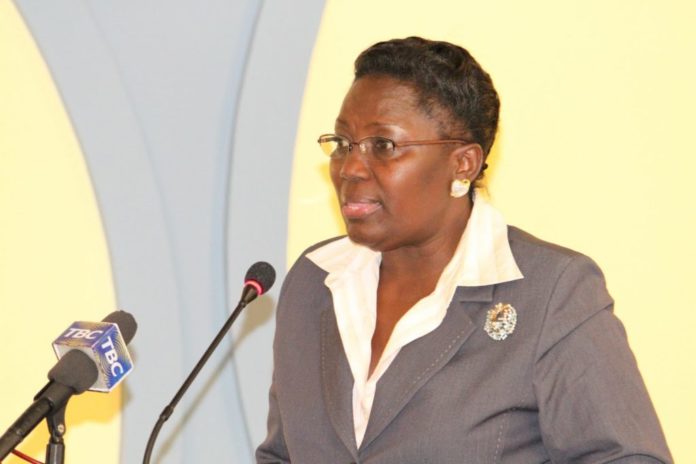
Kadaga vows to handle issues of reclaiming kingdoms assets

Speaker Rebecca Kadaga

The Speaker of Parliament Rebecca Kadaga has vowed to handle issues of reclaiming Kingdoms assets from the Central Government.

Kadaga was speaking at the commissioning of 400 local representatives, known as Isaazy of the King of Tooro, Oyo Nyimba Kabamba Iguru IV held at Tooro Kingdom Palace.

The Speaker’s assurance followed a request by the Prime Minister of Tooro, Bernard Tungwako to spearhead efforts to reclaim the Kingdom’s assets which include land titles.

He said some of the land titles of the kingdom still under central government include Kamwenge prison, Muhoti barracks and Kamwenge refugee camp among others.

“I want to assure His Majesty and the people of Tooro that we shall reclaim our assets. I am also pursuing Busoga assets because the central government gave us only the market. I will therefore, make a joint strategy for both Tooro and Busoga,” Kadaga said.

She also commended King Oyo for his unwavering commitment to revive and strengthen the culture of Tooro. She noted that many Ugandans cannot trace their clans, do not know their poems, dances and history.

“In this digital era where even English is adulterated, one should not allow our language Rutooro to be adulterated. I am very happy that you have taken up this important mission to bring back Tooro to its lost glory,” Kadaga said.

She urged the commissioned local representatives of the King to ensure that they use such opportunities to support the work of the Kingdom as well as Central Government.

“I want to appeal to you, the members of the Isaazy not just to remain decorated. You must be visible and reach the people so that they can benefit,” Kadaga said.

The Isaazy will be charged with collecting views from the locals and forward them to the King to be addressed. They will be spread in Tooro and among Tooro communities living outside the Kingdom, including in Kampala, Jinja, Mukono and the Diaspora.

Stories Continues after ad

Comesa-EAC-Ecowas start designing a digital networking platform for women entrepreneurs

The designing process of the 50 Million African Women Speak (50MWS) Digital Platform for women entrepreneurs has commenced following the kick-off workshop held from July 31 -August 10, 2018 at the COMESA Secretariat in Lusaka, Zambia.

Officials from COMESA, East African Community (EAC), Economic Commission for West African States (ECOWAS), African Development Bank (AfDB), and other stakeholders representing policy makers, women in business and service providers participated in the workshop.

The workshop was facilitated by Izertis Society Limited / P&L Global Joint Venture, a Spain based technology Consultancy Company which won the bid to develop the software and to design the platform.

The 50MWS is a three-year project funded by the AfDB, jointly implemented by three Regional Economic Communities (RECs) COMESA, EAC and ECOWAS in 38 countries.

The development objective of the project is to contribute to the economic empowerment of women through the provision of a networking platform to enable women to access information on financial and non-financial services. Specifically, the objective of the project is to establish a platform to improve the ability of women entrepreneurs to network and share information and to access financial services.

To achieve these objectives, the project will create a dynamic and networking platform for women entrepreneurs to connect them with one another in ways that will foster peer-to-peer learning, mentoring and the sharing of information and knowledge within communities, and access to trade finance and market opportunities between urban and rural areas, and across borders and between countries.

Addressing the participants during the official opening of the workshop, COMESA Assistant Secretary-General for Programmes, Ambassador Dr. Kipyego Cheluget urged the RECs and stakeholders to be innovative and develop a user-friendly platform that can be easily adopted by women entrepreneurs.

“The aim is to have a platform that is responsive and fit for purpose. We want a digital platform that will make it easier and convenient for women entrepreneurs to navigate and access the relevant information they need to develop and grow their business”, said Ambassador Cheluget.

He added that COMESA was making strides to invigorate her Member States towards the full adoption of digital technologies. The focus is on establishing seamless processes across the COMESA region to enable ease of doing business/trade and to enhance regional integration using information communication technologies (ICTs) as a tool.

Furthermore, he expressed his appreciation that the 50MWS project is being implemented at a time when COMESA is rolling out instruments of Digital Free Trade Area (DFTA) to minimize physical barriers in its Member States. Thus, the digital platform is expected to complement the ongoing efforts on enhancing the regional economic integration agenda.

The Head of the EAC delegation, Mary Makoffu, Director responsible for Social Sectors noted that the 50MWS initiative is an exciting project and all EAC Partner States are looking forward to the successful implementation in the East African region.

“The project will support current interventions which are providing women entrepreneurs with real time information on cross border market information such as prices of agricultural commodities, currency exchange rates and taxes charged by the revenue authorities. This helps women to make informed choices and save them time and money moving from one market to another searching for the trade commodities”, added Ms. Makoffu.

Ms. Makoffu also informed the meeting that the EAC had already held consultative meetings with all the EAC Partner States, which provided valuable feedback to enrich the platform design process.

Salimata Thiam, Principal Programme Officer (PPO) Gender at the ECOWAS Gender Development Centre, representing ECOWAS commended the AfDB for bringing the three RECs together to implement the 50 MWS project.

“In our view as ECOWAS, we envisage this project to enable women entrepreneurs in the three different sub-regions to interconnect, to share their experiences and to have access to useful information which will help them to improve their turnover”, said Thiam.

The 50MWSDigital Platform is expected to be fully functional at the beginning of 2019. Meanwhile, the three RECS will continue to engage their respective member States to introduce the project as well as setting up country teams who will be coordinating the implementation of the project at national level.

Stories Continues after ad

Bright Stars FC seals $40,000 sponsorship deal

Maroons Football Club Players. FILE PHOTO.

Bright Stars FC has sealed US $40,000 sponsorship deal with Japanese Yoshino Trading Company for 2018/19 football season.

The announcement follows Keisuke Honda’s buying of controlling interests in the club through his management company Honda Estilo.

Speaking before signing, Club Chairperson Ronald Mutebi applauded Yoshino Trading Company for choosing Bright Stars FC. He said that the partnership will push them towards improving the bright stars FC and clinching the startimes Uganda premier league trophy.

“Yoshino decided to partner with us because many people want to go for already established brands but they chose to develop with us. I want to promise that as a club, we shall fulfill the agreed principles within the contract,” he said at Matugga-Mwererwe.

However the exciting and attacking midfielder Kokas Opejo who remarked on behalf of players said, the club is delighted for the coming of Yoshino Trading Company on board saying as players, they believe that the deal will boost their income and promised to be more committed in the coming season.

Japanese Ambassador to Uganda Kazuaki Kameda who expressed greatness to witness partnership of both companies said the deal will brings Uganda and Japan not only in sports but in a number of sectors.

The coming of Yoshino Trading Company adds up to three sponsors with Lato Milk and Fero who recently signed with the club.

Last season Matugga club last finished eighth on the log with 27 points behind vipers the league champions.

Stories Continues after ad

Top two Kenyan CEOs arrested over fraud charges in the $3bn railway deal

Two senior Kenyan government officials have been charged in court with fraud over the building of a $3.2bn (£2.5bn) Chinese-funded railway line.

The two are accused of paying more than $2m in compensation to private firms which falsely claimed to own land through which the line ran.

The officials and 15 other accused have pleaded not guilty to the charges.

The railway line was Kenya’s biggest infrastructure project since independence from the UK in 1963.

President Uhuru Kenyatta opened it in May last year, hailing it as a new chapter in the East African state’s history.
The line runs between the port city of Mombasa and the capital, Nairobi, and construction was completed 18 months early.

It is supposed to eventually connect landlocked South Sudan, eastern Democratic Republic of Congo, Rwanda, Burundi and Ethiopia to the Indian Ocean.

But the project has been marred by corruption allegations, and claims by economists that the cost was too high.

It ran up a loss of about $100m in its first year of operation, official figures show.

The project was also condemned by wildlife groups as the line runs through the Tsavo National Park in south-eastern Kenya.

Kenya Railways head Atanas Maina and National Land Commission chairman Muhammad Swazuri were charged with fraud on Monday, following their arrest on Saturday.
Many Kenyans have welcomed the detention of the two men who were seen as “untouchables” because of the political influence they wielded, reports the BBC’s Ferdinand Omondi from Nairobi.

They were handcuffed after they took their seats in the dock at a magistrate court in Nairobi.
The directors of several companies are among the 17 accused, our reporter adds. They all denied the charges.

The arrests are the latest sign of the government intensifying its campaign to end the culture of impunity in Kenya, our reporter says.

The government has demolished several landmark buildings in Nairobi in the past week, and hundreds more are being targeted in a drive to reclaim public land.

Speaking during a church service on Sunday, Mr Kenyatta said: “Over the last few weeks I have lost so many friends.

“I have received many calls, being asked: ‘How can you sit and just watch all this destruction going on. You must stop it.’ But I said, it is difficult to stop, not because we love to destroy but because we must fight impunity.”

Stories Continues after ad

Kasaija bows to pressure, drops Bagyenda from FIA board

Embattled former Executive Director in charge of Supervision at Bank of Uganda Justine Bagyenda.

Finance Minister Matia Kasaija has bowed to pressure and finally dropped the appointment of Justine Bagyenda, the former director of supervision at the Bank of Uganda (BOU) on the Financial Intelligence Authority (FIA) Board.

In a May 7, 2018 letter to Speaker Rebecca Kadaga, Matia Kasaija re-appointed Bagyenda to the FIA board for the second term even as she is under investigation by the same FIA and facing a separate investigation by the Inspector General of Government (IGG) over allegations of illicit accumulation of wealth while a motion demanding that a Select Committee be set up to investigate the operations of Bank of Uganda and her role in the closure of Crane Bank is on the Order Paper.

Sources at Ministry of Finance, Planning and Economic Development told Eagle Online that Bagyenda was dropped this morning by Kasaija.

“Ms Bagyenda has been told that due to the public outcry, she won’t be serving on FIA board because if she did remain, it would be bad for the board” a source said on condition of anonymity.

Last month, there was an uproar in the public and parliament when legislators learnt Kasaija had nominated Ms.Bagyenda to serve her second term on FIA board yet she was a subject of investigations.

The legislators fumed when they heard Kasaija had nominated Bagyenda when she had been relieved of her duties at BoU by Governor Tumusiime Mutebile in February 2018 in a major internal staff transfer that saw her replaced by Dr Tumubweine Twinemanzi.

Following public outcry, on August 9, Kasaija said that he was ready to withdraw the nomination of Bagyenda to serve as a board member of the FIA should Parliament decline to vet her on moral grounds being that, she is still under investigations.

Investigations on Bagyenda’s source of wealth was prompted by leaked bank details that showed she had over Shs19 billion in three different Banks and 17 properties in prime areas.

MPs under the African Parliamentary Network against Corruption recently made their statement discouraging the minister Bagyenda’s reappointment on the FIA, the controversies surrounding her right now.

Apart from FIA, troubled Bagyenda is also being investigated by the Inspector General of Government (IGG) for similar allegations of accumulation of wealth which was not commensurate to her monthly earnings as a civil servant.

Kasaija in his defence said that he nominated Bagyenda on the board before she ‘retired’ from BoU and allegations against her had not yet emerged.

“The information we had at that particular time, this issue had not arisen,” he said, adding that he would listen to the directive of Parliament on Bagyenda’s matter.

“I proposed her name to Parliament. It’s up to Parliament now to tell me what to do, because if I took a decision it would mean I’m prejudging Ms Bagyenda. The names were sent to Parliament for vetting, if Parliament says no and they have got good reasons, I will abide because I can’t appoint until Parliament has given me the authority to do so,” Kasaija said.

The new development, according to the sources, shows that Kasaija has listened to the public’s cry and Bagyenda might take a long time before getting a government appointment.

Stories Continues after ad

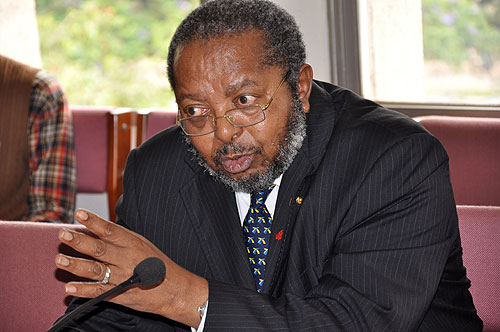
BoU keeps CBR unchanged at 9 per cent

BoU Governor Emmanuel Tumusiime Mutebile

The Bank of Uganda has kept its key lending rate at 9.0 per cent in August, and its governor Prof. Emmanuel Tumusiime-Mutebile said economic growth in the country was robust because of previous rate cuts that had lowered lending rates.

“Indeed, weighted average lending rates fell to 17.7 per cent in June 2018 from 25.2 per cent in February 2016 when Bank of Uganda (BoU) started easing monetary policy,” he said on Monday.

“The BoU’s Composite Index of Economic Activity (CIEA) projects robust growth in the first half of 2018, with annualised growth of about 6-6.5 per cent.

Mutebile told journalists in Kampala that there are risks to the growth outlook of the Ugandan economy, including from balance of payments pressures, while the shilling’s exchange rate remained vulnerable and poses risks to inflation.

“Given the objective of keeping inflation close to the target and the need to contribute to attaining sustainable economic growth, a neutral monetary policy stance is warranted. “The BoU will therefore maintain the Central Bank Rate (CBR) at 9.0 per cent,” he said.

According to Mutebile, the weaker shilling exchange rate combined with higher oil price assumptions could result in a more elevated inflation trajectory.

He projected food prices to remain low in the forecast horizon and that are not seen as a major risk to the inflation outlook. However, he said that could quickly change depending on the weather conditions in the country.

“A key risk to the inflation outlook is the shilling exchange rate which remains vulnerable to domestic market conditions and the possibility of tighter global financial conditions,” he said.

He said “Core inflation was forecast to continue rising and peak in the range of 6-7 per cent in the second half of the financial year 2018/19 but would later on stabilise around the medium-term target of 5 per cent by end of the year 2019.

“The rise is a result of a combination of several factors: increase in fuel prices, the closure of the negative output gap and the increased taxes,” he said

The governor said the heightened depreciation pressures experienced during the last quarter of the last financial year 2017/18 were in part driven by speculative activity in the foreign exchange market, which resulted in the exchange rate overshooting its long-run equilibrium.

“The foreign exchange market has, however, stabilised with only intermittent demand surges. The BoU international reserve levels remain adequate to maintain stability in the foreign exchange market,” he said.

Economic growth

He said Economic growth continued to strengthen, with the real Gross Domestic Product (GDP) growth for financial year 2017/18 estimated at 5.8 per cent compared to 3.9 per cent in the financial year 2016/17.

“There are nonetheless downside risks to this growth outlook including challenges relating to financing of public investment programmes and the weak external balance position coupled with escalation of global trade tensions,” he said.

He said the current account balance was relatively weaker in the financial year 2017/18, with the current account deficit as a ratio of GDP widening to 5.8 per cent from 3.4 per cent in the year 2016/17. That deficit was partly funded by inflows in the financial account driven by FDI and other related inflows.

Over the medium-term, the economic growth, he said, would be supported by public infrastructure investments, improving agricultural productivity, recovery in Foreign Direct Investment (FDI), and strengthening private sector credit (PSC) growth.

Stories Continues after ad

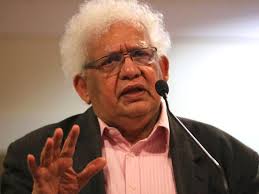
Welcome to the multipolar world: Trump and China roles in transformation

Meghnad Desai

By Meghnad Desai

Memories are short. Many people forget that the ubiquitous liberal free trade order is only around 25 years old. We can date its start to the aftermath of the fall of the Berlin wall and the break-up of the Soviet Union. The European Union’s single market started in 1993; the World Trade Organisation was set up in 1995.

What is in no doubt is that the (re)birth of a multipolar world is a reality. In a three-part series, I look at the US and Chinese roles in catalysing this transformation, the implications for different economies around the globe, why most of the changes we are witnessing were predictable, and why we should not necessarily fear them.

US President Donald Trump plays a big part in this. The liberal free trade system he is seeking to redefine was never as liberal as its champions claim, but it has defined the global order. The other pivot has been the military umbrella the US provides through the North Atlantic Treaty Organisation, formed in 1949, which Trump now appears to wish to dismantle.

The end of the 1945-1991 cold war and the WTO’s genesis made commentators call the 1990s ‘the end of history’. Western political and economic systems allegedly represented the conclusion of humanity’s sociocultural evolution, with the US as the sole superpower. It was never as simple as that. Many in the liberal order wished for a multipolar world. And this is what they have now got.

There are some piquant ironies here. When Chinese President Xi Jinping asserted his support for globalisation and free trade at the January 2017 Davos World Economic Forum, many European leaders hailed the rebuff to Trump’s assault on the modern liberal order.

China was championing free trade while not fulfilling the WTO’s conditions for qualification as a free market economy. China’s state subsidies are opaque. It blocks market access to outside investors, and it has a dubious record on protecting intellectual property rights. The EU, for its part, is a customs union that, by definition, does not practise free trade but is a protectionist agreement. Only the US is a practitioner of free trade, except in the case of farm products, where all countries are sinners.

Trump says the US can no longer afford to be the generous provider of such global public goods as Nato, the world trading system, and international sea lanes policed by the US navy.

In 1945, most economies were shattered after a decade of depression and then six years of world war. Most economies had been using tariffs and quotas to trade with each other, with Britain a relatively liberal outlier. The US led the postwar reconstruction of free trade, abandoning its high tariff policy of the previous 100 years and introducing a series of mutual tariff cuts under the 1947 General Agreement on Tariffs and Trade, with the Kennedy round in 1964 and Tokyo round in 1973 being the larger ones. These were mainly between developed countries. The Uruguay round, which began in 1986, included emerging markets as active participants, foreshadowing the WTO’s 1995 establishment.

In the beginning, protectionism was allowed for developing nations, just as European countries were permitted a common market and customs union, a major departure from free trade. With the signing of WTO, all were on the same level regarding permissible domestic trade policies. But, between 1945 and the mid-1990s, the shape of the global economy had changed.

During the cold war the US and Soviet Union competed on many fronts without engaging in direct conflict. The US fought a long proxy war against communism in Northeast Asia during the Korean war and later in Southeast Asia. Despite suffering major losses in both territories, the US repelled the challenge, driving the Soviet Union into dissolution.

But this was only part of the reshaping of the global economy. The US abandoned the gold-dollar link in 1971. Oil prices quadrupled in 1973. Innovations in satellite communications and shipping made it economical for manufacturing industries to shift from high-wage developed countries to Asia’s low-wage economies. Advanced economies moved up the value chain with successful high-tech and service sectors, especially financial services. Emerging economies in Asia began to industrialise rapidly and demanded access to developed economy markets during the 1986 Uruguay round – an attractive proposition for western companies. Consumers in developed economies benefited from lower manufacturing prices. The US accrued huge trade deficits as the world invested its savings in US Treasury securities.

Thus began the ‘Davos age’ of globalisation. However, along the way the manufacturing labour force in developed economies had shrunk, and the wages of low-skilled workers had stagnated. The financial sector made borrowing easier with subprime mortgages and similar innovations. For a while between 1995-2008, everyone was happy. But it couldn’t last. And it didn’t.

Lord (Meghnad) Desai is Emeritus Professor of Economics at the London School of Economics and Political Science, and Chair of the OMFIF Advisers Council.

This is the first in a series of three articles on the multipolar world and the impact of President Donald Trump on the modern liberal order of free trade and international relations. The second article will be published on 15 August.

Desai was among the relatively few international political commentators taking Trump seriously before the November 2016 presidential election.

Stories Continues after ad

Over 500 expected to attend global logistics convention in Kampala

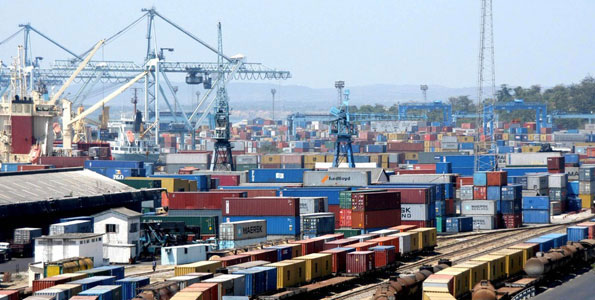
Containers at Mombasa Port

Over 500 delegates from across the world are expected to attend the Second Edition of the Global Logistics Convention (GLC) in Kampala from September 17-18, 2018, organisers have said.

The event is being organised by Uganda Freight Forwarders Association (UFFA) in partnership with the National Logistics Platform and the Ministry of Works and Transport.

The event will be held under the theme: “Freight Logistics: The Edge to Competitiveness”.

“Uganda is a land locked country, but transport and logistics offers a unique opportunity to become land-linked, and the convention presents an opportunity to share best practice in trade and policy, engage a wide range of stakeholders, and define roles and responsibilities in the development process to facilitate a competitive environment for the sector” Gideon Badagawa, the Executive Director of Private Sector Foundation Uganda (PSFU).

The Convention is expected to attract include logisticians, finance institutions, insurance firms, manufacturers and traders, truck and equipment dealers, government officials, civil society organizations, development Partners, academicians, and other private sector stakeholders from all over the region.

The Convention will include a cocktail of tailor-made activities such as key note presentations, motivational talks, conferences, stimulating discussions, sharing sessions, exhibitions, media engagements and networking events which will be facilitated by experts in the sector, government officials and development partners from within and beyond the region.

“We are very excited about the level of enthusiasm we have received from speakers, sponsors and attendees for this unique conference,” said Hussein K, Kiddedde, Chairman Organising Committee GLC 2018 and Chairman UFFA.

He added: “We look forward to bringing together the many business leaders in Frieght and Logistics industry for a substantive discussion of real-world solutions to key issues facing the Logistics industry today.”

Stories Continues after ad