Stanbic Bank
Stanbic Bank
19.8 C
Kampala
Stanbic Bank
Stanbic Bank
Home Blog Page 151

President Museveni Appoints Dr. Flavian Zeija as Deputy Chief Justice

President Yoweri Museveni has appointed Dr. Flavian Zeija as Uganda’s Deputy Chief Justice, replacing Justice Richard Buteera, who is set to retire in May 2025.
Dr. Zeija has served as Principal Judge since December 25, 2019. He holds a Bachelor of Laws (LLB) and a Master of Laws (LLM) from Makerere University, along with a Postgraduate Diploma in Legal Practice from the Law Development Centre (LDC) in Kampala.


Additionally, he earned a Doctor of Philosophy (PhD) in Law from the University of Dar es Salaam and a Master of Business Administration (MBA) from Uganda Martyrs University.
Dr. Zeija has extensive experience in legal practice, academia, and the judiciary:


He began his career in 1998 as a legal assistant at Kwesigabo, Bamwine, Walubiri & Company Advocates in Kampala. Later, he became the managing partner at Zeija, Mukasa & Company Advocates before joining the judiciary.
Zeija served as Manager, Legal & Recovery at Tropical Africa Bank (2002–2003) and later as Legal Counsel at FINCA Uganda Limited.
He taught law at Uganda Christian University (UCU), Makerere University, and Makerere University Business School (MUBS), where he was the founding head of the Department of Business Law.
He was appointed as a High Court Judge in 2016, serving as Resident Judge of the Mbarara High Court Circuit, the largest in Uganda. In December 2019, he was elevated to Principal Judge.
Dr. Zeija’s appointment as Deputy Chief Justice further strengthens Uganda’s judiciary, bringing both legal expertise and administrative leadership to the role.

Stories Continues after ad

Future-Fit Financing for African Mining Hinges on ESG

The world is rewriting its rulebook. It’s no longer just about what you produce but how you produce it. For resource-rich regions like Africa, the implications are profound: the value of its vast reserves of critical minerals is now tied not only to their abundance but also to the ethical and sustainable frameworks governing their extraction and processing.
Emerging global policy shifts and tariff measures aimed at greener trade and decarbonised supply chains will undoubtedly put African mining under significant scrutiny – and whether this weight is merited or not depends on the lens through which it’s viewed.
From one perspective, this scrutiny is justified. The global climate crisis demands urgent action, and decarbonising industries like mining is an essential part of that response.
African mining cannot be an exception to this, especially since critical minerals like cobalt, lithium, and rare earths are central to enabling the green energy transition globally. For the world to achieve net-zero goals, every link in the supply chain – including mining – must contribute.
However, the counterpoint is equally valid: this pressure comes in a context of global inequity. African nations bear minimal historical responsibility for the carbon emissions driving climate change, yet they are being asked to shoulder significant burdens in the form of decarbonisation, often without sufficient financial or technological support.
Herein lies the paradox.
While the world’s green energy future depends on African minerals, developed ESG requirements risk leaving the continent’s mining industry less competitive and more isolated. Bridging this gap requires urgent solutions – targeted financing, infrastructure investment, and collaborative frameworks that enable African mining to align with global sustainability goals without undermining its economic stability.


The greatest and most immediate hurdle to overcome is the upfront capital required to make the transition to greener operations, and today’s financiers and investors are increasingly prioritising ESG-aligned projects over pure profitability. For African mining, this means that attaining future-fit financing is contingent on demonstrating tangible commitments and progress in three areas: environmental sustainability, social responsibility, and sound governance.
But this is easier said than done.


Green bonds, for example, are often touted as a silver bullet for sustainable financing, but their utility in the mining context isn’t straightforward. For one, issuing a green bond requires not only a level of transparency, reporting capability, and project predictability—areas where many African mining companies, particularly smaller operators, are still actively building capacity—but also a demonstrable commitment to financing green activities, such as renewable energy projects. Moreover, the bond market typically favours projects with a high degree of perceived stability and lower risk, often sidelining countries or companies that need this capital the most.


Sustainability-linked loans too, which allow mining companies to finance general operations while embedding green incentives into their borrowing structure, depend on clear, measurable targets. To date, these have often been tied to carbon reduction or water use. This requires sophisticated monitoring systems and ESG frameworks, which many African companies are still developing. In regions where even baseline ESG data collection is sporadic, it is difficult to ensure that these mechanisms don’t inadvertently exclude companies that have the will but not the capacity to track and report progress.


The real issue, therefore, is not the tools themselves but the systems in which they operate. The African mining sector needs a financing ecosystem that addresses inherent risk perception, builds local capacity for compliance and reporting, and prioritises projects that deliver both sustainability and economic impact. The mechanisms are valuable, but without structural reforms to how they’re deployed, there is a risk of designing solutions for a system that doesn’t yet exist in practice.


Future-fit financing therefore means investing not just in the mines but in the broader systems that support them. For example, financing renewable energy infrastructure that powers mining operations and surrounding communities or improving transportation networks to reduce the carbon footprint of mineral exports. These systemic investments are ESG-aligned by design, creating a feedback loop where the mining sector becomes a driver of regional development and resilience.
We should acknowledge that the path to a greener future for African mining requires tailored financing models that allow for a just transition, ensuring that workers, communities, and economies don’t bear the cost of compliance alone.


It’s about creating a mutually reinforcing cycle where ESG-driven investments make African mining more competitive, sustainable, and inclusive – where African minerals power the global energy transition, and African communities thrive as equal partners in that transformation.
The writer is the Director for Coverage, Resources & Energy, Absa Securities United Kingdom and Chetan Jeeva, Head of SA Corporate Lending at Absa CIB

Stories Continues after ad

BoU Maintains Central Bank Rate at 9.75%

Bank of Uganda

The Bank of Uganda (BoU) has kept the Central Bank Rate (CBR) at 9.75%, citing stable domestic inflation and a resilient economy.
According to BoU, inflation trends have remained in line with projections, supported by monetary policy measures and reforms in the Interbank Foreign Exchange Market. These actions have strengthened the foreign exchange market and contributed to exchange rate stability.
Favorable food and energy prices, along with relatively low global inflation, have also played a role in controlling domestic inflation. Over the twelve months leading up to January 2025, annual headline and core inflation averaged 3.4% and 3.8%, respectively. However, in January 2025, headline inflation rose to 3.6% (from 3.3% in December 2024), while core inflation increased to 4.2% (from 3.9%), mainly due to rising service costs, particularly in passenger transport.
“Despite seasonal food price increases, near-term inflation remains manageable. However, the short to medium-term outlook is uncertain, largely due to external risks. The BoU forecasts annual core inflation to range between 4.0% and 5.0% in 2025, stabilizing in the medium term,” the statement reads.
Economic activity remains strong, with business confidence holding firm despite global economic challenges and slow private sector credit growth. The Uganda Bureau of Statistics (UBOS) reported a 6.7% real GDP growth in Q1 of FY 2024/25, up from 6.2% in the previous quarter and 5.6% in the same period last year. This growth was driven by a significant rebound in industrial activity.
Looking ahead, Uganda’s GDP is projected to grow by 6.0%–6.5% in FY 2024/25 and reach 7.0% in the coming years, supported by a stable macroeconomic environment, Increased foreign direct investment (FDI) in the extractive sector, Government initiatives for wealth creation, Growth in agriculture and anticipated oil revenue
The Monetary Policy Committee (MPC) acknowledged that while inflation may rise in the short term, it is expected to return to target levels in the medium term. However, uncertainties in the global economy could accelerate inflation and impact economic activity, necessitating a cautious monetary approach.
“The CBR remains at 9.75%, with bands at +/-2 percentage points. The rediscount rate is 12.75%, and the bank rate is 13.75%,” the committee said.
The MPC believes that the current CBR level effectively balances inflation control with economic growth. Future adjustments will depend on new data and risk assessments.

Stories Continues after ad

Court Remands Accountant General, seven others over Shs 60 billion fraud at Bank of Uganda

The Anti-Corruption Court has remanded Accountant General Lawrence Semakula and seven officials from the Ministry of Finance and Economic Development over the alleged embezzlement of Shs 62 billion from the Bank of Uganda (BoU).
The case stems from a December 2024 revelation by Henry Musasizi, the Minister of State for Finance (General Duties), who disclosed that BoU accounts had been compromised, leading to the loss. However, Deputy Governor Michael Atingi-Ego clarified that there was no evidence of hacking into the Central Bank’s IT systems.


Details of the Fraudulent Transactions
The stolen funds were originally meant for the World Bank and the African Development Fund but were misdirected in two major transactions. On September 12, 2024: $6,134,137.75 meant for the World Bank was instead sent to Roadway Co. Limited via MUFG Bank, Japan.


September 28, 2024: $8,596,824.26 intended for the African Development Fund was wrongly transferred to MJS International, London, UK.


By December 2024, BoU had successfully recovered $8,205,133.84 from MJS International and credited it to the Consolidated Fund. Efforts are ongoing to retrieve the outstanding $391,660.45.


Charges and Court Proceedings
Appearing before Chief Magistrate Recheal Nakyazze, the accused were charged with 11 counts, including:  Money laundering, Electronic fraud, Causing financial loss, Abuse of office and others.
The suspects were remanded to Luzira Prison until February 18, 2025.

Stories Continues after ad

A decline in Uganda’s business conditions marks beginning of 2025

There was a fall in consumer demand during January dropping the headline Stanbic Purchasing Managers’ Index (PMI) to 49.5 compared to the December reading of 53.1. Readings below 50.0 are indications of deterioration of private sector operating conditions.
Christopher Legilisho, Economist at Stanbic Bank said, “Surprisingly, the Ugandan Purchasing Managers’ Index (PMI) eased in January as new orders and output reflected subdued consumer demand. The private sector may well have lost momentum in January. Further, backlogs declined due to less consumer demand.”
The Stanbic PMI is compiled by S&P Global from responses to monthly questionnaires sent to purchasing managers. The sectors covered by the survey include agriculture, mining, manufacturing, construction, wholesale, retail and services.
The PMI is a weighted average of the following five indices: New Orders (30%), Output (25%), Employment (20%), Suppliers’ Delivery Times (15%) and Stocks of Purchases (10%).
According to the latest survey, lower new orders subsequently dampened business activity levels, which were broadly unchanged on the month in January. Unlike the fall in new business, which was largely centred on the service sector, the decline in output was broad-based by monitored segment.
Legilisho said, “However, quantities purchased increased, and inventories and supplier delivery times improved due to optimism about future output and efficiency gains by vendors. Therefore, the retreat in new orders and output may prove temporary.”
He said, “Firms reported an increase in input costs due to higher utility bills as well as a rise in purchase prices for staple products, for instance, foodstuff, stationery, cement and toiletries. Staff costs rose, with a slight uptick in the manufacturing, wholesale, and retail segments. Output prices too increased as firms passed on higher input and purchase prices to consumers. This implies a slight rise in inflationary pressures in January compared to the case in December, aligning with the inflation print that rose to 3.6% y/y. The private sector is upbeat about the business outlook for the next 12 months.”
Average input prices continued to increase at the start of 2025, following higher reported purchase and staff costs. Survey respondents noted that utility and raw material costs ticked up, with some also mentioning increased overtime payments to staff.
Ugandan businesses raised their selling prices, in response, with output charges increasing for the fifth month running. Although the uptick in total input prices was broad-based by sector, construction registered a reduction in output charges in January.
Ugandan private sector firms cut employment for the third month running in January, amid lower new orders and renewed evidence of spare capacity. Companies indicated a drop in backlogs of work, following an increase in December.
Nonetheless, private sector firms were upbeat in their expectations regarding the outlook for output over the coming year. Business confidence was positive in all sectors amid hopes of stronger demand conditions in the coming months. Finally, despite hikes in purchase costs, Ugandan businesses signaled another monthly increase in input buying in January
Finally, despite hikes in purchase costs, Ugandan businesses signaled another monthly increase in input buying in January. A fourteenth successive monthly improvement in vendor performance helped support firms’ efforts to build safety stocks, as inventories rose further.

Stories Continues after ad

Uganda’s Collective Investment Scheme Assets Surge Past $1 Billion Mark

Uganda’s Collective Investment Schemes (CIS) have achieved a significant milestone, with assets under management (AUM) surpassing US$1 billion for the first time. As of the end of December 2024, the total AUM for licensed CIS reached UGX 3.85 trillion (US$1.05 billion), according to the latest quarterly bulletin released by the Capital Markets Authority (CMA).

This surge in AUM represents substantial growth, with a 9.6% increase from UGX 3.51 trillion at the end of September 2024, and a remarkable 63.2% jump from UGX 2,357.5 billion at the end of December 2023. The number of funded CIS accounts also saw significant growth, rising by 11.6% in the last quarter to reach 113,445, and expanding by an impressive 60.29% year-on-year.

Several factors have contributed to this impressive growth. The CMA highlights a robust regulatory environment that has fostered investor confidence, coupled with public awareness campaigns by both the CMA and CIS managers. The availability of mid-term savings accessed by National Social Security Fund (NSSF) members has also provided a significant boost to CIS investments. Furthermore, the number of licensed CIS managers has increased to seven, including prominent firms such as Britam Asset Managers Uganda Limited, ICEA Lion Asset Management Limited, and Sanlam Investments East Africa Limited, offering investors a wider range of options.

Regionally, Uganda’s growth in CIS AUM positions it competitively. While Kenya leads the region with US$2.44 billion in AUM, Uganda’s figures are comparable to Tanzania’s US$1.05 billion.

Table 1: Jurisdictional Comparison of Number of CIS Investor Accounts and CIS AUM as of 31st December, 2024

IndicatorUgandaKenyaTanzania
CIS Assets under Management (US $ million)1,050.12,444.91,051.3
CIS Assets under Management to GDP (%)2.32.21.5
Number of CIS Accounts113,4451,299,300361,254

Josephine Okui Ossiya, CEO of the Capital Markets Authority, commented on the achievement, stating, “We continue to see remarkable growth in CIS AUM as more Ugandans recognize the advantages of investing through pooled savings vehicles. The strong regulatory framework has boosted investor confidence by ensuring protection when investing in regulated financial products like CIS funds. We urge Ugandans to invest only in regulated financial products or engage with licensed entities to safeguard and grow their hard-earned savings.”

This milestone underscores the growing sophistication of Uganda’s financial sector and the increasing public trust in regulated investment vehicles. The CMA’s continued efforts to promote financial literacy and strengthen regulatory oversight are expected to further drive growth in the CIS sector in the years to come.

Stories Continues after ad

Uganda’s first female police officer dies at 85

Pauline Maniraguha Bangirana, the first woman to join the Uganda Police Force has died at 85 years of age.
News about her death has been revealed by Director of Criminal Investigations Department at Parliament Police, ASP Charles Twiine.


“Iconic Rtd. Superintendent of Police Pauline Bangirana,Uganda’s 1st female Police officer, has passed on! She broke barriers in 1961 & paved the way for women in law enforcement!,” ASP Charles Twiine revealed.


ASP Charles Twiine wished the Uganda Police to honor her legacy and accord her an official burial.
However, the cause of her death has not been revealed and burial arrangements will be communicated later.
Pauline Maniraguha Bangirana joined the Uganda Police Force in 1960, as part of the pioneer cohort of 10 women and her first posting was in the Traffic Department.


She has since served as the Officer in Charge (OC) of the Central Police Station, DPC (District Police Commander) Old Kampala, and Officer in Charge, Nsambya Barracks.
In 1964, Pauline was posted to the criminal investigations department where she investigated the ‘Okoya Murders’, in which Idi Amin was the main suspect. She also handled the investigation case of Archbishop Janan Luwum’s murder.
In her autobiography: “To be Shrewd Without Appearing a Shrew”, Pauline Maniraguha Bangirana shared her knowledge of the evolution of security services in Uganda from her own experience, including what had been going wrong with security and Police since Independence.

Stories Continues after ad

Govt Commits to Tackling Rising Cases of Drowning

The government has pledged to address the increasing cases of drowning in major water bodies across the country.
Drowning remains a significant but often overlooked public health concern. According to the World Health Organization (WHO), it is the third leading cause of unintentional injury-related deaths globally, accounting for approximately 370,000 fatalities annually. Nearly 45% of these victims are under the age of 20.
In Uganda, where fishing is a primary source of livelihood for lakeside communities, drowning poses a major risk. Despite working in hazardous water environments, more than 33% of Ugandan fishermen cannot swim, making them particularly vulnerable. The country records some of the highest drowning rates in the region, with over 1,435 fatal and non-fatal cases documented between January 2016 and June 2018 across more than 60 districts. Nearly 90% of the victims were male.
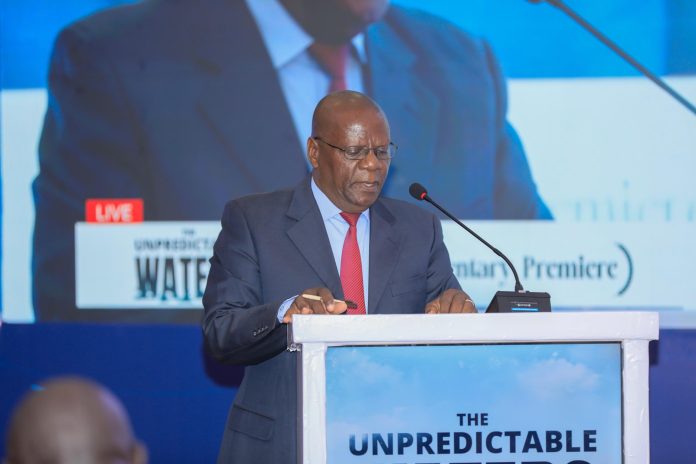
Speaking at the premiere of Unpredictable Waters a documentary highlighting the dangers faced by lakeside communities Eng. Tumusiime reaffirmed the government’s commitment to drowning prevention. He emphasized that this effort is being reinforced through policy frameworks, including the draft National Water Safety Strategic Plan (2023-2028).
“Uganda is blessed with abundant water bodies, but they come with challenges, including drowning. Children and young people are the most affected. In 2023 alone, 138 drowning fatalities were reported, highlighting the urgent need for action,” he stated. “This documentary sheds light on the issue and offers practical solutions to save lives.”
The event also showcased the Drowning Prevention Project, an initiative by Reach A Hand Uganda (RAHU) launched last year. The project aims to enhance drowning prevention efforts and promote water safety in lakeside districts such as Mayuge, Rakai, and Masaka.
RAHU’s Acting Country Director, Benson Muhindo, emphasized the need to integrate swimming lessons into school curricula and establish community swimming pools to equip children with essential life-saving skills.
“We have identified three locations in affected districts where swimming pools will be built to teach basic water safety and survival skills,” he announced.
Joe Kigozi, a RAHU Board Member representing Board Director Edna Mbabazi, stressed that drowning prevention is not just a safety measure but a critical public health priority, particularly for Uganda’s predominantly young population. He highlighted that the documentary serves as an advocacy tool for stronger interventions.
The premiere also featured a panel discussion where experts underscored the need for coordinated strategies to reduce drowning risks.
Commissioner Sowed Ssewagudde from the Department of International & Transboundary Water Affairs at the Ministry of Water & Environment revealed that Shs 14 billion is still required to strengthen interventions at various water bodies and communities.
“Out of the Shs 25 billion needed, Shs 11 billion has already been sourced through ongoing activities. The remaining Shs 14 billion is required for implementing key interventions such as early warning systems, teaching schoolchildren to swim, and purchasing water ambulances to improve rescue operations,” he said.

Stories Continues after ad

Kirk Whalum, Isaiah Katumwa to Headline Jazz in the Pearl Festival

World-renowned saxophonist Kirk Whalum and Uganda’s celebrated saxophonist Isaiah Katumwa, who has not performed in Uganda since relocating to the United States, are set to grace the dfcu Jazz in the Pearl Festival.
The festival promises a dynamic cultural collaboration, not only entertaining audiences but also elevating Uganda’s jazz music industry. Set to take place on May 10, 2025, at Kampala Serena Hotel, the event will bring together top national and international jazz stars for an unforgettable experience blending global and African musical influences.


Jazz in the Pearl envisions becoming East Africa’s premier jazz festival—one that celebrates the genre’s historical roots, cultural significance, and growing popularity. The festival will also provide a platform for local Ugandan jazz musicians to perform alongside international stars, fostering artistic exchange and future collaborations.


“Music has an extraordinary ability to transcend boundaries and connect people. dfcu Bank is proud to bring you the dfcu Jazz in the Pearl Festival because we deeply believe in the power of connection. For six decades, we have been driven by a vision of building a community of progress, and this concert allows us to celebrate that journey with the Ugandan people,” said Charles Mudiwa, CEO of dfcu Bank.
Marking his long-awaited return to Uganda, Isaiah Katumwa will perform alongside Kirk Whalum, whose Grammy-winning artistry has captivated audiences worldwide. They will be joined by Tshaka Mayanja and the Black Roots Academy of Soul, one of Uganda’s most talented jazz ensembles.
According to Mudiwa, the Jazz in the Pearl Festival is more than just a musical celebration—it is a tribute to the jazz culture that dfcu Bank is committed to promoting and preserving. Through this festival, dfcu Bank continues to cement its reputation as a forward-looking, aspirational institution that honors tradition while embracing the future.

Stories Continues after ad

Uganda’s Betting Boom and the Rise of Sports and Online Gambling

The betting industry in Uganda has experienced significant growth, becoming an important part of the nation’s entertainment landscape. Sports betting, in particular, has captured the interest of many Ugandans, reflecting broader changes in recreational activities. As the sector continues to expand, it presents both opportunities and challenges for Ugandan society.

In recent years, sports and online gambling have become integral components of Uganda’s entertainment scene. This surge is a reflection of wider shifts in how leisure is perceived and engaged with across the nation. The evolution of betting in Uganda is deeply intertwined with technological advancements and cultural shifts that mirror global patterns. Platforms like Bestbetting.ug have emerged as comprehensive resources, offering detailed information, comparisons, and reviews of various betting sites to help users make informed decisions.

The Development of Betting in Uganda

Betting in Uganda has undergone significant transformation over the past decade. Historically seen as a niche activity, it has blossomed into a mainstream form of entertainment. The rapid increase in internet accessibility has been a crucial driver behind this boom, allowing more Ugandans to participate in online betting activities. Sports, particularly football, have also played a pivotal role in this evolution, captivating audiences and creating a fertile ground for sportsbooks to thrive.

Bestbetting.ug serves as a valuable resource for those interested in understanding the dynamics of this growing market. The platform provides comprehensive insights into various betting sites and practices, ensuring that Ugandans can make informed decisions when venturing into online betting. Legal frameworks have also evolved to accommodate the burgeoning industry, with regulators working to ensure fair play and integrity within the market.

While this growth signifies positive economic impacts, such as increased tax revenues and job creation within the industry, there are challenges that come with it. Issues such as gambling addiction and its socio-economic repercussions necessitate attention from both stakeholders and policymakers.

Impact on Ugandan Society

The rise of betting has left an indelible mark on Ugandan society, influencing both cultural norms and economic landscapes. On one hand, it has contributed significantly to job creation and the generation of tax revenue, which are crucial for national development. Bookmakers and betting apps offer employment opportunities across various sectors, from customer support to IT development.

However, the cultural implications of this boom cannot be ignored. Gambling addiction poses a substantial challenge that requires comprehensive intervention strategies. Efforts to combat this issue must focus on education and awareness campaigns that promote responsible gambling practices among bettors.

Moreover, legal betting presents an opportunity for societal growth if managed appropriately. By regulating the industry effectively, authorities can harness its potential while safeguarding citizens against its pitfalls.

The Role of Online Platforms

Online platforms have revolutionized the betting landscape in Uganda by providing convenient access to gambling services. With mobile betting becoming increasingly popular, these platforms offer unparalleled ease of use and accessibility. For many Ugandans, mobile devices serve as the primary means of engaging with betting sites.

Bestbetting.ug is a comprehensive online platform dedicated to sports betting in Uganda. It offers detailed information, comparisons, and reviews of various betting sites to help users make informed decisions. By leveraging these resources, bettors can navigate the complex world of online sportsbooks more effectively.

This digital transformation allows bookmakers to reach broader audiences while providing customers with diverse options tailored to their preferences.

Responsible Gambling Initiatives

The rise in gambling activities has prompted both governmental bodies and organizations to advocate for responsible gambling initiatives. Regulatory measures have been introduced to promote safe betting environments while protecting vulnerable individuals from exploitation.

Educational campaigns play a vital role in these efforts by raising awareness about potential risks associated with excessive gambling behavior. These initiatives emphasize moderation and highlight support systems available for those affected by addiction issues.

Through collaboration between stakeholders within the industry—such as operators—and public institutions—such as health agencies—the impact of problem gambling can be mitigated effectively over time.

As we reflect on Uganda’s burgeoning betting industry, it is clear that its future holds immense potential alongside formidable challenges. By balancing growth with responsibility through collaborative efforts between regulators and operators alike—Uganda can continue reaping economic benefits while ensuring social well-being remains intact.

Stories Continues after ad