Stanbic Bank
Stanbic Bank
24.3 C
Kampala
Stanbic Bank
Stanbic Bank
Home Blog Page 150

Uganda Airlines wins Africa’s Youngest Aircraft Fleet Award for fifth consecutive year

Uganda Airlines has once again soared to new heights winning the ch-aviation Africa’s Youngest Aircraft Fleet Award for the fifth consecutive year.

The prestigious accolade reaffirms the airline’s unwavering commitment to maintaining a modern, efficient and environmentally friendly fleet.

The award, presented by ch-aviation, a leading global provider of aviation intelligence, recognizes airlines with the youngest and most advanced aircraft fleets across the continent.

Uganda Airlines’ consistent recognition indicates its dedication to delivering topnotch service through the use of cutting-edge technology and sustainable practices.

“We are honored to receive this award for the fifth year in a row,” Uganda Airlines officially posted on X (formerly twitter).

Added in the post, “This achievement reflects our commitment to offering our passengers a world-class travel experience while prioritizing efficiency and environmental responsibility.”

Uganda Airlines operates a fleet consisting of Airbus A330-800neo and Bombardier CRJ900 aircraft, boasting an average fleet age of under five years. The airline’s investment in new-generation aircraft not only enhances passenger comfort but also significantly reduces carbon emissions and operational costs.

As the national carrier continues to expand its network across Africa and beyond, this recognition strengthens Uganda Airlines’ position as one of the fastest-growing airlines on the continent.

Air Tanzania became the second followed by Jambojet, Air Cairo and lastly Air Austral.

The ch-aviation Youngest Aircraft Fleet Award recognizes airlines across the globe which maintains young, modern, and efficient aircraft. Airlines dedicated to keeping their fleet young with new-generation aircraft contribute significantly to decreasing carbon dioxide emissions within the aviation industry and help achieve better fuel efficiency.

Stories Continues after ad

Stop using harsh words to undermine my efforts in improving govt’s budgeting process” – Ggoobi to MPs

The Secretary to Treasury, Ramathan Ggoobi, clashed with MPs on the Public Accounts Committee accusing them of using harsh words to undermine his efforts in improving the Government’s budgeting process.

This followed remarks by Muwanga Kivumbi (Butambala County) who noted that although Ggoobi promised to clean up the budget indiscipline within Government, the challenges have worsened despite even when he promised to clean up the mess in Government when he was named the Secretary to Treasury.

The exchange was prompted by the findings by the Auditor General who noted that although Parliament had initially passed a budget worth Shs52Trn, Government in the same Financial Year 2023/24 requested for a supplementary worth Shs8Trn and despite this, the Ministry of Finance was only able to warrant funds to a tune of Shs50Trn, a trend MPs said has been normalised in Government.

“I attended the first briefing before the Budget Committee where you had been named Secretary to Treasury, if we look back at your submission; I was very inspired that we now have a new day. But here you are, you have been there for four years, it is getting worse. In the eyes of Ugandans, this is gross budget indiscipline. It isn’t good Parliamentary language, but this is gross budget indiscipline on the side of Government,” noted Kivumbi.

However, Ggoobi interjected Muwanga’s submission noting, “You are using very strong words and I would like to interject, it isn’t really acceptable to use that language. We sit every single day to make the budget better and it is getting better, so for you to sit there and you start using those platitudes isn’t acceptable.”

He instead highlighted measures put in place to strengthen public finance management reforms, domestic revenue mobilisation strategy, rationalisation of Gov’t Agencies and expenditure reform (RAPEX) to streamline efficiency and effectiveness in delivery of services as well as reforms in public procurement to improve efficiency, effectiveness and fight against corruption.

The PSST also briefed the Committee on progress in rolling out the human capital management system and implementation of the Parish Development Model (PDM).

Stories Continues after ad

UPDF launches ‘Table-Top Exercise’ to enhance disaster response readiness

The Uganda Peoples’ Defence Forces has launched a disaster response and management exercise (Table-Top Exercise), code-named “OKOA MAISHA 2025,” at the headquarters of the Uganda Rapid Deployment Centre in Jinja. The exercise is set to run until March 10, 2025.

The theme of the exercise is “Disaster Response and Management on Coordination Mechanisms Between Different Actors, Which Require Rapid Response Within 12 Hours.”

Officiating at the launch, Maj Gen George Igumba, the Commandant of the Senior Command and Staff College–Kimaka, on behalf of the Chief of Joint Staff informed participants that the exercise is a planning session that will gradually evolve into a command post and eventually culminate in a field exercise.

Maj Gen Igumba stated that the primary goal of the exercise is to equip participants with the necessary skills and knowledge to respond swiftly and effectively to disasters in high-pressure situations.

He emphasized the importance of preparedness, explaining that a well-trained team can play a crucial role in mitigating the impact of emergencies.

He stressed that effective disaster management depended on seamless collaboration, describing it as a synchronized effort among all actors to ensure a rapid and efficient response.

Maj Gen Igumba highlighted the need for improved public information management, greater awareness, and the establishment of strong early warning mechanisms.

He pointed out that monitoring and tracking disaster occurrences, along with testing emergency response capabilities, would be essential in refining Uganda’s disaster preparedness strategy.

He expressed confidence that by the end of the exercise, URDC’s ability to respond to crises within the prescribed 12-hour timeframe would be significantly strengthened.

Brig Gen Earnest Nuwagaba, the Commander of the Uganda Rapid Deployment Center and the exercise Director stated that the expected outcome is the integration of URDC into the national disaster response and management framework under the Office of the Prime Minister.

Brig Gen Nuwagaba stated that the UPDF was mandated to work alongside civilian authorities in emergencies and natural disasters, in line with its constitutional duties.

He referenced Articles 208 and 209 of the Constitution, emphasizing that the UPDF is legally required “to cooperate with civilian authorities in emergency situations and in cases of natural disasters.”

The exercise involves participants from multiple government agencies, including the Uganda Peoples’ Defence Forces, Office of the Prime Minister, Ministry of Works and Transport, Ministry of Internal Affairs, Uganda Police Force, Uganda Prisons Service, Directorate of Citizenship and Immigration Control, and the Uganda Red Cross.

Stories Continues after ad
Uganda deploys the National Emergency Medical Team to support Ebola response

Health workers

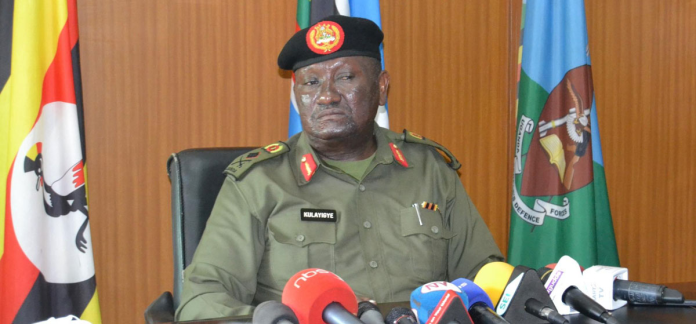
The Uganda Ministry of Health (MOH), with support from the World Health Organization (WHO) and partners deployed the national Emergency Medical Team (nEMT) to the ongoing Sudan Virus Disease (SVD) response.


On 30 January 2025, MOH declared an outbreak of SVD in the country after a 35-year-old Ugandan male who worked as a nurse in Mulago National Referral Hospital tested positive for the virus following his death on 29 January 2025. Before his diagnosis, he sought treatment at multiple health facilities, including Mulago Referral Hospital in Kampala, Saidina Abubakar Islamic Hospital in Matugga in Wakiso District, and Mbale Regional Referral Hospital in Mbale City.


By 2 February 2025, Uganda had recorded a total of nine confirmed cases. This includes the index case and eight additional confirmed cases from three different districts. This brings the total to nine cases (one mortality and eight recoveries).


In response, the Ministry of Health swiftly deployed the national Emergency Medical Team to support case management. A total of 44 national Emergency Medical Team members of various cadres were deployed. A team of 26 was deployed to support the operationalization of Mulago National Referral Hospital, while 18 were deployed to Mbale district Ebola treatment unit. This marked the first time that the country has deployed the national EMT for an Ebola response.


At Mulago hospital, the nEMT members were on ground within two hours of deployment, immediately  setting up the isolation unit and preparing to receive patients. Their support included providing direct clinical care according to national Ebola case management guidelines, strengthening referral systems to evacuate new cases from the community promptly, and building capacity of the local teams through training and mentorship.
In Mbale, the team was deployed on Monday 3 February 2025 to strengthen the isolation unit set-up and support clinical care. The Mbale team consisted of 18 members including physicians, nurses, a logistician, Infection Prevention and Control officer, plus a safe and dignified burial team.


“In previous outbreaks, we relied on mobilization of health workers across the country, working alongside surge teams from outside the country. However, this time, we had a fully trained, readily deployable trained team who were on-site within two hours of deployment and fully constituted within 12 hours. As a country, this is a proud moment for us,” said Dr Rony Bahatungire, Ag. Commissioner – Clinical Services and national EMT focal person.
Beyond clinical care, the nEMT has played a critical role in providing mental health and psycho-social services to health workers, patients and their communities including affected schools. Mentorship and training were extended to existing health workers within the local systems, to ensure sustainable support to survivors’ resettlement.
Sudan Virus Disease outbreaks have reported a mortality rate between 41% to 70% in previous outbreaks. The last outbreak in the country recorded a mortality rate of 47%. However, the EVD mortality rate during this response has been 11.1%, and this was the index case. The response has recorded a 100% survival rate for all patients admitted to the isolation units. This is due to multiple reasons including the rapid deployment of an experienced EMT that has maintained the high standard of care.
Since their deployment on 30 January 2025, the team has maintained 24-hour coverage, providing optimized clinical care. This included early supportive care across the spectrum from mild cases to provision of critical care. They have managed a total of eight confirmed cases and numerous suspects. To date, no mortality has been reported in either of the isolation units, despite managing some severe and critical cases including children.
“Public health emergencies can quickly overwhelm the local health systems, necessitating additional support. Fortunately, the national EMTs understand the local context and are readily deployable to support affected communities,” said Dr Kasonde Mwinga, the WHO Representative to Uganda.
Uganda currently has 149 nEMT members, ready to respond to public health emergencies.  The nEMT concept dates to December 2021 during the COVID-19 pandemic. At the time, MOH, with support from WHO, hosted the first regional training for nEMT members to support the COVID-19 response. MOH continued to build the team through additional trainings and drills supported by WHO with funding from partners like the European Union Humanitarian Aid Agency (DG ECHO), the Robert Koch Institute and Malteser International among others. The nEMT has also previously deployed for Mpox and measles outbreaks within the country.
In July 2024, Uganda’s Ministry of Health approved the nEMT roadmap to guide future emergency response efforts. This aligns with the WHO global EMT initiative, which aims to improve the speed and quality of emergency medical response while strengthening national health systems.
“The work that we do is not only about responding to outbreaks. Preparedness is an important part of our work. The Uganda national EMTs program has shown the importance of preparedness and its impact on response.” Dr Michael Ryan, Deputy Director General and Head – World Health Emergencies, WHO Headquarters, Geneva.

Stories Continues after ad
MTN Uganda launches ‘Virtual Card by MoMo’ for mobile money customers

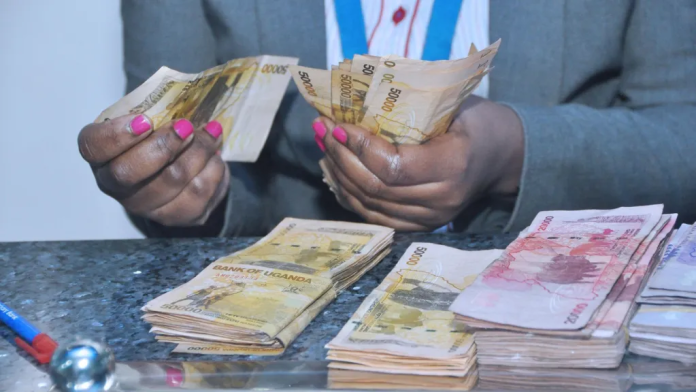
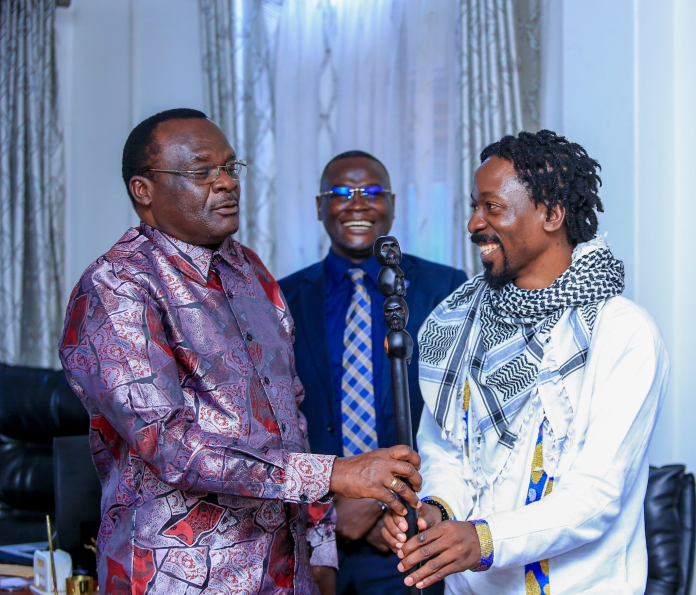
 MTN Uganda has launched a virtual card for its mobile money customers, allowing them to make online purchases without needing a physical bank card.

The “Virtual Card by MoMo”, launched on Thursday, is a partnership with Mastercard, Diamond Trust Bank and Network International which aims at boosting e-commerce growth and financial inclusion in the country.

Users can create the virtual card by dialling *165*70# on their phones. It is then linked to their mobile money wallet, allowing them to make card-based payments on any online platform that accepts Mastercard.

MTN says the card can be used for a range of transactions, from paying school fees and advertising on social media, to subscribing to streaming services and booking travel.

“The Virtual Card by MoMo is a major milestone in our journey towards MTN’s Ambition 2025,” said Jemima Kariuki Njuguna, Chief Product Officer at MTN MoMo. “By offering a secure and convenient way to access online services, we enable our customers to engage more actively in the digital economy.”

Uganda has seen rapid growth in mobile money use. According to the Bank of Uganda, transactions reached 191 trillion Ugandan shillings ($50bn; £40bn) in the 12 months to June 2023, a 23% increase on the previous year.

Mastercard’s Muhammad Nana said the launch “marks a critical milestone in enabling broader access to the digital economy”.

The virtual card is designed to cater to a range of users, including students, small business owners, entertainment enthusiasts, online shoppers and travellers.

MTN says security is a “top priority”, with transactions protected by “the highest industry standards”. Users can also control their spending by topping up only the amount needed for each transaction.

The company says the card will also offer access to exclusive deals and discounts.

Stories Continues after ad
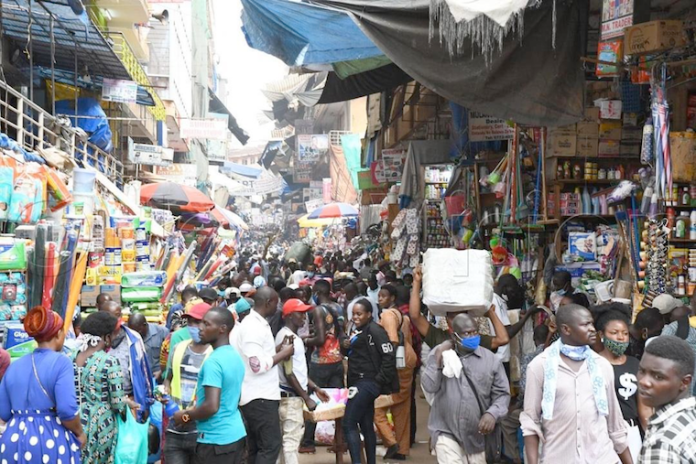
Museveni condemns exploitative moneylenders, vows crackdown on PDM defaulters

President Yoweri Kaguta Museveni has warned exploitative moneylenders and individuals misusing funds under the Parish Development Model (PDM) emphasizing that the initiative aims to uplift the poor and integrate them into the money economy.

Speaking at a public rally at Mwizi Secondary School playgrounds in Rwampara East, Mbarara District, Museveni criticized the high-interest loan schemes that continue to trap Ugandans in debt.

“I was told moneylenders give you Shs 1 million, and every month you pay Shs 200,000. By the end of the year, you have paid Shs 4.5 million for someone who gave you only Shs 1 million. In PDM, we give you Shs 1 million, and after two years, you return Shs 1.2 million in a revolving cycle. Each year, the parish receives Shs 100 million, making a lasting impact,” he explained.

Last year, the Finance Minister, Matia Kasaija under the Tier 4 Microfinance Institutions and Money Lenders Act, Cap. 61 announced 2.8% per month or 33.6% per annum as the maximum interest rate lenders can impose on the borrowers however the moneylenders have kept a deaf ear on this directive.

The President urged Ugandans to safeguard PDM funds from corruption, warning that those involved in stealing or mismanaging the money will face severe consequences.

“I have heard of people stealing this PDM money. Why don’t you report these thieves? Each parish is receiving Shs 100 million. That money is meant to rescue you from moneylenders,” he stated, urging local communities to expose culprits.

During his address, which was part of a three-day performance assessment tour on wealth creation and the PDM in the Ankole subregion, Museveni assured the public that corrupt officials, including police officers who release suspects on bond, would be dealt with decisively.

Furthermore, the President warned beneficiaries against using PDM funds for unproductive activities such as alcohol consumption, cautioning that those who misuse the money would face imprisonment.

“Those who take PDM money and use it for drinking alcohol, we shall imprison them for 12 months. They will work for the government in prison by planting maize and cotton, and the government will earn from their labor,” he declared.

The Parish Development Model, introduced to boost wealth creation at the grassroots level, has faced challenges including mismanagement and non-repayment. Museveni’s aim is to ensure that the program benefits its intended recipients and does not fall prey to corruption or abuse.

Stories Continues after ad

UHRC awards shs74m to victims of abuses in Teso Sub-region

The Uganda Human Rights Commission (UHRC) has awarded Shs74 million in compensation to victims of human rights violations in the Teso Sub-region.

The tribunal hearings chaired by Commission Chairperson Hon. Mariam Wangadya and three other members; Crispin Kaheru, Col. RTD. Steven Basaliza and Lamex Omara Apitta addressed several cases of abuse and handed down decisions on claims previously heard.

Among the most notable rulings was that of Phylis Chepkwemoi, a 42-year-old widow from Kapsiywo in Bukwo district who sought justice for the killing of her husband, Gilbert Cherotwo. Chepkwemoi accused members of the Anti-Stock Unit police and UPDF soldiers attached to Seredet detach of torturing and killing her husband.

The Commission heard that on November 4, 2004, at approximately 2:30 pm, 17 soldiers armed with sticks and guns found Cherotwo working in his garden and demanded that he hand over a gun. When he denied having one, they beat him relentlessly until 4:00 pm and later took him to their detach. The next day, his body was discovered at Bukwo Hospital mortuary.

“We are satisfied with the complainant’s evidence that UPDF soldiers of Seredet detach tortured and killed Cherotwo. From the testimony of George Chepnoyen, Cherotwo had defaulted on a debt. His creditor maliciously and falsely reported to the army that he illegally possessed a gun, leading to the ordeal that took his life. We have no reason to doubt Chepkwemoi’s evidence; more so, there was no other evidence to counter it—the respondent having failed to call any witnesses or file submissions in rebuttal thereof,” stated Hon. Crispin Kaheru while delivering the decision on behalf of the panel.

The Commission condemned the extrajudicial killing, describing Cherotwo’s final hours as “unspeakable” and labeling the 17 soldiers involved as “basically a lynch mob.”

“The order for him to produce a gun he knew absolutely nothing about was horrifying and a nightmare to him. The soldiers ought to have listened to Chepnoyen, the area LC1 Chairman, who told them that he was sure Cherotwo had no gun in his possession. They chased him away and instead chose to act on a false and malicious report given to them by Cherotwo’s angry creditor. This is inexcusable,” the Commission ruled. The tribunal awarded Chepkwemoi and her family Shs60 million as compensation for the violation of Cherotwo’s right to life.

In a separate case, Hon. Apitta delivered the ruling awarding Shs10 million to 54-year-old David Olobo of Kamuda Sub-county, Soroti district. Olobo was found to have been subjected to torture, cruel, inhumane, and degrading treatment by police officers. The Commission learned that on April 19, 2013, two policemen attempted to arrest Olobo at 5:00 am. He refused to comply, insisting he would only submit in the presence of his area chairperson.

“The complainant in our view proved that two policemen of Kamuda Police Post inflicted on him severe pain and suffering by hitting his left arm with a gun butt, thereby causing a fracture. Hitting his arm with a gun butt and breaking it was totally unjustified. Such acts of impunity cannot be tolerated,” the Tribunal ruled.

Additionally, Shs4 million was awarded to Ojur Lawrence, a 38-year-old peasant from Osongei in Katakwi district. He was assaulted by a UPDF soldier identified as Opus, who stepped on his head, alongside two police constables from Apapai Police Post. Lawrence had been accused of defiling Opus’ niece, Auma Agnes. However, the Tribunal found that instead of lodging his complaint against Opus, Ojur lodged it against Uganda Police whose contribution to his torture was minimal.

The Uganda Human Rights Commission reaffirmed its commitment to justice and accountability, stating that such acts of brutality and impunity must be condemned and addressed to ensure human rights are upheld throughout the country.

The Tribunal set out to hear 18 complaints of human rights violation from Monday February 24th, 2025 to Thursday February 27th, 2025. The UHRC has a mandate under article 52 and 53 of the Constitution of the Republic of Uganda to receive complaints of human rights violation, investigate, determine them and award damages or offer other remedies where it is satisfied that a violation indeed occurred.

Stories Continues after ad

Gov’t reduces 2025/26 national budget from 72.136Tn to 66.065Tn

The Ministry of Finance has released the Second Budget Call Circular for the 2025/26 financial year, noting that the government plans to reduce its expenditure to UGX 66.065 trillion, marking a UGX 6.049 trillion decrease from the 2024/25 budget of UGX 72.136 trillion.

The circular, issued by the Secretary to the Treasury, Ramathan Ggoobi, on 13th February 2025 to all accounting officers, outlines that Uganda Revenue Authority (URA) is expected to collect UGX 35.693 trillion in taxes, up from UGX 32.097 trillion in the 2024/25 fiscal year. The remaining portion will be raised through borrowing and grants from donors.

The Budget Call Circular also details the government’s growth strategy for FY 2025/26, which aims to boost Uganda’s economic trajectory, with the target of growing the economy to USD 500 billion by 2040, up from the projected USD 59 billion in June 2025. Key interventions will focus on agro-industrialization, tourism development, mineral-based industries including oil and gas, and advancements in science, technology, and innovation, including ICT and creative arts (knowledge economy).

The resource envelope for FY 2025/26 is UGX 66.065 trillion, compared to UGX 57.441 trillion in the initial budget proposal and UGX 72.139 trillion for 2024/25, Ggoobi stated.

The breakdown shows that domestic revenue will raise UGX 35.692 trillion, a rise from the UGX 32.097 trillion approved for 2024/25. However, budget support is expected to decrease from the current UGX 1.393 trillion to UGX 26.6 billion.

Government plans to borrow UGX 9.215 trillion from local commercial banks, an increase from the UGX 8.968 trillion projected in the current budget. External borrowing is also set to rise, with UGX 11.191 trillion earmarked for 2025/26, up from UGX 9.583 trillion in 2024/25.

A significant portion of the budget will go toward debt repayment. Government has allocated UGX 9.641 trillion for domestic debt refinancing, a reduction from the UGX 12.021 trillion in the current budget, while an additional UGX 4.287 trillion will go toward external debt amortization, up from UGX 3.149 trillion in 2024/25.

Moreover, the government has allocated UGX 11.191 trillion for the repayment of external loans borrowed to finance various projects, a rise from UGX 9.583 trillion allocated in 2024/25. For loans acquired from local commercial banks, UGX 9.641 trillion has been set aside, down from UGX 12.021 trillion in the current fiscal year. Only UGX 200 billion has been allocated for the payment of domestic arrears, which have exceeded UGX 10 trillion.

In line with wealth creation, the government has allocated UGX 2.087 trillion, with the Parish Development Model (PDM) receiving the largest share of UGX 1.059 trillion. Other allocations include UGX 135.2 billion for Uganda Development Corporation, UGX 100 billion for Emyooga, UGX 85 billion for capitalisation of Uganda Development Bank, and UGX 58.5 billion for youth programs under State House.

Additionally, the Microfinance Support Centre will receive UGX 48.5 billion, while UGX 35 billion is allocated to the Agriculture Credit Facility, managed by Bank of Uganda. The Investment for Industrial Transformation and Employment (INVITE) project will receive UGX 333.5 billion, and the World Bank-funded Generating Growth Opportunities and Productivity for Women Enterprises (GROW) project will get UGX 237.3 billion.

In a related development, the government has tightened rules surrounding donor-funded projects in Uganda. Under the new requirements, all donor-funded projects must be approved by Cabinet and the Ministry of Finance before being accepted by ministries, agencies, departments, and local governments.

Ggoobi explained, “All projects and programs sponsored for financing must satisfy the requirements and shall be signed off by the Minister responsible for Finance in line with the laws of Uganda. This will ensure that there is no duplication of efforts by different partners and government.”

The Ministry of Finance further stated that all donor-funded projects must be approved by Cabinet before being signed by the Minister of Finance for implementation. Ministries, Departments, and Agencies (MDAs) are required to submit these projects well in advance to allow for timely internal clearances.

“All projects and programs shall be reported and appropriated by Parliament, including those whose accounts will be managed off the Treasury Single Account. This means all projects and programs financed by Development Partners will be reported to the government for budgeting purposes,” Ggoobi added.

Stories Continues after ad

Museveni calls for quick trial of Kiiza Besigye in security-related case

President Yoweri Kaguta Museveni has called for a swift trial of opposition figure Dr. Kizza Besigye, who remains in detention over serious allegations linked to national security.

In a strongly worded statement, Museveni dismissed concerns raised by some Ugandans over Besigye’s continued incarceration, emphasizing that the legal process must take its course to ensure justice and accountability.

“If you want a stable country, the more correct question should be: ‘Naye Dr. Besigye bamukwatila ki? Why was Dr. Besigye arrested?’ The answer to that is a quick trial so that facts come out. Otherwise, you are promoting insecurity which is very dangerous for the country,” Museveni stated.

The President stressed that Uganda’s governance strategy has always been rooted in accountability, particularly for those responsible for acts of violence against citizens. He referenced past leaders and freedom fighters, asserting that the country’s current stability was achieved through sacrifices made by those who opposed oppressive regimes.

“We are not for vengeance, but the danger of the killers must be removed. Therefore, the correct answer in the matter of Dr. Besigye is a quick trial,” he added.

Museveni attributed the delay in Besigye’s trial to procedural changes, noting that the case was initially handled by the Military Courts before being transferred to Civilian Courts, following judicial directives.

“Who slowed down the trial process? It is the Courts that pointed out some gaps in the Military Courts and they ordered the transfer of the cases to Civilian Courts,” he explained.

He further stated that efforts are underway to ensure the trial proceeds, with the government and legislators working on closing the legal loopholes identified in the military justice system.

Addressing concerns over Besigye’s health, Museveni assured the public that medical care has been provided within prison facilities and that Besigye’s personal doctors have had access to him.

“There is, first of all, a Government hospital in the Prison. Besides, Dr. Besigye’s personal doctors have been visiting him and even taking him to private clinics. If there was need for any additional medical care, the Government would be advised,” he stated.

However, the President accused Besigye of attempting to manipulate public sympathy through a hunger strike rather than seeking to clear his name in court.

“How can you be accused of serious crimes and, then, your response is hunger strike to generate sympathy for getting bail, etc.? Why don’t you demand a quick trial?” he questioned.

Museveni reaffirmed that the military court had been prepared to proceed with the case, but the transition to a civilian trial was the next step. “Let us wait for the civilian court,” he concluded.

Dr. Kizza Besigye, a veteran opposition leader and former presidential candidate, has been a longstanding critic of Museveni’s government. His arrest and continued detention have drawn both local and international attention, with some activists calling for his release.

With Museveni emphasizing a swift judicial process, all eyes are now on Uganda’s legal system to determine the next course of action in Besigye’s case.

Stories Continues after ad

UWA reaffirms commitment to educating children of fallen staff

The Uganda Wildlife Authority (UWA) has reiterated its commitment to supporting the education of children whose parents lost their lives in the line of duty.

The pledge was reaffirmed by UWA Acting Executive Director, Dr. James Musinguzi, during a meeting with Kato Dalton and Kakuru Edgar—sons of the late Angel Kobusheshe—who excelled in their O-Level examinations at St. Paul’s Seminary, Rushoroza in Kabale District.

Kobusheshe, who served as an Accounts Clerk at UWA, was tragically killed by unknown assailants in February 2013. In 2020, UWA took on the responsibility of supporting his children, including Abaho Elijah and Tashobya Kelvin, under its policy of assisting families of fallen staff.

During the meeting, Dr. Musinguzi commended the students on their academic achievements and encouraged them to remain focused on their education.

“We recognize that our success as an institution is built on the dedication of our staff, some of whom have made the ultimate sacrifice. It is our duty to ensure that their children have the opportunity to pursue their dreams through education,” Dr. Musinguzi stated. “We remain committed to supporting them and honoring their parents’ legacy.”

Dalton and Edgar, who are now preparing to join A-Level, expressed their gratitude for the continued support from UWA.

“This scholarship means everything to us. It has given us hope and a future. We are determined to make the most of this opportunity and make our late father proud,” they said.

Hope Mbabazi, the widow of the late Kobusheshe, also expressed her appreciation for UWA’s ongoing assistance.

“It has not been easy raising the children alone after my husband was taken from us. UWA’s support has been a lifeline, ensuring that my children receive a good education. Seeing them excel gives me so much hope for their future, and I am truly grateful to UWA for standing with us,” she said.

UWA’s scholarship initiative is part of its broader commitment to staff welfare and conservation efforts. Currently, the authority is supporting a total of 60 children of staff who died in the line of duty, with two having successfully graduated so far.

“By investing in the education of the next generation, UWA aims to uplift the families of its fallen staff while inspiring future conservationists to continue the mission of wildlife protection in Uganda,” the statement concluded.

Stories Continues after ad