Stanbic Bank
Stanbic Bank
25 C
Kampala
Stanbic Bank
Stanbic Bank
Home Blog Page 1514

Seven steps to meeting the new bar of delighted customers

Martin Zwilling

By Martin Zwiling

Having satisfied customers is no longer enough to keep you ahead of competitors. The bar has been raised to having “delighted” customers. Customer delight is defined as surprising the customer by exceeding his or her expectations, thus creating a positive emotional reaction. This emotional reaction leads to word of mouth and social media, resulting in many new customers.

For example, during the last holiday season Mercedes Benz USA launched a #MBSecretSanta program on Twitter to personally engage customers and help find the perfect holiday gift. Then they did just that by providing responders with over 1000 gifts, ranging from branded bears, baby clothes, watches, and Bluetooth speakers. It was a small price to pay for the surge of delight.

TD Bank used a similar #TDTHANKSYOU campaign to delight customers with thank you gifts ranging from Disneyland tickets for a single mom, roses for the elderly, and airline tickets for a mother who wanted to visit her sick daughter. With today’s instant communication and the Internet, these efforts were soon known around the world. The value of such viral efforts is huge.

Thinking this way, and then making it happen, requires some strong leadership and lots of effort in existing business, to overcome the long-standing processes and procedures. For entrepreneurs and startups, it can be a bit easier, but still requires resources and risk. In either case, I recommend seven specific steps to set up the right culture, and keep it going:

The priority on delighting customers must be visible at the top. By default, the perceived and most visible focus of most executives is to delight stakeholders first. Perceptions are set by your actions, what you measure, and what you reward. Make sure your actions are based on customer experiences, rather than only internal objectives.

Relate all compensation criteria to customer experience levels. Due to pervasive communication in the marketplace, customers see and react to your compensation and recognition practices. They have negative emotional and viral reactions to people getting bonuses and raises, despite visible product and customer support shortcomings.

Develop programs to exceed current role model leaders. Your competition is global, so look for best-of-breed globally, and apply it locally. Solicit creative thinking and continuous innovation to keep you ahead of the game today, rather than tomorrow. Look beyond industry boundaries for customer delight examples that you can adapt and adopt.

Hire based on people engagement ability, not just skills. If you want excited customers, hire friendly people who love to work with and help others. Resumes and traditional HR processes tend to focus totally on skills and experience. Group interviews are more likely to expose motivation, attitude, and people relationship and learning ability.

Get buy-in from the team on why, and let the team show you how. Your objective should be for every team member to look for opportunities to exceed customer expectations, not just meet them. Those on the front lines will know the best ways to excite customers, and will be more highly motivated if you inspire them take key actions.

Give key employees the freedom to practice delighting customers. Requiring escalation for every exception, or providing scripts and fixed policies, won’t do it. Ensure you have formal mechanisms for employees to make decisions and practice customer sensitivity. Take action on feedback and provide updates to show you are listening.
Highlight your company examples of exceeded customer expectations.

Stories and anecdotes illustrate your message and evoke emotions in a way that even the best facts and figures can’t, both for team members and potential new customers. They improve customer retention and loyalty, as well as improving internal morale and engagement.
A culture of delighting customers doesn’t happen by chance, and it requires more than just good training and excellent operational procedures. Surprising and delighting customers requires a backdrop of strong leadership, deliberate planning, and integrity in execution. It requires a customer-first rather than company-first culture at all levels. Is your organization there yet?

The Writer is a veteran startup mentor, executive, blogger, author, tech professional, and Angel investor. Published on Forbes, Entrepreneur, Inc.

Stories Continues after ad

Police opens general inquiry file against Bukooli Central MP Solomon Silwany

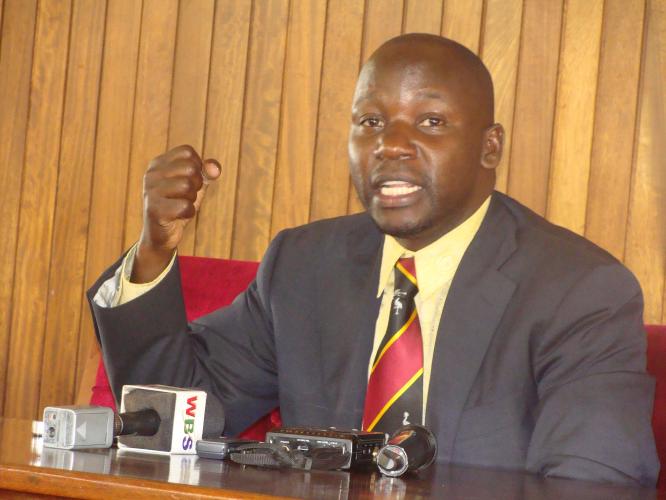
NRM's Silwanyi at a past press conference at Parliament of Uganda

Police has opened general inquiry file against Bukooli Central MP Solomon Silwany and Vice Chairperson for National Resistance Movement Caucus over allegations of storming Naluwerere Polling with a pistol and spraying voters with pepper.

Speaking at Naguru, the Spokesperson of Police Emiliano Kayima said they arrested 25 people before and after Bugiri by-election.
“Most of the suspects have recorded statements, we are preparing their files for prosecution to start,” he said.

“The most important bit is about MP Solomon Silwany, there are allegations that he pulled out a gun, others say it was pepper spray and as a result, we a case has been opened, the process of summoning him, police in Bugiri is preparing summons through the Speaker of Parliament to explaine what transpired,” he said

Electorates contends that the legislator stormed Naluwerere polling station alleging that he was bribing voters with cash a move which with contradicts with electoral laws.

“His presence however, attracted a crowd of angry mob that narrowly lynched him but with the aid of pepper spray, he dispersed the crowd as police escorted him out of the polling station,” some voters said. He also beat up journalists that covered the event destroying their equipment.

Kasese Municipality MP Robert Centenary a victim of pepper spray remarked that, ideally police should have evacuated Solomon Silwany but they just looked on as he tried to disorganize the election process.

The hotly contested Bugiri by-election was won by the president for Justice Forum (JEEMA) and Asuman Basalirwa who garnered 3,928 votes, followed by NRM candidate Mr Francis Oketcho with 3,267 votes and the FDC candidate Ms Eunice Namatende came third with 928 votes.

Stories Continues after ad

Police guard shoots dead Justice Musa Sekaana’s driver

Police Spokesman Emilian Kayima says they are investigating circumstances under which a daytime police guard Daisy Nagasha shot dead a driver to High Court judge, Justice Musa Sekaana’s driver.

The driver, Ismail Mayiga, was shot in the stomach at about 7am, shortly after he reported for duty at the judge’s residence in Muyenga-Bukasa in Kampala.

Kayima said Mayiga was pronounced dead upon arrival at the International Hospital, Kampala where he had been rushed for medication.

Kayima said after the incident, the policewoman immediately handed herself to the Police, saying the gunshot was accidental.
The body has been taken to Mulago for postmortem whereas and Police have commenced the investigations and already visited the scene of crime.

Stories Continues after ad

TD Bank earns $112 million as it holds meeting in Kampala

Admassu Y. Tadesse

President of the Trade and Development Bank (TDB), Admassu Tadesse has said in Kampala that the bank last year earned over US$112 million at the end of December 2017, which was way higher than the over US $101 million earned in the previous year.

Mr. Tedesse disclosed the figures in Kampala on Tuesday as he addressed delegates attending the 34th Annual General Meeting of the bank’s Board of Governors at Serena Hotel, Kampala, organised by the Ministry of Finance, Planning and Economic Development.

One of the other highlights in the financial year 2017 financial year, Tadesse said, was the clearing of the US $2.3 million dollar loan that accumulated in 2016.

Tadesse said that TDB is now able to attract international credit to fund the regional development projects such as roads and others.
“Africans can now be proud that the region has a significant bank that can attract international banks to help us grow economically,” he said.

Opening the meeting officially Uganda’s Prime Minister Dr Ruhakana Rugunda applauded the bank for the role it has played in different sectors of the economies of the regions it operates in. “ The bank has contributed to Trade, infrastructure and agribusiness. Its asset value has gone up to 74 per cent since making their investments four years ago,” he said.

Speaking at the function, Finance minister Matia Kasaija said that, “TDB has been a strongly committed partner in Uganda’s economic journey and also supported Uganda in development of some infrastructure.”

Kasaija who is the Incoming Chairman Board of Governors for TDB said that government borrowed money to finance the budget. “This bank has lent us money to invest in different infrastructure, you also remember that we borrowed US $ 200 million from TDB Bank to fund part of our budget,” Kasaija said.

He said government was looking forward to getting credit from the bank to build the standard gauge railway. The only money I am looking forward to borrowing is one for the standard gauge railway and when borrowing, we look at quite a number of things including borrowing rates,” he said.

TDB is mandated to finance and foster trade, socioeconomic development, and regional economic integration through trade finance, project and infrastructure finance, funds management and business advisory services.

Tadesse said the bank has so far signed 33 deals in Uganda and that more were in the pipeline. “We have injected about US $ 448 million into Uganda and we are still doing more,” he said.

The bank is set to sign a grant of US $ 25,000 to Powah Limited, an energy and technology solutions provider, to support the construction of the Powah Hub. The Hub will facilitate access to resources, training, and information for marginalized groups in Uganda.

Tadesse said TDB intends to play a leading role in promoting trade, economic development and regional integration at a crucial time when Eastern and Southern African countries are looking to grow and transform their economies.

The bank has partly funded renewable energy projects such as Turkana Wind Power in Kenya, Hydromax Minihydro in Uganda and industrial projects such as cement and steel plants in DR Congo, Djibouti, Zambia, Rwanda, Ethiopia and Zimbabwe. Other projects funded include the Burundi Fibre Optic Backbone Project and Kilwa Power in Tanzania.
It has also provided important asset finance facilities to the air-transport sector in the region, with Rwanda Air, Kenya Airways and Ethiopian Airlines being beneficiaries. Other sectors beneficiaries are agribusiness, industry, trade financing of fertilizer, equipment, agricultural commodities and petroleum.

Management of the bank have introduced a new class of shares, new shareholders and new member states. We have a more modern, robust governance structure, and a stronger institutional framework, reflected in a new Treasury and new Risk Management Division. We reformed our constitution to make all of this possible, Tadesse of the bank that has been in operation since 1985.

“We have dramatically increased our capacity to meet the rising demand for the Bank’s products and services, thanks to the strong funding partnerships we have built up with long term funders and investors. Our shareholder base has increased by more than 50 per cent in recent years, with several new institutional investors and member states. Indeed, our equity capital has tripled since we embarked on the current corporate plan in 2012,” he said recently in Nairobi during stakeholder events to mark the rebranding of the bank.

With the rebranding, the bank will retain the Eastern and Southern African Trade and Development Bank as its legal name, but its brand name is officially Trade and Development Bank (TDB). It is headquartered in Nairobi Kenya, with offices in Bujumbura, Kinshasa and a few more others.

Stories Continues after ad

Liberian appointed director at IMF

New IMF boss, Rhoda Weeks-Brown

Christine Lagarde, Managing Director of the International Monetary Fund (IMF), today announced her intention to appoint Rhoda Weeks-Brown as the IMF’s General Counsel and Director of the Legal Department. Ms. Weeks-Brown succeeds Mr. Sean Hagan whose retirement was announced previously. She is expected to begin her work in this capacity on September 17, 2018.

“Throughout her 21-year career with the IMF, Ms. Weeks-Brown has contributed to virtually all aspects of the institution’s work. In addition to a sharp legal mind and deep legal experience, she brings a comprehensive perspective on the Fund’s role and the challenges facing our members in today’s rapidly changing economic and financial environment, “MS. Lagarde said.

During her career in the Fund’s Legal Department, Ms. Weeks-Brown worked on a wide range of country and policy issues. She was particularly involved in leading the work related to the revamp of the Fund’s General Resources Account (GRA) lending toolkit and the transformation of the architecture of facilities for low-income countries.

She also contributed to the design of a new income model for the Fund adopted in 2008, the 2008 and 2010 quota and governance reforms, and the articulation of the Fund’s institutional view on capital flows. In her role as Deputy General Counsel, she was a key member of the Legal Department’s management team, helping to guide all aspects of the department’s work.

Most recently, Ms Weeks-Brown has served as Deputy Director of the Fund’s Communications Department, where she has played a key role in development of the Fund’s communications strategy and its positioning on key issues, and also had oversight of communications related to Europe, Africa and previously Asia.

A national of Liberia, Ms. Weeks-Brown joined the Fund’s Legal Department in 1997 and rose through the ranks to become Deputy Legal Counsel in 2010. She then joined the Fund’s Communications Department in 2012 as Deputy Director. Before joining the IMF, Ms. Weeks-Brown was in private practice in the United States. She received her Juris Doctor from Harvard Law School in 1991, and a Bachelor of Arts in Economics from Howard University.

Stories Continues after ad

2018 Digital Impact Awards Africa set for September

Digital Impact Awards Africa

Nominees for the 5th Digital Impact Awards Africa (DIAA) are out. And the winners will be awarded September 21, according organisers- HiPipo, a diversified company with operations covering digital, music and events.

Just like in 2017, the 2018 Digital Impact Awards Africa under the “Include Everyone” Program is set to recognize and reward individuals and organizations across Africa that are spearheading the use of digital tools to not only enhance financial and digital inclusion but also lead to continental economic transformation.

Slated to take place at the Kampala Serena Hotel, under the theme ‘Include Everyone’ has 35 categories and covers all entities that are using digital tools to improve the livelihood of their clientele. Some of the major categories are Digital Brand of the Year, Best Internet Service Provider, Best Financial Inclusion for the Poor, Best Use of Social Media by Bank, Technology, Utility and Government Agencies among others.

“After proper scrutiny of all submissions and detailed research, allow me share with you the list of the 2018 Digital Impact Awards Africa nominees. We commend those that are faithfully investing in the digital and financial inclusion journey across the continent, “Innocent Kawooya, the HiPipo CEO said while releasing the nominations.

Additionally, in an effort to promote the digitalization of trade processes in Uganda and across Africa, the DIAA board has created a special category named Commendation for Trade Digitization. “This special recognition (Commendation for Trade Digitization) will go to an individual, government or non-government agency that is spearheading the digitalization of trade through introducing, funding and supporting electronic trade facilitation projects and processes,” Innocent Kawooya said

However, the Commendation for Trade Digitization category has no nominees. “The winner will be decided after a thorough scrutiny of the current electronic trade facilitation projects. We shall engage various trade stakeholders before zeroing down on the overall winner,” he said.

Meanwhile Kawooya has asked the government to reconsider its position on OTT/Social media Tax, the same way it did with mobile money tax.

“The past few weeks have been very challenging for those passionate about digital and financial inclusion. It is good to know that the government of Uganda has received feedback from the populace and working to fix the issues raised around mobile money tax. We request it to also find time and review the OTT tax as well,” he said.

DIAA is a platform that promotes Digital inclusion, financial inclusion and Cybersecurity under the theme Maximizing the Digital Dividend. The Awards seek to recognize and appreciate different organizations that are spearheading the use of digital mediums in this respect. Digital Impact Awards Africa is organized by HiPipo in partnership with Cyberplc and Global Networks Limited.

To be considered, nominees must have substantially contributed to digital space in Africa. Entries should be offering innovative, useful or engaging digital (web, mobile, social media) content, applications, services or utilities including digital financial services with good cybersecurity practices. Nominees may be of companies (Corporate/SMEs), nonprofit organizations, digital applications, projects, platforms and promotions. The scope of eligible organisations excludes media houses.

The project covers 3 main domains: Digital Inclusion, Financial Inclusion and Cybersecurity.

Stories Continues after ad

Gen. Saleh enters Crane Bank saga as Meera Investments confident of regaining properties

The Former Crane Bank Ntinda branch, which DFCU took over and illegally rebranded in its name, was ordered by the court to vacate and compensate Meera Investments because the property belongs to Meera.

A source at Meera Investments Limited, says managers are confident of regaining the company’s 48 properties that were established countrywide as banking halls by Crane Bank before it was controversially sold to DFCU Bank by the Bank of Uganda) in January 2017.
This follows reports that government has approached General Caleb Akandwanaho a.k.a Salim Saleh to use his negotiation skills to help DFCU Bank and BoU before the case whose file is with Commercial Court Judge David Wangututsi begins in the near future.
Records show that Principal Judge Justice Yorokamu Bamwine in mid-July sent the file to Justice Wangututsi for further action after the two sides-BoU versus Meera Investments (Sudhir Ruparelia), failed to agree.
Sudhir accuses BoU of breaching a confidential Settlement and Release Agreement of March 20 in which the two pledged to settle their difference amicably.

Gen. Salim Saleh.

Through Meera Investments Limited, Sudhir also sued DFCU Bank, praying to repossess leasehold titles and developments for the 48 banking halls taken over by its former rival when as Crane Bank was liquidated.

Meera Investments also sued the Commissioner for Land Registration, claiming that the officer connived with DFCU Bank to transfer the releases into its names having agreed to buy Crane Bank at Shs200 billion.

Sources say DFCU Bank lawyers have advised bank managers that the bank is likely to lose the properties worth about Shs100 billion much as DFCU Bank valued them at Sh47 billion upon the acquisition of the same properties were only being rented by Crane Bank before its liquidation by BoU.

Leaked documents indicate that DFCU acquired lease documents from the Commissioner of Lands at Sh10 billion.
It is worth noting that BoU Governor Emmanuel Mutebile would later controversially fire his Executive Director in charge of Supervision, Ms Justine Bagyenda as controversial issues relating to Crane Bank’s sale started to emerge in public.

Eagle Online has learnt Gen. Saleh is reported to have met all parties involved in the Crane Bank saga. It is reported that DFCU in a desperate need to reach out to their directors of CBL, DFCU approached him through a prominent city lawyer so that before court begins, some agreeable grounds could be reached.

Stories Continues after ad

Ruling against Magara murder suspects flop

Courtsey Photo: Suzan Magara suspected killers appearing before High Court today

Buganda Road Magistrate Robert Mukanza has failed to deliver a ruling in a case against the nine suspects implicated in kidnapping, torture and murder of business woman Susan Magara.

Early this month, Justice Mukanza scheduled today, to give his judgement on whether to allow Magara murder suspects to African Center for cross examination on grounds of being tortured at the hands of Police, Uganda people’s Defence force (UPDF) and Chieftaincy Military Intelligence (CMI) during and after their arrest.

Appearing before court, prosecution led by Patricia Cingitho told court that police is still investigating the matter and within few weeks substantial evidence pinning suspects will be introduced for their commission to high court.

The magistrate however adjourned the matter to the August 15, 2018 a day he promised to make his ruling

The suspects include: Yusuf Lubega, Hussein Wasswa, Muzamiru Ssali, Hajara Nakandi, Abubaker Kyewolwa, Mahad Kasalita an Imam at Usafi Mosque, Hassan Kato Miiro, Musa Abbas Buwembo and Ismail Bukenya.

Ms. Magara, 28, was in February kidnapped by unknown assailants on her way home in Lungujja, Lubaga Division, tortured for three weeks and killed after her agonizing family paid ransom of over Shs700 million.

Stories Continues after ad

Museveni castigates judges for ruling against extension of MPs’ term of office

President Museveni

Despite upholding the removal of presidential age limit from the Ugandan constitution a majority decision of 4-1 in Mbale High Court last week, the five judges have now come under attack by President Yoweri Museveni for ruling against the extension of the term of office members of parliament from five years to seven years.

“Our judges in Uganda spend more time on form and not substance, on procedure and not substance. My freedom fighter’s sense of justice, in this matter (the age limit ruling) focuses more on the convenience of 7 years rather than 5 years. With the 5 years, a lot of time is spent on electioneering and less time on development; the 1st two years settling in, the 3rd year some work in the constituency and, then, by the 4th year, electioneering again,” he said.

The five judges who swept away the legislators’ extended term of office were Deputy Chief Justice Alfred Owiny Dollo, justices Kenneth Kakuru, Remmy Kasule, Cheborion Barishaki and Elizabeth Musoke.

Museveni said much as the judges took that decision, they are not the one in charge of the country. “In the end, however, the judges are not the ones in charge of the country. If the NRM MPs follow my guidelines and bond closely with the people, through wealth and job creation, we can, together with the people, make the necessary Constitutional reforms, judges or no judges,” he said on his Facebook page.

He said the Constitution should facilitate the modernization of Uganda and the economic and political integration of Africa for the survival of the people of Africa as free people, not just the theatre of democracy of form without addressing substance.

“The Judges should have taken into consideration the recent L.C.1 and Women Councils and Committees elections which gave massive victory to the NRM, soon after the age limit and the seven years’ debate. This was more or less a referendum. There was open participation by the millions,” he said.

He added: “We shall harmonise and galvanize our position. The undemocratic age limit nonsense was clear. “Nibagaya Engabo oti mwihemu abagurusi?” (How can you say old soldiers should be disqualified when everybody’s efforts are needed because the good soldiers are not enough?)”

Museveni who referred to himself as ‘Ssabalwanyi in Africa’ has meanwhile congratulated the NRM on winning the four seats for MPs and the 5 seats for Mayors in the seven new municipalities. The new municipalities were: Apac, Nebbi, Ibanda, Sheema, Bugiri, Njeru and Kotido.

However, he accused those opposed to NRM of sectarianism in Bugiri during campaigns. “It is a shame to hear of the sectarian manipulation by some elements of opposition in Bugiri- using religion (Islamism) and tribalism (Busogaism Vs Badaama),” he said.

He said that: “Such nonsense grows when there are weaknesses in the local area of handling the social- economic issues, service delivery and lack of sensitization. The NRM leaders need to deal with social- economic issues, and the rest will be easy. This year’s budget has focused on these very issues.”

He continued that those who use sectarianism of religion and tribe or gender chauvinism are bankrupt ideologically and dangerous for the future of Africa. “They were the problem of Uganda in the past and they have no value economically and, therefore, socially…,”he said.

He added: “If we get evidence about the promoters of sectarianism, we shall act against them politically and criminally. I also got alleged reports of importing voters in Bugiri as happened in Kyadondo and Jinja East. The case of Jinja East is in the courts on the same issue of importing voters from other areas. Back to the question of sectarianism, we should never allow identity to eclipse or subvert interest.”

“I went to the schools in the 1950s and 1960s because my father was able to pay the school fees of that time by selling some of his cattle in the monthly auction markets of Ntungamo. Who were buying the cattle? Three businessmen, none of them a Munyankore. These were:

Walusimbi-Mpanga from Kampala, Bukyenya (Bukenya) from Mbarara and Shear, a Muzungu, operating out of Ishaka, that was taking cattle to Kilembe to feed the miners there. Who, then, were the supporters of my education apart from my father? Certainly not the Banyankore or Church of Uganda, my denomination,” he said.

Museveni said Uganda is making good friends all over the World that will help the country to achieve its goals, “starting with unity of our African brothers and sisters in the form of the EAC and CFTA in order to unite our markets.”

Stories Continues after ad

Police issues traffic control plan head of Kabaka’s coronation anniversary

Kabaka Mutebi

Police has issued traffic management control plan for Kabaka of Buganda, Ronald Muwenda Mutebi II coronation anniversary slated for tomorrow.

Remarking at central police station (CPS)
Kampala Metropolitan traffic police senior officer, Norman Musinga cautioned non-obedient road users saying whoever violates the traffic rules and regulations will be dealt with in accordance with the traffic and road safety act, 1998.

“All motorists are advised to adhere to the traffic guidelines to avoid inconvenience, during the celebrations, the following traffic guidelines will be adhered to,” he said.

VVIPS will access the venue through the main gate (‘Wankaki’) and park at the parking adjacent to the venue.
VIPs and other Invited guests will park at Nabagereka primary School playground; will access the parking through Lubiri High gate opposite Musajjalumba as guided by the traffic police.

The general public will park at the ground near Nabagereka Primary School and will access via Lubiri High main gate.
After the function, the celebrants will exit in the way as they entered.

VVIPs will access via Wankaki for dinner and park at the ground opposite Lubiiri Offices.

VIPs and other invited guests for dinner will access via Lubiri High gate and park at Lubiri High gate Park at Lubiri High playground.
Motorists not related to this function will be diverted at Nabunya Rubaga Road, Mengo Hill road, Musajjalumba Road, Nalongo Close, Mutebi Road, Kisenyi, Ndeeba, Zing and at Kabaka’s Lake.

Stories Continues after ad