Stanbic Bank
Stanbic Bank
25 C
Kampala
Stanbic Bank
Stanbic Bank
Home Blog Page 1516

Security forces on the spot over House chaos

Justice Barishaki Chebrion

By Maria Nassiwa

Mbale: All the five judges in age limit petition faulted security forces over their involvement during the debate of the controversial constitutional amendment Bill.

In each of their rulings the justices said the beating, torture and arrest of members of Parliament during the debate was a violation of the constitution.

“The actions of the armed forces of the Uganda Police in beating, torturing, arresting and subjecting several Members of Parliament were inhuman,” read Justice Dollo Owinyi Alfonse.

Justice Cheborion Barishaki said, “The speaker’s directive was for removing the MPs from parliament but not to detain them. Their arrest and detention was uncalled for .The excessive force and treatment of MPs was inhuman.”

Last year plain clothed men invaded Parliament, and forcefully removed members of the opposition whose actions had stalled the proceedings of the House. In the process, many were beaten while others were detained in police cells.

The judges held that, “the arbitrary action of the armed forces of the Uganda Peoples Defense Forces, Uganda Police Force frustrated, restrained, prevented and stopped some 15 Members of Parliament from attending and participating in the debate and proceedings of the House” which was wrong.

“This undermined Parliamentary independence and democracy and as such was inconsistent with and in contravention of the Constitution,

“There was absolutely no reason for the intervention of the UPDF. These members of the UPDF who intervened went barehanded in civilian attire something that signified violence,” of the judgments read in part.

Also, the men of the law faulted the Assistant Inspector General of Police, Asuman Mugyenyi for authoring a directive to police asking them to block cross constituency consultations by the MPs during age limit consultation period.

“It was wrong for the police to restrict Members of Parliament from exercising their freedom of association and movement within their respective constituencies, and elsewhere in Uganda, to consult the people about the Bill,” the judges rules.

Stories Continues after ad
NRM accuses police of looking as Apac supporters get beaten

The Uganda-Police-Force logo with the Motto 'Protect and Serve'.

Dr. Kenneth Omona the NRM National Deputy Treasurer has decried the high level of relaxty by police and other security agencies in Apac Municipality as the Party supporters get beaten up while Police looks on.

“In Apac our people are facing serious security challenges. Response from the security is worrying”, Dr. Omona said in his message to the Secretariat headquarters.

Dr Omona told the secretariat that there was suspected connivance between police and the UPC leadership to deny NRM’s Jovino Akaki victory in the Friday Parliamentary race.

He asserted that cases involving supporters of the UPC candidate beating up people have been reported to police but no meaningful actions taken.

“The goons terrorising the areas are donning yellow T-Shirts and travelling in different vehicles that include a black Land Cruiser Reg. No. UAK 399W, a tipper lorry Reg. No. UAY 417N, a caridina car Reg. No. UAX 119M and another blue vehicle Reg. No. UAP 896 reportedly belonging to an oppisition Politician in the region,” he said.

Eagle online has established that there were also two other cars Reg Nos. UBD 839R and UAW 742F allegedly used in these same nasty operations.

At Awiri Polling Station, the NRM official agents were allegedly denied entry for over 30 minutes while at Atopi Primary School polling station one person was found in possession of pre-ticked ballot papers in favour of an opposition candidate but the suspect walked away free as there was no security to help.

Genesis Odagiu one of the victims was rushed to Apac Hospital for treatment. Several other incidents have been reported in Arerwang, Omukuwie and Temogo among others.

“Police is hereby asked to execute their field operations freely without favours to particular political camps. The Secretariat has taken up these concerns with higher police authorities in order to secure the lives of our voters but we shall automatically demand explanations later.”

“To our supporters, we urge them to remain vigilant and proceed with the voting exercise,” said party communications chief, Rogers Mulindwa in a written message to this writer.

Stories Continues after ad

I was not beaten in Bugiri—NRM MP Silwanyi

NRM's Silwanyi at a past press conference at Parliament of Uganda

Bukooli Central legislator, Solomon Silwanyi has refuted reports of being roughed up by voters in Bugiri Municipality.

Silwanyi was ‘blocked’ by a rowdy opposition youth group deployed at Police Post Polling Station in Naluwerere ward less then 100 metres away from the home of JEEMA candidate, Asuman Basalirwa.

Acting on allegations that NRM officials were bribing voters to ensure that their candidate, John Francis Oketcho finds his way to Parliament, the charged youth on seeing Silwanyi confronted him.

Sirwanyi says that, minutes later he saw media reports that he had been beaten.

What happened

“On arrival [at the polling station] the angry group blocked my way. I tried to force but they grouped up in big numbers so I had to vacate,” explained Silwanyi.

“When I saw them following me I decided to enter into a police patrol and I left the venue,” says Silwanyi who also refuted the reports that he was giving out money to voters.

But the MP could neither accept nor deny the allegations that during the scuffle he took out pepper spray which he used to rescue himself.

Deputy police spokesman, Patrick Onyango has also refuted claims that the MP was armed but said it was a minor scuffle.

Stories Continues after ad

Bukooli Central MP got with pistol at polling station, pepper prays irate crowd

NRM's Silwanyi at a past press conference at Parliament of Uganda

Bukooli Central MP Solomon Silwany and Vice Chairperson for National Resistance Movement (NRM) Caucus was forced to evacuate Naluwerere Polling over allegations that he was armed with a pistol.

Voters say the legislator stormed Naluwerere Polling Station bribing voters with money.

His presence however attracted an angry mob that narrowly lynched him hadn’t he pepper sprayed them and disappeared in the safety of police that escorted him out of the polling station.

Kasese Municipality MP Robert Centenary who received part of sprayed pepper a victim of pepper spray said, police just looked on as MP Silwanyi tried to disorganize the election process.

A few minutes after his departure, one of the candidate in the race Counsel Asuman Basalirwa arrived and cast his vote. He called for calm saying he will emerge winner of the hotly contested by-election.

Forum for Democratic Candidate (FDC) candidate, Eunice Namatende, cast her ballot at Ndokya East Polling Station. She implored NRM to follow the law and keep peace.

Deputy police spokesperson Patrick Onyango refuted allegations of MP Silwany having a pistol at the polling station. He said they managed to rescue him from the polling station and the election process continued.

When contacted, the spokesperson for Electoral Commission Jotham Taremwa said sanity had been restored at the polling station

Stories Continues after ad

Gov’t signs deal to protect renewable energy SMEs

BIGGEST IN EAST AFRICA: The Soroti Solar Power plant

The Government of Uganda has signed an agreement with the Regional Liquidity Support Facility (RLSF), a joint initiative of the German Development Bank (KfW), and the African Trade Insurance Agency (ATI) to support renewable energy projects in Uganda.

The agreement was signed by Finance Minister Matia Kasaija, Energy Minister. Irene Muloni, Willy. K. Kiryahika, Managing Director & CEO, Uganda Electricity Transmission Company (UETCL) and George Otieno, CEO, African Trade Insurance Agency (ATI).

Speaking during the signing ceremony in Kampala, Kasaija, said government was committed to improving conditions for investors within the local energy sector.

He said: “With this agreement, we see RLSF providing a perfect complement to our on-going strategy of accelerating the delivery of clean energy to the national grid.” He said Uganda through concessions had managed to invest in the electricity grid to the tune of US$500 (about Shs1.9 billion) in the last decade.

“RLSF is a tool that can ensure more renewable energy projects reach financial close. For Africa, small and mid-sized projects may be a better fit to the current environment requiring less financing and they can be implemented much quicker. This could be a model that works in many other African markets that may just pave the way for an expansion of the facility or other such initiatives,” said Otieno.

The World Bank estimates that the continent needs to generate annual capacity of 7,000 MW but such generation capacity cannot be achieved without private sector participation.

Under the program, RLSF will offer protection to new small and mid-sized renewable energy projects up to 50 Megawatts (MW). The initiative targets other countries in Sub Saharan Africa.

The RLSF has an initial capacity equivalent to USD74 million and will protect IPPs against the risk of delayed payments by public off-takers.

The Facility is designed to help independent power producers (IPPs) developing renewable energy projects in Africa to obtain the liquidity they need in the event that their off-taker (frequently a state owned entity) delays payment.

It will provide immediate cash collateral supported by guarantees to a commercial bank that will in turn open a standby letter of credit to the benefit of the IPP. The amount provided will enable the IPP to operate and service the debt for up to 6 months. Furthermore, unlike most IPP letters of credit (which tend to be 12 month tenors) the facility is designed to be in place for multiple years.

Speaking of the launch of the facility in November last year, Dr. Thomas Duve, KfW Director Southern Africa and Regional Funds, said “We highly appreciate the opportunity to partner with ATI on this innovative instrument. The RLSF is a strongly market-driven concept, emphasizing KfW’s strategy to support and leverage the resources of local partners and the private sector.”

Also speaking of the launch in London, John Lentaigne, ATI’s Chief Underwriting Officer said: “We are delighted to be working with the German government, represented by KfW, on an initiative that directly targets one of the main bottlenecks preventing green power projects from being financed in Africa.”

While, Jef Vincent, Senior Advisor to ATI, who has overall responsibility for the initial implementation of the facility, added: “Unlike some of the alternative solutions to the liquidity issue, ATI’s guarantee (as provided via the RLSF) will not require a counter-guarantee from the relevant Ministry of Finance, and as such we are confident this will be a very useful tool for those projects that we expect to support.”

The facility, in combination with ATI’s traditional suite of political and trade credit risk insurance products, in particular ATI’s arbitration award default cover, means that ATI is able to cover the full range of political and financial risks facing investors on such projects, read a recent statement.

Stories Continues after ad

Ugandan troops decorated with medals of service in Somalia

Ugandan soldiers being decorated with service medals

The African Union (AU) has awarded service medals to a contingent of troops from the Uganda People’s Defence Forces (UPDF), in recognition of their role in furthering the mandate of AMISOM in Somalia.

The troops from UPDF Battle Group XXII (UGABAG XXII) have completed a year’s tour of duty in the Horn of Africa country.

Deployed in August 2017, the outgoing battle group has been conducting anti-insurgent operations against Al-Shabaab in the Lower Shabelle region that include areas of Celjaale, Ayub, KM50, KM67, Buffor, Shalambot, Marka, Masla and Quoryoley.

The group will be replaced by Battle Group XXV (UGABAG XXV), which will assume security responsibility of the same areas.

“Go back and exhibit the expertise. Show the discipline and I wish you well,” AMISOM Force Commander, Lt. Gen. Jim Beesigye Owoyesigire, told the soldiers during the medal awards and send-off ceremony.

The Force Commander commended the soldiers for exhibiting discipline in the course of duty, sentiments echoed by Brig. Paul Lokech, the Commander of the Ugandan contingent in Somalia.

Lokech said that the Ugandan troops had shown a deep sense of commitment and sacrifice, while operating in tough conditions on the frontline. He lauded their efforts at reconciling rival clans in their areas of responsibility and encouraging restoration of peace.

“In the struggle to pacify this country, we have lost comrades. In the struggle to pacify this country we have the wounded in Mubende. We still look at the scars of what we went through. But all this has been to help our African brothers and sisters, the Somalis,” he said.

“One of the pillars in our doctrine which you know very well, is about pan-Africanism. And that’s the agenda that drew us into this mission. We have no other interest beyond this. The main focus of our coming to Somalia is to help the Somalis get back to where they were some 30 years ago,” Lokech said.

Present at the ceremony was the Deputy Ambassador of Uganda to Somalia Maj. Gen. Nathan Mugisha, who asked the outgoing commanders to document lessons learnt during their tour of duty, in order to inform the Mission’s leadership during transition period.

He further expressed gratitude to AMISOM and the United Nations Support Office in Somalia (UNSOS), for the support they extended to the officers, which expedited their contribution to Somalia’s stabilization.

Stories Continues after ad

Seven Keys to making people first and winning in business

Martin Zwilling

By Martin Zwilling

Just as national cultures influence and shape a country, so does the startup culture set by founder strategy drive the future of a new venture. In top current companies, such as Google, Apple, and Netflix, cultural strategies that include greater employee freedom and fostering creativity are the norm. I believe this new focus on culture is a key to startup success today.

Thus creating the right company culture must be a top priority of every entrepreneur and business leader. Simply speaking, culture-driven businesses put their people first, and people make the business, rather than the other way around. Today’s business mantra must be “Take care of your people and they will take care of your business.” Unfortunately, it’s easier said than done.

Most startups are created by one or two entrepreneurial founders, with a vision and focus on developing an innovative solution, rather than on developing people. They are so immersed in their mission and their own ideas, that they find it hard to change their focus to nurturing new employees, and making sure the people have the same passion and motivation for the solution.

In fact, most see a more direct relationship between customers and their business success, so employee focus by default will end up in third place. Once this product-first, customer-second, and employee-last culture is set, it is extremely hard to change. Thus, in my advisory role to new businesses, I recommend a seven-step approach for setting the right culture from the start:

Communicate clear direction and values daily from the top. Employees need to see and understand the “why,” before they can buy in to what they need to do. These days, more than ever, the “why” needs to be a win-win for them, and for the greater community as a whole. Only then can they stay motivated and make the decisions you need to win.

Clearly define individual roles, and what you expect of them. Every team member needs to understand and be rewarded for the desired attributes, competencies, and results you need. It’s easy to see how cultures go astray, for example, when you pay only for sales volume, but expect a high focus on customer satisfaction.

Provide an inviting and appropriate work environment. Place shapes culture. Open architecture is more conducive to certain desired office behaviors, like collaboration and easy communication. Even geography counts – there is a reason that tech firms cluster in Silicon Valley and financial firms cluster in London and New York.

Establish metrics on the culture, as well as the product. Healthy cultures have high morale, as well as low turnover, high rates of retention, and attract top talent. These can be easily measured, and compared to winners in the marketplace. These metrics need the same top management attention as customer retention and sales metrics.

Recruit, mentor, and promote talent to highlight opportunity. It’s tempting as a startup to grab family members, or pay less and get inexperience. It’s also easy to skip the personnel focus in the heat of daily product and customer crises. Yet, in the long run, your people are your business. Make sure they get your first priority and attention always.

Highlight small successes rather than failures to set culture. The more intermediate successes you can attribute to team members, which confirm your direction and values, the more quickly people will relate to this culture as permanent, pervasive, and personal. Your goal is to have the team internalize and become advocates for your big picture.

Solidity team member trust by admitting your own mistakes. Practice humility and openness by being transparent about your own weaknesses and mistakes. Don’t hide the need for pivots, or required quality corrections. If you want your team members to display certain behaviors, you need to display them first. Leaders must walk their talk to get trust.

Even if your business is not in the startup stage, these steps will move you in the right direction, in assessing your culture and improving it. If you aren’t at least keep pace with a strong culture and finding a way to differentiate yourself, you’re already falling behind competition. In any case, building and maintaining a winning culture is not a one-time effort or a sprint, but a marathon. Start today.

The Writer is a veteran startup mentor, executive, blogger, author, tech professional, and Angel investor. Published on Forbes, Entrepreneur, Inc.

Stories Continues after ad

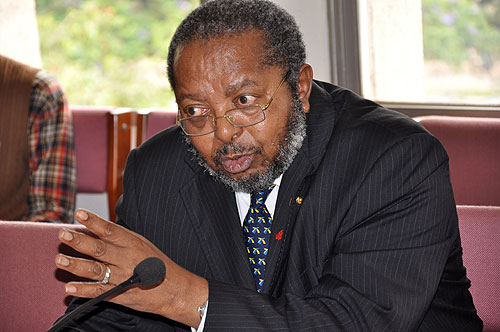
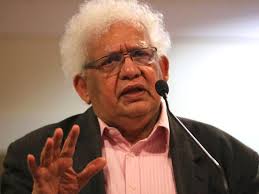
Kasekende, Ocailap reportedly fighting for governorship at BoU

Mr. Patrick Ocailap

All is well at the central bank/Ministry of Finance Planning and Economic Development as two top officials are reportedly fighting on who among them replaces Emmanuel Tumusiime Mutebile whose third term is coming to an end.

The two are Deputy Governor Dr. Louis Kasekende and the Under Secretary/Deputy Secretary to the Treasury Mr Patrick Ocailap.However, sources say Ocailap isn’t interested as he plans to retire soon.
According to sources, it is alleged that Kasekende lobbyist are front the issue his long stay at the central bank and being a Catholic. They claim in the history of Bank of Uganda, Catholics haven’t had a fair deal like other dominant religions.

Dr. Louis Kasekende.

However, the opponents of the above argument reason that Kasekende being a Catholic won’t favour him as his region (Buganda) has had a fair share of top leaders at the BoU and so, those not in favour of Kasekende say it is time for Eastern or Northern regions to produce a governor as both Buganda/Central and Western have had their time.

Northern has had Mr. David Opio Okello as Deputy Governor in 2002 while Eastern Region had Mr Bob Elangot. Eagle Online understands that majority of the board members at BoU and key actors in finance are reportedly scouting for Ocailap. Nevertheless, as both camps intensify lobbying, there are connotations that Kasekende and Ocailap aren’t reading from the same page.

BoU governors since 1966 – 2012

Mr. Joseph Mary Mubiru (1966 – 1971):
He was the first governor of the Bank of Uganda. He was appointed governor on August 15, 1966; the day the Bank of Uganda opened. Prior to this he was the General Manager, Uganda Commercial Bank. He died in 1972. Bank of Uganda instituted an annual lecture in his memory known as “The Joseph Mubiru Memorial Lecture” to commemorate his contribution in setting up of the Bank in 1966.

Mr. Simeon Moses Kiingi (1971 – 1973):
He took office on August 30, 1971. Prior to this he had been Managing Director of Produce Marketing Board. After his Governorship in 1973 he was appointed a Minister of State in the Ministry of Finance. He later served as Executive Director for Uganda at the IMF and First Director General of COMESA (The Common Market for Eastern and Southern African States).

Mr. Onegi- Obel (1973 – 1978):
He was appointed governor onAugust 30, 1973. He had been deputy governor since 1969, having moved from the Treasury. His contract expired on August 30, 1978.

Mr. Henry Kajura (1978 – 1979):
He served as governor from October 1978 to February 1979. Prior to that he was Managing Director, Uganda Commercial Bank. He joined politics and parliament in 1986-2016 and became a cabinet minister (1986-2016) and Deputy Prime Minister.

Mr. Nkojo Gideon (1979 – 1980):
He was appointed governor in May 1979 and served until September 1980. Prior to that he had been working with the World Bank in Washington DC since the 1960s. He returned to the World Bank to serve as a World Bank representative.

Mr. Leo Kibirango (1981 – 1986):
He was appointed governor in November 1981. Prior to that he had served as a deputy governor of the Bank since 1980.
Dr. Suleiman Kiggundu (1986 – 1990):
He took office as governor on 23 November 23, 1986 and served until 10 November 1990. Prior to that he had been a lecturer of Economics at Makerere University and in a US University. He later became Managing Director of the defunct Greenland Bank. He was a chairman of a political party.

Mr. Charles N. Kikonyogo (1979; 1990 – 2000):
Mr. C.N. Kikonyogo served a two five-year term from 1990 to 2000. He rose through the ranks from a Banking Officer when he joined the Bank in 1967, Exchange Controller to deputy governor of the Bank (1975 – 1979). He had briefly served as governor from 22 February 1979 to April 1979. He died in June 2001.

Emmanuel Tumusiime Mutebile (2001 – todate):
In 2001, Mr. Emmanuel Mutebile was appointed governor of Bank of Uganda. Prior to that he had been Permanent Secretary to the Treasury in the Ministry of Finance, Planning and Economic Development.

Stories Continues after ad

President Museveni is set to attend the 10th BRICS conference

President Yoweri Museveni is set to attend the 10th BRICS Summit that is seeking to strengthen the relationship between trade member states and African countries.

Museveni accompanied by the First Lady and minster of education and sports Janet Kataha Museveni arrived in south Africa and they were yesterday received by South African Minister for Small Business Development Lindiwe Zulu together with the Ugandan delegation led by Sam Kuteesa Minister.

President Museveni will address the BRICS Africa Outreach and hold bilateral meetings with other heads of state as they seek to adopt the adopting ‘Johannesburg declaration’.

BRICS Summit is an international relations conference attended by the heads of state or heads of government of the five member states including Michel Temer of the Federative Republic of Brazil, Vladimir Putin of the Russia Federation, Prime Minister Narendra Modi of Republic of India, Xi Jinping of the People’s Republic of China and Cyril Ramaphosa of the Republic of South Africa.

The summit will be held under the theme “BRICS in Africa: Collaboration for inclusive Growth and Shared Prosperity in the Fourth Industrial Revolution”, chosen by South Africa that is chairing it.

The BRICS leaders will today have time to interact with African leaders during the BRICS Africa Outreach on how best they can bring about “inclusive growth” and “shared prosperity”.

South Africa will remain Chair of BRICS until December 31, 2018. The 10th BRICS Summit will culminate into the adoption of the “Johannesburg declaration” which will include joint commitments for the year ahead and the next Chair will be the Republic of Brazil.

South Africa has proposed the following adoption at the Summit: establishment of a working group on peacekeeping, establishment of a vaccine research center for collaboration with BRICS vaccine innovation and development partners intended to be a physical research center focused on research and development and vaccine innovation.

They aim at establishing BRICS tourism track of cooperation, leveraging the strategy for BRICS economic partnership towards the pursuit of inclusive growth and advancing the 4th industrial revolution to foster discussions to address opportunities provided by the fourth industrial revolution.

African Heads of State confirmed to attend the Summit include: His Excellency Dr. Hage G. Geingob, President of Namibia, His Excellency Ali Bongo Ondimba, President of the Republic of Gabon, His Excellency João Manuel Lourenço, President of the Republic of Angola, His Excellency Macky Sall, President of the Republic of Senegal, His Excellency Faure Essozimma Gnassingbe, President of the Republic of Togo, and His Excellency Paul Kagame of the Republic of Rwanda.

Stories Continues after ad

The ruling on the Constitutional Amendment Act: Justice Kakuru- Uganda’s pride ,rebel NRM MPs win

Justice Winy Dollo

The judges’ unanimous decision of 4-1 saved president Museveni yesterday by upholding the scrapping of term limit and age limit in the Ugandan Constitution even though members of parliament (MPs) were unlucky as the judges agreed with the petitioners that the extension of legislators’ term of office from five years to seven years was unconstitutional.

The judges’ performance

Ugandans both within the country and abroad yesterday spent almost 12 years hooked on television sets in their homes, hotels, bars, shops and offices as each of the five justices of the Constitutional Court delivered their ruling on the consolidated petition seeking to among others quash the constitutional term limit removal, age limit removal and the extension of the legislators term of office from five to seven years.

Justice Kenneth Kakuru: Justice Kenneth Kakuru declared the whole amendment process unconstitutional and urged that the entire amendment act should be expunged from the Constitution, a ruling that has been welcomed by Ugandans who still believe in the sanctity of the constitution. Kakuru’s ruling, unlike those of his colleagues, was based on an independent mind, an independent judge. One would expect that Kakuru who comes from Western Uganda, same as Museveni, would favour the latter but he did not. For that decision Justice Kakuru is an early contender for Ugandan Man of the Year 2018 as he restored the pride of Ugandans who believe in constitutionalism.

Justices Remmy Kasule, Cheborion Bashariki, Owiny Dollo and Rebecca Musoke for sure disappointed many Ugandans by maintaining upholding the removal of the age limit and term limit. In their ruling the four justices failed to grasp the fact that in Africa a president in power will always have a greater advantage over his competitors due to the fact that they control resources including finances, civil service, military and security agencies. The argument that the people have the power to elect or not to elect a sitting president is far-fetched. For instance in Uganda the constitution gives powers to the president to appoint Chairman of the Electoral Commission and other top officials but also appoints the judges. That undermines decision making in a suit where the sitting president is involved like it happened yesterday. There is no doubt that parliament entrenched life president in Uganda and now the four judges yesterday confirmed it without exhibiting any shame in their faces.

President Museveni

Museveni is a winner and all happy as Justices Remmy Kasule, Cheborion Bashariki, Owiny Dollo and Rebecca Musoke did not see any problem in having a constitution without presidential term limit as well age limit. The president wanted the two changed and his National Resistance Movement (NRM) MPs did it and the judges confirmed it in the ruling. Whether this is not the entrenchment of life presidency in the constitution is a matter of debate. However, the president must be unhappy that the son of the soil, Justice Kakuru could not grant him his wish.

Speaker Rebecca Kadaga

Speaker of Parliament Rebecca Kadaga is all smiles after the judges in their ruling agreed that she faulted no parliament’s rules of procedure as she expelled some MPs from the house on the account of causing chaos during the debate to remove age limit for the president. On allowing external security inside parliament Kadaga scored highly, as the judges observed that the situation warranted the intervention of the forces. However, that she allowed the smuggling in the constitutional amendments the extension of MPs term of office from five to seven years and reinstatement of the presidential term limit did not go well with the judges as it went against the law.

NRM Members of Parliament big losers!

It is no secret that the removal of the presidential age remit, presidential term limit and now failed extension of the MPs term of office was hatched and executed by the National Resistance Movement (NRM) legislators in parliament on account of their numerical strength, an advantage they thought would always give them way to achieve what they want in disregard of the electorate and constitutional provisions. Yesterday’s ruling by all the five judges reminded them that they can always have their way in parliament but not in the judiciary. That justice Kakuru asked each of the MPs who received Shs29 million for consultations to give accountability of the cash was prudent to tell them they cannot always misuse taxpayers’ money for selfish interests.

On the other hand, the ruling vindicated the NRM rebel MPs as well as those in the opposition who opposed the extension of their own term of office. As regards the ruling on this issue that group emerged victorious even as the fight could end up in the Supreme Court.

Stories Continues after ad