Stanbic Bank
Stanbic Bank
25.4 C
Kampala
Stanbic Bank
Stanbic Bank
Home Blog Page 1535

Gov’t should address farmers and SME’s concerns

Uganda will on July 7, celebrate international day of cooperatives at civil service collage Jinja as it strives to achieve middle status income.

Years down the road, cooperatives member were able to save, and acquire low interest loans from various cooperative unions and fund numerous productive activates a move that had elevated their financial status.

Under the theme, ‘sustainable consumption and production of goods and services’, the day is aimed at increasing public awareness on cooperatives and highlighting complementary goals of United Nations and cooperative movements.

At the peak of cooperative movements in Uganda, the country had both primary and secondary cooperative societies that served the interests of ordinary citizens. Of the then established numerous cooperative unions, only Bugisu cooperative union (BCU) has managed to wither the storm.

Heavy infrastructure such as cooperative bank that were closed down in 1999 for having become insolvent, cooperative training collage in Kigumba, Uganda cooperatives transport union (UCTU) and its ultramodern and mechanical workshop that were had been established to empower cooperative societies were all wasted.

However, farmers among small medium enterprises were left to battle with market forces that comprises of continuous importation of both low and quality products, high interest rates on loans that is at 17 percent, hiking prices for agricultural equipment.

At the commemoration of the 94th international day of cooperatives that was held in Nakaseke, the minister for trade and cooperatives vowed the government will compensate all who lost their property during the bush war however till now Bugisu cooperative as cooperative Union that was promised shs19 billion, Banyankole Kweterana Cooperative Union Shs2 billion among others have not received it.

Despite the introduction of National Agricultural Advisory Services Organization (NAADs), Savings and Credit Cooperative Organization (SACCO) Operations wealth creation, the functioning of cooperative societies/ Unions is definitely descending leading to unsustainable financial inclusion.

NAADs/ operation wealth creation, SACCOs that would serve the purpose for thriving of cooperative movements, deliver unsuitable seeds compared to nature of soils, as others fail to sprout.

Even though government introduced Buy Uganda Build Uganda (BUBU) policy to promote local products, it has failed to protect local manufacturers from continuous importation of goods.

Therefore as the country commemorates international day cooperatives, farmers and small medium enterprise (SME)’s concerns ranging from production, processing, marketing, branding must be put under consideration through the in lowering of interest rates to at least seven per cent, for economic transformation and attaining of middle status income that has become the song of the day.

Stories Continues after ad

World Cup 2018 quarter-finals preview

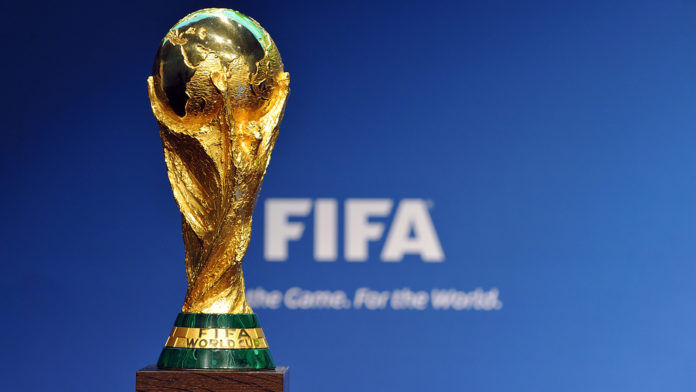
The FIFA World Cup Trophy

After completion of the Round of 16, the quarter-final matches have been decided. We take a look at all the four matches.

France Vs Uruguay
Uruguay’s last appearance at the quarter-final stage was at South Africa 2010. Their meeting with Ghana will go down as one of the most dramatic games in World Cup history remembered for a Luis Suarez deliberate handball in the 120th minute.

The 1998 winners France will face them in the first quarter-final fixture at the Nizhny Novgorod Stadium.

Didier Deschamps’ side remain one of the favourites to win this year’s world cup. France have scored seven goals so far but will find it difficult to break into a strong Uruguayan defence which has conceded only one goal in the four matches.

A brace form Edinson Cavani against Portugal in the round of 16 secured their spot but the striker may miss out due to an injury and the Uruguayans will need to rely on Suarez’s heroics.

Paul Pogba, Corentin Tolisso, Benjamin Pavard and Olivier Giroud are in danger of a suspension. If any of them receive a yellow card they will miss the semi-final should their team qualify.

The latest of Uruguay’s three meetings with France at a World Cup took place at South Africa 2010 when both sides played out a goalless draw in Cape Town on 11 June that year.

Head-to-head: Uruguay 2 wins, France 1 win, 4 draws
The winner of Uruguay-France tie will play the winner of Brazil-Belgium in the first semi-final on Tuesday, July 10.

Brazil Vs Belgium
It has been a long time since the teams faced each other. The last meeting was Brazil’s 2-0 World Cup Round of 16 victory in 2002. That was also their only competitive meeting to date. Rivaldo and Ronaldo were the goal scorers.

Five time winners Brazil overcame Mexico in the round of 16 while Belgium overturned a two goal deficit against Japan for both teams to set up a mouthwatering quarter-final.

Neymar, who has produced moments of brilliance, will still be needed to deliver the goods for Brazil with the help of Coutinho, Gabriel Jesus and Willian while the Belgian Red Devil will need their captain Hazard, De Bruyne and Lukaku to perform at their best.

If the Red Devils don’t progress past Brazil, some could point to something of a curse for the ‘golden generation’. Belgium were eliminated at the quarter-final stage in the past two tournaments. At Brazil 2014, they lost to Argentina (1-0) and at UEFA EURO 2016 were beaten by Wales (3-1).

Casemiro is suspended for Brazil due to accumulation of yellow cards. Fernandinho is expected to come in for the Real Madrid midfielder.

The two teams will meet at the Kazan Arena and the winner will play either France or Uruguay in the semifinal.
Head-to-head: Brazil 3 wins, Belgium 1 win.

Sweden Vs England
England booked their place in the quarter-finals with a dramatic victory over Colombia on penalty kicks on Tuesday afternoon after a 1-1 draw in fulltime while the Swedes edged past Switzerland with a deflected goal from Emil Forsberg.

The Three Lions won their first ever world cup penalty shootout to qualify for the quarter-finals for the first time in 12 years while Sweden qualified for the first time since 1994.

Sweden play as a team while Gareth Southgate’s side will look up to the tournament’s top scorer Harry Kane to deliver the goals.

All of Sweden’s players are based at clubs abroad, while all of Gareth Southgate’s men play their domestic football in England.

Sweden goalkeeper Robin Olsen has kept three clean sheets in four games so far at Russia 2018 while England has not kept any clean sheet.

Kane is the top scorer with six goals, making him the favourite to end the tournament with the golden boot. Belgium striker Romelu Lukaku trails him on four goals.

The winner will play either Croatia or Russia in the second semifinal on Wednesday, July 11.
The tie will be played in Samara Arena.

Head-to-head: Sweden 7 wins, England 8 wins, 9 draws
Croatia Vs Russia

Both Croatia and Russia qualified for the quarter-finals winning their penalty shootouts over Denmark and Spain respectively. The two sides have never met in the World Cup.

Croatia will rely on their golden talent of Luka Modric, Perisic, Mandzukic and Ivan Rakitic while Golovin and Artem Dzyuba will lead Russia’s attack. Mateo Kovacic will not participate for Croatia due to his shoulder injury.

Russia’s captain and goalkeeper Igor Akinfeev was the hero in the Round of 16 penalty shoot-out win over Spain while Subasic was the hero for Croatia saving three penalties.

Croatia’s most historical campaign at the world cup was in France 1998 when they finished in third place and their striker Davor Šuker was the top scorer with 6 goals.

Hosts Russia came in the tournament as the lowest ranked team among the 32 countries.

The match will be at Fisht Stadium, Sochi with the winner to play either England or Sweden in the semifinal.
Head-to-head: Croatia 1 win, 2 draws.

World Cup Quarter-finals
Friday, 6 July 2018
France Vs Uruguay, 5pm
Brazil Vs Belgium, 9pm
Saturday, 7 July 2018
Sweden Vs England, 5pm
Russia Vs Croatia, 9pm

Stories Continues after ad

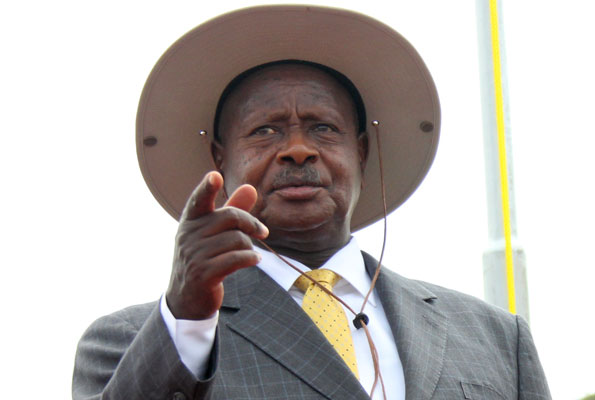
Confusion as Museveni makes U-turn on mobile money tax

President Museveni

President Yoweri Museveni has caused confusion in the public after announcing that the actual tax on mobile money transactions is 0.5 per cent and not 1 per cent as passed by parliament in the 2018/19 budget.

“The 1 per cent was a miscommunication. The actual figure was 0.5 per cent, half of one per cent. That is what we should debate, on the mobile money,” Museveni said on Wednesday on his Facebook page.
He said mobile money transfer is a useful service though he said Ugandans should pay the 0.5 per cent tax on transactions to develop the country.

The president said there is no tax on depositing money on mobile money accounts. “This is to clarify that there is no tax on mere depositing money on a mobile phone account. That confusion should be clarified. The half –per cent tax, not 1 per cent, is only on the sender and the receiver of money through mobile money,” he said.
Yesterday the State Minister for Finance David Bahati while addressing the press in Kampala said Ugandans would pay 1 per cent tax for sending and receiving money on mobile money platforms run by telecom companies.

Following the president’s announcement, it is not clear whether those who had paid the 1 per cent tax on mobile money transactions since July 1 will get their extra money refunded. Some Ugandans had already sent the money to their relatives and paid utility bills.

On social media tax, he said social media chatting is “a luxury by those who are enjoying themselves or those who are malicious.” He said Ugandans by logging on to social media were donating money to foreign companies and sees no problem with Ugandans paying some tax to government.

“As to social- media tax, all the moral reasons are in favour of that tax. The social – media users have no right to squander the dollars I earn from my coffee , my milk etc by endlessly donating money to foreign telephone companies through chatting or even lying and, then, they are allergic to even a modest contribution to their country whose collective wealth they are misusing,” he said.

He said accused betting companies of siphoning the money earned in Uganda to their own countries, which he said has contributed to the weakening of the local currency. “The same with those who engage in games betting. They bet in local shillings. Since, however, our economy is an open one, the foreign owners of betting machines rush to the forex bureaus, buy dollars, the ones I earned , so as to externalize them. This is what affects our shilling,” he said.

“The importers of foreign luxury goods- wines, whiskies, artificial hair, furniture, textiles, shoes etc, goods that can be made here, also squander our dollars. Fortunately, on account of our campaigns, the import bill has decreased from US $7 billion to US $5 billion. That is not enough, however,” he said.

He however said: “There are no taxes on agricultural products, no taxes on machinery for factories or agricultural machinery , no taxes on raw- materials , no taxes on scholastic materials, no taxes on medicine, no tax on exports, no graduated tax etc. Most of the inputs in wealth and job creation are not taxed because we want people to engage in production. The essentials are never taxed.”

Stories Continues after ad

Local insurance companies ‘financially stable and sound’, says IRA boss

IRAU CEO Alhaj Ibrahim Kaddunabbi Lubega, and the Stanbic Bank boss Patrick Mweheire

All insurance companies in Uganda are financially stable and sound despite recent media reports that some were on the verge of collapsing, a top executive of the regulatory agency-the Insurance Regulatory Authority of Uganda has said.

“This is to clarify that are no insurance companies at the verge of collapsing. We would like to assure the insurance policyholders and the general public that licensed companies are financially sound and stable,” Alhaj Kaddunabbi Ibrahim Lubega, the CEO of IRA said Wednesday in a statement.

He said the growth rate of any company does not necessarily reflect its strength. Some media houses had used that to conclude that some companies would collapse soon.

On June 28, IRA released industry performance report for the year 2017 and first quarter of 2018, showing a significant growth with gross written premium totaling Shs737 billion from Shs635 billion in 2016, posting an overall growth rate of 16.13 per cent.

According to the report, medical insurance gross written premium grew by 33.16 per cent from Shs121 billion in 2016 to Shs161 billion in 2017.

There was also was increased uptake of agriculture insurance under the Agriculture Insurance Consortium. As at December 2017, the utilisation of the subsidy was Shs3.1billion for 45,704 farmers, which is about 68.1 per cent of the total subsidy.

As at March 2018, the utilisation of the subsidy was Shs4.8 billion for 59,146 farmers while the gross written premium for Agriculture insurance under the consortium arrangement (subsidy plus farmers contribution) was Shs10.1 billion.

In 2016/17 budget, government introduced the agriculture insurance subsidy aiming at making agriculture insurance affordable to farmers and increase access to credit by protecting agriculture loans disbursed by financial institutions from the effects of specified agriculture risks.

The industry paid out Shs291 billion in gross claims for life and non-life insurance policies, an increase by 11.71 per cent from Shs261 billion in 2016.

The performance showed that non-Life business continued to dominate the insurance industry with its gross written premium income growing by 14.65 per cent from Shs450 billion in 2016 to Shs516 billion in 2017. Whereas life gross written premium income increased by 27.19 per cent from Shs132 billion in 2016 to Shs168 billion in 2017 while health medical insurance increased marginally by 0.74 per cent from Shs52.1 billion in 2016 to Shs52.5 billion in 2017.

According to the IRA boss, there is need to have a stable insurance industry in Uganda to boost both investor and public confidence in order to enhance competitiveness and promote insurance inclusiveness.

Stories Continues after ad

Mobile Money tax risks reversing inroad promotion of financial inclusion- Wilbrod Owor

The Executive director for Uganda bankers association (UBA) Wilbrod Owor (Centre) said the newly introduced Mobile Money Tax risks reversing the inroads made in promoting financial inclusion

The Executive director for Uganda bankers association (UBA) Wilbrod Owor says the newly introduced Mobile Money Tax risks reversing the inroads made in promoting financial inclusion in citizens in the country.

Speaking about annual banker’s conference that is scheduled on July 17, Wilbrod said mobile money tax has made transactions more expensive as he categorically denies that bankers influenced that policy that has seen the introduction of mobile money tax.

“Banking sector is not at war with Mobile money, we are partners with Telecommunication companies, each mobile money wallet has a mirror account in the bank and we are working closely with them,” he said at Serena hotel.

Wilbrod said increased excise duty tax is not only affecting telecom companies, he revealed that excise duty in banks was moved from 10 per cent to 15 per cent, driving away customer’s progress in increasing financial inclusion by getting more people to embrace banking.

Patrick Mweheire sympathized with the government on the need to widen its tax base by taxing mobile money however called for a discussion on the methods through which it can be done.

He said if you look at Uganda’s tax to GDP ratio, it’s the lowest in the region therefore government is trying to figure out how to increase its tax base in an informal economy.

“Banks are moving away from ATMS and moving on to agent banking which will enable financial inclusion,” he said.

He said banker’s conference will be rich with speakers from different spaces like legal, payments and many others to discuss changes that are taking space in the banking sector to promote to promote financial sector growth in the economy.

This year’s conference will aim to deliver constructive discussions and recommendations on a range of subject matters affecting the performance and stability of the financial sector at the global, regional as well as domestic level.

Stories Continues after ad

Donations from Dutch embassy will improve community policing- IGP Okoth Ochola

A police officer tries out one of the bikes donated by the Dutch Embassy to the force

Kampala: The inspector general of police (IGP) Martin Okoth Ochola has received two double cabin pickups and eight motorbikes from Dutch funded refugee law project with a motive of stepping up security in the refugee settlement areas.

Currently Uganda is one of the top three countries that opened its doors for refugees. The country is hosting over 1.4 million asylum seekers form Rwanda, Burundi, Somalia, south Sudan fleeing due to country’s escalating civil wars that have left hundreds killed and displaced. Of over 1.4 million refugees, it is averred that an estimate of 950,000 people are expected to come from South Sudan.

Speaking at the function, Ochola said donations will be used in policing refugee settlements in Adjumani, Lamwo districts and other parts of northern Uganda that hosts the highest numbers of refugees in Uganda.

“As Police, we are happy to secure and make contributions to asylum seekers, refugees, deportees, and host communities, it is an important milestone in our collective effort to secure life and property in a committed and professional manner in partnership with the public in order to promote development,” Ochola said at Naguru police headquarters.

Ambassador of the Netherlands to Uganda Henk Jan Bakker said, it was a logical choice to team up with refugee law project in order to fill gaps that had emerged due to influx of refugees into Uganda and in terms of security in their settlements.

Bakker remarked that Netherlands is convinced that investments will make a difference since they have been rested in well trained and equipped police officers ready to serve in any communities.

Stories Continues after ad

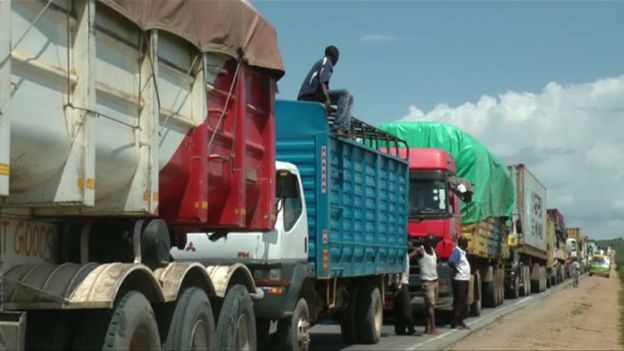
Fighting smuggling requires collective effort

Trucks carrying goods

By Herbert Ssempogo

Polythene bags strapped onto their bodies, and covered by clothes, the three women seemed like ordinary travellers. Were it not for “intelligence”, they could have successfully smuggled their items.

However, because of a tipster, the Uganda Revenue Authority (URA) enforcement team at Busitema, Eastern Uganda, netted them.

Such is the smugglers’ ingenuity. They create hard-to-see compartments in buses, hide banned cosmetics under sand and in sacks containing matooke.

Ambulances and other government agency vehicles have severally been netted over smuggling. Despite the risk-arrest and prosecution, forfeiting goods and vehicles used, like all bad acts, somehow it continues to lure people.

It is most rampant in Eastern Uganda-Busia & Malaba, South Western-Mpondwe & Kasese, Southern-Mutukula and West Nile-Arua among other areas.

Top on list of most commonly smuggled goods is cigarettes, phones, rice, wheat flour and banned cosmetics due to harmful ingredients.

Surprisingly, out of ignorance, sometimes people smuggle items that tax exempt. For example, human drugs are smuggled from Kenya.
As it is with other offences, often we know the perpetrators. But we protect and or encourage them because we are beneficiaries.

This was evident in a recent Facebook post in which a woman boasted about her husband’s activities.

According to her, her husband was a habitual smuggler, crimes that made him rich. She boasted about his invincibility. Unfortunately, many women (the post was in a women’s group on Facebook) supported the man’s actions (smuggling).

Incidentally, those, who supported her, routinely comply with tax obligations directly or indirectly while the man was amassing wealth with no contribution to public goods-services arising from the collected revenue. Moreover, they could be proprietors, whose businesses are affected by the unfair competition caused by the smuggled goods. With no “levelled playing field” some businesses are ejected.

And worse still, they could be ‘consumers’ of the smuggled items like the banned cosmetics said to cause cancer due to hydroquinone and other harmful ingredients. Often, smuggled items are counterfeit and, therefore, not good to use.

From the foregoing, as is the case with other criminal activities, the public ought to work with the authorities including URA to arrest smugglers and prosecute them. This is because communities know them.

Merely looking on because smuggling does not affect you directly is defeatist. In the long run, one selfish person’s actions have a ripple effect on the perpetrators, beneficiaries and those who turned a blind eye.

As an institution mandated to collected revenue, URA is at the forefront in the fight against smuggling. Indeed, routinely, the aforementioned top most smuggled goods are impounded in enforcement activities across the country.

Enforcement is a dangerous activity as the criminals will do anything to avoid detection. This involves speeding and its attendant consequences and moving in the wee hours of the morning and at night.
However, the fight against the vice requires collective effort-informing authorities like URA about the people involved, their consolidation centres, means of conveyance (vehicles) and market. Additionally, we should not buy smuggled items for example cosmetics namely Coco Plus, Carol Light, Beautyon smuggled from Democratic Republic of Congo.

The Writer works for URA -Media Unit, Public & Corporate Affairs

Stories Continues after ad

Nine leadership styles that will define your new venture

Martin Zwilling

By Martin Zwilling

Entrepreneurs inherently understand that they have to be the initial leader of their startup, but often they don’t have the experience or the training to know where their leadership competencies lie, or how to build a leadership team. For new entrepreneurs, leadership development efforts may be more valuable for achieving startup success than business skills development.

Very few people know their own leadership style, or strengths and weaknesses, despite their many years of living and working in the real world. To assess where you are, and to unlock your full potential, there are many courses available, as well as seminars and gurus, but a good place to start is a book on the subject, like the classic one from John Mattone, “Intelligent Leadership.”

Mattone has a wealth of insights, based on years of helping Fortune 500 leaders overcome their self-imposed limiting leadership habits. He identifies and distinguishes between nine distinct leadership styles that I see in all entrepreneurs to some degree. The most effective entrepreneurs know their own predominant style, and how to build a team with all the rest required:

Helper. Mature Helpers are considerate and genuinely the most sensitive and caring of all the leadership types. They are excellent mentors and coaches, but have a strong need to be admired and respected in return. Strengthen this trait by being more conscious of your need to be liked, and don’t be possessive or controlling.

Entertainer. Entertainers gain the respect of others with drive, determination, hard work, and the ability to win over people. But they can become fixated with appearing successful, showing more style than substance, or undermine themselves by exaggeration, inflating their importance, or trying to win or one-up all the time.

Artist. Artists are perhaps the most creative and innovative leaders. They tend to move people deeply, and bring out the most in people. As they become more mature, they draw less inspiration from themselves, and more from others. Improve your artist side by avoiding negativity, procrastination, and focus on self-discipline.

Thinker. Thinkers like to analyze the world around them, and may prefer thinking to doing. Mature Thinkers quickly understand problems, can explain them to others, and make sound and logical decisions. Strengthen this trait by not jumping to conclusions, seeking advice, and working cooperatively with others you trust.

Disciple. Disciples are able to form strong and cohesive work groups, but sometimes appear incapable of action without permission of an authority figure or belief system, and don’t seek out leadership positions. This trait can be strengthened by accepting accountability, reducing reaction to stress, and cutting ties to authority.

Activist. Activists are good at lifting the spirits of team members and managers, and are usually optimistic and confident. They tend to bury themselves in activities, but can be impulsive and select quantity over quality. Improvement efforts would include listening more to people, thinking about details, and learning to say no.

Driver. Drivers are the most openly aggressive leaders, who enjoy taking charge, and can make things better with their immense self-confidence. Unfortunately, they may feel the need to dominate every situation, and make every decision. Mature ones act with more self-restraint, let others win, and work with others.

Arbitrator. Arbitrators tend to be the most open of all types. What you see is what you get. They find ways to bring people together, and ways to involve everyone. To be a better Arbitrator, you need to be more assertive, more open, share your feelings, and work on developing your listening skills.

Perfectionist. Mature perfectionists are capable of being highly noble leaders, with their deep sense of right and wrong and ethical principles. They are usually highly critical of themselves and others, and often frustrated by reality. To improve, they need to learn to relax, listen to others, and remember that no one is perfect.

In all cases, to reach your highest leadership potential, you have to stay true to yourself, rather than trying to conform to other people’s images of the best you. If you truly commit to learning more about yourself and becoming the best that you can be, while possessing a great attitude, you will discover that all challenges are really the seeds of opportunity.

Most recognized entrepreneur leaders admit that their biggest challenge was to break through their self-imposed limiting thoughts, emotions, and habits, to reach the next level. How many of these leadership traits have you mastered, how many are you working on, and how many of the other strengths have you built into your team to help you? That’s intelligent leadership.

The Writer is a veteran startup mentor, executive, blogger, author, tech professional, and Angel investor. Published on Forbes, Entrepreneur, Inc.

Stories Continues after ad

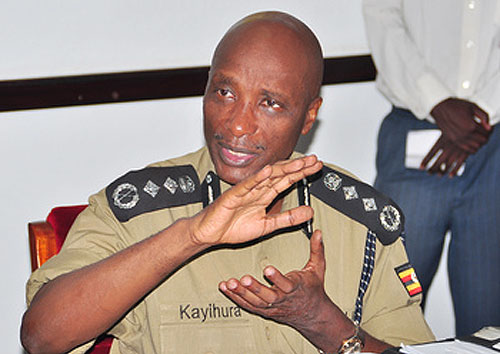
Gen. Kayihura to Gen. Saleh: I am ready to be tried than ask for forgiveness

Gen.Kale Kayihura

Former IGP, Gen. Kale Kayihura, has flatly rejected a proposal for him to plead guilty and be forgiven.

Sources say the proposal has been mooted by Gen. Salim Saleh. It is Gen. Saleh who was assigned the duty of arresting and interrogating former Police chief Kale Kayihura.

When Military Police and Chieftaincy of military Intelligence went to search Kayihura’s home for incriminating evidence, it is reported Gen Saleh was remained in a tinted army car in the compound monitoring and coordinating the search.

At Makindye, sources say, he has been a routine guest to Kayihura persuading him to share whatever he knows and also publicly apologize to the commander in chief and the public.

An inside source has told Eagle Online that the former police chief has out rightly rejected the idea of apologizing and pleading guilty to any accusation.

“He has told the general that he would rather stand trial than waiver under pressure to plead guilty and ask for forgiveness,” said a source who is involved in interrogating the former president’s blue eyed boy.

Giving insights in the happenings in the Makindye grilling room, the source said that whenever Kahiyura is called in for questioning, Gen Saleh always sits on the side mollifying and encouraging his former aide de camp to open up and answer the questions from the low rank military police interrogators.

“Gen. SS (Salim Saleh) is ever here trying to make inroads but KK (Kale Kayihura) has remained steadfast insisting if he has a case(s), he must be tried rather than be intimidated by pleading. It seems the law in him is finally out and we are likely to see a showdown,” the source said.

Unlike the rest of the detainees who were made to wear the yellow prison uniform and move around bear feet, Kale, the source says, was give exception and is allowed to wear sandals and buggy blue jeans but without a belt.

Sources further revealed that the whole of yesterday afternoon Gen. Saleh and the chairman of the court martial, Lt. Gen. Andrew Guti spent a considerable time in Makindye barracks together perhaps trying to finalize the charges against the former police chief.

It is expected that Kayihura’s accomplice and former head of crime intelligence in Uganda police under Kayihura’s reign, Atwooki Ndahura,will join the state as key witness after pleading guilty of kidnap and repatriation of Rwandan nationals.

Kayihura and host of other former top police officials under his reign are under detention at Makindye waiting to be charged with a variety of charges that could include espionage and several murders.

Stories Continues after ad

EAC, SACU push dairy, vehicle tax negotiations to December

Fresh Diary milk products

The East African Community (EAC) partner states and the Southern African Customs Union (SACU) have failed to reach a deal on taxing sensitive items such as motor vehicles and dairy products under the Tripartite Free Trade Area (TFTA) framework, pushing discussions to December this year.

The EAC comprises six countries-Uganda, Kenya, Tanzania, Rwanda, Burundi and South Sudan while SACU comprises five countries — South Africa, Botswana, Lesotho, Namibia, and Swaziland.

The member countries could not reach a consensus at a tripartite Council of Ministers meeting in Cape Town on June 18 and suspended negotiations to allow more time for consultation with stakeholders, said a Ugandan delegate that attended the negotiations.

But the two sides have agreed to immediately liberalize 66-67 percent of the items and to move to about 90 percent in five years, he said.

He said the negotiations on motor vehicles and dairy taxes were postponed to allow members consult their respective private sectors.

The EAC is coy to open up its motor vehicles market to imports from SACU, to protect the Kenyan and Rwandan assembly plants, while SACU, which is largely controlled by South Africa, one of the top two African economies wants to export vehicles to the EAC.

Stories Continues after ad