Stanbic Bank
Stanbic Bank
25.2 C
Kampala
Stanbic Bank
Stanbic Bank
Home Blog Page 1536

Uganda’s annual quarterly GDP rise 6.4 per cent

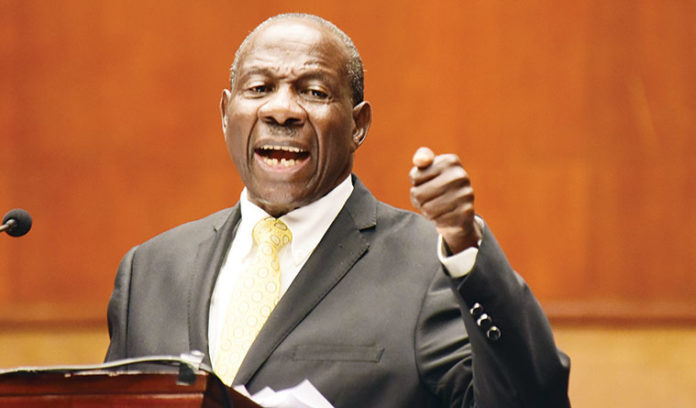
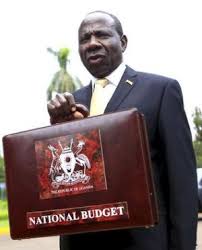
Finance Miniter Matia Kasaija denied ever granting permission for the tax.

The year-on-year quarterly gross domestic product (GDP) for the third quarter of 2017/18 stood at 6.4 per cent compared to the growth of 4.5 per cent registered in the same period in 2016/17, the Uganda Bureau of Statistics says in the latest report.

In value terms, the report says, the economy expanded to 14,438 billion shillings in third quarter of 2017/18 from 13,573 billion shillings estimated in the same period for the fiscal year 2016/17.

According to the report, the year-on-year value added in the agriculture sector is estimated to have upped by 0.8 per cent in the third quarter of 2017/18 compared to a growth of 4.7 per cent in the same quarter of 2016/17.

UBOS attributes the increase to the increase in the agricultural support services activities that grew by 6.6 per cent as a result of favourable weather conditions.

Meanwhile, year-on-year, the industrial sector grew by 9.7 per cent in the third of 2017/18 compared to a growth of 2.0 per cent in the same period in 2016/17. The better performance was driven by the increase in crude oil/mining explorations as well as construction activities which grew by 27.7 per cent and 10.2 per cent respectively.

On the other hand, the services sector year-on-year value added grew by 8.2 per cent in the third quarter of 2017/18 compared to the growth of 6.0 percent in the same period of 2016/17. UBOS attributes the growth to the information and communications activities that grew by 15.6 per cent.

However, real GDP grew in third quarter of 2017/18 by 1.1 percent compared to 1.1 percent in second quarter.

Value added in agriculture sector in the third quarter of 2017/18 grew by 0.1 per cent from a decline of 0.4 per cent. In the second quarter. The growth was boosted by the food crop growing activities although the same report shows that the value added for cash crop growing activities declined by 9.1 per cent and fishing activities by 4.9 per cent.

In addition value added in industry sector increased 3.0 per cent in third quarter of 2017/18 compared to an increase of 1.4 per cent in the previous quarter. The growth was boosted by manufacturing and construction activities which grew by 1.7 per cent and 5.7 per cent respectively.

The services sector value added grew by 2.5 per cent in third quarter of 2017/18 compared to 1.7 per cent attained in the second quarter. The growth, according to UBOS, was supported by the growth in financial, insurance (5.7 per cent), information and communications activities (5.7 per cent).

Stories Continues after ad

CDC exits DFCU after controversial Crane Bank takeover

dfcu bank

CDC, Britain’s oldest Development Finance Institution has announced it is quitting its business partnership with the Development Finance Company of Uganda.

CDC owns 9.97 per cent of DFCU

CDC on June 14, 2018, wrote to the DFCU’s board, indicating its intent to sell its stake. According to sources, exist of CDC is more connected to the way Crane Bank was acquired. It is said that after Crane Bank Limited shareholders protesting the takeover of branches by DFCU, it unsettled the board after CBL insisted that branches weren’t part of the bank as they fall under Meera Investment. CDC and other two partners opposed the deal and accused DFCU bosses especially Juma Kisaame for not carrying out enough due diligence.

Accordingly, CDC’s Investment Director in charge of Financial Institutions, Irina Grigorenko, said it was “undertaking a review of its investment in DFCU Limited which may lead to the disposal or some of some or all of its shares in DFCU over the short to medium term.”

CDC said in its letter to DFCU that with the knowledge of the company and Arise B.V., “we have held preliminary discussions with a small number of potential investors” which include Cranemere Africa Limited and responsAbility Investments AG.
Cranemere is a holding company for outstanding businesses in the United States and Europe. Its shareholders are major families and institutions from the United States, Europe, the United Kingdom, Latin America, and the Middle East.

Cranemere’s chairman and founder is Vincent Mai who previously led AEA Investors, a private equity firm founded to make investments on behalf of Rockefeller, Mellon, and Harriman families.
The company’s CEO is Jeffrey Zients who previously served in Barack Obama’s government as the acting director of the Office of Management and Budget.

On the other hand, responsAbility Investments AG describes itself as an asset manager in the field of development investments and offers professionally-managed investment solutions to private, institutional and public investors.
A private Swiss enterprise, founded in 2003 and headquartered in Zurich, responsibility says its investment solutions supply debt and equity financing predominantly to non-listed firms in emerging and developing economies.

DFCU is accused of conniving with some top Bank of Uganda executives to takeover CBL at a throw away price and this has resulted into legal battles as CBL shareholders insist that the transaction wasn’t transparent.

dfcu financial analysis
The bank’s total assets increased to a record Shs3 trillion, up from Shs1.7 trillion in 2016, like explained the boost in assets was a result of the acquisition of its rival Crane Bank. There is a pending case in court where former owners of Crane Bank are seeking recovery of assets, more so fixed assets.

The statement shows that DFCU’s core capital increased to Shs362 billion in 2017, up from Shs188 billion in 2016.
The management has earmarked Shs51 billion for dividends compared to Shs18.5 billion in 2016, meaning each shareholder will more cash on account.

So who are the shareholders? Dfcu is partly owned by the Commonwealth Development Corporation (CDC) a British government-owned company, together with other foreign firms like Rabo Development from the Netherlands and NorFinance from Norway who are shareholders in Arise B.V together with Norfund, a Norwegian government owned Private Equity firm and FMO, the Dutch Development Bank.

BoU transferred the liabilities (including deposits) of Crane Bank to DFCU Bank in 2017.

The leaked agreement between Bank of Uganda and DFCU indicated that the external owned bank got Crane Bank with assets valued at Shs1.3 trillion for just Shs200 billion (payment for liabilities).
The Agreement did not state the amounts of money paid by DFCU as a net purchase price; or the payment terms for monies, or the assets (outside branches) that DFCU was taking over.

DFCU Shareholding percentages

Arise BV 58.71 per cent
CDC Group of the United Kingdom 9.97 per cent
National Social Security Fund (Uganda) 7.69 per cent
Kimberlite Frontier Africa Naster Fund 6.15 per cent
2 undisclosed Institutional Investors 3.22 per cent
SSB-Conrad N. Hilton Foundation 0.98 per cent
Vanderbilt University 0.87 per cent
Blakeney Management 0.63 per cent
Retail investors 11.19 per cent
BoU staff retirement benefit scheme is 0.59 per cent

Stories Continues after ad

USAID, Think Tank launch investment survey to boost investment in Uganda

Ugandan currency

The East Africa Trade Investment Hub in partnership with the United States Agency for International Development (USAID) has launched an online survey aimed at improving Uganda’s trade and investment environment.

The purpose of the survey is to identify investment opportunities and challenges in the Ugandan market as well as quantifying the potential and real investment/trade losses to both Uganda and the United States, says a brief statement.

The survey is also aimed at improving Uganda’s investment environment as a means of promoting increased two way trade and investment between U.S. and Uganda.

“Your experiences and insights are extremely important to help us reach our ultimate goal – to create a more attractive and sustainable investor environment in Uganda,” says the statement to the targeted respondents-investors.

The survey is meant to make respondents point their views on issues that they consider to be important in enabling a conducive business environment in Uganda. Some of the issues are; low tax rates, access to credit, supportive policy and regulatory environment, political stability and reliable security.

Other issues to be commended on are; skilled workforce, low labor costs, good infrastructure, and reliable power supply.

The survey targets investors with capital ranging from US $9 million to over US $100,000. It targets those who have already invested in Uganda, considering to invest in Uganda and those who have failed to do business in Uganda or left Uganda.

The survey is further meant to establish which of the following factors influenced their decision to invest or consider investing in Uganda. They include; enabling environment on policies towards foreign direct investment, incentives for industrial investments, ease of doing business, political stability, ideal climate and fertile soils for agricultural sector investment.

Others presented for choosing are; Affordable and skilled work force, discovered oil and gas, independence in judicial and legal systems, low tax rates, reliable security, ease of starting business, bilateral investment protection treaties, free trade agreement and economic partnership agreement, transparency of the regulatory system, reliable power supply, intellectual property rights laws and good Infrastructure.

The survey also wants to know whether the targeted investors are; considering expanding their investment portfolio, intending to maintain current investment portfolio or considering leaving the market, based on prevailing conditions.

Stories Continues after ad

Social Media Tax is inconveniencing— Minister David Bahati

State Minister for Finance in charge of General Duties David Bahati

Kampala: State Minister of Finance, Planning and Economic Development David Bahati has said government has realized how inconvenient it is to pay social media tax adding that better ways will be sought with time.

With a motive of widening the tax base in the country, government introduced social media and mobile money tax. Social media platforms such as WhatsApp, Twitter, Facebook, You Tube, Viber and Skype among others have been subjected to a daily levy of Shs200 and mobile money transactions have been subjected to a 1 per cent excise duty.

Commenting on the implementation of Excise Duty Amendments for Telecommunication 2018/2019, Bahati said Excise Duty is a small contribution of citizens towards development of Uganda.

He said when government proposes a tax it must be affordable and reasonable, “I don’t think Shs70, 000 a year for Social Media Tax is unreasonable,” he said at Media Centre.

He vowed that government will account for resources generated from tax collection, “Social media tax is a small but affordable contribution, it is not a punishment, we should finance our budget 100 per cent,”

Bahati said government has directed Uganda communications commission(UCC) one of its institutions to work around the clock to block usage of VPNs to access social media that people are using to evade the paying of tax.

He further said, “the other good opportunity is that virtual private networks (VPN) is more expensive compared to paying tax of shs200 per day.”

Since the blocking of social media, various activists have petitioned constitutional court seeking for annulling of both mobile money and social media tax contending that this tax is a double taxation of Ugandans.

Stories Continues after ad

You didn’t consult us about 15 per cent fees increment-MAK students

Makerere University main building.

Makerere University students have opposed the 15 per cent fees increment that was recommended by students elect committee saying student’s leadership was not consulted.

Being the route cause of massive strikes at Makerere University, this year, University leadership constituted students elect committee to study and analyze the fees structure at the mighty learning institute and compare it we the other high institutions in the country and east African region.

Yesterday, committee led by Polly Bandora recommended for fees increment of 15 per cent effective from the forth coming semester. Bandora said the 15 per cent increase will only be paid by new students for only one semester and the process will be examined in a period of five years.

Speaking to journalist at Makerere University Lubega Pius student’s leader from Mitchel hall said, committee leaders were compromised and sold their trust to the University, “after the institution of the committee we didn’t tell them to report findings before discussing with students leadership,” He added.

However guild representative in the school of psychology Sulait Kamukama said the committee has no justification of recommending for the 15 per cent increment. “The committee had to come to us as students leaders for confirmation of whether we are comfortable with their recommendations,”

Sulait said it was a mistake to make recommendations in comparison to Kenya that has a higher GDP than Uganda and unemployment rates among the youth and then come up with a conclusive report recommending fees increment.

Stories Continues after ad

Braving stormy weather to treat 6000: The story of Bulamu Doctors in Masaka

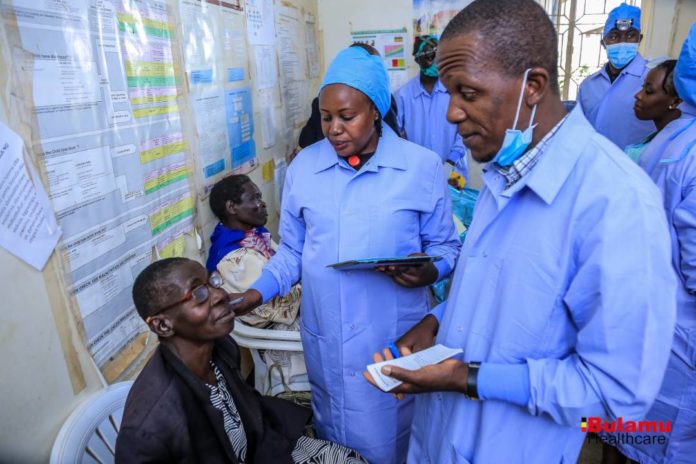
Doctors attend to a patient

The journey to save lives in the village of Kyannamukaaka, Masaka begun on a rather dreary note as rains continued to pour, rendering most of the muram roads slippery and muddy as the buses carrying the medical personnel to Kyannamukaaka health centre IV found it rather difficult to navigate the wet terrain.

The station where Bulamu International would hold its 9th medical camp in June, was a 40 minute drive from the town of Masaka, the unfavorable weather only served to delay the camp’s activities and further irritate the attendees and staff.

However, this neither deterred nor dampened the moods of the eager passengers onboard,as doctors and nurses jumped out and lent a hand on several occasions: shoveling and carrying the mud out from under the vehicles whilst others pushed the buses onto firmer ground.

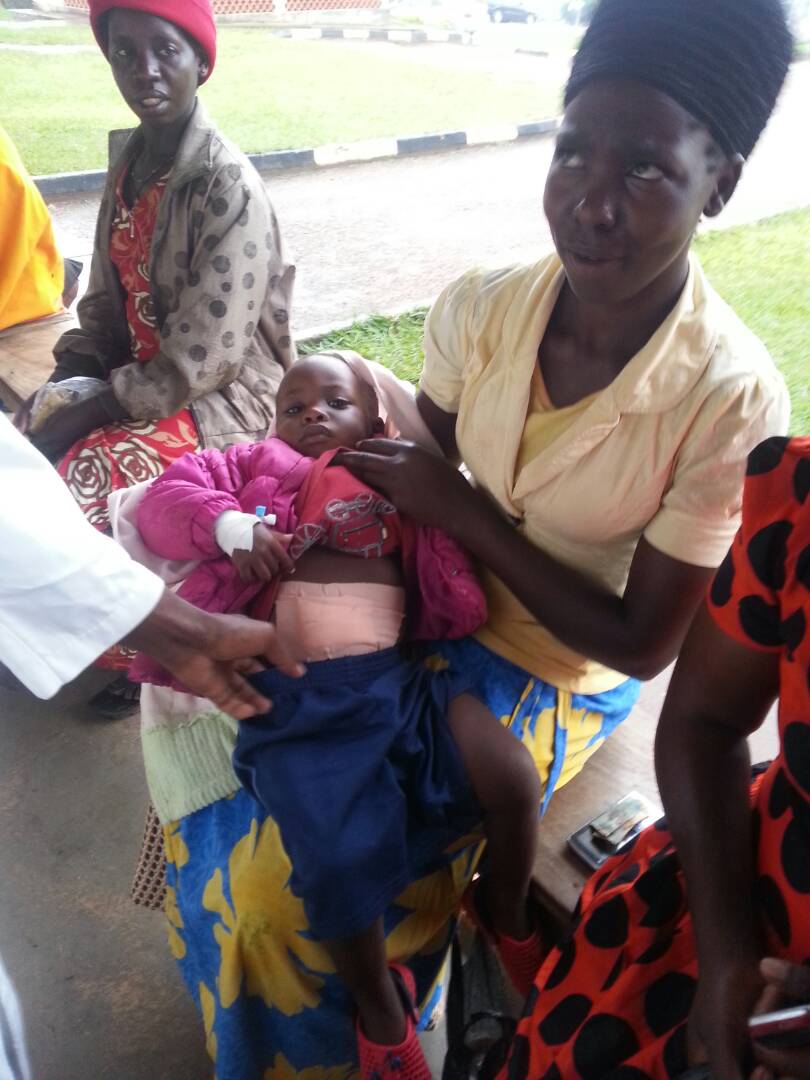
Mother and child after surgery.

This wouldn’t have been an issue had it not been repetitive for another two days.The strain became unbearable as several vehicles found themselves stranded in the same conundrum at odd hours of the night with little to know hope of break down services within that area.

Despite tensions rising, and anxiety at a climax, doctors continued to work around the clock not only to ensure the safety of their colleagues but also the lives of the patients awaiting their arrival at the camp site.

This was only but a glimpse into the trials and challenges that many of these doctors and nurses had to endure in order to secure the health of many Ugandans, not just during this camp alone but throughout the year and their medical careers.

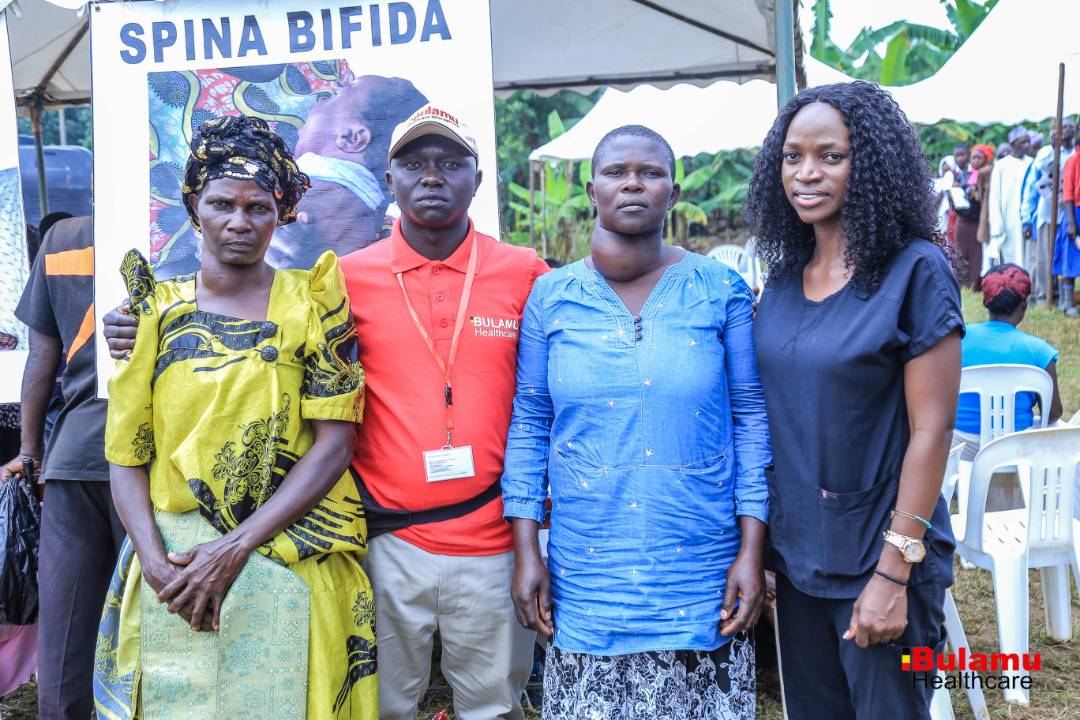
Bulamu volunteers after the camp

The medical doctors weren’t the only ones affected by the rainy season in the village, as the first two days of the camp also resulted in a poor turn up of patients; prompting the organization to plan and re-adopt other measures such as mobilization and advertisement that would ensure the camps success.

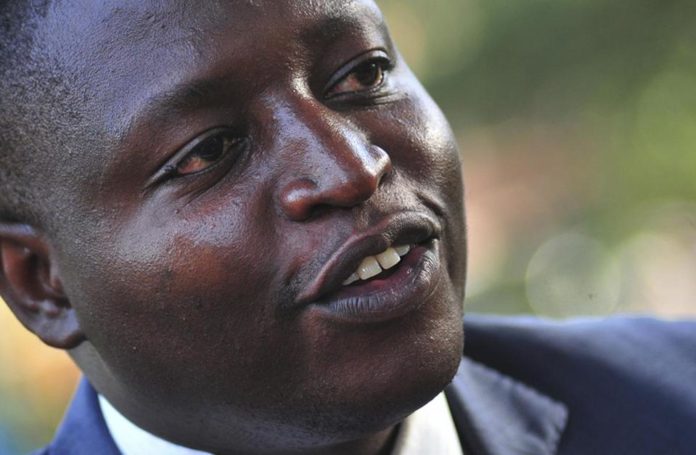
“This is the first time we have witnessed such a low turn up of patients during one of our camps but we urged the Village health teams and local government to intervene and spread word.” said Gerard Atwiine, Director-Bualmu International.

He also revealed that all camps usually run on a budget of about $40,000 and a set target number of 10,000 patients treated per camp. Given the unpredicted circumstances found in Masaka, such as weather and sabotage by rogue political agents, the results for this Health camp looked rather bleak.

Fortunately for the team and other partners the rains came to a halt and by the third day word of the camp’s unprecedented record from previous outreaches had travelled and patients begun to pour in the numbers.

The initial planning of the medical health camp was done through invitation by the Vice President, H.E Edward Ssekandi himself, who praised the organizations work throughout the country, urging Mr. Atwiine and his team to visit his hometown and treat the people there aswell.

Like past camps, it also welcomed a variety of patients, from the elderly to secondary students and a record number of infants who received vaccination services against polio, tetanus and diphtheria including a total of 8 births recorded during the camp.

Among other services offered the populace of Kyannamukaaka and neighboring villages were; Mama-kits, vaccination, dental surgery, optical treatment as well as enrollment into the newly established Angel programme that caters for those with complicated cases such as spina bifida, hydrocephalus and other ailments that would require outside intervention and care.

Patients taken under the Angel program

‘I have seen many camps but this one has been of a different kind; a camp that has set a standard and should continue to do so.

“We also urge that you find a way to work with Government inorder to improve our health care system.’ said Vincent Kityamusubire, Deputy Principal Private Secretary to the Vice president, at the closing ceremony of the week-long camp that saw 167 patients already surgically operated on out of the 200 who had been enrolled.

He also noted that the area had witnessed a number of camps but Bulamu International was the first of its kind to offer surgical services aswell as free eye glasses. Hon. Freda Kase Mubunda also thanked the Vice President for inviting the organization to Masaka and lauded the organization for its initiative that offered such complete and comprehensive services.

The organization aims to improve the welfare of many individuals living in the impoverished communities within Uganda and since it first camp in 2015, it has managed to treat more than 50,000 patients for free with three other camps scheduled for the remainder of the year.

With more support from government and other responsible organizations the U.S based organization believes it is more than capable of improving not only the lives of many more Ugandans but the general health care system of Uganda.

Stories Continues after ad

Kyabazinga graces Chief Izimba’s royal wedding

The Kyabazinga of Busoga, HRH William Nadiope(foreground) with the Chief Prince of Busoga, Samwiri Nkutu at a past function.

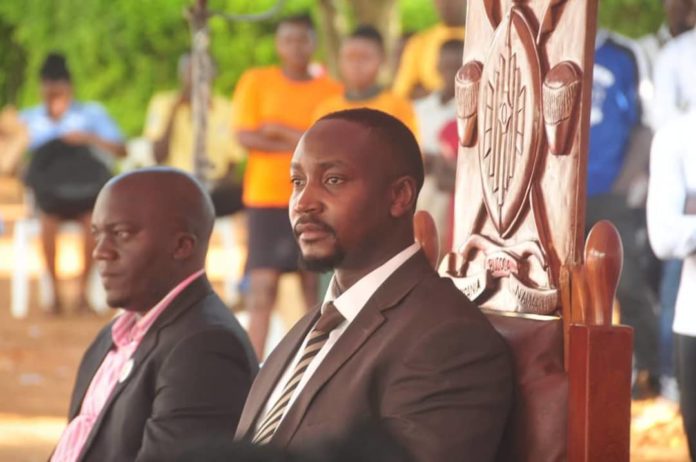
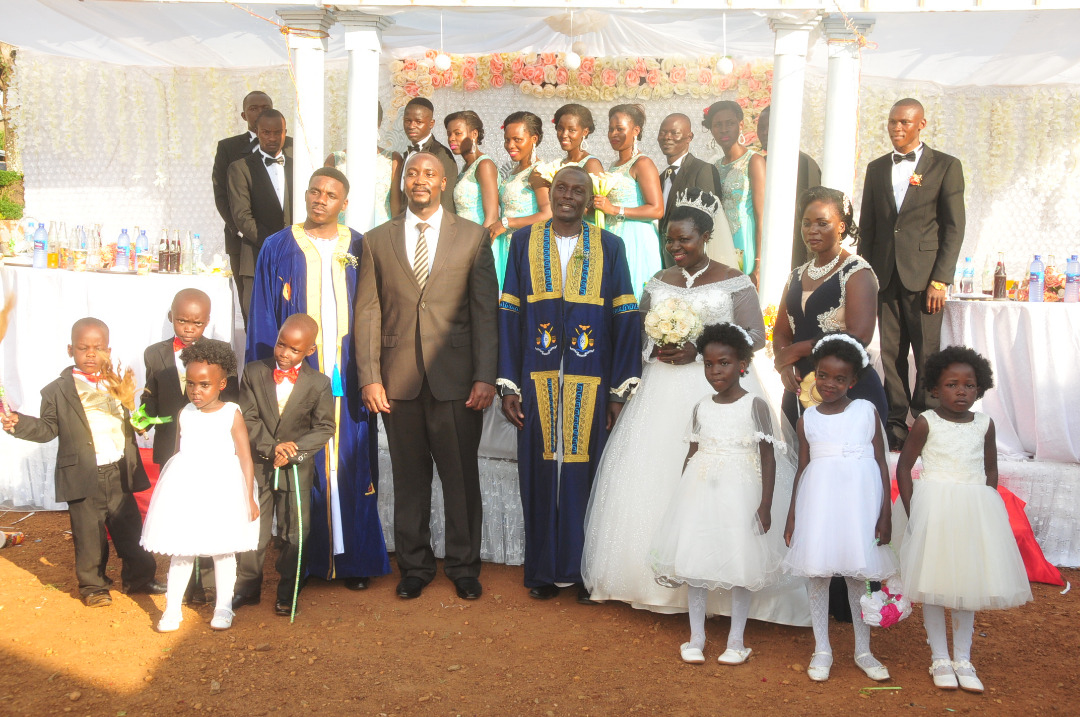
THE Kyabazinga of Busoga William Gabula Nadiope IV on July 1st, 2018 attended the first Royal wedding organised under his reign, of Prince Patrick Izimba Gologolo and his wife Rose Namulondo.

The couple walked down the aisle at St. Paul Church Nasuuti in Iganga district.

Prince Izimba and his wife Namulondo exchanged vows before the Bishop of Central Busoga diocese Patrick Wakula at Nasuuti.

After a long order of service punctuated with song and speeches, the newly wed couple entertained their invited guests at a royal reception held at Ntinda View Hotel in Iganga Municipality.

In his speech at the wedding reception, the Kyabazinga, congratulated the couple. He said he was happy that Prince Izimba and wife had joined Fathers and Mothers union respectively.

“Indeed you have set the ball rolling for other royals in our family to follow suit including myself,” Kyabazinga Gabula said.

He said “As you all know, marriage is a union of two people and it is based on the word of God and not experience. This is further experienced in Genesis 2: 18-24 and proverbs 8: 22.”

The King of Busoga, William Nadiope in a group photo with the couple

Guests were treated to an abundance of cocktails and light cultural entertainment before getting ushered into the reception area for a sumptuous dinner.

The couple also cut a cake in company of the Kyabazinga and served it to their guests at the reception.
After the Kyabazinga had left, the newly weds received gifts from their invited guests at the reception.

Present at the Prince Izimba’s wedding reception were Busoga Kingdom Prime Minister Dr. Joseph Muvawala, The Chief Prince (Issabalangira) of Busoga Samuel Zirabamuzale who is also Menha of Bugweri chiefdom, different Hereditary Chiefs from various Chiefdoms that make up Busoga, Ministers from Busoga Kingdom, Steven Kisira Napeera the Prime Minister of Bulamoji Chiefdom, Miss Tourism Busoga Ruth Kitamirike and other Queens and the Business community in Iganga.

Stories Continues after ad

2018 World Cup: England Colombia battle for quarter-finals spot

England will face Colombia in the round of sixteen with both teams aiming to reach the quarter-finals of the World Cup at the Otkrytie Arena, Moscow.

England made a positive impression in the early stages of the tournament and are now looking to reach the quarter-finals for the first time since 2006.

The South Americans started their 2018 World Cup with a 2-1 defeat to Japan, but beat Poland and Senegal in their next two Group H matches to ensure that they would qualify for the last-16 stage of the competition.

It has been 20 years since the Three Lions last faced Colombia at a World Cup, with winning 2-0 thanks to goals from Darren Anderton and David Beckham.

England are unbeaten against Colombia, having faced them five times previously (W3 D2). Their last encounter dates back to May 2005 in New Jersey. England won 3-2 with a Michael Owen hat-trick.

Gareth Southgate is expected to make changes to his starting lineup and start midfielder Dele Alli after the midfielder recovered from the thigh injury he picked up in that opening Group G win against Tunisia.

For Colombia, James Rodriguez remains a doubt after the star man went off injured during the 1-0 win over Senegal in their final group game.

The winner will face either Sweden or Switzerland in the quarter finals, with a possibility of Russia or Croatia in the semifinal.

The match will be played at 9pm Ugandan time.

Possible lineups:
England: Pickford (GK), Walker, Maguire, Stones, Trippier, Young, Henderson, Alli, Lingard, Sterling, Kane.
Colombia: Ospina (GK), Arias, Mina, Sanchez, Mojica, Carlos Sanchez, Uribe, Lerma, Quintero, Falcao, Cuadrado.

Stories Continues after ad

Regional business platform gets more access to EU market

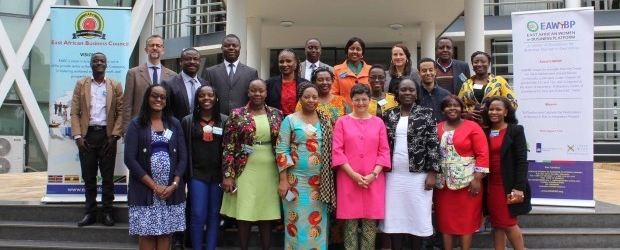
The East African Women in Business Platform members have successfully negotiated an agreement with the International Trade Centre (ITC) to increase market access for their products in the European Union.

That comes after the group held a recent round-table discussion with Ms. Arancha Gonzalez, who is the Executive Director of ITC, ahead of the official launch of the Market Access Upgrade project (MARKUP) at the EAC Headquarters, reflecting on the successes, challenges, and impact of the ongoing EAC regional integration process to businesses.

The discussions highlighted the importance of harmonization of standards in the region, which the EABC has been taking lead in advocating on behalf of the Private Sector in the region, to increase intra-EAC trade, improve product quality and maintain competiveness in regional and international markets.

The roundtable attracted EABC and EAWiBP members working in different sectors and sub-sectors including technology, consultancy, transport, manufacturing, horticulture, and agro-processing, among others.

EAWiBP Regional Coordinator, Nancy Gitonga underscored the importance of linking women in business to different market opportunities and improving their skills through trainings.
She said that EAWiBP has successfully developed a contact database of 10,000 women in business in the EAC region.

The EABC Executive Director, Lilian Awinja says they have sought for practical ways of increasing market access of EAC products to the EU for EAC products like; coffee, flowers, tobacco, tea, fish, vegetables and precious metal ores among others.

According to ITC, the EAC region exported goods worth approximately US $2.5 billion in 2017, an increase of eight per cent in comparison with US$2.3 billion in 2016.

According to Gonzales, ITC has made trade more inclusive through the ‘She Trade Programme’ by connecting together over one million women in business from different countries.

The Director of Productive Sectors of the EAC Jean Baptiste says that to tap into the EU market the region needs to benchmark standards with the ones of the European Union and East African products and should meet the requirements of the European consumers.

Meanwhile, the former East African Business Council (EABC) Board says the agency has made headway in advocating for the removal of non-tariff barriers such as roadblocks, improvement of the transport network in the region and simplification of border procedures. This, he says, has facilitated cross-border trade and improved the transport sector.

Stories Continues after ad

Rating agency says Uganda has weak policies to deal with debt crisis

Finance Minister: Matia Kasaija.

Rating firm, Moody’s, has singled out weak policies, poor budget planning and implementation as factors that have made it difficult for Uganda to tackle her ballooning debt portfolio.

The agency reports that Kenya and Tanzania, Uganda’s bigger neighbours face the same challenge that limits their ability to create policy solutions to the ever growing debt.

The report on the state of debt in the region says that only Rwanda has the institutional and policy framework that is stronger thus its government should be more effective in managing risks associated with a higher debt burden.

“Weaknesses related to public financial management and shortcomings in budget planning and implementation pose challenges in Kenya, Tanzania, and Uganda,” the firm said.

The firm says that the region to curb any further rise in debt burdens in the foreseeable future, and direct limited domestic resources toward productive use.
This, it says, will be important to how creditors view their ability to repay. Debt in the region has been driven by wider gaps in revenues generated by taxes and the expenditure plans, which is normally referred to as fiscal deficits.

Moody’s says that fiscal deficits are largest in Kenya, where large infrastructure-related development spending combine with subdued revenue collection has seen rising cost of debt. “Kenya, which relies less on grant funding, has posted the widest fiscal deficits over the past five years, where they averaged close to 7 percent of GDP,” Moody’s said.

“Large fiscal deficits in Kenya also reflect a narrowing of the domestic revenue base as government revenue net of grants has declined as a percentage of GDP. Kenya is the only country of the four that has failed to grow its revenue net of grants,” the firm said.

The firm says that the erosion of fiscal metrics was a key reason behind its decision to downgrade the sovereign rating of the country to B2 in February.

An increase in commercial borrowing in Tanzania has also increased. In Uganda, external debt remains mostly concessional, but its recourse to non-concessional domestic and external sources has increased.

Stories Continues after ad