Stanbic Bank
Stanbic Bank
24.6 C
Kampala
Stanbic Bank
Stanbic Bank
Home Blog Page 1538

April Fools Day Prank

Dear reader,

Here at Eagle Online, we were almost fooled into an April Fools day story.

You see, it’s fair to say we have a love/hate relationship with April Fool’s Day stories but they are just meant to give the reader that, “holy crap, they got me!” feeling just after reading the last line. And after that, you just move on with the real news in the pages. It happens in media world over.

That was the spirit of our April Fools day story of this year about Mutebile being replaced with NSSF’s Byarugaba.

Digging up the story two months later and making it trend is taking the joke a little bit too far.

Surely, Eagle Online has a tone of cutting edge pieces written with the finesse of good journalism, I invite you to them.

Thank you for being good readers.

Isaac Imaka
Editor Eagle Online

Stories Continues after ad

Agriculture is the ‘green gold’ that could transform the economy and the lives of Ugandan farmers

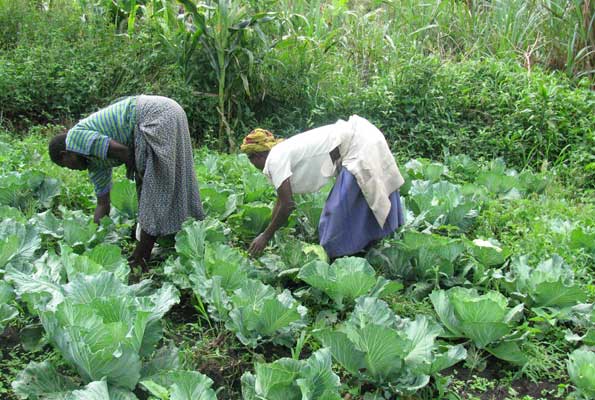
Women attend to their cabbage garden

By Christina Malmberg Calvo

Agriculture is Uganda’s ‘green gold’ that can transform the economy and the lives of farmers. Why it is then that Uganda’s well documented agricultural potential is not realized? What specific public-sector policies and actions are required to unleash the entrepreneurial energy of Uganda’s largest private sector actors—its farmers?

These and other questions are tackled in a new report we’ve launched jointly with the Government of Uganda, titled, “Closing the Potential-Performance Divide in Ugandan Agriculture.” It provides an unprecedented review of the structural context of Ugandan agriculture, its main actors, and the trends, opportunities and challenges the sector is facing.

Agriculture is the backbone of the economy, contributing a quarter of the national gross domestic product (GDP), and employs 70 percent of the population. The sector, however, is growing at a slow pace – way below its potential, with annual output growth at only 2 percent over the last five years. In comparison, East African Community members have seen annual output growth as high as 5 percent. However, in that same period, Uganda’s population has grown at 3.3 percent per annum.

Total factor productivity – which determines the efficiency and utilization of what is put into agriculture – has been negative for the last 18 years. The below par performance should be of concern to all stakeholders for a sector that is at the heart of the livelihoods of majority of Ugandans, and the economy.

So how can Uganda harness these opportunities for long term growth in the sector? How can the investment into agriculture match its output performance?

The report identifies three priority areas for policy action and investment, namely, (a) commercialization through value-addition and trade; (b) strengthened public institutions and policy, and (c) enhanced resilience of agriculture production and rural livelihoods.

Promoting commercialisation of agriculture through value addition and trade offers prospects for long-term growth and transformation of Uganda’s agriculture. Involving the private sector can provide much needed financing, allowing smallholder farmers to commercialize and get more returns. Most financial institutions are unwilling to extend credit to the sector because farmers often don’t have collateral, are too remote and this increases the institution’s transaction costs when there are no physical banking facilities in the areas. There are also too many variables with the rain, commodity prices and pests and diseases.

Risk can be minimized through warehouse receipt systems to provide collateral as alternatives to land titles and fixed assets. Credit guarantees, where larger ventures can offer protection to borrowers in small agribusiness, can cover default risk and build credit. With the booming domestic and regional demand for high-value foods arising from income growth, urbanization, and dietary shifts offer massive opportunities for Ugandan farmers, for value chains beyond farm production, and for better jobs in agriculture.

Like farmers elsewhere, Ugandan farmers are plagued by climate change including severe droughts, flood and crop pests and animal disease outbreaks. Uganda can refocus its extension system for social protection and teach farmers climate-smart soil and water management practices. The rural areas, which produce most of Uganda’s agriculture, are unable to adapt quickly to climate change and that hinders the growth of agriculture under present climate trends. The country is estimated to be losing from 4 to 12 percent of GDP annually mostly due to soil erosion.

The public extension system, National Agricultural Advisory Services (NAADS) would reduce costs and increase efficiency if they used technology as well. It does not have to be sophisticated. You are likely to reach more numbers with a radio announcement than with field visits. Radio programs can speak to good practices and include call-in programs.

Adoption of technology is another untapped area that could have a positive impact on productivity. ICTs like mobile phones enable better access to information and less transaction costs, all of which translate to higher incomes – and especially for women farmers, who adopt technology faster. Among coffee farmers, households using mobile money also receive better prices and sell more coffee.

All of these have to go hand-in-hand with more efficient public policies, and stronger coordination from the centre right down to the local governments. Some of the public policies have had repercussions like NAADS free input distribution mandate crowding out the private sector from seed distribution. Still, utilising public resources wisely to invest in complementary public goods and services such as agricultural research to keep updated on the latest climate developments and farm practices is key, as is development of good roads and expanding access to energy so that farmers spend less money moving produce, and to avoid post-harvest losses.

The public agencies have to step up and work in a more coordinated fashion. There should be more and better data including some district-level statistics, public expenditure reviews, policy analysis and policy monitoring. For agriculture to support the economy in the way we want it to, we have to invest in it and also have the right policies. It also requires politics not to interfere with the sector, but rather to enable investment in Uganda’s agriculture.

The Writer is the World Bank Country Manager for Uganda

Stories Continues after ad

Ugandan Agriculture must commercialize to drive economic growth and poverty-new report

Outgoing World Bank Country Manager for Uganda, Christina Malmberg Calvo

The Government of Uganda and the World Bank on June 19, 2018 launched “Closing the potential performance divide in Ugandan agriculture” report that provides an unprecedented review of the structural context of Ugandan agriculture, its main actors, and the trends, opportunities and challenges the sector is facing.

Agriculture is Uganda’s ‘green gold’ that can transform the economy and the lives of farmers. Why it is then that Uganda’s well documented agricultural potential is not realized? What specific public policies and actions are required to unleash the entrepreneurial energy of Uganda’s largest private sector actors—its farmers? These and other questions are tackled in the report.

The report identifies three priority areas for policy action and investment, namely, (a) commercialization through value-addition and trade; (b) strengthened public institutions and policy implementation, and (c) enhanced resilience of agriculture production and rural livelihoods.

“Economic growth and poverty move with the fortunes of Uganda’s agriculture sector, which, in turn, depends on the whims of the weather. Farmers will not invest in commercial agriculture while counterfeit and poor-quality inputs dominate the market. They need to be able trust the distribution system, and have tenure security and access to finance. This require effective policies and regulations, and that politics steers clear of the agriculture sector,” said Christina Malmberg Calvo, World Bank Country Manager for Uganda.

The report notes several structural barriers in Uganda’s agriculture sector, such as declining productivity, natural resource degradation, and high vulnerability to the impacts of climate change. The low level of tenure security and financial inclusion of smallholders, and comparably weak regulatory measures and poor quality-control systems have been found to limit technology adoption and to hamper agribusiness development. While public budget allocations for agriculture have remained modest, inefficiencies in spending are high.

Booming domestic and regional demand for higher-value foods arising from income growth, urbanization, and dietary shifts offer massive opportunities for Ugandan farmers, for value chains beyond farm production, and for better jobs in agriculture. Other sector potentials include developments in agricultural technology and ICT, and various successful agribusiness models that could be upscaled.

Strengthening the institutional base of agriculture, removing identified distortions, facilitating trade, and enhancing resilience through climate-smart agriculture and low-cost irrigation systems can help closing the divide between the potential and actual performance of Ugandan agriculture. Government needs to drive these high priority actions by forging a pact with the farmers and other private sector actors.

“A productive and climate-smart agriculture sector requires an effective enabling environment. Providing that environment is the role of the Government. Uganda’s agriculture sector may not be transformed overnight. But making the right adjustments now will be critical to realize the Vision 2040,” said Holger Kray, Head of the World Bank’s Africa Agriculture Policy Unit and the study leader.

Stories Continues after ad
Meet Bududa’s coffee woman Martha Wamatabu

Martha Wamatabu. Photo by World Bank

By World Bank

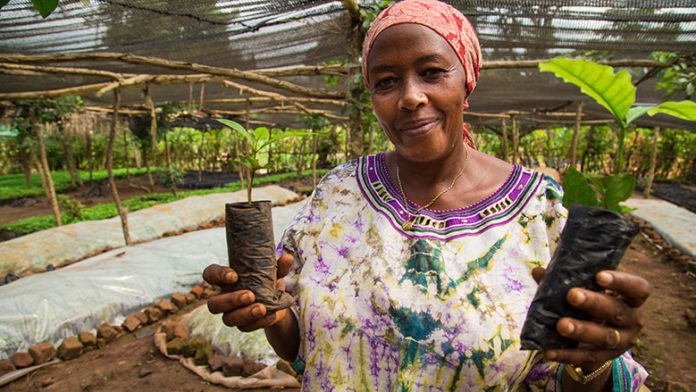
Martha Wamatabu harvests about 600 kilograms of coffee beans in a good season. She has an acre of land in Bududa district where she has grown coffee for the last 10 years, one of few women in the area to do so.

“Not all women have land,” she said. “And even those who want to rent, find it difficult to get money.”

Based in Bududa district on the Mount Elgon ranges, Wamatabu and other coffee farmers also face other barriers. They lack access to markets, domestic and international. The cost of transport is too high due to the narrow murram roads that are often impassable during wet weather conditions.

These are among some of the challenges discussed in the World Bank’ new report, Closing the Potential-Performance Divide in Ugandan Agriculture. The report assesses the state of Uganda’s agriculture, and offers an unprecedented analysis of the structural context, highlighting challenges, trends and key opportunities for growth.

Agriculture is the backbone of Uganda’s economy, employing 69% of the population, and contributing half of Uganda’s export earnings and a quarter of the country’s gross domestic product (GDP). Since most Ugandans live in rural areas and practice farming, raising agriculture incomes – a centrepiece of Uganda’s National Development Plan – is critical to reducing poverty, boosting prosperity and creating jobs, especially for women and youth.

The report, which provides a historical review of the sector, notes that rising population and growth of incomes have increased the demand for food and agro-processed products. This is putting increased pressure on the environment amid frequent and severe climate conditions, made worse by the continued dependence on rainfed agriculture. Combined with poor agricultural practices, low technological adoption, insecurity over land ownership, poor access to extension services, low quality inputs, and lack of credit, the report notes that the agriculture sector continues to be hindered from realizing its full potential.

Challenges notwithstanding, Ugandan agriculture has enormous potential to transform the economy and make farming much more productive and profitable for Ugandan smallholder farmers, the report says. In stark opposition to supply-side constraints, demand-side opportunities for agriculture and food for Uganda and its neighbors are the strongest they have ever been, according to the report. Booming domestic and regional demand for higher-value foods arising from income growth, urbanization, and dietary shifts offer massive opportunities for Ugandan farmers, the report says, and for value chains beyond farm production, and better jobs in agriculture. Other areas of potential identified by the report are developments in agricultural technology and ICT, and various successful agribusiness models that could be upscaled.

Sam Agona, an ICT expert and farmer, prioritized the use of technology in his agribusiness when he decided to register his company in 2016. “We designed and developed tools to manage logistics, inventory, cash flow management and also staff management while in office and in the field,” he said. “It eliminated the need to communicate through time-consuming phone calls and kept comprehensive financial documentation for the enterprise. We capture our transactions on mobile.”

For Uganda to maximize its potential and take advantage of the opportunity to become a regional agri-food powerhouse, the report provides evidence on the strategic decisions and the needs to be addressed in Uganda, and success stories to draw on. The report identifies three priority areas for policy action and investment; (a) commercialization through value-addition and trade; (b) strengthened public institutions and policy, and (c) enhanced resilience of agriculture production and rural livelihoods.

Strengthening the institutional base of agriculture, removing identified distortions, facilitating trade, and enhancing resilience through climate-smart agriculture and low-cost irrigation systems can help closing the potential-performance divide of Ugandan agriculture. The report recommends that high priority actions be discussed in multi-stakeholder fora under national coordination.

“A productive and climate-smart agriculture sector requires an effective enabling environment. Providing that environment is the role of the Government,” said Holger Kray, head of the World Bank’s Africa Agriculture Policy Unit, and lead author of the report. “Uganda’s agriculture sector may not be transformed overnight. But making the right adjustments now will be critical to realize the Vision 2040.”

With access to more finance, more efficient farming and climate-smart practices, the report says Uganda will be able to reach its potential in agricultural returns.

Stories Continues after ad

Mobile money tax will kill new ICT innovations-Private Sector Foundation

RIP Gideon Badagawa

The local private sector is worried that the new taxes on mobile money transactions as introduced in the 2018/19 budget will dampen new ICT innovations and suffocate growth of local businesses.

The private sector players under the umbrella of Private Sector Foundation Uganda (PSFU) Uganda say that the new 2 percent levy on all mobile money transactions will kill innovations that would have eased transactions.

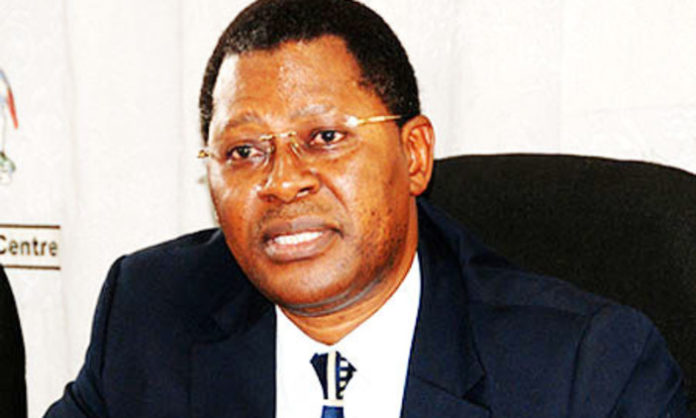
Moses Ogwal Goli, Director Private Sector Development, while presenting private sector’s response to the budget read last week that there were over 200 new ICT innovations that might not be operationalized due to the taxes.

Ogwal said, during a private sector post budget luncheon that was held on June 18 at the UMA Conference Hall in Lugogo Kampala.

“The new mobile tax is levied on airtime, data, tax income for operators, the sender, the receiver, paying bills and all that. This is like double taxation and will in the end discourage ICT innovation,” he said, urging the government to drop what he referred to as operational taxes.

PSFU’s Executive Director, Gideon Bandagawa said that although the budget had tried to address some of the challenges facing the private sector in the country, much still remains to be done for the sector to make profits so that the government can tax.

He said that much as government was to recapitalise the Uganda Development Bank (UDB), more money was needed to be put in the bank. “The private sector needs over Shs 6trillion in the six major sectors,” he said.

The private sector players also want government to review the structure of the UDB to be able to attract more private capital, such as amending the National Social Security Fund (NSSF) Act to enable it participate in the UDB recapitalization but also strengthen micro finance centers to be able to give credit to the private sector.

They further want government to implement the national agriculture finance policy, fully implement the subsidized agriculture insurance program as a way of commercializing the agricultural sector and reduce the 68.9 percent farmers that are still engaged in subsistence farming.

Albert Beine, the Managing Director, Global Taxation Service Limited, while making a tax analysis of the budget, said that the private sector would be very important in helping taxes the Uganda Revenue Authority to achieve the Shs 16.4 trillion that it is targeted in the 2018/19 financial year.

Stories Continues after ad

Kayihura is Museveni’s perfect assembly—Semujju Nganda

FDC's Semujju Nganda

Kampala: Forum for Democratic change (FDC) has called for a prob to investigate the 13 years of former Inspector general of police (IGP) ‘Gen Kayihura’s terror’ that happened in the approval of president Museveni.

Gen Kale Kayihura was sacked in December last year by president Museveni, few months after approval of his appointment in the August house and replaced him with his deputy martin Okoth Ochola. In reappointment, Kayihura was supposed to preside over police till 2023.

Speaking in a weekly media briefing, the spokesperson for FDC Semujju Nganda who doubles as Kira municipality legislator said the 13 years of Gen Kayihura must be investigated and charged for all crimes he committee, ‘not crimes that president Museveni wants to charge him with’.

“Museveni has always witnessed, defended and promoted the former IGP as he continued to grace over violations of human rights, Even when he joined police, Museveni continued promoting him from the rank of Brigadier to General, and he earned all these promotions because Museveni was satisfied with Gen Kayihura’s work,” Said Mr. Semujju.

He said that last year during celebrations at Kayihura’s home in Kisoro district, president Museveni praised him for being a royal carder for criminalizing politics, miming politicians, shooting at people on streets, banning political activities and now is the same Museveni saying Kayihura is a criminal.

“The only police about the former IGP was his uniform, the rest he became the chief promoter of crimes, National resistance movement (NRM),” he said at FDC headquarters, Najjanankumbi.

“We are opposed to Museveni’s proposal on police bond and bail and crack down of media. May be what Museveni missed was to become a journalist, because he wants to an editor, he wants to determine how newspapers and radio should be manage, stories should be published and aired,”

Semujju was retaliating Museveni’s statement during the presentation of the budget, Museveni blamed Daily monitor saying exaggerated Uganda’s debt among other issues.

Gen Kayihura was last week pick from his farm in Lyantonde district and is currently held at Makindye military barracks for allegations that he participated in the gruesome gun down of his assistant, assistant inspector general of police (AIGP) Andrew Felix Kaweesi.

Stories Continues after ad

SC Villa to vote for new president in August

Edgar Agaba CEO-National Gaming Board who credited for the growth of the industry.

Uganda’s most successful league side will again go to the polls to vote for the next club’s president in August this year.

The reigning SC Villa president, Eng. Ben Misagga, will be seeking to retain his seat and serve another four years in office.

Ben Misagga took over as the SC Villa president in 2014, and under him, the club won their ninth Uganda Cup title against KCCA in 2015 ending a five year trophy drought.

Lotteries and Gaming Regulatory Board CEO Edgar Agaba, Denis Mbidde, Muhammed Bazirengedde, and former club player Gibby Kalule are the other members rumoured to be interested in taking over the club.

The elections will be held on August 24 at Masaka Royal Gardens.

Meanwhile, the club appointed a five-man electoral committee to take charge of the elections. It consists of the MP representing UPDF, Evelyn Asiimwe, Vice chairperson Sarah Babirye Kityo who is the Central Youth MP, Secretary is Ivan Kakembo, Ass. Secretary Musa Balinda and Sarah Adong as the spokesperson.

Previous Club Leadership / Chairmanship (Presidents) and their Achievements:

1975 – 1979: Daniel Kiwalabye. Achievements: Club promotion to the topflight league (super league).


1979 – Dec 1993: Patrick Edward Mayengo Kawooya. Achievements: Uganda Premier League – 8 Titles, Uganda Cup – 4 Titles, CECAFA Club Championship – 1 Title.

Dec 1993 – Jul 2010: Franco Mugabe. Achievements: Uganda Premier League – 8 Titles, Uganda Cup – 4 Titles, CECAFA Club Championship – 2 Titles.

Aug 2010 – Jul 2012: Fred Muwema. No registered achievement.

Aug 2012 – Jul 2014: Interim Committee. No registered achievement.

Aug 2014 – Jul 2018: Ben Immanuel Misagga. Achievements: Uganda Cup – 1 Title.

Stories Continues after ad

UCC meets bus managers to streamline courier services

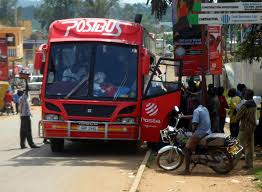
Post buses run by Posta Uganda deliver parcels as well as transporting passengers

The Uganda Communications Commission (UCC) has met with the representatives of bus companies in and other stakeholders in Kampala in a bid to have measures that can ensure the safety of clients, dispatches and other items.

UCC’s Director of Corporate Affairs Fred Otunnu said during the meeting that: “Stakeholders engagement is a key regulatory function that we at the commission take seriously. He said the meeting was vital in formulating the frameworks for the operation of the courier business.

The meeting was held under the theme, “Towards improved courier delivery and safety of property in transit.” The meeting attracted participants from bus companies KK Travelers, Gaaga Coaches, Y.Y Coaches among others. Representatives from the Transport Licensing Board (TLB).

Otunnu said UCC wants to ensure the security and quality of postal services and others in the transport sector.

Winston Katushabe, Commissioner Transport Regulation and Licensing at the Ministry of Works and Transport said: “As parcel deliveries “become common, the rise of failed deliveries has also increased.”

He urged bus courier operators to employ ICT solutions such as tracking systems to increase efficiency.

He said Section 33 of the UCC Act prohibits any person from conveying, delivering or distributing postal articles without a license.

The Commissioner said postal articles are to include any letter, postcard, newspaper, book, document, pamphlet pattern, sample packet, defined parcel package or other article tendered for dispatch or specified in the International Postal Union of the license of an operator.

However, he said that article 32 of the Act provides that; a person shall not require a licence to convey, deliver or distribute articles for delivery to another person or persons to whom they are directed, without hire, reward or other profit or advantage for receiving, carrying or delivering them.

UCC Senior Enforcement officer, Kenneth Seguya said the engagement would empower players in the sector to know “who is to be held liable in case of breach of the law, lost postal articles or those tampered with, and management of liability.

Section 5(b) of the Act mandates UCC to monitor, inspect, licence, supervise, control and regulate communications services in Uganda.

Similarly, the conveyance, delivery or distribution of postal articles without a license issued by UCC is prohibited.

The five courier and postal license categories are national postal operator, international license, regional license, domestic license and intercity license, suitable for bus operators.

Otunnu urged players to obtain postal licences, saying that it would ensure fair competition among operators, but also promote efficient, equitable and quality postal services, increase revenue and profitability among others.

He said other benefits would include; sharing of infrastructure to bring down costs of providing services, opportunity for last mile delivery in e-commerce transactions and coordination initiatives between the postal industry and the relevant national and international organisations in matters relating to postal.

Stories Continues after ad

Uganda registers success in fight against HIV/AIDS

Chairman Uganda Aids Commission, Dr Eddie Mukoyo, at Parliament yesterday.

Uganda has registered some success in the fight against HIV/AIDS, according to the Uganda Aids Commission (UAC), the lead agency in the fight against the disease in the country.

In 2011, there were 140,000 HIV Infections, which had dropped to 100,000 by 2017, said Dr. Eddie Mukooyo Sefuluya, Chairman of UAC.

The official was briefing the media on June 18 in Kampala on the Presidential Fast Track Initiative to End AIDS as a Public Health threat in Uganda by 2030. The initiative was launched by president Museveni in June 2017.

However the Director General of UAC Dr Nelson Musoba said there has been an increase in the HIV/AIDS prevalence among the youth aged 15-25 years and men aged 35-49 years.

According to Dr Musoba, Uganda has about 1.3 million AIDS patients, whereas an estimated 20,000 have died of AIDS-related illnesses as of 2017. The estimated prevalence among adults aged 15 to 49 stands at 6.5 percent.

In April this year, the US government announced US$ 408 million budget support to Uganda’s HIV prevention and treatment effort. The financial assistance came through the US President’s Emergency Plan for AIDS Relief (PEPFAR).The money will be used to focus on building the country’s capacity to achieve an AIDS-free generation.

PEPFAR funding is supporting Uganda’s efforts to end AIDS by 2030. The first step in this is achieving epidemic control via UNAID’s “90-90-90” goals, which state that by the year 2020, 90 percent of all people living with HIV will know their status, 90 percent diagnosed with HIV will be on antiretroviral therapy, and 90 percent of people receiving antiretroviral therapy will have viral suppression.

Stories Continues after ad

Comesa Heads of State Summit set for July in Lusaka

President Yoweri Museveni

The Common Market for Eastern and Southern Africa (Comesa) Heads of State and Governments Summit will take place in Lusaka, Zambia on July 18-19, 2018, according to the latest press release issued by the bloc’s secretariat.

The Summit will be preceded by meetings of ministers and technical officials starting from July 9, 2018.

The Summit will be held under the theme: “COMESA: Towards Digital Economic Integration.) The theme is designed to rally member States towards the full adoption of digital technologies to reduce the disparities in the state of digitization across sectors in the Comesa region, particularly between high-tech and more traditional areas, and between countries and regions.

Delegations from the 19 members of the regional economic bloc are expected to arrive in Lusaka beginning July 7, 2018. Among the key issues in this year’s Summit Agenda is the consideration of membership to Comesa by Tunisia and Somalia.

“Negotiations for the admission of the two States have been concluded and what remains is the endorsement by the Comesa Council of Ministers and subsequent approval by the Heads of State Assembly. This will raise the number of Comesa States from the current to 19 to 21,” reads part of the press release.

The Summit is also expected to appoint a new Secretary General of Comesa to take over from Sindiso Ngwenya whose tenure of office is coming to an end.

Meanwhile, the Intergovernmental Committee (IC) which comprises of Permanent/Principal Secretaries will be the curtain raiser for the 10 ten days Comesa annual event. The IC is responsible for the development of programmes and action plans in all fields of co-operation except in the finance and monetary sector.

IC will review progress reports presented by various sectoral committees and Comesa Institutions and make recommendations to the Council of Ministers for decision making.

The Council of Ministers will meet on July 13-14, 2018 to make decisions on various recommendations presented by the Intergovernmental Committee on the way forward on implementation of Comesa integration programmes.

The Summit timetable:

• The 38th Meeting of the Intergovernmental Committee: 9 – 11 July 2018
• The ESA/EPA Senior Officials Meeting: 12 July 2018
• Peace and Security Committee Meeting 12 – 13 July 2018
• 13th COMESA Business Council Forum 12 – 13 July 2018
• The 38th Council of Ministers meeting 14 – 15 July 2018
• The ESA/EPA Council of Ministers’ Meeting 15 July 2018
• Meeting of Ministers of Foreign Affairs 15 – 16 July 2018
• The 11th First Ladies Round Table 18 – 19 July 2018
• The 20th Summit of the COMESA Heads of State & Govt 18 – 19 July 2018

Stories Continues after ad