Stanbic Bank
Stanbic Bank
18.5 C
Kampala
Stanbic Bank
Stanbic Bank
Home Blog Page 1546

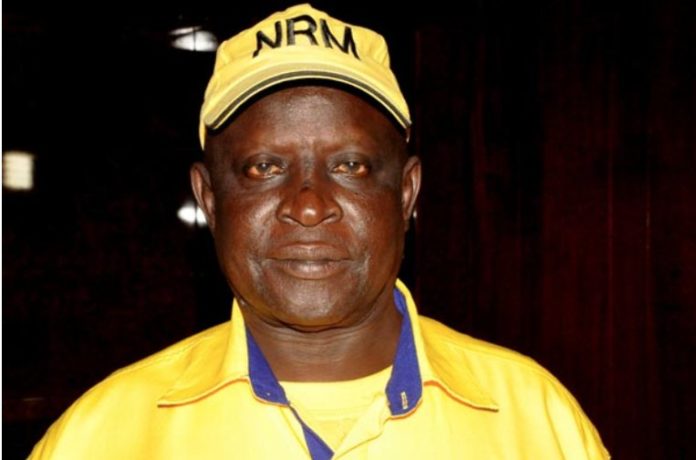
MP Ibrahim Abiriga gunned down

Col. Ibrahim Abiriga

Arua Municipality MP Ibrahim Abiriga has been shot dead.

He was at his home in Kawanda, Wakiso district

Kampala Metropolitan commander Denis Namwoza has told this news website that he is just reaching the murder scene and will update us with more details.

More details to follow……

Stories Continues after ad

Ministry of Finance stalling investigations into theft of Indians property—IGG

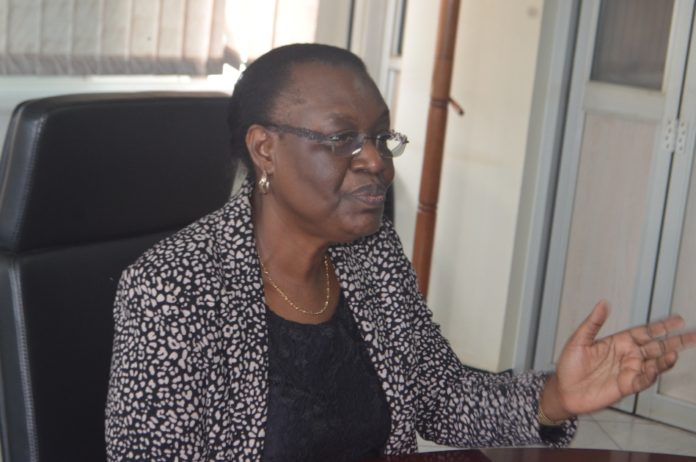
Justice Irene-Mulyagonja during interview

The Inspector General of Government has said Ministry of Finance will be held liable for properties of departed Asian if they don’t take responsibility and restrain public officials from taking over asserts.

Justice Irene Mulyagonja in an interview with Eagle Online on Thursday said she had on several occasions written to the Minister of Finance to take charge and make sure asserts aren’t stolen by public officials.

“Let me give the history of property custodian board. We receive so many matters about that board but I don’t know how many letters that I have written to the ministers of finance asking them to do something about those assets that are laying all over the place and which are being pilfered and stolen by fraudulent people, I have never received any response”. Justice Mulyagonja said.

She added “I don’t want to engage investigations in the matter of departed Asian property because remedies can only be given by ministers or by the courts of law. So it is pointless to carry out investigations and spend the little resources that we have, it is important to spend resources when there will be a remedy got”

She said they (IGG) have tried prosecuting people over that matter, but have a prosecution that went to court last year of someone called Kalangwa with members of Jinja district land board however, the person ran to Constitutional Court and got orders stopping IGG so that prosecution is still pending.

“We wasted our resources, carried out investigations for about one year but we were unable to prosecute them. Is it worthy to carry out investigations and a decision be made of what to do with those properties instead of leaving them to fraudulent people who acquire them”.

In response to Justice Mulyagonja’s concerns, Ministry of Finance Spokesperson, Jim Mugunga said he shares the IGG’s concern and that there is a good working relationship between her office and Ministry of Finance but the best placed sector to answer her was the department of departed Asian Custodian Board.

“I believe if there was any communication, it is between Permanent Secretary and Secretary to the Treasury, Keith Muhakanizi or the minister who would have directed it to the board and it is the board best suited to answer” Mugunga said.

Below is full interview with Justice Mulyagonja

What has been your performance in the recent past?

The figures for complaints received in 2015/16 are 2172 complaints.
Of the 2172 complaints we investigated 2215 but that include the complaints that were received in the previous year.
In 2016/17, we investigated and completed 2318 complaints. When we look at complaints coming in, we notice that between 2015/16 and 2016/17 they increased by almost 1000 and to us that represents an improvement in the credibility in office so it is not that we don’t receive complaints and that people do not bring complaints rather our short coming is not able to investigate all complaints that are brought before the inspectorate.
You promised to catch big fish in terms of corruption of all the figures that you have given to us, how many are in the availed figures.
We have a case that took us one and half years to investigate the case on Mukono –Katosi road, we are prosecuting seven people, five of those people we consider them as big fish they are on the level of accounting officer, former minister and senior official who were heads of departments, for us those are big fish.
As the press I understand that you want us to prosecute politicians, but the problem with politicians is that when they take bribes they don’t sign so to have them convicted you must have their subordinates to testify against them.

How transparent are your investigations.
You can never have a transparent investigation, because you are not supposed to reveal information while we are investigating. And we do not reveal steps taken in investigations because culprits can hide information.

There are claims that there is a way you have protected Justine Bagyenda

Verification is an internal process. I don’t know why you want us to reveal ongoing verification of Bagyenda because we don’t reveal any information about any person.
We have done verification on all accounting offers in this financial year say Jenifer Musisi, Allen Kagina, Richard Byarugaba, why do you want to reveal one of Bagyenda? yet I have not revealed the one of Byarugaba why should I discriminate against her.
If your concern is the allegations that that she engaged in illicit enrichment, illicit enrichment is an offence and is provided for by the anti-corruption act. If Madam Bagyenda illicitly acquired wealth, you will see us using the same act as we used it to Geoffrey Kazinda. When we take people to court for illicit enrichment we don’t reveal reports till we are ready to take people to court.

Are you aware that your officers take bribe?

Yes I am aware that is why there is an information and internal inspection unit headed by a senior officer supervised by me personally. That unit investigates officers of the inspectorate against whom complaints are made and I think you are a ware and you have seen us taking cases to court and have people convicted taken to Luzira prison and serve their sentences.
When I had just come here, there was an officer who was arrested taking a bribe. He was prosecuted convicted, served his sentence and was dismissed.
There was another offer who was suspected of taking a bribe. She was arrested with her husband and another party they were colluding with. She was prosecuted and she was acquitted and we have appealed against the acquittal.
We are aware that our staff are not clean. If the public is colluding with our officers and give them bribes there is no way we can trap them.

Aren’t you over whelmed by multiplication of agencies say when you are investigating a certain witness police calls them for their own investigations at Kabuli?

We have an agreement as anti-corruption agencies that where an agency is investigating the matter, the other does not. That is why you see like when complaints about procurement matters gone bad, the inspectorate doesn’t immediately start investigations. We turn them over to procurement and public assents disposal committee. If it is a question of audit, we don’t understand matters of audit, and we turn them to auditor general.
But there is also an understanding with Uganda police which is a member of the inter-agency forum. (Inter-agency forum is an agency where ant-corruption bodies meet and discuss issues of corruption)
Three is an understanding that as members of the Inter-agency forum that if the police is investigating the matter, we don’t investigate it unless when we are investigating different matters. Right now there is an ongoing investigations about the loss of money and relief items in refugee camps, so we are jointly carrying out investigations by Uganda police and the inspectorate but again we assigned different aspects, police is investigating human rights violations and inspectorate is investigation the loss and misuse of relief items and fraudulent of those items. So the roles are distinct and we are not summoning witness at the same time.

What is being done to cartel this (corruption among government officials) from happening again?

The declaration of income and liabilities asserts is under leadership code act. The benchmark is you have to declare asserts, every two years declare what you have acquired so as we the inspectorate of government can verify. Sometimes we receive complaints about public officials and the property they own. So that calls us to carry out investigations for us to establish what they own.

We are interested in Bagyenda because some of us wrote about her and she is trying to go to police for protection.

Isn’t she entitled to own property, yes she is entitled so if we carry out verification and find out that the property is hers and commensurate to her earnings, our obligation is to give a report to Bagyenda and her employers so what you have to do to get that information is to approach any of the two.

Two years ago I had an interview with you and you told me that you will be following properties of people who have been convicted of faking a minister’s signature. How far have you gone?

Right now there is a prosecution going on about Mr Kazinda and it is about to be done. There one for Mr Senkeeto for him there are many asserts that we have put on caveats.
There are those where court has ordered them to refund monies. There are billions of things that have to be recovered from people who have been prosecuted over the years. We have hired auctioneers or bailiffs to look for property of people who have been convicted including the director for budget of parliament who was ordered to refund Shs800 million and is serving a sentence though he was bailed to appeal against the sentence.
There are many cases that are being investigated right now in respect in which we are restraining assets so for continuous prosecution.

If you prosecute someone and later is acquitted does it render the process worthless?

If they are acquitted, it does not render the process worthless, it shows that if a person is accused of corruption and we carry out investigations, where we feel that information is credible, we take them to court. But courts have their rules, if they find that there is something missing, they acquit them and that is the due process of the law.
But it has value that someone is convicted or acquitted, it serves value among public officials because it prevents impunity from taking place.

The case of backlog, you always refers us to lack of budget and under-staffing, how much budget do you need to fully execute your mandate.

This is an institution that is perceived as an anti- corruption agency but it takes charge of superintending of the leadership conduct that is the ethical aspect of behavior of public servants and it is the national ombudsman institution. Our neighbors Kenya and Tanzania have three institutions that do what we do in one institution.
In Uganda they are three institutions in one and we only see anti-corruption that is only talked about and the other preventive agencies are not heard.
We were laughing about the budget that is given to inspectorate when I was talking to managing director of NSSF Richard Byarugaba. He asked me what your budget is, I said Shs45 billion a year, and he laughed and said that is NSSF’s budget for one month.
Last year’s budget (2017/18) was Shs29 trillion, this year’s budget (2018/19) is Shs33 trillion and is still Shs45 billion at it is not all allocated to us.
Let’s institute offices in all districts in Uganda because right now we have 16 offices in Uganda for ant-corruption and the ombudsman. Do you know much they get? We give them five staff, to motor vehicle, two drivers and a budget of shs6million every month. That Shs6 million is supposed to be operational funds for 10 offices. Other offices are given Shs3 million.

Then what does the directorate of ethics led by Father Lokoda do?

His ministry is not an implementing agency. It is policy arm of government that deals with corruption, they don’t investigate nor implement. They deal with issues of maladministration; they don’t deal with public officials.

How have you handled the issues of departed Asian property custodian board?

Let me give the history of property custodian board. We receive so many matters about that board but I don’t know how many letters that I have written to the ministers of finance asking them to do something about those assets that are laying all over the place and which are being pilfered and stolen by fraudulent people, I have never received any response.
I don’t want to engage investigations in the matter of departed Asian property because remedies can only be given by ministers or by the courts of law. So it is pointless to carry out investigations and spend the little resources that we have, it is important to spend resources when there will be a remedy got.
We have tried prosecuting people over that matter, we have a prosecution that went to court last year of someone called Kalangwa with members of Jinja district land board however he ran to Constitutional Court and got orders stopping us so that prosecution is still pending. We wasted our resources, carried out investigations for about one year but we were unable to prosecute them. Is it worthy to carry out investigations and a decision be made of what to do with those properties instead of leaving them to fraudulent people who acquire them.

What is next after the president announcing a team of three to report to him directly?

We have facts how this institution works may be the president doesn’t know, we send reports every after six months as we are required by law.
First of all I want to commend his Excellency for the idea of having his own unit to investigate corruption why do I commend him? In ant-corruption we say the tone at the top has got to be right so if that is his way of expressing his tone, I appreciate him.
The inspectorate of government started as a unit in the office of the president after bush war so that is the history of the inspectorate. Eventually it became a constitutional body.
But if the president feels that we are not doing sufficient work, and feels he has a need to have a unit at his office to investigate corruption and bring complaints that people are not confident to report to us we are glad.
We have complaints that we cannot even investigate because they are too many, we have one ant-corruption agency, so if we have another one we happy to share experience.
In the republic of South Africa, special investigation unit, is under the office of the president and it is him to decide which matter is to be investigated.
So if it is under the office of the president then the big fish that hide behind the president can be got, and we promise that if it is set up, should there be need for us to work with them we shall fully corporate.
If we have another unit and it is well funded, it will relieve the burden of the tripartite institution that is give a budget of one institution. We are happy that we shall have this one other agency and we look forward to seeing good results.
We are sometimes victims of our own success, we send people for investigations and sometimes they don’t want to go because of lack of funds.
May be we are so thin on the ground that is why he created it to report and deal with cases.

Are you surprised to see that it is James Tweheyo that has been put on the anti-corruption unit that will be under the office of the president?

I don’t know Tweheyo and his antecedents, my appointing authority deemed it fit to appoint Mr. Tweheyo to investigate and receive complaints. The President has sources of information who must have carried out verifications before appointment. I don’t have any information against Mr. Tweheyo.

Isn’t there miscommunication between the office of IGG and the office of the president because he publically criticized you?

We have a legal mandate to execute, we were appointed by him, paid by government, supervised by Parliament and submit reports every after six months and for us we shall continue carry out our work. As I told you there is no absence of credibility as far as the inspectorate is concerned.

May be the president isn’t happy with the way you handle issues of bank of Uganda where you said you can arrest the Governor of bank of Uganda

Yes I can arrest him, I have the powers, and it is stipulated in law

How did you feel after president Museveni’s submissions, that IGG is not a credible institution?

I will not make a comment.

Are thieves in government zeroing on you?

As I said before I don’t know why the president chose that moment to make that pronouncement and I will no comment about it.
As I told you there is a lot of work in ant-corruption, if the president feels that we are not doing well enough and he needs another agency he has the prerogative, he can set it up, it can be funded and it can do the specialized work that he wants it to do.

How much do you recover from corrupt officials?

In total money saved as a result of IGG intervention in 2015/16 was Shs41 billion and 2016/17 was Shs36 billion.

Have you had situations were a public officer has refused to be arrested?

There is a man call Jolooba who refused to give us information and search warrant was issued and he was arrested and brought here. Some times when we issue warrant arrests, the came and give us information.

How have you handled the case of Frank Gashumba when CMI and police arrested him and they said he will be investigated by IGG’s office.

He is being investigated by police and no body reported that case of blackmail to this office but we take it serious. Recently an employee of Uganda Wildlife Authority who purported to write a letter signed by me and forged my signature; we found it out, investigated him, prosecuted and has been convicted.
Recently there was another letter written by a LCV to minister of local government, we are investigating it and shall we find him culpable we shall prosecute him. We take very serious when people forge documents.

Stories Continues after ad

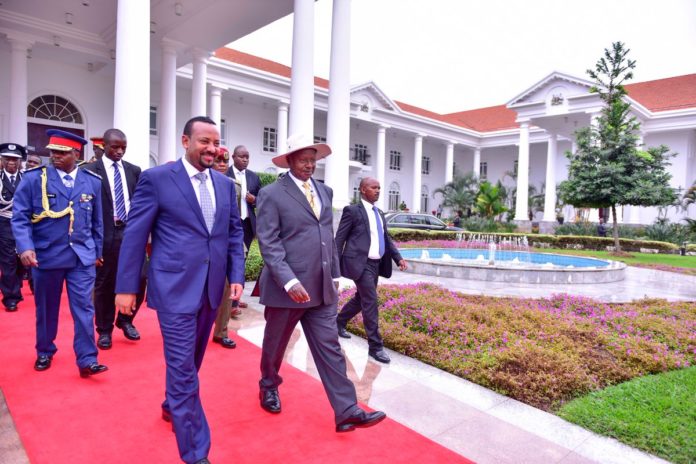
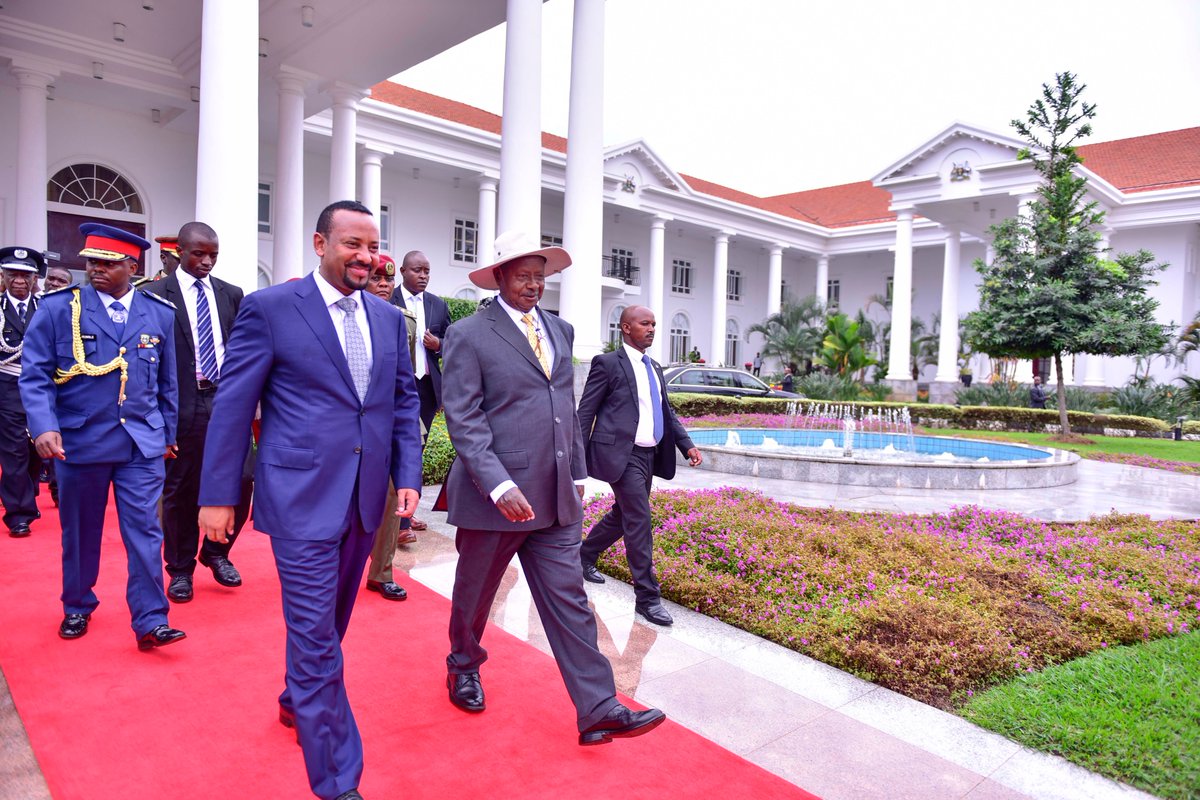
Ethiopian Premier Ahamed Ali arrives for Heroes Day

Ethiopia Prime Minister at State House with his Uganda counterpart Yoweri Museveni(in hat)

Kampala: Ethiopian Prime Minister Ahamed Ali has arrived in Uganda for a two days state visit following his invitation as the guest of honor as the country celebrates hellos day.

The legislator who doubles as the Prime Minister jetted in this morning and was welcomed by the president Museveni at state house Entebbe.

According the statement that was earlier released by the minister for presidency Esther Mbayo, Mr. Ahamed Ali will tomorrow be awarded the Most Excellent Order of the Pearl of Africa Grand Master medal for fro his contribution to the economic diversification of Africa.

Ethiopia Prime Minister at State House with his Uganda counterpart Yoweri Museveni(in hat)

The two leaders are expected to discuss enhancement of bilateral cooperation frameworks between the two countries among other things, the bilateral trade between the two countries is at $1m (Shs3.6b)

Under the theme: Remembering our Heroes who kept the faith and fought the fight; the duty to enrich their gains is ours, the day’s main celebrations will take place on 9th June at Birembo Sub County in Kakumiro district with the President as the chief celebrant.

Stories Continues after ad
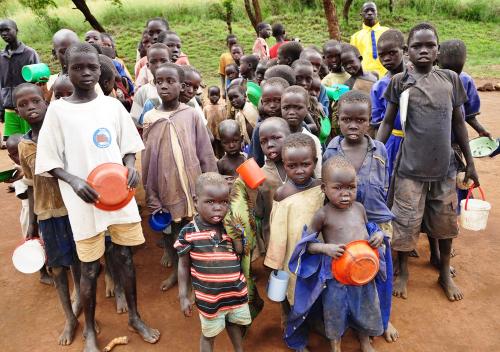
Uganda line up for food aid

Kids in Karamoja stand in anticipation of aid food during a past famine that hit the region.

Kampala: FAO has listed thirty nine countries that are most likely to be in need for food aid if the current rain patterns do not relent.

In the new Crop Prospects and Food Situation report Uganda’s below-average crop production is responsible for famine in some parts of the country. “About 0.44 million people are estimated to be severely food insecure due to the lingering effects of two consecutive seasons of reduced agricultural outputs in 2016,” it reads.

The report further notes that Uganda also hosts more than one million refugees from South Sudan in camps in the northwestern parts who depend on humanitarian assistance.

The other 38 countries currently in need of external food assistance are Afghanistan, Burkina Faso, Burundi, Cameroon, Cabo Verde, Central African Republic, Chad, Congo, Democratic Republic of the Congo, Djibouti, Eritrea, Ethiopia, Guinea, Haiti, Iraq, Kenya and Democratic People’s Republic of Korea.

Others are; Lesotho, Liberia, Libya, Madagascar, Malawi, Mali, Mauritania, Mozambique, Myanmar, Niger, Nigeria, Pakistan, Senegal, Sierra Leone, Somalia, South Sudan, Sudan, Swaziland, Syria, Yemen and Zimbabwe.

That list of countries rose to 39 countries from the last report in March, with the addition of Cabo Verde and Senegal.

Meanwhile, the report says that the recent rains point to cereal production gains in East Africa after consecutive seasons of drought-reduced harvests. However, recent abundant rains triggered flooding in Somalia, Ethiopia and Kenya, displacing about 800,000 people.

In contrast to the trend in the sub-region, staple food prices are high and rising in the Sudan and South Sudan, affecting access to food and intensifying food insecurity risks, the report says.

The number of severely food insecure people in South Sudan is expected to rise – in the absence of humanitarian assistance – to 7.1 million people during the current peak of the lean season (June-July).

FAO’s latest forecast for world cereal production in 2018 foresees a 1.5 percent annual drop from the record high realized the previous year. But the decline is larger in some areas, notably South and North America and Southern Africa.

Stories Continues after ad
Seven best practices for winning in a “we” economy

Martin Zwilling

By Martin Zwilling

As dialogues with peers become easier and more trusted via smartphones and the Internet, people are more willing to share their assets with others, and capitalize on the potential for a quick return for very little effort. This new sharing economy is rapidly becoming the new “online shopping” model, with major winners already including Airbnb (rooms), Uber (rides), and SnapGoods (stuff).

Experts are calling this the “we” economy, instead of “me.” It seems like a simple movement, but like any change in business, there are some new best practices that you need to learn, to make it work for you. Here are tips to keep your business from landing on the failure heap, like Carpooling.com (long-distance ridesharing), Beepi (used cars), and Homejoy (home services):

Provide relationship building opportunities for your customers. Customers today expect two-way relationships with the companies they choose, rather than transactions. To facilitate this, your team must use and embrace available interactive communication modes, including social media, blogging, web site forums, and special events.

For example, on Instagram, Airbnb encourages users to use the hashtag #Airbnb in order to be featured on the company website. If the company likes your picture, it creates a post showing how, in this scenario, city dwellers easily belong to the swimming enthusiast community.

Deliver personalized solutions and memorable experiences. The new demographic wants to provide input, and wants to be treated as one-of-a-kind in their solution, delivery, and service. The days of mass production and commodity pricing as an asset are gone. Being good in business now needs to feel like an art, with creativity and innovation.

Build your market by focusing locally before globally. Narrowing your initial focus actually builds exclusivity and allows you to charge a premium because you are “the expert.” Start with a niche that you know especially well, and build a reputation of being the best. This will give you the credibility to expand to other niches and grow the market.

Uber and Lyft recognized that local regulations are different from region to region, so they launched market by market in order foster loyalty from their customers, maintain quality of the service, and comply with the region’s laws.

Develop a culture of innovation and creativity in your team. This requires leadership from the top on purpose and shared goals, and being the model for actively listening to customers and incenting change. Team members need to be taught to think like innovators, and see a reward system that fosters change, rather than punishing failures.

Let people be pulled to you, rather than pushed by marketing. Both customers and employees expect to see value beyond a product or service, especially for social and environmental good, as leading the way forward. The result is an enhanced loyalty, both inside and outside your company, which is a strong component of momentum and profit.

This works especially well for services. In my own blog and speaking engagements, I talk about generic requirements to attract investors, but never mention that I offer a service to assist. Entrepreneurs are incented to followup with me for more specific fee offerings.

Communicate with stories and engaged customer advocates. Personal stories and testimonials are the best way to draw in customers and grow your business. Stories always trump marketing content for improving recollection and understanding. They help people remember in a way that numbers and text on a slide with a bar graph won’t.

Provide value to the community, as well as customers. If you provide real value and give-back to the global community and employees, thus generating trust and loyalty, you will appeal to more customers. The result is the desired win-win situation, with more profits for your business, more satisfied customers, and happy employees at all levels.

For example, Citi Bike is building themselves a great business by providing bicycles everywhere for sharing, but also is enhancing tourism and providing native New Yorkers with a fun and affordable new way to get around town.

The world of commerce has been forever altered by the growth of the world-wide Internet and pervasive mobile telecommunications. The customer and business universes are now globally and intimately connected. This means that all customers see relationships, culture, sharing, and social needs as part of their own world, and expect these to be part of every business focus.

Thus, as the new sharing economy challengers continue to evolve their new business models, the traditional incumbents will be smart to adapt, or forced out of the marketplace. It’s time to take a reading on where your business is in this spectrum. Are your company practices consistent with the ones outlined here, or are you still operating on yesterday’s model?

Mr Martin Zwilling is a veteran startup mentor,tech professional and Angel investor.

Stories Continues after ad
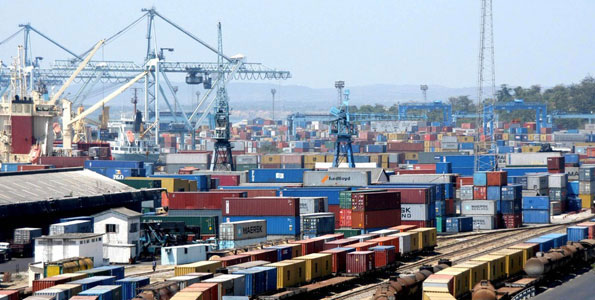
Uganda’s trade cargo through Mombasa grew by 12 percent in 2017—report

Containers at Mombasa Port

Uganda’s cargo traffic through Mombasa grew by 12 percent to 7,112,971 tons in 2017 from 6,346,715 tons in 2016, according to the Kenya Ports Authority (KPA).

According to KPA, the increase means that Uganda had a 82.3 percent share of the total transit cargo through the port between the two years.

“Uganda’s import traffic is the driver of this growth, recording a notable volume of 6,590.095 tons in 2017 against 5,922,160 tons handled in 2016, Edward Kamau, the General Manager Corporate Services Kenya Ports Authority, said.

South Sudan came second behind Uganda in traffic transit traffic through Mombasa Port with a total traffic of 673,752 tons in 2017 up from 597,852 tons in 2016 representing.

The Democratic Republic of Congo had about 360,124 tons down from 376,935 tons in 2016. It represented a 4.2 percent share of total transit cargo in 2017 through Mombasa Port. Rwanda and Tanzania had reduced levels of transit cargo through Mombasa Port while Burundi had an increase of 0.3 percent.

He said exports as well as imports realized a marginal increase of 522,876 tons in 2017 against 424,555 tons handled in 2016, reflecting a mild increase of 23.2 percent.

The total cargo through the port grew by 10.9 percent recording 30.35 million tons from the 27.36 million tons that was recorded in 2016. KPA attributed the growth in volumes to improved efficiency as well as the ongoing investment in infrastructure development at the port.

He said imports through Mombasa Port grew by 10.7 percent posting 25.6 million tons in 2017 from 23.12 million tons in 2016. It accounted for a dominant traffic share of 84.4 percent of the total throughput reflecting a huge imbalance of trade.

He said exports increased by 3.8 percent recording 3.8million tons up from 1.09 million tons handled in 2016. Container traffic increased by 9 percent recording 1.19 million TEU in 2017 up from 1.09 million TEU handled in 2016.

“Transit traffic posted a significant increase from 7.75 million tons in 2016 to 8.63 million tons in 2017, reflecting a notable volume growth of 888,069 tons or 11.5 percent” he said.

Stories Continues after ad

UK donates eye protection gear to AMISOM

Uganda's Deputy Head of Mission to Somalia Simon Mulongo receiving the equipment from Maundrell

The Commander of the British Forces in Somalia Col. Richard Maundrell on June 7, handed over 30-night vision goggles and 600 protective glasses to the African Union Mission in Somalia (AMISOM), to support night activities on the frontline.

The equipment, received by the Deputy Head of Mission Mr. Simon Mulongo and the Deputy Force Commander Maj. Gen Charles Tai Gituai, will be used for visual protection especially during clearing works along Main Supply Routes and for enhancing security around the Forward Operating Bases.

“This is one of the ways in which the UK government can support AMISOM troops to enable them to be more effective,” said Col. Maundrell.

The night vision goggles will be especially handy at observer posts, to help deter intruders.

“This is a very important enabler and the Mission is very grateful for this support. These (night vision equipment), will enable the Mission to operate more effectively,” said Mulongo.

He lauded the continued support to AMISOM by the UK Mission Support Team and the UK government.

The United Kingdom supports AMISOM in training in logistics, medical and heavy engineering capabilities, among others.

AMISOM is comprised of Uganda, Kenya, Burundi, Somalia, Ethiopia, Djibouti and Sierra Leone.

AMISOM has been helping the Somali government in battling militant group al-shaabab since 2007.

Stories Continues after ad

IGG suspends ‘prophet’ Mbonye from Lugogo Cricket Oval

Mbonye

The Inspector General of Government Irene Mulyagonja has immediately suspended Prophet Mbonye’s prophecy ministry from using Lugogo Cricket Oval for their Tuesday fellowships over pending investigations characterized by general mismanagement of the affairs of the council.

Prophet Elvis Mbonye of Zoe Fellowship ministries, was first based at Kyadondo Rugby Grounds for over a year but had moved and booked the Lugogo Cricket oval to get bigger space for his congregation every Tuesday for the next two years.

In the letter from the IGG dated June 5, 2018, it reveals that the office received a complaint from a whistleblower against the National Council of Sports where it was alleged that the Council was operating in a manner characterized by general mismanagement of the affairs of the council.

The letter states that Lugogo Cricket Oval has been home for the Uganda Cricket Association since 1966 but the activities of the various Cricket teams have been cut from 7 to 3 days which makes it difficult for the cricketers to prepare for the game.

IGG’s letter reads, “Lugogo Cricket Oval was irregularly contracted out of use for the use of the ZOE Fellowship Ministries for its massive public prayer rallies much to the detriment and prejudice of the state of the grounds as well as the activities of the Uganda Cricket Association which has been in occupation of the Oval since 1966.

This will be particularly prejudicial because unlike Zoe Fellowship, which can find another place of worship, cricketers cannot play the game in any place of worship or other place because there is none suited to practicing for and playing their game. It therefore appears that execution of this contract will not only be unfair to the cricket fraternity but it will also clearly be against the public policy.”

The letter also highlighted concerns over how the contract was drawn saying they were irregular and contrary to the requirements of the Public Finance Management Act and other related legal standards according to Article 230(2) of the Constitution of Uganda and Section 14(6) of the Inspectorate of Government Act.

“This is therefore, to direct you with accordance with provisions above to suspend the operation, implementation of the aforementioned contract with Zoe Fellowship Ministries for the use of Lugogo Cricket Oval pending investigation of the circumstances upon which the contract was entered and the management of the proceeds arising therefrom.” stated the letter which Eagle Online has obtained.

The IGG said that the matter is to be properly investigated to rule out the possibility of abuse of public assets and finances and that her office will commence on a systematic review of the processes and procedures of NCS on various other matters that have been brought to her attention.

“By copy of this letter the Solicitor General and the Permanent Secretary/Secretary to the Treasury and the Auditor General are requested to take interest in this matter and participate in bringing about order in the Sports Industry in Uganda,” the letter concluded.

Stories Continues after ad

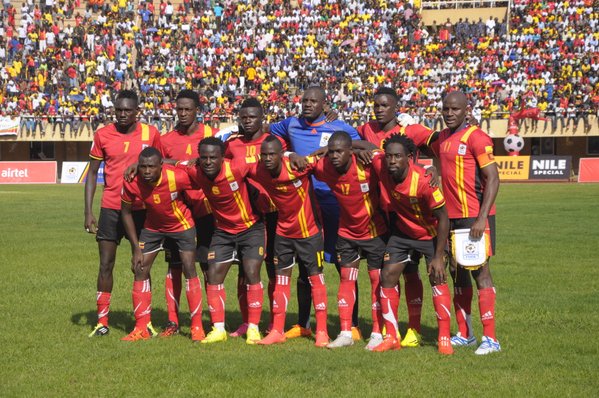
Uganda Cranes fall in latest FIFA rankings

Uganda Cranes

With one week to the start of the 2018 World Cup in Russia, the FIFA monthly rankings have been released today with Uganda dropping eight places to position 82.

The Cranes now have a total of 403 points, a fall from last month’s 426 points, and are now 17th in Africa.
The drop by the Uganda Cranes comes as a result of failing to win in two friendly games, a 1-0 loss to Central African Republic and 2-1 to Niger.

However, Uganda remains the best in East Africa after neighbours Kenya dropped one place to 112, Tanzania dropped by 3 places to 140, Burundi dropped by two slots to 148 and Rwanda down to 136 by 13 places.

The rankings of Africa’s representatives at the World Cup are; Tunisia (21), Senegal (27), Morocco (41), Egypt (45) and Nigeria (48).

Reigning World champions Germany go into the tournament as the number one team in while hosts Russia will be the lowest-ranked team in the tournament at 70th.

Brazil, Belgium, Portugal and Argentina complete the top five while the only change in the top 10 sees Poland up two places to eighth in a straight swap with Spain.

Azerbaijan was the best mover, moving up by 21 places, while Guyana, a country on South America’s North Atlantic coast fell hardest, dropping by 18 places.

FIFA rankings are based on the average number of points that a team accumulates over a four-year period. The ranking points in each match are determined by its result, its value and the relative strength of the opponent and their confederation. The system also has yearly basis depreciation for the value of the matches.

The next FIFA/Coca-Cola World Ranking will be published on July 19, few days after the World Cup.

Stories Continues after ad

I will give president and COSASE report on Bagyenda wealth

IGG-Irene-Mulyagonja

Kampala: The Inspector General of Government has said she will give President and parliament a report from her investigations on Bank of Uganda’s Justine Bagyenda as soon as its ready.

“We don’t give details on our investigations and we don’t reveal our investigations because it alerts the witnesses. Illicit enrichment is an offence and is she has acquired asserts illegally, we will move on her” Justice Irene Mulyagonja said

Adding “We will give a report on Bagyenda to the president and the Parliamentary Committee on State Authorities and State Enterprises (COSASE)”.

Justice Mulyagonja welcomed the committee that was unveiled by President Yoweri Museveni yesterday during the State of Nation Address saying it was a welcome in the fight against corruption.

“We have facts on how this institution works and there is no loss of confidence at all but we want to thank the president think that way. First of all, the torn at the top has to be heard. But if the president feels we don’t do sufficient work, we are happy that he has established another unit but there are many complaints”

Mulyagonja gave reference to South Africa and Kenya said whereas there are three bodies in those countries charged with fighting craft, in Uganda it is only the Inspectorate of Government that is charged with fight corruption, maintaining integrity and ethics among government employees. She revealed that the biggest change they face is limited funding.

She also revealed that it wasn’t Bagyenda alone under such investigations but also a one William Tumwine from Uganda National Roads Authority who is reportedly under probe for possessing more than 100 land titles and properties.

“Our budget is Shs45 billion a year and you are fighting corruption in a budget of Shs33 trillion with Shs45 billion. Imagine we have 16 regional offices and at each regional office, we have five investigators and budget of Shs6 million every month which is supposed to be operational fund plus two vehicles but in a region like Busoga, we have 10 districts in that region and who will this money be enough?

IGG is investigating Bagyenda, over allegations that she evaded paying income tax for ten years on revenues earned from her Naguru apartments.

Bagyenda is said have rented her apartments to the top officials of the defunct Crane Bank, earning millions of shillings without paying income tax as required by law.

On October 7, Eagle Online published a story in which a one Dick Kimeze reported Ms Bagyenda to IGG for non-payment of taxes. The source at the time told Eagle Online, the Uganda Revenue Authority (URA), the national tax collector had already begun investigations into the said tax evasion.

Mid this year Ms. Bagyenda came under criticism for allegedly failing to enforce her mandate, something her critics said had led to the closure of a couple of commercial banks including the Crane Bank, that is now under receivership.

Also, at about the same time reports indicated that the Inspectorate of Government (IGG) was set to begin investigations into allegations that Ms. Bagyenda made incorrect declarations contrary to the Leadership Code, 2002.

Among the property she allegedly falsely-declared are houses in the leafy suburbs of Ntinda, Naguru, Bugolobi and Kulambiro.

“When I wrote the letter I got confirmation from the IGG and I was to get an appointment with the official handling the matter but later on the person went abroad and we have now scheduled between 10th and 20th to meet,” lawyer Nyombi, who is representing ‘whistleblower’ Dick Kimeze, said.

In his allegations, Mr. Kimeze also avers that the properties owned by Ms. Bagyenda are way above what she has earned during her employment over the years.

Stories Continues after ad