Stanbic Bank
Stanbic Bank
18.4 C
Kampala
Stanbic Bank
Stanbic Bank
Home Blog Page 1557

Opposition calls for a joint candidate in Bugiri Parliamentary elections

Former Jeema boss, Al Hajji Hussein Kyanjo(centre) flanked by DP's Betty Nambooze(Left) and FDC's Dr Kizza Besigye(Right) addressing the media this morning.

Kampala: Opposition leaders have called for a compromise candidate in the Bugiri parliamentary elections in order to deny the ruling party a chance at winning.

Early this week Truth and Justice forum candidate counsel Asuman Basalirwa and Forum for Democratic Change candidate (FDC) Eunice Namatembe were nominated despite a series of meeting held to persuade one of them to stand down for the other.

Speaking at Fair Way Hotel, Hajj Hussein Kyanjo said he, together with Mukono municipality MP Betty Nambooze, was tasked to mediate persuasion meetings however both candidates decided to compete against each other hence dividing opposition’s supports at the various rallies held yesterday.

“Yesterday’s situation in Bugiri was enough to make an assessment of the ground, I think that at some time before the elections, we may reach a surprise agreement,” he said.

He appealed to both candidates to carry out civil campaigns rather than standing to condemn the same side of the coin, “I expect to get a call from FDC’s candidate persuading Basalirwa to step down for her.”

According to former presidential candidate Col. Kiiza Besigye there were various engagements for a single candidate which regrettably did not happen adding there is a hope that as campaigns thrives one of the two candidates will leave a room for the other.

Besigye said having two opposition candidates means they are not united and fighting each benefiting the ruling party (NRM).

He warned opposition leaders who have continued to black mail him as he strives for change saying there few opposition leaders who look to be with them in struggle against president Museveni however they are traitors of the struggle.

“If you start abusing or de-campaigning me, you automatically become my enemy, disagreement is human, in opposition we are supposed to work towards a common goal against Museveni who has held us in captivity,” he said.

He asked fellow opposition leaders in ‘people’s government’ to change their attitude saying putting a gun against fellow fighters in the struggle renders ones in the opposite side as an enemy.

He revealed that they are yet to establish a method of winning the forth coming local council elections.

Subsequently, Nambooze revealed that inasmuch as they have failed to agree on a single candidate, they will work towards having one of the two candidates to emerge winner as the persuasion continues.

Stories Continues after ad

Of course, development aid has a big black people problem

By Lydia Namubiru

The first NGO I ever worked with was American. The staff ratio was about 1:7, white people to Ugandans. On the surface, it was a wonderful multi-cultural office where colleagues gave you cupcakes for your birthday and once a year we all could wear traditional attire to the office. Below the surface, a cold war raged. Our version of nuclear threat? Meetings.

The foreign staff scheduled way too many of them. The Ugandans ignored a whole bunch of them or just didn’t productively participate when they attended. My American boss, who sometimes saw me as a confidant even though she treated me really poorly on a daily basis, once came to me and asked, “what can I do to support you guys in adapting to structure?” I didn’t understand the question so I stammered a non-response and changed the subject.

“Adapting to structure“, I later learnt from her own boss, was being being good at American business culture, as it is practiced in the development world. You get online for a Skype call 5 minutes before it starts. You prepare a proper update ahead of your weekly one-on-one with the boss whose desk literally touches yours. For each external report you are writing, you prepare drafts 0, 1, 2 … Each one is reviewed by multiple (often white) colleagues. If you are lucky, ‘Draft 3’ is sent to the donor. If not, you’re reassured that it was a learning opportunity.

Even though you sit in the same open office with your colleagues, with access to both email & instant messaging apps, to collaborate with them, you jot down a few bullet points stating what needs support on, and bring those to the weekly team meeting. That’s a different meeting from another weekly one you have with your immediate team – a vertical consisting of exactly three people who can’t move their office desks without bumping into each other.

To that meeting, you bring a well-structured to do list. What is under your column for “urgent but unimportant” tasks? Is the monthly report to our smallest donor captured under your “big tasks” columns? Oh, don’t you sort your to-do list in prioritized columns? Well, there’s this book by this super-efficient leader of a U.S. company you are unfamiliar with. It will change your life in terms of organizing your work.

I don’t know how else to state this: we, the Ugandans, thought this bureaucracy for bureaucracy’s sake was utter nonsense. With the quiet obstinance of people who resist their government by simply not participating in public life, we refused meetings and drove our bosses right up the wall.

But you see, meetings were just a proxy for an entire cultural war. Ugandans felt much of the organizational culture they were expected to embrace was outright racist. We were angry about unequal pay between white colleagues and their Ugandan counterparts (the payroll leaked once, but we also could tell from their lunches & gourmet coffees).

We were angry that while it had taken each of us as many as three formal interviews to land our jobs, our white colleagues spoke of running into each other at Kabira country club and chatting. Next thing, or so it seemed to us, they offered each other high power jobs, as bosses of the rigorously hired local staff. Where Ugandan staff needed higher degrees and years of experience to be managers, for our white colleagues, only a higher degree sufficed. So, they told stories like, “I was interning in the U.S office when this project came through. I had assisted on research for the proposal so I was asked if I wanted to come to Uganda and run it.”

We could have brought up these bigger conversations, but where do you start, when your boss speaks to you and of you, as someone who needs capacity building in attending meetings? I have never known a place where so many people simply didn’t want their contracts renewed. All the best people were constantly looking for new jobs. Being the monitoring & evaluation person, I was asked to add staff turnover to the list of metrics I tracked.

Staff-turnover as a trackable metric in an office of no more than 35! When the white bosses got tired of giving locals opportunities they didn’t appreciate (hiring us for jobs we quickly ran away from), they hired more white people. Even the black people who were invested in the organization could not see how they would move up because that would mean displacing a white person and what are the chances of that? Eventually, the eye could separate the physical space in the office white zones and black zones. Mine did, when I dropped in on friends, years after I had left.

Because of who I am as a person (irredeemably gossipy), I also actively kept up with the office gossip.

In one story, white staff pooled funds to buy a fancy coffee machine and only those that contributed to it, could use it. So, then, there was a pot brewing black coffee for blacks and a machine making foamy varieties for the white people? In a Kampala office? Well, anyway, a few years later, that organization folded in on itself but on its way to oblivion, it burnt through no less than $20 million of development aid, in about six years.

I was glad to have left but I didn’t immediately go someplace better. I moved to a British NGO, where I landed smack in the middle of a turf war between a senior Ugandan manager and a long term Canadian consultant. The consultant had been doing the senior manager’s job prior to the hiring. After the manager was hired, the consultant was kept on board, to continue doing bits of the same job.

It looked like the organization was mitigating the risk that the Ugandan might not quite know what he was doing. Or perhaps, she was being rewarded for some other contribution. In any case, the elephants fought and often took it out on the staff below them. It was not uncommon for a team member to lock themselves in the toilet and cry.

Every set of instructions you got from one, would be contrary to what the other wanted. I concluded that international development aid was merely a case study in bad management and left that job too, after 11 months. I found a local NGO were I continue to do aid related work but with some insulation from its toxic racialized machinery.

I’m also thriving more than I could have hoped for, operating from the middle where racial power and condensation runs unchecked. In the development world, my white bosses inundated me with capacity development in tools such as Microsoft Excel. A year into working at the local NGO, my bosses wrote stellar recommendations in support of my application to an Ivy league graduate school. Then, they allowed me 10 months off, to attend said graduate school.

I am a big believer in development work, actually. I won’t be jumping onto the “Africa needs trade not aid” bandwagon any time soon. Africa needs trade, aid and more, because like all others, it is made up of complex societies. What one section deems bad for the image of the continent, another desperately needs. Trade can fire up opportunities for the rich and middle class Africans. Lower income Africans often can’t even meaningfully participate in local economies, let alone trans-oceanic export markets.

Folks need subsidized healthcare, agricultural extension that actually reaches them, educated advocates who dedicate their lives to equalizing the playing field for them. Marginalized minorities need support for their political causes, and they are not going to get it from the same African governments or societies that dehumanize them. Development aid stands in those gaps.

For as long as these inequalities persist, I will always want to do development work. I just don’t necessarily want to do it with the people who bring it here, until they muster some difficult introspection on how the industry treats workers who look like me.

Lydia Namubiru is a Ugandan journalist and researcher

Stories Continues after ad

Rwanda right to reject our old jeans and T-shirts—US investment strategist

Grant Harris, lead partner at Harris Africa Partners

By Harris Africa Partners

Rwandans would like to wean themselves from American hand-me-downs, and the United States wants to punish them for it. Last week, the Trump administration suspended duty-free access to U.S. markets for Rwandan clothing. This may sound like inconsequential news, compared with the prospect of a trade war with China, the European Union or our Canadian neighbors, but the move follows a dangerous trend of disregard for Africa. And it’s not just Africans who will suffer: Neglecting the continent will foreclose trade opportunities, harm U.S. companies and, ultimately, cost U.S. jobs.

Rwanda and several of its neighbors recently introduced tariffs on used clothing in an attempt to bolster the local apparel industry. In response, a U.S. trade group filed a complaint, claiming that the new tariffs violate the terms of the African Growth and Opportunity Act, which requires participating countries to reduce trade barriers for U.S. goods. Unlike its neighbors, Rwanda stayed the course. The administration has every right to retaliate under the terms of the act — but the move is inconsistent and shortsighted.

For a start, the administration can hardly claim to be acting on principle. More than 100 countries benefit from U.S. trade preference programs without returning the favor. Florie Liser, former assistant U.S. trade representative for Africa, notes that countries like India and Brazil, which are major exporters to the United States under the program known as the Generalized System of Preferences, “ship a lot more to us than Rwanda, yet have significant barriers to U.S. trade.”

The selective decision to retaliate against Rwanda not only adds to the general trade turmoil damaging U.S. standing overseas but also is seen as a particular snub of Africa, where President Trump’s derogatory comments about its countries have not been forgotten.

The administration can’t claim to be protecting a vital American industry, either. The complaints of the used-clothing association — that Rwandan tariffs would have a negative impact on up to 40,000 U.S. jobs — are unsubstantiated. Rwanda, a country of approximately 12.5 million people, imported $17 million in used clothing in 2016, according to the U.S. Agency for International Development.

The clothes are primarily donations to organizations like the Salvation Army and Goodwill, bought by members of the trade group that lodged the complaint, the Secondary Materials and Recycled Textiles Association, and resold in Africa. Rwandan vendors sell them in market stalls.

Rwanda’s motivations are as much about dignity as they are about economics. Just as China recently banned imports of “foreign garbage” that it used to buy and recycle, Rwanda is taking a stand against the perceived indignity of buying clothes that others have worn and discarded. It would be a different story if Rwandans were rejecting icons of American ingenuity and enterprise, like cutting-edge medical devices or mobile technologies.

But they’re not; they’re rejecting our hand-me-downs. The White House fails to grasp that, as well as the bigger picture for the United States. It’s not just Rwanda — the president is picking fights with trading partners old and new over relatively small amounts of U.S. imports and exports and with little regard for the long-term consequences. As relationships fray — even longtime allies feel under duress — the price to the United States rises; the country will pay not just in self-inflicted economic harm but also in diminished global leadership and reduced support for its national security priorities.

Banning used clothes is not enough to build Rwanda’s domestic textile and apparel industry, especially given competition from cheap Chinese imports of ready-made clothing. But there is a certain irony in Trump punishing Rwanda for protecting domestic manufacturing in what really is a Rwandan version of “America First.” More to the point, the United States ought to be supporting countries that pursue economic growth and development plans — not just because it is the right thing to do but also because the vitality of the U.S. economy depends on whether we have markets for our goods and services.

Until recently, supporting African economic growth was a key piece of U.S.-Africa policy. For instance, building on the African Growth and Opportunity Act’s strong legacy of bipartisan support, President Barack Obama launched the Trade Africa initiative to support regional economic integration and work toward a more reciprocal trade relationship. But the suspension of access for Rwandan apparel reinforces the sad truth that the Trump administration has no vision for trade with Africa.

And there is no question that U.S. businesses will suffer as a result. Africa represents the last frontier for America’s export-driven economy, with consumer and business spending predicted to reach $6.7 trillion by 2030. A U.S. government report released last week cited motor vehicles, poultry and refined petroleum products among various sectors, as well as a range of services, with the potential for greater American exports to sub-Saharan Africa.

The United States misses a larger opportunity by engaging in petty trade squabbles and generally neglecting the continent. While it is true that the Trump administration maintains that it supports more reciprocal trade relationships with African states and has been studying trade and investment potential in certain African markets, advancing a strategic economic partnership with Africa requires more than talk. Actions — like threatening the funding of government agencies that support U.S. companies investing in Africa, leaving key ambassadorships vacant and deprioritizing trade programs — speak louder than words.

Meanwhile, other economies are making aggressive commercial plays in Africa. China has been Africa’s leading trade partner for the last nine years; trade scuffles like this one with Rwanda can only further drive African states into China’s open arms. Nor is it just China — the European Union has been actively traveling the region, signing two-way trade agreements that will disadvantage American companies far more than any tariffs on secondhand clothing.

It would be misguided to dismiss this row with Rwanda as a small issue with a small country. The larger economic picture is much more worrying.

Harris Africa Partners is an American company that advises companies and organizations on strategy, policy, and mitigating risk with respect to doing business in Africa.

Stories Continues after ad

Skilling Ugandans: KCCA, Standard Chartered Bank train over 200

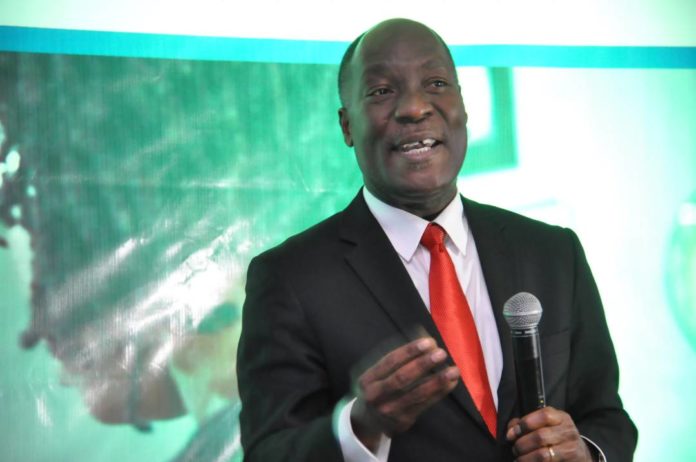
Standard Chartered Bank Uganda CEO Alber Saltson

Kampala: About 200 young graduates have undergone a special training aimed at empowering them with employable skills.

The training has been conducted by Kampala Capital City Authority (KCCA) in partnership with Standard Chartered Bank.

According to KCCA’s Director of Gender, Community Services and Production, Harriet Mudondo, the Director Gender Community and Production, the training was meant to update the young people with the requirements of the job market.

She called for more youth who have completed their studies to register with KCCA Employment Services Bureau in order so that they benefit from the services that the bureau offers.

“Young people who have been here have had their lives turn around,” she said adding that some have been employed as a result of attending the special training offered by experts in the different sectors of the job market.

In some circumstance, she said, KCCA has been able to link young people to employers even though she warned that their role as regards the program is to give young people skills needed in the job market.

She challenged the young people to always exhibit a positive attitude in what they do. “The issue of mindset change and positive attitude is very important,” he said.

Speaking to the trainees, Standard Chartered Bank’s Chief Executive Officer, Albert Saltson, said his bank would continue to support them to acquire employable skills but challenged to have good work ethics and do their work to the best of their abilities.

“Try as much as to excel in what you do and you will be able to climb the career ladder,” he said, urging the youth to be focused so as to overcome challenges that may come their way.

Saltson advised the youth to develop their careers further, saying that having the first degree or diploma was not enough given the current competition in the job market where those with more skills and knowledge are preferred. “Learning never stops. Add more qualifications to your name,” he said.

He urged the youth to identify mentors who can help them achieve their career goals. “Look at what made that person achieve what he achieved. Take that person as your mentor or role model,” he said.

Sylvia Mulomi – Country Head Human Resources at Standard Chartered Bank, urged the youth to engage in activities that make them be ready for employment.

“Be employment ready. Know what you want to do and find out what it takes to do what you want to do,” she said.

Mulomi however advised the female youth to resist sex demands from employers, challenging them instead to be flexible and begin with the opportunities that come their way.

She said it was important for the youth learn about the organisations they want to work with before even applying for the job.

Human resource consultant Paul Olweny who spoke to the male dominated group of trainees said they were trained in CV writing, cover letter writing, interview techniques.

He urged the youth to review the job specifications before applying. “Your qualifications, skills, knowledge and experience should match the job specifications,” he said.

One of the trainees who preferred her first name Allen, appreciated KCCA and Standard Chartered Bank for availing them with the training opportunity. “I have been jobless for two years now since I graduated but I am hope full that the training will increase my chances of passing interviews,” she said.

Stories Continues after ad

US Ambassador tips Ugandans on fight against plastics pollution

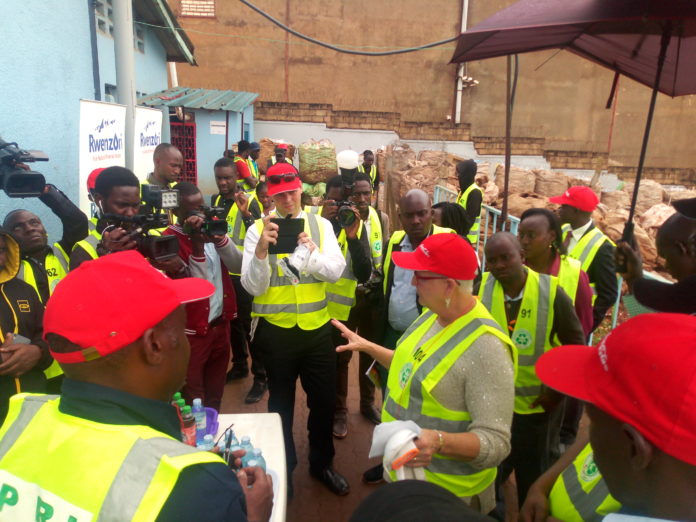
The US Ambassador to Uganda, Deborah Malac has urged Ugandans to wage war on plastics pollution.

In her World Environmental Day message at the Plastic Recycling Industries (PRI) plant in Nakawa, a subsidiary of Coca-Cola Beverages Africa, Malac stressed the importance of Ugandans pledging themselves as individuals, citizens and members of the global community in ensuring a clean environment through proper disposal of plastics.

She used the event to applaud PRI on environmental stewardship exhibited and the clear tracking of their targets monthly.

“Being able to collect 34 per cent of the plastic you produce as CCBA is a step in the right direction,” she lauded the partnership route and agreed that the plastic problem requires collective effort.

“I would like to thank Coca-Cola Uganda for what they are doing to make a difference. They are picking plastic from the streets, sewage and water ways.”

In January 2018, the Company launched a global goal to fundamentally reshape its approach to packaging through its World Without Waste initiative.

This initiative aims to collect and recycle the equivalent of 100 per cent of its packaging by 2030.

“In Uganda, we know we have a waste problem. Two years ago in 2016, Plastic Recycling Industries (PRI), the largest plastic recycling business in Uganda became a subsidiary of Coca-Cola Beverages Africa on July 1, 2016 when The Coca-Cola Company, SABMiller plc and the Gutsche Family Investments (GFI, majority shareholders in Coca-Cola SABCO) announced the combination of their bottling operations of non-alcoholic ready-to-drink beverages businesses in Southern and East Africa.

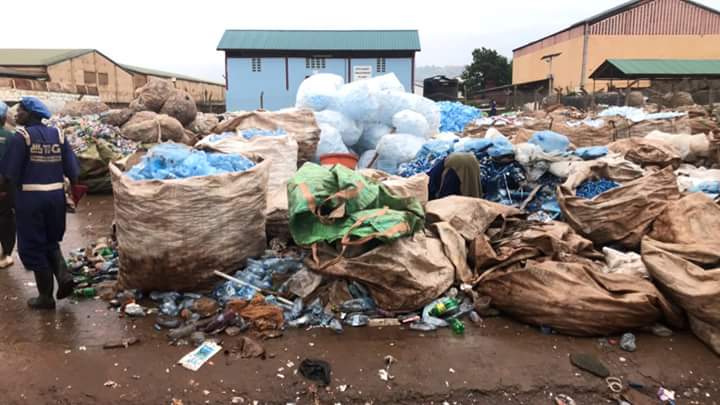
“PRI collects about 10 tons of plastic daily, ridding the environment of close to 400 tons of plastic per month. It employs 45 people directly, 80 casuals and empowers 1,500 plastic collectors to earn a living, 80 per cent of whom are previously unemployed women,” explains Conrad van Niekerk, Managing Director of Coca-Cola Beverages Africa Uganda.

This year, the UN is calling on people across the globe to help “Beat Plastic Pollution” a theme that is very relevant to us as Coca-Cola Beverages Africa (CCBA).

A series of activities have been organized to commemorate theme throughout the month and can be followed on; #BeatPlasticPollution
#worldwithoutwaste

Stories Continues after ad

Bobi Wine: Why am I endorsing Counsel Asuman Basalirwa?

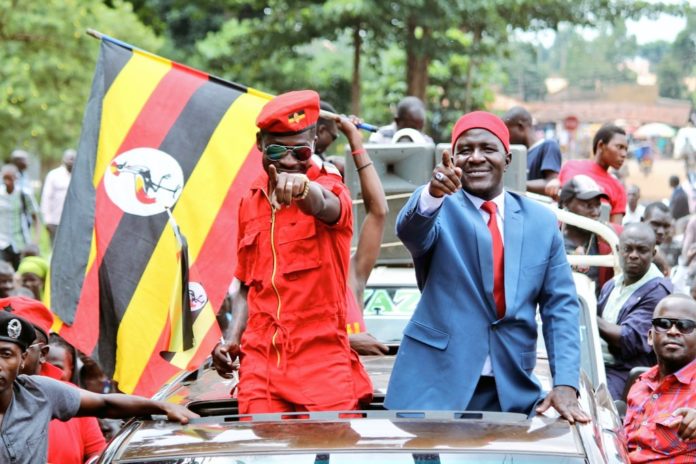
Bobi Wine and Asuman Basalirwa in Bugiri during nomination.

Dear friends,

A few people have been asking me why I decided to endorse Counsel Asuman Basalirwa in the upcoming Bugiri Municipality MP elections. Let me use this opportunity to explain why.

First of all, let me remind you all of the nature of struggle we are involved in. I have at all times said that we need a united force to fight and defeat dictatorship in Uganda. The struggle we are involved in is not a struggle of political parties, religions or tribes.

It is a struggle to liberate our motherland from the chains of corruption, bad governance and dictatorship. It is not a personal war and none of us should lay claim on it. It is a battle between the people of Uganda and a small clique of people who continue to impose themselves and oppress our people.

Therefore, in this struggle, we need to try as much as possible to unite all the forces of change to fight a common enemy. Not a personal enemy- but the enemy of the progress of our nation!

And so, just like we did in the recent elections in Jinja and Rukungiri, I had hoped that we would all unite behind one candidate in Bugiri Municipality because we have seen it work elsewhere. This is because my belief is that the very first step towards emancipating our nation is UNITY.

Surprisingly citizens seem to be ahead of us, leaders, in understanding this simple fact. Wherever I have gone, people have been clear that they want to see a united team fighting for them. Therefore, that was our initial prayer and effort with regard to the Bugiri election. Unfortunately for some reason it failed.

Although it is never too late, as it stands we have two candidates on the opposition side- Counsel Asuman Basalirwa and Ms. Eunice Namatembe. Having come to the cross-roads, we needed to make a decision. The question was, what is the right thing to do? If our overall objective is to liberate our country from dictatorship as soon as possible, on which side must we stand?

I must confess that it was a tough decision because Eunice Namatembe is a freedom fighter like the rest of us. She is also on the side of liberation and I would support her at any point if the circumstances did not raise the kind of conflict they have raised.

However, I felt more compelled to stand with Counsel Asuman Basalirwa and I fully endorse him without reservation. Looking at all factors, I am persuaded that a win for Basalirwa would be a great addition to our overall objective of emancipating Uganda.

My conscience is very clear that we need Counsel Basalirwa to win this election. We must stop looking at these elections as mere events, or simply as opportunities for people to get jobs. These elections symbolize resilience. They must be viewed as the fire that reignites the liberation struggle. For we have seen that our problem today is not just that we have many bad leaders. No. In fact, the bigger problem is that we have many leaders who know what is right and what is wrong, but they choose not to say it or stop the wrong because they are afraid of the consequences.

To break that, we need tested men and women on the frontline. We need people who will stand and be counted. Asuman Basalirwa is such a man.

Some people will be shocked to learn that I did not know Asuman closely before. But anyone who has been following the politics of our country knows what counsel Basalirwa’s contribution has been to this struggle and what he is capable of. Right from the time he was Guild President at Makerere, Basalirwa has been on the side of Uganda. He has been arrested and jailed countless times fighting against injustice. We have seen him crisscross courts of law- from the lowest to the highest, defending opposition leaders, representing activists and arguing the case for good governance and human rights for all. In 2016, we saw him aggressively argue the presidential election petition.

He has been a regular visitor at different police stations all over the country to secure bond for political prisoners and to protest against illegal detentions. He has done these things countless times without even charging legal fees. We have seen him campaign zealously for progressive candidates so many times.
He has stood with our comrades in the struggle regardless of their political affiliations! Asuman has been there for FDC, for UPC, for DP, for JEEMA, for CP, for Go-Forward and yes for Uganda. He has been there for us and my conscience tells me that we should be there for him.

Basalirwa believes that young leaders have a role to play in shaping our nation. In 2010, he was elected youngest Party President in Uganda’s history at 33. I feel very proud to identify with such a man! We must desist from being petty. When necessity calls, we must be willing to put aside personal ambitions and party or other differences and work for the greater good of our country. If our aim is indeed to change Uganda for the better, let us walk this talk for the sake of our people and our nation.

And that is why I pledge that when duty calls I will answer, guided by one principle- whoever is for Uganda is an ally. Whoever is against Uganda is a foe. Period!
I therefore, request the people of Bugiri to support Asuman Basalirwa in every way so that we quicken our mission to free Uganda. I will be there personally to campaign for this great son of the soil.

Finally, I leave you with two quotes. Martin Luther King Jr said, “There comes a time when one must take a stand that is neither safe, nor politic, nor popular, but he must take it because conscience tells him it is right.” Nelson Mandela said, “Any man who changes his principles according to whom he is dealing with- that is not a man who can lead a nation.” May these timelines words always inspire us to be true to good conscience and loyal to our principles at all times. God bless Uganda.

Robert Kyagulanyi aka Bobi Wine is the MP for Kyadondo East

Stories Continues after ad

Lionel Messi ahead of Cristiano Ronaldo on Forbes rich list

Lionel Messi with wife Antonella Roccuzzo

By Agencies

As the World Cup tourney nears in Russia, Barcelona star Lionel Messi has moved above Real Madrid rival Cristiano Ronaldo in the rankings in the annual Forbes list of the world’s 100 highest-paid athletes but football lost top spot to boxing’s Floyd Mayweather.

Messi, with earnings of £82.9 million, occupies second spot behind Mayweather, with Ronaldo in third on £80.6m.

His move above Ronaldo comes after he signed a new contract at the Camp Nou, with Brazil star Neymar (£67.2m) now in fifth place following his world-record move from Barcelona to Paris Saint-Germain last summer.

Forbes said Messi’s annual salary and bonus was more than £59m before tax, making him the year’s highest-paid player, with endorsement deals with companies including Adidas and Pepsi adding to his fortune.

Ronaldo has a place in the list’s top three for a sixth successive year, while Neymar has risen 13 places to fifth after putting pen to paper on a lucrative five-year contract with PSG.

Stories Continues after ad

Seven force multipliers that accelerate your business growth

Martin Zwilling

By Martin Zwilling

The military has long recognized that machine guns are force multipliers for rifles, but businesses have been slow to capitalize on this concept. Sometimes all the planning in the world isn’t enough for business survival, when things change as fast as they do today. Every business, especially startups, needs all guns blazing quickly on every opportunity or insight into the market.

This point was highlighted well in the classic book, “Disrupting Digital Business,” by R “Ray” Wang, CEO and Principal Analyst of Silicon Valley-based Constellation Research. I recommend that every entrepreneur and small business investigate and implement as many as possible of his seven new business force multipliers that I will paraphrase here:

Information sharing through social media networks. The speed, interactivity, and sharing we can do today through the social media networks of Twitter, Facebook, and many others is a major force multiplier. Communications that traditionally could only be broadcast to all can now be done on a customized person-to-person level, interactively.

Soliciting user-generated online feedback and reviews. User generated content that is immediately available to other users is another positive force multiplier. Of course, it can also be a negative force multiplier, if you are not paying attention as an entrepreneur, or choose to challenge your customer’s view of reality.

Crowdsourcing for funding and ideas. Crowdsourcing allows entrepreneurs to bypass the experts and professional investors, to get quick validation and help for efforts that meet the needs of today’s audience. New ways are being developed every day to reward and influence people who participate in crowdsourcing, for a very low cost.

Flash mob activities created for immediate impact. These can be utilized as force multipliers by creating “pop-up” stores or events at a moment’s notice in the middle of an opportunity to get interest, attention, and sales. Apple did it with a pop-up store in Austin to sell the new iPad to 20,000 technologists near the South-by-Southwest music festival.

Nurture dedicated customer advocates and fans. Consider advocates to be a step up from customer engagement. Advocates talk about you and become influencers to the many who are undecided. These dedicated fans and partners believe so much in your brand, your cause, and your product, that they do all the force multiplying work for free.

Improve situation awareness for real-time decisions. This means that your network has connectivity to the right people and groups to hear the right information at the right time and place to make speedy and informed decisions. It’s a force multiplier by allowing your business to react and jump into something important before everyone else does.

Do predictive hot-spotting to anticipate near-term changes. Effective prediction of the future is the ultimate force multiplier. It’s already in use by law enforcement to predict security hotspots, health-care to predict needs, but most businesses are far behind in the use of analytics and big data. It’s time to exploit your network for trends and direction.

If you want to grow your startup, and you are only reaching one customer at a time, one market or one partnership at a time, you’re not going to grow fast enough to be competitive, especially against the larger players that have a full infrastructure in the marketplace. These force multipliers allow you to scale up rapidly, and reach opportunities you could not support any other way.

But force multipliers used without focus are not enough to make a company great. Top entrepreneurs still have to decide what activities and tools are the most important for their domain and their environment. We all have limited resources and time, and need the right force multipliers to leverage every single element of both.

Of course, the concept of force multiplication goes far beyond your startup networks. Simple force multipliers, like product cost reductions and powerful new software tools, have been around for a long time. Every team member needs to constantly seek forces that can multiply their impact and productivity. What new force multipliers are you using in your startup today?

Stories Continues after ad

Museveni dumps IGG appoints parallel anti-corruption team

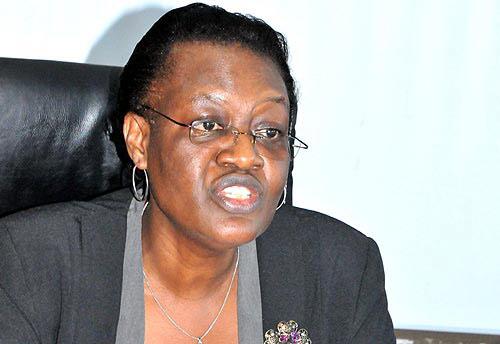
IGG-Irene-Mulyagonja

President Museveni has faulted the inspector general of government over surging corruption in government offices saying they have retarded the development and diversification of Ugandan economy.

Museveni instead announced that he had a new team of three persons that would handle corruption.

Museveni remarked that corruption interferes with the patriotic attitudes of freedom fighters, and called upon the general public to report all corruption cases to an instituted a team led by former Secretary General of Uganda National Teachers Union (UNATU)James Tweheyo, Ms. Martha Asiimwe and sister Akiror for proper manning down of corruption.

“The purpose of the IGG’s Office was to protect the public from corrupt officials, What happened to the IGG? Why don’t the victims of corruption report those incidents to the office of the IGG?” Museveni wondered.

He further continued “That was the purpose of that office; to protect the public from corrupt officials; to protect the investors against corrupt officials. The IGG should reflect on this. Are her staff credible? Why does the public not trust that institution? We need answers”.

He revealed that In order to speed up in monitoring economic production and service delivery, government will offer bicycles to parish chiefs saying it is quite and health for him to peddle around to monitor and inspect.

“The only element of security is the acquaissance of the public by not reporting these criminals, otherwise there is no crime that we cannot handle report corruption a cross to the instituted unit,” he said.

Museveni’s frustration against IGG come at the time when there is public outcry over corruption. The IGG and Financial Intelligence Authority are currently being accused by a youth group Youth Crusaders of failure by the two institutions to investigate former Executive Director in charge of Supervision over corruption and money laundering . Despite whistle blowers reporting Bagyenda three months ago, both institutions haven’t produced any report on her.
Senior officials who have been tried over corruption: former ministers, Herbert Kabafunzaki, Eng Abraham Byandala. Others are former National Social Security Fund boss, David Chandi Jamwa, the former Permanent Secretary of the Ministry of Public Service Jimmy Lwamafa, former Principal Accountants, Godfrey Kazinda and Christopher Obey among others.

Stories Continues after ad

What Museveni said at SONA

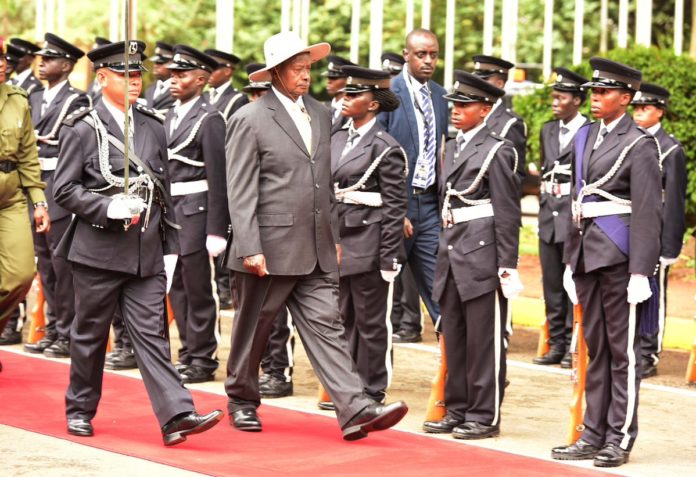
President Museveni inspecting a guard of honour upon arriving at Kampala Serena Conference Centre for 2018 State of the Nation Address.

State of the Nation Address
Uganda International Conference Centre,
Serena, Kampala

6th June, 2018

His Excellency the Vice President,
Rt. Hon. Speaker of Parliament,
His Lordship the Chief Justice,
Rt. Hon. Deputy Speaker,
His Lordship the Deputy Chief Justice,
Rt. Hon. Prime Minister,
Rt. Hon. Deputy Prime Ministers,
Rt. Hon. Leader of the Opposition,
Their Highnesses the Traditional Leaders,
Hon. Ministers,
Hon. Members of Parliament,
Hon. Members of EALA,
Members of the Diplomatic Corps,
Distinguished Guests,
Ladies and Gentlemen.

Madam Speaker, in fulfillment of the Constitutional requirement under article 101 (1) of the Constitution of the Republic of Uganda, I am here to deliver the State of the Nation Address, 2018.

Greetings to all Ugandans and congratulations on reaching the mid-year of 2018. In the Book of Galatians, Chapter 6, Verse 7, it says:“Be not deceived. God cannot be mocked. A man reaps what he sows”

By financial year 2005/2006, our tax revenue collections per annum, were standing at Shs2.23 trillion. At that time, an understanding had been reached between some branches of the government and the development partners to the effect that the government of Uganda should concentrate on handling the recurrent budget (salaries, etc.), while the development partners would handle the development budget (roads, electricity, the railways, etc). That arrangement was already landing us in problems. Towards the end of 2005 and as we were heading towards the elections of 2006, the country was plunged into the crisis of what came to be called “Load-shedding” ─ the acute shortage of electricity.

Since 1986, only the British had helped us with the repair and upgrade of the Owen Falls dam from the miserable 60mgws to 180mgws. Since the economy had grown 6.6 times since the low level of 1986, those 180 mgws was no longer enough. Yet, as our Baganda people say, “Omugo oguli ku murirano, tegugoba engo” ─ (the stick in your neighbour’s house cannot help you to fight off a leopard). It is too far to help you. That is when I sat down with my NRM colleagues in the Cabinet and the Caucus, in a retreat in Statistics House, to discuss this very serious problem.
I proposed to the two fora the step of taking on the development budget of the country and also focusing on the roads and electricity. The budget for the roads was raised from Shs398 billion to Shs3, 442 billion. It now stands at Shs4, 786 billion per annum. The budget for electricity was raised from Shs178 billion to Shs2, 858 billion. It now stands at Shs2.77 trillion per annum.

As a consequence, we now have tarmac roads to almost all the corners of Uganda: Nimule; Oraba; Musingo; Vurra; Lwakhakha soon; Malaba; Busia; Busuunga, beyond Bundibugyo; Mpondwe; Mutukula; Muroongo on the Kagyera river; Mirama hill; Katuna; Cyanika and Bunagana. Radiating from Kampala, tarmac roads are now connecting all those points. The distance between Cyanika and Oraba is 1,048 Kms (655miles), all of it connected by a tarmac road, from Kisoro district to Koboko.

With electricity, all the district headquarters, except for Kaabong and Buvuma, have now been reached by the electricity wires. The generation capacity of Uganda will soon be 2,216 megawatts, once Isimba, Karuma and many of the mini-hydros are completed.
Much of this work has been done by the Uganda Government money. 58 per cent of the roads, for instance, have been done or are being done by the Government of Uganda money. We are, of course, also grateful to the development partners for their contributions. Some of the roads have been done with their support.

“Otamanya ishekooko, ati eriibwa n’ebyooya” (the uninformed, thinks that people eat the Turkey with its feathers). Many people do not know how the economy grows, although many pass themselves out as “experts”. These investments in the roads and electricity, along with the earlier decision (2001) of strengthening the Army, are beginning to result in the resumption of our usual high growth rates which had been interfered with by the shortage of electricity and, more recently, the drought. This year, for instance, the economy will grow by 5.8 per cent per annum. This will rise to over 7 per cent per annum by the financial year 2019/2010.
Indeed, a Centre at Harvard, in the USA, recently predicted that Uganda will be one of the fastest growing economies in the world by 2026 or thereabout. I was not surprised by that prediction. What surprised me was that Uganda would be the first or the second fastest growing economy in the whole world.
The fact that our economy would grow fast, however, was not surprising for me given the deliberate steps we have taken to lay the foundation.

When we say that the economy is growing reasonably well, we mean that the four sectors are growing well. Indeed, industry grew at 6.2 per cent per annum, services at 7.3 per cent, ICT at 7.9 per cent and agriculture at 3.2 per cent. As you can see, it is only agriculture that is still growing slowly. Fortunately, we have or will soon have the necessary boosters for agriculture. These will be the use of fertilizers by more Ugandan farmers than at present and the farmers will use more irrigation. In the coming financial year, the government will work on the following irrigation schemes using the government budget:

(i) Doho phase II in Butalejja district;
(ii) Mubuku phase II in Kasese district;
(iii) Wadelai in Nebbi district;
(iv) Tochi in Oyam district;
(v) Ngenge in Oyam district;
(vi) Atari (Bulambuli and Kween);
(vii) Katete in Kanungu district;
(viii) Kawumu in Luwero district;
(ix) Amagoro (Tororo district);
(x) Nabigaga (Kamuli district);
(xi) Rwimi (Kasese and Kabarole district);
(xii) Nyimur (Lamwo);
(xiii) Musamya (Kayunga);
(xiv) Kibimba (Gomba);
(xv) Kabuyanda (Isingiro);
(xvi) Matanda (Isingiro); and
(xvii) Igogero-Naigombwa (Iganga and Bugiri).

In order to roll-out a global irrigation system for the whole country, we are encouraging industrialists to set up assembly or manufacturing plants for solar-powered water pumps. Some of these pumps and water conveyance systems will be used in government funded irrigation schemes. Others, however, will be used by the farmers at their own cost. I encourage all the capable farmers to, at their own cost, go into irrigation.

With the building of our phosphate fertilizer plant in Tororo, Uganda, which at 2.5kgs per hectare has one of the lowest rates of fertilizer use, will now stir itself up to use more fertilizers. We are looking for an additional investor to blend the phosphates with nitrogen and potassium in order to formulate NPK (Nitrogen, phosphates and potassium).
With the use of NPK, production will go up by 30 per cent. With higher rates of agricultural growth, the overall rate of growth will go up. Within the industrial rate of growth, I would like to single-out the sector of construction. This grew by 12.5 per cent annually. This is not surprising given the respective efforts of the government and the private sector in the areas of road and houses construction.

All this is happening before we implement our invigorated effort to ensure import substitution. You remember last year, I told you how rich Ugandans and other Africans are, already. In the case of Uganda, we spend about US $7 billion a year in terms of imports.

Importing what? Importing the shoes, clothes, carpets, textiles, furniture units, pharmaceuticals, electronic equipments, perfumes, soaps, wines, cars, pikipikis (motorcycles), etc., etc. Since some time ago, we have told our people that they can manufacture or process most of these here. That is how we have started the process of supporting the youth and the women groups that are already engaged in those activities or are about to be engaged in those activities.
This will save our foreign exchange, create more money for us, but also create jobs for our youth. Hence, many of our unemployed youth can be transformed into property owners, job creators and also employ themselves.

Since we talked about this in last year’s State of the Nation Address, 4,525 girls have already been assisted to engage in: knitting, shoe-making, weaving, tailoring, bakery and embroidery, while six groups have been assisted in furniture-making and 10 in welding. As of now, these groups may be making items for import-substitution. In time, however, they will make items for exports.

While this effort is aimed at recruiting many of our youth from agriculture or from the urban informal sector (jua kali) into small scale industry activities, the bigger foreign and local investors have already helped us to attract and locate in Uganda 44,316 factories and 8,200 service companies. These employ 600,000 and 1.2 million people, respectively. Indeed, as you drive on Gulu road, as I did recently, or along Jinja road, you will see quite a number of new factories that have been built recently.
In the coming days, the Minister of Finance will announce the financial support we intend to give to the groups that wish to join the manufacturing in the form of the enhanced micro-finance efforts and the Innovation in addition to the Women Fund, the Youth Fund and Operation Wealth Creation Fund. With enough electricity, the improved roads and security, we are surer of success than we have ever been. Through enhanced micro-finance, we are going to solve one of the bottlenecks ─ absence of low-interest money for manufacturing.
The privatization of Commercial Banks failed to solve the problem of high interest-rates. We are going to solve it using the route of the enhanced micro-finance and the r boute of the more capitalized Uganda Development Bank (UDB). These institutions should be able to give loans to manufacturers, processors and commercial agriculture at interest rates of 12 per cent or thereabout per annum.

One of the stimuli for faster economic growth is the low cost of doing business in the economy. With the refinancing of Bujagali and a better deal for managing the transmission of electricity, we shall achieve the low cost of electricity per unit, added to the low cost of money mentioned above. That leaves the low cost of transport as our next target.

Although we have done so much on the roads, by the end of this financial year, (we shall have a total length of 6,027 kms that are tarmacked), the roads are only good for passengers. They travel comfortably and fast; sometimes, too fast for their own safety as we have seen with so many fatal accidents, recently. Nevertheless, cost for road transport remains high if you compare it with rail and water transport. God gave us the possibility of water transport with so many Lakes (Nalubaale, Mwitanzigye, Masyooro, Butuumbi-Rutshuru, and Kyoga) and Kiira (the River Nile). These are the Ugandan names for Lakes: Victoria, Albert, George and Edward. This potential is always there and, as we get investors, the potential will turn into capacity. That leaves the issue of the railway. We are going to build the Standard Gauge Railway. We are only continuing to refine the issues of cost and quality with the partners we are talking with.

Before I leave the subject of the economy, I cannot forget to talk about the commercialization of Agriculture, especially for the 68 per cent homesteads that are still in subsistence and that are a big source of our poverty. 68 per cent are not active in the economy and they are just by-standers. This has been one of the battles I have been fighting since 1966, for the last 52 years. I do not accept to live with neighbours that are stuck in poverty. I patiently educate them until they are able to join the gospel of wealth creation through production. I started the battle in the cattle corridor in 1966 ─ end of year.

With my late colleague, Mwesigwa – Black, we sensitized the nomadic Banyankore as to the need to become sedentary and, later, join the dairy industry. This effort, by 1995, in spite of the 20 years interruption on account of the political chaos in the country, had succeeded beyond our wildest imagination. In Kiruhura district alone, there are 6,000 dairy farmers, producing 800,000 litres of milk per day today. The total production of milk in Uganda went from 200 million litres to 2.5billion litres per annum, thereby liberating Uganda from depending on imported powdered milk and, actually, becoming an exporter of milk and milk products to the tune of US $130 million per annum.

Recently, on account of the laxity by the veterinary staff and also the carelessness of the farmers themselves, we have had the problem of tick resistance to acaricides. We shall, however, use science to defeat this problem. Our scientists are working on it.

Having confirmed that villagers can be enlightened into becoming commercial farmers in the dairy sector, during the whole of 1995, I travelled throughout the country and preached the gospel of wealth-creation. Unfortunately, many leaders are never bothered with substance of leadership. They spend a lot of time on Public Relations (PR) and no time on substance. The PR is attending church services, weddings, burials, etc. In the end, however, real mobilization is helping the people to solve the problem of wealth creation, jobs, health, and education for their children by directing them to wealth creation so that they can support the education of their children themselves, the infrastructure of roads and security.
Having shared my pilot project with the rest of the country, I was hopeful that my colleagues would take advantage of my experience. Some did. Recently, I invited the Inter-religious Council to visit some areas that have woken up: Ibaanda, Kiruhuura, Kalungu and Masaka. They were able to see for themselves that poverty in the rural areas can be defeated. The Ibaanda, Kalungu and Masaka areas had relied on coffee to defeat poverty. Kiruhuura had relied on dairy. There are other areas like Bundibugyo that are, unfortunately, being disturbed by the artificial issue of identity (Bakonjo vs Baamba – Babwisi). Otherwise, through cocoa, palm oil, coffee, vanilla and up-land rice, that area was becoming very prosperous.

As I was waiting for my colleagues to absorb the message of transformation, since I am always allergic to poverty among my neighbours, I launched directly managed programmes in the Kisozi area and Kawumu in Luwero. The President’s office is also running a number of Model Parishes. In Kisozi, I have 1700 homesteads in nine villages. As I speak, 1400 of the homesteads have joined the effort of commercial farming through coffee, bananas, beans, maize and zero-grazing of cattle. See annex I attached about the details. I, however, notice that the coffee yield and returns per acre are still low. I do not know why.

In the Masaka area, the yield per acre per annum is 2,700Kgs that bring in Shs18.9 million per annum. In the Kawumu area, the Mawale Parish has got 1,188 homesteads. Operation Wealth Creation (OWC) has handled 341 homesteads and State House has handled 292 homesteads. Information on Mawale and Nsanvu parishes is attached in annexes II. The leaders should be informed that this is the correct way of seeking durable popularity and not confining yourselves to Public Relation (PR) and spontaneity. The latter, in the end, will evaporate. The leaders and the CAOs must plan per parish to involve, in phases, eventually, all the homesteads.

One of the problems I have been informing the leaders about, including the community leaders, is the issue of land fragmentation through indisciplined inheritance practices. This will cause a big problem for the country if we do not copy what the Europeans did in order to guard against this phenomenon. The use of shares (emigabo) for inheritance is better than the physical fragmentation of land and property. Fortunately, science is developing so fast that we may, in future, not need soil to produce crops. In fact, somebody told me that soil was an inconvenience because it harbours crop diseases. That what is crucial is water, which we should do everything possible to protect. They call this hydroponics agriculture ─ crops without soil, but with fresh water. The political leaders, the cultural leaders, the religious leaders need to know that there are strategic issues we need to grasp clearly for the survival and prosperity of our people. Riding on an uninformed population is criminal.

As our industrialization is progressing, our Scientists are also making their own contribution. That is why we put in place the Innovation Fund. Quite a number of our Scientists have patents for industrial formulae. These include: Dr. Muranga, Dr. Kyamuhangire, Musasizi, the late Dr. Isharaza, Dr. Mukwaya, Dr. Kaahwa, etc., etc. One of the products being developed is the Kiira electric car. Our industrial sector, therefore, will not only depend on processing agricultural and minerals products. It will also benefit from the intellectual labour of our Scientists, out of their designs and fabrications, like the electric cars.

One of our Scientists Dr. Phillippa Ngaju Makobore, has developed an Electronically Controlled Gravity Feed Infusion Set (ECGF), a medical device designed to accurately administer intravenous (IV) fluids and drugs by controlling the rate of fluid flow based on feedback from a drop sensor. I congratulate all of them.

In order to invigorate our services sector, the Government will revive the Uganda Airlines. We have already booked slots for the manufacture of medium and long – distance planes. These will be able to handle the regional and inter-national routes. Ugandans have an itch in their feet. They like to travel, to Dubai, to China, etc. Besides, we have a large diaspora that run away during the bad times; they are too comfortable where they are and never bother to come back, permanently.

Nevertheless, they regularly travel back to see their families. Besides, we have the tourists and also the investment and business delegations. All these need convenient mode of travel from London, from Dubai or from a point in China. This is not to talk of regional destination – Nairobi, Dar es Salaam, Kigali, Bujumbura, Arusha, Juba, Khartoum, Kinshasa, Addis-Ababa, Cairo, Johannesburg, etc. Every year, Ugandans spend US $430million (Shs1.6 trillion) on air-travel. This is quite a heamorrhage that must stop, just as we are going to stop the haermorrhage occasioned by the phenomenon of medical tourism. This is going to India for medical treatment. This takes another US $1.3 million per year.

I hear so many people talk about the attainment of the middle-income status by Uganda. The main problem here is, actually, the problem of Uganda importing too much and exporting little. The GDP per capita today is US $776. To become a middle income country, you need, at least, US $1,006 per capita. This money is calculated in Dollars. Too much importing and too little exporting undermines the progress to a middle-income status. Therefore, Ugandans, please, buy Ugandan; travel Ugandan; health-wise, be treated in Uganda. The government will facilitate its part as outlines in this speech.

All I have said above is about the economy that is being developed to create wealth and jobs for the Ugandans as well as widening the tax base for the State of Uganda. At the same time, this bigger economy provides more goods and services for Uganda’s domestic consumption and for exports.

Your NRM, always looking ahead, has already negotiated and arranged with our brother and sister Africans to ensure the market integration of Africa (EAC, COMESA, CFTA), so as to provide capacity for the absorption of the greater supply of goods and services produced by the Ugandans awakened to realize their potential as we also buy from our brothers and sisters in Africa, as we all take advantage of the huge collective market of Africa. Besides the huge continental market we are creating with our African brothers, the NRM always never missing in action when it comes to African issues, we have also negotiated for third party market access to the USA, EU, Chinese, Japanese and Indian markets, in varying degrees. Hence, ladies and gentlemen, the NRM has addressed or is addressing all the factors that are necessary to open the gates to the Ugandans engaged in wealth and jobs creation. Let everybody, then, play his or her own part.

On the side of stability, Uganda had a lot of challenges even after the NRM took power. Eventually, by 2007, the UPDF totally defeated Kony, ADF, the other rebel groups and disarmed the Karimojong. Therefore, rural-based terrorism and banditry was totally defeated and we built military and intelligence capacity to ensure that Uganda will never be threatened by terrorists operating from the rural areas. The terrorists of ADF are still in Congo, preserved there by the UN and the Congo government. If, however, they were to re-enter Uganda, they would be promptly and decisively defeated.

Some of the terrorists of ADF as well as other criminal elements, seeing that they could not survive in the rural areas, infiltrated into the towns where we had not fully focused in terms of developing intelligence capacity. As a consequence, we had 7 Sheiks assassinated as well as Major Kiggundu, Joan Kagezi, AIGP Kaweesi and Susan Magara, of recent. These killings seem to have been linked with ADF. Other killings, like the women killed in the Entebbe – Wakiso areas, as well as the killings in the Masaka area on New Year’s Eve, were by local criminals using pangas.
With this new challenge, we put in place mechanism to build the intelligence gathering capacity in the towns and on the highways. We are about to round-off the building of that capacity.

Urban terrorism and crime will be defeated just as we defeated the rural terrorists. In the meantime, most of the killers of the women in the Entebbe – Wakiso areas as well as the killings in the Masaka area, have been arrested. One of the killers, Kiddawalime, was killed by the wanaichi and our Police Force. In particular, I want to commend Cadet ASP Twinomugisha Steven, a Police Officer that wrestled down the criminal and disabled him. With immediate effect, I promote him to the next rank. I also salute our grand-daughter, Nakyambadde, who, using the mobile telephone, summoned for help when the obnoxious Kiddawalime was about to start robbing her and was about to rape her.

With the permission of the Rt. Hon. Speaker, I will decorate them with the Jubilee medal, later. On the kidnappers and killers of Susan Magara, two were killed at Usaafi Mosque as they were trying to fight the Police and eight were arrested. Regarding the killings of Joan Kagezi, Moslem Sheikhs, AIGP Kaweesi and Major Kiggundu, 90 persons have been arrested and are now facing trial and those not yet arrested are still being hunted.
The ADF criminals in Congo will answer for the killings of our people even when they are hiding in Congo. Their only safety is for them to voluntarily surrender and seek for amnesty. I salute our brothers, the Tanzanians, for arresting and handing over to us Jamil Mukulu. He is now facing the Courts of Law.

The other issue that needs attention is the environment, especially the restoration of the wetlands, preserving the national forests, planting the new commercial forests, not cultivating along the River banks, not allowing cultivation within the 200 metres of the Lake shore and stopping soil erosion by using contours when cultivating in the mountain areas or on the hillsides. Cultivation or building in the wetlands (ebisharara, enfuujo-bisaaru, ntobazi-bitoogo) should stop.

We can economically use the wetlands better when we preserve them and only use the edges for fish ponds. The four fish-ponds, in half an acre of the Presidential farm at Kawumu in Luwero, bring in Shs64 million per year, according to Madam Nakyobe. This is the right way to use the wetlands so that the centre of the swamp regenerates, preserves water for us because we need it for irrigating the farms. Besides, the swamp grass known as ebigugu (Cyperus latiforia) is very good for mulching the gardens and banana plantations.

You cut and the grass grows again. God had arranged everything for Uganda ─ water, ebigugu, ebifuunjo for paper making (known as papyrus), fish in the wetlands, mud-fish (eshoonzi), etc. We can now use the edges (emiiga) for fish farming, get much more money and preserve our wetlands with all our other benefits. Moreover, the swamp vegetation also filters the water so that, by the time it goes into the Lakes and Rivers, it is free of silt. This preserves the Lakes and Rivers from silting and also preserves the quality of the water. When it comes to purifying water for consumption, it costs us less.

There is no part of Uganda where there is no branch of the government. There is a government at the district (elected and appointed), there is a government at the sub-county and there is a government at the parish (the Muruka chief). There is no good reason, therefore, why the President and the Central government should be harassed for this whole hierarchy of the structures not doing their job.

Therefore, I am going to write a directive in the form of a circular letter to all these galaxy of officials to ensure that all the services in their area are delivered properly. They should ensure that there are no ghosts in the Local Government Secondary and Primary Schools; that teachers teach; that there are drugs in the health centres; that the farmers follow the required agricultural practices; that the wetlands are not invaded; that the Lake shores are not cultivated; etc. The Chief Administrative Officer (CAO) in the district is the Permanent Secretary of the Government in the district. All his workers, the Gombolola chiefs and the Miruka chiefs, should not allow anything to go wrong in the areas of their responsibility. I will create an Inspection Unit in my office ─ State House. If they go to an area and there is anything wrong, that official and the CAO will be held responsible.

I cannot fail to talk about mercenarism of the public officials and corruption of some of them. The mercenarism interferes with the patriotic attitude of the freedom fighters. People expect money for every little task. We could not have liberated this country if we did not have a high degree of altruism. This attitude of altruism must come back. As for the corrupt officials, I would like to inform the public that their only element of security is the acquaissance of the public by not reporting these criminals. Otherwise, there is no criminal, we cannot handle. Report any corruption you come across to this unit. It will comprise of Mr. James Tweheyo, Ms. Martha Asiimwe and Sister Akiror. They will give out their telephone numbers. What happened to the IGG? Why don’t the victims of corruption report those incidents to the office of the IGG? That was the purpose of that office; to protect the public from corrupt officials; to protect the investors against corrupt officials. The IGG should reflect on this. Are her staff credible? Why does the public not trust that institution? We need answers.

In order to help the Muruka chief monitor economic production activities and service delivery in his area, the government should give each one of them a bicycle. It is quiet and healthy for the chief to peddle around and inspect. The motor-cycles of the Gombolola chiefs should be replaced. The old ones, given out in the financial year 2007/2008, are too old by now.

In the area of Sports, Uganda is beginning to come up, again. The best sports performance by Ugandans was that of Akii Bua in the 400 metres hurdles of 1972 in the Munich Olympics.
Since the 1950s, I had been following the sports events and the achievements of our people. Etolu in Vancouver in 1954 in the high jump, Tom Kawere in boxing in Cardiff in 1959, Grace Seruwagi in boxing in 1960, etc., etc. Therefore, the recent star performances of the young sportsmen like Kiprotich, gold in the London Olympics of 2012, Kipsiro, gold in 2014 in Glasgow, Cheptegei in the recent Commonwealth games, etc., revive and re-inforce the good performance of the fore-runners of sports in modern Uganda. Yet, we have not yet put systematic efforts into sports beyond the peace brought to the country, the immunization of the young people, the UPE and USE as well as the absorption of the youth with talent into the disciplined forces of Uganda (Prisons, Police, UPDf, etc).
Let the Ministry of Health sensitize our people more on nutrition in early childhood and, when funds are available, more systematic annual schools and districts competitions to be able to identify talent early enough. The potential in Uganda is huge.

In the budget, the Minister of Finance will give more details about the plans for the economy. I wish to end this address by thanking Parliament for handling the following legislations during the last session:

BILLS ENACTED
1. The Bio-fuels Bill 2017;
2. The Constitution (Amendment) NO 2 Bill; 2017
3. The Supplementary Appropriation Bill 2017;
4. The Supplementary Appropriation No 2 Bill 2018;
5. The Appropriation Bill 2018;
6. The Stamp Duty (Amendment) Bill 2018;
7. The Excise Duty ( Amendment) Bill 2018;
8. The Income Tax ( Amendment) Bill 2018;
9. The Value Added Tax (Amendment) Bill 2018;
10. The Tax Procedures Code (Amendment) Bill 2018;
11. The Tax Appeals Tribunal (Amendment) Bill 2018;
12. The Traffic and Road Safety (Amendment) Bill 2018;
13. The Lotteries and Gaming (Amendment) Bill 2018.

In the coming session, the government will present the following Bills:

PROPOSED LEGISLATIVE PROGRAMME FOR FINANCIAL YEAR 2018/2019
S/NO MINISTRY
Ministry of Foreign Affairs
1 The Uganda Institute for Diplomacy and International Affairs (UIDIA), Bill.
2 Foreign service Bill
Ministry of Public Service
3 Public Service Pension Fund Bill,
4 Human Resource Management Professionals Bill
Ministry of Finance, Planning & Economic
Development
5 Income Tax (Amendment) Bill, 2019
6 VAT (Amendment) Bill, 2019
7 Excise Tariff (Amendment) Bill, 2019
8 Stamps Duty (Amendment) Bill, 2019
9 Finance Bill, 2019
10 Tax Procedures Code (Amendment) Bill, 2019
11 Supplementary Appropriation Bill, 2019
12 Appropriation Bill, 2019
14 Annual Budget Estimates for FY2019/20 – Motion
15 Corrigenda for FY2019/20 – Motion
16 Budget Speech FY2019/20 – Motion
17 National Budget Framework Paper FY2019/20 – Motion
18 Semi Annual Budget Performance Report FY2018/19 – Motion
19 National payment systems.
20 BOU Amendment Bill
21 PPDA
22 Foreign Exchange Amendment Bill.
23 Anti-Money Laundering (Amendment) Bill.
Ministry of Lands, Housing and Urban Development
24 Uganda Land Commission Bill
25 Land Lord –Tenant Bill
Ministry of Trade, Industry and Cooperatives
26 The National Accreditation Bill
27 The Legal Metrology Bill
28 The Industrial and Science Metrology Bill
29 The Consumer Protection Bill
30 The Competition Bill
Ministry of Works and Transport
31 The Engineers Registration Act (Amendment) Bill
32 The Roads Bill
Ministry of Education, Science, Technology and Sports
33 National Curriculum Development Centre (NCDC) (Amendment) Bill.
34 Physical Activity and Sports (PAS) Bill.
35 Uganda National Examination Board Act (UNEB) Amendment Bill.
36 The Nakivubo War Memorial Stadium (Amendment) Bill.
36 The Universities and Other Tertiary Institutions (UOTI) Act (Amendment) Bill
Ministry of Health
37 National Food and Drug Authority Bill
38 Public Health Act
39 Organ and Tissue Transplant Bill
40 Pharmacy Bill
Ministry of Defence and Veteran Affairs
41 The Uganda Peoples Defence Forces and Veterans Bill, 2017

In conclusion, I want to remind the listeners that Uganda is un-stoppable given what we have done in the field of: Army building; building the other security forces; in education; in health; the ICT backbone; the roads; electricity; in agricultural research for improved seeds, disease control and improved agro-practices; what we are planning to do to deal with the cost of money for borrowing; and the work already done on the issue of the continental market integration and access to third Party markets.
What remains to be done is build the Standard Gauge Railway with the branches to Kasese, Kakitumba and South Sudan. I did not talk about the oil and gas because all the work is already done. It is just implementation that is remaining. The oil revenues will, obviously help us to fund our infrastructure and innovation programmes. The future is bright. Let us tighten discipline.

Madam Speaker, It is my pleasure to declare the 3rd Session of the 10th Parliament open.

I thank you very much and hope that the coming Session will be fruitful.

Stories Continues after ad