Stanbic Bank
Stanbic Bank
25.2 C
Kampala
Stanbic Bank
Stanbic Bank
Home Blog Page 156

WHO outlines recommendations to protect infants against RSV – respiratory syncytial virus

The World Health Organization (WHO) published its first-ever position paper on immunization products to protect infants against respiratory syncytial virus (RSV) – the leading cause of acute lower respiratory infections in children globally.

Every year, RSV causes about 100 000 deaths and over 3.6 million hospitalizations in children under the age of 5 years worldwide. About half of these deaths occur in infants younger than 6 months of age. The vast majority (97%) of RSV deaths in infants occur in low- and middle-income countries where there is limited access to supportive medical care, such as oxygen or hydration.

Published in the Weekly Epidemiological Record (WER), the position paper outlines WHO recommendations for two immunization products: a maternal vaccine that can be given to pregnant women in their third trimester to protect their infant and a long-acting monoclonal antibody that can be administered to infants from birth, just before or during the RSV season.

“RSV is an incredibly infectious virus that infects people of all ages, but is especially harmful to infants, particularly those born premature, when they are most vulnerable to severe disease,” says Dr Kate O’Brien, Director of Immunization, Vaccines, and Biologicals at WHO. “The WHO-recommended RSV immunization products can transform the fight against severe RSV disease, dramatically reduce hospitalizations, and deaths, ultimately saving many infant lives globally.”

RSV usually causes mild symptoms similar to the common cold, including runny nose, cough and fever. However, it can lead to serious complications – including pneumonia and bronchiolitis – in infants, young children, older adults and those with compromised immune systems or underlying health conditions.

Two immunization products to protect against RSV

In response to the global burden of severe RSV disease among infants, WHO recommends that all countries introduce either the maternal vaccine, RSVpreF, or the monoclonal antibody, nirsevimab depending on the feasibility of implementation within each country’s existing health system, cost-effectiveness and anticipated coverage. Both products were recommended by the Strategic Advisory Group of Experts on Immunization (SAGE) for global implementation in September 2024. In addition, the maternal vaccine received WHO prequalification in March 2025, allowing it to be purchased by UN agencies.

WHO recommends that the maternal vaccine be given to pregnant women during the third trimester of pregnancy, from week 28 onwards, to optimize for the adequate transfer of antibodies to their baby. The vaccine may be given during routine antenatal care, including at one of the 5 WHO-recommended antenatal care visits in the third trimester or any additional medical consultations.

The second WHO-recommended immunization product, nirsevimab, is given as a single injection of monoclonal antibodies that starts protecting babies against RSV within a week of administration and lasts for at least 5 months, which can cover the entire RSV season in countries with RSV seasonality.

WHO recommends that infants receive a single dose of nirsevimab right after birth or before being discharged from a birthing facility. If not administered at birth, the monoclonal antibody can be given during the baby’s first health visit. If a country decides to administer the product only during the RSV season rather than year-round, a single dose can also be given to older infants just before entering their first RSV season.

The greatest impact on severe RSV disease will be achieved by administering the monoclonal antibody to infants under 6 months of age. However, there is still a potential benefit among infants up to 12 months of age.

WHO regularly issues updated position papers on vaccines, combinations of vaccines and other immunization products against diseases that have major public health impact. These papers focus primarily on the use of vaccines in large-scale vaccination programmes. The new position paper aims to inform national public health policymakers and immunization programme managers on the use of RSV immunization products in their national programmes, as well as national and international funding agencies.

Stories Continues after ad

Tycoon Sudhir led support as Ugandans raised Shs200m in Cedric Babu’s final hours

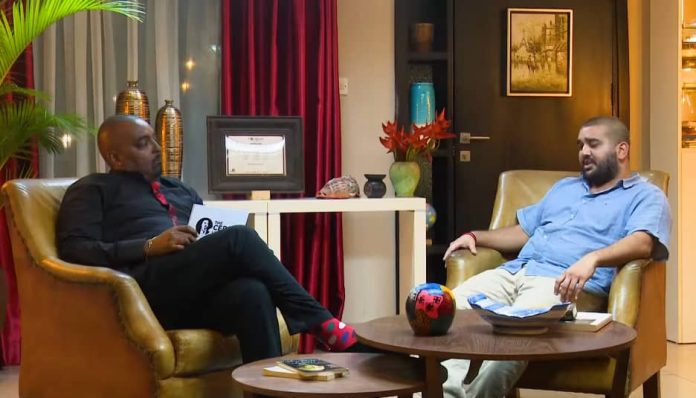
TWO FRIENDS: Rajiv Ruparelia and Cedric Babu. In this photo, Cedric was interviewing Rajiv. Rajiv perished in a car accident, while Babu died of heart failure.

 Ugandans and friends across the globe came together in a desperate race to save the life of media personality Cedric Babu Ndilima, who was battling severe heart failure at just 50 years old. 

At the center of this wave of generosity stood Sudhir Ruparelia and the Ruparelia family, whose contribution was more than financial it was deeply personal.

When news of Cedric’s condition broke, revealing that he urgently needed a £300,000 (approx. Shs1.5 billion) heart transplant in London, his family launched a GoFundMe campaign on Thursday, May 29, 2025. Within 48 hours, more than Shs200 million (about £39,358) was raised from 343 contributors around the world. But among the donations, one stood out: £2,500 from the Ruparelia family, a gesture rooted in history, love, and heartbreak.

For Sudhir Ruparelia, one of Uganda’s most prominent businessmen, Cedric was more than a public figure, he was like family. Cedric had shared a close bond with Sudhir’s late son, Rajiv Ruparelia, who had passed away years earlier. Together, Cedric and Rajiv had been a dynamic duo in the media space, their vibrant energy lighting up interviews and storytelling across platforms. That history, that brotherhood, moved Sudhir and his family to act swiftly and generously.

Sudhir’s tribute on X (formerly Twitter) said it all. He posted a photo of Cedric and Rajiv together in the midst of a media interview, both smiling with purpose and passion. The caption was heartfelt:

“Another son of ours has left this world. May Cedric’s Soul Rest in Peace. Here with Rajiv, may they rest in peace .”

The rose emoji was simple, but powerful. It symbolized the deep grief of losing not just a friend, but someone considered part of the family. For the Ruparelias, their donation wasn’t just charity, it was a final act of love, a way to honor both Cedric and Rajiv.

The campaign’s momentum was immediate. Donations streamed in from all corners—Uganda, the diaspora, strangers, friends, and celebrities alike. One anonymous contributor donated £7,417, six others gave £1,000 or more, and Leopold Kyanda offered £622. Each donation carried a message of hope. But it was the Ruparelias’ tribute, combining generosity and emotional resonance, that touched many the most.

Tragically, time was not on Cedric’s side. Despite the overwhelming response, his condition worsened, and he passed away less than two days later in a Nairobi hospital. His death stunned a nation and left a void in the media community but also shone a light on Uganda’s unshakable spirit.

Even as some cynics questioned the possibility of raising such a large sum so quickly, their doubts were drowned out by the voices of 343 donors who gave what they could. The GoFundMe effort may have fallen short of the full target, but it became something more a symbol of solidarity, of people rising to support one of their own in his darkest hour.

Cedric Babu Ndilima’s legacy is now intertwined with the story of a nation that refused to be indifferent. In just 48 hours, Uganda showed the world the size of its heart. And in the midst of that show of unity, Sudhir Ruparelia’s gesture stood as a reminder: that beyond wealth, it’s the bonds we build and the memories we cherish that define our humanity

Stories Continues after ad

Will NRM party reciprocate Speaker Anita’s Among’s efforts?

Speaker Anita Among.

Last week, Parliament passed the Uganda People’s Defence Forces (UPDF) Amendment Bill, a move that will significantly deepen the military’s intervention in Uganda’s justice and civic systems. The bill has sparked widespread backlash, both at home and across the diaspora, with many critics viewing it as a direct affront to the rule of law and the freedoms it protects. For many Ugandans tirelessly advocating for justice, this decision feels like a betrayal.

This is but one of several contentious bills that have recently been passed under the stewardship of Speaker Anita Among. In stark contrast to the measured approach of her predecessor, Rebecca Kadaga, Among has taken bold and, at times, controversial steps to push legislation through the August House. Her approach has left many reeling; not only because of the substance of these bills but because of the swift and determined manner in which they’ve been enacted.

Notably, prior to the UPDF Bill, Parliament passed the Anti-Homosexuality Bill, a proposal that has long drawn scrutiny from local and international communities. Despite decades of debate, previous attempts to pass the bill were mired in legal and technical obstacles. However, not under Among’s watch. With a tenacity that has become her hallmark, she navigated those hurdles and ushered the bill through, aiming to “restore moral clarity” and redefine Uganda’s ideological footing.

Since May of last year, her actions have attracted sanctions, travel bans, and asset freezes from countries such as the United Kingdom. Yet, unshaken remains the “Lioness of Bukedea.” The passing of the UPDF Amendment Bill is but the latest testament to her resolve. A symbolic effort to rid Uganda of neo-colonial influence and re-anchor its youth in a Pan-African ideology that she believes is under siege by Western agendas and their paraphernalia.

Among’s legislative record underlines her vigorous leadership. Under her tenure, Parliament has passed the Public Health Amendment Bill, the Computer Misuse Amendment Act, and the Mining and Minerals Act, among others. Her efficiency has stunned both citizens and fellow politicians alike — a level of decisiveness rarely seen within Uganda’s political institutions.

Yet Among’s influence extends beyond lawmaking. She has consistently taken strides toward peace and unity, most notably when she facilitated peace talks between the Ugandan government and the Kingdom of Rwenzururu after the tragic 2016 massacre. Her participation in the Sudan peace negotiations between opposition leader Riek Machar and President Salva Kiir further demonstrates her diplomatic competence and expertise.

Her split from the Federal Party for Change was only the beginning. For Right Honourable Anita Among, no length is too far when it comes to securing Uganda’s future. Her vision is clear: a prosperous and sovereign nation, unburdened by external interference and guided by pragmatic leadership.

Which brings us to the lingering question: Will the National Resistance Movement (NRM) recognize and reciprocate her efforts?

The NRM has been in power for over three decades, during which countless politicians have come and gone with many leaving little to no impact at all whilst a number have prioritized personal interests over national development. But Among has disrupted that norm. Since taking up the Speaker’s gavel, she has replaced complacency with urgency and inaction with results. Her commitment to furthering the party’s ideological goals through action rather than rhetoric is rare and stays invaluable.

As Uganda stands at a crossroads, the NRM must consider what role Among will play in its future and whether her loyalty and labour will be duly recognized. For a party long criticized for stagnation, she represents momentum. And momentum, if properly supported, could be the key to ushering in a new political era.

Stories Continues after ad

Parliament approves Shs2t gov’t loan amidst protests

Finance Minister, Matia Kasaija.

The House has approved a government proposal to borrow up to €270 million from the African Export-Import Bank (Afreximbank) and €230 million from Ecobank Uganda Limited and the Development Bank of Southern Africa (DBSA) to finance the 2024/2025 national budget, despite strong reservations from several Members of Parliament.

The borrowing adds to Uganda’s public debt stock, which stood at $25.55 billion as of June 2024.

Tabling the motion during the plenary sitting on Thursday, May29,2025, the Minister of Finance, Planning and Economic Development, Matia Kasaija, defended the borrowing, citing urgent obligations and pending invoices.

“We have a number of pending invoices. The contractor is on the road. He has to be paid, and we do not want to carry it to the next financial year when the opportunity is available,” Kasaija told the MPs.

The minister reiterated the government’s struggle to meet financial obligations, noting delays in negotiations with lenders.

“If we had closed with them two months or three months behind, I would not be standing here. Now, if we do not pass these loans, we are going to default,” he warned.

However, opposition MPs sharply criticised the timing, purpose, and terms of the loans.

Muhammad Muwanga Kivumbi (NUP, Butambala County) accused government of mismanagement and circumventing the law and said the manner of borrowing “is a post-mortem kind of approval” and described the process as “unconstitutional.”

“You are speaking to a minister who has undisbursed money, borrowed Shs16 trillion. It is lying out there. We are paying interest,” Muwanga Kivumbi said.

He further questioned the loan’s intent. “The President clearly stated borrowings should only be for security, infrastructure, and human capital development not recurrent expenditure. So is the minister serious when he says the money is to pay wages?” the Butambala County MP asked.

He also pointed out that money is sitting unused at the Bank of Uganda, despite being disbursed.

“One of the reasons the Auditor General is consistently advancing this predicament is the way Parliament approves borrowing without taking all the necessary conditions to ensure that this money will be absorbed,” he said.

Theodore Ssekikubo (NRM, Lwemiyaga County) echoed those concerns, pointing to hidden costs.

“We are having new conditions like management fee, agency fee, commitment fee, base tranche, commercial tranche – can we unpack this loan?” he demanded. “We are ready to support, but once you stampede Parliament at the last minute, who is to blame really?”

He warned of profiteering by intermediaries: “There is a middle entity called the agent who is going to get free money. He is there to arrange the money and carry away part of this loan.”

Karim Masaba (Indep; Industrial Division, Mbale City) went further, citing legal violations. “When you look at the law, the Public Finance Management Act (PFMA), this loan was supposed to be brought before us passing the next annual budget. We are breaking the law by passing it now,” he said.

Despite the criticism, government defended its position.     

The Government Chief Whip, Denis Hamson Obua, explained that the delay was due to “prolonged and protracted negotiations with the banks” and that part of the loan would fund Supplementary Schedule No. 3, already approved by Parliament.

Eddie Kwizera (NRM, Bukimbiri County) questioned the ministry’s planning. “This is a ministry responsible for economic planning. Do they plan? If they did, they should have come and given us sufficient time,” he argued.

Speaker Anita Among acknowledged the concerns but sided with the urgency of the situation. “There is no money. So can we agree that since we do not have money, nobody should be paid a salary? Should we stop working on roads?” she questioned.

According to the motion document, the loan from Afreximbank carries an effective interest rate of 7.33 per cent, while the Ecobank and DBSA loans have rates of 7.28 per cent and 7.18 per cent respectively.

Stories Continues after ad

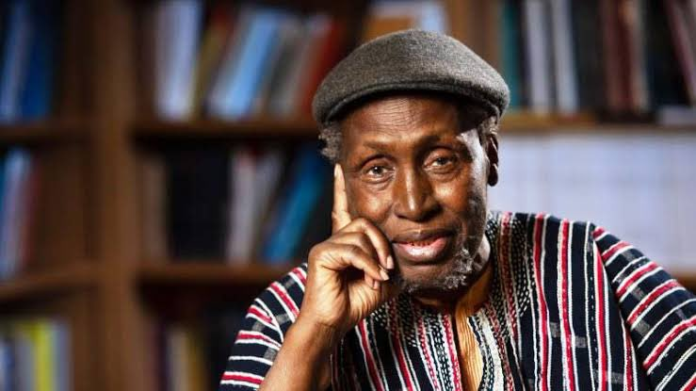
President Ruto mourns literary icon Ngũgĩ wa Thiong’o

Prof. Ngũgĩ wa Thiong’o.

President William Ruto has paid tribute to celebrated Kenyan author, playwright and scholar Prof. Ngũgĩ wa Thiong’o  who passed away yesterday at the age of 86.

Ruto described the late writer as a “towering giant of Kenyan letters” whose voice and intellect profoundly shaped Kenya’s literary and political consciousness.

“I have learnt with sadness about the death of Kenya’s beloved teacher, writer, playwright, and public intellectual, Prof Ngũgĩ wa Thiong’o. The towering giant of Kenyan letters has put down his pen for the final time,” said President Ruto.

Ngũgĩ, known globally for his bold and unrelenting critique of post-colonial African governance, colonialism, and cultural imperialism, leaves behind a body of work that defined African literature for decades. Among his most influential novels are Weep Not, Child (1964), The River Between (1965), A Grain of Wheat (1967), Petals of Blood (1977), and Devil on the Cross (1980), which was originally written in Gikuyu. His memoirs, essays, and plays also contributed significantly to pan-Africanist discourse and debates on language and decolonization.

“Always courageous, he made an indelible impact on how we think about our independence, social justice as well as the uses and abuses of political and economic power,” Ruto noted.

Throughout his career, Ngũgĩ challenged the intellectual status quo, urging African writers to embrace indigenous languages and narratives that reflect their cultural realities. His insistence on writing in Gikuyu was both a political and artistic act, inspiring generations of African writers to reclaim their voice.

“In his bold and creative career, Prof Thiong’o showed us how to make contributions that cannot be ignored and speak in ways that both supporters and opponents cannot ignore,” said Ruto.

Ngũgĩ spent years in exile following his arrest in 1977 for staging the politically charged play Ngaahika Ndeenda (I Will Marry When I Want). Despite persecution, he never wavered in his commitment to truth, justice, and intellectual freedom.

“His patriotism is undeniable, and even those who disagree with him will admit that Prof Thiong’o’s discourse always sprang forth from a deep and earnest quest for truth and understanding, devoid of malice, hatred or contempt,” Ruto added.

For many Kenyans and admirers across the world, Ngũgĩ was a perennial contender for the Nobel Prize in Literature—a dream that remained unfulfilled in official form, but not in spirit.

“Many Kenyans cannot remember a time when we were not united in the hope that Prof Thiong’o would finally receive the Nobel Prize for Literature, which we all felt he more than deserved,” the President said. “Be that as it may, he will always remain the champion of literary emancipation and innovation in our hearts and minds.”

Ruto offered condolences to Ngũgĩ’s family and celebrated his unmatched contribution to Kenya and the global literary stage.

“May his family find peace and comfort in this period of mourning, and may Prof Thiong’o rest in eternal peace.”

Stories Continues after ad

Speke Apartments rolls out Eid al-Adha packages for a glamorous celebration

Speke Apartments Wampewo.

As Muslims around the world prepare to mark Eid al-Adha on Friday, June 6, Speke Apartments Wampewo is offering an irresistible invitation to celebrate the special day in opulence and comfort right in the heart of Kampala.

The high-end apartment complex has unveiled a series of elegantly curated packages designed to give guests a perfect blend of relaxation, indulgence, and style. Whether you’re seeking a serene staycation or a rich culinary experience, Speke Apartments Wampewo promises to elevate your Eid celebrations.

Guests can choose from stylish accommodation options including the One-Bedroom Deluxe at Shs711,000 or $180 per night, the One-Bedroom Superior at Shs932,200 or $236 per night, and the spacious Two-Bedroom Apartment at Shs1,283,750 or $325 per night. Each package comes complete with thoughtful luxuries—a refreshing non-alcoholic welcome drink, breakfast for two, a 45-minute “Relief & Release” massage, a fresh fruit basket, cookies, and assorted sodas. Guests will also enjoy a 10% discount on food and laundry services, along with complimentary access to the swimming pool, gym, steam room, sauna, and Wi-Fi.

To add even more flavor to the festivities, Speke Apartments Wampewo is hosting a special Eid al-Adha Dining Experience. Guests will enjoy a generous spread of Churrasco and traditional Biryani, served with a complimentary refreshing beverage, all for Shs105, 000 per person, exclusive of a 5% service charge.

These offers have been specially designed to help guests, especially women, unwind, reconnect, and create lasting memories in a setting that’s both sophisticated and serene.

Whether you’re looking to treat yourself or surprise a loved one, Speke Apartments Wampewo is the ultimate city destination for a chic and memorable Eid celebration.

Stories Continues after ad

Renowned Kenyan Novelist Ngũgĩ wa Thiong’o goes to rest

Prof. Ngũgĩ wa Thiong’o.

Despite the scorching sun, a dark cloud hangs over the heads of the literato within East Africa and beyond. The unexpected passing of celebrated playwright and novelist Ngũgĩ wa Thiong’o has dealt a heavy blow to the academic and literary world. The distinguished author, who had been battling kidney failure, passed away suddenly on Wednesday, May 28, 2025.

The heartbreaking news was confirmed by his family in a post shared on social media by his daughter, Mukoma wa Ngugi:

“It tears my heart to say that my father Ngũgĩ wa Thiong’o passed away earlier today. I am me because of him in so many ways—as his child, scholar, and writer. I love him. I am not sure what tomorrow will bring without him here. I think that is all I have to say for now.”

Born into a generation that witnessed the atrocities of colonialism firsthand, Ngũgĩ wa Thiong’o wielded his pen as a weapon against the forces that sought to erase identity, culture, and history. Through his prose and plays, Wa Thiong’o challenged the colonial mindset that deemed all things Western as inherently superior.

Ngũgĩ remains one of the most influential voices from a generation of writers who emerged as a counter to the colonial portrayal of Africa as a dark, cultureless continent. His literary works like: Weep Not, Child, Petals of Blood, and The River Between, among others, served not only as powerful critiques of oppressive regimes but also as compelling defenses of African heritage and self-worth.

A staunch believer in the inseparability of language and identity, Ngũgĩ made the radical choice to write exclusively in his mother tongue, Gikuyu, later in his career. This decision was a bold testament to his belief in the richness of African languages and the need to decolonize African minds through literature.

As the world mourns the loss of a literary titan, his voice will continue to resonate in classrooms, libraries, and the hearts of readers around the globe. His legacy lives on as a new generation of African writers rises, inspired by his courage and commitment to telling African stories in their own voices.

Stories Continues after ad

Museveni calls for political will and limited foreign interference to Africa’s problems

Burundi's President Évariste Ndayishimiye hands over the report to Museveni.

President Yoweri Kaguta Museveni assumed the chairmanship of the Regional Oversight Mechanism (ROM) of the Peace, Security, and Cooperation (PSC) Framework for the Democratic Republic of the Congo and the Great Lakes Region yesterday.

During the 12th high-level Regional Oversight Mechanism summit held at State House Entebbe, His Excellency Évariste Ndayishimiye, the President of the Republic of Burundi, handed over the instruments of power to President Museveni to steer the peace mechanism for the next two years.

President Museveni emphasized the collective responsibility of all involved in the peace processes while calling for limited foreign interference in the region.

“Because we know what the problem is and it can be solved, but we must have the political will, and foreigners should limit their involvement, because foreigners are the ones who carelessly embolden the mistake. Then the mistake makers think that we don’t care about these internal groups. We don’t care about the region. What is important is our support,” Museveni said.

The Peace, Security, and Cooperation Framework, established in 2013 under the auspices of the United Nations, the African Union, the International Conference on the Great Lakes Region (ICGLR), and the Southern African Development Community (SADC), aims to tackle the root causes of instability in eastern DRC through collective regional responsibility.

“I want to congratulate His Excellency (Évariste Ndayishimiye) again for the good work he has done. We now know the problems, and we can solve them. There’s nothing we don’t know about all these countries: Rwanda, Burundi, Eastern Congo, Tanzania, and Kenya. These are our people. In my opinion, these problems are easy to solve. They are not difficult. What is difficult are the three mistakes: philosophy, ideology, and strategy,” Museveni added.

President Museveni blamed the conflicts in the Eastern DRC on the politics of identity, fuelled by foreigners since the days of Mobutu Sese Seko and Juvenal Habyarimana.

“The Mobutu army was defeated in Rwanda, and together with Habyarimana, they fled to Goma. We appealed to Mobutu to disarm them. He wouldn’t listen because he thinks the internal forces don’t matter. We, the neighbors, don’t matter. What matters are the foreigners who are supporting them. Why was Mobutu not listening? We were here. We could have helped him,” President Museveni explained.

President Ndayishimiye congratulated President Museveni and assured him of continued support during his tenure.

The high-level meeting chaired by President Museveni brought together the heads of state and government or the representatives of the signatory countries of the PSC Framework, which include the Republic of Uganda, the Republic of Angola, the Republic of Burundi, the Republic of the Congo, the Democratic Republic of the Congo (DRC), the Republic of Kenya and the Republic of Rwanda.

Others are the Republic of South Africa, the Republic of South Sudan, the Republic of Sudan, the United Republic of Tanzania, and the Republic of Zambia.

The representatives of the Guarantor Institutions of the PSC Framework, namely the African Union, the International Conference on the Great Lakes Region and the United Nations, also participated in the meeting, as well as partners of the region as observers.

Stories Continues after ad

People are the nation’s first line of defence – Gen. Otafiire

Gen. Otafiire being welcomed to National Defence College.

The Minister of Internal Affairs, Maj Gen (Rtd) Kahinda Otafiire, has underscored the pivotal role of citizens in safeguarding national security, describing the population as the first and most vital line of defence.

Speaking to course members of Intake 3 at the National Defence College – Uganda (NDC-U), where he delivered a lecture on Uganda’s institutional security framework, Hon Otafiire emphasised the need for a people-centred approach to national security.

“The security of any country depends on intelligence, diplomacy, and the security forces,” he noted.

He added, “But it is the population that helps coordinate intelligence and enables the security forces to consolidate it. Human beings are the first line of defence.”

The Ruhinda County MP highlighted the importance of developing human capacity across seven pillars of human security: food, economy, health, environment, politics, personal safety, and community. He argued that Africa must focus on these pillars to build truly sovereign national defence systems.

“It is the duty of leadership to change the way we think. Security means wealth and prosperity. When you provide security to the people, they will take care of themselves,” he said.

Hon Otafiire criticised the tendency of many African strategic thinkers to overlook these key elements, calling instead for policies that strengthen institutions, empower citizens, and enforce discipline within the armed forces.

“Strength comes from the people. Empowered citizens and a disciplined army create a mighty force,” he added.

He encouraged the participants to actively engage with diverse communities, emphasising that inclusive dialogue is essential to creating a secure and prosperous Africa.

The session was attended by senior college staff, including the Dean of Studies, UPDF Brig Gen Kefa Nangeso, who represented the Commandant, UPDF Brig Gen Dr Stephen Kusasira, as well as Professor Murindwa Rutanga and departmental heads.

Stories Continues after ad

Tycoon Sudhir Ruparelia set to open Pearl Business Park

Renowned tycoon Sudhir Ruparelia, through his real estate arm Crane Management Services Ltd is set to open the Pearl Business Park, an iconic commercial development in the heart of Kampala.

This grand opening signals the arrival of a new wave of employment opportunities for Ugandans, while also enhancing Kampala’s status as a regional commercial powerhouse.

The Pearl Business Park is poised to become one of Kampala’s premier commercial hubs. It will offer not only state-of-the-art office and retail spaces but also generate much-needed jobs for Ugandans across various skill levels.

With a reputation as one of the largest employers in Uganda’s private sector, the Ruparelia Group has once again demonstrated its dedication to empowering local communities. This commitment is expressed through direct employment, skills development and infrastructural investment principles that have guided its operations for years.

The upcoming Pearl Business Park project continues this legacy by offering job openings across more than 15 categories. These include roles in property and building management, security and CCTV operations, housekeeping and cleaning services, reception, plumbing, painting, and electrical work. The Group has announced that over 40 job positions are currently available, targeting both skilled professionals and semi-skilled workers. This inclusive hiring model reflects the Group’s commitment to leaving no one behind as Uganda’s private sector expands.

“This is more than just a building—it’s an ecosystem for business and employment,” said a representative from Crane Management Services. “We are proud to once again offer opportunities to hardworking Ugandans who want to grow their careers.”

The Pearl Business Park is expected to host a dynamic mix of corporate offices, retail shops and service centers, which will further expand the job market beyond the initial hiring phase. By doing so, the development aligns with the government’s strategy of encouraging private-sector-led economic development, a key driver in Uganda’s post-pandemic recovery.

The public has been invited to submit their resumes by 31st May 2025. Interested candidates are required to send their applications via email to hr@cms.co.ug. This transparent and accessible hiring process reaffirms the Group’s long-standing track record of fairness and openness in employment practices.

As Uganda continues to rebuild economically, initiatives such as the Pearl Business Park stand out as beacons of hope and progress. Through this project, the Ruparelia Group is not only redefining Kampala’s skyline but also actively shaping livelihoods and contributing to a more resilient and inclusive economy.

Stories Continues after ad