Stanbic Bank
Stanbic Bank
21 C
Kampala
Stanbic Bank
Stanbic Bank
Home Blog Page 157

Meet the seven UPDF Generals set to retire

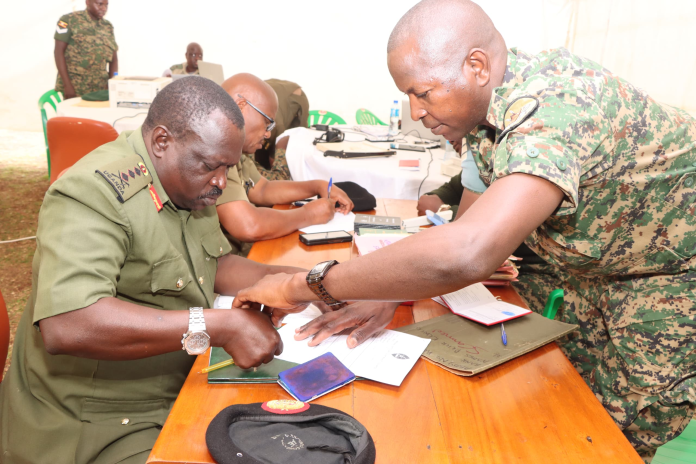
Lt. Gen. Peter Elwelu being helped to register and process his retirement benefits.

Seven senior officers of the Uganda Peoples’ Defence Forces (UPDF) are set to retire in July 2025, marking the end of decades-long military careers that have shaped Uganda’s defense architecture both at home and abroad.

On May 27th, the generals officially documented their retirement at the Ministry of Defence and Veteran Affairs (MODVA) headquarters in Mbuya.

Presiding over the ceremony, Chief of Joint Staff Maj. Gen. Jack Bakasumba hailed the group for their distinguished service to the country.

“These leaders have made remarkable contributions to national and regional peace, especially through international missions such as those in Somalia,” said Maj Gen Bakasumba.

He emphasized that retirement is an essential phase in military progression.

“It provides space for younger officers to rise while ensuring continuity within the institution. I urge you all to embrace this next chapter with purpose, guided by the values of the UPDF,” he said.

He also noted that proposed amendments to the UPDF Act, 2005 would enhance the welfare of retiring officers, including healthcare access, disability compensation, and full military burial honours.

“There is a whole new kind of life ahead, full of experience, just waiting to happen. Some call it retirement, I call it bliss,” Bakasumba quoted American biochemist Betty Sullivan.

The Generals preparing to retire:

Lt. General Peter Elwelu

Lt. Gen. Peter Elwelu, born in 1966 in Kumi District, joined the Ugandan military in 1987. He trained at the Tanzania Military Academy in Monduli and later served as an instructor at the School of Infantry in Jinja. Elwelu played a significant role in the UPDF’s operations in the Democratic Republic of Congo during the late 1990s and early 2000s.

In 2007, he commanded the first Ugandan contingent deployed to Somalia under the African Union Mission in Somalia (AMISOM), establishing a secure base that facilitated further operations against insurgents.

He later served as the commander of the UPDF’s 2nd and 3rd Divisions and was appointed Commander of Land Forces in 2017. In 2021, he became the Deputy Chief of Defence Forces. His tenure included commanding the controversial 2016 operation in Kasese.

Major General Hudson Mukasa

Maj. Gen. Hudson Mukasa began his military career in 1983, joining the National Resistance Army, the precursor to the UPDF. He trained at the Tanzania Military Academy and took advanced military courses in Ghana and at Kenya’s National Defence College.

Mukasa held various command positions, including leading the 2nd Division in Mbarara and the 5th Division in Lira. He also commanded the 503 Brigade in Kitgum, focusing on operations against the Lord’s Resistance Army. From 2016, he served as Uganda’s Military Attaché to Kenya.

Major General Francis Ben Okello

Maj. Gen. Francis Ben Okello served as the second commander of AMISOM from March 2008 to 2009, leading key peacekeeping efforts in Somalia. On return, he held senior leadership roles, including Commandant of the National Defence College Uganda (NDC-U), where he advocated for youth skilling and agricultural mechanization as pillars for national development and security.

Major General George Igumba

Maj. Gen. George Igumba has played a central role in professionalizing the UPDF. As Commandant of the Uganda Senior Command and Staff College in Kimaka, Jinja, he supervised the training of senior military officers. His contributions to military education earned him commendation from Vice-President Jessica Alupo, who praised his discipline and integrity.

Brig. General John Byuma

Brig. Gen. John Byuma’s military journey features various command and administrative roles that enhanced the UPDF’s operational capacity. Though less publicized, his behind-the-scenes leadership contributed significantly to institutional stability.

Brig. General Dominic Twesigomwe

Brig. Gen. Dominic Twesigomwe held both field and administrative roles in the UPDF. His leadership reinforced the force’s discipline and mission readiness, especially in peacekeeping environments and support operations.

Brig. General Augustine Kamyuka Kyazze

Brig. Gen. Augustine Kyazze, born in 1961 in Mpigi District, joined the UPDF in 1987. He commanded the Armored Component under AMISOM and served as Deputy Chief of Logistics and Engineering. He also headed the Kalama Armored Warfare Training School as Chief Instructor. His legacy is grounded in promoting training, discipline, and professionalism.

As they prepare to transition from active service, these seven generals leave behind a legacy of resilience, sacrifice, and leadership. Their retirement not only symbolizes the close of a significant chapter but also ushers in a new era for the UPDF.

Stories Continues after ad

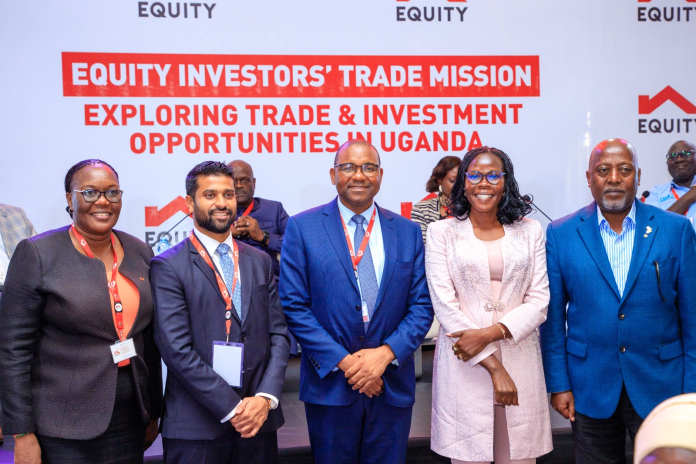
Minister Anite lauds Equity Bank for rallying global investors to boost Uganda’s regional trade & growth

Minister Anite, Equity bank top officials and investors at the trade and investment conference.

The investment state minister, Evelyn Anite, lauded Equity Group for gathering over 50 investors from 17 countries to deepen investment in the region. The week-long mission aimed to promote cross-border trade and investment and strengthen regional value chains under the group’s Africa Recovery and Resilience Plan (ARRP).

Speaking Friday at the close of a dialogue in Kampala, Anite highlighted that the high-impact trade and investment mission positions Uganda as a promising destination with numerous opportunities in the region’s rapidly growing markets.

“Equity bank’s commitment to wealth creation and prosperity for Africans through access to affordable credit aligns with the visionary leadership of President Museveni. Together, we are building a foundation for inclusive economic growth across the continent,” Anite said.

She added, “Investors are not just stakeholders, they are our partners in national development. We go the extra mile to support them, aligning with the President’s vision.”

In Uganda, delegates explored opportunities in value addition, manufacturing and technology, with a particular focus on sectors such as dairy processing, pharmaceuticals, textiles, mining, and agri-tech. Investors also participated in site visits and engaged with policymakers and business leaders.

James Mwangi, Equity Group’s managing director stated the mission was a strategic effort to “unlock the enormous potential that exists in Tanzania and Uganda by connecting global capital to local opportunities.” He added that the goal is to catalyze investment and trade that creates jobs, enhances value chains, and drives inclusive economic growth.

Mwangi noted that these missions have helped catalyze billions in investment, facilitate new business partnerships, and support regional trade integration, aiding the Africa Free Continental Trade Area Agreement. As part of its ARRP, Equity Group is redirecting liquidity equivalent to 2% of the region’s GDP toward the private sector, targeting critical value chains in agriculture, manufacturing, micro, small and medium enterprises (MSMEs), and infrastructure. The plan aims to reach 100 million people and businesses by 2030 and create 50 million jobs across the continent.

Amos Wekesa, CEO of Great Lakes Safaris, highlighted Uganda’s largely untapped tourism potential. He emphasized that while tourism in Uganda remains underappreciated, it holds immense investment prospects.

“The Government has now earmarked significant resources to promote the tourism sector, marking a major step forward. For investors, this is the right moment to tap into tourism,” Wekesa said. He added that Uganda is home to approximately 54% of the world’s mountain gorillas and enjoys favorable weather.

Uganda is emerging as a dynamic investment destination due to its stable economy, abundant resources, and investor-friendly reforms. This trade mission builds on the legacy of previous successful Equity-led trade and investment missions across Africa. The Tanzania-Uganda Trade Mission continues the group’s commitment to transforming lives and livelihoods by connecting people, capital and opportunity across Africa.

Stories Continues after ad

KISU pioneers blood donation in memory of late Rajiv Ruparelia

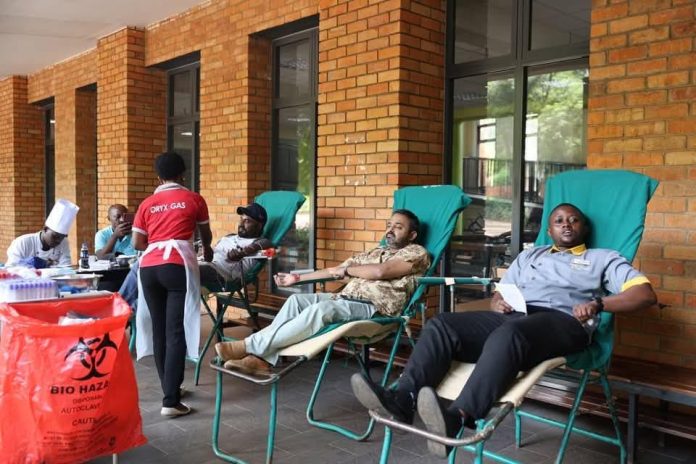
In memory of the late Rajiv Ruparelia, Kampala International School Uganda (KISU), one of the flagship institutions under the Ruparelia Group, has launched its inaugural blood donation drive, drawing widespread participation and emotional reflection.

The event, held at the school’s premises in Bukoto, brought together teachers, students, auxiliary staff, parents and members of the wider public. The drive served not only as a life-saving initiative but also as a heartfelt memorial to Rajiv, a beloved member of the Ruparelia family whose legacy continues to inspire compassion and community spirit.

Speaking about the initiative, business mogul and philanthropist Sudhir Ruparelia expressed profound gratitude to all those who took part in the drive.

“A heartfelt thank you to the great Ruparelia family and Kampala International School Uganda for their noble act of donating blood, a true gesture of compassion and humanity. Every drop donated is a life restored,” Sudhir said.

He dedicated the event to his late brother, fondly referred to as Dad Inara Rajiv Ruparelia, noting that acts of kindness such as this reflect the very essence of his memory.

“In honour of the late brother Dad Inara Rajiv Ruparelia, this act of love reminds us that helping others costs nothing but means everything,” he added.

Sudhir also extended special appreciation to his daughters Meera Ruparelia and Sheena Ruparelia, as well as renowned comedian Patrick ‘Salvado’ Idringi, for their presence and support at the event.

“Deep gratitude to my dear sisters Meera Ruparelia, Sheena Ruparelia, Salvado and all who participated. Your kindness echoes in every life saved,” he said.

KISU officials emphasized that the blood donation drive will become an annual tradition, reflecting the school’s growing commitment to social responsibility and community health. The school aims to partner with health institutions such as the Uganda Blood Transfusion Service to ensure sustained impact.

Stories Continues after ad

I am sorry, Kenya President apologizes to Uganda

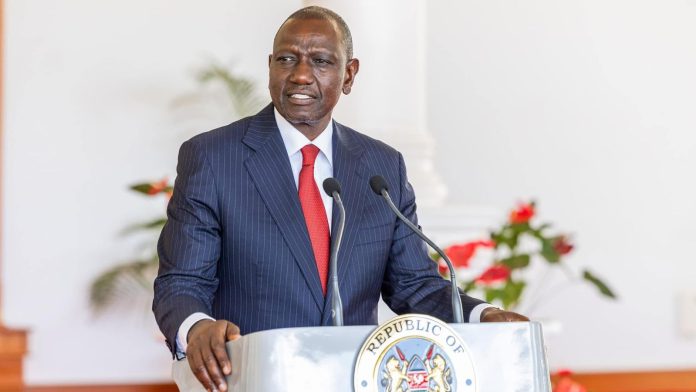
Kenya’s President William Ruto has issued a public apology to Uganda, acknowledging rising diplomatic tensions between the two nations and urging renewed efforts to restore harmony, respect and cooperation within the East African region.

Speaking during the National Prayer Breakfast held at Safari Park on Wednesday, Ruto publicly reached out to Ugandans, asking for forgiveness in light of recent incidents that may have strained bilateral relations.

His remarks come amid controversy surrounding the arrest of Ugandan opposition leader Dr. Kizza Besigye and 37 other Ugandan nationals in Kisumu, Kenya — a move that has ignited accusations against the Kenyan government of complicity in their detention and subsequent treason and terrorism charges in Uganda.

“To our brothers and sisters in Uganda, if there is anything we have done — knowingly or unknowingly that has caused offence or jeopardized our friendship, we seek your forgiveness,” President Ruto said.

“Kenya values our relationship with Uganda, and we are committed to nurturing peace and cooperation between our peoples.”

The apology comes at a time when Ruto’s administration is under fire both at home and abroad.

Domestically, the government has been grappling with intense criticism over soaring taxation, economic mismanagement, and allegations of corruption.

The fallout from the 2024 anti-tax protests which saw Kenyan youth killed by police continues to cast a dark shadow over the administration’s legitimacy.

Regionally, tensions have escalated following Kenya’s efforts to assist illegal deportation of a Tanzania popular activist after abduction in Nairobi and the controversial arrests in Kisumu, which have been widely interpreted as Kenyan complicity in the crackdown on dissents from neighbouring countries.

Ugandan and Kenyan legislators have exchanged harsh words over the incident, fueling fears of a diplomatic rift.

Ruto used the platform not only to express remorse to Uganda but also to issue a broader appeal for reconciliation, including with Tanzania another nation with which Kenyans have recently clashed.

He also turned inward, apologizing to Kenyan youth, many of whom remain disillusioned with his government.

“To our young people, we recognize your frustrations. If we have failed you, we apologize. We want to rebuild trust and shape a future where every Kenyan feels seen and heard,” Ruto stated.

The president called for unity and healing across the region, insisting that his government is on a mission to rise from past missteps and forge stronger, more respectful ties both within Kenya and across East Africa.

“I believe in the promise of Kenya. But that promise is only real if we choose the path of building bridges, not walls,” he said. “Our strength lies in our unity as a nation, and as a region.”

Stories Continues after ad

45 women-led businesses win Shs3.3b in NSSF Hi-Innovator funding 

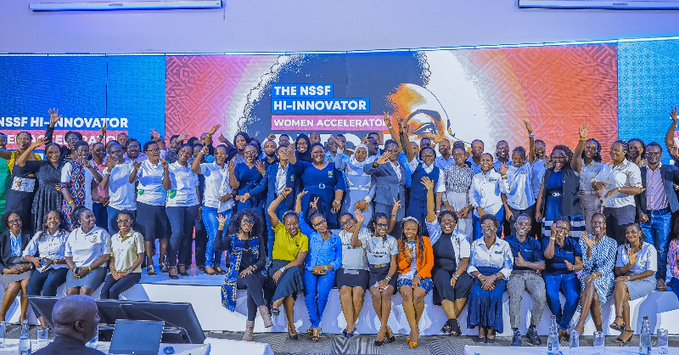
The National Social Security Fund (NSSF) and Mastercard Foundation have extended funding to 45 women-led businesses worth Shs3.3 billion under their Hi-innovator program.

Each business will receive Shs75 million in seed funding, subject to the completion of a due diligence exercise to ensure compliance with program requirements and operational efficiency.

This followed a competitive pitching exercise held in Kampala, where a total of 56 women-led businesses presented before a panel of seasoned entrepreneurship experts.

The Hi-Innovator is an initiative of the National Social Security Fund (NSSF) in partnership with the Mastercard Foundation and implemented by Outbox, aimed at cultivating an enabling ecosystem for indigenous Small and Growing Businesses (SGBs) to evolve into viable and scalable enterprises.

The businesses were evaluated based on their scalability, potential to generate employment opportunities for youth, and the strength of their management teams.

The sectors represented in this pitching round include agriculture, digital economy, light manufacturing, tourism, health, green business, and Edtech, reflecting a deliberate focus on industries with high growth potential and social impact.

Derrick Sebbaale, representing the NSSF Head of Strategy, said: “We are proud to witness women entrepreneurs leading the way and shaping the future of their businesses. Building on the success of our previous window, we are committed to empowering these businesses to cement their operations, drive sustained economic growth and make a lasting impact on the nation’s development.”

This selection brings the latest number of women businesses supported to 249, following the successful funding of the previous pitching window, which saw 32 women-led businesses acquire Shs1.1 billion.

Richard Zulu, Founder of Outbox, the lead implementing partner for the Hi-Innovator program, highlighted the rationale behind prioritising these sectors.

“This round of selections was guided by the potential of these industries to create dignified and sustainable employment opportunities, particularly for youth and women, who are critical drivers of Uganda’s economic transformation,” he explained.

The Hi-Innovator program has significantly contributed to Uganda’s entrepreneurial ecosystem by equipping small and growing businesses with the financial, technical, and mentorship support needed to scale. Through its targeted investments, the program has fostered innovation, created thousands of jobs, and strengthened local enterprises, driving economic growth and long-term sustainability.

Since its inception in 2021, the program has supported 390 businesses with a total allocation of Shs28 billion resulting in the creation of 224,755 jobs, affirming the program’s mission to foster innovation and entrepreneurship across Uganda.

Sebbaale underscored the program’s strategic vision, stating that today’s selection reaffirms the programme’s commitment to supporting 500 businesses by the end of 2025.

Stories Continues after ad

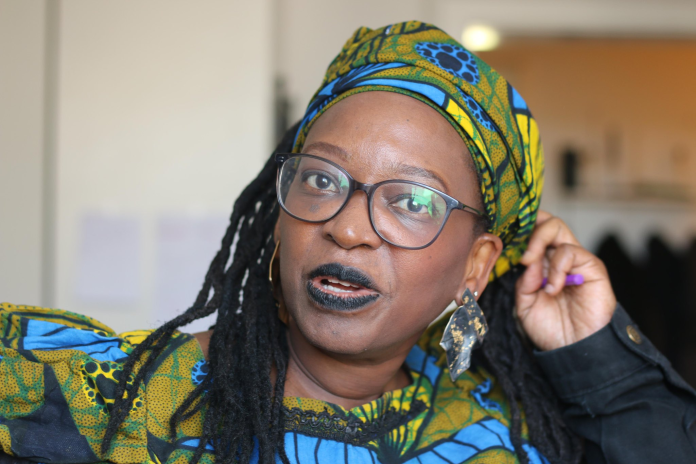
Stella Nyanzi decries German bureaucracy over delayed re-entry         

Dr. Stella Nyanzi.
Stories Continues after ad

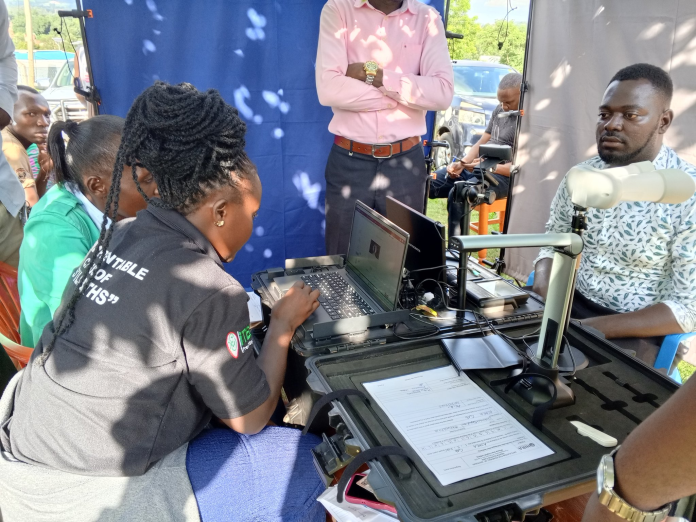
NIRA officially kicks off nationwide identity card enrolment

The National Identification and Registration Authority (NIRA) has today officially launched a massive nationwide identity card enrolment and renewal campaign, targeting over 30 million Ugandans.

The exercise is expected to last between six to ten months, covering all districts and parishes across Uganda.

The rollout, seen as one of the country’s most ambitious citizen data initiatives, seeks to renew 15.8 million national IDs set to expire by June 2025 and to register an additional 17.2 million Ugandans—particularly children below 17 and citizens who missed earlier enrolment drives.

“This exercise will be conducted at the parish level, operating six days a week from Monday to Saturday,” said NIRA Executive Director Rosemary Kisembo at the launch. “Citizens can choose to register or renew either by first pre-registering online and completing the process at the parish or by registering entirely at the parish manually.”

To support the exercise, NIRA has deployed 5,300 biometric kits to districts, reserving 365 for emergencies. Each parish will have at least 10 kits, with more sent to areas of higher population. Ugandans will be required to present themselves in person with proper documentation. For individuals seeking to change ID details such as names or dates of birth, a Shs200,000 fee applies unless the error originated from NIRA itself.

The government is expected to spend approximately Shs666.85 billion on the exercise. Of this, Shs183 billion will go toward purchasing new ID cards, Shs293 billion on technology infrastructure, including data centres and biometric kits, and Shs190.85 billion to pay 13,864 staff working on the project.

The exercise adopts a “comb and clean” strategy at the parish level—Uganda has 10,594 parishes—using a zone-based categorisation to streamline the process. Vulnerable groups, such as children under five, expectant mothers, the elderly, and persons living with disabilities, will be prioritised under Zone A and E. Other zones focus on mass enrolment, ID renewals, and card issuance.

Kisembo defended the exercise, describing it as a crucial step toward updating the national registry and enhancing the integrity of government services, elections, and social protection programs such as the Social Assistance Grant for Empowerment (SAGE).

“Let us all get involved in this exercise,” she urged. “This is about citizenship, identity, and access to services.”

With just over a year to the next general elections, the success—or failure—of this exercise will likely shape voter registration, public trust, and service delivery across Uganda. How efficiently NIRA and its partners navigate logistical, political, and technological challenges in the coming months will be critical.

Stories Continues after ad

Over 55,000 Sironko residents lifted by Parish Development Model

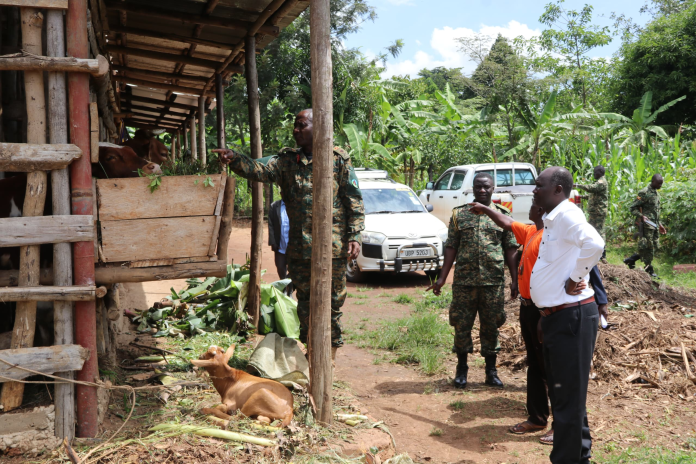
Officials inspecting some of the beneficiaries of PDM.

Sironko District has recorded substantial progress under the Parish Development Model (PDM), with 55,075 individuals benefitting from the initiative since its inception.

The figures were revealed during a stakeholder engagement at the district headquarters, chaired by Brig Gen Godfrey Muwanguzi, Acting Deputy Chief Coordinator of Operation Wealth Creation (OWC) from the Uganda Peoples’ Defence Forces (UPDF).

Speaking to local government leaders and SACCO executives, Brig Gen Muwanguzi underscored the need for patriotism and adherence to the Ministry of Local Government’s implementation guidelines.

“The Ministry has outlined clear roles for each level of government. I urge you to be patriotic and apply these guidelines diligently,” he said.

He likened the Parish Revolving Funds to community banks, urging stakeholders to manage them responsibly and strictly in line with PDM protocols.

Sironko, which hosts Uganda’s highest number of parishes—224 across Budadiri East and Budadiri West, covering 1,545 villages—has seen this extensive reach play a pivotal role in its high level of PDM participation. Chief Administrative Officer Mr Nelson Kidera credited this breadth for the district’s progress and praised OWC coordinators for their dedication.

“Their commitment has been vital in delivering services to the community,” he remarked.

District Production Officer Dr Patrick Charles Okori reported that Sironko has received UGX 57.79 billion through the Parish Revolving Fund, with a disbursement rate of 95.29%. The funds have supported 1,692 enterprise groups engaged in agriculture and livestock, including coffee, dairy, bananas, horticulture, piggery, poultry, and fishing.

However, Dr Okori acknowledged persistent challenges affecting full implementation. These include data discrepancies between the Parish-Based Management Information System (PDMIS) and the Financial Inclusion System (FIS), manipulation of beneficiary lists by certain Parish Development Committees, corruption among some SACCO leaders, and difficulties in accessing remote areas.

Despite these issues, SACCO executives commended the government for simplifying the application process. They noted that acquiring PDM funds now requires only a national ID, in contrast to the burdensome procedures previously associated with bank loans.

The PDM, launched by President Yoweri Kaguta Museveni in February 2022, aims to transition 33% of Ugandan households from subsistence farming to commercial agriculture. Each eligible household receives UGX 1 million to invest in income-generating agricultural activities.

After the meeting, Brig Gen Muwanguzi, accompanied by district technical officials, visited selected beneficiaries to observe how the funds are being utilised at the grassroots.

Stories Continues after ad

Court nullifies Kawempe North MP election, orders fresh polls

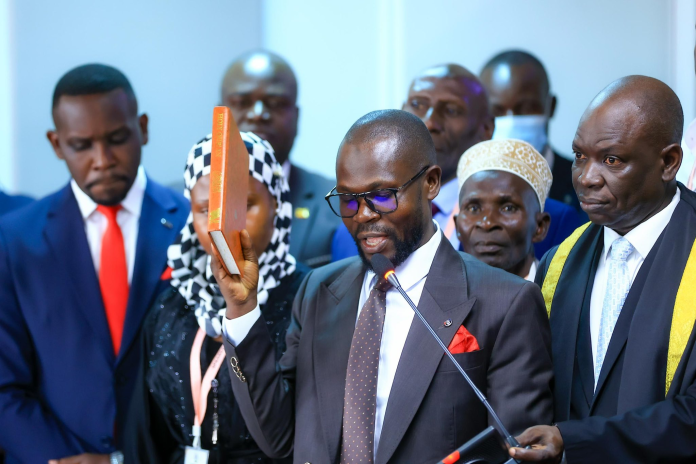
The High Court has nullified the election of Luyimbazi Elias Nalukoola as the Member of Parliament for Kawempe Division North, citing violations of the Parliamentary Elections Act.

In a ruling delivered by Justice Bernard Namanya on Monday, the court found sufficient grounds to set aside Nalukoola’s election, effectively rendering the Kawempe Division North parliamentary seat vacant.

“That the election of Luyimbazi Elias Nalukoola as a Directly Elected Member of Parliament for Kawempe Division North constituency in Kampala District is set aside,” the court ruled.

Justice Namanya further directed the Electoral Commission to organize a fresh election for the constituency.

“The Electoral Commission is ordered to conduct a fresh election for the Directly Elected Member of Parliament for Kawempe Division North constituency in Kampala District,” the order reads.

The judgment, issued under Section 80, 82 (4)(c), and 82 (6)(c) of the Parliamentary Elections Act (Cap. 177), concluded a contested legal battle over the integrity of the 2021 parliamentary elections in Kawempe North. While the court did not detail the exact breaches in this excerpt, such rulings typically arise from irregularities such as voter bribery, falsification of results, or non-compliance with electoral guidelines.

The court also ruled that each party would bear its own legal costs, stating:

“Each party shall meet its own costs.”

The ruling follows an election petition filed by NRM’s Faridah Nambi.

This decision opens up a new political showdown in one of Kampala’s most dynamic constituencies, as potential candidates now prepare for a by-election under tight scrutiny. The ruling could also set precedent for ongoing election petitions across the country.

Stories Continues after ad

Why More Kiwis Are Choosing Real Money Casinos Over Free Games

New Zealand, 26 May 2025 – A growing number of online players in New Zealand are making the switch from free casino games to real money casinos, as the appetite for authentic gaming experiences and the thrill of real wins continues to rise.

Recent trends show that Kiwi players are no longer content with demo slots and practice rounds. Instead, they are increasingly seeking out real money casinos in New Zealand that offer licensed, secure, and mobile-friendly platforms with actual cash payouts.

What Real Money Casinos Offer That Free Games Don’t

The difference between free and real money casino games goes far beyond stakes. Real money platforms offer a more complete and rewarding experience:

  • Real cash prizes: The most obvious benefit — you can actually win and withdraw real money.
  • Exclusive features: VIP programmes, cashbacks, and progressive jackpots are only available when playing with real funds.
  • Live dealer games: These immersive, studio-quality games are rarely, if ever, offered in free mode.
  • Higher-quality gameplay: Many software studios reserve enhanced features like bonus rounds and full RTP versions for real money play.

This richer gaming environment is one reason players are migrating from casual demo platforms to full-featured real money casinos.

Expert Insight: What the Data Shows

“We’ve noticed a significant increase in traffic from users searching for legitimate real money casinos in New Zealand,” says Terri Radford, site analyst at PlayCasino.co.nz. “More players are looking for platforms that are licensed, safe, and payout-focused — and they’re willing to deposit real funds for a premium experience.”

He adds: “A lot of users tell us they started on free games, but once they understood how bonuses worked, they wanted to try real money casinos. Our guides and reviews help them make informed choices and avoid risky or unlicensed operators.”

Why Real Money Casinos Are Trending in NZ

Several factors are contributing to this national shift:

  • Increased trust in online casinos new zealand platforms due to tighter global regulation.
  • Easier payments via NZ-friendly options like POLi, bank transfers, and crypto.
  • Mobile-first design, allowing seamless real money play on phones and tablets.
  • Better bonuses: Real money players can access deposit bonuses matches, free spins casinos, and exclusive promotions.

As more New Zealanders explore these benefits, the real money segment is quickly outpacing free-to-play alternatives.

How to Start Playing at Real Money Casinos Safely

If you’re ready to try real money play, here are three key steps:

  1. Choose a licensed NZ-friendly site: Look for casinos regulated by respected bodies like the MGA or UKGC.
  2. Start small: Begin with a modest deposit and use a welcome bonus to stretch your budget.
  3. Understand the terms: Bonus wagering requirements and withdrawal limits can vary.

Where NZ Players Can Find the Best Real Money Casinos

With hundreds of sites online, it can be difficult to know which casinos are safe, fair, and actually worth your time. That’s why savvy players are turning to PlayCasino.co.nz — New Zealand’s most trusted resource for discovering real money casinos.

The site offers expert reviews, comparisons, bonus rankings, and transparent safety checks, helping players confidently choose the right platform for their needs.

Whether you’re a casual player ready to make your first deposit or a seasoned gamer searching for better rewards and faster payouts, PlayCasino.co.nz makes it easy to find the best real money casinos in New Zealand.

A Broader Shift in NZ’s Online Gambling Landscape

This migration toward real money gaming reflects a broader change in how Kiwis approach digital entertainment. As mobile data gets cheaper, payment systems improve, and regulatory awareness grows, more players are embracing the full experience of real money gaming and mobile casinos — not just for the thrill, but for the genuine rewards.

Industry analysts expect New Zealand real money casino market to keep growing steadily through 2025 and beyond.

For more information or to explore the top-rated real money casinos in NZ, visit PlayCasino.co.nz.

#Mobile CasinoWelcome Bonus PackageBonus Code
1SlotBox Casino100% up to $1,000 + 100 Free SpinsN/A
2Grand Rush Casino$4,000 Free + 40 Spins on 7 ChakrasN/A
3Jackpot City Casino100% up to NZ$400 Free Welcome BonusN/A
4Kiwis Treasure Casino50 Free Spins for $1 DepositN/A
5Lucky Dreams Casino100% Bonus Up To $500 + 100 Free SpinsN/A
6Lets Lucky Casino100% Deposit Bonus Up To $1500 N/A
Stories Continues after ad