Stanbic Bank
Stanbic Bank
17.5 C
Kampala
Stanbic Bank
Stanbic Bank
Home Blog Page 1567

Kadaga insists Auditor General must investigate BOU over Crane Bank sale

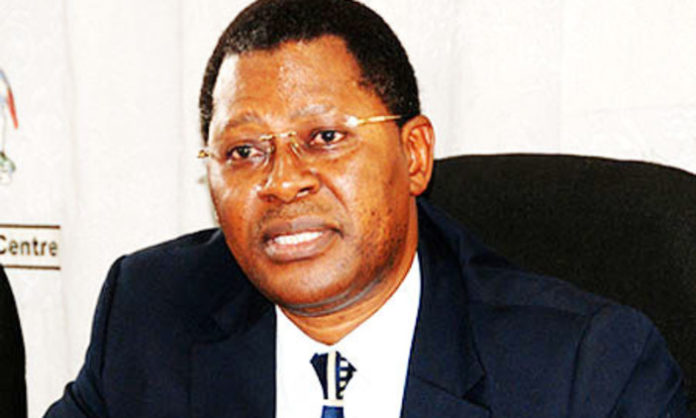
Dr. Lious Kasekende

The sale of Crane Bank to DFCU Bank still continues to haunt the Bank of Uganda (BOU).

The latest is that Speaker of Parliament Rebecca Kadaga insists that the Auditor General (AG) must by all ways launch a special audit into BOU over the sale of Crane Bank and other six commercial banks.

In the letter dated May 10, 2018 and addressed to the Auditor General John F.S Muwanga, Kadaga urges that BOU has never produced any report concerning the sale of defunct banks such as Teefe Bank, Greenland Bank, International Credit Bank, Cooperative Bank, National Bank of Commerce, Global Trust Bank and Crane Bank.

Speaker Kadaga is concerned that the Auditor General Muwanga has taken long to launch investigations into BOU as requested by the Committee on Commissions, Statutory Authorities and State Enterprises (COSASE). The committee members accuse BOU of not producing any report as regards the sale of the banks.

“The request from the Committee on Commissions, Statutory Authorities and State Enterprises (COSASE) is premised on the finding by that committee that there has never been any report by the Bank of Uganda on the defunct banks,” Kadaga says in the letter.

The Speaker has copied the letter to BOU Governor Emmanuel Tumusiime-Mutebile, the Solicitor General- Francis Atoke, the Chairperson COSASE-Abdu Katuntu and the Deputy Speaker of Parliament Jacob Oulanyah.

Kadaga said the earlier motion that was deferred by the Deputy Speaker Jacob Oulanya has nothing to do with the request by the COSASE Committee that the AG launches a special audit into the sale of the affected commercial banks by BOU. “This request by the committee is, in opinion, clearly distinguishable from the Rt. Hon. Deputy Speaker’s directive about the motion which was intended to be discussed,” she says in the letter.

Kadaga further tells the AG that the audit his office was directed to conduct has nothing to do with Bank of Uganda roles in the supervision of Financial Institutions. “Audits are processes directed by the Constitution. I don’t believe that there is any public institution created by law in Uganda that is not subject to audit,” she says.

The Speaker in her letter faults BOU for consulting the Solicitor General on that matter, saying that any institution that needs a clarification on a decision of parliament must consult with the Office of the Speaker.

“Therefore in response to your request for guidance, you should proceed with the audit as directed and submit your report to my office as is required by law,” Kadaga cocludes.

Meanwhile Members of Parliament have quashed attempts by the Deputy Governor Bank of Uganda, Dr. Louis Kasekende, to obstruct a forensic audit by the AG into the Central Bank’s role in the closure of commercial banks.

On April 19, 2018, Kasekende wrote to the AG stating that an investigative audit into BOU would go against the sub-judice rule as the case between Crane Bank and BOU is court.

The Solicitor General, Atoke, on May 2, 2018 affirmed Kasekende’s letter, concurring with Kasekende that an investigation into the sale of Crane Bank would offend the subjudice rule and therefore told BOU not to cooperate with the AG or parliament.

But Budadiri West MP Nandala Mafabi, the lead petitioner for an audit into BOU, has attacked Kasekende accusing him of attempting to protect what he referred to as a mafia at the BOU. He said yesterday that the AG must continue with the BOU investigations process to bring out the rot in its operations.

Mafabi said that in neighbouring Tanzania, Bank of Tanzania was audited by that country’s Auditor General which and grand theft. Mafabi said BoU should account for all the closed banks.

Mafabi wants the audit to focus on the conduct of Ms Justine Bagyenda, the former director of commercial banks supervision at the bank and other officials who were charged with the responsibility of carrying out routine supervision of Crane Bank.

Meanwhile the Shadow Attorney General, Wilfred Niwagaba MP-Ndorwa East,  said BOU cannot stop such an inquiry if the Speaker rules that it does not offend the law on sub-judice.
“It is the Speaker to decide that this matter is subjudice or not, he said adding that the essence of the subjudice rule is not to prejudice a matter that is pending in court.

“Parliament is talking about an investigation to do with a forensic audit. How does a forensic audit affect the current proceedings between BoU and Crane Bank?” Niwagaba asked.

On the other hand, MP Abdu Katuntu, also has insisted that BoU,  must provide documentation relating to the closure of Crane Bank.

“Entities being audited do not have the liberty to choose what should be audited. The arguments being raised by the bank of subjudice do not apply to auditing,” Mr Katuntu wrote to the Auditor General and BoU.

Source within BoU say the main reason why Kasekende is trying to reject an investigation into the collapse of these banks especially Crane Bank is that him and Justice Bagyenda, the sacked Executive Director in charge of Supervision is because they two oversaw the collapse as Kasekende supervised Bagyenda and the two knew everything together.



Stories Continues after ad

Kasekende under fire over BoU

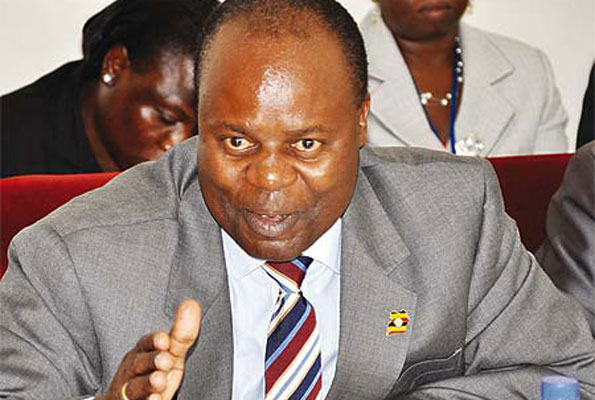
Former Deputy Governor, Dr. Louis Kasekende.

Bank of Uganda Deputy Governor Louis Kasekende has come under an avalanche of criticism after he attempted to block a forensic audit by the Auditor General into the central bank’s role in the mismanagement of Crane Bank.

Kasekende protested to the Attorney General in an April 19, 2018 letter, pleading that an inquiry into the controversial circumstances that led to the collapse of Crane Bank would offend the law of sub-judice because there are related cases in the High Court.

Director Legal Services Christopher Gashirabake wrote back to Kasekende on May 2 advising him to ignore demands by Parliament and the Auditor General to audit Bank of Uganda’s role in the collapse of Crane Bank.

The broad forensic audit is supposed to cover the role played by Justine Bagyenda, the former executive director for commercial banks supervision at Bank of Uganda, in the closure of Crane Bank.

Kasekende was relying on a ruling by Deputy Speaker Jacob Oulanyah to the effect that Parliament would not debate a motion by the Budadiri East MP Nandala Mafabi demanding for the setting up of a select committee to investigate the operations of Bank of Uganda.

It has however, since emerged that the Deputy Speaker relied on wrong information as the Committee on Commissions, Statutory Authorities and State Enterprises (Cosase) was not conducting an inquiry into BoU

MPs have warned that Kasekende is pulling all the stops in a futile bid to shield a “mafia network” at Bank of Uganda and warned the Deputy Governor to back off and allow the Auditor General to proceed and carry out a forensic audit into BoU.


Stories Continues after ad

PAP considers US $26m budget for 2018/19

Prof. Ogenga Latigo

The Pan African Parliament (PAP) has considered a proposed US $26 million budget to run the legislature’s activities and programs for 2018/2019.

presented by the chairperson of the Committee on Monetary and Financial Affairs, Michael John Temple (Swaziland), the proposed budget indicate that there is 35 per cent increase compared to the previous year’s budget of U S$19 million.

According to Mr. Temple, the increase is due to the addition of extra Programme activities and the inclusion of rental of the PAP official residence in the 2009 budget.

He noted the other costs that spiked the budget were salary inflationary adjustments, increase in educational allowance, travels, communication and ICT maintenance among others

The budget focuses on enhanced legislative capacity, increased oversight of the PAP, representation of the African people and building institutional capacity of the legislature, will be forwarded to the African Union Commission budget for consideration.

While demonstrating support for the budget, Prof. Geoffrey Lungwangwa (Zambia) noted that the PAP has operational difficulties, which even affected elections that were recently held for the leadership of the PAP.

“It took us long to conclude our voting system. In my Parliament, voting takes only two minutes because we do electronic voting. You don’t have to use a register,” Prof. Lungwangwa said.

With regard to the overall management of the budget, Hon. Thandi Modise (South Africa) suggested removing the burden of accounting for the budget to the PAP Bureau instead of leaving it entirely to technical staff.

She therefore, recommended revising the rules of procedure so as to highlight the role of the President in the PAP budget since he is ultimately accountable to PAP in the management of the funds.

Prof. Morris Ogenga Latigo (Uganda) attributed the bloated budget to the reluctance by the South African government to implement fully the host agreement. He said this was contributing to leakages of the PAP resources towards paying for the residence of the President.


Stories Continues after ad

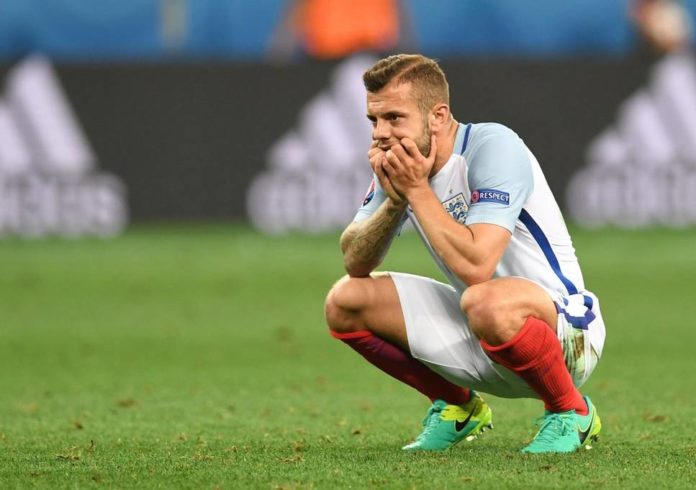
Arsenal’s Wilshere misses out as England announce World Cup squad

Jack Wilshere misses out

England National Football team manager Gareth Southgate has today announced the final 23-man squad for the FIFA World Cup this summer in Russia.

Only five players in the squad were part of the previous team in the 2014 world cup; Gary Cahill, Phil Jones, Jordan Henderson, Danny Welbeck and Raheem Sterling.

There’s no room for Arsenal’s Jack Wilshere in midfield, Everton’s Theo Walcott and Adam Lallana of Liverpool while Oxlade Chamberlain misses out due to a long term injury.

Former Three Lions keeper and Captain Joe Hart missed the cut due to poor form and Harry Kane is set to lead the team out during the tournament.

Surprise call ups for Alexander-Arnold who has been rewarded for his superb form in Liverpool’s run to the Champions League final and Ruben Loftus-Cheek after an impressive season on loan at Crystal Palace.

Tom Heaton, Jake Livermore, James Tarkowski and Lewis Cook are on those on standby incase the called up players pick up an injury.

England’s official World Cup 2018 squad:

Goalkeepers: Jack Butland, Jordan Pickford, Nick Pope

Defenders: John Stones, Phil Jones, Kyle Walker, Garry Cahill, Danny Rose, Harry Maguire, Alexander-Arnold, Ashley Young, Kieran Trippier.

Midfielders: Henderson, Eric Dier, Dele Alli, Jesse Lingard, Raheem Sterling, Fabian Delph, Ruben Loftus-Cheek.

Strikers: Harry Kane, Jamie Vardy, Marcus Rashford, Danny Welbeck.


Stories Continues after ad

Gen. Muhwezi’s fight against his eviction hits a snag

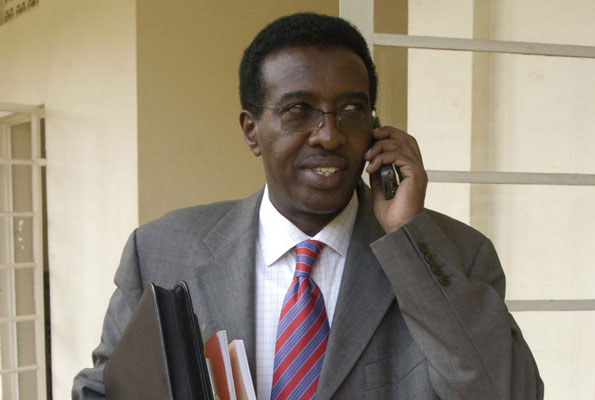
Gen. Jim Muhwezi making a phone call.

The hearing ex Minister Maj. Gen. Jim Muhwezii is challenging his eviction from land in Makindye division has failed to kick off.

This is after the trial Judge Paul Gadenya Wolimbwa failed to turn up at court.

The case was pushed to May 28 by High Court Registrar.

Following an order from Makindye Magistrates Court, Muhwezi ran to the High Court last week, seeking an order to quash Makindye Magistrate’s court’s order which gave one James Mubiru the power to own one acre of land in Salaama Kyamula in Makindye Division.

Maj. Gen. Muhwezi insists he is the rightful owner of the land in question having purchased it from a one William Hatimana in 1995.

He adds that his eviction from the said land is pre-mature because there are pending court cases and staying orders which were overlooked.

On his part, Mubiru says he filled his case before the commission of inquiry into land matters in June 2017 but since then his compliant has never been handled.

The fight for the land has been ongoing for the past 26 years.

Mubiru says that the contested land was owned by his father, George Ssekajjugo who died in 1987 when he was three years old, leaving him and his sister Nabunjo Nammande under the care of their paternal uncle Nathan Ssewambwa.

The two left their home to live with their uncle who stayed in the neighborhood but kept using their late father’s land for farming until in 1992 when strangers claiming to have bought the land showed up at his uncle’s home to introduce themselves as the new landlords.

Since then, the family has been fighting to recover their land but all in vain till last week.


Stories Continues after ad

Everton sacks Sam Allardyce to pursue former Watford manager Marco Silva

Sam Allardyce

The head coach of Everton Football Club Sam Allardyce has today been sacked after spending six months of his appointment to pursue ‘a longer-term plan.

In a statement released earlier in the day, “Everton Football club confirmed that Sam Allardyce has left his role as manager.

The club’s newly appointed chief executive Denise Barrett-Baxendale said, “On behalf of the Chairman, Board of Directors and Mr. Moshiri, I’d like to thank Sam for the job he has done at Everton over the last seven months.

“Sam was brought in at a challenging time last season to provide us with some stability and we are grateful to him for doing that.

“However, we have made the decision that, as part of our longer-term plan, we will be appointing a new manager this summer and will be commencing this process immediately. Again, we’d like to place on record our sincere thanks to Sam for his work with us over the last few months and wish him well for the future.”

Everton will now pursue former Watford manager Marco Silva, although there are complications as his ex-club will seek compensation despite sacking him in January.

Allardyce leaves with neutrals offering more sympathy than the Everton fans who never wanted him and grew more resistent to his presence after each uninspiring performance.

He was employed at a time when the club was genuinely threatened with a relegation fight in the aftermath of a dismal summer of recruitment in 2017, and Ronald Koeman’s poor start to the season.

David Unsworth was given the chance as a caretaker, but could not acquire the necessary points during a tough run of fixtures to convince he should be retained as head coach.

Ironically, Allardyce arrived just as Unsworth had overseen the most encouraging performance of the season – a 4-0 win over West Ham – and the controversy of who deserved credit for that victory summed up the divisiveness of reign. The new manager was in the stands, but Unsworthy was still in charge.

Evertonians tolerated his arrival but did not welcome his receiving an extra year on his contract, demanding the club pursue a manager perceived as more ambitious in style at the end of this campaign.

Although the club swiftly eased into mid-table, they continued to play in a manner resembling a side scrambling for points to avoid the drop.

Whether that was due to the manager or poor recruitment is a matter for football historians to debate, but with little evidence the ex-Bolton, Newcastle and Crystal Palace manager could evolve his tactics to satisfy the fans. The situation could not continue in the start of next season. The fans demanded change and Allardyce knew he would never win them over.

There will be relief from all sides a dissatisfying period is finally over and the club, fans and Allardyce himself can move on.

Since Moshiri invested in Everton, the club has now sacked three managers – Roberto Martinez, Koeman and now Allardyce.


Stories Continues after ad

Prioritize private sector foundation- Gideon Badagawa argues government

RIP Gideon Badagawa

Chief Executive Officer (CEO) for Private Sector Foundation Gideon Badagawa, has implored parliament to step up efforts in its oversight role following government’s failure at both planning and budgeting stages.

Appearing before parliamentary committee on national economy Badagawa said proposing for prioritization in Ugandan economy, government spends a lot of money in boosting agricultural yet there are areas which require mechanization for thriving of agricultural sector.

“The cohesion between farmers in Uganda is not very developmental and we intend to make it better by emphasizing specialization, if granted opportunity, we will contribute greatly to the development of the country in tax collection and tax creation,” he said at parliament.

He proposed that the linkages between industries and primary producers be strengthened, adding that this provides and widens market through backward and forward linkages.

Mr. further called for channeling of Youth Funds through private sector for proper monitoring after vigorous training.

However, committee chairperson Syda Bbumba rejected Badagawa’s proposals saying productivity of the private sector is lacking and almost stands no chance in the changing dynamic market, “you should  focus on quality and productivity” she added.

“Multinational corporations are taking advantage of the loop holes in the legal systems in Uganda, the onus is on parliament to protect the private sector from outside competition because the private sector lacks capacity to borrow money from banks,” Mr. Badagawa said.

The committee argued that though there are challenges in mobilization of finances, there is a big problem of partnership where most private entities are not welcoming to partnerships with each other.

The committee observed that the private sector imports supplies instead of taking the due diligence to make these on their own.

Committee noted that many enterprises have come to parliament seeking funds but no accountability is usually provided adding that private sector is known for facilitating and encouraging corruption just to escape from taxes.


Stories Continues after ad

Increasing tax flow Key to financing Uganda’s growth, development

Many businesses in Uganda operate informally, making it difficult for the government to track and assess them for taxes.

Improving tax revenue is essential to sustaining economic growth in Uganda, according to a recent economic analysis for the country.

The Uganda Economic Update, Financing Growth and Development: Options for Raising More Domestic Revenues, says that while economic growth has rebounded from 4.5 per cent to 5.5 per cent this financial year, tax collections currently account for 14 per cent of the country’s gross domestic product (GDP), lower than regional peers, and short of the government’s target of 16 per cent. This hinders the country’s capacity to finance investments in infrastructure and deliver essential services.

“Tax is an important source of domestic revenue for a government, and central to spurring growth and opportunity for Uganda to attain its development goals,” said Rachel Ssebudde, World Bank senior economist and lead author of the economic update. “Without it, citizens would not be able to have good roads, or access to quality and affordable health care and education.”

Taxes are one of three main sources of government revenue. Borrowing from the local financial markets, and overseas development assistance, while important sources of development finance are declining steadily and are often not sufficient, the report notes. Loans from the domestic market tend to have higher interests than foreign borrowing, and often have shorter repayment periods, which sometimes reduce government spending on key priorities.

Uganda’s modern tax system is regulated by the Uganda Revenue Authority (URA), which oversees tax administration, offers 24-hour online tax services through eTax, and undertakes regular tax education for clients. This one-stop center has brought together all the local tax authorities under one roof, easing tax payments. At the same time, the Tax Appeals Tribunal has been instrumental in resolving tax disputes. URA’s customs department has automated cargo-tracking and extended tax handling services to the Kenyan seaport of Mombasa, which handles the bulk of Uganda’s exports and imports.

Despite these innovations, the report says a small percentage of Uganda’s citizens pay taxes. In addition, about 80 per cent of businesses are informal and transact in cash, making it difficult to track and assess them for tax, according to the update.

Naluggya Hanifa, a hairdresser in Kawempe, does not pay taxes. She is self-employed and attends to clients in their homes. Naluggya has dreams of starting her own hairdressing business and is willing to pay taxes as a business owner – if her business is profitable.

“If I am making money, I have no problem paying taxes,” Hanifa said. In her view, everyone should pay taxes, regardless of size of business, because the government needs taxes to deliver on services.

On the other hand, Adong Winnie, a tailor in Gulu, Northern Uganda, said her tax bill is too high. She pays a local service tax of Shs70, 000 (US $20) and Shs135, 000 (US $40) annually for a trading license.

“I am in this tailoring business only for survival, and I feel cheated paying all that money,” she said. “I will just close my shop.”

Within the formal sector, many businesses evade or avoid paying taxes by under-declaring their income, while many foreign firms and organizations enjoy generous tax exemptions, according to the report. Total Value Added Tax (VAT) collections, a tax imposed on the consumption of domestic and imported goods and services are currently at 4 per cent of GDP, the report says, but without VAT exemptions, the government could collect up to 6.5 per cent of GDP. Personal income tax currently contributes 10 per cent of the country’s total revenue, far below the 40 per cent regional average.

According to the economic update, Uganda could rise up to 23 per cent of GDP annually if it undertakes tax reforms to reduce leakages, expands the tax base by tapping into hard-to-reach economic activities, and improve efficiency of its revenue administration systems.

“If everyone played their part, total collections would rise dramatically and the country would be able to meet a larger part of its spending obligations, currently met through borrowing,” added Ssebudde.

The Economic Update also recommends:

The use of credit and debit cards, improved regulation of businesses, and simpler and publicly accessible tax procedures to potentially bring taxable entities and hidden transactions into easy reach.

Improving efficiency of existing instruments and applying them correctly could rationalize tax exemptions to ensure that the criteria is defined and properly enforced.

Reducing tax expenditures to minimize revenue foregone arising from tax exemptions

Improving efficiency and effectiveness of revenue administrations such as the Uganda Revenue Authority, local governments (for own source revenue), state owned enterprises (for investment income) and ministries, departments and agencies (non-tax revenue).

Enhancing public awareness, transparency, and civil society engagement to increase voluntary tax compliance.

“A strong social contract which encourages tax compliance exists when citizens relate tax payment to actual services delivered by their central or local governments,” said Moses Misach Kajubi, World Bank senior public sector specialist and co-author of the update. “Greater accountability and transparency can also enhance greater confidence by tax payers that their taxes are and will be spent well.”


Stories Continues after ad

UN health agency launches new diagnostic tool to ensure effective treatment

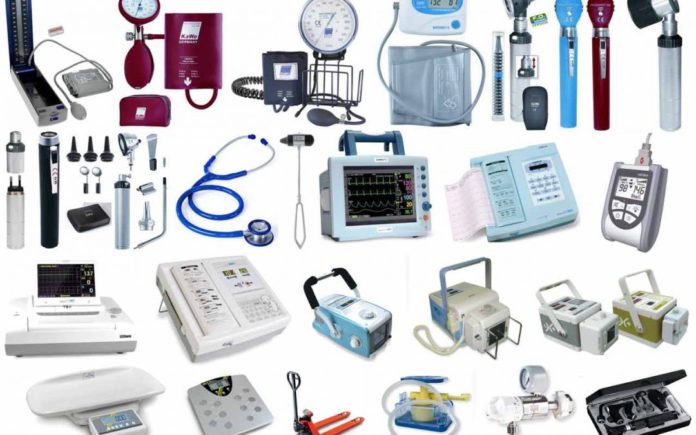
Medical-Equipment

Although correctly identifying disease is essential for successful treatment, many have no way of accessing an accurate diagnosis, the United Nation health agency said on Tuesday, launching new tool to close this critical gap.

“An accurate diagnosis is the first step to getting effective treatment,” said Tedros Adhanom Ghebreyesus, Director-General, of the World Health Organization (WHO).

“No one should suffer or die because of a lack of diagnostic services, or because the right tests were not available,” he added.

WHO’s first “Essential Diagnostics List” – a catalogue of the tests needed to diagnose the most common conditions as well as numerous diseases deemed to be a “global priority” – concentrates on in vitro tests, such as blood samples or urine specimens.

The list contains more than 100 products involving 58 tests for detecting and diagnosing a wide range of common conditions; and providing an essential package for screening and managing patient care.

Other tests are designed to detect, diagnose and monitor “priority” diseases, such as HIV, tuberculosis, malaria, hepatitis B and C, human papillomavirus and syphilis.

Some tests are particularly suitable for primary health care facilities, where laboratory services are often poorly resourced or even non-existent, said WHO. For example, tests that can rapidly diagnose a child for acute malaria, or glucometers to test diabetes do not require an electrical charging or trained personnel.

Other tests are more sophisticated and suitable mainly for larger medical facilities.

“Our aim is to provide a tool that can be useful to all countries, to test and treat better, but also to use health funds more efficiently by concentrating on the truly essential tests,” said Mariângela Simão, WHO Assistant Director-General for Access to Medicines, Vaccines and Pharmaceuticals.

“Our other goal is to signal to countries and developers that the tests in the list must be of good quality; safe and affordable.”

For each test category, the list specifies the type of test, intended use, format and – if appropriate – for primary care or health facilities with laboratories.

The list also provides links to WHO Guidelines or publications and, when available, to prequalified products, as well as a reference point for countries to update or develop their own list of essential diagnostics.

To benefit patients, Governments must ensure appropriate and quality-assured supplies, trained health care workers and safe use. WHO will support countries as they adapt the list for local context?

WHO will update the list on a regular basis and add categories to the next edition. It will expand over the next few years as it incorporates other important health challenges; including antimicrobial resistance, emerging pathogens, neglected tropical diseases and additional non-communicable diseases.


Stories Continues after ad

Somalia assures AU and UN of its commitment to take over security responsibilities from AMISOM

Prof. Sam Turyamuhika

Somalia has assured a joint team from the African Union and the United Nations reviewing the African Union Mission in Somalia (AMISOM) of its commitment to assume security responsibilities as stipulated in the transition plan.

Speaking at a high-level meeting attended by AU-UN joint review team, international partners, AMISOM Troop and Police Contributing Countries, held in Mogadishu recently, the National Security Advisor of the Federal Government of Somalia, Abdisaid Musse Ali, asked the team not to judge the country by its past but what it is today and what it will be in future.

Presenting the Federal Government of Somalia’s transition plan, Mr. Ali said there was political will from the highest office in the land and the government was ready to handle the country’s security.

“The transition plan represents a significant change in the planning and delivery of security in Somalia. It’s not business as usual. For many years, Somalia has been grateful for the strong support of our international partners which has allowed the country to make progress,” he added.

The Advisor noted that the transition plan is aimed at securing Somalia, through the implementation of the security architecture developed and adopted by the government last year.

The Special Representative of the Chairperson of the African Union Commission (SRCC) for Somalia and Head of AMISOM, Ambassador Francisco Madeira, said the peacekeeping force had always had an exit strategy.

The SRCC said AMISOM fully identified itself with the transition plan developed by the Federal Government of Somalia, with the help of development partners.

“All the things that are showing up now, in this transition plan, were already at the centre of AMISOM’s action plan,” the SRCC said adding; “We need to build a state and building a state meant the Somalis needed to take responsibility not only of the military but also of the administration of the country.”

He added that the peacekeeping force had envisaged the transition plan in driving out Al-Shabaab in most places and rebuilding institutions that are now ready to be handed over to the Somali government.

Ambassador Madeira said he had seen profound determination from the Federal Government of Somalia to take over the responsibilities currently being undertaken by AMISOM in the country.

In his remarks, the Head of the United Nations Delegation to the Joint AU-UN Review of AMISOM, Walid Musa Abdelkarim, acknowledged that there had been significant political progress since the joint mission was in Somalia a year ago.

“We now are convinced that the geopolitical position or status of Somalia is rising, increasing every day because of global events and therefore we will have this time a more serious tone in what we do,” Dr. Abdelkarim noted.

Speaking at the meeting, the Head of the African Union Delegation to the Joint AU-UN Review of AMISOM, Maj. Gen. Francis Okello, said the continental body wants the transition plan presented by the Somali government to succeed.

“We want this plan to succeed. And we’re sure that it will succeed because of the level of commitment,” said Maj. Gen. Okello.

His remarks were echoed by the Ugandan Ambassador to Somalia, Prof. Sam Turyamuhika, who pledged the support of the Troop Contributing Countries in ensuring the plan succeeds.

“We are here to help you (succeed). We have been doing it and those of you who have worked with us know that this is the spirit in which we came here,” Uganda’s ambassador added.

The Head of the United Nations Support Office in Somalia (UNSOS), Lisa Filipetto, said this year’s joint AU-UN review is important because the transition plan offers a practical shift from the way things have been done.

Ms. Filipetto said the review also comes at a time when important activities, expected to shape the hand over by AMISOM, are scheduled to take place.

“There are a number of significant dates going forward. There’s this joint review. Already being mentioned is the Somali Partnership Forum in late June. So, this review will feed into Security Council considerations,” the Head of UNSOS observed.

Mr. Ali paid tribute to AMISOM soldiers, police and civilians for their commitment to Somalia, noting their presence remains critical as Somalia moves into the transition stage.

Stories Continues after ad