Stanbic Bank
Stanbic Bank
24.6 C
Kampala
Stanbic Bank
Stanbic Bank
Home Blog Page 1569

Nimisha Madhvani still Uganda’s ambassador to UAE-Foreign Affairs Ministry

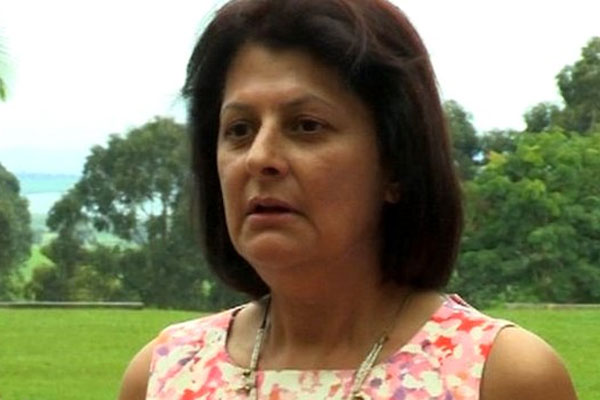
Amb: Nimisha Madhvani

The Ministry of Foreign Affairs has maintained that Nimisha Madhvani still remains Uganda’s Ambassador to the United Arab Emirates (UAE), despite recent media reports that she had been relieved of her duties for allegedly making disparaging remarks in the press about that country.

The Ministry in the May 15, 2018 press release says Ms Madhvani was recalled for consultations as opposed to rumours that she had been withdrawn for good.

“Most of the media reports are based on a limited understanding of the contents of a leaked letter addressed to Amb. Madhvani by the Acting Permanent Secretary, Amb. Isaac Sebulime. Amb. Madhvani was recalled for consultations and not withdrawn from the UAE as a duty station,” said Margaret Kafeero, the Acting Public Relations Officer in the ministry.

Ms Kafeero says recalls for consultations are frequent and routine within the Foreign Service as they give the ministry and ambassadors or Foreign Service Officers ample time to carry out in-depth discussions as well as review obtaining situations and receive instructions on the bilateral relations. She says written correspondence cannot be used to do that.

She says there is no evidence so far to that effect and that many comments made by other individuals are being wrongly attributed to her in various media articles.

“Uganda values her relations with the UAE. These relations remain strong and will keep growing,” concludes the press release.


Stories Continues after ad

Uganda, Sudan conclude 3rd joint political consultation committee meeting in Khartoum

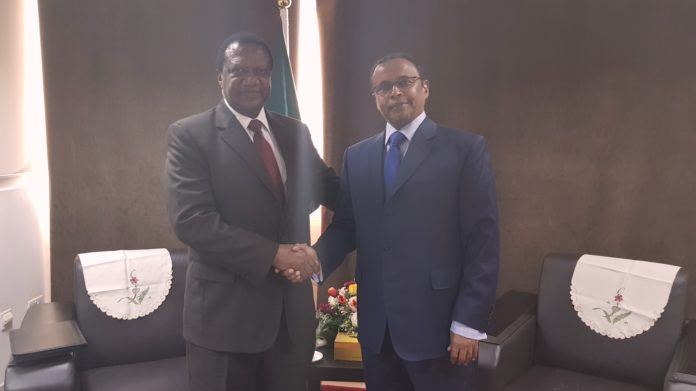
PS Mugoya and his Sudanese counterpart

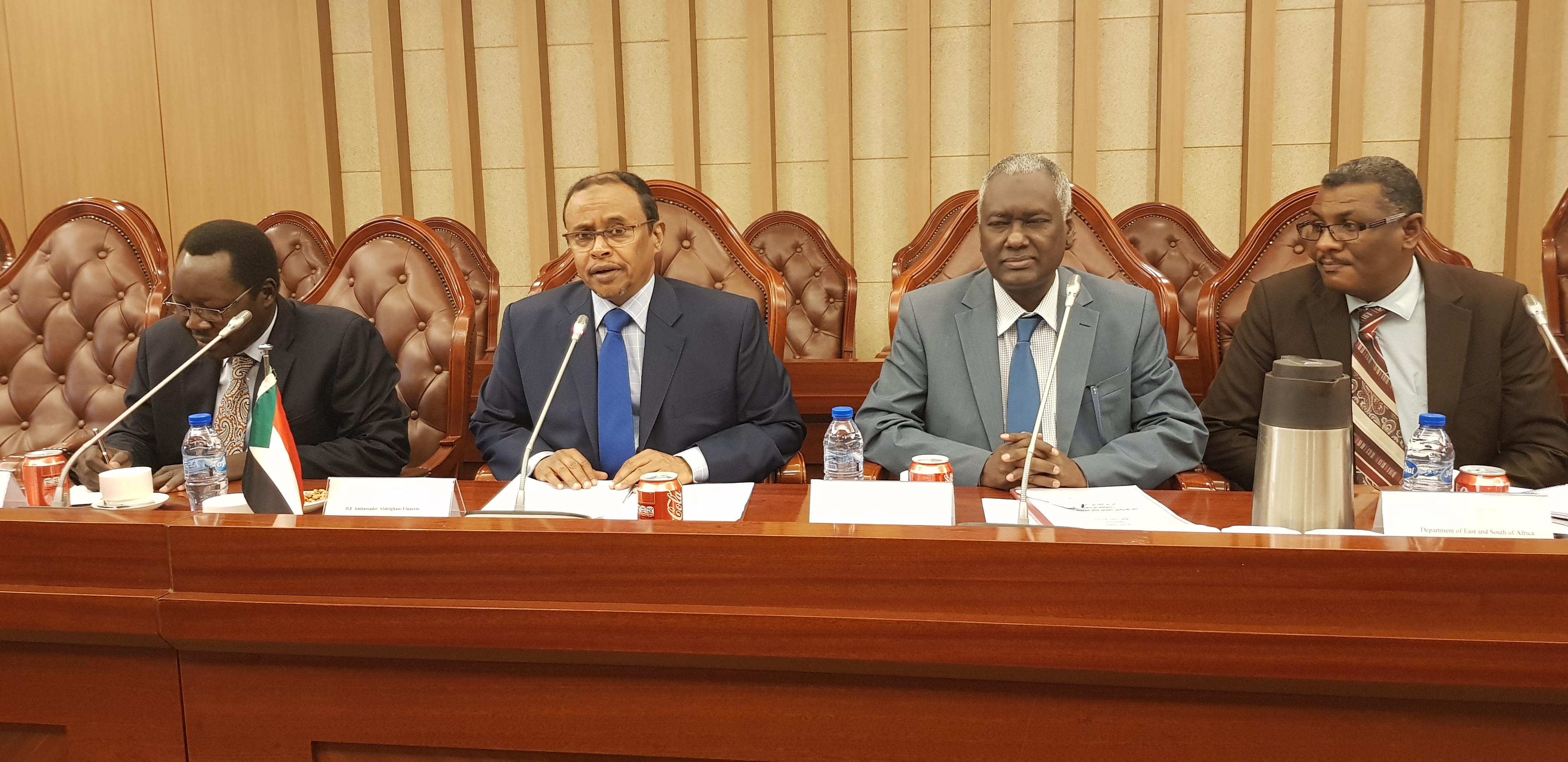
The third joint political consultations committee (JPCC) meeting between the Uganda and Sudan was held in Khartoum Sudan on May 13 2018.

The Uganda delegation was led by Ambassador Patrick Mugoya and included Ambassador James Kinobe, Uganda’s Ambassador to Khartoum, and other senior officials from the Ministry of Foreign Affairs and Uganda Embassy in Khartoum.

The meeting, which was co -chaired by Ambassador Abd Elghani Elnaim Awad, the Undersecretary of the Ministry of Foreign Affairs of Sudan and Ambassador Patrick Mugoya of Uganda, followed up on issues discussed in the 2nd Joint Political consultative committee meeting which was held on October 5-6 2017, and also reviewed the final communiqué issued at the conclusion of the State Visit to Uganda by President Omar al Bashir in November 2017.

The two Permanent Secretaries emphasized the importance of the JPCC mechanism which enabled them to exchange views on matters of mutual interest between the two countries.

They exchanged views on a host of regional and international issues of mutual interest, including IGAD, the Nile Basin, Refugees issues, illegal immigration and human trafficking , terrorism , International Criminal Court, the African Union,  the  situation in South Sudan, Libya, Somalia and Central African Republic.

The meeting recommended that the 6th joint ministerial commission be held in Kampala in August 2018 and Memorandum of Understanding (MOUS) on bilateral cooperation in health, water and environment related issues and energy, tourism, industry, science and technology, youth and sports will be concluded.

In an effort to improve trade and Investment between the two countries, the meeting concurred that the agreement between Sudanese Business Chamber and Uganda National Chamber of Commerce be activated   during the next joint ministerial committee meeting.

The meeting further agreed that the Joint Sudan -Uganda Investment Conference with the participation of the Private Sector from Arab Countries be held in Khartoum as soon as possible.

The next meeting of the Joint Political Consultations Committee will be held in Kampala within six months.​


Stories Continues after ad

Australian firm launches rights issue to raise Shs11.8b for Busumbu and Bukusu mines

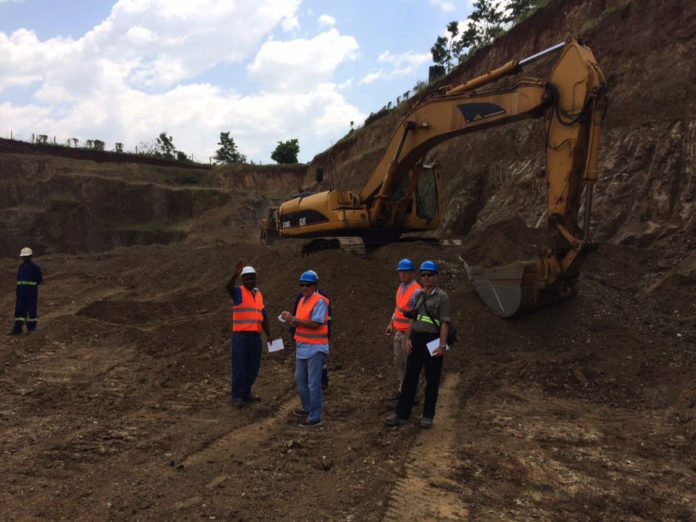
Workers of Black Mountain Resources.

Australian company, Black Mountain Resources Limited is to spend much of the month of May trying to convince its shareholders to participate in a US $3.2 million (about Shs11.8 billion) rights issue, the substantial amount of which is planned to be invested in the Busumbu phosphate project in eastern Uganda, sources say.

The launch of the rights issue comes less than three months after Black Mountain Resources agreed to relinquish its license over the Namekara vermiculite mine for a debt relief.

According to some of the terms of the rights issue, US $1.7 million (about Shs6.3 billion) of the proceeds will be booked as exploration funding for the Busumbu project and other existing copper and rare earth targets identified in the Bukusu complex.

For the Busumbu project, Black Mountain Resources has planned to spend $500,000 (about Shs1.9 billion) for drilling; $200,000 (about Shs740 million) for preliminary mine planning and optimization studies; US $150,000 (Shs555 million) for broad sampling and metallurgical test work; and US$150,000 for preliminary processing plant optimization studies.

In a statement, Black Mountain Resources said: “Previous exploration on the Busumbu Phosphate Project Identified up to 3 kilometers of strike extent of phosphate mineralization likely between Busumbu and the Namekara Vermiculite Mine. The results also indicated a substantial phosphate mineralization footprint for future exploration.”

For the Bukusu project, the Australian mining company intends to spend US$ 150,000 for ground survey geophysics and sampling and US $250,000 (about Shs925 million) for drilling in some areas.

A recent baseline study estimated that there are about 50m tones of phosphate at Bukusu. Black Mountain says it is preparing an exploration programme for the Bukusu carbonatite complex, which hosts the Busumbu phosphate mine.

The company says it is engaged in “advanced negotiations with a strategic partner to progress the Busumbu phosphate project.”


Stories Continues after ad

Police plans to push for a constitutional amendment to remove the 48 hour confinement- IGP Okoth Ochola

Maj. Gen. Sabiiti-Muzeei on the left

Kampala: The inspector general of police (IGP) Martin Okoth Ochola has said police plans to push for a constitutional amendment to remove the 48 hour confinement that compels police to produce suspects in court within a period of the said hours.

Appearing before Committee on Human to respond to the 19th   annual report from the Human Rights Commission that ranked police as the top perpetuates of human rights, IGP said that period is   not enough to gather information that can lead to conviction of suspects.

“Due to limited work force and budgetary constraints When released on bond or given a court bail, the suspect can easily interfere with police investigations irrespective of the nature of crime committed” Ochola noted.

Parliamentary Committee on Human Rights however, cautioned police to address escalating number of kidnaps and massive killing of people in the country and subsequent torture of suspects in police cells.

Legislators implored police to go back on drawing board, collaborate with communication companies to man down this catastrophic vice that has led to loss of lives.

“Police electronic counter crime measure like tapping phone is an issue that is not well known, Police has the duty to inform the public and tracking phone numbers used in crime. Police is not diligently doing their work if culprits implicated in the killing of former Assistant Inspector of Police (AIGP) Andrew Felix Kaweesi are not yet fully persecuted among other suspects,” Safia Nalule said.

MPs argued that there is excessive force and tear gas against students, business persons, “it is not acceptable and the persons responsible have to be prosecuted, you can’t use a gun to fight a stone” Kaberamaido MP Veronica Isala added.

The chairperson of the committee Safia Nalule revealed that Human Rights committee is thankful over the closure of Nalufenya and hopes there is no any other torture house in the country.

“The Uganda Police Force is in the process of prosecuting police officers who take part in torture, police obey the law but those who do not are prosecuted in police disciplinary committees. Officers are trained and retrained in how to understand and observe the law,”

However, Busiro South MPs Peter Ssematimba said Uganda police force should put in more effort to facelift police’s image towards the general public adding that police is known for torture among other cruel acts.

MPs sought clarity on the status of Kirumira saying police should let him to retire peacefully if he is fed-up of serving nation.


Stories Continues after ad

Foreign lenders give Shs177.3b to SCOUL

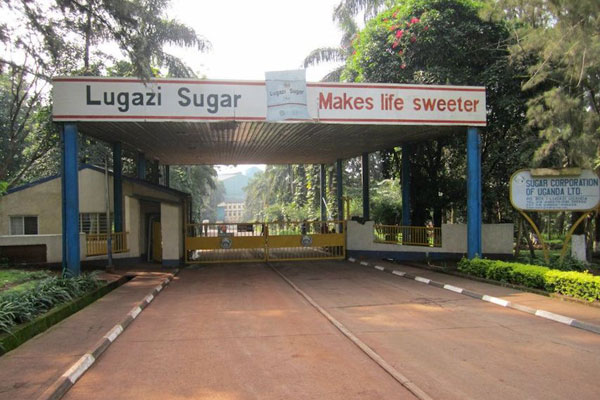
The main entrance to Sugar Corporation of Uganda Limited in Lugazi Municipality.

Sugar Corporation of Uganda Limited (SCOUL), the third largest sugar plant in Uganda, recently received €40 million (about Shs177.3 billion) from France’s Proparco to finance a new 26MW co-generation power plant.

According to the financial arrangement, Proparco granted a €20m (about Shs88.7 billion) loan band catalyzed funds from the Dutch Development bank, FMO, which contributed a similar amount to the project.

The new power plant, FMO said, “will allow the company to produce green electricity at a competitive price to meet its own needs and to be sold to the national grid.”

The generation of the electricity will be done by burning bagasse, a residue of sugarcane. This is the second time Proparco has made an investment in SCOUL after an initial US $23 million (about Shs85.10 billion) loan it granted the sugar firm in 2012.

That Loan “allowed the sugar company to increase its production capacity and expand its technical assistance to Smallholder farmers.”

Electricity generation from the use of bagasse has become popular, attracting a number of factories into the industry, which has in turn shrunk the margins of the older firms from the sale of sugar.


Stories Continues after ad

WB official urges gov’t to improve capacity of URA to collect more taxes

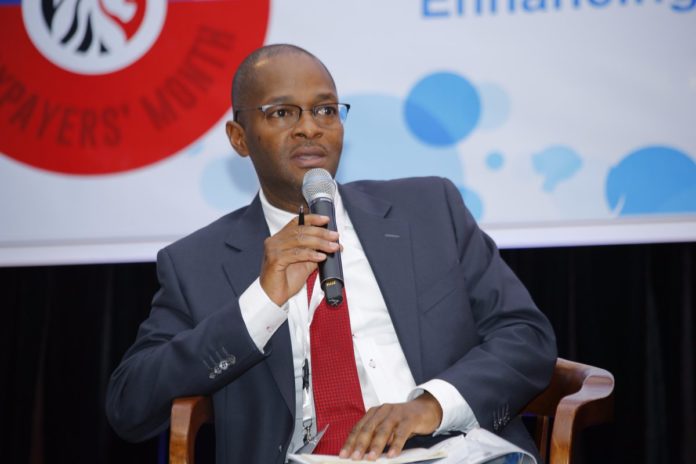
Mosese Kajubi

Government must improve the capacity of tax collection agencies like the Uganda Revenue Authority (URA) if it wants to collect more tax revenue, a World Bank official has advised.

Let’s improve ICT, share information more and improve the capacity of revenue agencies like URA but also; when you collect taxes from citizens, then they expect better services, Moses Kajubi, Senior Public Sector Specialist at the World Bank Uganda Country Office said in Kampala Tuesday.

Kajubi was speaking during the launch of the 11th Uganda Economic Update at the Uganda Manufacturers Association (UMA) Conference Hall in Lugogo.

“The Economic update urges government to introduce new measures to collect more taxes sustainably in order to deliver better services to the people. And participants at the event were discussing how that could be achieved”.

He urged government to regularize Uganda’s big informal sector to reap more tax revenue. He said the informal sector players use cash to transact and this makes it hard to be taxed.

The World Bank is worried that Uganda collects only 14 per cent of GDP in tax which is 40 per cent less than its tax potential.

“How can the country avoid the debt trap and raise more revenue to finance its development? Rachel K Ssebudde, Senior Economist World Bank wondered.

Speaking at the event, the Permanent Secretary in the Ministry of Finance, Keith Muhakanizi, said the country needs to collect more tax revenue to fund its development projects.

Muhakanizi said all Ugandans; including political leaders must pay their fair share of taxes. “We leaders must be the ones to pay taxes first than the rest of Ugandans, we leaders must stop from exempting ourselves from paying taxes if we are to encourage others to pay their taxes,” he said, adding that some politicians are using the legal framework to evade paying taxes.

Muhakanizi said that government has proposed to tax copies of the holly books-Bible and Koran as a measure to increase the tax base much as he said there is resistance from some politicians. He said taxing the holy books is not a bad idea.

The Executive Director of Civil Society Budget Advocacy Group (CSBAG) Julius Mukunda said that to increase tax revenue base, Uganda needs to decrease the amount of tax exemptions, an argument which was also agreed to by World Bank’s Kajubi.

Mukunda said government should spend more money in service delivery to encourage citizens pay taxes. “Our willingness to pay taxes moves in line with how much government is spending on service delivery.  If I know that my taxes are doing something that I benefit from, and then I would pay without question,” he said

On tax administration in the country, Kajubi said the issues of transparency and accountability were important in the administration of tax exemptions, saying some taxpayers have taken advantage of that provision to dodge paying taxes to government leading to the low tax revenue collections.

More, Kajubi has advised that government taxes big farmers in the Agriculture sector, which contributes 25 per cent of GDP and grew by 6.3 per cent in 2017, up from 1.9 per cent in the previous year.  He also said government must also innovate and get more tax revenue in the services and industry sectors. Growth in services, was 47 per cent of GDP, doubled to 8.8 per cent in 2017 and industry which accounts for 20 per cent of GDP, registered 6.4 per cent in 2017.

The Chairman of African Fine Coffees Association, Ishak Lugenge, while addressing participants at the event said value addition to more products could reap more tax revenue for the government. “Value addition is a must if we are to go forward, we don’t have to do it at 100 per cent but at least if we did value addition to 40 per cent of our products, that would be a good level to start at,” he said.

According to Ms. Ssebudde, Uganda is growing at a slow rate of 4.5 per cent which makes it fall behind other countries, but also behind its aspiration of 6.7 per cent and that this growth figures needed to be improved to boost tax revenue collections in the near future.

The World Bank says Uganda’s medium term growth still hinges on strong investment. Adding that from the estimated growth of 5.5 per cent in financial year 2017/18, the economy could accelerate to percent in the subsequent two years, driven by investment in infrastructure such as the oil roads, oil pipeline.


Stories Continues after ad

Supreme Court grants Jamwa bail

Jamwa

Kampala: The former Managing Director for National Social Security fund (NSSF) David Chandi Jamwa has today been granted Shs10 million cash bail by Supreme Court Judge Stella Arachi Amoko.

Pending the hearing of his petition in Supreme Court over lower court’s decision that convicted and sentenced him to 12 years in prison. He was freed on bail however, it was cancelled in January this year after appellant court judges led Kenneth Kakuru and Rubby Opio Aweri upheld ant-corruption court’s decision.

Subsequently Jamwa who had been bail for seven years was sent back to Luzira prison. Nevertheless, in prison, he didn’t relent, and through his layers, he petitioned High Court and lodged in his bail application that has been granted earlier in the afternoon.

The granting of his bail application follows yesterday’s argument between Jamwa’s layers of FK Mpanga and prosecution led by Rogers Kibobe. In his application, Jamwa revealed that he is suffering from obesity and hypertension and therefore, he needs special attention and a balanced diet which he is not receiving from prison.

In her ruling read by Court Registrar Godfrey Opefen, court directed Jamwa to surrender in his passport, a land title worth Shs 2.5 million. The five sureties who included his wife Catherine Jamwa were instructed to pay Shs500 million non-cash and remind Jamwa to appear before Court whenever he is required.

Jamwa was convicted of corruption and sentenced to 12 years in prison after Ant-corruption Judge John Bosco Katutsi found him guilty of selling National Social Security Fund (NSSF) bonds to the now defunct Crane Bank before their maturity date hence leading to a financial loss of Shs3.1 billion. He also banned him for 10 years from holding any public office.

Since his conviction, Jamwa has spent seven years out of prison and in case Supreme Court upholds lower court’s decision, Jamwa will spend few years in prison since time spent on bail is counted on his sentence of 12 years.


Stories Continues after ad

Uganda’s Kiira Motors ready to start manufacturing cars

First car Kiira motors manufactured

Kiira Motors Corporation (KMC) is a Ugandan automobile manufacturing company owned by the government of Uganda and Makerere University, launched in 2011.

But since President Museveni launched the vehicle project, it was an unfunded priority but this year government has availed the funds to enable works on the project to commence.

Robert Kafeero Ssekitooleko, the chairperson Parliamentary committee on Science and Technology has said. During a live twitter chat he confirmed the development saying the project is now ready to start after government approved funding of over Shs 140 billion to advance its development through the phases.

The plant sits on 100 acres of land situated at the Jinja Industrial and Business Park and expected to have a production capacity of over 5,000 cars per year.

“There’s now enough preparation which Uganda is doing to take this project forward. At commercial stage, the assembly plant will be fitted with material handling and plant logistics, equipment and tools among others.” He said.

Kafeero – chairperson Parliamentary committee on Science and Technology.

He further stated that the setup of a 33kv electric line to the project base for motor vehicle assembly is ongoing, to facilitate progressive work and the works on the extension of electricity and water to the Kiira Motor Vehicle plant will be complete by end of July 2018.

KMC developed Africa’s first electric vehicle in November 2011, Africa’s first hybrid vehicle in 2014 and Africa’s first solar electric bus (Kayoola Solar Bus) in February 2016.

On the market of the vehicles to be produced, Kafeero says Kiira motor vehicles will be competitively priced given local content addition and the reduction in production costs due to local chain value addition will lower price of their products, making them competitive on the market.

He made a reference to the batteries that late Mulwana began manufacturing, citing that government support to him with a tax holiday thus subsidizing the cost of his product, and attracting market.

Kafeero challenged Ugandans to end the mentality of not purchasing Ugandan made products. This initiative would develop Uganda’s production and manufacturing sector.

The need to reverse the trend from many vehicle imports to an increase in the purchase of cars manufactured in Uganda. We shall have to make sure that Kiira Motors competes favourably with imported cars.

Kiira Motor EV is the first electric vehicle in Africa so its mass production will attract market. Ethiopia is already assembling and we should compete with them.

The Nissan assembly project in Kenya shouldn’t be a threat to the Kiira Motor Vehicle assembly plant, but rather a challenge to compete with, so as to put the brand on the local, regional and international market.

Taxation of imported vehicles is usually high, but with cars manufactured here at home, they will be much more affordable for Ugandans because they will not have to incur a lot of taxes when purchasing them.” He said

Meanwhile, Kiira Motors is expected to create over 900 jobs at the initial stage, 2,000 direct jobs when fully operational and 12,000 indirect jobs helping reduce on the unemployment rate.

The commercialization of the Kiira Electric Vehicle Project is expected to catalyse investment by small and medium enterprises in the manufacture of vehicle parts, components and autonomy systems (brake pads, seats, bolts, nuts, bumpers vehicle electronics and navigation system).

On the Bio-safety Bill:

Kafeero said, “I pray that Ugandans accept that we get the Bio-safety and Bio-technology (GMO) Bill. We can’t leave our borders being porous for anyone to bring in things that affect our society.”

“The Biosafety bill hasn’t gotten much attention because Parliament has prioritized the budget process. But hopefully next week, we shall be able to have the topic on the order paper, discuss it and vote on whether to pass it or not.” He concluded.


Stories Continues after ad

Umeme boosts industrialization in Tororo district

The substation at National Cement factory that shall be fed by a dedicated Umeme distribution line from Nyakesi substation

Tororo district located in eastern Uganda on the border with Kenya has of recent witnessed an increase in the number of industries setting their bases in the district that boosts of minerals such as phosphates, lime stone among others.

The increase in the growth of the industries in the area is a result of Umeme’s investment in the power distribution infrastructure, attracting new factories like the National Cement, Simba Cement and Hima Cement that are expected to start production this year.

Both the Hima and Simba Cement factories have a projected power demand of 20 megawatts with respective demand of 12MW and 8MW.

Tororo Cement Industries (TCI) which has operated in the area for decades has also expanded and increased its production capacity due to a steady supply of power.

As new factories rush to open shop in Tororo, Umeme is making the requisite preparations in investments in anticipation of the projected increase in demand.

However, the existing nearby substations of Tororo Rock, Nagongera and Mbale are currently incapacitated to take on the expected load necessitating the need for a new substation.

As such, Umeme has invested up to US $3.88 million (about Shs14 billion) into setting up a new substation at Nyakesi, an investment that is tipped to boost industrialisation in the area through reliable power supply.

Civil works at the project that was contracted to Global Network Limited are currently estimated to be 81 per cent complete. It is expected to be completed by end of next month.

The capacity works include installation of two transformers of 20 MVA each, seven switch gears of 33kv and 5 switch gears of 11kv.

This is expected to meet the anticipated maximum demand, power quality, stability and reliability requirement around the potentially growing industrial park, therefore, Umeme needed to boost the present supply.

Tororo Cement, the initially sole existent cement manufacturer in the area has sunk about US $30 million (about Shs108 billion) into expansion of its current factory that shall see it increase its installed production capacity by an annual 1.2 metric tonnes.

This will bring its installed production capacity to 3 million metric tonnes, from the current 1.8m metric tonnes.

With Tororo Cement increasing its production capacity, Umeme has also invested US $455,000 (about Shs1.6 billion) to avail its biggest customer countrywide with an additional 10MW.

The additional load meant that a dedicated feed would be required to meet the ever growing demand justifying the sh1.6b

The works here have included construction of a 6.8km double socket concrete pole to guarantee reliable and stable supply.

“We have been having challenges of unstable power supply. Cement manufacturing is a continuous process and as such, we need stable power supply,” Brij Gagrani, Tororo Cement executive director.

The works involved supporting the ever growing load, which necessitated the increasing of the feeder carriage capacity through conductor size uprate.

With an installed generation capacity of about 930 megawatts and an additional expected 896.76MW from other projects under construction, there is need to invest in other segments of electricity sub-sector.

These are inclusive of Uganda’s flagship projects of 600MW Karuma and 183MW Isimba hydro projects that are expected to be commissioned before end of year.

The power distributor plans to invest up to US $70 million (about Shs259 billion), up from US $65 million (about Shs240 billion) in anticipation of the expected generation increase.

“Over 70 per cent of our power is consumed by industrial customers. It’s fundamental that when for the new generation coming on board, we concentrate on large consumers. We need big industries to take up this power,” Selestino Babungi, the Umeme managing director said.

He explained that Uganda needs to model its new generation around industrial and commercial consumers that will lead to job creation and economic development which puts money in the pockets of households.

“That’s why we are advocating industrial development, commercial production, value addition and cottage industries,” he added.


Stories Continues after ad

The gradual painful murder of the delicious Rolex…. into something else

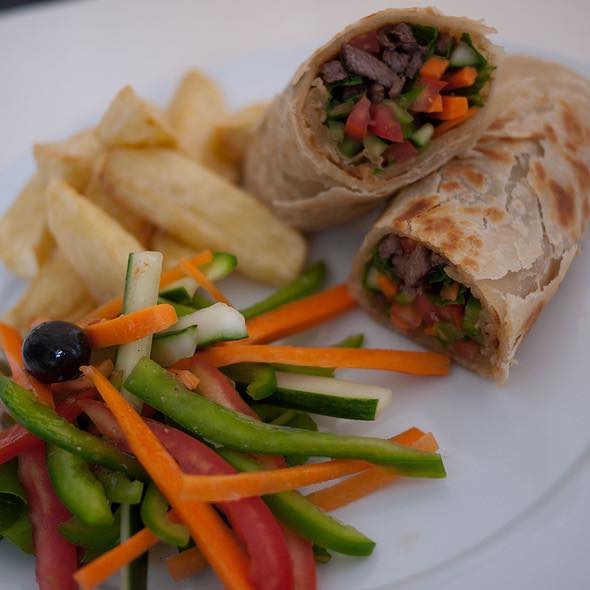
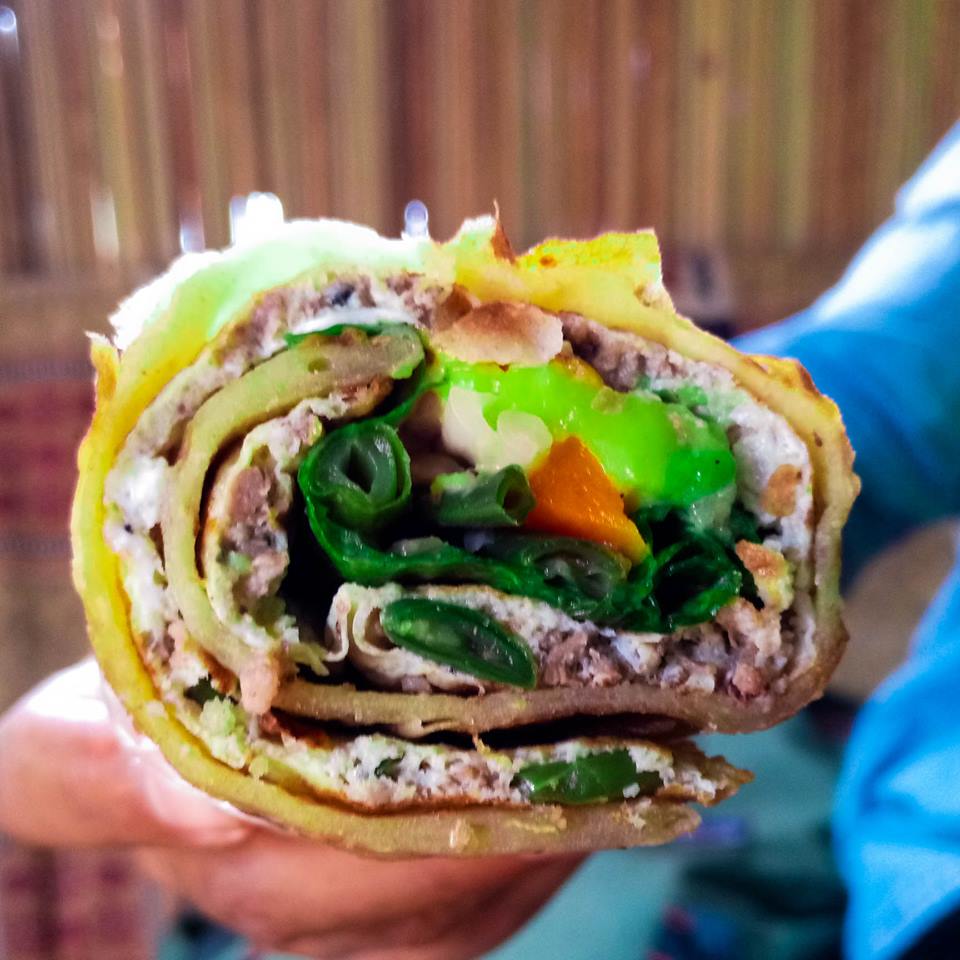
Adulterated Rolex: High end restaurants are now servings things that are far from the original Rolex that was first advertised as Uganda's unique delicacy.

Kampala: “Our Rolex made a name for what it was—a Rolex,” wrote journalist Grace Amee on her Facebook page.

Her post had been provoked by a series of pictures on the Jinja City Facebook page advertising a new Rolex joint.

“This feels like seeing a beautiful African woman bleaching into a Fanta and Coke patched unrecognizable being,” her post went, ending with a hashtag #SaveOurRolex.

‘Rolex’ at the Jinja Rolex Joint. It is the Rolex that triggered journalist Grace Amee’s comment and Hashtag #SaveTheRolex

In a few words, Grace had said what I had always wanted to say but never said.

Maybe I said it through action. I always told myself, “I can never buy that type of Rolex. It is not the real thing.”

Its simplicity. Its low price. Its right-thereness. Its real-ness. That is what made made Rolex, Rolex.

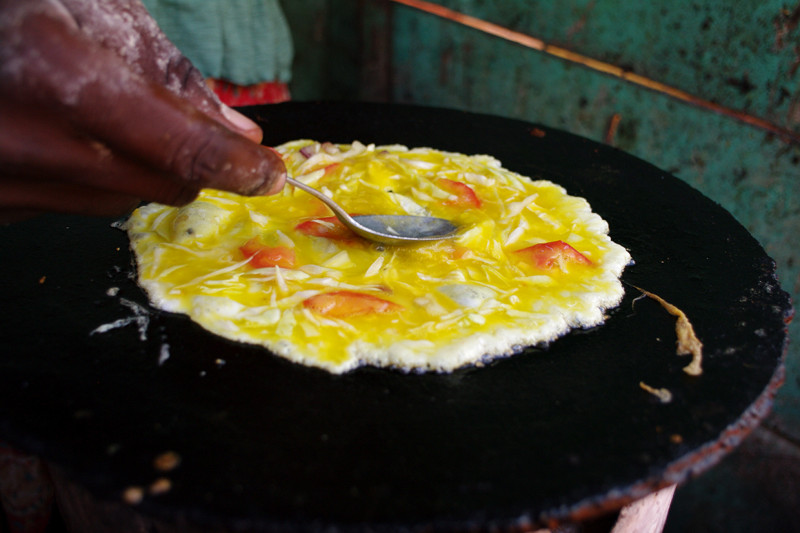
Anyone who has eaten a Rolex in its Rolexness knows the experience of walking over to a roadside stall and order for ‘Rolex ya maagi asaatu’-Rolex of three eggs, and the optional birungo- ingredients: A little bit of cabbage, tomato, onions and a bit of green paper. As a rule, all must, in the Ugandan speak, ‘disappear’ in the fried omelets at just shs3, 000($0.8) in high end streets or just shs1,000($0.3) at Mwamadi’s stall just across the sewerage stream in Kikaramoja ‘estate’.

A little bit of the birungo to add to the taste

But alas, enter town elite. I mean that lot that wants to fake everything from lifestyle—accent, skin color, the friends they hung with—to success! They are now faking our Rolex.

Why the hell are Rolex in high end restaurants having more of cucumber, carrots, Mayonnaise and all manner of green stuff than eggs, and going for shs20K, with a side dish of Guacamole?

This method of making Rolex is killing its specialty

That’s not even value addition. That is a poor man’s version of a Mexican Wrap or Mexican Chicken Enchilada Roll Ups. A burger is a burger-either beef or vegetable. You add pounded yams and it will not be a burger anymore. Why can’t therefore jealously guard the Rolex? Why should it turn into a Mexican wrap or anything but a Rolex?

#SaveTheRolex. Do not chock it with all those carrots, French beans, Mayonnaise and whatnot. You are not making a salad wrap. You are making a Rolex. Allow it rule in its simplicity. Let the eggs and Wheat floor with a pinch of cabbage, a pinch of tomatoes, a pinch of green paper and a pinch of salt reign! Save the country and its visitors adulterated Rolex.

Stories Continues after ad