Stanbic Bank
Stanbic Bank
23.9 C
Kampala
Stanbic Bank
Stanbic Bank
Home Blog Page 1582

Kampala parents’ school holds Sports Day

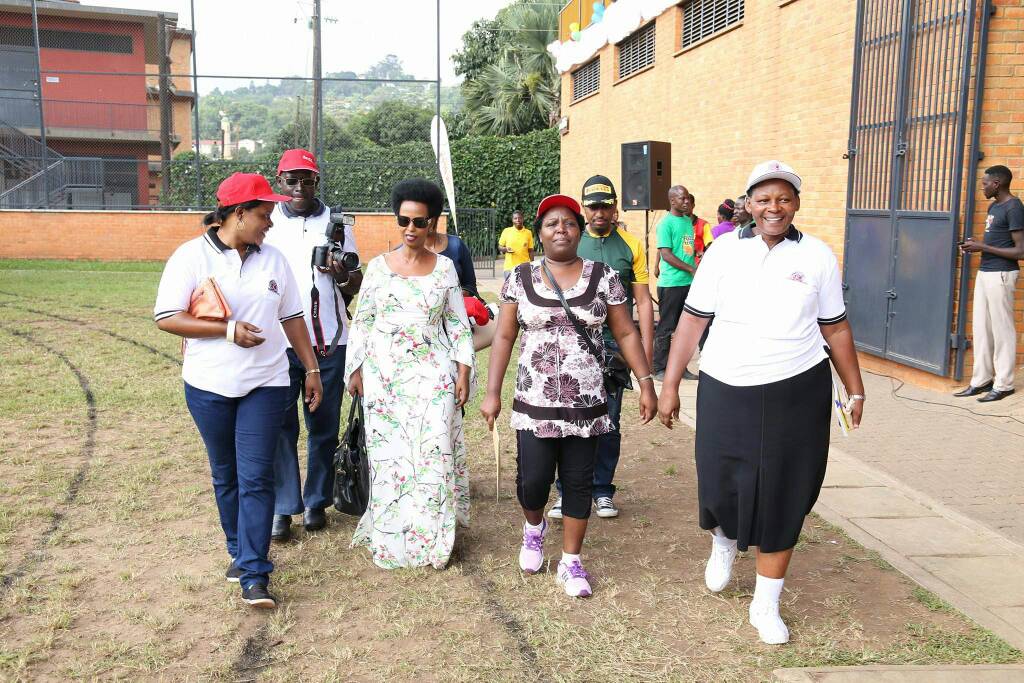
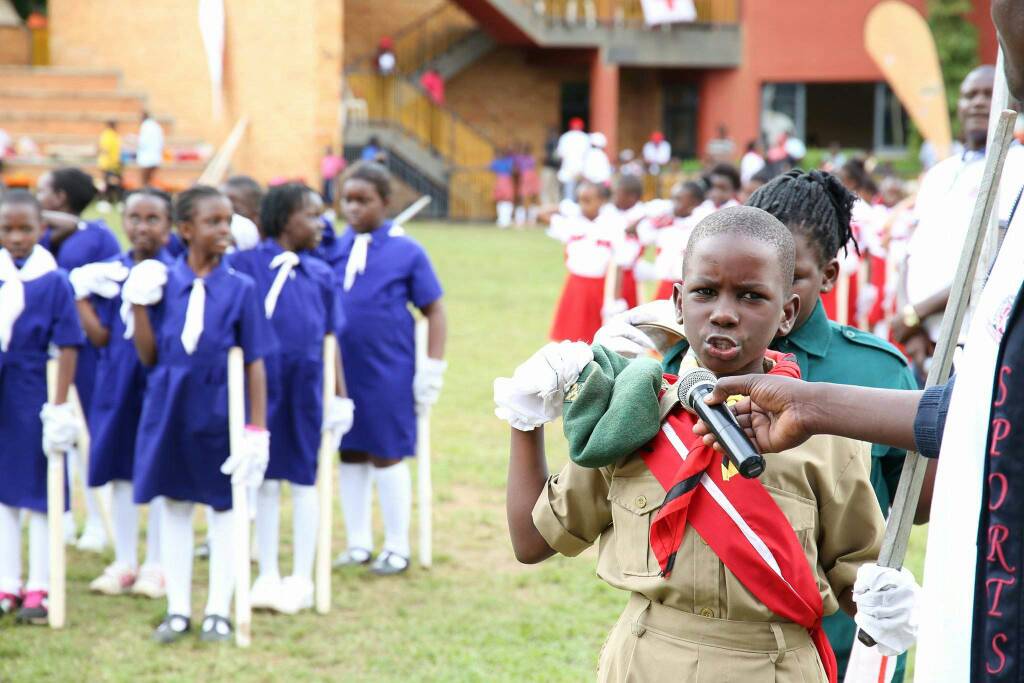
Kampala Parents one of the leading private primary schools in Uganda has held its Sports Day this Saturday and in attendance are parents, guardians and well-wishers.

The schools invited guests to attend the sporting activities taking place at the school sports ground.

The children have been prepared to participate in sporting activities such as athletics, sack race, among others like matching.

Children’s sports and play is linked to improvement in academic skills, classroom behavior, healthy emotional attitudes and better adjustment to school life.

At KPS your child is given time to play with guidance of their teachers.

KPS is owned by city Tycoon Sudhir Ruparelia and has dominated excellency performance in Primary Leaving Examination in the country for close to 30 years.

Stories Continues after ad

Big data challenges for the holy grail of business

By Martin Zwilling

We are now solidly in the era of big data, where computers are capturing and processing the details of everything we do with all our interconnected devices in real time. Businesses see this as the Holy Grail for finally being able to predict who, where, and when customers will buy their existing solutions, and what their future solutions must look like to be attractive.

According to recent estimates, ninety percent of the data in the world today was captured in the last two years, at roughly 2.5 quintillion bytes a day. That’s a lot of data, but the jury is still out on whether technology can make any sense of the data, or derive new meaning from it in our rapidly changing world. So far, we haven’t been very good at predicting the future in life or in business.

For me, the first step in understanding the potential is to better understand what human data really looks like as it comes in from all these sources. I found some help in this regard from a classic book, ‘Humanising Big Data’ by leading consumer researcher Colin Strong. I will paraphrase here the keys ways he outlines that our lives are becoming increasingly datafied:

Datafication of emotions and sentiment. The explosion of self-reporting on social media has led us to provide very intimate details of ourselves. Many market research companies now use this data by ‘scraping’ the web to obtain detailed examples of the sentiment relating to particular issues, brands, products, and services.

Datafication of relationships and interactions. We are now not only able to see and track the ways in which people relate, but with whom they relate, how they do it, and when. Social media has the potential to transform our understanding of relationships by datafying professional and personal connections on a global scale.

Datafication of speech. Speech analytics is becoming more common, particularly as conversations are increasingly recorded and stored as part of interactions with call centers, as well as with each other. As speech recognition improves, the range of voice-based data and meaning that can be captured in an intelligible format grows.

Datafication of offline and back-office activities. Within many data-intensive domains such as finance, healthcare, and e-commerce, there is a huge amount of data stored on individual behaviors and outcomes. Add to that the emergence of image analysis and facial recognition systems processing in-store footage, traffic systems, and surveillance.

Datafication of culture. There is a whole new discipline of ‘cultural analytics,’ which uses digital image processing and visualization for the analysis of image and video collections to explore cultural trends. For example, Google’s Ngram service has already datafied over 5.2 million books from 1800 to 2000 to let anyone analyze cultural trends.

Of course, there is a big jump needed from data to real insights, intelligent decisions, and future predictions. This book author also explores some of the major challenges associated with humans making sense of big data, and using it effectively, including the following:

The human psychology of cognitive inertia. Humans seem to be wired to resist change, with a set of cognitive ‘rules of thumb’ which focus us on short-term loss-averse behaviors. Human are inclined to rely on familiar assumptions and exhibit a reluctance to revise those assumptions, even when new evidence challenges their accuracy.

Cognitive ability to make sense of data. Even though computers can process and store large volumes of data, assessing the implications still falls primarily in the realm of humans. Sense-making is the process of deriving meaning from experience and situational awareness, which seems to be a struggle for both people and computers.

Information overload and data quality. In reality, more data does not necessarily lead to better decisions. More information usually means more time is required to make a decision, perhaps leading to inertia, or volumes of one type of data bias the decision in the wrong direction, since more data is not always better data.

As we continue to become more data connected online and offline, there is no question that our digital exhaust will tell more and more about us, allowing better short-term projections of our buying habits and interests. Yet, the challenge of really predicting future needs and behavior is much tougher. Thus, I predict that humans will be driving big data in business, rather than the other way around, for a long time to come.


Stories Continues after ad

BAT-U gross profits rise 70 per cent, share at Shs246

BAT Uganda products

Local cigarette manufacturer, British American Tobacco Uganda (BAT-U) had its gross profit rise by 70 percent in the year ended December 2017 to Shs18 billion, up from Shs11 billion earned in the year 2016, the company says in its financial statement.

The company attributes the rise in gross profits to the increase in prices of cigarette derived from increase in excise duty and lower operational costs.

However, the company’s gross profit in the year 2017 was far less than Shs29 billion and Shs69 billion earned in the years 2015 and 2014, respectively.

The financial statement further shows that the company’s  net revenue increased to Shs69 billion in the year ended December 2017 compared to Shs65 billion it realized in the year ended December 2016. The company attributes the increase to excise driven price increment.

But the statement notes that the 2017 net revenue figures were far much less when compared to Shs179 billion and Shs270 billion realized in the years 2015 and 2014, respectively.

The company says excise duty, value added tax payments and corporate tax charges increased by Shs7 billion to Shs82.5 billion relative to the previous period.

Mathu Kiunjuri, the BAT-U Managing Director, says cigarette sales grew marginally by 0.4 per cent in 2017 compared to 2016. “The stability in the sales volumes performance is attributed to the marketing and distribution activities carried out during the year,” he says.

The company’s flagship brand, Sportsman, continued to register strong performance as sales grew by 12 per cent Kiunjuri says, but adds that illicit trade in cigarettes continues to impact the company’s cigarette sales as well as government revenues.

The statement shows that BAT Uganda’s return on equity improved by 55 per cent in 2017 mainly driven by increase in the profits after tax.

Based on that the Board of Directors has maintained 100 per cent dividend pay-out policy and recommended a dividend pay of Shs246 per share. BAT Uganda is listed on the Uganda Securities Exchange (USE).

The company says the enactment of the Excise Duty (Amendment Act 2017) had its business experience some challenges following the imposition of different rates for locally manufactured products and those imported from the East African Community (EAC) member states.

BAT-U Board Chairman Elly Karuhanga says that despite Uganda’s economy witnessing a slowdown in economic activity in 2017, the company has maintained a strong market position and improved business results.

Stories Continues after ad

EAC, Germany to sign financing agreement for SMEs

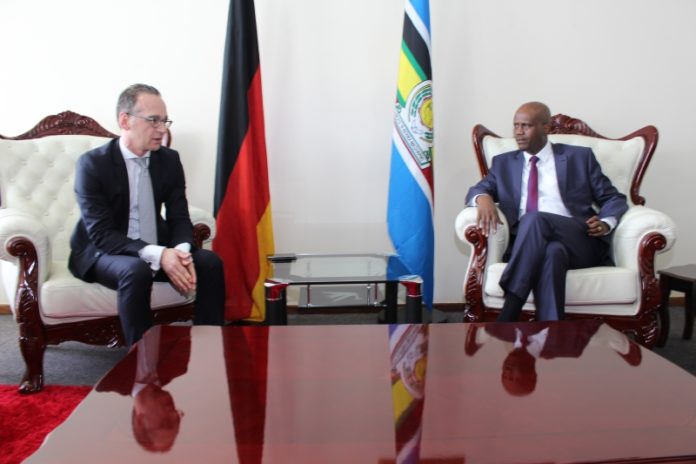
Amb. Liberat Mfumukeko, with Germany Foreign Minister Heiko Mass

The East African Community (EAC) Secretariat and the government of Germany are finalising a five million Euros agreement to support the small and micro enterprises sector in the bloc, the Secretary General Amb. Liberat Mfumukeko, has said.

“The aim of the project is to improve opportunities for growth for small and medium sized enterprises in East Africa. The project will be implemented in collaboration with GIZ, the German Technical Cooperation Agency, and the East African Business Council, the apex body of private sector organisations in East Africa,” Mfumukeko said.

The revelation came as the Germany Foreign Minister Heiko Mass was days ago on a working visit to Tanzania, where he held bilateral talks with  Mfumukeko. The two leaders discussed development cooperation between the Federal Republic of Germany and the EAC on regional economic integration, health, water, and institutional strengthening of the EAC Secretariat.

Addressing a media briefing after the meeting, Amb. Mfumukeko said that relations between Germany and the EAC have been strong for the past two decades.

Amb. Mfumukeko disclosed that Germany had supported the EAC to the tune of 290 million euros including funding the construction of the EAC Headquarters and that on April 9, 2018, the EAC and Germany signed a financing agreement of 5 million euros for the EAC Scholarship Programme in Berlin.

“The scholarship programme will be implemented in cooperation with Inter-University Council of East Africa and KfW, the German Development Bank. The objective of this programme is to promote EAC’s regional integration agenda by supporting higher education students and their role in fostering awareness for the East African integration, promoting social change as well as economic growth,” he said.

The financial agreement for the scholarship programme was part of the 35 million euros that will go towards supporting regional immunization.

The Secretary General further revealed that Germany’s had since 2013 contributed 120 million euros to fight child mortality through the immunization programme in the EAC.

“So far more than 60 million euros has been spent on Rota Virus, Pneumococcal and Pentavalent vaccines in the EAC Partner States. Also, many children have been vaccinated against the biggest killers of children, namely diarrhea and pneumonia,” he said.

Stories Continues after ad

Gulu logistics hub in advanced stages-officials

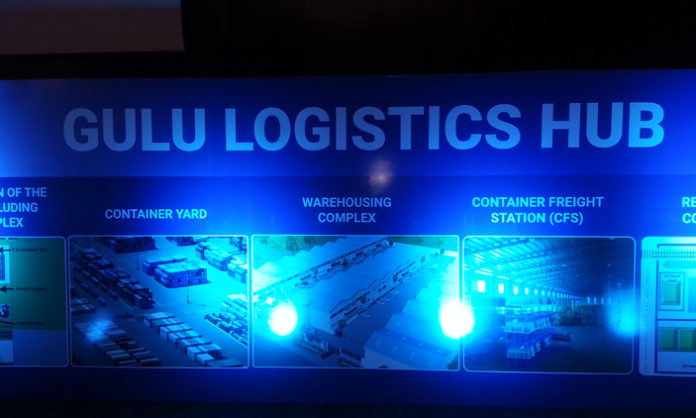
Artistic impression of Gulu Logistics Hub.

The Shs30.96 billion transport and logistics hub planned in Gulu town under the new programme-Development Initiative for Northern Uganda is in advanced stages with construction works expected to begin soon.

According to officials who are steering the project, the project appraisal report was approved some time back, a pre-feasibility study has been conducted and the project implementation team set up.

The hub is a brainchild of the Ministry of Works and Transport, Gulu Local Government, Uganda Revenue Authority and the National Logistics Platform with the Private Sector Foundation.

Planners of the project say the facility which will act as an inland container depot will be of great significance in the northern region which depends on other distribution hubs established around Kampala and Jinja.

The project to take 41 months will be implemented by TradeMark East Africa. The project will increase trade of commodities within the region, the country and the neighbouring countries through improved transport and logistics infrastructure.

Government and development partners think that the completion of the project will help exporters, importers, and government agencies in Uganda, Kenya, South Sudan and DR Congo.

When it becomes operational, implementers, say it will quicken transit time as well bring about cost savings for businessmen and regulators.

“Populations in northern Uganda will benefit from cheaper products, including food, and connection to markets, thereby providing opportunities for export,” says reads part of the project’s synopsis.

Officials say the hub will also increase the capacity of local farmers to access the markets and facilitate the importation of agriculture inputs.

The document adds that it will contribute to: “reduced barriers to trade for both northern Uganda and the neighbouring countries of South Sudan and the Democratic Republic of Congo.”

The Gulu logistics hub project comes at the time when Uganda in the recent years has played a pivotal role as a distribution hub for South Sudan, DR- Congo.

The Gulu hub is expected to serve the two export markets for Ugandan goods but also for re-exports destined for DRC and South Sudan. It will be a Private-Public Partnership (PPP), with some private sector players expected to come on board, officials say.

The logistics hub will be built at the Gulu Railway station on at least 24 acres provided by the government.


Stories Continues after ad

Former Minister and Obote cousin Adoko Nekyon dead

DEAD: Al Hajj Ali Akbar Adoko Nekyon

Veteran politician Al Hajj Ali Akbar Adoko Nekyon has passed on at Nsambya Hospital this evening aged 86, reports indicate.

A cousin to former president Milton Obote, Adoko Nekyon was the first post-Independence Minister of Information, Broadcasting and Tourism in the 1960s. He also served as Minister for Health and Minister of Rehabilitation and Social Services between 1988 and 1990, under the National Resistance Movement (NRM) government.

Stories Continues after ad

Govt, partners launch Shs 600b project to fight poverty in northern Uganda

The EU Ambassador to Uganda Attilio Pacifici shares a light moment with Prime Minister, Dr. Ruhakana Rugunda as other officials look on


The Uganda government in conjunction with development partners has launched a four-year Shs 668.5b project that aims at reducing poverty, under-nutrition and to propel inclusive socio-economic development in northern Uganda.

The project dubbed ‘Development Initiative for Northern Uganda’ (DINU) was launched in Kampala on Friday by the Prime Minister, Dr. Ruhakana Rugunda in the presence of representatives of the European Union (EU), DFID, GIZ, UNICEF and TradeMark East Africa and the local government leaders from the districts were the project will be implemented.

Launching the project, Dr Rugunda said it was a continuation of an earlier project to fight poverty and boost social economic development in Northern Uganda, and he also thanked the development partners for injecting funds in the project.

The EU is the largest funder of the project through its 11th European Development Fund which has provided Euro.132.8m. Government of Uganda has provided Euro.12m, while UNCDF and UNICEF have provided Euro.04m and Euro1.1m, respectively. Germany’s GIZ has contributed Euro1.8 while UK’s DFID has sunk in Euro2.7m.

The programme that succeeds previous two projects, the Northern Uganda Agricultural Livelihoods Recovery Programme (ALREP) and Karamoja Livelihoods Programme (KALIP), has three components namely: transport infrastructure, food security and agriculture and good governance.

The project aims to improve food security, improve maternal and child nutrition, enhance household incomes. It also aims to increase trade locally, regionally and internationally. Further it will also strengthen good governance and the rule of law of local governments and empower communities, said Gonzaga Mayanja, the Focal Coordinator of the project in the Office of the Prime Minister.

Much as it targets 33 districts of the north of the country, the project will mainly be implemented in the 16 districts of Amudat, Moroto, Abim, Pader, Agago, Lamwo, Omoro, Amuria and Otuke. Others are Alebtong, Oyam, Kole, Adjumani, Moyo, Yumbe and Zombo.

“The remaining 17 districts will be treated as satellites in which some components may be executed,” said Mayanja.

EDF’s Euro57.8m is to help increase production of diversified food items, increase market accessibility and improve nutrition in the region. Among others, officials will use the money to create linkages between farmers, processors and market operators, they will also provide seed capital to start-ups, rural electrification and product lines.

The money will also be used to build to set up water infrastructure in the Karamoja region, land registration, vocational training.

Euro65m will be used to rehabilitate and upgrade to bituminous standard of the Atiak-Adjuman-Moyo-South Sudan border road. Targeted also is the 65.8km Atiak-Larop road. There will also be the construction of a logistical hub (inland container depot) in Gulu to facilitate trade.

More Euro10m, among others, will be used to promote good governance in the region where capacities of local governments will be strengthened. The project here will also enhance accountability and transparency in local governments which are important for effective service delivery.

Still, UNCDF’s Euro 25.85, among other will go to seed capital to incubation projects, rehabilitate community access roads and strengthen capacities of local governments.

GIZ’s Euro3.8m, among other activities, will help increase the number of households and businesses having access to electricity in 15 villages in Lamwo and Kabong districts.

GIZ has also set aside Euro5m to among others, construct 15 multipurpose valley tanks in Amudat, Kabong, Kotido and Moroto. The facilities will provide seasonal water for crop irrigation and livestock production.

Government will provide Euro5.1m to support vocational training institutes where disadvantaged youth will be provided with skills for employment, but also the money will help strengthen the capacities of police and other institutions in the law and justice sector.

The projects targets to benefit over seven million people, including civil society organisations and small and medium sized businesses.

The EU Ambassador to Uganda Attilio Pacifici, while commenting on the undertaking called for hard work, saying the project will help reduce poverty in the region considered to be the poorest in the country.

State Minister for Northern Uganda, Grace Kwiyucwiny, while addressing participants at the launch of the project called for a coordinated and combined effort, saying the project is one of those aimed at bringing the northern region closer to the rest of other regions in terms of social economic development.


Stories Continues after ad

Announcement for 2018 Literature Nobel Prize laureate deferred

Jean-Claude Arnault, a leading cultural figure in Sweden

A sex abuse scandal is sidelining this year’s Nobel Prize for Literature, and this year’s laureate will be announced in 2019.

Six members of the Swedish Academy, which awards the prestigious prize, have stepped down as allegations swirl around Jean-Claude Arnault, a leading cultural figure in Sweden and the husband of an ex-Academy member. He faces multiple allegations of sexual assault and harassment, including inappropriately touching Sweden’s Crown Princess a decade ago.

The postponement does not affect the other Nobel prizes. The prize hasn’t been postponed since the height of World War II.

Meanwhile, the Academy of Motion Picture Arts and Sciences, the group behind the Academy Awards, has kicked out Bill Cosby and Roman Polanski.

Cosby was convicted last week of three counts of indecent assault. Polanski fled the United States 40 years ago after being charged with the statutory rape of a 13-year-old girl.


Stories Continues after ad
Visiting UN team impressed with refugees’ handling

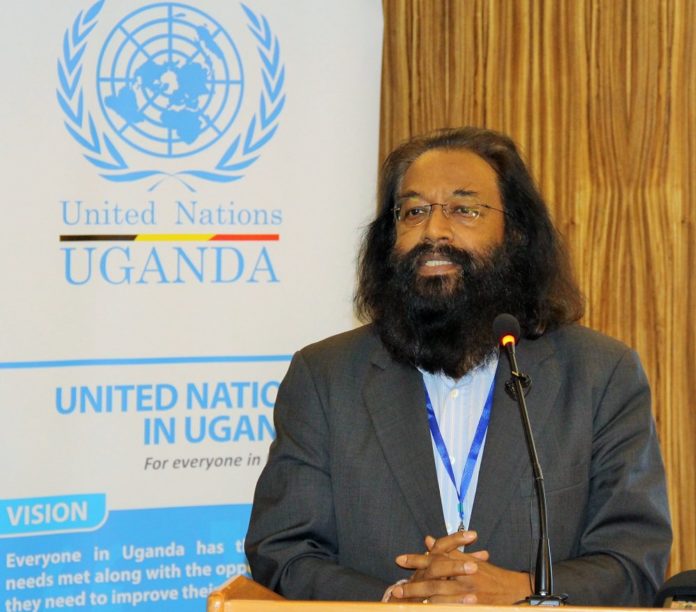
The President of Executive Board of United Nations Organisations Jagdish Koojul

The President of Executive Board of United Nations Organisations Jagdish Koojul has lauded Uganda for hosting refugees and the country’s policies that empower them earn income.

The UN organisation team is in the country to assess the progress in implementing Sustainable Development Goals (SDGs) and the working relationship between Uganda and United Nations agencies including the UNDP, UNFPA, UNOPS, UNICEF, UN-WOMEN and the WFP.

During their meeting with the Speaker of Parliament Rebecca Kadaga, Jagdish appreciated the solidarity which Uganda has expressed towards to African refugees.

“There are few places in the world where refugees get this welcome; we appreciate that Uganda maintains openness of her borders,” Mr. Jagdish said at Parliament.

He also lauded Speaker Kadaga for her continuous campaign against the violation of children and women’s rights and for the efforts in implementing global goals including poverty eradication, the fight against inequality and environment conservation.

In response, Speaker Kadaga noted that there is need for increased intervention in infrastructure development and environment protection for the refugee hosting communities, mostly for schools, health centres and water sources.

“Uganda supports refugees as a duty to humanity in distress. We couldn’t fold our hands seeing children, women dying during political instability and we salute the UN for support that has been rendered,” Speaker Kadaga said.

She also lauded the United Nations Development Programme for commitment in raising funds as Parliament moves to set up its own radio station that will help create awareness among Ugandans about the various programmes that the august house will be undertaking.


Stories Continues after ad

Susan Magara’s father lodges application to manage her estate

John Fitzgerald Magara, the father of slain Susan Magara, eulogising his daughter at the requiem mass in Mbuya

John Fitzgerald Magara, the father of slain Susan Magara has lodged a petition in the High Court at Makindye to administer his daughter’s estate, estimated in millions of shillings.

The Administration Cause for late Susan Magara’s estate

Through Baygenda and Co. Advocates of 4th Floor Equatoral Hotel Building, and in Administration Cause No.517 of 2018, the elder Magara wants to be granted letters of administration for his daughter’s estate.

The late Susan Magara

An accountant and businesswoman, the 28-year old Susan Magara was killed by her kidnappers after 21 days in captivity, and after the tormentors were paid a ransom of over Ushs700 million.

Since her killing about 30 suspects have been arrested, the most recent being one suspect captured during a raid on a mosque adjacent to the Usafi market.

Stories Continues after ad