Stanbic Bank
Stanbic Bank
23.9 C
Kampala
Stanbic Bank
Stanbic Bank
Home Blog Page 1583

Nation Media Group offers free promotion to artistes

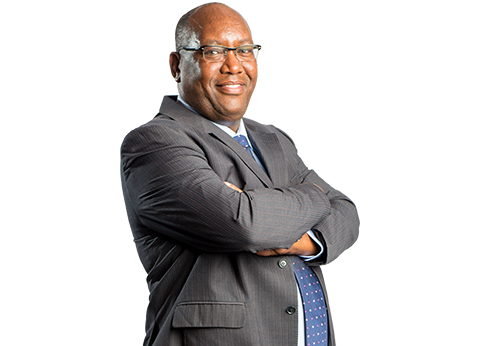
NMG CEO: Stephen-Gitagama

Nation Media Group (NMG), owners of NTV Uganda, Daily Monitor, Dembe FM and KFM has launched a record label branded Lit Music that is set to revolutionise the music industry by using a unique model that offers artistes free recording, distribution, promotion and guidance.

Lit Music will scout for talent and help new artistes, manage their brands and trademarks, coordinate the production, manufacture, distribution, marketing and promotion of local music talent.

“We are excited about this new venture. We believe through the new record label we will create something unique and fresh for the local artistes and make it easier for them to commercialise their talent,” reads a statement issued by NMG acting Chief Executive Officer Stephen Gitagama said.

“This record label is also an initiative by NMG to support the local music industry in and find ways to make it efficient for local artistes to have transparency on revenues earned through various platforms,” Mr Gitgama said, and added: “I am delighted that we have received very good response from a number of artistes who have already signed up with Lit Music. This is part of our new revenue streams.”

Currently the label is only operating in Kenya but has prospects of expanding to include Uganda.

However, Ugandans will still have access to some of the productions from the label as Lit Music will promote its productions through the broadcasting, print and digital platforms.

Stories Continues after ad

Gov’t targeting Muslims for arrests – former MP Kyanjo

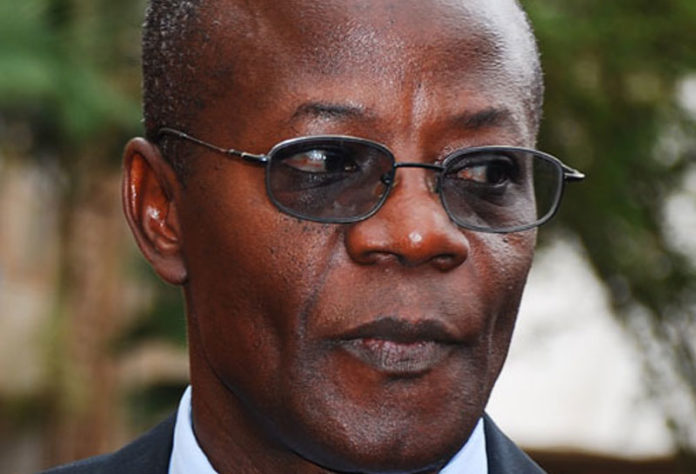
RIP Former Makindye West MP Hussein Kyanjo

Former Makindye West Member of Parliament Hussein Kyanjo has castigated government, saying the security apparatus in Uganda is targeting the Ugandan Muslim community for arrests.

Kyanjo, whose missive comes in the wake of a raid on the mosque near the Usafi market, says government has blamed all the killings in the recent past on Muslims. Among those killed that Kyanjo cites is the former Assistant Inspector General of Police (AIGP) Andrew Felix Kaweesi; Assistant Director of Public Prosecutions Joan Kagezi and several Muslim clerics.

‘As it is today, Muslims are automatic suspects for any major crime in Uganda. The Museveni government has a long list of names including mine and others … out of which they carefully select who to arrest for some crime,’ Kyanjo, a member of JEEMA party, wrote in his three-page missive.

Further, according to Kyanjo, government is pursuing an ‘arrest first and investigate later’ approach in relation to the arrest of Muslims in Uganda.

‘The law provides that one will be presumed innocent until proved guilty. In the case of Muslims they are taken to be guilty on arrest. They are paraded before the media and some are through torture, coerced into false confessions…’ Kyanjo further wrote.

But Deputy Police Spokesperson Patrick Onyango refuted Kyanjo’s accusations, saying they were inaccurate.

“When you commit a crime, we look for you as an individual, so don’t hide behind Muslims. We target individuals who hide behind Muslims,” Onyango said on phone.

The outspoken Kyanjo, who served in the Eighth and Ninth Parliaments, was allegedly poisoned and has been undergoing treatment for about two years now.

Stories Continues after ad

Barclay Africa fires KPMG

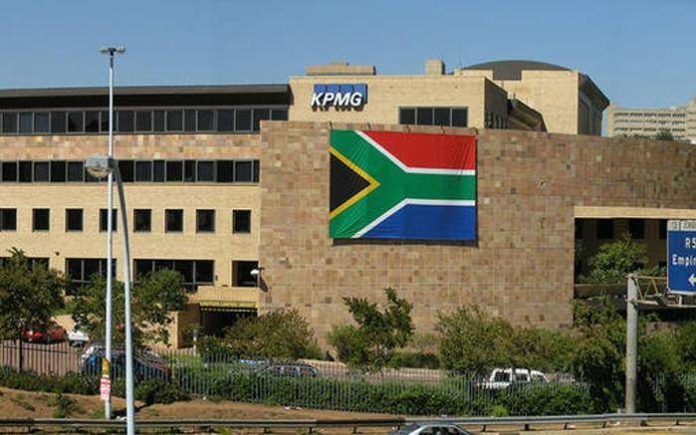
Barclays Africa, one of the continent’s largest banks, has fired KPMG as its auditor over the firm’s work linked to the Gupta business family and a high-profile bank failure.

South Africa’s second-largest lender by market capitalisation, which is rebranding after separating from the UK’s Barclays, on Thursday, dropped a recommendation to reappoint KPMG at its annual meeting on May 15.

In a statement, the bank said that “ongoing and more recent developments were evaluated by the board, which decided that it is no longer able to support the reappointment of KPMG”. KPMG has lost a number of big corporate clients in South Africa since last year over its work linked to the Guptas.

The family is accused of using a friendship with Jacob Zuma, the former president, to advance their business interests by influencing his government’s decisions.

Both the Guptas and Mr Zuma have denied any wrongdoing. Several partners, including the chief executive, left KPMG South Africa over the Gupta scandal and the firm apologised for mistakes over its role. KPMG also carried out a dubious inquiry into alleged wrongdoing at the country’s revenue service that was used to tar Mr Zuma’s political opponents. KPMG was then ensnared in a scandal over its audit of Linkway, a company at the centre of claims that the Guptas used a state-funded dairy project in South Africa’s Free State province to launder money.

The Guptas left South Africa shortly before the ruling African National Congress forced Mr Zuma to resign in February under a cloud of corruption allegations. Mr Zuma was succeeded by Cyril Ramaphosa who has pledged to end endemic graft in government. D amage to KPMG’s reputation in South Africa has been compounded by the firm’s auditing work for VBS, a mutual lender that collapsed in March. Regulators revealed evidence of a hole in the bank’s deposits and irregular lending, despite KPMG giving VBS a clean audit.

In April, South Africa’s auditor-general barred KPMG from government work, citing “significant reputational risks” from being associated with the firm. “We are disappointed by, but fully accept, the decision” by Barclays Africa, a KPMG South Africa spokesperson said. “We have implemented far-reaching changes over the past seven months to all aspects of the firm including governance, quality and risk management.” Other South African companies have abandoned KPMG, including Sasfin, a broker, and African Rainbow Minerals, a miner.

But Nedbank, another of the country’s big four lenders, said it would be reappointing KPMG because it was required to have the same auditor as its corporate parent, Old Mutual. Under rules set by South Africa’s central bank, banks must retain two auditors although they are not required to draw them from the Big Four of KPMG, EY, Deloitte and PwC.

Standard Bank, the second-biggest bank by market value, has said it is monitoring its ties to KPMG. “We realise that to build a KPMG that we and South Africa can be proud of, one that has quality and integrity at its heart, we must be prepared to adopt and embrace significant change to our culture and partner conduct,” Nhlamu Dlomu, KPMG South Africa’s chief executive, said last month in light of the VBS scandal.

Stories Continues after ad

May be we can have the Cuban Doctors here

Mr David Serumaga

Last month, officials from the Public Service and Ministry Health appeared before one of the committees at the Parliament where they declared that the Government of Uganda is in process of bringing specialized Cuban doctors to help in providing medical services in the remote areas where our own doctors have failed to go. This statement rose criticism among opposition politicians and some of our medical practitioners claiming that our Government has taken a bad move to bring Cuban doctors because Uganda has enough to do that same job.

During the Labour Day celebrations in Sembabule district, President Yoweri Museveni confirmed that he is hiring Cuban doctors soon because he is not to be happy with the way how our doctors do their work which prompted him to review his method of calling Cuban doctors to come for rescue. His statement has been welcomed by those who realized the reasons why he is bring Cubans here.

Although it has been like that, opposition members are misinterpreting his statement and make the public think that government is leaving our doctors unemployed and give jobs to foreigners. I doubt that the coming OF specific Cuban doctors is aimed at keeping our doctors unemployed but rather to solve some complicated medical issues and to extend medical facilities to remote areas.

That can be one of the major reasons but we have to know that Cuban doctors have always been here and their work is visible positively. The relationship between Cuban government and President Museveni begun way back in 1980’s when President Museveni sent over 60 Ugandan soldiers to Cuba for training. After some months, the former Cuban President Fidel Castro called President Museveni for a meeting which in the end revealed that 18 UPDF soldiers were infected with HIV/AIDS which needed a joint effort from both the Cuban and Ugandan government. After that meeting it was resolved that Cuban medical experts had to help Uganda to curb the HIV/AIDS virus which was on rise.

After that engagement, President Museveni picked interest in the disease and led the sensitization to fight against it with the knowledge and support of specialized Cuban doctors who were here on Fidel Castro’s deployment. By then, the AIDS prevalence in some areas in Uganda was at 30% and at the national level 18%.

Although Cuba is not among the richest countries in the world, but if there is a field that Cuba has convincingly made its own, it’s medicine. When the Ugandan government wanted to implement the idea of starting Mbarara University of Science and Technology, with the advice of President Museveni, officials just decided to look back at Cuban doctors to teach in the medical school which they have done tremendously.

Since Cuba is referred to as the best country with health care services, it means that there is a positive impact they have rendered to Uganda in the medical field and health knowledge sharing. Although they have given knowledge and skill to our students who studied from Mbarara University of Science and Technology, there is still a big gap and weaknesses in our health sector which required our government to look for specific specialized medical experts that will help in giving health services to Ugandans, train our interns and give knowledge to our own doctors.

Cuban doctors have not only been in Uganda but in almost every country in the world. In 2014, Cuba was one of the single biggest provider of health workers in the Ebola-hit West African countries, many more than those so far sent by far richer nations, according to the World Health Organization. During that period President Raul Castro, embraced the 248 doctors and nurses who waved Cuban flags and went to West African countries of Liberia and Guinea Sierra Leone which was affected by Ebola in 2014. Cuba first came to Africa’s aid during the liberation struggles of the 1960s and 70s, helping independence movements in some southern Africa countries.

Like Uganda is trying to do, based on a bilateral healthcare cooperation agreement signed in 1995, the first Cuban doctors began arriving in South Africa in 1996, to fill a skills shortage in state hospitals and in rural and under-served areas. Over 450 Cuban doctors took placements in South Africa and over 250 South African medical students have undergone training in Cuba.

About 35,000 of these doctors, along with 30,000 Cuban nurses and other health professionals, are working or have worked in 67 countries around the world. More than 20,000 have worked in Brazil and Venezuela and it is estimated to that they might have provided treatment to more 60 million Brazilians, mostly the rural poor.

Middle East countries have a testimony to tell about the role of Cuban medical specialists. In Qatar, an oil-rich emirate about as far from Cuba geographically and culturally as any place in the world, the so-called Cuban Hospital is fully staffed by 400 Cuban doctors, nurses, and technicians.

Countries like Haiti, United States of America have ever hired Cuban medical specialists to provide health services to their people. Those saying that President Museveni is hiring Cuban medical specialists to create unemployment to our own doctors are just trying to politicize service delivery because they are coming to empower our health sector. Our neighbors the Kenyans are processing to hire over 100 doctors from Cuba and take their interns for training to equip them with more medical professional skills.

By David Serumaga

President, Buganda Youth Wing

serumagadavid917@gmail.com


Stories Continues after ad

African Banker awards 2018 to be held in South Korea

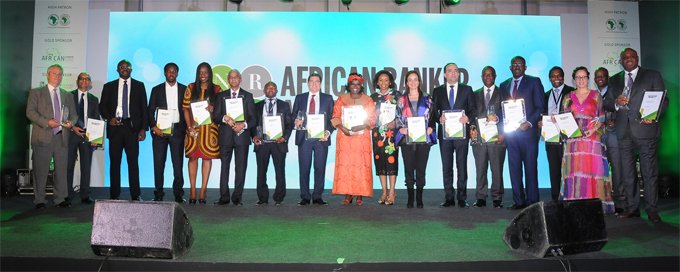
FLASHBACK: Winners of the 2017 African Banker Awards were announced at a prestigious Gala Dinner in Ahmedabad, India. This year the awards will be held in Busan, South Korea

Nominees for the 2018 African Banker Awards were announced on Thursday in London but awarding of the finalists will take place on May 22 in Busan, South Korea, Eagle Online understands.

The Awards, which are hosted by African Banker magazine, will be held during the Annual Meetings of the African Development Bank (AfDB) in Busan.

According to the organisers, this year’s shortlist sees another strong year for banks from Kenya, Morocco and Nigeria. Ecobank, Standard Bank and Standard Chartered, which have a large footprint across the continent, also feature across several categories.

Chair of the Awards Committee, Omar Ben Yedder, the Group Publisher and Managing Director of IC Publications Group  which publishes African Banker, said in the statement that :” I am once again impressed by the quality and breadth of entries this year.”

“We saw McKinsey earlier in the year releasing a very positive report analysing the banking landscape in Africa. The entries reaffirm their findings when they say Africa’s banking market are amongst the most exciting in the world,” he said.

He said the categories that caught his eye were innovation in banking and  that this year’s entries reflect the transformative role of fintech and also blockchain technology  as well as deal of the year, which is every year a very competitive category.

“Equity markets were a little slower in 2017, but we saw some interesting deals on the debt side and also transformative infrastructure financing structures. The quality of the entries, and sophistication of the solutions being presented, reflect a buoyant sector in continuous evolution,” he said.

The awards which are held under the patronage of the African Development Bank and, are sponsored by The African Guarantee Fund, Banco Nacional de Investimento (BNI), Groupe Crédit Agricole du Maroc and the Bank of Industry.

Ecobank will be the hosts of the African Banker Awards cocktail reception prior the awards. The Gala Dinner and Awards presentation will take place at the Paradise Hotel, Busan.

The shortlisted entries are:

African Banker of the Year:

  • Mohamed El Kettani – Attijariwafa Bank, Morocco
  • James Mwangi – Equity Group Holdings Plc, Kenya
  • Joshua Oigara – KCB, Kenya
  • Segun Agbaje – Guaranty Trust Bank, Nigeria

African Bank of the Year: 

  • Attijariwafa Bank, Morocco
  • Equity Group Holdings, Kenya
  • Guaranty Trust Bank, Nigeria

The Mauritius Commercial Bank, Mauritius

  • Standard Chartered

Best Retail Bank in Africa: 

  • Barclays, Zambia
  • Ecobank
  • KCB, Kenya
  • Millennium BIM, Mozambique
  • SBM Holdings, Mauritius

Investment Bank of the Year: 

  • Barclays Africa Group
  • Exotix
  • FNBQuest Merchant Bank, Nigeria
  • Standard Bank
  • Standard Chartered

Award for Financial Inclusion: 

  • Fourth Generation Capital Limited, Kenya
  • Groupe Crédit Agricole du Maroc, Morocco
  • Baobab Group, France
  • Equity Group, Kenya
  • JUMO World, South Africa

Award for Innovation in Banking: 

  • Agricultural Finance Corporation, Kenya
  • Ubuntu Coin
  • Banque Nationale pour le Développement Economique, Senegal
  • Ecobank
  • SBM Holdings, Mauritius

Socially Responsible Bank of the Year:

  • Barclays Bank, Zambia
  • BMCE Bank of Africa, Morocco
  • Equity Group, Kenya
  • First Bank of Nigeria, Nigeria
  • KCB Group, Kenya
  • Standard Chartered Bank Kenya, Kenya

Deal of the Year – Equity: 

  • ADES IPO – EFG Hermes, Egypt
  • First Rand Acquisition of Aldermore PLC – Rand Merchant Bank, South Africa
  • GAPCO sale to Total – Standard Chartered, South Africa
  • Long4Life IPO – Standard Bank, South Africa
  • Steinhoff Africa Retail Listing – Rand Merchant Bank, South Africa
  • Vodacom Tanzania IPO – National Bank of Commerce and Absa CIB, Tanzania

Deal of the Year – Debt:  

  • $300m Diaspora Bond – Standard Bank/FBNQuest Merchant Bank, Nigeria
  • $540 First Rand Asia Focused syndication – Standard Chartered, UK
  • Cape Town Green Bond – RMB, South Africa
  • Dufil Prima Foods – Standard Bank, South Africa
  • Nokeng Fluorspar – Fieldstone, South Africa
  • Viathan – Renaissance Capital, Nigeria

Infrastructure Deal of the Year: 

  • Nigeria Infrastructure Debt Fund – Chapel Hill Denham, Nigeria
  • Nacala Railway and Port Corridor – Standard Bank SA / RMB, South Africa
  • FIRST – Rand Merchant Bank, South Africa
  • AEE Power Project – RMB, Namibia

Individual recognition will also be given in the categories for the Regional Bank winners, Central Bank Governor of the Year, Finance Minister of the Year and Lifetime Achievement.


Stories Continues after ad

Ugandan inflations drops 1.8 per cent in April – Ubos

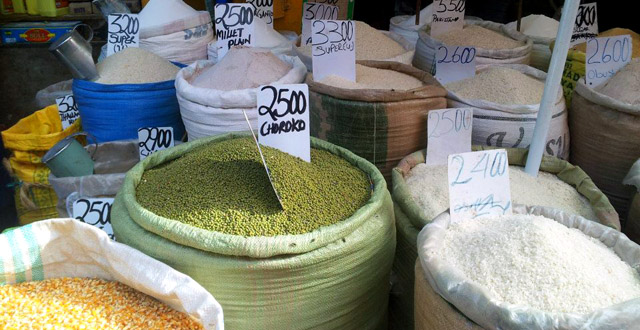
Food items in a Ugandan market

Uganda’s year-on-year inflation edged down to 1.8 per cent in April from 2.0 per cent the previous month as some food prices declined, the Uganda Bureau of Statistics (Ubos) says in its latest report.

According to the report, the country’s consumer price index was last below this level in October 2014 when it was 1.5 per cent, and analysts say further slowing in prices could spur monetary agencies to extend an ongoing policy easing cycle.

Core inflation, which excludes metered water, electricity, food and fuel prices, dropped to 1.6 per cent from the 1.7 per cent recorded in March. Policymakers use the core inflation rate when setting policy.

Further, the report indicates that Month-on-month inflation rose to 0.8 from 0.5 per cent registered in March. It was zero percent in February. The increase was due to the increase in price levels of food crops that registered a 2.4 per cent rise in April 2018, up from the 2.7 per cent increase recorded in March 2018.

The Energy Fuel and Utilities Inflation decreased by 0.2 per cent in April 2018 from the 0.1 per cent rise recorded in March 2018.

In addition, Services Inflation decreased to 2.4 per cent for the year ending April 2018 compared to the 2.5 per cent recorded during the year ended March 2018.

Bread and Cereals inflation also declined to minus 5.3 per cent in April 2018 compared to 0.4 per cent in March 2018.

The Annual Energy, Fuels and Utilities (EFU) inflation rose to 10.4 percent for the year ending April 2018 compared to 10.3 per cent recorded for the year ended March 2018. The increase was due to increase in price of Diesel which rose to 15.0 per cent for the year ending April 2018 compared to 10.4 per cent recorded for the year ended March 2018.

Kerosene annual inflation rose to 12.0 per cent for the year ending April 2018 compared to 11.0 per cent recorded for the year ended March 2018.

The consumer price indices covered the ten baskets of Kampala High Income, Kampala Middle Income, Kampala Low Income, Jinja, Mbale, Masaka, Mbarara, Fort portal, Gulu and Arua. All the baskets are for the urban households.

Arua registered the highest annual inflation of 3.9 per cent for the year ending April 2018, though lower than 4.8 per cent recorded for the year ended March 2018. This rise was driven by price increases for housing, water, electricity, gas and other fuels.

The second highest inflation was registered in Fort Portal at 3.5 per cent for the year ending April 2018 compared to 3.2 per cent recorded for the year ended March 2018. The main driver for the increase was price increases for food and non-alcoholic beverages. Furnishings, household equipment and routine household maintenance also contributed as their inflation rose to 4.7 per cent for the year ending April 2018 compared to 4.5 per cent registered for the year ended March 2018.

Stories Continues after ad

UHRC lobbies Parliament to back improved remuneration for top staff

RIP: Jacob Oulanyah

Uganda Human Rights Commission (UHRC) has urged Parliament to consider its petition for better remuneration and improved staffing.

In a meeting with the Deputy Speaker of Parliament Jacob Oulanya, UHRC chairperson Med Ssozi Kaggwa said the Commission has various challenges which need to be addressed after government embarks on increasing its budgets.

Kagwa also said that despite the Ministry of Public Service harmonizing the Commissioners’ salaries with that of Permanent Secretaries, it has not been reflected at the UHRC.

“It is hierarchical that the Commission’s Secretary earns better than the Chairperson and all Commissioners; it is that commissioners’ salaries be enhanced,” he added.

In response, the Deputy Speaker said Parliament would act upon UHRC’s request in conjunction with the Ministry of Finance.

“So far in all the documents that Parliament has received, the Ministry of Finance has not tabled your request. However, we shall task them to bring all requests that they have received from various government agencies for consideration,” Oulanyah said at Parliament.

The UHRC request comes in the wake of various industrial actions by different government entities demanding for among others improved payments and working conditions.

On Labour Day in Ssembabule district, President Yoweri Museveni castigated Uganda doctors for staging strikes and vowed to bring in Cuban doctors who, interestingly, will be paid higher salaries.

Museveni argued that the local medics ‘misbehaved’ as they demanded for solutions to their grievances, prompting his decision.

In the current process of budgetary allocations for Financial Year 2018/2019, various government agencies are lobbying Parliament to allocate funds to cater for staffing and remuneration constraints.


Stories Continues after ad

On the Media and its Skeletons as seen from Media Centre

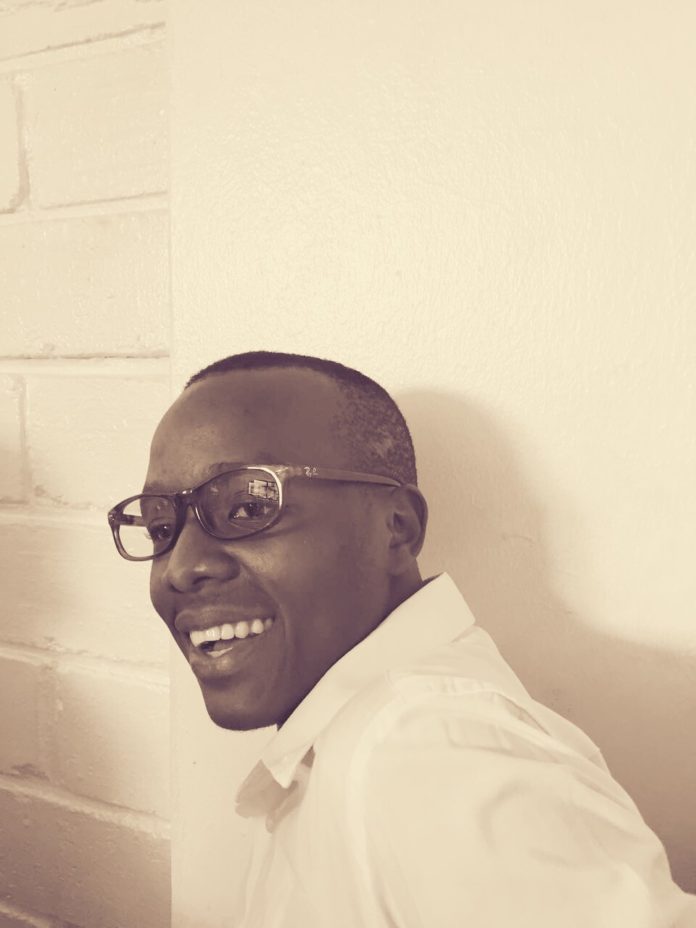
Mr. Michael Woira

By Michael Woira

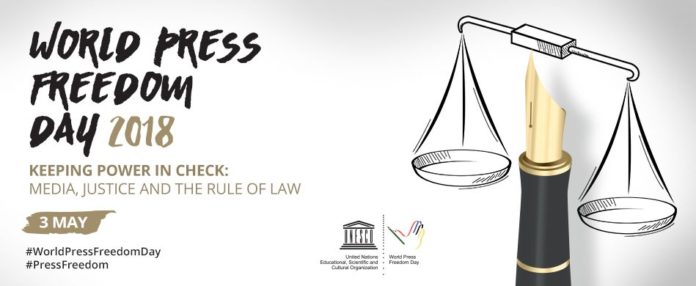
Today the world, and Uganda in particular, is celebrating the World Press Freedom day.

Congrats scribes, but I have a word for you.

I have for some time been with the media and the experience that I have with it is enough for me to at least utter a word or two about them and how they operate, in this I don’t mean the ugly side of it but the other good side of it in developing in our country and being the mouth piece of the voiceless.

The media fraternity is going on with its world freedom day celebrations and this day is celebrated world over to commemorate the freedoms of journalists and their achievements towards development in the areas of operation, one writer said that; Journalism can never be silent: that is its greatest virtue and its greatest fault. It must speak, and speak immediately, while the echoes of wonder, the claims of triumph and the signs of horror are still in the air.( Henry Anatole Grunwald).

As members of the media have done a lot for the country in sensitizing the masses in different activities and promoting government programs, giving reliable information to the audience and most important of all educating the citizens of this nation on various issues.

While at school, my lecturers taught me about the media principles of accuracy, fairness and mutual respect for other agencies like security forces and others. Neither accuracy or nor fairness must ever be sacrificed for speed.
Double-check facts, figures, names, dates and spellings. Watch for typographical errors. And make sure there is enough context in the story to ensure balance and fairness, including disclosure of important information that is not clear or not known.

Because of the pressures of wanting to be the first to break the news, common mostly with the online news platforms, journalists, more often than not, go to press with half-truths a thing that makes them to be suspect in the eyes of their readers. Let’s always get it right.

Independent voices are also important in that we should not act, formally or informally, on behalf of special interests whether political, corporate or cultural. We should declare to our editors or the audience any of our political affiliations, financial arrangements or other personal information that might constitute a conflict of interest and this can create trust in our stories that we avail to the audiences.

Some of our fellow journalists no longer abide by the principals of journalism and resorted to publishing and airing out stories for money or else stories of their interest. Uganda has in the past faced such problems because media houses have left purposeful information and resorted to covering demonstrations, strikes, nudity and spending most of their time moving with the opposition strategists thus encouraging them to popularize themselves by acting unruly and this is because they always expect to go back at their stations with some money in their wallets for being good activists. Is this the right thing to be done?

Many journalists have now days resorted to asking for bribes wherever they go to cover stories— unprofessional.

We should focus on issues that unite Ugandans other than promoting divisions and immorality in the community for the betterment of the next generation and value of our media profession. Happy world press freedom celebrations

Woira is a Media Coordinator at Uganda Media Centre.

Stories Continues after ad

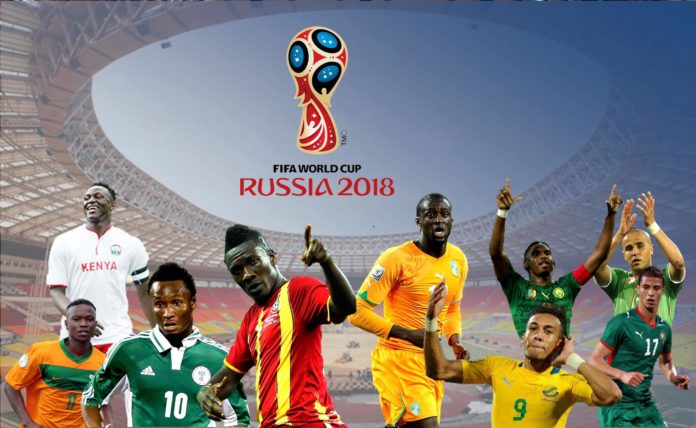
FIFA World Cup: SuperSport launches pop-up channels on DStv

The countdown to the 2018 FIFA World Cup will begin in earnest this month on DStv and GOtv when the switch is flipped on yet another exciting 24-hour pop-up channel dedicated to the much-anticipated tournament.

This follows MultiChoice’s recent announcement of the ‘History of Football’ pop-up channel to be launched on DStv in association with A+E Networks International on May 28 to delight DStv Premium, Compact+ and Compact customers with 14 days of original, globally-focused premium documentary series, short form specials and a selection of FIFA World Cup films.

The latest World Cup dedicated pop-up channel, SuperSport 14 (SS14), will go live on all DStv packages two months ahead of the soccer feast on April 18 with an assortment of exciting content including great legacy footage, highlights, documentaries, FIFA films, classic matches and interviews.

From Wednesday April 25, GOtv customers on the GOtv Max and GOtv Plus packages will also be treated to the pop-up channel which will also feature exclusive and rare archive footage of football’s best moments and matches on channel 36 (Ghana: channel 136; Uganda: channel 336).

Charles Hamya, the General Manager MultiChoice Uganda, said: “Our World Cup programming delivers value to customers over and above the 64 games we’re already offering them. This pop up channel will be just the required release subscribers need as they warm up towards the tournament. This is an opportunity to recap on some of the greatest matches, players and coaches ever to grace the game.”

The pop-up channels on DStv and GOtv will also feature warm-up matches to get fans fired up for the kick-off beginning in mid-June.

Thereafter, all 64 World Cup matches of the 2018 FIFA World Cup will be available on all DStv packages as well as on the GOtv Max and Plus packages, while GOtv Value customers can view a total of 56 World Cup games.

GOtv Lite customers can also enjoy a select number of fixtures available on free-to-air channels.

Viewers can also tune in to Maximo 1, Maximo 2 and Maximo 360 for Portuguese-language coverage.

Leading the challenge for Africa will be Team Senegal, Nigeria, Egypt, Tunisia and Morocco.


Stories Continues after ad

Over 70 percent of Ugandan citizens strongly support media freedoms

Media tools in a graphic expression

As the world marks World Press Freedom Day, a new report indicates that seven out of 10 Ugandans express strong support for media freedom, with six out of 10 (64 percent) of the interviewees saying the media should have the right to publish any views and ideas without government control.

According to the report, 72 percent of the 1980 respondents interviewed think that the news media should investigate and report on government mistakes and corruption, while 68 percent think that radio and television stations should be free to produce their own news programmes.

The findings,  based on data collected from across Uganda in November 2017, were released recently by Twaweza, a local not- for -profit organisation in a research brief titled ‘Frankly Speaking: Ugandans’ opinions and experiences of information and the media’. The brief is based on data from Sauti za Wananchi, Africa’s first nationally representative high-frequency mobile phone survey.

Additionally, citizens have an active culture of seeking information, at least from some government institutions. In the past three months, the majority of citizens have sought information from public health facilities (87 percent), public schools (79 percent), and village or Local Council I offices (62 percent).

According to the report, a significant minority also demand information from water suppliers (31 percent), government offices (27 percent) and political parties (23 percent). However, the report says that most of these requests are for information about services, rather than more sensitive information about staff­ing, budgets and other resources.

Furthermore, most Ugandans believe in their right to government information, while 71 percent say it should only be restricted for national security reasons. Ugandans also have faith in government institutions’ responsiveness.

Fifty percent of the respondents believe that if they ask they would get information on district development plans while 41 percent said they would get information budgets from their local authority. 50 percent of the respondents said that if they asked, they would get information on how much capitation grant their school had received.

And although citizens support media freedom and seek government information, they have very low levels of trust in all sources of information – from the media or that provided by government officials and leaders. No information source is trusted completely by the majority of Ugandans, be it their Local Council I Chairpersons (45 percent), the President (34 percent), or MPs from the ruling party (26 percent) or the opposition (22 percent), to radio (48 percent), public meetings (39 percent), people they know well (34 percent) and social media (12 percent).

Furthermore, almost all citizens are unaware of laws that govern their information and communication rights including the Uganda Communications Act (2013) (3 percent), the Computer Misuse Act (3 percent) and the Access to Information Act (2005) and its regulations (1 percent).

Similarly, few citizens are aware of government platforms to proactively provide information to citizens and to seek their feedback including their experiences and opinions. Very few have ever heard of Barazas or community-based forums (6 percent), the budget information website (4 percent) or the Ask Your Government platform (3 percent). Nonetheless 1 out of 50 citizens (3 percent) say they have participated in the local forums (Barazas).

Marie Nanyanzi, Sauti za Wananchi Officer at Twaweza, said:  “On the positive side there is a fairly active culture of citizens seeking information from government offices and institutions, and of government responding to those requests.

Citizens also support free expression for the media and themselves and see healthy debate and different opinions as constructive, providing support for government. On the other hand, citizens express low trust for all information they might receive publicly, are not confident of their own personal freedom to criticize and are less likely to seek sensitive information around resources.”

Dr Mary Goretti Nakabugo, the Country Lead in Uganda for Twaweza, said: “Citizens’ opinions on access to information and free expression present a challenging outlook for citizen agency. With low levels of trust and the feeling that they are not free to express themselves fully, citizens cannot be expected to participate actively in government processes and projects.

However there is some cause for optimism in terms of Barazas where millions have been reached by this government feedback and sharing platform. And similarly, the prevalence of identification documents means that citizens are ‘visible’ in the system. Documenting citizens is a first and critical step in ensuring their participation and in delivering better services.”

Stories Continues after ad