Stanbic Bank
Stanbic Bank
17.6 C
Kampala
Stanbic Bank
Stanbic Bank
Home Blog Page 1585

Corruption: Why the IGG is stuck with 4000 cases

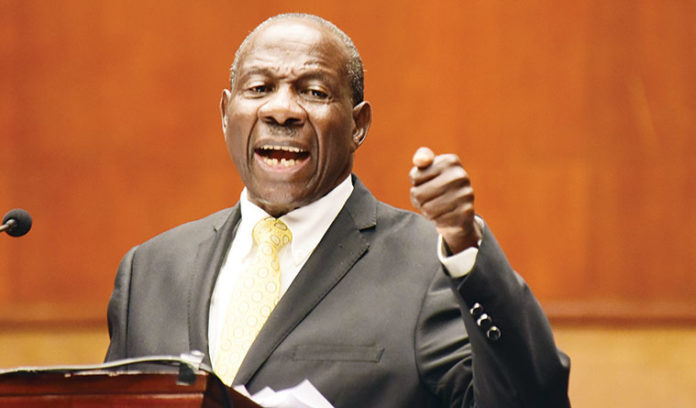
HOT SEAT: IGG Irene Mulyagonja

The Inspectorate of Government headed by the Inspector General of Government (IGG) still has a long way to go following a revelation that it requires more funding to handle 4409 cases, as stated in its Budget Framework Paper (BFP) for the financial year 2018/19.

While presenting the BFP to MPs early this year the IGG-Irene Mulyagonja Kakooza, said then that a total of 4409 investigations were still ongoing, particularly the Directorate of Regional Offices was handling 4228 cases, Directorate of Ombudsman Affairs dealing with five cases while Information and Internal Inspection Division was handling 83 cases and Directorate of Special Investigations was looking into 93 cases.

Highlighting the achievements of the first half of financial year 2017/18, the IGG said 175 backlog cases were concluded by regional offices out of the 2106 cases available representing 8 percent. Directorate of Special Investigations managed to conclude 2 out of 87 backlog cases which represent 3 percent achievement. While 144(28 per cent) recommendations were followed up out of the 505.

The IGG blames the slowness in the handling of the cases on the limited funds allocated to them. In the financial year 2017/18, the IG approved budget was Shs45.421billion out of which Shs45.6 billion was released and Shs42.767 billion or 93.8 per cent was spent.
In the same period, the IG received a supplementary funding of Shs0.643 billion for payment of rent for the Head Office, PAYE, NSSF contributions and other operational expenses. This means there was no supplementary allocations to handle cases.
The IGG Irene Mulyagonja is unhappy that rent is eating into the budget for activities her office is mandated to do. For instance, she says the cost of rent is increasing from Shs2.285 billion in financial year 2017/18 to Shs2.756 billion in financial year 2018/19. Currently, she says, the IG is operating in rented office premises for both its head office and the 16 regional offices.

According to Mulyagonja,the rent problem is worsened by the fact that IG has to pay rent for the head office in dollars. “The rent for the head office is paid in US dollars, thus the continuous rise in the dollar has adversely affected the funds available for other activities given that rent is a primary cost to the institution’s existence and operations,” she cries.

The IG also faces the problem of unpredictable landlords for its regional offices. The landlords, according to the IGG, have a tendency of adjusting rents upwards at the end of tenancy agreements, which are not in tandem with the national budget process timeline.

The IG says it needs more funding to do its constitutional activities. “The IG has three core functions and these are Ombudsman role, Anti-corruption and Enforcement of Leadership Code of Conduct. Given the enormous activities under these functions, Shs45 billion is insufficient for the IG to effectively deliver on its mandate,” the document reads in part.
Though allocations to the Inspectorate have been increasing significantly over time, the institution is still faced with the challenge of inadequate resources. The IG has a funding gap of Shs3.827 billion, it adds.

Breakdown in grievance handling mechanisms
According to the IG’s BFP for 2018/19, there is complete breakdown in the internal complaints and grievance handling mechanisms in the ministries, district administrations and local governments (MDALGs). Previously government institutions had functional structures to manage complaints internally and would only refer cases which had either failed or those that were outside their jurisdiction to the Inspectorate of Government. “This situation has created increased workload as aggrieved public officers report to the Inspectorate as a first resort,” the BFP reads in part.
The IG reports that several constraints still remain and that enormously affect budget execution: They include the prevalence and complexity of corruption in the public and private sector. Of particular concern, the evolving nature of corruption is giving the IG officials sleepless nights. However, as this might be the problem, the IG is also blamed for shifting attention from big cases that involve big shots in government to minor cases of civil servants in districts. A case in point is the case involving former Executive Director in charge of Supervision at Bank of Uganda, Ms Justine Bagyenda who according to sources wasn’t investigated by the inspectorate despite the overwhelming evidence against her.

While previously limited to favours and bribes to a few officials, the situation now encompasses grand syndicated corruption where controls are deliberately circumvented in a systematic way, involving networks of corrupt officials from different MDA/LGs and private sector
“Increasing complexity of corruption; corruption is now sophisticated and involves wide network of people (syndicates) in and outside Uganda. Combating this type of corruption requires significant resources (financial and skilled human resources),” the IGG notes in BFP 2018/19.

There have been instances where the recommendations made by the IG have not been implemented upon completion of investigations, says the IGG. When such administrative sanctions of various officials are not effected promptly, the matters remain unresolved, she adds.

The above, according to the IGG is worsened by the poor methods of storage and retrieval of records and sharing in public offices. “Poor record keeping results in great difficulty for the IG to collect credible information from the public officers or offices. The absence of proper records has continuously created a bottleneck for investigations,” IGG Mulyagonja says.

Further Mulyagonja notes that the increasing cost of fuel, lubricants, oils and vehicle maintenance will affect the IG operations. This is because most of the IG activities involve travels to collect information and carry out prosecutions.

In order to overcome the above constraints, the Inspectorate in the financial year 2018/19, wants funding to complete construction of own head office but also wants additional funding of Shs2.66 billion to cater for operational and obligatory expenses. “This fund will also to finance the activities of the Directorate of Special Investigations which was established to expeditiously investigate grand and syndicated corruption,” IGG Mulyagonja says.

During the Ministerial Policy Statement considerations, the IGG indicated that she was targeting to register 200 and 250 cases of grand or syndicated corruption for financial year 2017/18 and 2018/19.

That has now come down to 75 cases in FY 2018/19. The cause of the changes in the targets set this year is that little money has been given for operations and more allocated to construction of the IG head office building.

However, as the IG fails to handle these cases on time, so is the investigative arm of Uganda police and the judiciary and so the question is who will save IGG and police from collapsing like the public service?
reports also indicate that although the IG is supposed to be the watchman of government, internally the institution is allegedly housing corrupt officials which makes it complex to fight the corrupt.


Stories Continues after ad

Coca-Cola takes plastics collection drive to bars

Plastic recycling has now taken root in society

Plastic Recycling Industries, a Subsidiary of Coca-Cola Beverages Africa, has today announced a plastic waste collection drive with Kampala’s most popular bars.

Under the partnership, Plastic Recycling Industries will provide plastic collection equipment at Zone 7, a popular restaurant, bar and lounge in Mutungo that hosts Shisa Nyama every Saturday.

The Shisa Nyama event and Zone 7 generate a large amount of used plastics weekly and organisers are committed to ensure these plastics are diverted from landfills and sent to Plastic Recycling Industries for recycling instead.

Coca-Cola Beverages Africa Public Affairs & Communications Director Simon Kaheru thanked House Of DJs, organizers of Shisa Nyama, and Zone 7 Management for being responsible about environmental conservation.

“We are happy to create more partnerships and invite more event’s organizers and hospitality outlets to take the initiative and join us in ridding the environment of plastic waste,” Kaheru said.

“It is also gratifying that we are growing partnerships in plastic waste collection within the lifestyle-‘feel good moments’ category, which gives us the opportunity to sensitize revelers about waste segregation in a fun, casual environment,” he added.

Zone 7 Director Lotani Kagwa said the commitment to collect plastic waste was long term.

“We have always been concerned about plastic waste being disposed wrongly and ending up in soil and in drainage. We have designated an area where we will collect plastics and separate them from other types of waste. Every week we will ensure that the Plastic Recycling Industries Team can collect them easily and recycle them,” he said.

House Of DJs Manager Afsa Umutesi said the campaign was timely and would go a long way in changing the events management landscape.

“We are happy to form this partnership because it makes a major contribution to keeping Uganda clean and also protecting our environment. As event managers we must demonstrate responsibility by actually doing the right things. Eventually we will extend this collaboration to all events that we host and organize,” she said.

The philosophy behind Plastic Recycling Industries (PRI) is to take plastic waste out of the environment, reduce it, and re-use it as valuable products. While doing so, we not only protect the environment, but also create jobs for youth and women from underprivileged backgrounds who have found a livelihood in waste collection.

The Coca-Cola Company recently announced a new global packaging strategy and recommitted a ‘World Without Waste’ target.

In Uganda, Coca-Cola Beverages Africa Uganda is committed to achieve the 100% collection target ahead of 2030.

“At Coca-Cola Beverages Africa Uganda, we are cognizant of the fact that for a Country to have a successful recycling program, it takes collective effort of several stakeholders. On this note, I would like to appreciate our partners KCCA and Masaka Recycling Initiative in walking with us on this journey. As PRI, we are ready to work with KCCA to put collection points at all public concerts and events going forward,” Kaheru said.

Commenting about the culture of waste disposal, PRI Manager Edward Kalenzi said: “One of the biggest challenges we face today is the belief that somebody else will clean up after us. We are continuing to disseminate information about disposing plastic responsibly. Lets take the message and apply it now in our homes and work places.”


Stories Continues after ad

Local CSOs to launch campaign against mobile money tax

Most Ugandans now send and receive money via mobile phone networks

Local civil societies led by the Civil Society Budget Advocacy Group (CBAG) will Thursday at Hotel Africana in Kampala launch a campaign against a proposed tax on mobile money transactions as stated in the budget framework paper for the financial year 2018/19, Eagle Online understands.

Of the financial year 2018/19 proposals, the finance minister Matia Kasaija has included a 1 per cent tax on the value of the mobile money transactions-targeting receiving, payments and withdrawals, as outlined in the excise duty bill.

But according to organisers, tomorrow’s event is expected to draw a considerable number of participants from the political cycles, civil society, media, students, academia and the members of the general public, who argue the new tax will increase the cost of sending and receiving money.

Particularly, they argue that the tax will negatively affect value chains in agriculture, access to energy, utilities and trade services. “Uganda could suffer a reversal of gains made towards financial inclusion,” reads part of a statement released by CBAG two days ago.

Uptake of mobile money services

They also state that the tax will reduce the uptake of mobile money services and adversely affect businesses, “which will have a negative knock-on effect across the economy.”  “We also believe that taxing Mobile money is in real effect going to reduce the amount of money available to cater for basic needs like health and education,” they say.

The CSOs also fear that the will could make adoption of mobile money especially in lower segments much more difficult. “They In addition, Government and businesses will not be spared the impacts since delivery of bulk payments to the lower income segments in a timely and cost-efficient manner through mobile money could be affected,” they say.

They also say that effective tax on deposits, transfers and withdrawals could reduce the already low payments being received by the end users. Likely to be hit directly are government plans to use Mobile Money for payments to the elderly, the vulnerable and even refugees.

Frustrating financial inclusion

They argue that 48 per cent of the districts out of the 112 districts in Uganda lack access to any bank branch and ATM.  They say mobile  money transactions enable  more  efficient payments for goods and services,  reduce  the informal economy, create  employment and protects vulnerable segments  of society  from financial  shocks.  The  tax, they say will  also negatively impact  government’s financial  inclusion agenda  which  is heavily  reliant  on digital financial  services, and  increasing access and usage of financial  services  among a majority of Ugandans at the lowest possible  cost.

It is important to note that  more  than  10 million  Ugandans have  been  able  to access  formal financial  services  because  of mobile  money.  “Projections show that while farmers currently use mobile money to facilitate 53.5 per cent of their annual payments, imposing the 1 per cent transactional levy will see this number drop to just 5.9 per cent primarily to buy airtime and transfer money to friends and relatives.  Higher value services such as paying school fees will become unaffordable,” they say.

Increased cost of doing business with Mobile Money

Taxing every mobile money transaction – sending, payment,   receiving   and withdrawing as proposed in the tax may discourage growth in mobile money transactions and ultimately result in a reduction in the velocity of money in the economy.  A reduction in the velocity of money will hamper economic activity and ultimately slowdown economic growth as mobile money agents could see their costs go up when they send money back and forth to maintain floats, they warn.

Slowing down of Uganda’s digital financial services

The activists say that the proposed tax is likely to slow down the use of digital payment channels which could impede on government transparency initiatives in revenue collection. They reason that because payments using mobile money leave a digital trail, its use had significantly reduced reporting and other administrative costs of NGOs, government, businesses and other players. “We have observed service providers like UMEME and NWSC close majority of their cash offices   in favour of mobile money,” they say

Frustrating financial inclusion

The ta CSBAG says,  will  negatively impact  government’s financial  inclusion agenda  which  is heavily  reliant  on digital financial  services  increasing access and usage of financial  services  among a majority of Ugandans at the lowest possible  cost.

“It is important to note that  more  than  10 million  Ugandans have  been  able  to access  formal financial  services  because  of mobile  money.  Projections show that while farmers currently use mobile money to facilitate 53.5 per cent of their annual payments, imposing the 1 per cent transactional levy will see this number drop to just 5.9 per cent primarily to buy airtime and transfer money to friends and relatives,” they argue.

Increased cost of doing business with Mobile Money

They say that taxing every mobile money transaction – sending, payment,   receiving   and withdrawing as proposed in the tax may discourage growth in mobile money transactions and ultimately result in a reduction in the velocity of money in the economy. They add that a reduction in the velocity of money will hamper economic activity and ultimately slowdown economic growth as mobile money agents could see their costs go up when they send money back and forth to maintain floats.

“Curbing  this float  rebalancing behaviour will result in significant liquidity challenges across mobile  money  networks  hence  affecting the profitability  and long-term viability  of the more than 60,000  mobile  money agents  in the country.  This will have a negative knock-on effect in rural areas where withdrawals are the dominant mobile money activity,” the CSO’s say.


Stories Continues after ad

KCCA off to Botswana for CAF Champions League duty

 KCCA FC departed for Botswana today for their first-ever CAF Champions League group stage match on Friday against fellow debutants Township Rollers.

A contingent of 32 including 17 players, seven coaches, one kits-man, two doctors, two media personnel and three officials departed from Entebbe International Airport aboard Kenya Airways.

First choice goalkeeper Charles Lukwago is suspended and Thomas Ikara will replace him, while Derrick Nsibambi returns to the team after recovering from a long term injury.

The team is expected to conduct a training session on Botswana National Stadium tomorrow before the game on Friday, at 7pm Ugandan time.

KCCA is in Group A alongside Township Rollers, 8 time Record holders Al Ahly and Tunisian giants Esperance.

Al Ahly will also be hosting Esperance on Friday in Egypt.

KCCA will host Al Ahly in the second game on May 15 at Namboole Stadium because their home ground, StarTimes Stadium, failed to meet the CAF standards to host continental games.

The team:

Goalkeepers: Tom Ikara, Malyamungu Jamil.

Outfield players: Kavuma Habib, Bukenya Lawrence, Nsibambi Derrick Paul, Kizza Mustafa, Mucureezi Paul, Okot Denis Oola, Musamali Paul, Kirabira Isaac, Poloto Julius, Nunda Jackson, Okello Allan, Obenchan Fillbert, Shaban Muhammad, Kaddu Patrick Henry, Awany Dennis Timothy.

Friday, May 4, 2018

CAF Champions League

Township Rollers Vs KCCA

Botswana National Stadium

Stories Continues after ad

Media to celebrate 25th anniversary of World Press Freedom Day in Ghana

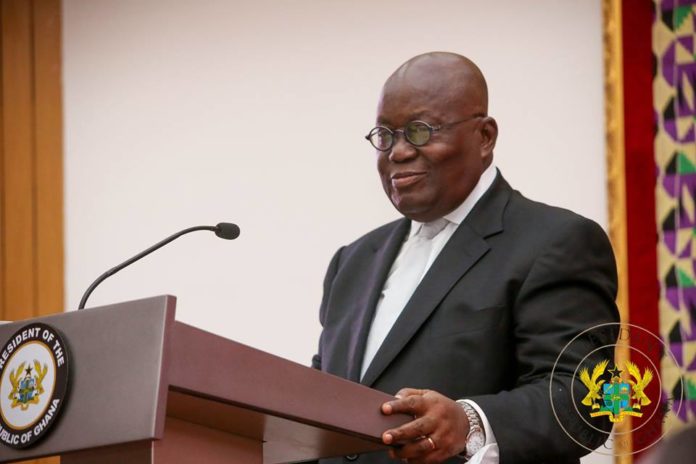
Ghanaian President Nana-Akufo Addo

As the Ugandan media fraternity readies itself to celebrate the 25th anniversary of World Press Freedom Day on May 3, UNESCO and the government of Ghana, will from May 2-3, 2018 hold the flagship celebrations with the participation of the country’s President Nana Akufo-Addo.

The theme chosen for this year’s World Press Freedom Day is “Keeping Power in Check: Media, Justice and the Rule of Law.” It explores the interaction between the judiciary and the media, and their complementary roles in fostering transparency, accountability and governance. Dozens of World Press Freedom Day events are being organized around the world.

The programme of the international conference in Accra highlights the media’s contribution to government accountability and to the transparency of elections. Ways to reinforce the ability of the judiciary to protect press freedom will be assessed along with the risk posed by attempts to regulate online speech.

More than 700 participants will attend the conference, among them high-level representatives of regional and national judiciary systems, ministers, heads of media organizations, journalists and civil society will participate in 18 parallel sessions, arranged in multiple interactive formats, on topics ranging from internet shutdowns, to gender-based harassment, through safety protocols for journalists, and artistic freedom in the digital age. A special session on national safety mechanisms in Africa will also be organized.

An academic conference will present new research on the safety of journalists. For the first time, a PolicyLab will offer a unique opportunity for high-quality interactions between researchers and policy actors working on common topics.

Also in Accra, on 3 May, President Nana Akufo-Addo and Deputy UNESCO Director-General, Getachew Engida will host the 2018 UNESCO/Guillermo Cano World Press Freedom Prize ceremony, whose laureate is jailed Egyptian photojournalist Mahmoud Abu Zeid, known as Shawkan, selected by an independent international jury of media professionals.

On the occasion of World Press Freedom Day, UNESCO will launch its’s flagship publications on press freedom: the World Trends in Freedom of Expression and Media Development and Re-shaping Cultural Policies.

An exhibition of works by this year’s winners of UNESCO’s annual World Press Photo contest will be on show during the celebration.

Independent news organizations have come together, launching a new campaign, Read more, Listen more, for World Press Freedom Day urging everyone to look beyond their usual information channels and seek out news sources that offer a different perspective.

Meanwhile, video messages by high profile journalists, artists and advocates will highlight the importance of press freedom and freedom of expression from various perspectives at a time when misinformation, censorship, harassment and violence against journalists and artists put new strains on fundamental human rights.

World Press Freedom Day was proclaimed by the UN General Assembly in 1993 following the Recommendation of the 26th session of UNESCO’s General Conference in 1991.It also marks the 70th anniversary of the Universal Declaration of Human Rights.


Stories Continues after ad

Finance, FIA directed to vet UTL potential investors

Finance Minister: Matia Kasaija.

The Cabinet has directed the Ministry of Finance to get a competent investor to revamp Uganda Telecom Limited (UTL), whose service license was extended for 20 years to allow the company to upgrade its network.

In meeting chaired by President Museveni, the ministers authorized the Minister of State for Investment Evelyn Anite to work with the Financial Intelligence Authority (FIA) to vet the capacities and records of the various prospective investors who submitted in their expressions of interest (EOIs).

Further, cabinet resolved that Uganda Communications Commission (UCC) should allow UTL to expand its Frequency Bandwidth (spectrum) ‘so long as it can prove that it will use it efficiently’ to cover the whole country and provide better quality service.

“The resultant entity to become the preferred provider of internet services to all Ministries Departments and Agencies of Government by guaranteeing it unlimited access and use of the National Backbone Infrastructure (NBI) to enhance government shareholding to a range of 32 per cent and 45 per cent,” the Ministers noted.

It should be recalled that last year, government directed the MDAs to outsource airtime and internet services from UTL. But this has since proved unsustainable because the company is heavily indebted and needs to be revamped.

Hitherto, the National Information and Technology Authority (NITA) has been providing internet services to 322 MDAs through its National Data Transmission Backbone Infrastructure (NBI) and E-Government Infrastructure (EGI).

Also, to facilitate the huge undertaking, NITA has laid an Optical Fibre Cable Network of 2,400 kilometres, connecting thirty three major towns in Uganda.

The above developments by NITA have ensured that connectivity costs have over the last seven years, reduced from US$1200 in 2011 to about US$70 in 2017.


Stories Continues after ad

Blankets and Wine returns big with South African and Rwandan ‘heavyweights’

Revellers at a past Blankets and Wine fete at Lugogo cricket Oval

The nineteenth edition of Blankets and Wine promises to be more exciting than any other before it, as Ugandan music freshest star, Fik Fameica faces off with South African musician and disc spinner Heavy K and Rwanda’s The Ben on May 6 at the Lugogo Cricket Oval.

The Ugandan rapper, who has made his name for hits like Kutama and his most recent Property, will be taking to the stage at Blankets and Wine for the first time, and the added spice is that he will be the only Ugandan performer as he squares off with the visiting artistes.

Revellers are in for a treat as Heavy K is an acclaimed performer who has produced multiple hits, including collaborating with Uganda’s Eddie Kenzo on Yasolo, while The Ben on the other hand is best known to Ugandans for his Binkolera collabo with local songstress Sheeba.

A quarterly, picnic style music festival which is powered by Tusker Malt Lager and organised by House of DJs, Blankets and Wine is one of the events on the Ugandan social calendar that revellers look forward to the most, thanks to its unmatched offering of great music, fun people, fashion, music and good vibes.

“The upcoming edition of Blankets and Wine is yet another opportunity for Tusker Malt Lager to appreciate our consumers and take them to a place where they discover some of the finest African music acts, said Grace Namutebi, Uganda Breweries Limited Brand Manager, Premium Beers.

Tusker Malt has been very deliberate and consistent about promoting local talent and we are pleased to have Uganda’s music star of the moment – Fik Fameica – making a debut appearance at Blankets and Wine.

With the acts from SA and Rwanda who are gracing the stage there is no doubt that this is going to be a show everyone will all be talking about for a long time, she added.

Since its first edition, Blankets and Wine has crafted a steady reputation as East Africa’s premier music experience, designed to showcase outstanding musicians in the emerging genres of Afro-based music.

That is not about to change at the nineteenth edition as a rich cast of acts both, local and international, will grace the stage. In addition to the headlining acts, the lineup also includes The Roots Warriors, Nu Kampala, Aka Dope Band, @Da_Bundus, Dj Xzyl and Vj Spinny.

Entry to Blankets and Wine will be Shs100, 000 and tickets can be purchased using mobile money by dialing *252# for MTN and *152# for Airtel, with gates open from 10am.


Stories Continues after ad

Fans blown away by Isaiah Katumwa, Manu Dibango’s tribute to Hugh Masekela

If anyone ever wondered what you get when you line up three of Africa’s most accomplished artistes on one stage, the short answer- pure magic – was delivered in emphatic style at the Serena hotel on Monday evening.

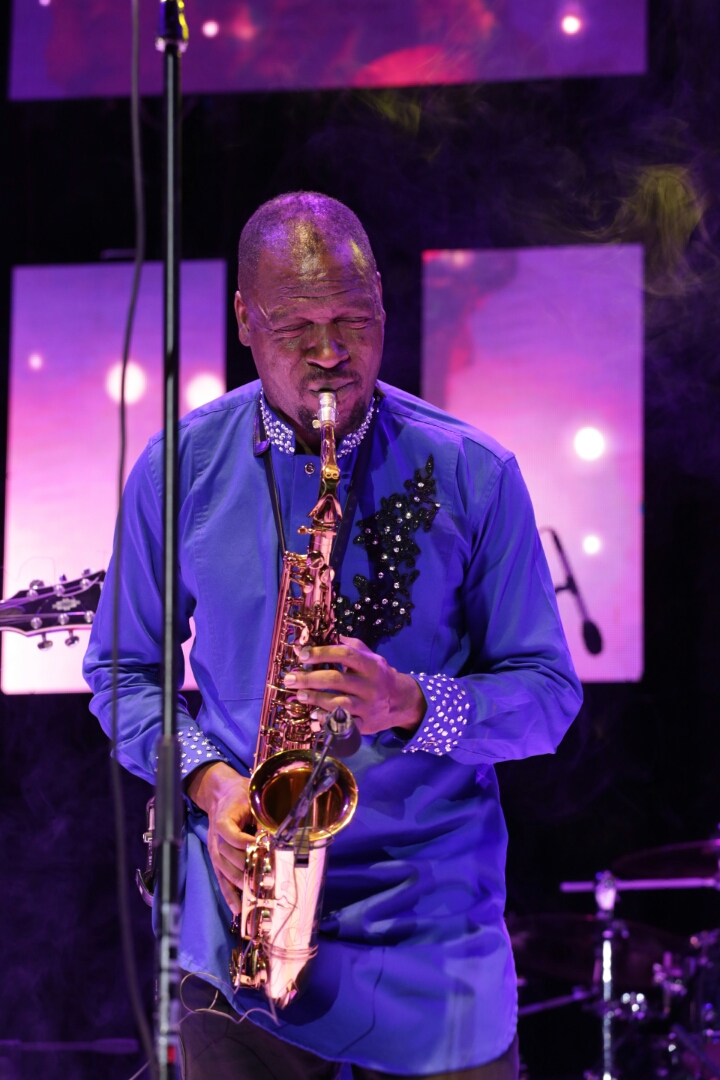
On an occasion that fittingly coincided with the International Jazz Day, the annual Isaiah Katumwa Concert served jazz lovers in Uganda a first-hand treat of Africa’s jazz royalty in the form of two internationally acclaimed guest performers; Manu Dibango and Afro-soul songstress Siphokazi, who joined our own Isaiah Katumwa for a live performance many will remember for a long time.

The concert had been themed as a tribute to the departed South African maestro Hugh Masekela, who passed on in January this year.

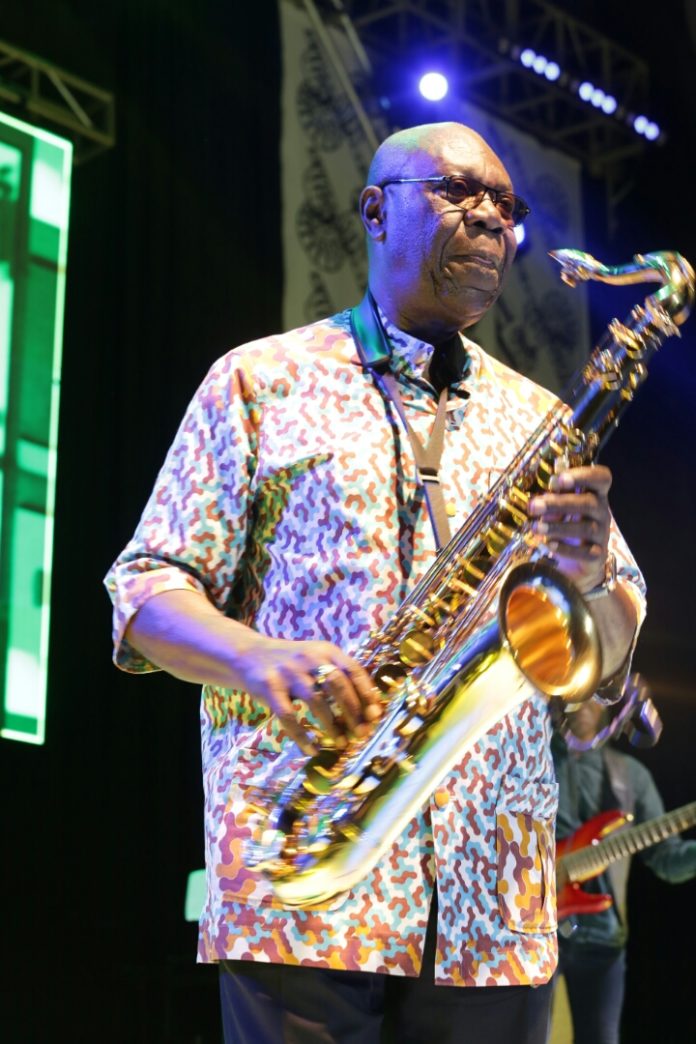
It was, therefore, fitting that a living legend, Cameroonian Manu Dibango was chosen as the guest performer to headline the event.

Revellers were reminded soon enough why the concert retains the tag of one of the country’s premier jazz affairs, as host Katumwa delivered more than half a dozen of his outstanding jazz tunes that earned the genre acceptance in Ugandas music mainstream.

Katumwa`s performance sandwiched the electric vibes provided by the South African Siphokazis Afro-soul mixes, setting the stage for the man of the evening  Manu Dibango. He did not disappoint.

The man best known for the 1972 single Soul Makossa, a song which influenced several hits including Michael Jacksons Wanna Be Startin Something, was quick to take charge, enrolling an awestruck audience on a musical journey with a style, grace and authority only a man with 100 albums to his name and close to 50 years of recording under his belt could.

Makossa means dance in Dibango’s native tongue, and he sure had revellers up on their feet as he worked his saxophone, delivering several of his other works of beauty before Katumwa joined up with the 84-year-old virtuoso to create the evenings crowning moment of musical bliss with a joint delivery of Soul Makossa.

There was never a dull moment, and with Johnnie Walker on hand to delight the palates of those in attendance, everyone who had made it to the Victoria Hall at Serena knew their money had been well spent.

It was an evening which had lived up to the promise that a lineup of three award-winning artistes provides.

The jazz enthusiasts present had, indeed, been blown away.


Stories Continues after ad

Ugandan-American woman to visit all countries in the world

GLOBAL TOUR: Jessica Nabongo while on part of her global journey

A Ugandan-American is planning to become the first woman, if not person, to visit all the 195 countries on earth.

Jessica Nabongo, born in Detroit, US, to Ugandan parents says she has been to 109 countries, wants to have visited 172 countries by the end of 2018, completing her ‘dream’ by visiting the other 23 in 2019.

An academic and blogger, reports indicate Ms. Nabongo  undertaking to visit all 195 countries in the world ‘isn’t just about getting her name in a record book … it’s about paving the way for women and people of color to do the same’.

Ms. Nabongo, who has taught English in Japan, and grad school at the London School of Economics, holds American and Ugandan passports, and will reportedly use her Ugandan travel document to visit North Korea and Iran, two countries which are hostile to the US.

Stories Continues after ad

Workers up in arms as DFCU EFT system crashes

dfcu bank

Customers who use DFCU Bank to access their salaries are wallowing in sorrow after the bank’s EFT system collapsed, leaving thousands Ugandans in a state of uncertainty.

Employees of several organisations that were paid as early as Friday last week had not had their accounts credited by Monday evening.

When distraught clients contacted DFCU, management responded that its EFT system had crashed and was being handled.
EFT is the Electronic Funds Transfer that banks use to effect account-to-account transactions. Though DFCU could not definitively give a timeline on when the system crash will be rectified, a source knowledgeable with the banking sector warned that the bank is suffering “excess customer stress”.

DFCU last year controversially acquired the assets and customers of Crane Bank, Uganda’s biggest commercial bank then, and banking sector experts warn that it has failed to manage Crane Bank’s huge customer base.

The defunct Crane Bank Limited is reported to have been sold at a mere Shs200 billion shillings, however, revelation indicate the Shs200 billion where for liabilities as the bank was taken for free.
The new revelation is that the Shs200 billion is ‘liability fees’ and this makes the whole transaction questionable in respect to the actual sale price.
More drama however ensued as DFCU Bank in mid-August announced net profits of Shs114 billion for the first half of 2017 year, up from Shs23 billion in the same period the preceding year, 2016. So this profit indicates the bank was sold and sound by the time it was given to DFCU. However, in the free market place, there value attached to the property but for CBL it this wasn’t the case.

The DFCU Bank attributed the profit majorly to the acquisition of Crane Bank: the company’s balance sheet jumped to Shs3.05trn as of June 2017, up from Shs1.8 trillion in December 2016, in just six months.

DFCU is partly owned by the Commonwealth Development Corporation (CDC), a British government-owned company, together with Rabo Development from the Netherlands and NorFinance from Norway, who are shareholders in Arise B.V together with Norfund, a Norwegian government-owned Private Equity firm and FMO, the Dutch Development Bank.

DFCU Shareholding percentages

Arise BV 58.71 per cent

CDC Group of the United Kingdom 9.97 per cent

National Social Security Fund (Uganda) 7.69 per cent

Kimberlite Frontier Africa Naster Fund 6.15 per cent

2 undisclosed Institutional Investors 3.22 per cent

SSB-Conrad N. Hilton Foundation 0.98 per cent

Vanderbilt University 0.87 per cent

Blakeney Management 0.63 per cent

Bank of Uganda Staff Retirement Benefits Scheme 0.59 per cent
Retail investors 11.19 per cent

Stories Continues after ad