Stanbic Bank
Stanbic Bank
18.8 C
Kampala
Stanbic Bank
Stanbic Bank
Home Blog Page 1586

WhatsApp co-founder Jan Koum is leaving Facebook

WhatsApp co-founder Jan Koum

Jan Koum, who sold the online messaging service WhatsApp to Facebook for $19 billion in 2014, said it was time to ‘move on’.

Koum is leaving both the WhatsApp and Facebook boards after disputes over issues including strategy and efforts to use WhatsApp data and ‘weaken its encryption’.

Facebook has faced scrutiny since the Cambridge Analytica scandal, in which data from up to 87 million members was improperly accessed.

Stories Continues after ad

Museveni warns civil servants saying they have retarded job creation

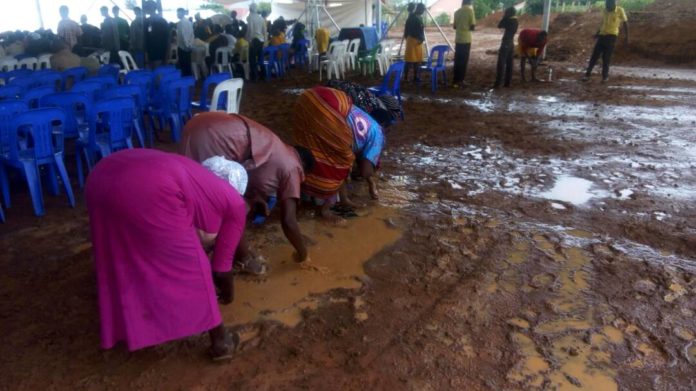
2018 International Labour Day celebration in Ssembabule. The heavy downpour disrupted the event.

President Yoweri Museveni has warned corrupt civil servants saying they have retarded possible ways of creating job in this country.

Speaking at international Labour Day celebrations held at Ssembabule Town Council play grounds in Ssembabule District, Museveni said corrupt officials have not only blocked the establishment of industries and service delivery, they act as barriers to the country’s economic development.

Under the theme ‘Promoting Public Spirit in Public Sector’ that is drawn from the fact that ‘public servants are like all workers seek employment as means to a livelihood Museveni vowed act against corrupt officials who stands against creation of employment opportunities among other opportunities that would lead to the development of this nation.
“He emphasized that he wanted to bring Cuban doctors after misbehaving of Ugandan doctors that recently boycotted their work over low salaries. Cuban doctors will teacher these local doctors who acted against the oath that they took which include among others saving people’s lives.” he said at Labour Day celebrations.

He noted that local doctors are unprofessional to the extent of shunning their duties for just pay rise among other minor issues.
“I have worked in this country for over 50 years without pay or little salary, I earn Shs3.6 million that is less than legislators’ salaries and I have never complained.”

Without disclosing his name, Museveni said one Ugandan doctor mobilized medics strike however, when he got involved in an accident, he wanted to be attended to, “I don’t know if that doctor was treated, would he still be in this country. “ He added.

The president’s reference could have been in regard to Dr. the president of Uganda Medical Association, Ekwaro Obuku who was attacked by thugs at his gate.
He noted that salary enhanced will addressed upon investing into government programs such as operation wealth creation, SACCOs on top of other Innovations. Government has started with among others science teachers, judicial officers and with time that issued of salary will become history.

Earlier the chairman for National Organization of Trade Union (NOTU) Wilson Owere implored the Permanent Secretary in the Ministry of Health Dr. Diana Atwine to closely work with Ugandan doctors other than sidelining them.

“Your Excellence, Ministry of Health officials have misunderstandings with some doctors, instead of working towards developing human capital to enhance their pays, they just blackmail them as they threaten to import Cuban doctors” Owere noted.

Stories Continues after ad

Fortebet gives back to 100 clients in Bwaise

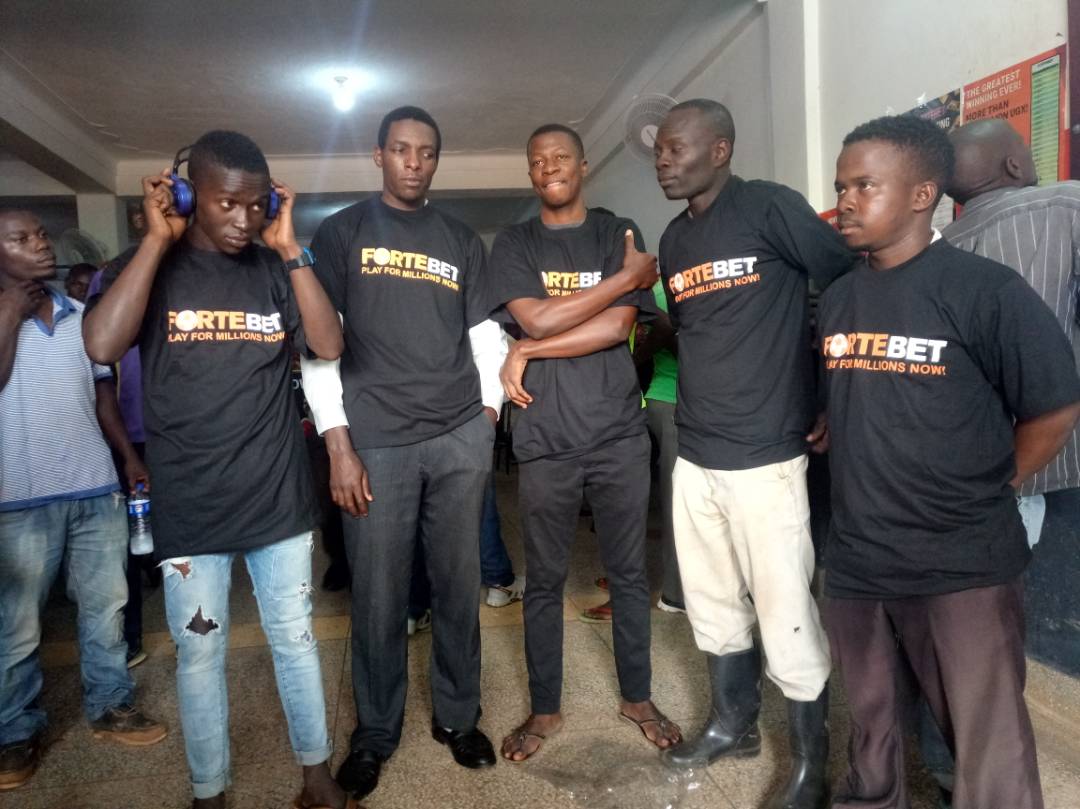
The winners of jerseys at Litre-Litre branch.

It was excitement as Fortebet showered lots of gifts to its customers in Bwaise.

Over 100 customers that were found at its seven branches over the weekend got gifts that Fortebet took to them. The gifts included jerseys for the most loved European teams, Fortebet T-shirts, caps, pens and wristbands.

All the gifts were given out inside the branches by the company’s media manager, John Nanyumba.

“All of you qualify to receive any of these gifts, as long as you show proof that you bet with us,” Nanyumba said while addressing Bwaise main customers shortly before the gifts’ giving session started.

Depending on the customers’ weight of stakes, many of them walked home with at least one of the gifts above.
The branches in which these gifts were given out include Bwaise main, Bwaise Gombolola, Bwaise center, Bwaise Ku Ttaawo, Bwaise Ku Satu, Bwaise Mumbawo and Bwaise Litre Litre.


The customers that received the gifts told us how they felt after getting the gifts. “Fortebet has made a real difference in the betting industry in Uganda. Traditionally, betting companies here (Uganda) were not known for giving back to their customers.

“We are happy that you have given back to us part of our money,” Charles Kizito, one of the customers who won an Arsenal jersey at Bwaise main said. Khalid Musisi, who won a T-shirt at Bwaise Litre-Litre said, “Every time I will be wearing this T-shirt, I will be doing two things; one, to advertise my company (Fortebet) and two, remembering that Fortebet loves me. The next time you come, I want to win a jersey.”

The winners of jerseys at Litre-Litre branch

The customers also gave their predictions of the UEFA Champions League second leg matches to be played on Tuesday and Wednesday. To view these predictions, visit the Fortebet Facebook page. This weekend, Fortebet will appreciate its clients in Soroti.

Stories Continues after ad

International Labour Day: Civil servants urged to be patriotic

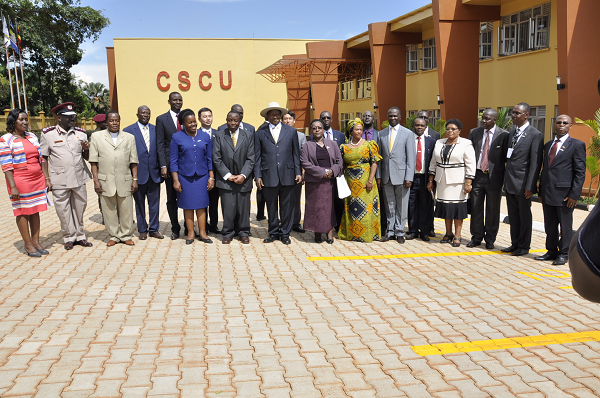
Uganda Civil Service College-Jinja.

As Uganda joins the rest of the world to celebrate the International Labour Day that falls on May 1, Ugandan civil servants have been urged to show respect, be patriotic and pursue public interest at all times as they serve citizens.

This year’s celebration will be he held in Sembabule District under the theme, ““Promoting the Public Spirit in the Public Sector”.
The day is commemorated in honour of the contribution of workers to national development. It is also used to heighten both national and international consciousness on the importance of promoting and protecting the rights of workers.

Given that rights go hand in hand with responsibilities, this day has also increasingly been used as an occasion to remind workers of their responsibilities and obligations, says the Ministry of Gender Labour and Social Development (MGLSD).

According to MGLSD, The public spirit refers to loving or caring for the nation the way an ordinary person loves or cares for their personal interests.
“Public spirited persons identify themselves with the interests of the nation and make those interests their own. Similarly, a public-spirited person shields the nation from anything that can harm it,” the ministry says.

The choice of the theme, according to the ,ministry was informed by the fact that whereas public servants like all workers seek employment as a means to a livelihood, they also have an over-arching obligation to serve and act in the public interest.

The ministry opines that public servants have a primary responsibility to pursue the public interest. This sets them apart from workers in the private sectors.

“Therefore, the notion of the public interest serves as part of their corporate mission,” it says.
Unlike employees in a private firm who may be required to pursue the firm’s interests, the ministry says public servants are… expected to put the public interest ahead of their own when exercising their powers.

“Placing citizens at the forefront of public service requires a fundamental change in mindset of public officials. This requires reforms that target changing the values, behaviours as well as the technical capacity of public servants with a view of deepening motivation and instilling the public spirit,” reads a synopsis of this year’s National Labour Day celebrations.

On many occasions public officials in Uganda have in the pursuit of private or personal interest compromised the public good or interest. As a result, planning and implementation of many government programmes and projects has been compromised. This has not only cost the public treasury resources but has also left the ordinary citizens without the much needed services.

Besides, officials say, failure to promote public interest in the public service undermines the performance of the private sector which is a key driver of economic growth.
“The history of development further teaches us that failure to reign in on the pursuit of personal interest at the expense of the public good slows down the socioeconomic transformation of a country,” they add.

They thus urge public officials to ensure that the objectives and outcomes of their decisions are in the public interest. “Similarly, the processes adopted and procedures followed by decision-makers in exercising their discretionary powers should also be in the public interest.”

Stories Continues after ad

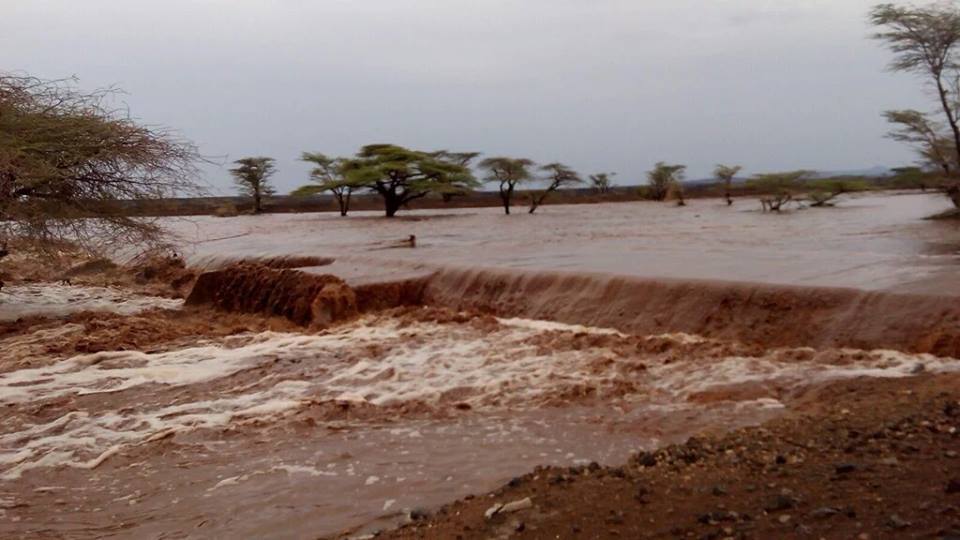
Floods hit Southern Kenya

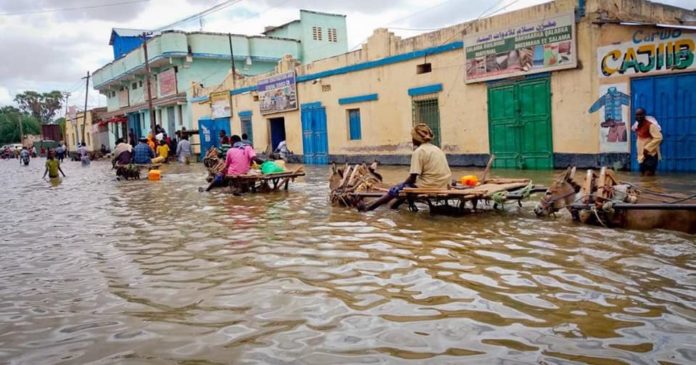
Flooding in Southern Kenya

At least 100 people have been killed in flood-related incidents since the start of spring flooding in Kenya.

Fifteen counties have been impacted, including Kitui, Baringo, Nyandarua, Kisumu, Isiolo, Kilifi, and Tana River. As many as 210,000 people have been displaced, most from Tana River, Kisumu, and Isiolo counties.

More than 3,000 people were rescued from the Garashi and Kakuyuni wards of Kilifi after being trapped by floods.

Residents living near the banks of the River Tana are being forcibly evacuated as more water is expected to flow down from the Seven Folks dams. Widespread damage to crops and roads has occurred, as well as to water and sanitation infrastructure.

Rain is expected to continue, especially in the Coast region. Kenya has two rainy seasons, the second of which typically runs from late April to October.

Stories Continues after ad

More than 60 per cent of the world’s employed population is in the informal economy-ILO

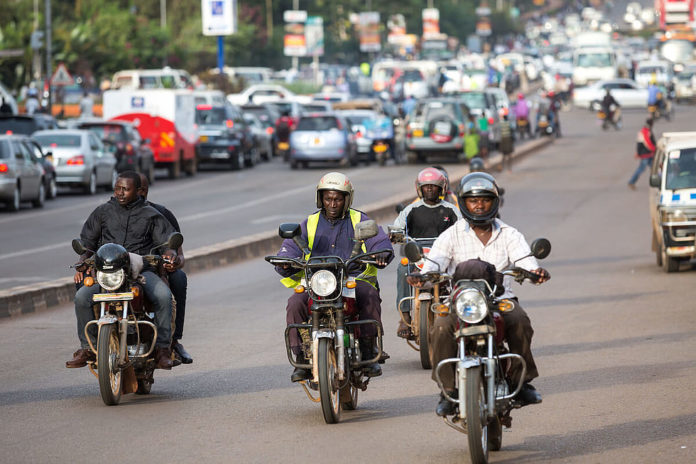
Commercial riders in Uganda are part of the informal sector.

The International Labour Organisation (ILO) in its latest report says that 2 billion people work informally, most of them in emerging and developing countries.

The majority lack social protection, rights at work and decent working conditions.
Two billion people – more than 61 per cent of the world’s employed population – make their living in the informal economy, the ILO said in a report, stressing that a transition to the formal economy is a condition to realize decent work for all.

Women and men in the informal economy: A statistical picture (Third edition) provides comparable estimates on the size of the informal economy and a statistical profile of informality using criteria from more than 100 countries.

When excluding agriculture, half of the employed population is in informal employment, according to the report.

In Africa, 85.8 per cent of employment is informal. The proportion is 68.2 per cent in Asia and the Pacific, 68.6 per cent in the Arab States, 40.0 per cent in the Americas and 25.1 per cent in Europe and Central Asia.

The report shows that 93 per cent of the world’s informal employment is in emerging and developing countries.

Informal employment is a greater source of employment for men (63.0 per cent) than for women (58.1 per cent). Out of the two billion workers in informal employment worldwide, just over 740 million are women. Women are more exposed to informal employment in most low- and lower-middle income countries and are more often found in the most vulnerable situations.

The level of education is a key factor affecting the level of informality. Globally, when the level of education increases, the level of informality decreases, the report says. People who have completed secondary and tertiary education are less likely to be in informal employment compared to workers who have either no education or completed primary education.

People living in rural areas are almost twice as likely to be in informal employment as those in urban areas. Agriculture is the sector with the highest level of informal employment – estimated at more than 90 per cent.

Two of the report’s authors, Florence Bonnet and Vicky Leung, point out that while not all informal workers are poor; poverty is both a cause and a consequence of informality. “The report shows that the poor face higher rates of informal employment and that poverty rates are higher among workers in informal employment,” said Leung.

Bonnet, for her part, stressed: “There is an urgent need to tackle informality. For hundreds of millions of workers, informality means a lack of social protection, rights at work and decent working conditions, and for enterprises it means low productivity and lack of access to finance. Data on those issues are crucial for designing appropriate and integrated policies that are tailored to the diversity of situations and needs.”

“The high incidence of informality is a major challenge for the realization of decent work for all and sustainable and inclusive development.” Rafael Diez de Medina, Director, ILO’s Department of Statistics
This report is all the more timely given the momentum created by the Transition from the Informal to the Formal Economy Recommendation, 2015 (No. 204) , and the Sustainable Development Goals that includes a specific statistical indicator on informal employment (8.3.1).

ILO Recommendation No. 204 stresses the need to facilitate the transition of workers and economic units to the formal economy, to promote the creation, preservation and sustainability of enterprises and decent jobs in the formal economy and to prevent the informalization of formal economy jobs.

“The high incidence of informality in all its forms has multiple adverse consequences for workers, enterprises and societies and is, in particular, a major challenge for the realization of decent work for all and sustainable and inclusive development.
Having managed to measure this important dimension, now included in the SDG indicators framework, this can be seen as an excellent step towards acting on it, particularly thanks to more available comparable data from countries,” said Rafael Diez de Medina, Director of ILO’s Department of Statistics.

Stories Continues after ad

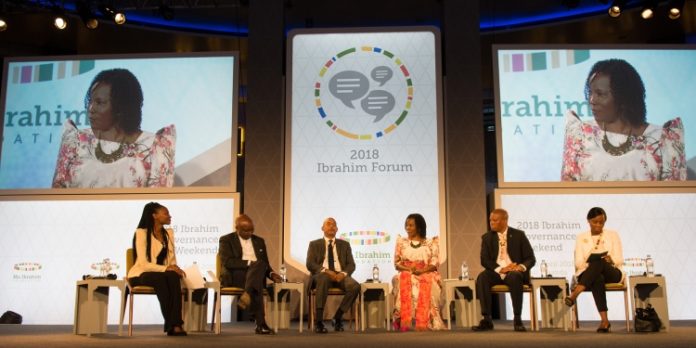
Africa must strengthen pride and restore ownership in its public services, concludes 2018 Ibrahim Forum

KCCA ED Jennifer Musisis (Third right) attended the 2018 Mo Ibrahim Forum in Kigali.

Public services in Africa are critical to the continent’s future but are currently overlooked and under-resourced, and struggling to cope with unprecedented demands from rapidly growing populations.

However, through a combination of wise leadership and active citizen engagement, new opportunities exist to shape public services that not only respond to these challenges, but also strengthen the social contracts between governments and the people they serve.

These are among the key conclusions to emerge from the 2018 Ibrahim Forum, held in Kigali on Saturday as part of the Ibrahim Governance Weekend.

Mo Ibrahim, Chairman of the Mo Ibrahim Foundation, said: “Our public services are vitally important, but we are not talking about them. There have been endless meetings in Africa, or about Africa, discussing everything under the sun, but we never discuss our own public service and public servants. These are the people who teach our kids, provide electricity, clean water, hospitals – the people doing everything around us – and we have never stopped once to think what is going on in this sector.”

The Ibrahim Forum brings together a powerful coalition of African and global leaders to discuss an issue that is critical to the continent’s future. This year’s Ibrahim Forum focused on the Foundation’s latest research report, Public Service in Africa. As a new component of the Ibrahim Governance Weekend, the Foundation this year introduced the Next Generation Forum, a meeting of young leaders from 35 countries whose recommendations fed into the Ibrahim Forum.
The Ibrahim Forum’s first session – Growing expectations for public delivery – discussed the changing shape of demand directed at African public services, and the need to assess who should be responsible for meeting and financing these demands.

Herman Mashaba, Mayor of Johannesburg, outlined some of the particular challenges facing urban Africa in relation to public service delivery. He said: “Housing really is the number one problem. Second, it is unemployment. In Johannesburg, we have an unemployment rate of 33 per cent and every month, Johannesburg attracts a minimum of 3000 people from rural areas.”
Ibrahim Assane Mayaki, CEO of the NEPAD Planning and Coordinating Agency, and former Prime Minister of Niger, said: “When we were building Niger’s national development plan, we organised a survey to ask citizens about their priorities for public services. All of us were guessing what they would be – education, agricultural production etc. But justice came out as the priority for our citizens. It opened a debate, which has continued, on how we should intensify the consultation process around the delivery of public services.”

Donald Kaberuka, Chairman and Managing Partner of South Bridge Partners, and former President of the African Development Bank, said: “At the end of the day, citizens are looking for three things. Number one, public service should be clean. It should not steal their money, especially when they have very little. Number two, providers should actually deliver the service for which they have been paid. Number three, they should be accountable.”

The second session – Assessing the current supply of public services – explored the challenges facing public services, including skills, resources and the difficulty of attracting talent, including the issue of ‘brain drain’ towards private sector and abroad. Panellists discussed success stories of governments creating innovative partnerships that support both the delivery and financing of public services.
Fanfan Rwanyindo Kayirangwa, Minister of Public Service and Labour in Rwanda, said: “In Rwanda we have really focused on our human resources. We invest in our human capital. We have many opportunities for young people to have appropriate training and that has helped us to build a stable public service.”
Attracting the best and brightest minds to the public sector requires embracing technology and innovation, said Winifred Oyo-Ita, Head of Civil Service of the Federation, Nigeria. “Having public records available at the touch of a button improves issues of performance, discipline, and also integrity. You can do much more monitoring and evaluation, and, importantly, know where you are falling short.”

Adesoji Solanke, Mo Ibrahim Foundation Scholar and Next Generation Forum participant, said: “I’ve spent my entire career in the private sector. If I am going to potentially join the public service, what I would like to see is an environment where integrity counts. Pride in your workplace matters.”

The third session – Building a sound contract between citizens and public service providers – explored the need to develop a stronger contract between the consumers and suppliers of public services, built on accountability, ownership and consent to taxation.

Highlighting the importance of active citizenship, Jay Naidoo, Founding General Secretary of the Congress of South African Trade Unions, said: “Only the power of the people can ensure there is accountability. We have to understand this is an interactive process where the bottom-up is more important than the top-down.”

Stressing the imperative for governments to be open and transparent with their citizens, Ngozi Okonjo-Iweala, Chair of the Board, Global Alliance for Vaccines and Immunization, and former Minister of Finance in Nigeria, said: “Once citizens have information and they know what is happening, they become empowered. It is only those authorities who don’t want to build trust who will ensure that their citizens don’t have access to accurate information.”

Barkha Moussa, Second Secretary in the Ministry of Foreign Affairs of Mauritius, and a participant in the Next Generation Forum, stressed the need for young people to actively participate in shaping the public services they want. “Actually, we are not the next generation forum, we are the now generation forum – because we are already here!”
The Ibrahim Forum concluded with an on-stage conversation between Mo Ibrahim and President Paul Kagame, of Rwanda and Chair of the African Union. Commenting on reform of the African Union, President Kagame said: “We have to change the mentality of how we do things on our continent – whether it is about efficiency, pride in ourselves, or institutional reforms. We also have to look at the financing of the African Union. It is not proper that we don’t fund our own budget, because we can. So if we can, why don’t we do it?”

The Ibrahim Governance Weekend began with a special Leadership Ceremony to honour Ellen Johnson Sirleaf, former President of Liberia and winner of the 2017 Ibrahim Prize for Achievement in African Leadership. Accepting the Prize on behalf of “the many women and men who helped to navigate the profound complexities of the post-conflict country that is Liberia”, President Sirleaf announced she would establish the Ellen Johnson Sirleaf Presidential Center for Women and Development. The Center will focus on supporting women as agents of change, makers of peace, and drivers of progress.

The weekend wrapped up with a star-studded music concert featuring some of Rwanda’s and Africa’s biggest stars, including Riderman, Phionah Mbabazi, Charly & Nina, Sauti Sol and Peter P-Square. Addressing the crowd of 3,000 guests, Mo Ibrahim said: “We’ve had a wonderful discussion this weekend and we wanted to end it with a party to say thank you to you, the young people of Rwanda. You are the future.”

Stories Continues after ad

Old is Gold as Ponsiano Wins Masaka Challenge

Ponsiano Lwakataka going over a rough edge in Masaka,

Masaka: Ponsiano Lwakataka has always said he is as lethal as any competitor in any car while in his old Subaru N8. He has always argued that competitors that beat him do it because they have superior cars and can only do that on technical terrains.

He lived to that claim over the weekend when he emerged the winner of the Tavern Kick SMC Challenge Rally in Masaka outclassing a field of very technically superior cars handled by fellow senior drivers.

Ponsiano took advantage of the 42 km Bukeri stage, the first on Sunday morning to open up a 60 second lead after overnight leader Jas Mangat dropped out 14km into the stage with engine failure.

A resurging Hassan Alwi in a Subaru N14 overturned that lead in Stage 2, Kyabakuza 41 km stage with a favorable weather condition that saw the rest of the field suffer heavy rains and by end of stage 5, was leading Ponsiano by 6 seconds before dropping out with engine failure as well.

Ronald Sebuguzi, Omar Mayanja, Arthur Blick all driving EVO X as well as Duncan in a Subaru N14-R4 were no match for Ponsiano whose flat out attack principle gelled with his old Subaru N8 and Sam Mugisha calling the notes to maintain good pace.

Was it a case of superior cars failing to live up to the occasion or was it the ability of ponsiano as a driver that determined the day? Arguably, Ponsiano is a very quick driver who takes crazy risks that other competitors can’t take. When it comes to technical terrains with several turns and slow bends, Ponsiano and his N8 are inferior to the senior drivers with superior cars. But when it comes to flat out stretches, Ponsiano can match any car any day.

Three stages of the rally contributed to about 120km of flat stretches. These were the sections that did it for Ponsiano. Earlier in the week he had mentioned that if he won the first stage on Sunday morning he would take the day. He won that stage and indeed he took the day. Ponsiano has 17 years of rallying experience and his Subaru N8 is also 17 years old.

Meanwhile the crew of Unisan Bakunda and his co Umar Kakande continues to impress with their daring approach rally after rally. Their 3rd place finish, less than 2 minutes off Ponsiano and barely 50 seconds off second placed Duncan Mubiru in a much inferior EVO 4 raises the question of whether he is the newest kid to watch.

Stories Continues after ad
NBS’ Simon Muyanga sent to prison over Shs51m court debt

Jinja: Opposition Forum for Democratic Change’s Secretary for Mobilization Kaliro District and former Bulamoji Constituency MP Aspirant, Simon Muyanga Lutaaya has been committed to six months in Kirinya prison for failure to pay a lawyers’ cost of shillings 51 million.

He was sent to the coolers by Grade I Magistrate, Samanya Kasule.

Trouble for Muyanga started when he filed an election petition contesting the ruling National Resistance Movement party (NRM)’s Kenneth Lubogo’s victory but he lost both cases at Jinja High Court and Court of Appeal. Actually, he lost the first case in Jinja High Court on August 19, 2016 and on November 22, 2017 he lost the second in the Court of Appeal.

The court of appeal dismissed his petition with costs amounting to shillings Shs153 million. Since then, Muyanga who is also the minister of information for Bulamogi Chiefdom started making payments in installments, through selling personal property to raise the money, reducing the burden to Shs51 million which he was supposed to have cleared latest by December last year.

Police Saturday January 13, 2018 blocked former FDC presidential candidate, Dr Kizza Besigye and Kampala Lord Mayor Erias Lukwago from attending a fundraising rally organized by Muyanga to raise the costs.

The Police were seen chasing away local residents who had gathered to attend the rally.
It was after then that the senior journalist sold off several of his assets including a car and land to pay part of the money.

In February this year, Jinja High Court deputy registrar, Jesse Byaruhanga issued arrest warrant after Muyanga allegedly failed to honour court summons which he (Byaruhanga) describes a contempt of court. This after Muyanga failed to show up in court to show cause why he should not have been arrested.

Lubogo’s lawyer, Hassan Kamba said then that Muyanga was supposed to tell court whether he was bankrupt after failure to pay the court fines. Muyanga did not show up and they have since been hatching a plan to have him face the law.

According to the warrant of arrest, Muyanga is supposed to be arrested, sent to Kirinya prison or Nalufenya and his property sold off to recover the money.
Muyanga’s lawyer Asuman Nyonyintono told this writer today that: But we are doing our best to have our client out of Kirinya.

“When are you are committed in such a case, you can be released immediately when you pay the costs,’ clarified Nyonyintono.

Stories Continues after ad

EA standards committee approves 44 more standards

STANDARDS: Bottled mineral water has been standardised by the EAC.

The East African Standards Committee (EASC) has harmonized 44 standards covering the areas of oil seeds, fats and oils, packaging, drinking water, textiles and textile products, alcoholic and non-alcoholic drinks, liquefied petroleum and natural gas equipment.

During the harmonization meeting held from April 26-27, 2018 in Arusha Tanzania, the committee members noted that 40 draft standards were in final stages of approval and had been circulated for public review and notified to World Trade Organization (WTO), due for approval at the next committee meeting.

The 21st EASC meeting was chaired by Uganda and attended by the delegates from Partner States of Burundi, Kenya, Rwanda, Tanzania and Uganda. Other attending included delegates from the EABC, Trade mark East Africa (TMEA), USAID/Trade Hub, ARSO, SADC, ISO, WHO/FAO Codex, and IEC regional office for Africa, with the committee also endorsing 107 international standards that had been referenced in the harmonized standards.

Harmonization of standards at the regional level continues to be a major activity, and a study undertaken by the East African Business Council (EABC) has shown that between 2010-2016, harmonization of standards within the EAC led to increase of intra-regional trade value by 18% from US$291.2m to US$343m for selected products that include soap and cleaning agents, alcoholic beverages, steel products, edible fats and oils, sugar confectionaries, fish and fishery products.

As of 2017, there were 1374 harmonized East African Standards and experts say that with more standards harmonized, the intra-regional trade is expected to grow much higher.

The committee also reviewed progress made in the implementation of the 2017 work plan, status on adoption and implementation of harmonized standards, engagement with regional and international standardization organizations and progress made in the finalization of the EAC Metrology and Standards, Accreditation and Conformity Assessment (SACA) bills.


Stories Continues after ad