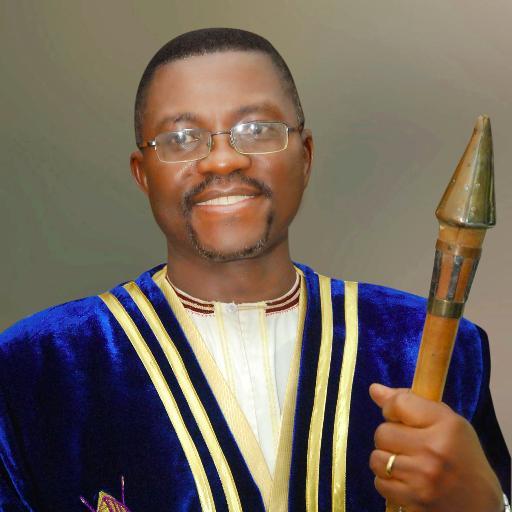
The Katikiro of Buganda Charles Peter Mayiga has faulted police, judiciary and land registries for exacerbating the land problems in the country.
Appearing before the Justice Catherine Bamugemereire-led Land Commission in Wandegeya this morning the Katikiro said the three agencies are complicit in the rampant land fraud by siding with the rich including politicians to grab land from the poor.
“Every person across the country has a negative a story to tell about Police on how they have failed to investigate into land matter and how they side line with the rich persons and politicians to grab peoples’ land,” Katikiro Mayiga told the Commission.
“We implored the Land Division of the High Court gets judges to dispose of cases in a timely manner. The Land Act has not been fully implemented and this needs to change,” he added.
He also took swipe at an amendment bill by government last year, proposing to acquire land for putting up public structures before compensating the land owners.
“Government is known for taking its time before people are compensated, and therefore we believes Government can only acquire land from owners after clear compensation,” he noted.
And, reacting to the Commission’s recommendations to abolish Mailo land, Katikiro Mayiga said the Buganda kingdom will outrightly oppose the recommendation.
“There is a perception the the land commission is aimed at denying the Buganda Kingdom and the Kabaka a rightful ownership of land. We recommended for the reinstatement of a Federal system of governance for each area to manage its own affairs,” the Katikiro emphasized.
Instituted in 2016 to investigate land matters, the Land Commission includes among others Justice Bamugemereire, Robert Sebunya, Ms. Mary Oduka Ochan, Ms. Joyce Habasa, Dr. Rose Nakayi, former Justice and Constitutional Affairs Minister Fred Ruhindi and George Bagonza Tinkamanyire.
FLASHBACK: KCB SME Business Club members being flagged off for a trip to Germany and Turkey.
Small and Medium Enterprises constitute 99.95% of all companies in Germany. There are 3.67million SMEs in Germany, employing 68% of the working population of the country.
The SME sector is thriving in this part of the world with an annual turnover of up to 500m Euros, SMEs are arguably among the biggest contributors to the GDP of the Republic of Germany.
SMEs in Uganda and Germany are not fundamentally different in terms of philosophy.
However, the degree of success these entities have scored over the years compared to their Ugandan counterparts presents us with numerous lessons.
Heads of over 30 Small and Medium Enterprises (SMEs) in Uganda recently visited Germany and Turkey on a 10-day familiarization trip organized by KCB Bank Uganda Business Club. Below are the lessons learned from the trip.
Family Businesses: 95% of the SMEs in Germany are family businesses, even the big names like BMW and Liebherr were started by families.
Family businesses in Germany have got a ‘we’ philosophy that is ingrained in all the family members as opposed to the ‘I’ philosophy in our Ugandan entities.
This ideology enables these SMEs to be handed over from one generation to another, and they embrace a ‘work in progress’ approach, every member at the helm of the company gives it his best and passes it on to the next one in line.
Every family member has got a responsibility to ensure that business survives and does not collapse in his time. Nobody works to satisfy his own needs but to fulfill the ideology of the founding father.
Brand resilience: Germany SMEs build Brands not personal empires.
A brand like Schussenrieder, have survived since 1183 and today it is one of the most popular brands of beer in Bavaria Germany. Brands have the capacity to live on long after their founders but personal empires don’t.
Ugandan SMEs must embrace the registration of their trade names and endeavor to grow them with a connotation of quality and reliability, this is how Germany has built strong brands.
Technical education: University Degrees are good but to build sustainable SMEs everyone in the business must have the knowhow of the primary business the entity deals in. SMEs in Germany provide training for more than 1.2million youth constituting 89% of all trainees in the country.
Liebherr, a market leader in the manufacture of Mobile and crawler cranes has got a fully-fledged apprentice ship department on their more than 10 acre manufacturing complex, for students as young as 15 years learning to create breath taking technological breakthroughs in the engineering arena.
We need to embrace this approach in every line of business we are doing as SMEs, our young ones should be exposed to the primary business before they are elevated to management positions in the organization, and this is the sure way to create sustainable and resilient brands.
Succession Planning: Bavaria, Germany is well known for its good brands of beer and milk production.
One farmer running a modern dairy farm with 85 heads of cattle single handedly with state of the art technology, confessed that “this farm has been running in the family for the last 50 years”. He learnt the trade from his father and he was training one of his daughters to care for the animals in preparation of her taking over from her father.
Irrespective of the profession one has taken at college or University, he pays allegiance to the family trade and this way everyone is a producer in Germany, from lawyers, teachers, doctors, bankers mention it. This how Germany has managed to maintain a high GDP.
The writer is the head of SME banking at KCB Bank (U) ltd,
He holds a B.Com (MUK), PGDFM (UMI), MBA (MUK) and Candidate CFA Level II
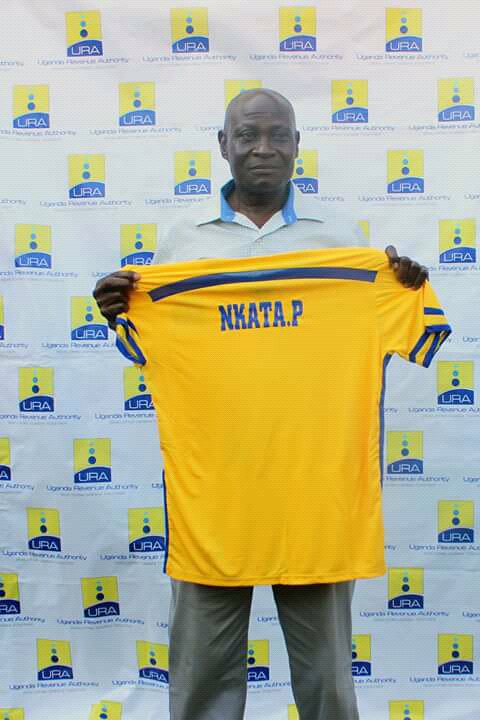
After a humiliating 7-2 defeat by the Kampala Capital City Authority Football Club yesterday, Uganda Revenue Authority (URA) Football Club Head Coach Paul Nkata has resigned.
According to sources, Sam Timbe, himself fired by Kenyan side Tusker on Monday, is tipped to replace Nkata at URA.
With the emphatic home-ground win at the KCCA Star Times Stadium, the ‘Kasasiro Boys’ now lie in second position on the table, while URA is in eighth position.
The United Kingdom’s Foreign and Commonwealth Office (FCO) has issued a security alert in respect of Tanzania, cautioning Brits to stay safe during planned anti-government protests tomorrow.
The April 26 protests have been banned by authorities even though the Tanzanian activist behind it, US – based Mange Kimambi, insists the nationwide protests will go ahead as planned.
Its foreign travel advice of April 23, cautioned against political gatherings which it said could get confrontational. It cited the recent incident where a passer-by was hit and killed by a bullet during protests.
“Political demonstrations across Tanzania are possible on April 26, 2018 (Union Day). Previous political demonstrations have resulted in fatalities and the police may use tear gas and/or live ammunition.
“You should take care, be aware of your surroundings and avoid large crowds or public demonstrations. Make sure you have a means of communication with you at all times and monitor local media for updates, the advice added.
It stressed that even though most of the estimated 75,000 British nationals who visit Tanzania annually have incident-free trips, there was an increase in criminal activities across the East African nation, hence the need to beef us personal security at all times.
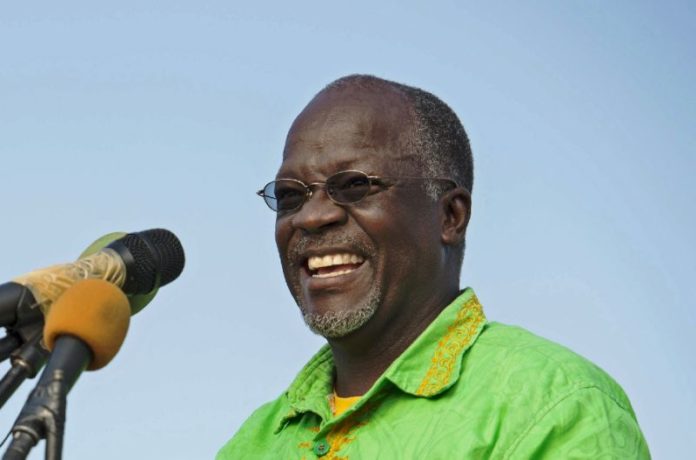
The banned protests are specifically against the style of leadership of President John Pombe Magufuli, who is increasingly accused of dictatorial use of his executive powers.
Local media portals have reported arrests made by police in relation to persons associated with planning for the banned protests. Police are on record to have said they will cripple persons who defied the ban on protests.
Among other things, opposition meetings and protests are banned across the country. Those that defy are clamped down by the police. There are laws that expressly criminalize insulting or defaming the president.
Politicians have been jailed and a number of media outlets closed for breaching such laws. In the latest media clampdown, bloggers are expected to register their blogs by dishing out around $900. A situation media watchers say will affect jobs of many young people in the media.
Magufuli, who came to power in 2015 has, however, been lauded in the area of anti-corruption and public service delivery. He has fired close allies and heads of utility agencies for failure to protect public interest.
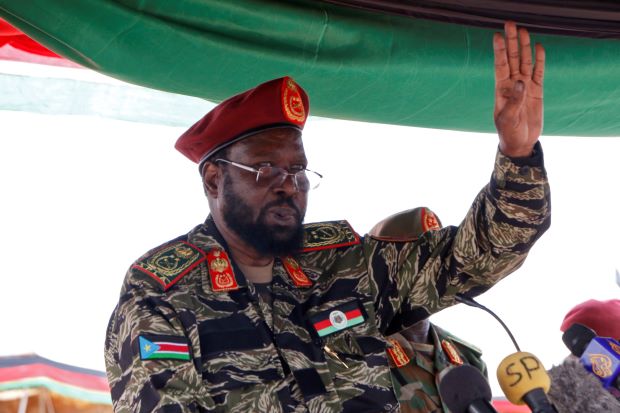
REJECTED CALLS TO STEP DOWN: South Sudan President Salva Kiir.
South Sudanese President Salva Kiir rejected calls from some opposition groups to resign as part of a deal to end the four-year civil war in the oil-producing African nation.
“They want me to sign the agreement and then step down immediately,” Kiir said Tuesday in the capital, Juba, at a gathering to mourn army chief James Ajongo, who died last week after a short illness. “What is my incentive in bringing peace if it is peace that I will bring and then I step aside? Nobody can do it.”
Eight of nine opposition and rebel groups that have been in stop-start talks with South Sudan’s government on April 14 issued a statement urging him to resign. “The people who are fighting with us have very unreasonable conditions to make peace,” Kiir said.
Conflict that erupted in December 2013 has claimed tens of thousands of lives, caused Africa’s largest refugee crisis and left parts of South Sudan on the brink of famine. A decline in crude production — the government’s almost sole source of revenue — and lower global oil prices have shattered the economy.
The eight organizations also called on Riek Machar, a former vice president and rebel leader commanding the ninth group, to hold no role in any transitional administration. Machar briefly returned as Kiir’s deputy in mid-2016 under a short-lived peace deal, before being forced to flee the country amid renewed violence.
Negotiations backed by other East African countries were due to resume in neighboring Ethiopia on April 26, but were last week postponed to a later date. Kiir, 66, has ruled South Sudan since independence from Sudan in July 2011.
Parliament has this afternoon congratulated Ugandan sports personalities who recently won medals in the just concluded Commonwealth games that took place in in Australia.
In August House chaired by Deputy Speaker Jacob Oulanya, the motion was moved by Hamison Obua, (Ajuri county) who noted that the future of sports in Uganda is bright adding that investment in sports isn’t a choice rather an obligation of government and the entire nation.
“There is need to repeal the 1964 National Council of Sports law, the new law will help to solve underfunding sports.”
He called upon government to complete the high altitude training center in Sebei sub-region for the sports persons to train saying most athletes train in Kenya.
According to Obua, Namboole stadium has a master plan but until now it is incomplete, “It is supposed to host indoor arenas for various sports disciplines, why don’t we as a government complete that structure?” he asked.
Deputy Speaker Jacob Oulanyah noted that, Ugandan National Anthem will be sung in every capital where games will be held if we put the resources together. He lauded all sports personalities who scooped medals on top of those all that failed.
On taking the floor, Dokolo Woman MP Cecilia Ogwal implored government to reflect on promises that are always made, create a database of all Ugandan heroes. “I would like all those who played a role in the field of sports to be recognized too, she wondered why we always focus on success and forget its basis?” she added.
In his submission, Ayivu MP Bernard Atiku said this government needs to put its act together, where you have made pledges, fulfill them. “The Minister should stop chest thumping, athletes did not get support before the games.” he added.
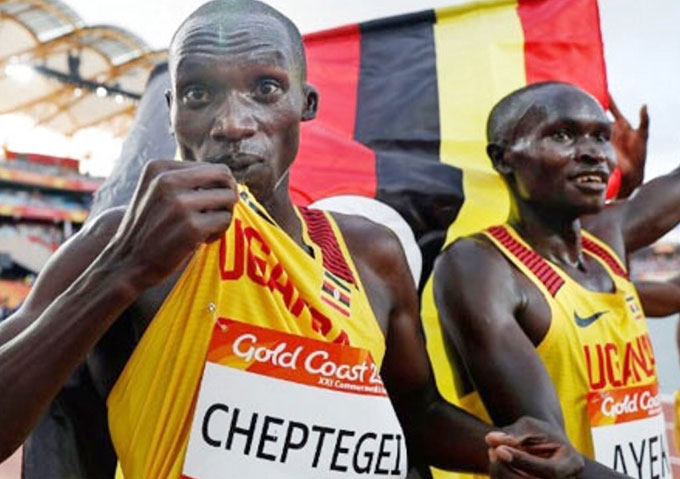
The Five Participants who scooped six medals include: Joshua Cheptegei (two gold medals), Stella Chelangat (gold), Solomon Mutai secured silver, Mercyline Chelangat (bronze) and Juma Miiro (bronze).
90 per cent of Ugandans want to criticize President Yoweri Museveni.
A substantial majority of 9 out of 10 Ugandans or 90 per cent of the citizens sampled in a recent survey say they believe it is their right to criticize the President for making bad decisions and not listening to advice.
These findings of the report were released by Twaweza in a research brief titled Frankly Speaking: Ugandans’ opinions and experiences of information and the media.
The brief is based on data from Sauti za Wananchi, Africa’s first nationally representative high-frequency mobile phone survey. The findings are based on data collected from 1,980 respondents across Uganda in November 2017.
The survey also shows that 85 per cent of the respondents believe it is their right to criticize the government for making bad decisions whereas 87 per cent of the respondents say it is their right to criticize their Member of Parliament (MP) for being lazy. 89 per cent said they would also criticize their MPs for not caring about constituents (89 per cent).
A large majority (78 per cent) believe that criticism is constructive, helping government to correct mistakes (78 per cent) while 72 per cent think it makes the country stronger.
The survey further shows that 6 out of 10 respondents think the media should have the right to publish any views and ideas without government control, 68 per cent think that radio and television stations should be free to produce their own news programs whereas 72 per cent of the respondents think that the news media should investigate and report on government mistakes and corruption.
Additionally citizens have an active culture of seeking information, at least from some government institutions. In the past three months before November 2017, the majority of citizens sought information from public health facilities (87 per cent), public schools (79 per cent), and village or Local Council I offices (62 per cent).
A significant minority also demand information from water suppliers (31 per cent), government offices (27 per cent) and political parties (23 per cent).
“It should be noted, however, that most of these requests are for information about services, rather than more sensitive information about staff¬ing, budgets and other resources,” reads part of the survey report.
Furthermore most Ugandans believe in their right to government information – three out of four say it should only be restricted for national security reasons (71 per cent). Ugandans also have faith in government institutions’ responsiveness; more than 4 out of 10 believe that if they ask they will get the following information: district development plans and budgets from their local authority (41 per cent), details of how to report wrongdoing in government (48 per cent), and how much capitation grant their school had received (50 per cent).
However, the report says, the reality often does match citizens’ democratic aspirations. Most citizens do feel free to criticize leaders and institutions closer to them such as Local Council V Chairs (56 per cent), their MP (59 per cent), their Local Council III Chair (64 per cent) and their village or street chairs (68 per cent).
But citizens are unsure about criticizing national leaders including the President (44 per cent), the Vice President (45 per cent) and the Prime Minister (46 per cent).
And although citizens support media freedom and seek government information, they have very low levels of trust in all sources of information – from the media or that provided by government officials and leaders. No information source is trusted completely by the majority of Ugandans, from Local Council 1 Chairs (45 per cent completely trust their information), the President (34 per cent), or MPs from the ruling party (26 per cent) or the opposition (22 per cent), to radio (48 per cent), public meetings (39 per cent), people they know well (34 per cent), or social media (12 per cent).
Dr. Mary Goretti Nakabugo
Furthermore, almost all citizens are unaware of laws that govern their information and communication rights including the Uganda Communications Commission Act (2013) (3 per cent), the Computer Misuse Act (3 per cent) and the Access to Information Act (2005) and its regulations (1 per cent).
Similarly, few citizens are aware of government platforms to proactively provide information to citizens and to seek their feedback including their experiences and opinions. Very few have ever heard of “Barazas” (community-based forums) (6 per cent), the budget information website (4 per cent) or the Ask Your Government platform (3 per cent). Nonetheless 1 out of 50 citizens (3 per cent) say they have participated in the local forums (Barazas).
However, it is encouraging to note that citizens are well documented and identifiable in government systems: 90 per cent have national ID cards, 66 per cent have voter ID cards, and 56 per cent have birth certificates while far fewer have passports (4 per cent) and driving licenses (5 per cent). There are fairly small variations between demographic groups and no clear patterns that advantage specific groups.
Marie Nanyanzi, Sauti za Wananchi Officer at Twaweza, said: “On the positive side there is a fairly active culture of citizens seeking information from government offices and institutions, and of government responding to those requests.
Citizens also support free expression for the media and themselves and see healthy debate and different opinions as constructive, providing support for government.
On the other hand, citizens express low trust for all information they might receive publicly, are not confident of their own personal freedom to criticize and are less likely to seek sensitive information around resources.”
Dr. Mary Goretti Nakabugo Country Lead in Uganda for Twaweza, said: “Citizens’ opinions on access to information and free expression present a challenging outlook for citizen agency. With low levels of trust and the feeling that they are not free to express themselves fully, citizens cannot be expected to participate actively in government processes and projects.”
She however said there was “some cause for optimism in terms of Barazas where millions have been reached by this government feedback and sharing platform. And similarly, the prevalence of identification documents means that citizens are ‘visible’ in the system. Documenting citizens is a first and critical step in ensuring their participation and in delivering better services.”
Inter-Governmental Authority on Development (IGAD) members states have today convened for consultations about protocol that advocates for free movement of people within member states in the region.
The protocol that is currently anchored by South Sudan, advocates for among others free transportation of goods from one state to another, harmonization of labour laws and good and safe environment for refugees and right of residence in any member state.
According to Uganda’s Internal Affairs Minister Gen. Jeje Odongo the just kicked off consultations follows last year’s meeting that was held in South Sudan where officials were implored to endorse the protocol.
“The protocol is in line with the 1986 agreement that led to the establishment of IGAD and states are about to reach at modalities that will facilitate good movement of people as well as controlling bad movement in the region .” Gen. Odongo observed at Sheraton hotel.
However, the Foreign Minister for South Sudan Martin Lomuro said, after this four days meeting in Uganda, IGAD members will proceed to Ethiopia in May for the last meeting thereafter, there will be rounds of negotiations for the adoption of the protocol in December year.
According to Lucy Laxbacher an IGAD expert said this protocol advocates for free movement of people not only to Uganda as some people say however to other member’s countries to carry out businesses among other activities.
Officials says due to political uncertainty that is rooming in South Sudan, the protocol should be signed to create safe and good atmosphere for over one million South Sudanese seeking for asylum around member states.
The bloc comprises of Uganda, Kenya, Sudan, South Sudan, Djibouti, Ethiopia, Somalia and Eritrea however according to Gen. Odongo, consultations about the ratification of the protocol is expected to be finalized by December 2018.
Bukedde newspaper reporter and Bukedde TV presenter, Josephat Sseguya has dragged celebrated musician Joseph Mayanja alias Jose Chameleone to police over assault.
In a case opened up at Katwe police station, Sseguya accuses Chameleone of assaulting him at last Friday when the two met at Catherine Kusasira’s introduction.
According to Sseguya, after his performance at the function, Chameleone went to where the presenter was and punched him several times, accusing him of being responsible for his downfall.
Chameleone accused Sseguya of taking him down through his stories in Bukedde newspaper and TV.
On the contrary, Sseguya denies the allegations saying he built the brand “Chameleone” and he is the reason he shined.
“I can’t demolish my own efforts. We should remember that when a horse is dying it kicks stronger.”
Sseguya’s case of humiliation and assault has been registered under file no SD: 59/22/04/2018
Celebrated Irish gospel singer and song writer Robin Mark is coming to Uganda this April.
In company of his wife, Jacqueline the couple will be at the biggest women’s conference in Uganda known as the Virtuous woman conference.
Born 67 years ago in Belfast, Northern Ireland, Robin Mark is a singer, song writer, and worship leader best known for his song Days of Elijah which he did in 1997 on his Album known as the Room of Grace.
The virtuous woman conference is an annual women’s conference that brings together women from all churches and different spheres of life.
The theme for the conference this year Is Life at 360 and will be focusing on the things that make strong women who are very crucial as pillars of society in shaping culture among other things.
The conference is organized by Christ’s Heart Ministries International headed by Bishop Isaiah Mbuga and Pastor Deborah Mbuga.
Pastor Deborah who is also the mind behind this conference expressed joy and excitement at the work she expects God to during this conference. She said
“The purpose of this conference is to reach out to the broken hearted and the lost as part of our mandate to reach out to God’s people with the Love of God” This virtuous woman is going to be very unique because the event will run for three days: April 27 at Omega Hotel in Jinja, April 28, at Imperial Royale Hotel in Kampala and April 29, at Christ’s Heart Ministries’ Headquarters in Mukono.