Stanbic Bank
Stanbic Bank
25 C
Kampala
Stanbic Bank
Stanbic Bank
Home Blog Page 1592

Ykee Benda features in localized version of World Cup anthem

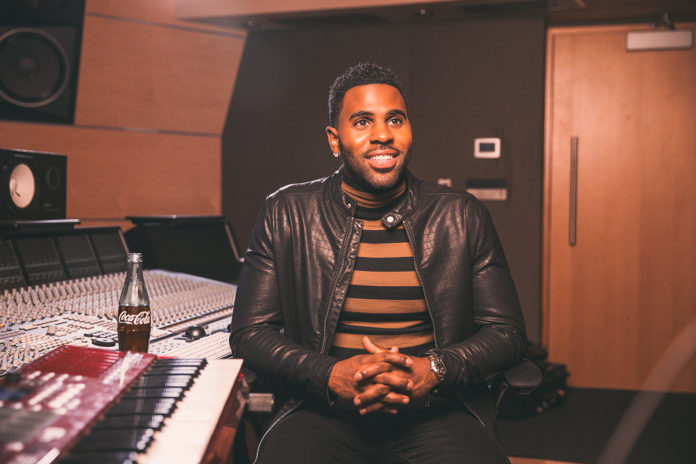
Jason Derulo Coca-Cola Anthem FIFA World Cup 2018.

Coca-Cola today officially released the 2018 FIFA World Cup global anthem – “Colours” – created in partnership with global music superstar, Jason Derulo.

A true collaboration between Coca-Cola and Jason Derulo, “Colours” celebrates all of the vibrancy and excitement that comes with the arrival of the world’s biggest football tournament.

A localized version has been created by 2017 Coke Studio artist Tugume Wycliff, most commonly known as ‘Ykee Benda’ to uniquely celebrate Uganda’s passion for football.

Other top artists – Diamond Platnumz, South Africa’s Cassper Nyovest, Ethiopia’s Sami Dan and Mozambique’s Lizha James have also worked on localized versions to depict the colours and styles of their different countries.

Ricardo Fort, VP of Global Sports Partnerships at The Coca-Cola Company said, “We know that the FIFA World Cup is a global cultural and social phenomenon.

Every four years, people are drawn to this event from all over the world due to the excitement and platform it provides. We believe that music and football are intrinsically linked by the passions they evoke so we are excited to welcome Jason to the team and can’t wait to bring this upbeat anthem to the world ahead of the 2018 FIFA World Cup”.

Coca-Cola Uganda Brand Manager Ms. Miriam Limo expressed pride at the international recognition that this global endeavor has created for Ykee Benda and the other local artists.

“Providing a platform for renowned as well as upcoming and less mainstream artists to collaborate musically is the backbone of Coke Studio and we at Coca-Cola are always proud to see one of our local artists get recognized internationally.

Having 2017 Coke Studio representative Ykee Benda participate in such a global project signifies the impact that the Coke Studio initiative has not only on the participating artists but also on Africa and the rest of the world,” she noted.

‘Ykee Benda’ is a Ugandan musician and producer, who is signed on to Badi Music Label.

Some of his popular songs include Kyenkyebula, Munakampala, Farmer and Malaika. He made his debut on Coke Studio Africa 2017 in the Big Break Segment collaborating with Jah Prayzah (Zimbabwe) and Mr. Bow (Mozambique).

That same year, he went on to win Breakthrough Artist and Best Collaboration of the Year in the Zzina Awards.

“Colours” will become the sound track to fans’ excitement for the tournament, as it begins playing across the world in the build up to the kick off.

Jason Derulo added, “I was honored to work with Coca-Cola to create an anthem celebrating every team and their fans. ‘Colours’ represents the different flags and cultures from around the world, and will get everyone moving to a unifying beat. I’m excited to finally tell the world about this partnership as the excitement builds for the FIFA World Cup.”

Stories Continues after ad

Three Ugandans in Shs1.8b Global innovation challenge

Labour and Gender Minister, Frank Tumwebaze who has been appointed to the Appointments Committee of Parliament.

Kampala: Three Ugandan Inventors have been named among eight finalists in first Global Competition for Social-Driven Hardware where the winner is to walk home with Shs1.8 billion approximately ($500,000).

The completion is organised by American Society of Mechanical Engineers (ASME) a non-profitable global engineering community established in 1980s with a motive of developing solutions to real world challenges, recognizing and rewarding of hardware designs with a social purpose.

Julius Mugaga based in Kampala is presenting Lumenda an affordable and portable device for rapid and accurate diagnosis of neonatal bacterial meningitis in low-resource settings.
Manon Lavaud who came up with Musana Cart that provides the tools and support to street vendors to achieve a clean, sustainable, and dependable work environment. A solar panel is incorporated in the canopy of the cart to provide vendors with light after sundown. It also replaces charcoal for cooking with a more efficient, eco-friendly alternative fuel.

Grace Nakibaala from Entebbe came up with Pedal Tap a no-touch, cost-effective, water-dispensing system actuated by a foot-pedal. It can be connected to any tap system and is designed to reduce the spread and frequency of infectious diseases in public spaces.
The finalists will compete against Ishmael Hezekiah from Nairobi, Samuel Castro basing in Nairobi, Kenya and Netherlands, Anastasia Kaschenko from Kenya, George Chege from Kenya, and Austin Ng’andu of Zambia.

This year’s competitions will feature a range of device, prototypes for clean fuel, safe drinking water, infectious disease mitigation and neonatal meningitis diagnosis, among others that will clix into a transformational economic, environmental, and social impact in underserved communities around the world.

During the competition, the finalists will pitch their product prototypes to a panel of judges that include successful entrepreneurs, academics, and founders of venture-funded startup companies.

The pitches according to Charla K. Wise the president of ASME, will outline the engineering design attributes of the prototypes and also include a discussion of plans for manufacturing, implementation, marketing, and financing.

“ASME celebrates new ideas and innovations that are aimed at pushing collective knowledge frontier outward and solving problems to improve on the lives of all people.” He noted.

Stories Continues after ad

Standard Chartered Bank launches digital banking outlet in Ntinda

The Digital Banking Unit launched at Ntinda Tuesday.

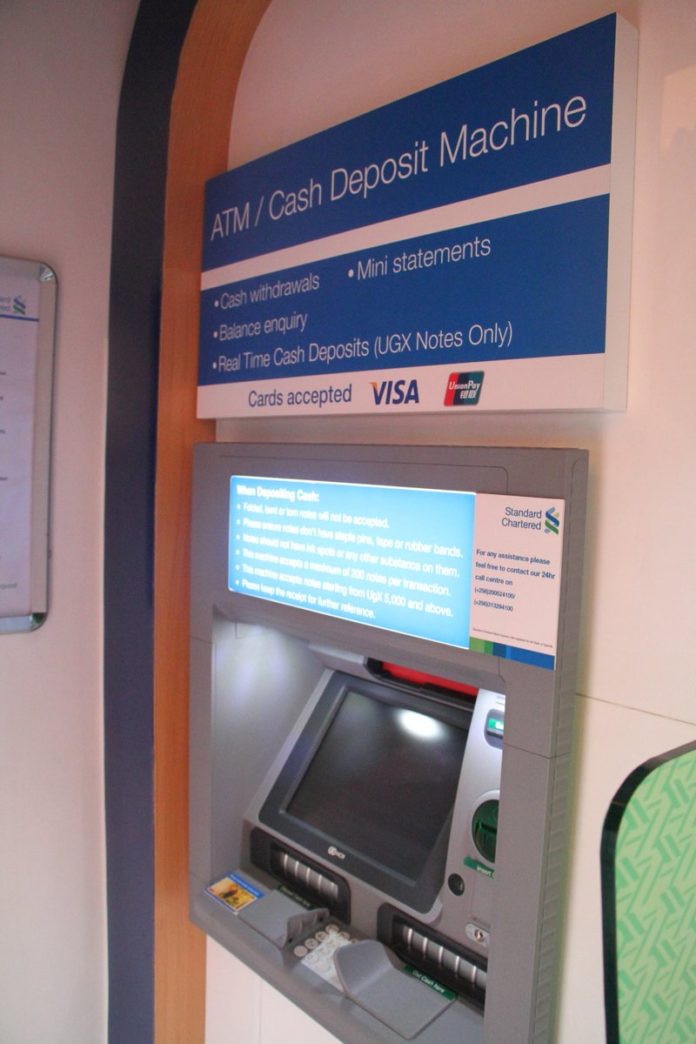
Banking for Standard Chartered Bank Uganda customers in Uganda has further been made easy with the launch of the first digital banking outlet at Shell Ntinda in Kampala.

The launch of the digital unit on Tuesday was done in partnership with Vivo Energy and the first 400 clients to transact business over the first three months at the facility will instantly receive a fuel or meal voucher worth Shs10, 000, but can be redeemed only at Shell fuel station and Café Pap restaurant in Ntinda.

The launch of the Ntinda digital banking outlet marks the beginning of the setup of similar outlets in selected Shell fuel stations. Those who open new accounts will get free banking for six months.
At the new unit, clients can do cash withdraws, fund transfers, account inquiry, bill payments, phone banking and mobile money transfers and account opening.

The bank CEO Albert Saltson, while addressing guests at the launch ceremony talked of the significance of the facility, saying it will make day-to-day banking more much easier as the bank provides a range of digital solutions that meet the needs of various stakeholders.

“Innovation is our forte as a Bank as attested by the milestones we have received over the years, he said adding that: “As the world increasingly goes digital and our clients follow suit, it’s imperative for us as a service business to adapt and move with the trends in order to remain relevant and deliver our aspiration to be the Main Digital Bank for our clients.”

The Head, Retail Banking, Israel Arinaitwe, said investment in technology brings about efficiency in the provision of services but also creates convenience for the Bank’s clientele.
“We are investing heavily in technology to improve our efficiency through simple and standardized solutions so we can deliver easy, convenient banking through whatever channel the client prefers and whenever the client wants,” he said.
In 2016, Standard Bank announced it would invest US $1.5 billion globally in technology over a period of three years and the launch of the digital banking unit at Ntinda, officials say, is part of the project meant to improve the client banking experience.

While speaking about the 2016 Memorandum of Understanding between Standard Chartered Bank and Vivo Energy, the latter’s CEO Gilbert Assi said his company’s clients are some of the businesses that need daily banking with limitless hours of operation.

“The new digital banking outlet is certainly an offer matched to today’s business needs; he said the launch of the facility at Shell station will serve its customers better.

Speaking at the launch event, Bank of Uganda Executive Director in charge of Supervision, Dr. Tumubweine Twinemanzi who was the guest of owner encouraged the Bank’s clients to use the facility, continuing that the Bank has remained sensitive and responsive to the needs of its clients over the years. He lauded the Bank for embracing the digital era to keep up with the times and trends “which are improving our overall banking services in Uganda.”

The Bank’s Board Chairman, Dr. Robin Kibuka, on his part said they will continue making investments in technology so as to break the barriers of traditional banking. “Investments in technology like this digital banking unit will ensure and guarantee that your bank never closes as they are available to you 24/7,” he said.

He said Standard Chartered Bank through its digital footprint has made banking easier, faster, cost effective and safer for clients.

Stories Continues after ad

Fortebet gifts ‘paralyse’ Mbale, Bukedea towns

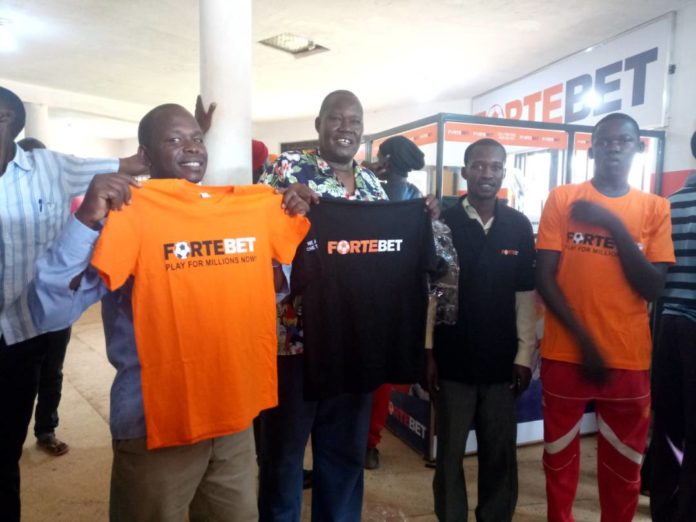
Happy clients at Bukedea branch that got T-shirts

Mbale and Bukede residents were over the weekend thrilled after Fortebet unleashed to them a surprise package of gifts.

The gifts that included favourite European teams’ jerseys, Fortebet T-shits, caps, pens and wristbands were all given out to over 150 customers.

This took place at the four Fortebet centres in Mbale town and the newly opened Bukedea branch.
Conducted by Fortebet Media Manager, John Nanyumba, the gifts’ handover was in a way of giving back to the clients-thanking them for making this company their number one betting centre.

The upto-standard Mbale main centre.

“We have decided to give you these gifts because we love and value you. Fortebet would not be Uganda’s biggest and best betting company if it were not you. This is the reason we must say to you-thank you,” Nanyumba said to the customers at Mbale main branch before the gifts were given out.

Some of the customers that got the gifts couldn’t hide their joy. Jesse Mukuwa, a jersey recipient said, “There is no other betting company that has ever given out gifts to its customers in such big numbers. I am just happy that each day, this company (Fortebet) keeps doing new things that make it a class apart.”

Bukedea branch manager handing over one of the balls to Bukedea Lifeline Primary school.

Alamanzan Masaba, who got a T-shirt said, “I can’t express my happiness. I came here not expecting to get this. I feel even if I lose my bet today, Fortebet has already paid me. Please, keep on coming back because we shall still keep betting with Fortebet.”

Fortebet did not only give out gifts to its customers but also footballs to young talents in both Mbale and Bukedea towns. Kids of Bukedea Lifeline primary school received balls just as community kids that play from children’s lion park in Mbale.
The balls were given out to fulfill one of Fortebet’s goals in Uganda of development and supporting talents’ development.

Stories Continues after ad

ADB boss to speak at Tanzania’s Union Day celebrations

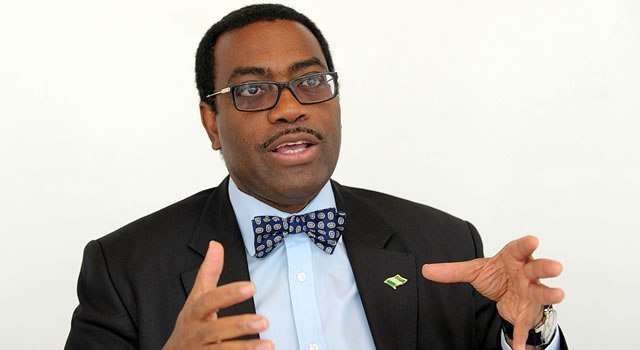
ADB President, Dr. Akinwumi Adesina

The President of the African Development Bank (ADB), Dr. Akinwumi Adesina is attend the 2018 anniversary of the union between the Republic of Tanganyika and the People’s Republic of Zanzibar that gave birth to the United Republic of Tanzania.

Adesina, has been invited as a special guest to deliver remarks at the event, scheduled for April 26 at the Jamhuri Stadium in Dodoma.
As part of his State visit to Tanzania, Adesina will on April 27 perform the official opening of the Dodoma-Babati road project, which was co-financed by the Bank and the Japan International Cooperation Agency (JICA).

During his visit, Adesiona and the Bank’s delegation will hold bilateral meetings with Tanzanian President John Pombe Magufuli, development partners, private-sector representatives, African diplomatic corps and top Government officials in Tanzanian cities of Dar es Salam and Dodoma.

The Bank’s delegation will then proceed to Kigali, Rwanda, to participate in the Ibrahim Governance Forum (April 27-29), where Adesina will host high-level bilateral meetings. Kampala Capital City Authority Executive Director, Jennifer Musisi is among the key note speakers invited to speak at the event.

The Dodoma-Babati road is an important road network between the central and northern regions of Tanzania. It is also part of the East African Community trunk road network (Route 5), the Southern Africa Development Community Regional Trunk Road Network (RTRN-Route 25), and the Trans-Africa Highway from Cape Town to Cairo (Highway No 4).

It will link Tanzania to the neighbouring countries of Zambia in the South and Kenya in the North, and to the southern and northern African countries.

Stories Continues after ad

Gov’t redeems Port Bell-Kampala rail line after 11 years

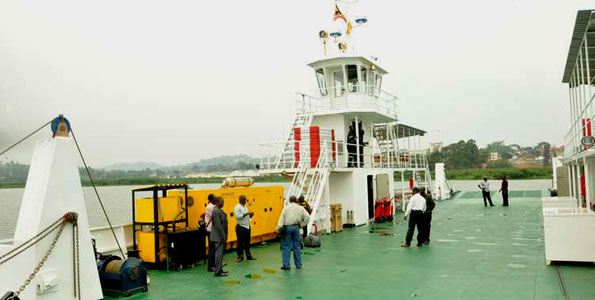
MV Ssese docked at the Port Bell Pier, Uganda

The Port Bell -Kampala railway line is ready for use following rehabilitation by the Uganda Railways Corporation (URC), the managers of that system of transport in the country.

Having finished the rehabilitation works, URC will on April 27, 2018 test the railway line with a cargo train, eleven years since the once famous line became inactive, affecting passengers and businesses alike.

The URC Senior Marine officer, Charles Ruzigye, says government has invested over Shs1b in replacing old rails and slippers, among other items for the line whose station is on the shores of Lake Victoria in Luzira.
“We have replaced the rails and slippers and we plan to have a trial run for a cargo train from Port Bell in Luzira to Kampala,” Ruzigye told the media in Kampala recently.

According to Ruzigye, the test is aimed at checking the strength of the railway line that will connect to Tanzania port Mwanza also on Lake Victoria.
The project is part of the Central Corridor and according to Ruzigye, will help boost the movement of cargo between Dar es Salaam and Kampala.
The rehabilitation of the port Bell railway station follows a memorandum of understanding between the governments of Uganda and Tanzania on joint ministerial cooperation and improvement of ports, inland waterways and railway transport in order to increase transit trade.

The agreement establishes the re-opening of multi-modal transport through the use of trains and wagon ferry services. The Central Corridor that starts from Dar es Salaam port in Tanzania to the hinterland includes routes in Tanzania, Uganda, Rwanda, Burundi and the Democratic Republic of Congo.

“As we plan to open the Central Corridor starting from Kampala, the Tanzania government has already provided MV Umoja while Uganda already has got MV Kaawa,” Ruzigye said.

Each marine vessel can carry 880 tonnes of cargo per trip and is capable of making eleven voyages in one month. He said that the ferries that carry 44-20ft containers take only 17 hours from Mwanza to Port Bell.
Government meanwhile is seeking for US$4 – US$5m to rehabilitate MV Pamba that has been docked at Port Bell for 13 years now.
Ruzigye says he said Tanzania is already using railway from Dar es Salaam to Mwanza.
He said that URC, Tanzania Ports Authority, Tanzania Railways Corporation, and the Marine Services Limited of Tanzania have established new affordable tariffs as an incentive to the regional traders.

Tanzania Port Authority (TPA) Director General Eng. Deusdedit Kakoko said container rates for the Ugandan traders will also be reduced. Those who will start using the route from Port Bell to Dar port will benefit from the reduced rates during in May.

The revised rates are; US$60-US$70 per tonne for containers from Uganda transported through Port Bell via Mwanza to Dar Port, while containers from Dar Port via Mwanza to Kampala will be charged US$75.
Port Bell used to handle 600,000 tonnes of cargo but this had dropped to about 10,000 tonnes. This is expected to improve as infrastructure in the central Corridor is re-ordered including the opening of the one stop border post at Mutukula.

Meanwhile Kampala residents who used to use this line are cheerful as URC revives it. “I used to travel on this line from Luzira to the city centre. It was convenient and cheap. No traffic jam,” said Simon Peter Odongo, 70, now a resident of Namuwongo.

Meanwhile, road network through the corridor between Dar es Salaam and Kampala and is now extensively used to move cargo with a cargo delivery time of four days to Kampala, while the weighbridges between Mutukula and Dar es Salaam have been reduced to only three from eight days.

Stories Continues after ad

The Peter Principle can kill your business and career

Martin Zwilling

By Martin Zwilling

As a former IBM executive, I used to think that big-company executives would be ideally skilled and experienced in business to run a small company or a startup. Yet that rarely happens, and when it does, like John Sculley moving from Pepsi to Apple, the results don’t turn out so positive. I see this as a variation on the “Peter Principle,” as well as considerably different skills required.

Back in 1968, Dr. Laurence J. Peter first published evidence that promotion strategies in most companies are based on performance at the current task, with the result over time putting people in new tasks over their head. Even worse, top performers are moved to management positions, which are often not their forte or interest, but have higher salaries and more career prestige.

Once topped-out and frustrated in a big company, many of these people seek key positions in a new business or startup where they can again be top dog and feel in control. Even though their resume may look great, I continue to advise small businesses to fill every team position based only on demonstrated current results, motivation, commitment, and not based on any past title.

This is easier said than done, especially in new ventures where the founder is personally inexperienced in hiring and managing employees. Thus based on my considerable experience in both domains, I offer my recommendations on what to look for and how to select people with minimize exposure to the devastating effects of the Peter Principle, past and present:

Favor people who can both communicate and perform well. Small businesses can’t afford two or more people for every task — one to do work, and others to communicate results to all constituents. As the founder, you won’t have a finance chief, a marketing staff or a requirements manager. Everyone must know how to listen, talk and write.

Put a premium on customer-facing and relationship building. In a big company, you often need highly-skilled specialists, doing accounting, research and design, or quality support. These people can excel without ever selling or knowing a real customer. In a small business, everybody is in sales, and the customer is always the main focus.

Prioritize current skills and a demonstrated ability to learn. People who haven’t changed in a while find it harder and harder to do so. If you don’t hear an enthusiasm for new challenges, you won’t find the flexibility you need to anticipate and create the pivots required for success. People trapped by the Peter Principle won’t be happy fixing chaos.
Keep the focus on results – don’t hire or reward for effort. A common refrain I hear from team members in over their heads is how many hours they work and how busy they are. If you hear that in the interview process, change the subject to results, and then move on quickly to the next candidate. Set your metrics and rewards to map to results.
Promote an “up or out” growth culture to prevent role stagnation. Look for team members that see every job as a step, rather than a destination, as the company grows. Make it clear through words and actions that you expect upward growth, and no-growth is a failure for both of you. The alternative is to lose your best people to new ventures.
Look for an ability to manage people, as well as do the work. Some people are great workers, but are barely able to manage themselves. The best are comfortable in both roles, and approach every task from both perspectives. Many big company executives rely on their staff to do the real work. This doesn’t work in a small and growing business.

Provide mentoring and self-learning opportunities. Most small businesses don’t have the time or resources to send team members to formal training classes, either in-house or off-site. Yet every new team member can be assigned an in-house mentor, provided with online seminar opportunities and given special assignments to facilitate new learning.

Another difficult challenge for new entrepreneurs and small business owners is being able to deal immediately with the Peter Principle in current team members, once they see it or recognize a hiring or promotion mistake. It’s as hard as every other pivot you will have to make as a new business, with the same penalty that the longer you wait, the higher the cost of recovery.

If you as the leader don’t deal quickly with incompetent people in key team positions, they will paralyze your business. The best people see the problem and beat a path to the exit, to take new outside opportunities, and only the ineffective ones will remain. That will make you the final proof of the Peter Principle.

Stories Continues after ad

Employees don’t quit their Job; they quit their boss!

Brigette Hyacinth

Employees might join companies, but they leave managers. Too many managers view their position as one of entitlement rather than one of responsibility. In days past, managers would focus on developing their employees. Today they are more focused on self-promotion and securing their position.

A managers’ job is to facilitate a good working environment for his/her employees. The focus should be to help everyone around you succeed. Managers define culture, and culture under-girds the lasting health, success and sustainability of an organization.

The biggest danger of leadership: Arrogance

According to research from the University Of Washington Foster School Of Business, humble people are more likely to be made the most effective leaders. It turns out, humility offers a competitive advantage.
So why has an arrogant or narcissistic leader become the norm?

It has been historically perceived that humility is a sign of weakness and an antithesis to leadership. There is still an expectation that successful leaders are more arrogant than humble. Narcissism is mistaken for self-confidence and toxic leaders seem to be in control of everything.

They are able to provide short-term results but the truth is they leave a trail of destruction in their path. Organizations pay heavily for such managers with low engagement, high turnover and reduced productivity.
Arrogant leaders have a shelf-life within their organizations. They may “rule the day” but eventually people tire of them and their tactics, which lessens overall commitment from the team. Intimidation and threats of punishment
can only work for so long.

The x- factor of great leadership is not personality, it’s humility.” -Jim Collins
The Power of Humility in the Workplace
Leading with humility means focusing on others and practicing servant leadership. Humble leaders:
1. They put people first. There focus is on serving others. They do not get consumed by seeking out more power. Instead, they seek more ways to help others.

2. They admit their mistakes. All leaders make mistakes. Humble leaders own up to them. They don’t play the blame game when things go wrong. Instead they hold themselves accountable. Vulnerability builds trust.
3. They share information and delegate. Humble leaders are aware of their strengths and weaknesses. They realize that they cannot do everything. They delegate because the work is more important than their ego.
4. They listen – They are approachable to employees and this allows them to create an environment of open communication and effective feedback.

5. They do not hesitate to give credit where credit is due. They appreciate the contributions of others. They are quick to recognize and reward the efforts of team members.
6. They are empathetic to those in their charge. They genuinely care about employees and employees can feel this sincerity. Empathy allows them to build healthy relationships and bond with team members.
7. They are authentic. They are the same person in every situation. This makes them trustworthy. Authenticity goes hand in hand with integrity. They are individuals of integrity.

“No matter how educated, talented, rich or cool you believe you are, how you treat people tells all. Integrity is everything.”
Humility doesn’t mean that leaders can’t make tough decisions. A humble leader should not be mistaken for a weak one. It takes strength, courage, and wisdom to practice humility. I have learned that the best leaders are selfless and more concerned with the well-being of their team than with personal titles or status symbols.

Easily offended leaders with inflated egos don’t build strong teams. You cannot be an effective leader if you feel that you are better than your subordinates. No one likes dealing with egomaniacs. Arrogance is a deterrent; it destroys relationships and lowers employee morale whereas genuine humility has a way of winning others over.
Good leaders empower. Bad ones micromanage. It is dreadful to work under a manager who is more worried about pushing their weight around than building relationships. The role of any leader within a corporate framework is to build up the team and to encourage growth.

If we want employees to feel commitment to the organization; we need to show we respect and value them. This takes humility. For loyalty, there has to be a relationship that develops between employee and employer and this develops over time through trust that gets built and sustained. Once people trust you, they will follow your lead. You won’t need to flaunt your title to get them to do the best possible job.

People might tolerate a boring job or long commute, but they are more prone to leave if their boss treats them poorly.
Humble leaders get the best from people. They have more influence, they retain top talent, and they earn more respect and loyalty than those who rely upon ego and power. Want to be a good boss? Start by taking a slice or two of humble pie!
The Writer is Author: The Future of Leadership: Rise of Automation, Robotics and Artificial Intelligence

Stories Continues after ad

An echo of Goodhart’s law: Dynamic management and foreign exchange reserves

Gary Smith

By Gary Smith
It can be argued that China’s deployment of foreign exchange reserves between mid-2014 and the end of 2016 was the most unsuccessful use of such reserves in history.

Around US $1tillion was spent and, despite this, the renminbi declined in value against the dollar by almost 15 per cent. The outcome confounded conventional theory. The relationship between reserves deployment and currency value did not work as expected.

In defence of Beijing, it is impossible to say where the currency might have moved if the reserves had not been deployed. Capital controls played an important part, to halt and then reverse currency weakness in 2017.

However, these factors should not deflect from recognising that intervention to support the currency not only appeared to be unsuccessful, but counterproductive. When the intervention ended, the renminbi rose in value. This adds to the mystery.

The Chinese experience was not unique. There is plenty of evidence to suggest this outcome is probable. A vicious circle can develop, where the use of reserves creates a sense of unease that undermines the currency, as happened in Russia in 2014, South Korea in 2008, and across Asia in 1997.

In these cases the size and rate of depletion became the focus of market attention. Instead of simply being a tool to help achieve currency stability, the reserves became a policy objective in themselves. This is a variation on Goodhart’s law, which can be summarised as stating that when a measure becomes a target, it ceases to be a good measure.
A nation without foreign exchange reserves will be viewed as vulnerable on multiple levels. But a nation with reserves may also look vulnerable the moment they are utilised. As the head of reserves at a central bank with more than US $100 billion in reserves noted at a recent OMFIF seminar, it’s not how much you have, but whether you have had any need to spend.

The concept of reserves adequacy can be rendered redundant by the act of usage.
These circumstances have led to some questions about whether the use and, in turn, accumulation of reserves is pointless. The answer to these questions hinges on the purpose of foreign exchange reserves. In 2018 they are much more than a tool for currency intervention.
Although managing the value of domestic currencies might have been the original reason to hold and accumulate reserves, this use has a poor record of success. In terms of the list of reasons to hold reserves, this should be a candidate for relegation.

To have value as a threat to the foreign exchange markets, reserves (and the assets of related sovereign funds) may need to be more than 100 per cent of GDP, as in Hong Kong and Singapore, rather than the 40 per cent of GDP in China in 2014.
There are two conclusions, with overlapping implications. First, any argument that suggests a need for greater foreign exchange reserves should also demand a more dynamic approach to their management. Second, a relegation of the currency intervention motivation for holding reserves in turn argues for a promotion of the case for the conservation of reserves.
This implies a diminished need for liquidity, and hence greater justification for pursuing yield- enhancing strategies.

Gary Smith is Member of the Strategic Relationship Management Team at Barings and Member of the OMFIF Advisory Council.

Stories Continues after ad

Jinja West MP named in plan to sell off Kimaka airstrip

IN THE SPOT: Moses Grace Balyeku.

Works Minister Azuba distances self from plan

A source at Civil Aviation Authority has intimated to Eagle Online that there is a move by a section of politicians from Jinja to parcel out Kimaka Airstrip land to investors.

The move, the source said is being orchestrated by Mr. Moses Balyeku, the Jinja West MP who apparently has been pestering the Authority’s leadership for a while.
Attempts to get a detailed response from the legislator were futile as he didn’t response to multiple telephone calls. When we texted him, his response a terse, “not true” comment.

On seemingly hitting a dead end at the Aviation Authority, our source says, the legislator got a buy in of the works minister Engineer Monica Azuba Ntege, who is the political head of the Authority and is apparently pushing through the plan.
However, Minister Azuba said she was hearing about the matter of investors for the first time. Although she hinted on some other land already being availed for the airstrip , she said she was instead investigating the veracity of the arguments from within the Authority that the airstrip that the coming Standard Gauge Railway project is going to eat into the airstrip’s land and therefore it is prudent to have it moved to a different place.

“I found in motion a situation where they wanted to move the airport to a different station on information that SGR was going to take part of the airstrip. So I started finding out if it’s true and whether where they want to take airstrip actually exists.

“I wanted to find out if it (SGR) affected the airstrip or the remaining land as it is it is enough to serve the operations of the airport; then it’s another story. The issue of investors I am hearing it for the first time and from you. I have no idea that the reason is to be given to investors,” she said.

We couldn’t get hold of the SGR project spokesperson Diana Apio as her phone went unanswered but the Managing Director of Civil Aviation Authority, Dr. David Kakuba said.“The best which I can assure you is that the district asked for information about that and we told them that the SGR will not pass through the airstrip’s land. The SGR is going to pass that side of Nile Resort. We assured them that if that is the case (SGR taking part of the airstrip land) forget about the SGR we are still in charge of our property”.
Adding “This is a national property if the sell is to happen procedure has to be followed,”.

President Yoweri Museveni some time back while touring Busoga region promised to rehabilitate the airstrip in a bid to promote tourism in the region. Busoga region is home to the Source of River Nile and other major tourist attractions.

Kimaka is one of twelve upcountry airports that are administered by the Uganda Civil Aviation Authority.
In 2005, government has earmarked Shs350 million for the first phase of the rehabilitation of Kimaka Airstrip in Jinja municipality, the Civil Aviation Authority (CAA) managing director has said.

There were plans to build the runway, renovate staff quarters, the terminal building and fire house.
CCA had plans to turn the airstrip into a bigger commercial facility to boost trade, Jinja being a few kilometers away from the Uganda-Kenya Border.
Eagle Online couldn’t get comments from both Mayor Majid Batambuze and Town Clerk Francis Byabagambi as they never answered their mobile phones.

Stories Continues after ad