Stanbic Bank
Stanbic Bank
21 C
Kampala
Stanbic Bank
Stanbic Bank
Home Blog Page 160

Uganda, South Sudan & CAR sign infrastructure and aviation agreements to boost regional trade, connectivity

Uganda, South Sudan and the Central African Republic (CAR) have signed a series of bilateral and tripartite agreements to develop cross-border road infrastructure and expand air connectivity.

The agreements have been concluded today, 15th of May at the end of a three-day Tripartite Ministerial Meeting held in Kampala, hosted by Hon. Gen. Edward Katumba Wamala, Uganda’s Minister of Works and Transport. The meeting brought together transport and infrastructure ministers from the three nations to strategize on collaborative infrastructure development and regional trade promotion.

The initiative follows an earlier engagement in March 2025, where Gen. Katumba Wamala led a Ugandan delegation to Bangui, the capital of the Central African Republic, to engage officials on the cross-border infrastructure project. The outcome was the agreement to convene the tripartite meeting in Kampala.

During the tripartite meeting held in Kampala, the officials discussed that the robust road infrastructure development project will commence from Uganda, Kampala-Karuma-Arua-Oraba-Kaya-Yeyi-Juba and/or Kampala-Karuma-Nimule-Juba-Kaya-Yeyi-Juba (Uganda to South Sudan); Juba-Mundri-Maridi-Yambio-Yubo-Ezo-Bambouti-Obo-Sibuti (South Sudan to CAR); and Ezo-Source-Yubu -Bambouti (South Sudan- Central African Republic).

The Ministers held and agreed to a phased project development and a joint mobilization of funding for the long-term undertakings of the project from the development partners to fund the project as a regional trade corridor.

A Tripartite Technical Committee (TTC) was formed composed of technical officials from the Ministries responsible for Transport, Infrastructure, and Public Works, Defense and Security, Foreign Affairs, Internal Affairs, and Solicitor General to conduct a joint inspection of the project on the proposed routes, finalize the road alignment, feasibility studies, and joint implementation framework.

At the sidelines of the Tripartite meeting, the Ministers responsible for Civil Aviation of the Republic of Uganda and Central African Republic concluded a Bilateral Air Service Agreement (BASA) and a Memorandum of Understanding (MOU) on operationalization of the BASA to enhance the aviation connectivity between Uganda and CAR, including planned commencement of Uganda Airlines flights to Central African Republic.

The Ministers expressed appreciation to the visionary leadership of the Heads of State of the Republic of Uganda, South Sudan and Central African Republic as guided on addressing the bottlenecks to infrastructure development and security for connectivity and trade promotion in the region

Uganda’s Minister for Works and Transport, Gen Edward Katumba Wamala, emphasized the importance of the project in fostering economic growth and regional stability.

Representing the Central African Republic, the Minister for Equipment and Public Works; Hon Eric Mathieu ROKOSSE-KAMOT expressed optimism about the collaboration, noting that improved road networks would significantly boost commerce and ease transportation challenges.

South Sudan’s delegation, led by the Minister for Roads and Bridges, Hon. Simon Mijok Mijak, echoed similar sentiments, highlighting the road’s potential to enhance security and economic integration.

Speaking at the event, the Minister for Transport and Civil Aviation of the Central African Republic, Hon. Herbert Gontran DJONO-AHABA observed that a Bilateral Air Service Agreement (BASA) with Uganda, would be very integral in enabling travelers to have easy ways to travel within the region hence reducing travel time.

In attendance were Government Officials and Diplomatic representatives including, Mr. Pius Perry Biribonwoha-the Solicitor General of Uganda, Amb. Brig. Gen. Ronnie Barya-Uganda’s Ambassador to South Sudan, Amb. Farid Kalisa-Uganda’s Ambassador to the Central African Republic, and senior and technical teams from the three countries who witnessed the launch of discussions and agreements that will shape the future of cross-border connectivity, transform transportation across the region, unlock new economic opportunities and strengthen diplomatic ties.

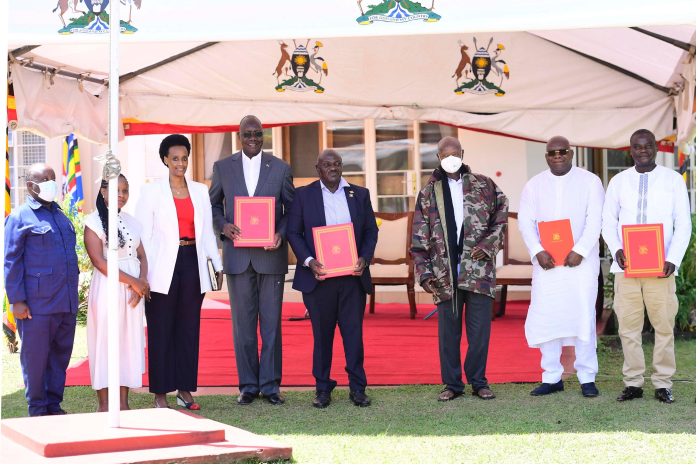
The Ministers have shared insights of the discussions held with President Yoweri Museveni and signed the agreements this afternoon.

Stories Continues after ad

Parliament imposes new tax on hides and skins export

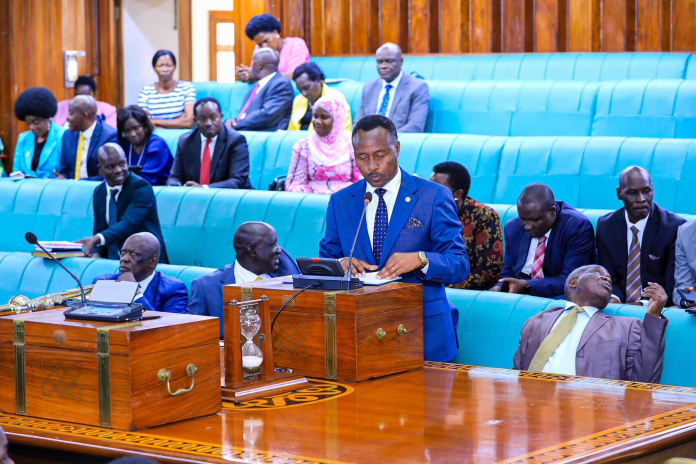
Chairperson finance committee of parliament, Amos Kankunda presenting budget suggestions on skins and hides.

Parliament has passed the Hides and Skins Export Duty [Amendment] Bill, 2025, dropping exemptions that previously allowed the export of glue stock and semi-processed hides and skins without taxation.

Under the new law, all exports of hides and skins, including glue stock will attract a levy of $0.80 per kilogram.

Presenting the Committee report, Amos Kankunda, Chairperson of Parliament’s Finance Committee, noted that the removal of exemptions was prompted by a surge in glue stock exports that had depleted raw materials for local tanneries and hindered value addition efforts.

“The Amendment seeks to enhance availability of raw materials for Uganda’s tannery industry and support local value addition,” he said.

Legislators, however, debated passionately over the classification of “glue stock” products—offcuts of hides processed into a food item known as ponmo for West African markets.

While some Members of Parliament called for the exemption of glue stock to encourage innovation and export diversification, others insisted it should be taxed like any other hide-based product.

“We cannot say someone is exporting hides when they have cooked and packaged them as food. The URA [Uganda Revenue Authority] must assign the appropriate classification,” said Sheema Municipality MP, Dicksons Kateshumbwa.

Attorney General Kiryowa Kiwanuka clarified that the law targets exports classified as hides, not food.

“If they are exporting food, the law does not deal with them. However, if URA is classifying them as hides, then they must pay the levy,” he stated.

Parliament ultimately voted to maintain the tax on all hide-related exports, including glue stock, aligning with the broader national push for industrialisation and local value addition.

Parliament Passes Stamp Duty Amendment to Ease Access to Credit

In the same sitting, Parliament also passed the Stamp Duty [Amendment] Bill, 2025, introducing a new “near-duty” classification and scrapping the longstanding Shs 15,000 duty on agreements and mortgage deeds.

Henry Musasizi, Minister of State for Finance (General Duties), explained that the amendment seeks to reduce the cost burden of formalising legal and credit agreements.

“The bill provides for near-duty for agreements or memorandum of an agreement and a mortgage deed,” he said.

Committee Chairperson Amos Kankunda supported the move, stating that the removal of the Shs 15,000 stamp duty would ease the registration of agreements and encourage formalisation of contracts.

“The Committee recommends that the Shs15,000 stamp duty on agreements or memorandum of an agreement should attract near-duty as proposed,” Kankunda stated.

He added that stamp duties on credit-related instruments have been driving up borrowing costs and discouraging private sector growth.

“To support access to affordable credit and promote business growth, the government proposes near-duty on mortgage deeds and mortgage of a crop,” he said.

This position was also backed by Attorney General Kiryowa Kiwanuka, who said the bill responds to earlier concerns that stamp duty was being charged even on employment appointment letters.

“The issue was to remove the duty on any of those registrable memorandum… now you can have your agreement without duty,” he said.

Stories Continues after ad

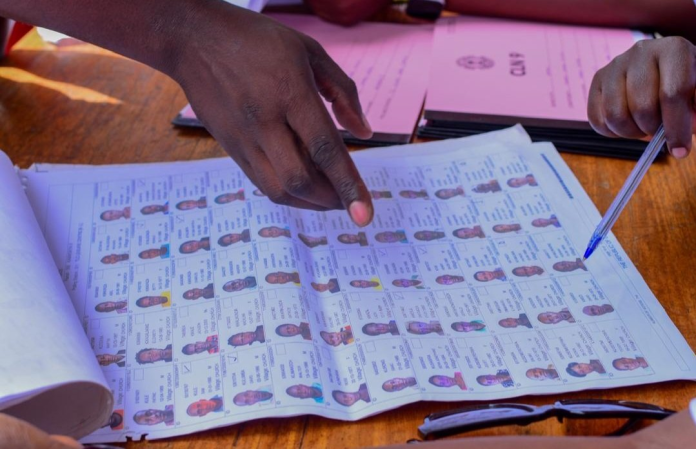
EC extends voter register display in 620 polling stations due to technical delays                                                 

The Electoral Commission has announced the conclusion of the National Voters Register display exercise across Uganda, except in 620 polling stations where the process was delayed due to technical challenges.

According to Justice Simon Byabakama, Chairperson of the Electoral Commission, the general display, which began on Friday, April 25, 2025, ended May 15, in most polling stations.

However, he confirmed that a statutory extension has been granted for polling stations affected by delays in register production.

“For the 620 polling stations, where the commencement of the display of the Voters’ Register was delayed due to technical challenges encountered during the production of the registers, the Commission will conduct the display for the full statutory period of twenty-one (21) days,” said Justice Byabakama.

He added, “This period is from 30th April 2025, when the display commenced in each of the affected areas. It will be concluded on 20 May 2025.”

He also noted that the display of Voters’ Registers for Special Interest Groups (SIGs)—including the Youth, Persons with Disabilities (PWDs), and Older Persons—was conducted from April 25 to May 8, 2025, and has officially ended.

“There shall be no extension of the Display exercise,” Byabakama emphasized.

The objective of the display was to allow voters to verify their details on the Voters Register and raise objections regarding individuals who may have been wrongly included or excluded. These include deceased persons, minors, people not resident in their registered parish, and those with multiple entries.

“During this exercise, we allowed members of the public to scrutinize the register and report to the Display Officer persons who had died, were under 18 years of age, resided or originated from another parish, or appeared more than once on the register,” he said.

He added that the Commission also displayed names of citizens verified by the National Identification and Registration Authority (NIRA) but who had not selected polling stations.

“This display was intended to facilitate the assignment of polling stations to these individuals,” he explained.

With the display phase closing, the Commission will now proceed with the display of names of persons recommended for removal or inclusion by the Parish or Ward Tribunal. This exercise will run from May 16 to May 26, 2025, at all Parish/Ward headquarters.

“The purpose of this exercise is to enable any person who may have been wrongly recommended for deletion to raise an objection to the Parish/Ward Tribunal,” said Byabakama.

He explained that the tribunals are composed of two elders aged 60 and above (one male and one female), and three additional members nominated in consultation with political parties and organisations in the area. The members are appointed by the local Magistrate and are mandated to make final decisions regarding voter inclusion, deletion, or correction.

After the tribunals conclude their work, the Commission will collect all the returns and effect the approved changes to compile the final National Voters Register for the 2025/2026 General Elections.

“All complaints arising from the Display Exercise shall be addressed to the Returning Officers of the respective Electoral Districts,” Byabakama stated. “These shall be handled in accordance with Article 61(1)(f) of the Constitution of the Republic of Uganda and Section 15 of the Electoral Commission Act, Cap 140.”

The finalized Voters Register will be used in the first cycle of the electoral roadmap, including the elections of Special Interest Groups Committees—Youths, PWDs, and Older Persons—scheduled for June 2025.

Justice Byabakama urged all registered voters to continue confirming their voting details through the Commission’s website: https://ec.or.ug/register, and called for continued stakeholder engagement.

“The Electoral Commission appreciates the support of various stakeholders in the electoral process for their role in mobilising the public to participate in the Display of the Register,” he said.

“We remind all stakeholders to participate in all electoral activities as scheduled in the Roadmap for the 2025/2026 General Elections,” he added.

Stories Continues after ad

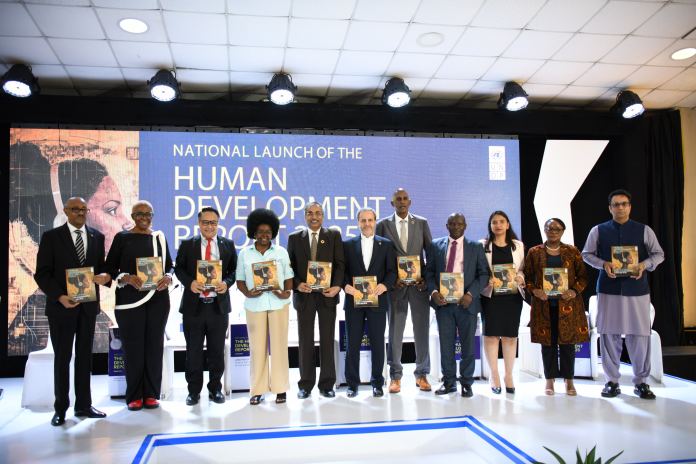
UNDP Human Development Report: Artificial Intelligence key to Uganda’s inclusive growth

The United Nations Development Programme (UNDP) in partnership with the Government of Uganda and Kyambogo University have launched the 2025 Human Development Report (HDR), titled “A Matter of Choice: People and Possibilities in the Age of AI” at Kyambogo University.

The report delivers a sobering global message: after decades of steady gains, human development progress is slowing, and the world is at risk of a development crisis unless decisive action is taken.

Since 1990, UNDP through its flagship Human Development Report (HDR) has challenged conventional thinking about progress by putting people—not economic growth—at the center of development. The 2025 HDR continues this tradition by examining how AI can be shaped to advance rather than undermine human development.

“The 2025 Human Development Report underscores the critical importance of strategic decision-making for Uganda to harness the transformative potential of AI,” said UNDP Resident Representative Ms. Nwanne Vwede-Obahor during the launch. “In alignment with this vision, UNDP remains steadfast in it’s commitment to working alongside stakeholders to support the Government of Uganda in creating an enabling environment for responsible and inclusive AI adoption.”

Ms. Nwanne Vwede-Obahor added “Human development is not predetermined – it is a matter of choice. Let us join forces to shape an inclusive, digital, and AI-powered future that leaves no Ugandan behind.”

Uganda’s HDI shows long-term gains, though inequality persists Uganda’s Human Development Index (HDI) value stands at 0.582, placing the country in the medium human development category and ranking it 157 out of 193 countries and territories. Since 1990, Uganda has made significant progress with a 70.2% increase in HDI, driven by improvements in life expectancy (up by 20.7 years), expected years of schooling (up by 5.8 years), and GNI per capita (up by 158%).

However, inequality remains a persistent challenge. When adjusted for inequality, Uganda’s HDI drops to 0.400, reflecting a 31.3% loss due to disparities in health, education, and income – slightly higher than the Sub-Saharan average but significantly lower than the global average.

Prime Minister Robinnah Nabbanja’s speech, presented by Monica Musenero, Minister for Science, Innovation and Technology said that since adopting the 2030 Agenda for Sustainable Development in 2015, Uganda has been steadfast in its efforts to realize its aspirations. In 2023, Uganda launched an ambitious growth strategy to expand its economy from USD 50 billion to 500 billion by 2040. The 10/4 Growth Strategy is anchored on agro-industrialization, tourism, mineral development, and science, technology, and innovation—what are call the ATMs—to accelerate growth.

 “The Fourth National Development Plan, to be implemented between 2025/26 and 2029/30, is the first of the three five-year NDPs that will deliver this tenfold economic growth. The NDP IV recognizes that human capital development plays a crucial role in unlocking the full potential of individuals and societies, thereby enhancing productivity and the quality of life. It also recognizes that science, technology, and innovation are deep drivers of progress.”

“This report arrives at a fitting moment for Uganda and the world, as we navigate the transformative potential and challenges of artificial intelligence. AI is both a great opportunity and a great responsibility. Uganda’s journey towards human development is one of resilience, experience, and focus. Over the years, we have witnessed significant advancements in various dimensions of human development, as reflected in the Human Development Index.”

“The transition from the low to medium human development category in 2022 was a testament to our collective efforts in improving the wellbeing of our people. While we celebrate our achievements, we must also acknowledge the persistent challenges—particularly inequality and gender disparities. The 31.3% loss in Uganda’s Human Development Index due to inequality serves as a reminder of the work ahead of us.”

“Gender inequality remains a significant concern, and one I am especially passionate about. Uganda’s Gender Inequality Index of 0.524 and ranking of 141 out of 172 reflect this. While we have made strides in empowering women and girls, there’s still much ground to cover to achieve gender equality. We must redouble our efforts to dismantle systemic barriers and create an enabling environment where every individual, regardless of gender, can thrive and contribute to national development.”

“We must not overlook the environmental challenges facing our planet. While Uganda exerts lower environmental pressures than the global average, our greenhouse gas emissions are growing at a high rate of 3.1% per annum. It is incumbent upon us to adopt sustainable practices to mitigate our impact and ensure a prosperous future.”

“This 2025 HDR is important for Uganda because it underscores a critical truth: AI is not just a technological revolution, but a human development crossroads. The report must be contextualized within Uganda’s current social, economic, and political landscape. It is a call to action.”

“Uganda now has its Digital Transformation Framework, which provides a unified direction for ICT development. With support from partners such as UNDP, we have developed the Uganda Digital Vision. This strategy integrates and improves all ICT strategies and plans. We also launched the Digital Transformation Roadmap in 2023 to guide our transition to a digital economy, focusing on infrastructure, e-governance, and innovation.”

“In addition, we have developed a Big Data Strategy to inform policy decisions, particularly in healthcare, agriculture, and climate resilience. Our AI Framework and upcoming National AI Strategy will guide ethical and inclusive AI deployment in key sectors such as health, agriculture, education, and public administration.”

“Government is committed to strategic infrastructure investment, education, and capacity building. We are ensuring equitable access to internet and digital technologies, particularly in underserved and rural areas. We are also working to build digital literacy and AI skills, especially among women, youth, and marginalized populations.”

“Finally, we are establishing monitoring mechanisms to ensure AI governance frameworks uphold ethical standards and human rights. I hope you had fruitful deliberations in contextualizing the findings of this HDR in Uganda’s context. I am happy to note that relevant ministers and government officials actively participated in today’s discussions.”

AI: A game-changer, though only if Uganda chooses wisely The 2025 HDR emphasizes that artificial intelligence (AI) holds transformative potential for human development, though its benefits are not guaranteed. The report cautions that without strategic choices and investment in human capability, AI could deepen inequality.

For countries like Uganda, this represents both a risk and an opportunity. AI solutions must be tailored to Uganda’s specific needs. This includes integrating local languages, embracing cultural diversity, and focusing on augmenting jobs rather than replacing them to boost productivity.

The report reveals stark gender disparities. Uganda’s Gender Development Index (GDI) is 0.908, with female HDI (0.556) trailing behind male HDI (0.612). The Gender Inequality Index (GII) ranks Uganda 141 out of 172 countries, pointing to persistent inequality in education, labour force participation, and political representation.

On the environmental front, Uganda’s Planetary Pressures–Adjusted HDI is 0.569, only slightly lower than its HDI. This relatively small adjustment (2.2%) suggests that Uganda exerts less pressure on the planet than the average Sub-Saharan country, underscoring opportunities for sustainable development.

The report findings point to the need for Uganda to focus on: Building a complementarity economy: Positioning AI as a tool to enhance – not replace – human work. Driving innovation with intent: Ensuring AI serves public good by embedding equity and inclusion in its development. And Investing in capabilities that count: Strengthening education, digital literacy, and access to AI tools.

With a youthful tech-savvy population, ongoing digital expansion, and a strategic Fourth National Development Plan (NDPIV), Uganda is well-positioned to harness AI to accelerate development, with success dependent on making the right choices today.

Stories Continues after ad

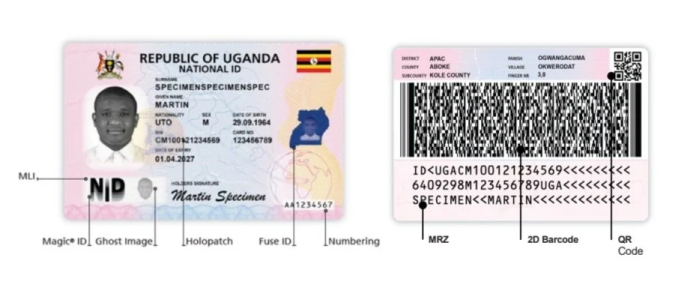
NIRA unveils enhanced National ID cards

Uganda’s National Identification and Registration Authority (NIRA) announced Thursday a nationwide rollout of enhanced National Identity Cards, starting May 27.

The six-month mass ID renewal and registration campaign will target every parish in the country as the initial IDs issued in 2014 begin to expire.

Speaking at a news briefing in Kampala, NIRA Executive Director Rosemary Kisembo said the new generation of IDs will feature advanced security upgrades to curb identity fraud and improve access to services.

Kisembo said the cards will include Multiple Laser Images (MLI), Machine-Readable Zones (MRZ), QR codes, and 2D barcodes to strengthen online and offline verification processes.

NIRA has distributed over 5,300 biometric registration kits to sub-counties across Uganda to support the operation. The exercise will cover renewals, first-time registrations for citizens 18 and older, and corrections of existing ID errors.

Kisembo emphasized inclusivity, stating that efforts will be made to register all eligible Ugandans, including those in prisons, the diaspora, and individuals who missed previous enrollments.

To prevent illegal registrations by non-citizens, NIRA has established district-level verification committees chaired by Resident District Commissioners (RDCs) to vet applications.

The government has allocated 666.85 billion shillings for the operation, with the goal of renewing 15.8 million IDs. The upgraded cards will be valid for ten years.

Kisembo said secure identification is fundamental to accessing services like healthcare, education, and finance, adding that the initiative aims to build a more inclusive and efficient Uganda.

Authorities are encouraging citizens to register or renew their IDs early to avoid last-minute rushes

Stories Continues after ad

Victoria University, others accredited by Law Council to teach Bachelor of Laws Degree

Victoria University has officially received accreditation from the Law Council to offer a Bachelor of Laws degree, marking a major milestone in its academic journey and legal education ambitions.

The announcement was made by George Omunyokol, Chairperson of the Committee on Legal Education and Training of the Law Council.

This final approval follows earlier accreditation by the National Council for Higher Education (NCHE), which, on July 12, 2024, authorized Victoria University to teach Law and two other programs — Bachelor of Events and Hospitality Management and Diploma in Events and Hospitality Management.

Victoria University Vice Chancellor, Dr. Lawrence Muganga welcomed the accreditation as a milestone filled with pride and excitement for the continuity in the University’s journey of excellence.  

Dr. Muganga said, “We are overjoyed and deeply grateful to the Law Council for officially recognizing @VUKampala as an accredited higher education institution authorized to teach Law in Uganda. This milestone fills us with pride and excitement as we continue our journey of excellence.Thank you, Law Council.”

The NCHE accreditation had allowed the University to admit 81 students annually into the Law programme for the next nine academic years. However, full implementation required a green light from the Law Council — which has now been granted.

Prof. Mary Okwakol, Executive Director of NCHE, revealed the institution’s accreditation in a letter dated July 12, 2024:

“I am pleased to inform you that after due consideration, Council at its 76th Meeting of 10th July 2024, under Min. 607/76/2024 accredited the academic programmes indicated below for the specified admissible number of students and the stated accreditation period with effect from July 10.”

Dr. Muganga previously described the NCHE accreditation as “great news” and invited students to apply:

“Ugandans are invited to join Victoria University and become part of the esteemed legal fraternity.

Our innovative LLB programme goes beyond traditional legal education, offering additional expertise in digital mastery and AI proficiency.”

This approval by the Law Council not only affirms the University’s compliance with national legal education standards but also solidifies its place as one of the 19 institutions in Uganda accredited to teach Law — joining the ranks of Makerere University, Uganda Christian University, and Kampala International University, among others.

The accreditation also comes as a timely endorsement of a programme that the university had already started implementing, now enabling students to graduate with officially recognized degrees.

In accordance with Section 119(A) of the Universities and Other Tertiary Institutions Act, NCHE had earlier warned institutions against running unaccredited programmes. Prof. Okwakol emphasized the need for adherence to guidelines:

“Officers of the NCHE shall review the implementation during their periodic administrative and monitoring visits to your institution.”

Victoria University recently expanded its academic portfolio, also launching UBTEB-certified vocational courses aimed at enhancing practical skills and hands-on learning.

Stories Continues after ad

Equity Group, African Guarantee Fund partner to transform Ugandan SMEs

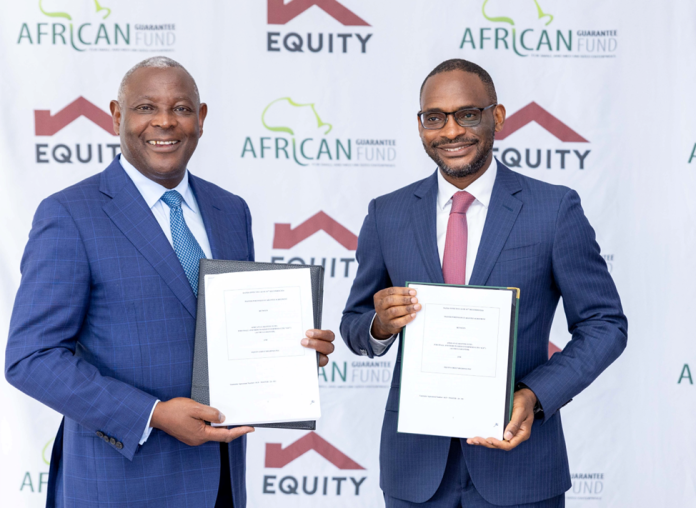
Equity Group Managing Director & CEO, Dr. James Mwangi (Left) and African Guarantee Fund Group CEO, Jules Ngankam (Right)

Equity Group Holdings Plc and the African Guarantee Fund (AGF) have partnered to support Micro, Small, and Medium Enterprises (MSMEs) by renewing and expanding their strategic partnership through a $500 million framework.

Ugandan small business owners can benefit from the renewed partnership between Equity Group and the African Guarantee Fund (AGF) that will disburse $500 million in affordable loans.

This facility will enable Equity Group to scale its lending activities to micro, small and medium enterprises (MSMEs), unlocking $1 billion in financing for these businesses. The initiative is projected to create or sustain over 50,000 jobs.

Lending will involve three phases, starting with an initial $115 million tranche already committed to the five core subsidiaries. It will cover loans to MSMEs, with a focus on women-owned, youth-led, and green enterprises.

To date, the AGF–Equity partnership has unlocked over $160 million in loans for nearly 2,000 MSMEs, including 500 women-led and 900 youth-led businesses.

Speaking recently in Nairobi at the official signing, Equity Group Managing Director and CEO, Dr. James Mwangi said, “This expanded partnership with the African Guarantee Fund underscores our shared vision of empowering MSMEs, which are the backbone of African economies. By enhancing access to finance and promoting sustainable business practices, we are investing in the future of our communities, preserving jobs and driving inclusive growth across the region.”

Building on a collaboration which was first established in 2018, which was later enhanced in 2020 with a $75 million according to officials, this renewed partnership represents the largest single guarantee engagement in AGF’s history.

It targets MSMEs in Kenya, Uganda, Rwanda, Tanzania, and the Democratic Republic of Congo (DRC), with plans to extend to future Equity Group subsidiaries over the next 10 years.

Dr. Mwangi said, “We see a unique opportunity to deepen our focus on high-impact SME sub-sectors, including agriculture, women- and youth-led enterprises, among others. These are central to our Africa Recovery and Resilience Plan (ARRP), which emphasizes the power of collaboration and strategic partnerships to unlock transformative growth.”

The partnership leverages Equity’s African Development Bank partnership under the Affirmative Finance Action for Women in Africa (AFAWA) Guarantee for Growth program, which aims to unlock up to $3 billion in financing for women SMEs in Africa through financial institutions.

A substantial portion of the risk-sharing mechanism between AGF and Equity will offer women entrepreneurs increased guarantee cover along with technical assistance as provided by the Equity Group Foundation, to help reduce the gender finance gap.

Jules Ngankam, the AGF Group CEO said, “Our renewed partnership with Equity Group further increases our footprint and impact in the region. By supporting the Bank to accelerate SME financing, we envision several development impact indicators, including increasing the number of people employed and engaged in businesses and growth of enterprises from one stage to another, for instance, from Small to Medium enterprises.”

In addition, AGF will continue supporting Equity Group through its Capacity Development initiative, by offering comprehensive training programs for the bank’s staff with a special focus on enhancing gender-smart investing.

Equity Group and AGF remain committed to working collaboratively to ensure that this enhanced facility delivers measurable value to the region’s MSMEs and aligns with the UN Sustainable Development Goals (SDGs) and Africa’s Agenda 2063, reinforcing both institutions shared vision to transform lives through inclusive finance.

Stories Continues after ad

Government to issue corporate bonds to fund state enterprises

The government is planning to issue corporate bonds in the upcoming financial year as part of efforts to raise capital for state-owned enterprises and revitalize the country’s underperforming corporate bond market.

However, the move presents a challenge, as most state enterprises lack credit ratings, which are crucial for attracting investor confidence.

The funds raised through these bonds will be directed towards long-term, approved projects, helping to alleviate mounting pressures on the government to finance various investments in critical sectors such as transport, energy, education, health, and science and technology. According to the National Budget Framework paper for 2025/06-2029/30, select beneficiaries of these funds include the National Water and Sewerage Corporation (NWSC), Uganda Development Bank (UDB), and Uganda Development Corporation (UDC).

While the full details of the bond issuance are not yet available, it is understood that NWSC is facing a funding shortfall in its efforts to expand safe water coverage in urban centers. UDB, on the other hand, is seeking additional capital to finance long-term projects across various sectors, including manufacturing, education, healthcare, and agriculture.

NWSC currently manages over 500,000 water supply connections nationwide, while UDB received a Shs1 trillion ($271 million) capital injection from the government in 2020 to support small businesses hit by the COVID-19 pandemic. This funding was sourced from a $491 million loan provided by the International Monetary Fund (IMF) and was used to offer financial rescue packages, health sector support, and welfare grants to affected communities.

Meanwhile, UDC has invested in projects such as a fruit juice processing factory and the Atiak Sugar factory, which has faced delays despite consuming significant taxpayer money over the past five years. The delayed start of production at Atiak has raised concerns about the effectiveness of state-run investments.

One of the key challenges facing the corporate bond initiative is the rise in interest rates on treasury bills and bonds, which serve as benchmarks for pricing corporate bonds. Financial experts highlight that the yields on these instruments have increased to between 12% and 18% this year, driven by investor concerns over weak economic growth, declining tax revenues, and limited donor support.

Although UDB secured a foreign credit rating last year, neither NWSC nor UDC has obtained a credit rating for their commercial operations, which is a critical factor for investors when considering corporate bonds. Credit ratings provide assurance of a borrower’s ability to meet debt obligations on time.

Paul Bwiso, the CEO of Uganda Securities Exchange (USE), pointed out that corporate bonds are typically priced around the yield of the 182-day treasury bill. He also suggested that the government may limit the number of bids on these treasury bills to control yields on corporate bonds. According to Bwiso, a corporate bond issued by a government enterprise would be attractive to investors, provided the enterprise has strong growth prospects and robust corporate governance standards. Additionally, official government guarantees could help mitigate the lack of credit ratings for public enterprises.

Investors looking to invest in corporate bonds issued by government entities would need to consider various economic factors, such as economic growth, public debt levels, inflation, and tax revenue collection. The government debt yield curve, which directly influences borrowing costs, is a particularly sensitive factor in these decisions.

In the absence of credit ratings, official government guarantees could make such corporate bonds more appealing. Previous corporate bonds issued at the USE include offerings from the East African Development Bank (EADB), African Development Bank (AfDB), Housing Finance Bank Uganda, and Stanbic Bank Uganda. These bonds have since matured, according to capital markets sources. The last private debt offer on the USE was a $30 million corporate bond issued by Kakira Sugar in 2013, which carried an interest rate of 13% per annum and matured in 2023.

Dr. Patrick Birungi, the Executive Director of UDC, acknowledged that the corporate bond program is a long-overdue tool for mobilizing capital for productive investment rather than consumption. He emphasized that compared to neighboring countries’ debt levels, Uganda has less to fear regarding new borrowing arrangements.

Stories Continues after ad

Gov’t targets growth, debt reduction in FY 2025/26 Budget

Minister of State for General Duties, Hon. Henry Musasizi, has assured Parliament that Uganda’s fiscal position remains sustainable and focused on recovery, despite challenges in revenue performance.

Appearing before the Committee on Budget to discuss the draft estimates of revenue and expenditure for FY 2025/26, Musasizi outlined key priorities including domestic revenue mobilization, development spending, and clearing domestic arrears.

He was accompanied by the Permanent Secretary and Secretary to the Treasury (PSST), Ramathan Ggoobi, and a team of technical officials from the Ministry of Finance, who provided technical support in addressing queries raised by the Committee.

Musasizi admitted that revenue collection has not grown as anticipated under the Charter for Fiscal Responsibility, largely due to the lingering effects of the COVID-19 pandemic on business activity.

“Revenue collection has not increased as projected in the Charter for Fiscal Responsibility due to slow recovery of businesses from effects of Covid-19,” he said.

To support recovery, he added, the government has extended tax relief measures for affected entities. Over the past five years, revenue performance has fluctuated between 13.4% and 14% of GDP.

To improve this outlook, Musasizi said the government is implementing the Domestic Revenue Mobilization Strategy (DRMS) at full scale, with major investments in the Uganda Revenue Authority (URA) to strengthen tax administration and manage exemptions more efficiently.

On public debt, the minister noted that Uganda’s nominal debt stood at 46.80% of GDP in FY 2023/24—below the projected 47.9%.

“Our debt is expected to remain sustainable in FY 2025/26 and over the medium term,” Musasizi told the Committee.

He also revealed that Shs. 18.509 trillion has been allocated under the development budget for projects with high economic return, in line with the Agro-Industrialization, Tourism, Minerals and Oil & Gas Strategy (ATMS) and the government’s ten-fold growth plan.

“The projects to be financed are those that are compliant with the Public Investment Management System (PIMS) framework,” he said.

Turning to domestic arrears, Musasizi disclosed that Shs. 1.4 trillion has been provided in FY 2025/26 as part of a phased plan to clear all categories of arrears.

The Auditor General’s report shows that domestic arrears increased from Shs. 10.5 trillion in FY 2022/23 to Shs. 13.81 trillion in FY 2023/24. However, a significant portion—Shs. 8.313 trillion for Bank of Uganda redemptions—was already catered for in the current FY 2024/25 budget, leaving a remaining stock of Shs. 3.854 trillion.

“At this rate, therefore, we shall be able to clear the remaining stock within three financial years,” Musasizi assured.

Stories Continues after ad

South Africa is Leading the Call for Responsible Gambling in African Countries

South Africa is once again positioning itself as a leader in ethical gambling practices, with the upcoming Responsible Gambling Summit 2025 set to take place on 13–14 November 2025 at Emperors Palace in Kempton Park, Gauteng. This landmark event will gather international experts, regulators, and industry professionals to address the most pressing challenges in responsible gambling across Africa.

Hosted by the South African Responsible Gambling Foundation (SARGF) in collaboration with major regulatory bodies such as the National Gambling Board, Eastern Cape Gambling Board, and Western Cape Gambling and Racing Board, the summit aims to drive forward an evidence-based, solutions-focused agenda that ensures gambling growth does not come at the cost of public well-being.

As South Africa continues to see rising participation in both land-based and gambling online, the summit is timely. It will tackle issues ranging from technological safeguards and public health integration, to policy harmonisation and vulnerable population protection.

SouthAfricanCasinos.co.za: Advocating for Safer Online Gambling

As South Africa strengthens its role in setting responsible gambling standards, SouthAfricanCasinos.co.za remains at the forefront of this effort in the online casino space. Our portal is more than a online casino listing site — it is a trusted source of expert advice, consumer guidance, and responsible gambling advocacy.

Since our inception, we have maintained a clear policy: we only recommend licensed, regulated casinos in south africa that adhere to strict player protection measures. These include transparent terms, fair bonus practices, and built-in tools such as deposit limits, time-outs, and self-exclusion options.

“The online gambling landscape in South Africa is growing rapidly,” says a spokesperson for SouthAfricanCasinos.co.za. “But with growth comes responsibility. Our mission is to ensure players have access to safe, ethical gambling environments. We support the goals of the Responsible Gambling Summit and encourage every operator to prioritise the welfare of their players.”

Practical Frameworks for Change

The Responsible Gambling Summit 2025 will focus on seven key thematic areas:

  • Understanding gambling behaviour and disorders through science-led approaches.
  • Overcoming barriers to effective policy implementation, including gaps in education and enforcement.
  • Leveraging technology, such as AI-driven risk detection and real-time player monitoring.
  • Adopting global regulatory best practices tailored to South African realities.
  • Protecting at-risk individuals and communities, especially youth and those in lower-income brackets.
  • Educating the public on the risks of gambling and how to stay safe.
  • Building international networks to ensure future readiness and consistency across borders.

Each session is designed to lead to real-world outcomes, with progress monitored and reported biennially. This commitment to transparency aligns with broader calls for industry-wide accountability.

How Players Can Gamble Responsibly

Whether you’re new to online casinos or an experienced player, here are some essential responsible gambling tips:

  • Treat gambling as entertainment, not a way to make money.
  • Set a time limit before you start and stick to it.
  • Only gamble with money you can afford to lose.
  • Avoid playing when you are upset, stressed, or intoxicated.
  • Use built-in responsible gaming tools provided by licensed operators.
  • Keep track of your play history and regularly review your habits.
  • Seek help if gambling is no longer fun, or if it begins to impact your personal life.

At SouthAfricanCasinos.co.za, we make these practices easier by highlighting casinos that offer responsible gambling features as part of our review process. Each recommended site undergoes a thorough evaluation based on licensing, fairness, transparency, and player protection standards.

Our Commitment to the South African Gambling Community

With a growing base of South African users, SouthAfricanCasinos.co.za plays an important educational role in the online gambling space. Our platform offers in-depth guides, news updates, free bonus casinos, free spins casinos  and strategy articles designed to help players make informed decisions.

We actively follow developments in gambling regulation and work to ensure our listings are in line with the latest responsible gambling initiatives. As the conversation around ethical gambling evolves, so does our content — reflecting the high standards that South African players deserve.

South Africa’s leadership in responsible gambling sets a high standard not just for the continent, but for the global industry. By playing at casinos that are transparent, regulated, and committed to safety — such as those featured on SouthAfricanCasinos.co.za — players can enjoy the entertainment of gambling while staying in control.

CHECK THE FOLLOWING LIST OF CASINOS THE WE RECOMMEND:

#Mobile CasinoWelcome Bonus PackageBonus Code
1Springbok CasinoR500 Free No Deposit Bonus + R11,500 FreeNDC350
2HollywoodbetsR25 Free Bet + 50 Free Spins On Sign-UpN/A (Automatic)
3ZARBonus available on DepositN/A
4Thunderbolt CasinoR350 Free No Deposit Bonus + R10,000 FreeNDC350
5Yeti CasinoR200 Free No Deposit Bonus + R3,333 FreeN/A (Automatic)
6Punt CasinoR200 Free No Deposit Bonus + R10,000 FreeNDC200
7Yebo CasinoR350 Free No Deposit Bonus + R12,000 FreeNEW350
810Bet100% Casino Bonus Up To R3,000N/A (Automatic)
9SlotBox Casino100% Bonus Up To R2,000N/A 
10Silver Sands CasinoR400 Free No Deposit Bonus + R3,000 FreeSAC400
Stories Continues after ad