Stanbic Bank
Stanbic Bank
21 C
Kampala
Stanbic Bank
Stanbic Bank
Home Blog Page 159

Gov’t to invest $700m into Uganda Airlines for expansion, global reach

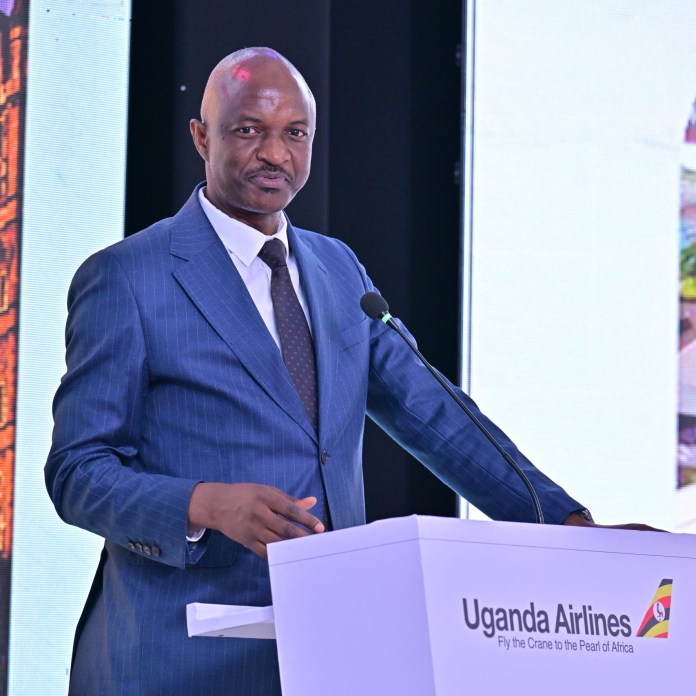
Ramathan Ggoobi, Permanent Secretary and Secretary to the Treasury (PSST) at the Ministry of Finance, addressing the UK-Uganda Trade and Investment Forum in London.

The Government of Uganda is set to invest $700 million into Uganda Airlines over the next few years in order to expand the carrier’s route network and reinforcing its role in boosting economic ties with global markets.

The announcement was made by Ramathan Ggoobi, the Permanent Secretary and Secretary to the Treasury (PSST) at the Ministry of Finance, while addressing the UK-Uganda Trade and Investment Forum in London.

Ggoobi described the recent launch of direct flights between Entebbe and London Heathrow by Uganda Airlines as a “game-changer” that will reshape the economic and cultural landscape between the two countries.

“This is more than just a new flight route—it’s a strategic link for business, tourism, and diplomacy. It dismantles the walls of misinformation that have kept some UK investors and tourists away from Uganda due to outdated or false narratives,” said Ggoobi.

He emphasized Uganda’s commitment to leveraging strategic partnerships, noting that the new flight connection would enhance trade flows and facilitate investor engagement in key sectors such as financial services, investment banking, insurance, and infrastructure development, as part of Uganda’s roadmap to becoming a $500 billion economy by 2040.

Ggoobi reaffirmed the country’s strong economic performance, projecting a 6.4% GDP growth rate for the Financial Year ending June 2025, and over 7% growth in the medium term.

“New data confirms that our growth is inclusive, transformative, and pro-poor,” he said.

He cited the latest Uganda National Household Survey released by the Uganda Bureau of Statistics (UBOS), which shows that the percentage of Ugandans living below the national poverty line has dropped from 20% to 16% in just four years, outperforming the 2025 national target of 18.5%. Income inequality has also declined, with the Gini coefficient falling from 0.41 in 2020 to 0.38.

Ggoobi highlighted Uganda as one of Africa’s most attractive investment destinations, boasting a 14% average return on investment and 30% return on equity for listed companies. He noted that the country’s liberalised economy, stable macroeconomic framework, and pro-private sector policies are key pillars supporting investor confidence.

“We offer a conducive environment with both tax and non-tax incentives, strong legal and regulatory frameworks, and protection from non-commercial risks,” he said.

He added that Uganda provides tariff- and quota-free access to major regional markets through the East African Community (EAC), Common Market for Eastern and Southern Africa (COMESA), and the African Continental Free Trade Area (AfCFTA)—tapping into a combined population of over 1 billion people and a market GDP of $3 trillion.

Ggoobi also extended a warm invitation to UK investors and tourists: “Come and experience Africa’s best-ranked investment destination. Fly direct to Uganda—a country with low macroeconomic risk, high returns, and a renewed tenfold growth strategy.”

Stories Continues after ad

UPDF Bill passed: Parliament defies Supreme Court ruling on civilian trials in Military Courts

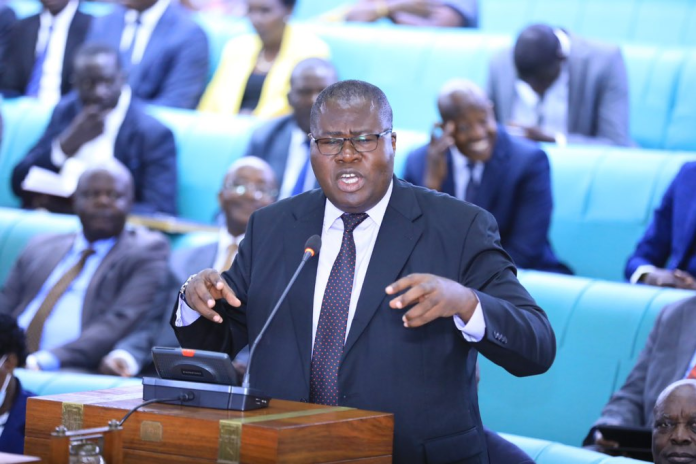
Defence and Veteran Affairs Minister Oboth Oboth presenting the UPDF Bill before Parliament.

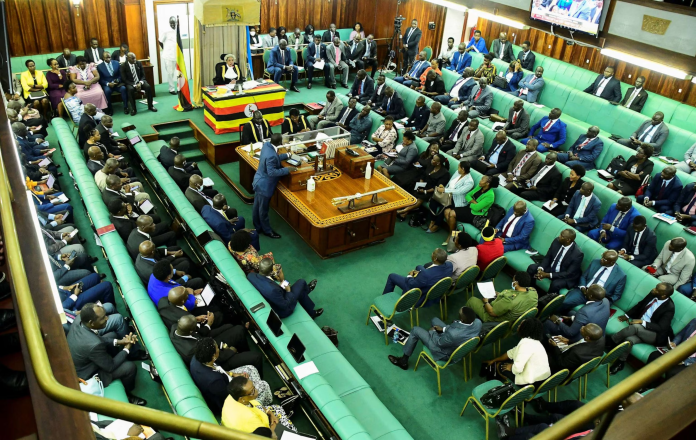
Parliament on Tuesday passed the Uganda People’s Defence Forces (UPDF) Amendment Bill, 2025 effectively defying a Supreme Court ruling that outlawed the trial of civilians in military courts. The new law reintroduces military jurisdiction over civilians under a restructured Court Martial system, raising concerns over constitutional violations and separation of powers.

The Bill’s passage came amid tense scenes at Parliament, including an unexplained cutoff of the official livestream shortly after Speaker Anita Among entered the chambers. There was also no live television broadcast of the session, effectively blocking public access to a proceeding.

Introduced last week by Defence Minister Jacob Oboth Oboth, the new version of the Bill purports to align with the Supreme Court’s January ruling in Attorney General vs Michael Kabaziguruka. In that judgment, the Court upheld a Constitutional Court decision that military courts had no jurisdiction over civilians, recognizing them instead as disciplinary tribunals for service offenses only. It further directed that all criminal cases involving civilians and capital offenses involving soldiers be transferred to civilian courts. However, instead of complying, the government withdrew the original UPDF Bill, which had only proposed internal structural changes, and replaced it with a sweeping new version that establishes a three-tier military court system and permits military advocates to chair these courts — including in cases involving civilians.

The Bill’s progression through Parliament was anything but smooth. Leader of the Opposition Joel Ssenyonyi led a walkout of opposition MPs, citing procedural violations and lack of stakeholder consultation.

Addressing journalists at a press briefing, Ssenyonyi said Parliament had not been given adequate time to read or debate the committee reports and claimed the majority report may have originated from the State House.

“Members were simply summoned to sign without meaningful review,” he said. He accused Speaker Among of ignoring legitimate procedural concerns and praised MPs who worked overnight to prepare minority reports.

“This was a sham process. Due process was trampled on. We had no choice but to walk out,” he added, announcing that the opposition plans to challenge the law in court, citing violations of Article 92 of the Constitution and contempt of a Supreme Court directive.

Despite the opposition boycott, a few MPs stayed behind to present minority reports. Erute South MP Jonathan Odur warned that the Bill violates Article 92, which prohibits Parliament from enacting laws that overturn court decisions. He also raised a point of sub judice, citing pending cases before both the Supreme Court and the East African Court of Justice including Civil Appeal No. 01 of 2025, filed by lawyer Male Mabirizi, which challenges the constitutionality of trying civilians in military courts.

“The Bill seeks to formalize what the Court already ruled unconstitutional. Proceeding is in direct contempt of court,” Odur said.

Kioga County MP Moses Okot Bitek, presenting a separate minority report on behalf of 14 MPs including Mathias Mpuuga, Medard Lubega Sseggona, and Betty Nambooze, criticized the Bill for undermining the judiciary. He specifically opposed Section 117A(e), which allows military courts to try civilians found in unauthorized possession or sale of military uniforms — offenses already covered under the Penal Code Act. Okot argued that the Bill dangerously expands military jurisdiction and revives provisions the Supreme Court explicitly struck down. “Sections 2, 179, and 119 of the current UPDF Act were already declared unconstitutional for duplicating offenses found in civilian law,” he emphasized.

Despite the resistance, the ruling National Resistance Movement (NRM) and its allied independents used their numerical advantage to pass the Bill.

Among its key provisions is the establishment of the Unit Court Martial to handle offenses punishable by up to five years’ imprisonment, chaired by a captain-level officer who is also a qualified lawyer. It also creates the Division Court Martial, responsible for trying offenses warranting more than five years in prison, excluding capital offenses, chaired by a Lieutenant Colonel and legal practitioner. The General Court Martial is restructured to handle capital offenses and will be chaired by a Brigadier General qualified for appointment as a High Court judge. The chair will be appointed by the High Command in consultation with the Judicial Service Commission, on a renewable three-year term.

If signed into law by President Yoweri Museveni, the Bill could extend military court jurisdiction to civilians associated with the UPDF, including individuals who accompany military units or engage with military equipment or attire. The passage of the UPDF Amendment Bill, 2025 marks a profound shift in Uganda’s military justice system, reigniting a contentious debate over the separation of powers, constitutionalism, and civil liberties. With the opposition preparing to challenge the law in court, the battle over whether civilians can be subjected to military justice — a question the Supreme Court had seemingly settled — is far from over.

Stories Continues after ad

Uganda Airlines appoints APG as UK sales agent following launch of direct London flights

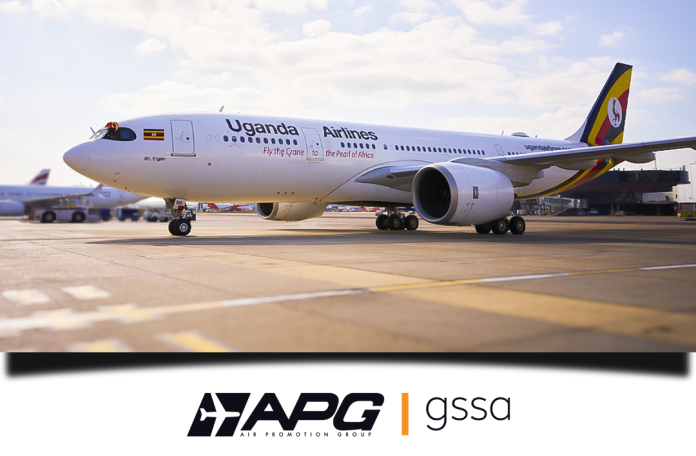
Uganda Airlines has appointed APG as its General Sales Agent (GSA) in the United Kingdom, shortly after launching its long-anticipated direct flights between Entebbe and London Gatwick on May 18, 2025.

The new partnership is expected to bolster the airline’s expansion into the UK market, marking a major milestone as Uganda Airlines reconnects with the UK for the first time in more than 20 years.

Under the agreement, APG will manage full sales and marketing services for Uganda Airlines across the UK market. This includes overseeing customer service, trade engagement, and promotional efforts to support the airline’s growth in Europe.

“APG will provide full sales and marketing services and representation support in the UK market. APG will also support Uganda Airlines with travel trade engagement and promotional initiatives to drive awareness and sales of the new route,” the airline stated.

Uganda Airlines’ Entebbe–London route will be operated using the airline’s state-of-the-art Airbus A330-800neo, offering three cabin classes: Business, Premium Economy, and Economy, to cater to both leisure and corporate travelers.

Richard Burgess, President of APG Network, commented: “We are delighted to be representing Uganda Airlines in the UK at such a pivotal moment. The airline’s direct operation from Entebbe to London Gatwick signifies a significant development for travel and trade relations between the two countries.”

The airline emphasized that this strategic partnership will strengthen Uganda Airlines’ international footprint and ensure efficient representation in one of its key markets.

“This partnership further reinforces APG’s ongoing mission to support airline growth worldwide through local representation and a full suite of services tailored to airline partners,” the airline added.

Uganda Airlines is the national carrier of the Republic of Uganda and has rapidly expanded its international and regional routes since its revival. It currently operates scheduled service across East, Central, and Southern Africa and now extends its reach to Europe with this new UK route.

Stories Continues after ad

MPs want political parties to receive funding based on IPOD participation

Legislation in progress by Members of Parliament in Uganda.

The Parliament of Uganda is considering major reforms to the Political Parties and Organisations Act, aimed at promoting democratic principles, political dialogue and accountability among political parties.

This comes following the tabling of the Political Parties and Organisations (Amendment) Bill, 2025, which proposes changes to how public funds are accessed by parties represented in Parliament.

The Bill, first read on May 14, 2025 and subsequently referred to the Committee on Legal and Parliamentary Affairs, seeks to restrict government funding to only those political parties that are committed to the principles of tolerance, dialogue, and peaceful co-existence.

“The current law allows political parties in Parliament to access public funds without any conditions attached, apart from financial accountability,” the committee observed in its report.

The committee added, “This amendment seeks to promote responsible political behavior and ensure that parties benefiting from public funds uphold democratic values.”

Under the proposed amendment to Section 14 of the Act, only political parties and organisations that are members of, and actively participate in, the Inter-Party Organisation for Dialogue (IPOD) will qualify to receive government funding.

“This is not an attempt to exclude or punish any party,” said Yusuf Mutembuli, the mover of the Bill. “Rather, it is a way to strengthen our democratic processes by encouraging political parties to engage in dialogue, promote tolerance, and avoid divisive politics.”

The Attorney General expressed strong support for the Bill, noting that the proposed changes are in line with Article 72(3) of the 1995 Constitution, which mandates Parliament to regulate the financing of political parties. He argued that the institutionalization of IPOD would operationalize this constitutional mandate while promoting unity and democratic integrity.

“Funding political parties should be conditional on adherence to principles of tolerance, dialogue, and peaceful co-existence,” the Committee emphasized in its findings. “This would promote stability, reduce political violence, and encourage responsible conduct.”

The Committee further noted that the current funding model fails to account for the behavioral standards of political parties.

“There is no law requiring parties to demonstrate their commitment to democratic norms before receiving funds,” the report stated. “This gap undermines the spirit of multiparty democracy.”

The committee also recommended a revision of the language used in the Bill, specifically the reference to the National Consultative Forum (NCF). While the Bill proposes to tie funding to membership in the NCF, the committee cautioned that the NCF includes all registered political parties, including those not represented in Parliament.

“This could inadvertently broaden the scope of the law to include parties that are not eligible for funding,” the committee warned. “We therefore recommend that the requirement be limited to parties participating in IPOD activities, which are more aligned with parliamentary representation.”

In an equally important reform, Clauses 2 and 3 of the Bill seek to institutionalize IPOD as an official organ under the National Consultative Forum. The Bill proposes a reorganization of the NCF into two distinct bodies: IPOD, for parties represented in Parliament and a separate forum for non-represented political parties.

“This structure allows parties with similar challenges to engage in constructive dialogue within their ranks,” said the mover. “It recognizes the distinct realities between represented and non-represented parties.”

The committee supported this approach, noting that it “will enhance internal communication, foster mutual understanding, and improve the capacity of parties to resolve conflicts without resorting to undemocratic means.”

IPOD, originally established in 2009 as a loose coalition of parliamentary political parties with support from the Netherlands Institute for Multiparty Democracy (NIMD), has played a vital role in mediating political tensions and fostering cooperation. Its formal institutionalization would give it a stronger mandate and clearer legal status.

“The institutionalization of IPOD within the law will ensure its sustainability and strengthen Uganda’s multiparty system,” the report stated.

The committee’s final recommendation was unequivocal: Government funding and access to public resources should be strictly reserved for political parties that are members of and active participants in IPOD.

“This will foster discipline among political actors and ensure that public funds are utilized by institutions committed to peace and democracy,” the committee concluded.

The Parliament is expected to deliberate on the committee’s report in the coming weeks. If passed, the Bill will mark a shift in how political engagement is incentivized and regulated in the country.

Stories Continues after ad

Equity Group recognized as a superbrand in East Africa

Equity Group team.

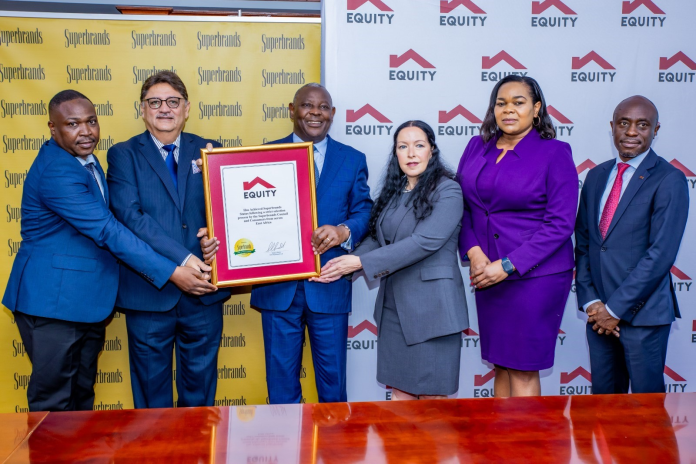
Equity Group Holdings Plc has been recognized as a superbrand in East Africa, a distinction that affirms the Group’s commitment to quality, reliability and excellence in the financial services sector.

Equity’s inclusion in superbrands East Africa Volume 9 comes at a pivotal time as the Group continues to strengthen its presence across East and Central Africa as a regional brand serving the unique needs of its customers across diverse territories.

Superbrands is a globally respected authority on branding excellence, identifying and celebrating the most trusted and influential brands across more than 90 countries. The East African edition, now in its ninth volume, highlights brands that have achieved exceptional status in the eyes of both consumers and industry experts.

This recognition is based on a rigorous selection process led by an independent research firm and evaluated by a panel of branding and marketing professionals. Brands are assessed on three core criteria: Quality, which refers to the delivery of world-class products and services; Reliability, which covers consistent performance and consumer trust; and Distinction, which looks at brand identity and visibility that set it apart in the marketplace.

“We are honored to be recognized as a Superbrand. Equity was the first bank in Kenya to receive this recognition in 2007 and we are proud to be the only bank to have received it four times. This achievement reflects the unwavering support of our customers, and we are deeply grateful. Our staff have also folded their sleeves to give their best. We commit to embedding this success into our DNA, ensuring that our strategy, governance, systems, and processes reflect our dedication to changing lives, enhancing wealth creation, and making lives better in our region,” said Dr. James Mwangi, Equity Group Managing Director and CEO.

Superbrands East Africa Project Director, Jawad Jaffer, while commenting on Equity’s achievement, said: “Equity has consistently demonstrated exceptional brand strength, achieving Superbrand status for the 4th time. Their success in balancing technological innovation with a purpose-driven approach that addresses the specific needs of East African communities exemplifies what it means to be a Superbrand in today’s competitive landscape. We are delighted to present this year’s certificate to Equity.”

The recognition enhances the Group’s global profile as a reliable and purpose-driven financial institution and cements the brand’s legacy as a homegrown African success story. It also grants Equity the right to carry the Superbrands Award Seal across all markets where Equity operates, including Kenya, Uganda, Tanzania, Rwanda, South Sudan, and the Democratic Republic of Congo. This visible mark of excellence provides enhanced credibility during critical customer decision-making moments by transferring established trust and reputation to new territories.

Equity emerged as a top performer at the 20th edition of the Think Business Banking Awards 2025, securing 16 awards across key categories that recognize excellence in innovation, financial literacy, SME support, and sustainability. The Bank claimed the top position in nine categories, including Best in SME Banking, Agriculture Financing, Asset Financing, Mortgage Financing, Financial Literacy Programs, Special Judges Award for Product Innovation, Sustainable Corporate Social Responsibility, Microfinance, and Agency Banking.

Equity Bank remains resolute in its commitment to driving positive societal transformation and implementing impactful operational policies that create value for its communities and stakeholders. By prioritizing sustainability and customer-centricity, the bank consistently strives to redefine banking in Kenya.

Stories Continues after ad

Uganda Airlines lands in London as Victoria University VC calls for patriotism over politics

Following Uganda Airlines’ historic maiden landing at London Gatwick Airport, Victoria University Vice Chancellor Dr. Lawrence Muganga has called on Ugandans to rise above political biases and embrace a spirit of unity, truth and national pride.

“Fellow Ugandans, with your permission, kindly allow me to share that it is easy to fall into negativity, especially when we see something good coming from someone or a government we may not agree with. But real maturity and love for our country means being able to celebrate what is positive, no matter who is responsible for it,” Dr. Muganga said via X (Twitter) handle.

The milestone moment—when Uganda Airlines safely touched down at London Gatwick at exactly 17:01—was met with fanfare and national pride, but also revealed the persistent divide in public perception, particularly on social media, where accomplishments are often overshadowed by political sentiment.

“We should always try to put positive thinking first and remember to put our country first. That is what true patriotism looks like,” Dr. Muganga emphasized, urging Ugandans to embrace factual understanding and avoid knee-jerk criticism.

He further pointed out the need for accurate information in public discourse, especially from educated citizens.

“As educators, we often feel frustrated when people complete their education yet do not take time to find out accurate information or research what is really going on. This problem shows up clearly when people talk about Uganda Airlines without knowing its actual story,” he noted.

To set the record straight, Dr. Muganga clarified a common misconception:

“To be clear, Uganda once had an airline called Uganda National Airlines, which started in 1977 and stopped operating in 2001. The current Uganda Airlines is not the same company. It is a new airline that was registered in 2018, giving Uganda a fresh start in aviation. Every achievement it makes is new for this company.”

Indeed, Uganda Airlines’ landing in the UK marked not only an expansion of its international routes but also a symbol of national aspiration and progress.

“When Uganda Airlines landed in the United Kingdom for the first time at London Gatwick yesterday, that was a new and historic achievement for this new company,” Dr. Muganga added.

He further noted, “Let us use this as a reminder to educate ourselves and find the facts before rushing to criticize. The best thing we can do is to learn, to stay positive, and to always put our country above personal feelings. That is how we help Uganda move forward.”

The successful flight to London signals not just a new route, but a new chapter in Uganda’s aviation story. As Dr. Muganga aptly put it:

“History made! Uganda Airlines has safely touched down at London Gatwick Airport at exactly 17:01 — marking its first-ever landing on UK soil! A proud moment for Uganda and a giant leap in connecting our Pearl of Africa to the world. Congratulations to Uganda Airlines for making the dream take flight!”

Stories Continues after ad

Dei BioPharma’s Diabetes Drug application accepted by US FDA

Dei BioPharma factory.

The U.S. Food and Drug Administration (FDA) has accepted an application from Uganda’s Dei BioPharma for the review of its Abbreviated New Drug Application (ANDA) for liraglutide, a multibillion-dollar treatment for diabetes and weight loss, marketed under the brand name Victoza.

The FDA’s decision, officially recorded on April 23, 2025, paves the way for the company’s entry into the lucrative market for GLP-1 receptor agonists, a class of drugs that includes both liraglutide and semaglutide (Ozempic). Industry analysts project that the GLP-1 market could soar from USD 53.46 billion in 2024 to over USD 322.85 billion by 2034.

Dei BioPharma, led by Ugandan scientist and entrepreneur Dr. Matthias Magoola is positioning itself as a global leader in generic versions (Biosimilars) of these drugs.

The company estimates that it could generate revenues of between USD 5–10 billion within the next three years from the marketing of these products alone. Dr. Magoola is the founder and managing director of the biotech firm, which is based in Matugga, just outside Kampala.

In the latest innovation, the GLP-1 agonists as shown in a recent paper by Dr Magoola has changed the arena of multiple therapies, from diabetes to cancer to neurological disorder to most important the first safe drug for weight loss, an issue with most of the developed world.

Dei BioPharma has also developed an oral dosage form in place of the current injection that will further expand the market of these drugs like liraglutide and semaglutide.

Dei BioPharma is the first company in Africa to have completed the development of these drugs and has filed evaluation papers with the US FDA.

Dei BioPharma is focused on being the first company outside of the developed countries to launch this product at an affordable price, a market that can easily grow into hundreds of billions dollars in a short time.

“It is the intent of Dei BioPharma to earn enough foreign exchange to enable Uganda to pay off all of its IMF loans and other obligations,” says Dr. Magoola.

The FDA approval comes amid a string of scientific and regulatory achievements by Dei BioPharma.

Dei BioPharma under Dr. Magoola has been recognized for success and achievements for innovative discoveries in advanced therapies.

Last year, the biotech outfit received a written response to its Pre-Investigational New Drug Application (pre-IND) questions submitted to the U.S. Food and Drug Administration (FDA) regarding the development of its lead asset, RNAT-89 (BLA-761423), an mRNA LNP formulation to express darbepoetin, as the first in class such product presented to the FDA, with the agency giving a preliminary no objection.

This product is used to treat acute kidney failure, cancer, and severe anaemia. Once fully approved, Dei BioPharma is promising affordable Biological drugs, that are currently out of reach and unaffordable to more than 80% of the people around the world.

Stories Continues after ad

Another accident at Rajiv killer spot as authorities remains unbothered

That vehicle that got involved at the killer spot .

Just two weeks after the tragic death of youthful businessman and rally driver, Rajiv Ruparelia, in a road crash at the Busabala Flyover in Wakiso District, another car accident has occurred at the same exact location raising further concerns about government inaction and road safety.

According to eyewitnesses, a woman driving a Subaru Legacy on the night of Saturday, May 17, narrowly escaped death when she slammed into the same set of concrete barriers that claimed Rajiv’s life in Makindye Ssabagabo on May 3.

“Good Samaritans rushed to the scene and struggled to pull the woman out of the wrecked car,” one of the eyewitnesses reported. Traffic Police Spokesperson Michael Kananura confirmed the incident, stating, “It was a minor accident. There were no serious injuries, but I’m yet to get more details.”

The recurring crashes at this hazardous spot have sparked intense public outrage over road safety and the lax responsibility of contractors and relevant government agencies. At a vigil held for Rajiv on May 4 at his parents’ home in Kololo, Kampala, Mr. Balaam Barugahara, the State Minister for Youth and Children Affairs, made a passionate appeal:

“I appeal to the Ministry of Works and Transport, if we have not yet received money for the construction works, let us remove all the barriers because they are so deadly. Another person died at the same spot a day after Rajiv’s death,” Mr. Barugahara alarmed.

His concerns were echoed by Ms. Beti Kamya, the Inspector General of Government (IGG), who also attended the vigil. She emphasized the need for accountability and caution in public infrastructure projects:

“It’s a clear message to people constructing roads that their responsibility should not stop at constructing roads, but also making the space safe,” Ms. Kamya said.

Despite the growing pressure, the Ministry of Works and Transport issued a clarification that construction work on the deadly stretch had stalled. Gen. Katumba Wamala, the Minister, said the contractor, China State Construction Engineering Corporation (CSCEC), suspended works in October last year due to delayed payments.

The road works were originally contracted under the now-defunct Uganda National Roads Authority (UNRA) in 2021. The project aimed to upgrade 11 kilometers of the road—including the flyover and its supporting facilities—with completion scheduled for January 2024.

As the community continues to mourn Rajiv and now watches in fear as more lives are endangered, calls for immediate intervention and removal of the barriers grow louder. Yet, despite the increasing toll, the government response remains frustratingly slow, and the “Rajiv killer spot” continues to pose a deadly threat to road users.

Stories Continues after ad

Anita Among: The Speaker with a Flair

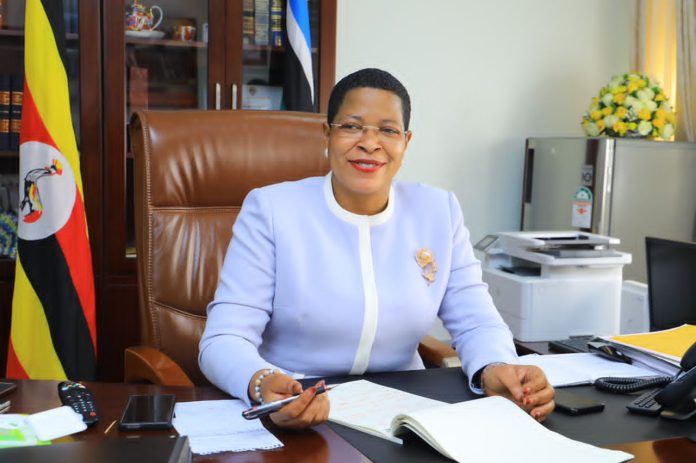
Anita Among, Speaker of the 12th Parliament.

It has been eight years since the August House was shaken by the chaos and controversy of the 2017 presidential term limit debate. An event marked by fierce clashes and flying fists, etched into the annals of parliamentary history. Yet, from those tumultuous moments rose a formidable figure, a phoenix whose influence would help reshape the political landscape: Honourable Anita Annet Among.

Like her trailblazing predecessor, Hon. Rebecca Kadaga, Among has broken barriers that long limited women’s participation in politics. The proud daughter of Bukedea, she has continually challenged the patriarchal norms that seek to constrain women’s roles in leadership and their emancipation. A force to be reckoned with, the Speaker and Woman Member of Parliament for Bukedea District embodies grace, poise, and an iron will.

It goes without saying that Among is no pushover. Time and again, she has faced down with formidable opponents, emerging not only victorious but, in some cases, having earned new allies. Her keen sense of negotiation and affable nature have made her quite the respectable figure, even among dissenters; winning hearts and commanding attention with every gavel she wields.

Born in 1973, Among’s journey began far from the glitz and glamour she commands today. Those who knew her as a child couldn’t miss the spark in her eyes—a dreamer destined for greatness. With relentless determination and earnest fervency, she pursued her education, eventually enrolling at Makerere University where she earned a degree in Business Administration.

Her transition into politics would came much later in 2007, when Bukedea was officially declared a district. Swapping her calculator for a more prestigious microphone, she boldly stood for office only to face defeat twice. The path was rocky, but she remained undeterred. In 2016, embodying the spirit of resilience, she ran once more. And as the American idiom goes, the third time’s the charm. She secured her seat in the 10th Parliament, marking the beginning of an unstoppable political ascent.

Since then, Among has held her position firmly, a testament to both her popularity and effectiveness. Her career has flourished, her voice, once tentative now rings with authority across Uganda. Her 2022 departure from the Forum for Democratic Change (FDC) to join the ruling National Resistance Movement (NRM) signaled a full-circle metamorphosis: from a determined girl in Bukedea to the Speaker of the nation’s Parliament.

That same year, she successfully contested for the position of Deputy Speaker and sailed through. However in a sudden turn of events, following the untimely passing of Speaker Jacob Oulanyah on March 25, 2022, in Washington D.C., she was elevated to the highest office in Parliament. Where with the support of her Deputy, Hon. Thomas Tayebwa, she has since managed to lead with resolve.

Under her stewardship, the once-routine proceedings of Parliament have become more dynamic and engaging. Whether through charitable initiatives or assertive disciplinary action, Among brings vitality and visibility to the Speaker’s role. Her youthfulness, sartorial flair, and bold leadership style have made her one of Uganda’s most recognizable political figures and a role model to countless young girls.

From Bukedea to the Vatican, Among’s principled leadership is fueled by a conviction to protect national values and resist external influences. This resolve was especially evident in her handling of the anti-homosexuality legislation, a controversial move that drew both domestic praise and international scrutiny.

A mother and a leader, Anita Among’s legacy is one of resilience, inspiration, and dedication. Her radiant smile has become a symbol of hope in the often-turbulent arena of politics. Despite the pace of her high-profile life, she remains grounded and connected to her roots. Her newly built mansion in Bukedea stands not merely as a personal achievement, but as a bold statement of the prosperity she envisions for her district.

As the 2026 elections approach, after having served Uganda with distinction for nearly a century. Among once again calls on the people of Uganda to believe in her leadership. If her journey thus far is any indication of she has in store, the stylish, charismatic legislator is poised to leave a lasting mark on not just Uganda’s political future, but on generations to come. Altiora Peto.

Stories Continues after ad

Ugandan activist and law student, Aloikin Praise Opoloje wins EU Human Rights Defenders’ Award 2025

Activist and law student, Aloikin Praise Opoloje has been named the winner of the EU Human Rights Defenders’ Award 2025. The award, which was presented during a ceremony on 15th May at the residence of the Ambassador of Sweden in Kampala, is given annually by the European Union to recognise an outstanding contribution by a human rights defender in Uganda.

Ms. Aloikin Praise Opoloje was chosen as the winner in recognition of her courageous activism for civil liberties, accountability, social justice and anti-corruption in Uganda. Born in 1999 in Paliisa district, she is a final-year Law student at Makerere University. She currently serves as the Student Engagement Lead at Open Parly UG, where she organizes student debates on parliamentary issues, and volunteers with the Dwona Initiative, working to combat period poverty and misinformation.

In 2024, Aloikin was actively involved in campaigns addressing political accountability, women’s rights and violations of civic freedoms. Through both grassroots mobilization and digital campaigns, she continues to inspire young people to participate in public life and push for a fairer, more inclusive Uganda.

Receiving the award, Aloikin Praise Opoloje especially recognised the new young generation of human rights defenders in Uganda, saying: “When we call for human rights, we do it passionately and we do it hopefully, for the future we never had and for the past we cannot really talk about”.

Addressing the winner Aloikin Praise Opoloje, European Union Ambassador to Uganda His Excellency Jan Sadek said“In spite of challenges faced, notably being arrested twice and remanded to Luzira prison, you still carry on and encourage young people to be involved in the politics of Uganda, calling for respect of all rights and respect of the law.

During his address Ambassador Jan Sadek also commended the work of the Ugandan Human Rights Commission: “Chairperson Wangadya deserves a warm appreciation and we recognise her and her dedication, as she is raising her voice on torture, as well as advocating for press freedom and the decriminalization of homosexuality!”.

Once again, the response to the call for nominations for the HRD Award highlighted both the range of human rights issues but also the vibrancy of activism in the country.

Also shortlisted for this year’s award were Hussein Kato Muyinda, lawyer and environmental rights defender, and Norah Kobusingye, a vocal defender of women’s rights. Mr. Muyinda was nominated for his inspiring work on environmental protection, as the co-founder of the Earth Rights Initiative he has been in the forefront of the struggle for environmental justice. Last year he was elected General Secretary of Climate Action Network Uganda (CAN-U). Ms. Kobusingye was nominated for her bold stand against corruption and gender-based violence. She is also both the co-Executive Director at Freedom Hive Uganda and CEO of Good Future and Hope.

Speaking before the award announcement, Ambassador of Sweden to Uganda Her Excellency Maria Håkansson thanked the three shortlisted candidates for their courage to shine a light on violations and abuses of human rights, and underlined the responsibility of the Ugandan state under international law to respect, to protect and to fulfil human rights for all its citizens, including taking measures to protect Human Rights Defenders.

Background

Human Rights Defenders (HRDs) are individuals who, individually or with others, act to promote and protect universally recognised human rights and fundamental freedoms in a peaceful manner. These include civil and political rights as well as economic, social and cultural rights. Examples of HRDs include journalists, bloggers, members of human rights NGOs, academics, lawyers, trade unionists, representatives of indigenous communities. The work of HRDs is essential for encouraging the respect for human rights as recognised by international human rights standards and agreements, and to secure accountability. The HRDs’ rights to freedom of expression, association and assembly need to be safeguarded to enable them to defend others.

An individual eligible for the EU HRD Award is nominated by another individual or organisation. Human Rights organisations active in Uganda were invited to nominate candidates for the award. Candidates were assessed by a panel composed of human rights experts of different European Embassies and the EU Heads of Mission.

Past winners of the EU HRD Award include Mr Gerald Kankya (2012) of Twerwaneho Listeners Club; Mr Geoffrey Wokulira Ssebaggala (2013), former Coordinator of Human Rights Network for Journalists (HRNJ); the three joint winners (2014) Ms Gladys Canogura of Kitgum Women Peace Initiative, Assistant Commissioner of Police Christine Alalo, Head of the Uganda Police Family and Child Protection Unit, and Mr Mohammed Ndifuna, Director of the Human Rights Network Uganda; Dr. Livingstone Sewanyana (2015), Founder & Executive Director of the Foundation for Human Rights Initiative (FHRI); Robert Sempala (2016) of the Human Rights Network of Journalists (HRNJ); Ms. Pamela Angwech (2017) Founder & Executive Director of the Gulu Women’s Economic Development & Globalization (GWED-G); two joint winners, Ms. Margaret Arach Orech, Founder and Director of the Uganda Landmine Survivors Association (ULSA) and Mr. Peter Sewakiryanga, a pastor with Kyampisi Childcare Ministries (KCM) in 2018; Mr William Amanzuru (2019), an environmental rights defender and founder of Friends of Zoka; Mr Aimé Moninga (2020), Founder of Men of Hope and an advocate for the rights of male survivors of sexual violence in conflict; and Ms. Rita Aciro (2021), Women’s Rights Defender and Executive Director of the Uganda Women’s Network (UWONET); Ms. Primah Kwagalah (2022), Executive Director of the Women’s Pro-bono Initiative; Ms. Agather Atuhaire (2023) Team Leader at Agora Discourse; Academic Cartoonist and Activist, Mr Jimmy “Spire” Ssentongo in 2024.

Stories Continues after ad