Stanbic Bank
Stanbic Bank
21.4 C
Kampala
Stanbic Bank
Stanbic Bank
Home Blog Page 1605

Tax Amendment Bills 2018: Ugandans to pay more taxes even as they incur losses

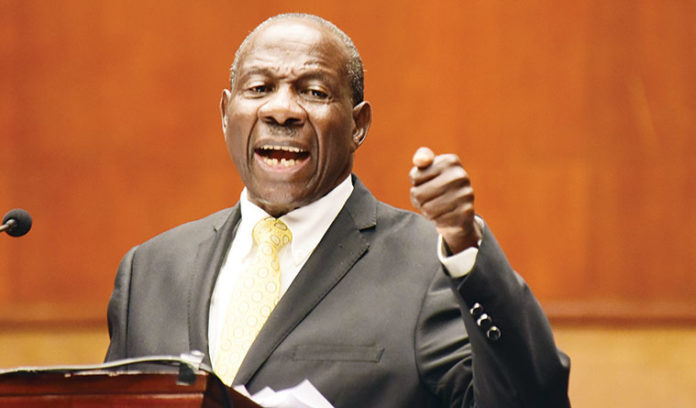
Finance Minister: Matia Kasaija.

Finance Matia Kasaija has tabled the tax amendment bills 2018 for debate in Parliament and if passed by the MPs and assented to by President Yoweri Museveni as the law requires, Ugandans will find themselves paying more taxes amid biting poverty.

The bills include: The Income Tax (Amendment) Bill, The Value Added Tax (Amendment) Bill, The Excise Duty (Amendment) Bill, The Tax Procedures Code (Amendment) Bill, Gaming (Amendment) Bill, Stamps Duty (Amendments) Bill, Tax Appeals Tribunal (Amendment) Bill, and Traffic and Road Safety (Amendment) Bill.

If the bills are assented to by the President, they will become law effective July 7, 2018. Below Eagle Online highlights some of the new tax proposals in the Income Tax, VAT, Tax Procedures Code, Excise duty bills and Traffic and Roads Safely which has brought in registration and environment levies for different car molds.

Income Exempt from Tax
Tax SACCO’s: The bill proposes to repeal section 21[1] (ad) that was introduced in 2017 to exempt Savings and Credit Cooperative Societies (SACCOs) from paying income tax up to June 30, 2027.

The bill proposes to exempt from tax the income of a developer of an industrial park or free zone whose investment capital is at least USD 200m for a period of 10 years from the date of commencement of construction.

Also to be excepted from tax is the income of an operator in an industrial park or free zone or other business outside the industrial park or free zone whose investment capital is at least 30 million Dollars in the case of a foreigner or US $10 million in the case of a Ugandan citizen for five years from the date of commencement of business.

Interest on a mortgage to acquire or construct rentals
The bill proposes that interest on a mortgage from a financial institution as expenditure incurred by an individual to acquire or construct premises that generate rental income will be an allowable deduction.

Pay tax even when you make losses!
The bill is also proposing that a taxpayer who has carried forward losses for a consecutive period of seven years of income shall pay a tax at a rate of 0.5 per cent of the gross turnover for every year of income in which the loss continues after the seventh year.

Withholding tax on agricultural supplies
The bill proposes that a person who makes a gross payment for agricultural supplies in excess of One million Shillings shall withhold tax on the gross amount of the payment at the rate of 1 per cent from 6 per cent, if the payer is designated by the Minister to withhold tax.
Withholding tax on commission paid to airtime distributors and mobile money services
A telecommunications service provider who makes a payment of a commission for airtime distribution or provision of mobile money services shall withhold tax on the gross amount of the payment at the rate of 10 percent.

Withholding tax under VAT
The VAT bill proposes that the Minister shall, by notice in the Gazette, designate persons who shall withhold tax (VAT) on a payment for a taxable good and the persons designated shall remit to the Uganda Revenue Authority 50 per cent of the tax payable.

Interest on overpayments and late refunds
The minister has proposed that interest due and payable on overpayments and late refunds shall not exceed the principal tax.

Exempt supplies
The minister has proposed to exempt from VAT the following supplies:
The supply of Bibles and Korans, the supply of services to conduct a feasibility study, design and construction to a developer of an industrial park or free zone whose investment is at least US $200 million and the supply of earth moving equipment and machinery for development of an industrial park or free zone to a developer of an industrial park or free zone whose investment is at least US $200 million.

Also exempted for VAT is the supply of services to conduct a feasibility study and design; the supply of locally produced materials for the construction of a factory or a warehouse and the supply of locally produced raw materials and inputs or machinery and equipment to an operator within an industrial park, free zone or an operator with a single factory or other business outside the industrial park or free zone. The minimum requirement is investment capital of US $30 million in the case of a foreigner or US $10 million in the case of a citizen.

Exempted also is if a person carries on business in agro processing, food processing, medical appliances, building materials, light industry, automobile manufacturing and assembly, household appliances, furniture, logistics and warehousing, information technology or commercial farming. But that is if seventy percent of the raw materials used are sourced locally, subject to their availability.

Also if the activity directly employs a minimum of one hundred citizens; and provides for substitution of thirty percent of the value of imported products, it is exempted from VAT under the proposal.

Still exempted is the supply of services to conduct a feasibility study, design and construction; the supply of locally produced materials for construction of premises, infrastructure, machinery and equipment or furnishings and fittings which are not available on the local market to a hotel or tourism facility developer whose investment capital is US $15 million with a room capacity exceeding one hundred guests.

More, exempted from VAT are the supply of services to conduct a feasibility study, design and construction; the supply of locally produced materials for the construction of premises and other infrastructure, machinery and equipment or furnishings and fittings to a hospital facility developer whose investment capital is at least US $10 million and who develops a hospital at the level of a national referral hospital with capacity to provide specialised medical care. The supply of movie production is also exempted from tax.

Tax procedures code (Amendment) bill, 2018
Lotteries and Gaming licensed persons to furnish returns weekly
The bill proposes that in the case of the Lotteries and Gaming Act, 2016, a licensed person shall furnish a weekly return by Wednesday of the following week and a monthly return by fifteenth day of the following month.
Waiver of taxes due and unpaid by Government
The bill proposes that all taxes due and unpaid by Government except tax withheld by Government under subsection (1) as at June 31, 2018 are waived.

Mandatory Electronic receipting and invoicing
The bill proposes that a taxpayer may issue an e-invoice or e-receipt, or employ an electronic fiscal device which shall be linked to the centralized invoicing and receipting system or a device authenticated by the Uganda Revenue Authority.

The bill further proposes that the Commissioner shall, by notice in the Gazette, specify taxpayers for whom it shall be mandatory to issue e-invoices or e-receipts or employ electronic fiscal devices which shall be linked to the centralized invoicing and receipting system or devices authenticated by the Uganda Revenue Authority.

Traffic & road Safety (Amendment) Bill, 2018: Eight years old Motor Vehicles banned!
The bill is proposing that a person shall not import a motor vehicle which is eight years old or more from the date of manufacture. However, if this proposal goes through, it will not apply to the following vehicles; Road tractors for semitrailers; motor vehicles for the transport of goods with a gross vehicle weight of at least six tones.

Also protected are; special purpose motor vehicles including; breakdown lorries, crane lorries, fire fighting vehicles, concrete mixer lorries, road sweeper lorries, spraying lorries, mobile workshops, forklifts, mobile drilling rigs, mobile radiological units, works trucks, tanks and other armoured fighting vehicles and cesspool emptiers.

Others outside the bracket are water bowser, bullion spreaders, bitumen spreaders, bucket trucks, aircraft refuellers, spraying trucks, workshop vans and mobile banks; agricultural or forestry tractors; and earth moving motor vehicles, tamping machines and road rollers. motor vehicles which are in transit before the commencement of this Act and which arrive in Uganda by 30 September 30, 2018.

Stories Continues after ad

Court orders Kayihura to file defence against policeman

Former Inspector General of Police-Gen. Kale Kayihura who is already on the list

The High Court in Kampala has ordered former Inspector General of Police (IGP), Gen. Kale Kayihura to file a written statement against allegations that he denied a serving police officer leave so that he could contest as Member of Parliament for Tingeyi Constituency in Kapchorwa district in Eastern Uganda.
In a civil suit filed at the High Court, on March 26, Nelson Mungasa, who is serving as the top detective at Bugolobi Police Station in Kampala, said he tried to resign in order to participate in elective politics, but the ex-IGP could not grant him his wish.
“You are hereby required to file a written statement of defence within 15 days from the date of service of summons on you in the manner prescribed,” says part of the letter sent to Kayihura on March 26.
The plaintiff says Kayihura action denied him an opportunity to serve his people by providing them political leadership. Mungasa is said to have written a letter in 2015, a few months before kick of the campaigns.
“The defendants’ actions were unlawful, unconstitutional and amounted to abuse of office and the same were intended to deprive the plaintiff of his constitutional and fundamental rights to, inter alia, participate in the governance of his country,” he states.
Mungasa said his application was unsuccessful because Gen Kayihura usurped the powers of the Police Council and unilaterally rejected his request.
He then petitioned the ministry of Affairs that wrote to Gen Kayihura to re-consider his decision, but Kayihura refused to change his mind on the matter.
Three years ago, Gen. Kayihura informed the Electoral Commission that Mungasa, contrary to his claims, had been illegally participating in politics before official discharge from the Force, thereby offending various sections of the Police Act.
According to Kayihura side of the story at the time, the purported resignation letter was a mockery Mungasa to cover up his offences.
The registered case is civil suit No.1120 of 2018.

Stories Continues after ad

KCCA workers are sick and stressed, says Minister Beti Kamya

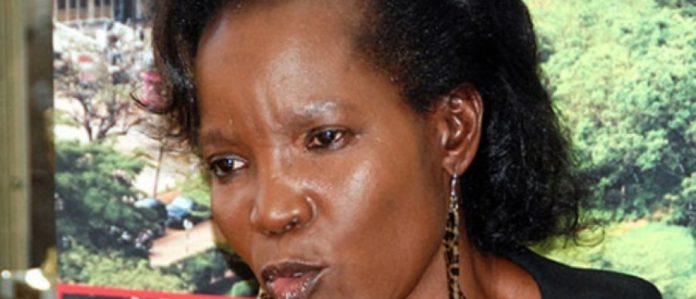
KCCA Executive Director, Jennifer Musis

All is not well with the staff of Kampala Capital Authority (KCCA), following the revelation by the Minister of Kampala City and Metropolitan Affairs, Beti Kamya Turyomwe that many fall ill and have unbearable stress, probably due to pressure to achieve performance targets.
“KCCA management has overtime noticed that there were increased number of staff falling ill and many reporting unbearable stress levels which in turn affects staff productivity,” says Kamya in a ministerial policy statement to parliament.
According to the minister, KCCA has introduced professional counseling services to support staff who are faced with different challenges in their lives and improve their coping mechanisms. The authority has also introduced aerobics classes to promote fitness of mind and body.
“A total of 88 staff at city hall actively participated in these classes and the program will be rolled out to the five divisions in FY 2018/19. Staff engagements were held with top management to address various staff matters and identify welfare gaps. These activities replaced the end of year staff parties,” the minister says.
KCCA reports that 22 staff left the institutions including two directors who did not renew their contracts, seven resignations, three abscondments, seven left after expiry of their contracts while 4 staff passed on during the reporting period.
More, the minister in the policy statement says a staff medical scheme has been introduced, attracting over 1200 staff and 951 dependants.
Meanwhile, in the financial year 2017/18, a total of Shs88.55 billion was allocated for the general KCCA operations and human resource costs. By the closure of the second quarter, Shs37.12 billion had been released.

Stories Continues after ad

USE rebrands as it celebrates 20 years in Uganda

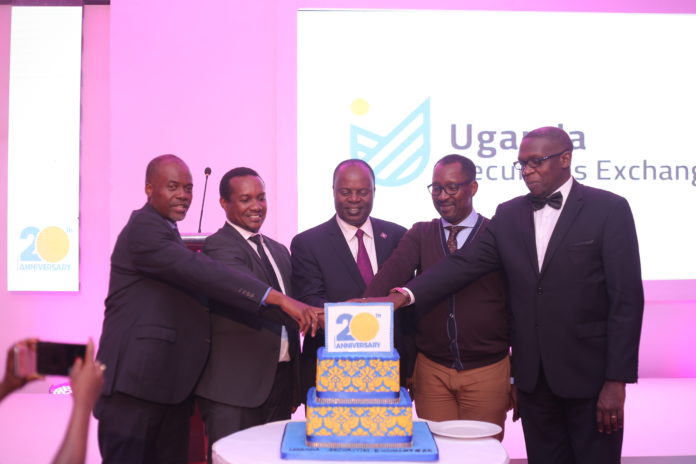
USE 20th Anniversary celebrations

Uganda Securities Exchange (USE) has re-branded as it marked 20 years.

This was at a stakeholder dinner which was graced by the Deputy Governor Bank of Uganda Dr. Louis Kasekende and the Nairobi Securities Exchange (NSE), CEO, Geoffrey Otieno Odundo.

Speaking at the event held at Kampala Serena Hotel, Paul Bwiso the CEO USE said, “Today marks a major milestone for us as USE as we mark twenty years in Uganda. It is a journey that has seen us enjoy a strong wave of growth and innovation together with our partners.”

The USE was incorporated as a company limited by guarantee on May 5, 1997 and became the 17th stock Exchange in Africa.

East Africa Development Bank (EADB) was the first company to list with a five year Shs10 billion bond in 1998, while East African Breweries was the first cross listing in 2001 followed by Kenya Airways in 2002.

In his speech read by the USE Director Richard Byarugaba, Charles Mbire, the USE Board Chairman challenged the Exchange to continue innovating so as to compete for business with financial institutions.

“The local market conditions remain challenging; this means that as an Exchange, we need to carefully review our value addition to all stakeholders; investors, issuers, custodians, brokers and all market intermediaries.”

With the demutualization of the Exchange, Mbire noted that it will allow for greater investor participation in the governance of the Exchange.

“Demutualization paves way for the planned self-listing of the USE through an Initial Public Offer (IPO) that we hope to achieve in the next couple of years.”

During his key note address, the Nairobi Securities Exchange CEO Geoffrey Odundo noted that the there is need for a lot of collaboration between the government and the Exchanges.

“Governments need to use Exchanges to raise capital. There is opportunity and liquidity to support the IPOs,” noted Odundo

The Deputy Governor, Bank of Uganda Louis Kasekende noted that there’s need for research into obstacles which deter companies from listing so as to formulate realistic policy solutions.

Meanwhile, USE also used the opportunity to re-brand as it changed its logo.

Stories Continues after ad

The relationship between the church and the state is inseparable

Mr David Serumaga

By David Serumaga

Dear Editor; When the National Resistance Movement government was attaining power in 1986 under the leadership of President Yoweri Kaguta Museveni, he decided not to block any religion in Uganda as it was experienced in President Idi Amini’s regime. This is because the Constitution of the Republic of Uganda under Article 29 (C) gives all the people the freedom to practice any religion and manifest such practice which shall include the right to belong to and participate in the practices of any religious body or organization in a manner consistent with this Constitution.
This has promoted the right and freedom of worship in the country and it is the reason why churches and mosques are growing and introduced every day. Respect for the religion is high from the State and all political leaders because when amendments in the Constitution comes, the NRM government cannot tamper with the freedom of worship because it is believed that religion does not only bring people towards God, but also unites, educates, impact moral discipline and transform the lives of the citizens positively.
Following the statements made by the Kampala Archbishop Dr. Cyprian Kizito Lwanga of the Kampala Archdioceses last week during the Easter celebrations, he said that there are spies within the Catholic Church that gives President Museveni wrong information and threaten to kill him (the Bishop) among others. This might be true but those are the enemies of the State who are trying to kill the longtime relationship between President Museveni and the Archbishop Lwanga.
There is no way the leader of the nation can want to kill a religious leader who is not a rebel or who has not destabilized the peace of the citizens. If there is someone who called Archbishop Lwanga threatening him to be killed, he is just blackmailing the President and he is trying to keep religious leaders into fear and break their relationship with the state.
The opposition members, who are allegedly adding fuel in words of the Archbishop about the state spying on the Archbishop, should know that every government in the whole world must have a good spy network. For this in the Catholic Church, it is shocking that the priests are the one spying on Archbishop Lwanga. This means that there are problems within the church that need church leaders bringing closer people to God and seek for solution in transforming their lives and uniting them. They should rethink of preaching to the priests themselves because some are doing an ungodly thing which betrays the church.
The relationship between the Church and the State is inseparable and it has come from far. When the NRM government was fighting to gain power between 1980-1986, it did not only use soldiers to bring peace but it also consulted religious leaders like Cardinal Emmanuel Wamala, Bishop Jonah Mukasa from Mityana (the father to Getrude Njuba) and others to influence people to support rebellion and they also acted as peace advocates. The relationship did not stop there after NRM had gained power; it has been experienced in many activities namely; physical protection to religious leaders, fundraising on many occasion with the aim of developing religious institutions, donating gifts to religious leaders, protecting worshipers from people who would attack them or destabilize their peace and freedom of worship. It is meaningless for the head of state to help in building places of worship and wish to kill those who are going lead worshipers. Those who are making this issue as a topic are just trying to be relevant in the media and public.
The issue we are experiencing now between the religion and the state is manageable which needs a round table discussion because all the two parties move together.
serumagadavid916@gmail.com
President, Buganda Youth Wing

Stories Continues after ad

KCCA wants owners of non-commercial houses to pay taxes

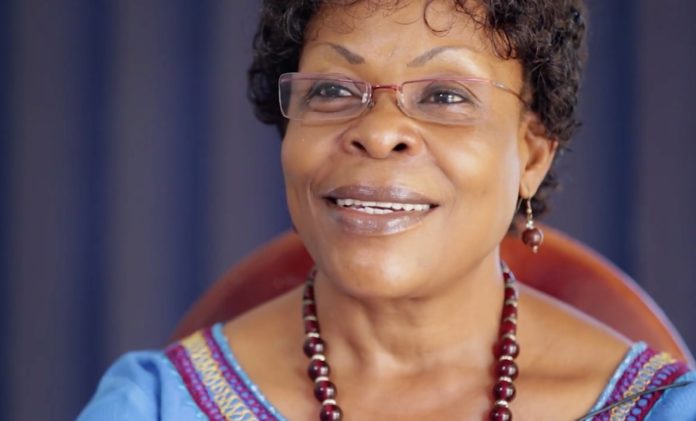
Kampala Minister Beti Kamya

The Kampala Capital City Authority (KCCA) plans to collect Shs36.2b from property rates in the city, up from Shs 30b projected in the financial year 2017/18, a ministerial policy statement for the upcoming financial year 2018/19 indicates.

The Minister for Kampala Capital City and Metropolitan Affairs, Beti Olive Kamya, says KCCA has submitted proposals to the finance ministry asking the repealing of the exemption of owner occupied properties provision in the Local Government ratings Act 2005 as amended, to pave way for KCCA to collect property tax from landlords staying in their own houses.

The minister in her ministerial statement to parliament, says the valuation of properties in the Central Division was finalized in the financial year 2016/17 and returned a net value of Shs 19b while the additional valuation roll for Central Division returned an extra Shs3.5b which will be administered effective July 1, 2018.

Meanwhile, the ministerial policy statement shows that field data collection in Nakawa Division has been finalized. The valuation of properties in Nakawa Division is projected to generate Shs 15b which will be collected effective July 1, 2018.

KCCA has also finalized plans to undertake concurrent valuation of properties in Rubaga, Kawempe and Makindye Divisions. “These are all aimed at boosting collections from property rates. This is a good step forward that will see the updating of the out dated valuation rolls of the above divisions,” Minister Beti Kamya says.

However, Minister Kamya says the coming into effect of the new rates presents a challenge for collection of arrears from the old rolls. She says KCCA is pursuing an interest amnesty initiative targeting realization of existing arrears before the coming into force of the new rates.

She says KCCA will focus on issuance of all demand notices in the first two months of the due dates of the rates. “This effort will also be complimented by an annual property rates policy we plan to issue which will inform all eligible property owners about their liability for rates, when, where and how to pay, liability and enforcement options,” she says.

She says KCCA intends to prosecute those who fail to remit taxes as provided for by law.

“Prosecution of all non-complying rate payers upon lapse of the due dates, September and December of each year, will be pursued,” she says.


Stories Continues after ad

Pay rent arrears for Okello House, PAC tells State House

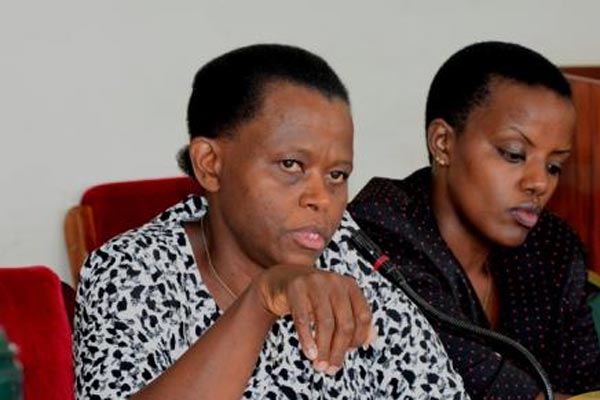
State House Comptroller Lucy Nakyobe Mbonye and a colleague appearing before a parliamentary Committee.

The Public Accounts Committee (PAC) of Parliament has ordered State House to pay outstanding rent arrears of Shs 1.4 billion to the National Housing and Construction Corporation (NHCC) and the owner of Okello House in Nakasero, within two weeks.

According to a PAC report, State House owed rent arrears of Shs l, 272,363,507 to tycoon Alex Okello, the owner of Okello House in the leafy Nakasero suburb, and Shs 201, 100,000 to NHCC which has not yet been cleared since 2013.

‘The tenancy agreement could not be renewed since the premise was a subject of mortgage dispute between the lender (Standard Chartered Bank and the Borrower (Landlord),” the accounting officer of State House noted then.

However according to PAC the two Parties have since then resolved their disputes and tenancy agreements were signed against which payments have since been made.

The PAC report by the Auditor General on entities with unqualified opinion for the financial year ending 2014/15 that was recently released in December 2017 shows that National Housing and Construction Corporation owns properties on Plot 1 Kyagwe Road-Nakasero currently occupied by State House.

‘According to the Chief Government Valuer’s report, the said piece of land is valued at Shs 8.4bn, however State House has expressed unwillingness to pay and intends to compulsorily acquire the property in contravention of the provisions of the Land Act and the Constitution,’ the report indicates.

However, the Committee recommended strict adherence to the lawful procedure for acquisition of land as enshrined in the Constitution and the Land Acquisition Act, Cap 226.


Stories Continues after ad

Govt bans importation of cars more than 8 years

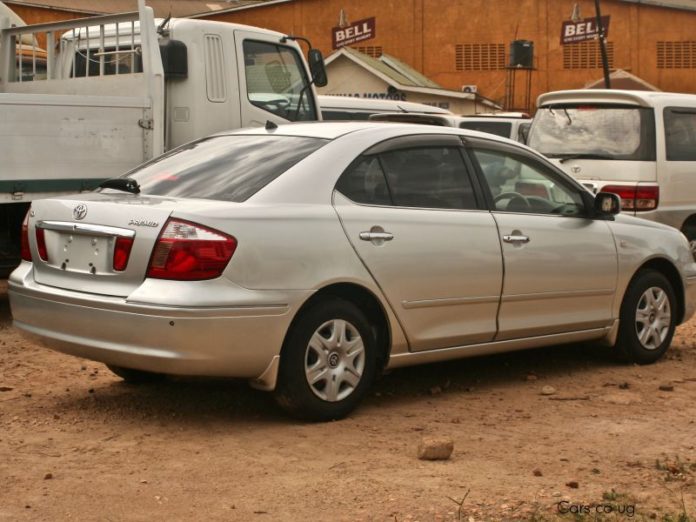
Second hand cars in a bond in Uganda

The government has moved to ban the importation of cars that are more than eight years from the date of manufacture.

According to Works and Transport Minister Monica Azuba, the Traffic and Road Safety Act 1998 Cap. 316 will be amended to also initiate an ‘environmental levy’, effective July 1.

However, according to the Minister, five categories of trucks and vehicles including those which will arrive in the country by September 30, are exempt.

Others exempt include among others road tractors for semitrailers; motor vehicles for the transport of goods with a gross vehicle weight of at least six tonnes; special purpose motor vehicles including breakdowns, lorries, crane lorries, fire fighting vehicles, concrete mixer, lorries, road sweeper lorries and spraying lorries. Others are mobile workshops, forklifts, mobile drilling rigs, mobile radiological units, works trucks, tanks and other armoured fighting vehicles, cesspool emptiers, water bowsers and bullion vans.

Agricultural or forestry tractors, earth moving motor vehicles, tamping machines and road rollers are also exempt, the Minister noted.

Among those to face levies are Sedan cars, saloon cars at Shillings 1,500,000; Passenger vehicles including light omnibuses with a seating capacity not exceeding 28 passengers at Shs 1,500,000; Estate and station wagon vehicles with an engine capacity of 3500 cc or above at Shs1,700,000 and, Medium omnibuses and heavy omnibuses with a seating capacity of more than 28 passengers Shs1,500,000.

‘The object of this Bill is to amend the Traffic and Road Safety Act, Cap. 316 to vary the motor vehicle registration fees provided for in the Finance Act, 2013; to vary the environmental levy on motor vehicles provided for in the Finance Act, 2006; and to ban the importation of motor vehicles that are eight years old or more from the date of manufacture,’ Minister Azuba wrote on March 29.


Stories Continues after ad

Tap into multibillion tourism industry, UTB boss urges youths

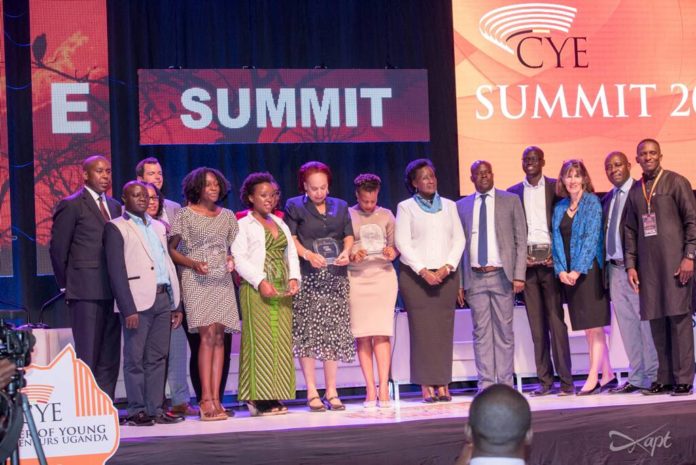
Guests at the CYE Summit

Uganda youths should invest in the tourism industry in a bid to tap into the multibillion shilling sector, the Executive Director of Uganda Tourism Board Steven Asiimwe has said.

Members of the Panel at the CYE Summit

Speaking at a two-day summit organized by the Chamber of Young Entrepreneurs (CYE) Mr. Asiimwe noted that the industry revenue has grown from US$350 million to about US$1.4 billion over the past two years, and urged the youth to tap into the vast opportunities the tourism sector has on offer.

A good example, Mr. Asiimwe said, would be the introduction of Air, Bed and Breakfast (AB&B) accommodations, a common practice in the West where private homes accommodate tourists at a fee. He noted that Kampala currently has only 9000 rooms, a factor that can contribute to the AB&B initiative.

Further, according to Mr. Asiimwe, with 10 national parks and a friendly culture, Uganda is a tourist hotspot that needs improved services that can be provided by tour guides and travel agencies.

Addressing participants at the first CYE Summit at the Kampala Serena Hotel Victoria Hall held under the theme ‘Inspiring a Sustainable Entrepreneurship Culture’, the organisation’s President Edward Musiime enumerated some of the hardships many start-up businesses endure and urged the youth to come up with ‘intellectual capital’. “Nobody ever got ready by waiting, you only get ready by starting,” he said, quoting the famous words of John. C. Maxwell. H

Giving an example of his struggle over a Shs20 million loan, Musiime, a journalist-turned-entrepreneur added: “Passion is the greatest answer to pain.”

(R-L) Trade minister Amelia Kyambadde, fashionista Beryl and former UIA boss Dr. Maggie Kigozi

In her speech Amelia Kyamabadde, the Minister of trade and Co-operatives, commended the CYE initiative, explaining the need for youths to understand the dynamics in the business world.

Ricky Rapa Thompson, the initiator of Safe Boda Uganda

The summit was attended by among others diplomats and sueccesful youths like Ricky Rapa Thompson, the initiator of Safe Boda Uganda and fashionista Anita Beryl of Beryl Quotore.

“I didn’t make money for three years until that one dress that gave me my breakthrough,” Beryl said.

Michael Niyitegeka, Country manager-ICDL Africa addresses the guests

Michael Niyitegeka, Country manager-ICDL Africa highlighted a few key elements necessary for an effective and efficient work force like trust and talent, and urged the youth to embrace them.

Meanwhile, CYE plans to reach out to the youths and equip them with the right skills to master and maneuver the risks and dangers within the business world by opening branches throughout the country.

The organization also plans to expand its outreach by having some of its members enrolling for entrepreneurship programmes that will be taught beginning with Victoria University, one of the sponsors of the summit.

Other companies and institutions that sponsored the summit included DFCU Bank, Roofings Limited, Uganda Communications Commission (UCC) and NTV.

Stories Continues after ad

Uganda marks World Health Day

Every year on April 7, Uganda joins the rest of the world to celebrate the World Health Day and for this year the country will celebrate the Day in Makulubita, Luweero district, the ministry has indicated in a public notice.

This year, World Health Day is dedicated to one of WHO’s founding principles: ‘The enjoyment of the highest attainable standard of health is one of the fundamental rights of every human being without distinction of race, religion, political belief, economic or social condition’.

“Good health is the most precious thing anyone can have,” says Dr Tedros Adhanom Ghebreyesus, WHO Director-General.

“When people are healthy, they can learn, work, and support themselves and their families. When they are sick, nothing else matters. Families and communities fall behind. That’s why WHO is so committed to ensuring good health for all,” he adds in a press release.

The tagline for this year’s World Health Day is ‘Universal Health Coverage: everyone, everywhere’. 

Globally, life expectancy has increased by 25 years since WHO was established. Some of the biggest health gains are seen among children under-5: in 2016, 6 million fewer children died before they reached their fifth birthday than in 1990. Smallpox has been defeated and polio is on the verge of eradication. Many countries have successfully eliminated measles, malaria and debilitating tropical diseases like guinea worm and elephantiasis, as well as mother-to-child transmission of HIV and syphilis.

WHO says it has made recommendations for earlier, simpler treatment, combined with efforts to facilitate access to cheaper generic medicines, have helped 21 million people get life-saving treatment for HIV. The plight of more than 300 million people suffering from chronic hepatitis B and C infections is finally gaining global attention. And innovative partnerships have produced effective vaccines against meningitis and Ebola, as well as the world’s first ever malaria vaccine.

Remaining on constant alert

According to the press release, every year, WHO studies influenza trends, to work out what should go into the next season’s vaccine. And it remains on constant alert against the threat of pandemic influenza. One hundred years after the flu pandemic of 1918, WHO is determined that the world should never again be subjected to such a threat to global health security.

“A renewed commitment to prevent outbreaks from turning into epidemics, and to respond better and faster to humanitarian emergencies, has spurred the creation of a new health emergencies programme that works across all three levels of the Organization. WHO is currently responding to outbreaks and humanitarian crises in more than 40 countries,” it says .

WHO says that next month, at the World Health Assembly, it will propose “a bold new agenda that builds on lessons learnt and experience gained over the past 70 years. It will focus on achieving universal health coverage for One billion more people; protecting One billion more people from health emergencies and enabling 1 billion more people to enjoy better health and wellbeing – by 2023, the halfway point to the 2030 Sustainable Development Agenda deadline.”


Stories Continues after ad