Stanbic Bank
Stanbic Bank
17.4 C
Kampala
Stanbic Bank
Stanbic Bank
Home Blog Page 1609

Dr. Kasekende, BoU should use the prosperity of Ugandans and not the prosperity of banks to measure progress

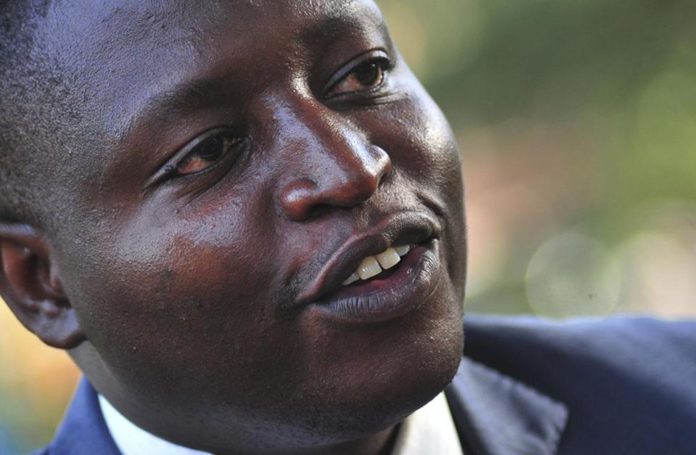
Mr. Kyamutetera

By Muhereza Kyamutetera

On its website, Bank of Uganda says it “100 per cent owned by the Government of Uganda” and conducts all its activities in close association with the Ministry of Finance, Planning and Economic Development (MoFPED).
Their stated mission is fostering price stability and a sound financial system, but more importantly, it is mentioned that their vision is to be a “center of excellence in upholding macroeconomic stability.”
In my basic understanding, “macroeconomic stability” describes a situation where citizens and businesses are protected from adverse shocks in their everyday life, which in turn increases their prospects for sustained but more importantly, inclusive growth.

Inclusive growth presupposes equitable opportunities for all players in the economy with benefits incurred by every section of society. For Uganda to achieve rapid and sustained poverty reduction, we require a deliberate all-inclusive growth that allows people to contribute to and benefit from any economic growth.
Otherwise the rich will continue getting richer and the poorer, poorer till a point when the poor will have nothing left to eat, but the elites and the rich.

I was therefore, perturbed by Bank of Uganda Deputy Governor’s speech during a dinner to mark the 20-year anniversary dinner for the Uganda Securities Exchange (USE) Kasekende in which he denied that the insolvency of Crane Bank was “not caused by any problems in the wider economy” but rather by “its own mismanagement, not least by its extensive insider lending.”
Kasekende goes on to wiggle some carefully selected banking sector industry figures that purport to show the banking industry is stable and growing and uses this to chest-thump about how well the Central Bank is doing a good job.
At this point I could not stop wondering for whom does the Kasekende and his kind at Bank of Uganda, work for- the people of Uganda who pay his salary or the banks, many of whom are not even Ugandan owned?
Even if I know that Dr Kasekende already knows this, let me take this opportunity to remind him that banks in Uganda have always enjoyed an inverted relationship with the people of Uganda- always taking every opportunity to profit at the expense of the economy in which they operate.

For starters, the very foundation of the banking industry is extortionist. They raise deposits very cheaply from the public and lend the very same deposits to the public, including the very owners of those deposits, at exorbitant rates- with the blessing of the Central Bank (read as supervision)
For the time that Kasekende has been Deputy Bank Governor, since January 2010, banks have averagely paid 3.3 per cent interest on customer deposits and yet charged on average 22.6 per cent as prime lending rate- of course prime lending rate is for the advantaged few- the majority of the citizens borrow at much higher rates. And they have come up with a beautiful name- Net Interest Margins, to sanitize this theft.
As a result, year in, year out, Banks have grown faster than the rest of the economy, fattening themselves as the rest of the economy struggles.
For example while industry profitability grew by 17.2 per cent and 11.5 per cent in 2014 and 2015 respectively, Uganda’s GDP only grew by 5.2 per cent and 5 per cent respectively. But in 2016 the sins of the industry- namely high and unsustainable interest rates caught up with them- causing a 44.2 per cent dip in industry profitability. But even then the industry made a massive Shs302.1 billion in profits.
Profits galore for banks in 2017

Private sector lending and interests rates are perhaps the only good parameters that can be used to measure the performance of an economy and I would have loved to hear Kasekende talk more about this. As it is the banks, aided by the Central Bank’s adamant policy on inflation-targeting have kept interest rates high, thus starving the economy of the much needed credit.
But trust the bankers, they will lend less money, yet make more profits through a deliberate strategy to lend to a few people but at exorbitant rates and Kasekende can do nothing about it.

According to a BoU report, private sector credit between January 2017 and January 2018, only grew by 6 per cent from Shs12.96 trillion to Shs12.65 trillion, this is despite an 18 per cent rise in customer deposits. Even though all the banks have not yet released their 2017 results, preliminary gross loans to total deposit ratios (this ratio measures what percentage of a bank’s deposits are actually being lent out for productive use) for Stanbic Bank and DFCU bank show a reduction from 82.7 per cent in 2013 to 60.7 per cent in 2017 and 88 per cent to 67 per cent respectively. In other words the banks are hoarding money to sustain their high interest rates.

To compensate for this deliberate reduction in lending, the banks in 2017 deliberately kept their lending rates very high. Despite the Central Bank easing on the CBR by 21 percentage points from 12 per cent in January 2017 to 9.5 per cent in December 2017, the banks did not reduce their interest rates by as much. Shilling based interest rates went down by only 9.4 percentage points from an average 22.4 per cent to 20.3 per cent while USD based loans reduced by just 11.84 percentage points from 8.6 per cent to 7.9 per cent.
As a result 2017 is slated to be a good year- for the banks only of course.

The Central Bank industry Earnings & Profitability report shows that return on assets doubled from 1.33 per cent in 2016 to 2017. Shareholders are also set to smile all the way to the bank as return on equity has also nearly doubled from 8.33 per cent to 16.39 per cent in the same period.

Already net profits for 2017 declared by 2 of the 24 banks- Stanbic (Shs200.5 billion) and DFCU bank (Shs106.2 billion) are larger than total industry profitability in 2016 (Shs302.1 billion). Kasekende should enjoy his fat paycheck quietly.

Kasekende, should be more concerned that today, interest rates are at 22.56 per cent- much worse than the 19.57 per cent he found in place when he became Deputy Central Bank Governor. In fact Uganda today, is home to the highest interest rates in the EAC region, with the exception of Burundi and South Sudan, making our exports uncompetitive.
Rather than flaunting superficially rosy growth figures, Kasekende should be more concerned that 7-8 years ago, when he joined the central bank, private sector credit grew averagely by 29 per cent annually and last year it only grew by 6 per cent.
He should be concerned that since he joined the Central Bank, the Shilling has depreciated by 89 per cent from Shs1935.6 in January 2010 to Shs3,660.1 in March 2018 and that this has disastrous impact on inflation and Ugandan based businesses that have to import inputs.

Perhaps, most importantly, he should be very alarmed that Ugandans are getting poorer; the number of poor people in Uganda increased by 51 per cent from 6.7 million in 2012/2013 to 10.1 million people in 2016/2017.
And for all these, instead of engaging in selective amnesia and chest thumping about some selective and isolated indicators such as bank deposits, I would be proposing some serious radical solutions instead of glossing over the misery and pain of Ugandans.
Of course he also has an option of enjoying his fat paycheck quietly and wait to end his five year contract in 2020 and retire quietly.
Muhereza Kyamutetera is a social commentator, communications specialist and journalist


Stories Continues after ad

UNBS gazettes 76 compulsory standards for consumer protection

Patricia Bageine Ejalu

In an effort to protect the health and safety of consumers and the environment, the Uganda National Bureau of Standards (UNBS) has gazetted 76 new compulsory standards, according to the latest issue of the Uganda Standards Gazette.

The compulsory standards are part of the 254 standards approved by the National Standards Council (NSC), the governing body of UNBS, and recommended to the Minister of Trade, Industry and Cooperatives (MTIC), Amelia Kyambadde, for gazetting as compulsory standards in accordance with the UNBS Act.

The UNBS Deputy Executive Director in charge of Standards, Patricia Bageine Ejalu said: “The compulsory standards are meant to guarantee quality of products and services to protect the health and safety of consumers and the environment and they are enforceable under the UNBS Act.”

The compulsory standards include food and agriculture, engineering, oil and gas, management and services, chemicals and environment standards.

Ms Ejalu said the standards will also enhance the development of Micro, Small and Medium Scale Enterprises (MSMEs), promote trade, improve livelihoods and foster export opportunities in Uganda.

Standards are developed through Technical Committees composed of experts drawn from academia, government, industry, consumer groups and civil society. Technical Committees are responsible for recommending final draft Uganda Standards to the National Standards Council (NSC) for approval and declaration as Uganda Standards.

Section 18 of the UNBS Act (Cap 327) provides that the NSC may recommend certain national standards for declaration as compulsory by the Minister responsible for Trade.

Stories Continues after ad

Louis Kasekende is telling half truths

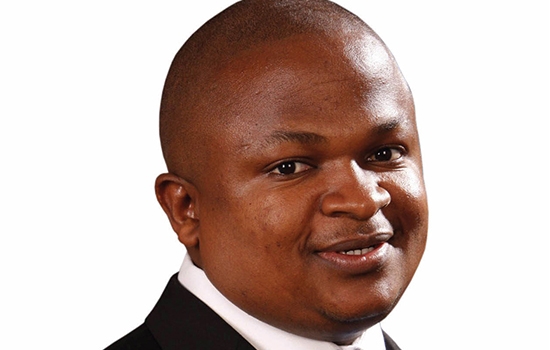
Kagenyi Lukka

By Kagenyi Lukka
11th April 2018.

While representing his boss at the Uganda Securities Exchange (USE) 20 year anniversary dinner, Deputy Bank of Uganda Governor Dr. Louis Kasekende spent more than half of the time allotted to him making shameless and scanty remarks.

During the Friday 6th April event at Serena Hotel, Kampala, Dr Kasekende, as if haunted by the Crane Bank ghosts, shamelessly peddled lies about its closure and the entire economy.

For instance The Uganda Securities Exchange hasn’t had an IPO in the last about five years. It has only stagnated at 8 companies that are locally listed with those that had earlier showed interest chickening. These include the former CRANE BANK, Kakira Sugar etc.

Kasekende further painted a rosy, yet misleading, picture of Uganda’s struggling economy.

“Furthermore, growth was wide spread across the economy with Agriculture, Industry and services recording buoyant growth in the second half of 2017,” Kasekende’s speech read in part.

The revival of economic growth has been accompanied by a very strong inflation performance, he said.

It is my considered opinion that Kasekende’s innuendos portrayed sheer elite mischievousness as reality tells the opposite.

The low rate of economic growth has been bemoaned by the National Planning Authority who through its chairman, Kisamba Mugerwa wrote a letter to the Speaker of Parliament and Matia Kasaija on March 27

Mugerwa, notes that Uganda will not attain the coveted Middle income status by 2020.

While Kasekende praises growth, figures from NPA and UBOS show that the economy grew by 4.0 per cent in 2015/16 and 4.8 per cent in 2016/17 and 5.5 per cent in the financial year ending June 2018.All this is below NDP targets of 5.8 per cent, 5.9 per cent and 6.6 per cent respectively.

Sadly, the sound economy that Kasekende fronts is characterized by growing poverty levels as per the numerous UBOS reports.

A UBOS report indicates that absolute poverty has increased to 21.4 per cent in the year 2016/2017 from 19 per cent in the year 2012-2013 .About 8 million Ugandans of 37.7 million live below the poverty line.

Relatedly, URA collections are below the target in a buoyant economy emphasized by Kasekende. Reports indicate that the collections are at about 60 per cent.

In 2016/17 URA collected Shs12.7 trillion against a target of Shs13.1 trillion. The daily Monitor reports that URA had failed to hit its target for the past four years since 2013/14 FY (Daily Monitor Wed 26 /July/2017).

“Whereas the FY 2016 outturn was lower than projected collections by Shs457.51billion, this performance was realized amidst sluggish economic growth…” A statement by Doris Akol read in part.

Any follower of current events would recall that recently, government has opted to borrow to pay salaries while fuel prices have increased immensely in a growing economy.

Yesterday, Trade Minister Amelia Kyambadde was meeting cement manufacturers to settle prices and bring them down. In Kasekende’s growing economy, the cost of cement increased to Shs50, 000 with in less than a month.

Then it came to Crane Bank which was unnecessarily looped in at dinner. Kasekende who is believed to have worked with Justine Bagyenda to give away Crane Bank at a negligible credit of Shs200 billion Uganda claimed that the bank collapsed due to internal mismanagement issues.

He however, fell short of telling us where was the supervisor was the bank for its problems to escalate thus far.
Why then were crane bank shareholders made to pay over Shs350 billion in an attempt to write off non-performing loans?

Kasekende should have also told the gathering on what the market value of Crane Bank assets was, why they (BOU) didn’t give other potential buyers a chance to buy Crane Bank but opted for DFCU bank. Further still, Kasekende and his accomplices find themselves with fewer answers to questions such as why they didn’t give shareholders a chance to recapitalize Crane Bank and why their listed auditors had consistently given Crane Bank a clean bill of health with its financial statements approved by BOU.

Finally, Kasekende and group should swallow a humble pie and accept that they made mistakes. The risk that his group stands is humongous and I think that’s why the principle Judge Yorokamu Bamwine has always candidly advised them to opt for out of court settlement in the multiple suits against them by Dr Sudhir Ruparelia.

Its Kasekende’s lies and arrogance that will cost the tax payer when justice is finally delivered.

Kagenyi Lukka is a current affairs commentator

Stories Continues after ad

Uganda Cranes move up in latest FIFA rankings

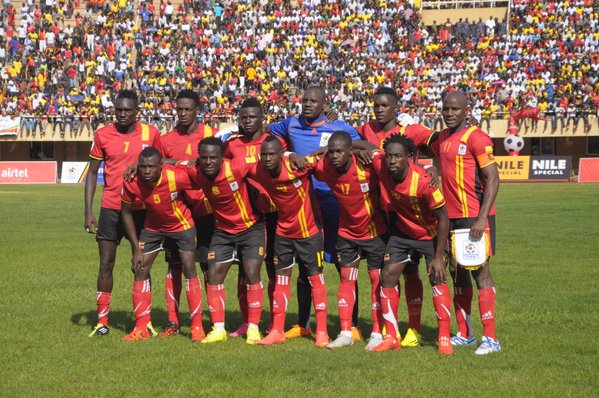
Cranes-Team

International football governing body FIFA has announced the April rankings which have seen Uganda improve by four slots.
Cranes are now ranked 74th, remaining the best in East Africa ahead of Kenya (113), Tanzania (137) Burundi (145) and Rwanda (123).
The 3-1 win against Sao Tome and the goalless draw with Malawi during the international break helped Uganda to rise.
The top five countries in the world are: Germany, Brazil, Belgium, Portugal and Argentina respectively.
Tunisia, Senegal, DR Congo, Morocco and Egypt are the top 5 countries in Africa.
Haiti was the worst mover, falling 23 slots to 108 while Kyrgyz Republic from Asia was the best mover, climbing 40 places to 75th.
FIFA rankings are based on the average number of points that a team accumulates over a four-year period. The ranking points in each match are determined by its result, its value and the relative strength of the opponent and their confederation. The system also has yearly basis depreciation for the value of the matches.
The next Coca-cola FIFA rankings will be released on May 17, 2018.

Stories Continues after ad

Ugandans among African athletes who vanished from the Commonwealth Games

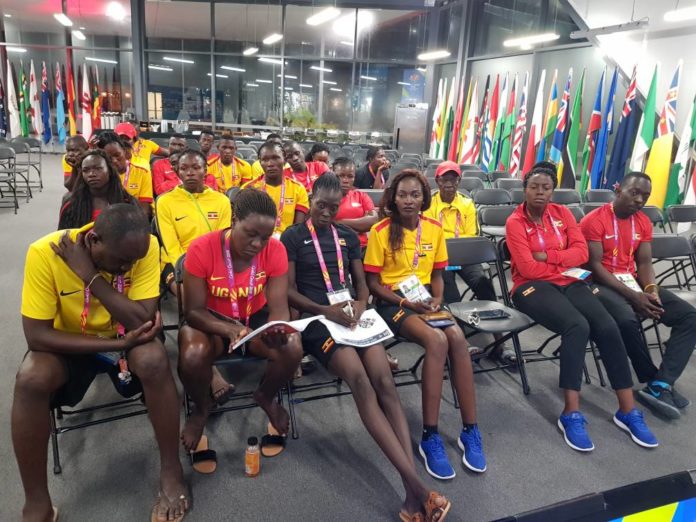
Ugandan Team

GOLD COAST-Australia: Five more African athletes may have vanished from the Commonwealth Games, organizers said Thursday, after eight competitors from Cameroon were suspected of fleeing a day earlier.

Gold Coast organizers confirmed reports that athletes from Rwanda and Uganda were thought to have gone missing, while they were also looking to verify the whereabouts of two squash players from Sierra Leone.
“We’re obviously looking at it very carefully,” Commonwealth Games Federation chief executive David Grevemberg told reporters.

“We have a service to people who have legitimate visas to be in this country,” he added.
“Until it becomes a true issue and somebody has outstayed their visa, or have formally applied for asylum, we just need to continue to monitor the situations.
“The focus now is to support teams in trying to track down the athletes who are missing.”
More than 100 athletes overstayed their visas at the 2000 Sydney Olympics. Athlete visas for the Commonwealth Games expire on May 15, Grevemberg said.

Eight athletes from conflict-hit Cameroon — one third of the central African country’s 24-strong team — were said to be missing from the Commonwealth Games on Wednesday, sparking an Australian Border Force manhunt.
As the search continues for Cameroon’s five boxers and three weightlifters, Grevemberg insisted the welfare of the athletes came first.

“We obviously have been in close contact with Cameroon officials,” he said. “We share their concern regarding obviously the safety, welfare, and whereabouts of these athletes.”
Cameroon team manager Victor Agbor Nso told local media he had reported the matter to police on Wednesday.
Australia’s Home Affairs Minister Peter Dutton warned that athletes would be forcibly removed from the country if they attempted to overstay their visas.

“They aren’t going to game the system,” he told local radio. “Australian Border Force officers will find these people (and) they’ll be held in immigration detention until they can be deported.”

Stories Continues after ad

Man in Jinja arrested over illegal possession of military stores

A cache of illegal weapons recovered by police from different places. People in Jinja are now living in fear of people who hold illegal guns.

A man in Jinja has been arrested after police Flying Squad raided his rented home in Kimaka village in Mpumudde Division and discovered a gun, army uniforms, jungle boots, rounds of ammunition and rocket bombs.

Denis Oyo, 36, who was whisked to Kiira Regional Police Headquarters, stays in the Kimaka village which is just next to the Uganda Peoples Defence Forces (UPDF) Senior Staff College in Kimaka.

Kiira Regional Police Commander Onesmus Mwesigwa declined to comment on the matter but this writer witnessed the arrest and spoke to some of Oyo’s neighbours and the village leaders.

“Now this is the second person they are arresting from this village in connection with possession of firearms. Government should come to our rescue otherwise we are not safe,” said one of the residents.

On Sunday, April 8, 2018 police retrieved an AK47 assault rifle with three magazines from a pit latrine in Idogoro Village, Mafubira Sub-County in Jinja District. Mafubira is less than two kilometres from Kimaka.

Police sources said the rifle that was tightly fastened by a polythene bag and left to freely sag in the latrine, was discovered by a neighbour who had gone to answer nature’s call.

They added that he thought a human being had plunged into the latrine and immediately reported the matter to the owner of the latrine who in turn informed the police.

Kiira RPC Mwesigwa confirmed the discovery of the gun, saying the rifle was found inside the pit latrine of Katib Kafufu, a resident of the same Village. He added that the gun was rusty, making it difficult to identify which security institution it belongs to.

Mwesigwa said that Kafufu was not arrested but is helping with investigations into how the gun ended up in his pit latrine and appealed to the public to always be very vigilant and report people in their respective areas who lack proper identification.

In a separate interview, the acting Jinja Central Division Police Commander, Nasur Anguyo, while displaying the gun to journalists at Jinja CPS, said the weapon had been in the latrine for ‘close to five months’.

Incidents of guns being found in Jinja have started worrying the residents, and Michael  Muwanguzi who works in Jinja wondered whether the citizens are safe when almost every day some gun is recovered from illegal hands in their area.

In December last year, police in Jinja recovered two guns stolen from two different local security firms operating in the second largest town in the country.

The then Jinja Central Division Police Commander Martin Mbabazi, while addressing journalists, said that one of the guns was stolen from Blue Light Guard Ltd on December 14, 2017, and was recovered from atop a house along Iganga Road.

He said the second gun recovered had been abandoned by a guard at his place of deployment on December 26, 2017.

“For us to recover these guns it was team work; we involved the community, crime preventers and of course the UPDF who patrol with us at night,” said Mbabazi.

No arrests were made in both incidents but he said police were hunting for the suspects.


Stories Continues after ad

Judge faults MPs on two-year office tenure extension

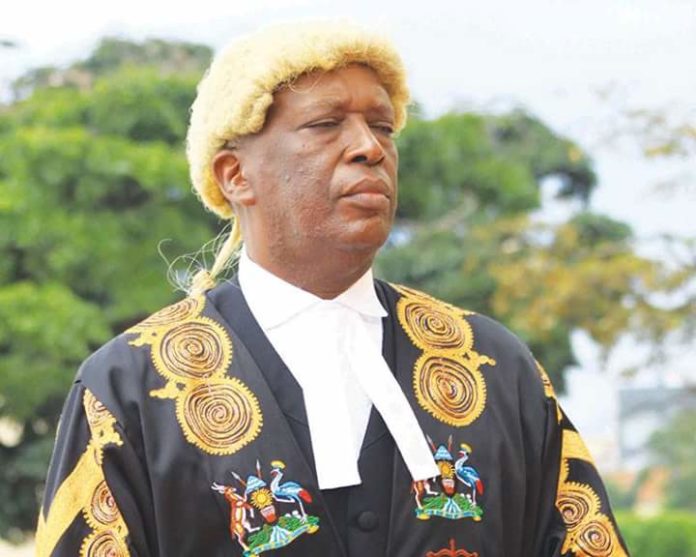
Justice Kenneth Kakuru

Justice Kenneth Kakuru, one of the judges hearing the age limit petition has faulted MPs for not consulting the electorate before moving to amend the Constitution.

In December last year parliament passed age limit bill lifting presidential age limit that capped at 75 years, giving a leeway for President Yoweri Museveni who is currently 73 years to stand for presidency in 2021. On the same day they also voted to extend their term in office from five to seven years.

But quoting Article 77 (3) Justice Kenneth Kakuru said the legislators’ term is five years from the time of election. “The seven years in office doesn’t start with this term because the Constitution does not provide for it,” he noted at the ongoing petition in Mbale, lodged to challenge the expunging of Article 102 (b) on the presidential age limit.

He added: “Why did you extend your term to seven years? Your electorate are used to five years; it would have been two months, they now have to wait for seven years to receive handouts. The late Idi Amin became a life president basing on argument that he consulted the people of Kigezi saying that they urged him to rule for life. Couldn’t the lifting of term limits lead to overthrow of the Constitution?”

His colleagues also faulted government for shunning its duty and leaving a private member to move the bill.

“It was a private members bill, then why did you go behind the curtain and fund it?” Alphonse Owiny Dollo, the Deputy Chief Justice and head of the five-judge coram asked the Deputy Attorney General Mwesigwa Rukutana.

In his submission Rukutana said that voters were consulted on the matter through various ways including the use of phones, rallies and that they supported the extension of MPs term in office.

“The electorates saw it that five years are not enough for their MPs to execute their duties,” he said.


Stories Continues after ad

Tough times for social media users as gov’t sets new tax

State Finance minister David Bahati

Ugandans seeking to access information will have to dig deep into their pockets in financial year 2018/19, following the announcement Thursday that government intends to charge Shs100 daily for social media users in the country.

“We are going for the sim card tax to access your social media that is why we have put a small fee per day. So you should use it optimally for all applications,” said State Minister for Finance David Bahati in Kampala as he briefed the media on new tax measures for fiscal year 2018/19.

The tax measure comes at the time when over 500,000 Ugandans are said to be using various social media every day, visiting sites like Facebook, Twitter, Instagram, Google, YouTube, LinkedIn and Whatsapp among others.

The social media platforms have become spaces in which network effects are formed, bringing together producers and consumers of information and often blurring the lines in a constant feedback loop, a senior journalist says.

The total number of mobile phone subscriptions is 23,529,979, up from 23,529,290, according to the recent report of the Ugandan Communications Commission (UCC). The phones include smart phones which people use to access the internet that carries the social media platforms.

Similarly, fixed telephone subscriptions grew 4.1 percent from 369,237 to 384,503 by the second quarter of 2017 compared to the 0.3 percent growth registered in the previous quarter. 41% of Uganda’s population or 16.8m people are classified as internet users.

These days businesses in Uganda like anywhere else have targeted social media users for with the aim to increase sales. The platforms have become a cheap marketing tool with companies like Jumia selling products online to clients.

The minister also said that there is a government proposal to increase tax on fuel by 100 shillings which will be for the construction of roads. He also said that a ban on vehicles 8 years and above will “increase the interest of companies manufacturing vehicles in the country”.

Government has proposed Shs30 trillion as national budget for fiscal year, 2018/19, the large funding of it expected from the tax collections.


Stories Continues after ad

Government insists on levying social media users

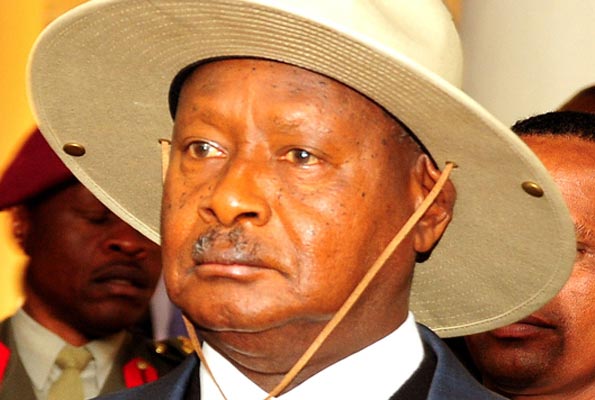
President Yoweri Museveni

Government has insisted on charging Shs 100 for every Ugandan to access social media platforms, with arguments that it will contribute towards the transformation of the economy.

According to Bahati, when action is taken, the government will generate over Shs 400 billion which will be for economic transformation of Uganda’s economy.

Early this month, President Yoweri Museveni ordered for levying taxes from social media users to access various platforms such as WhatsApp, Facebook, Twitter, Skype and Viber. According to President Museveni, owners of social media platforms make money without giving back to community.

Speaking to journalists at Uganda Media Centre, the Minister of State for Finance and Planning David Bahati said the Shs 100 will be levied on sim cards daily for social media users to use applications optimally.

“This will not only be applicable from social media users, however there is a proposal to increase tax on fuel by Shs 100 which will be for the construction of roads,” Bahati said.

He added: “These tax measures take effect on July 1st, 2018, we are increasing the excise duty from Shs1000 to Shs1, 500 and this will be on the company (telecommunications).

Since Museveni introduced the Shs100 levy proposal, it has attracted criticism from various political analysts, who argue that taxing social media users will not promote ‘local content’.  Instead, they argue, government should strategically invest in Information and communication technology (ICT) infrastructure and support local ICT hubs and individuals to promote local content.

The Lord Mayor for Kampala Erias Lukwago noted that taxing social media will limit information consumption to the public and will limit freedom of speech and free expression.


Stories Continues after ad

Bank of Africa executive tips SMEs on financing

Mr Arthur Isiko

The Managing Director of Bank of Africa (BOA), Arthur Isiko, has advised local Small and Medium Enterprises (SMEs) on how to access finances, saying that sustainability of their growth depends so much on ready funds.

Isiko was days ago speaking at a business forum hosted by the Bank at Tick Hotel in Kawempe Division, Kampala. This forum, which was the first of the many that BOA plans to host across the country, brought together various SMEs actors from key sectors like construction, education, agriculture, trade and commerce.

Isiko tipped the SMEs on the various financing options such as debt and equity investments. He also noted that there was need for banks to work with SMEs to structure their businesses so as to optimize benefits from the various financing options.

“Granting credit is only one of the services which banks provide to SMEs. We as a bank should most importantly work with SMEs to ensure that you can access the appropriate form of financing,” Mr. Isiko said.

On sustainability of businesses, he said: “Cash flows are the lifeline of the business. SMEs should first establish and understand their cash flow trends and cycles, then banks will be in a better position to advise on how best any identified cash flow gaps can be bridged.”

The Bank ‘s  Head of SME, Jonah Wanda, while addressing the participants at the forum, said the bank has developed innovative products and services to meet the various needs of entrepreneurs in the country.

“As more focus is placed on supporting Ugandan businesses, Bank of Africa launched an SME product that focuses on financing short and medium term needs of these establishments. Our proposition emphasizes speed of service delivery as we meet the needs and ambitions of our clients,” Mr. Wanda said.

Some of the products offered by the bank include; Bid Guarantee Facility, Invoice Discounting Facility, Business Loans and an Asset Finance Facility,” Wanda said.

Participants at the forum said access to business financing and product marketing were the key challenges facing SMEs in Uganda.

BOA officials said emphasised the role of the SMEs, saying that are the engine of Uganda’s economic growth.

SMEs constitute about 90% of private sector production and employ more than 2.5 million people according to the recent National Small Business Survey of Uganda.

Bank of Africa has presence in Benin, Burkina Faso, Côte D’Ivoire, Ghana, Mali, Niger, Senegal and Togo. Others are Burundi, Djibouti, Ethiopia, Kenya, Madagascar, Tanzania, Rwanda, The Democratic Republic of Congo  and Uganda. It also operates a branch in France.

Stories Continues after ad