Stanbic Bank
Stanbic Bank
18.2 C
Kampala
Stanbic Bank
Stanbic Bank
Home Blog Page 1617

Nalufenya detention facility not closed – Police

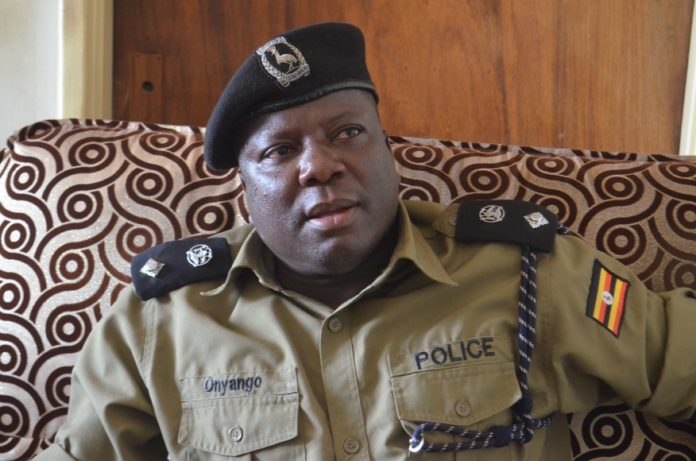
Patrick Onyanga, police Spokesperson for Kampala Metropolitan said the police will hunt the criminals down.

Police has refuted media reports that the Inspector General of Police (IGP) Okoth Ochola ordered for immediate closure of the notorious Nalufenya police detention centre.

Deputy Police Spokesperson Patrick Onyango, the police advisory committee discussed about facility near the Source of the Nile in Jinja on Wednesday, but made no conclusive decision.

‘The IGP normally writes his orders and directives, therefore this was not made, and in case the decision is taken then police will communicate via normal procedures,’ indicates a release by Superintendent of Police (SP) Onyango.

The infamous Nalufenya detention facility is known for torture, its most prominent victim being the Kamwenge Mayor Godfrey Byamukama who was arrested in relation to the assassination of the Assistant Inspector General of Police (AIGP) Andrew Felix Kaweesi on March 17, 2017.

Also, several other prominent people have been detained in Nalufenya including opposition icon Dr. Kizza Besigye and Rwenzururu King Charles Wesley Mumbere and most recent police officer, Assistant Superintendent of Police (ASP) Muhammad Kirumira.

Allied Democratic Forces (ADF) commander Jamil Mukulu is also incarcerated at the detention facility.


Stories Continues after ad

Law firm Sebalu, Lule replaces Mpanga and Masembe at BoU

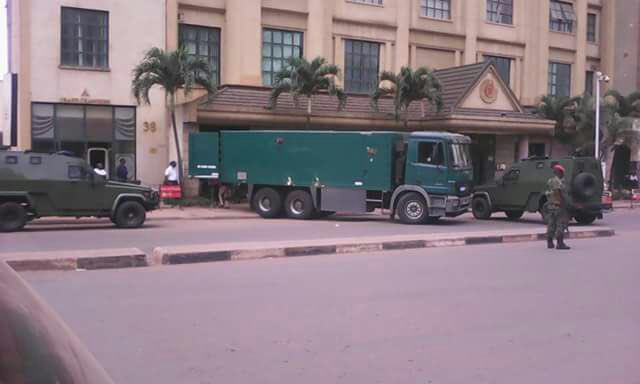
TAKEOVER: Bank of Uganda bullion vans ferry documents from Crane Bank on Kampala Road.

Bank of Uganda has hired Sebalu, Lule and Company Advocates as its new external attorneys, replacing lawyers David Mpanga and Timothy Masembe of AF Mpanga-Bowmans and MMAKS, respectively.

Sources at Bank of Uganda said Lule, Sebalu and Company Advocates were handed the multi-billion Shilling contract yesterday and immediately assumed the duties of representing central bank.

The replacement of the two law firms, the sources further said, was effected by BoU because the two lawyers reportedly ‘leaked’ confidential documents detailing account particulars of the former clients of Crane Bank, for which they had previously acted as counsel.

This, the sources said, was contrary to the ‘confidential clause’ that governs the banking sector and is said to have irked Crane Bank shareholder Mr. Sudhir Ruparelia to the point that he was considering filing another case against BoU and the two law firms and lawyers.

At the time the BoU had paid the two law firms over Shs4 billion in litigation fees’ settlements.

The saga surrounding the closure of Crane Bank is not without incident, and has seen terse exchanges between the parties involved including one that has pitted the BoU Governor Prof. Emmanuel Tumusiime Mutebile and the Inspector General of Government (IGG), in respect to the retirement of former Executive Director of Bank Supervision Justine Bagyenda.

It is pertinent to recall that earlier, in a Notice of Motion filed in court Mr. Ruparelia had said that by representing the BoU and Crane Bank, the two law firms were acting in conflict of interest.

In the ensuing litigation the Commercial Court ruled that the two ‘conflicted’ lawyers, Mpanga and Masembe Kanyerezi, were potential witnesses in the case between Bank of Uganda and Crane Bank Limited.

‘A declaration that the lawyers in the 1st and 2nd Respondents are potential witnesses in HCCS 493 of 2017 and are barred from representing the 3rd and 4th Respondents in the said suit’, the Notice of Motion added.

Sebalu, Lule and Company Advocates is a leading Ugandan business law firm founded in 1980 by lawyers Paulo Sebalu (RIP) and Godfrey Lule.


Stories Continues after ad

Tightening security in Kampala: Govt seeks Shs60b to procure CCTV cameras

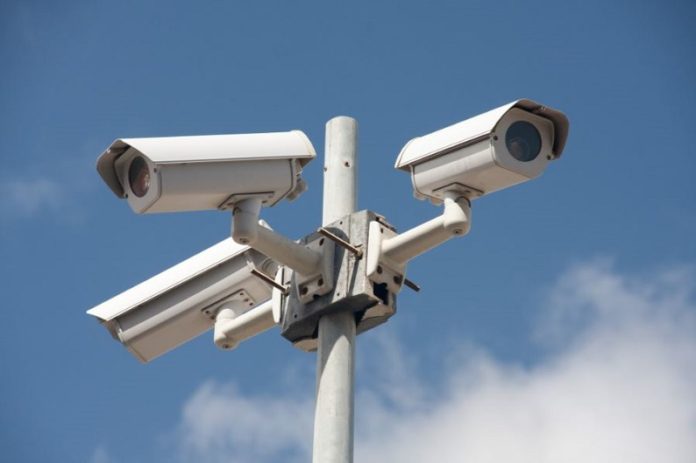
Government wants to procure CCTV cameras

Finance State Minister David Bahati has tabled a Shs910b supplementary expenditure budget before Parliament, including among others a Shs60b request to procure CCTV cameras to help the police track criminals.

The move comes in the wake of several murders across the country especially in the capital Kampala, which prompted President Museveni to direct that the spy cameras be installed at all junctions in the city.

But in Parliament yesterday, Butambala DP MP Muhammad Kivumbi tasked minister Bahati to disclose the source of the funds for the supplementary budget.

“The law requires that they show us the source of funding before they proceed,” he said fearing that the ministry might seek to cut the money meant for other budgeted votes.

In response Minister Bahati said government intends to obtain the money through domestic borrowing, prompting the MPs to refer him to the Committee on National Economy for clearance as whether the domestic loan request will be approved.

According to Bahati, already Shs41b of the supplementary budget has been spent but is now before parliament for retrospective approval as provided in Section 25(1) of the Public Finance Management Act which allows the central government to spend up to 3 per cent of the total approved budget, and table a request for retrospective approval within four months.

Bahati also noted that the balance of Shs481b is above the 3 percent provision and therefore requires prior approval by Parliament.

“The Ministry appears to have surpassed the 3 per cent request and this needs prior approval by Parliament,” queried Amos Lugoloobi, the Committee Chairperson.

Meanwhile, Bahati broke down how the supplementary request will be utilized, saying part of the money will finance a Shs49b wage shortfall in ministries, andShs20b will purchase of shares in Atiak Sugar Factory.

Other expenditures are: Shs10b to Uganda Prisons Service for food; Shs250m for recruitment and validation of health workers and Shs190b for the Ministry of Water and Environment’s counterpart funding of farm income enhancement and forestry conservation.

The Ministry of Trade needs Shs9.2b to settle outstanding Common Market for Eastern and Southern Africa ahead of its May summit in Bujumbura, while Shs15.38b is to cater for counterpart funding to the grants for the elderly under Ministry of Gender, Labour and Social Development.

The NAADS Secretariat also needs Shs80b to cater for the procurement of hoes, and Shs1b is to finance the procurement of an online registration system for the Uganda Registration Services Bureau.

The High Commission in Kigali requires Shs377m to cater for rent and mission staff salaries.
The minister said the Finance Ministry itself requires Shs7.7b for operations and investment promotion.

Some will go to compensations in the lands ministry and wages in other ministries.
 

Stories Continues after ad

Uganda’s debt rising – IMF report

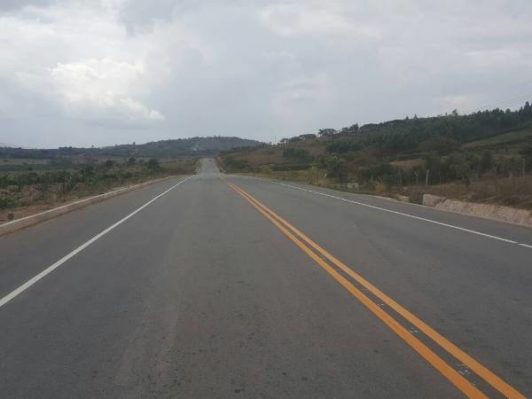
The Ntungamo-Mirama Hills road in western Uganda. Government debt has increased to fund such projects

Uganda’s debt has risen significantly, reflecting a renewed investment push financed through increased commercial borrowing, including from domestic borrowing, a new IMF report shows.

The report which does not mention the current debt says Uganda, like neighbouring Kenya, has not reached the debt burden indicators that show elevated risk, which means that Uganda can still borrow to finance projects.

But Government says borrowing will not exceed 41.7 percent nominal debt to GDP, and according to the Budget Speech for the 2017/18 financial year  read by the finance Minister Matia Kasaija, the country’s external and domestic debt has shot up to Shs28 trillion, equivalent to 33.8 per cent of the country’s GDP. The danger level of borrowing is 50 per cent of GDP.

However, according to the report that looks at economic developments and prospects among the world’s low-income countries, borrowing should be for productive projects.

On the other hand, the report says government debt in some of the world’s poorest countries is rising to risky levels. The report also focuses on the shift in the composition of creditors such as BRICS. It urges official creditors led by the World Bank and IMF to work together to find ways to ensure efficient coordination in the event of future debt restructurings for poor countries.

Analysis of the report shows that the drivers of the debt rise vary across countries. They include; shocks such as the sharp drop in commodity prices of 2014, which hit budget revenues in commodity exporters like Uganda, and natural disasters including the Ebola epidemic in West Africa.

Also civil conflict in counties like Somalia, Burundi, as well as high levels of public spending that were not linked to financing productive public investment, are part of the drivers. “Ample global liquidity played an important role in allowing for the rise of debt in low-income countries, by making it easier to borrow,” the report says.

Government debt is rising

“Budget deficits have been rising in most low-income countries during this decade where 70 per cent of low-income countries had higher government deficits in 2017 than during 2010-14. For commodity exporters, falling revenues contributed to higher deficits, whereas higher spending was the more important factor in other countries,” the report says.

The report says the current build-up of public debt comes in the wake of the low debt levels and robust growth that followed the international community’s actions to write off most of the debt of highly indebted poor countries—the Heavily Indebted Poor Countries (HIPC) initiative and Multilateral Debt Relief Initiative , which left countries with more resources to spend on investment and education.

“Higher public deficits and debt levels are not necessarily undesirable. When countries borrow to pay for infrastructure investment, that can boost long-term growth, which in turn generates revenues to service the higher debt,” it says.

Threat of debt crises is soaring

Despite the rise in debt, the report says more than half of low-income countries are still at low or ‘moderate’ risk of defaulting on their debt service obligations. “However, the share of countries at elevated risk of debt distress, for example, Ghana, Lao P.D.R., and Mauritania, … already unable to service their debt fully has almost doubled to 40 per cent since 2013,” it says.

The IMF anticipates some stabilization of the debt build-up in the coming years but says the forecast is predicated in part on countries undertaking fiscal adjustment and carrying out ambitious economic reform programs to deliver stronger economic performance. “It will be very important that countries implement these reforms—otherwise the debt build-up is likely to continue,” the report says.

Borrowers have moved away from traditional official creditors such as multilateral institutions and members of the Paris Club towards non-Paris Club official bilateral creditors, sovereign bond issues, other foreign commercial lenders, and domestic sources, mainly banks, the report says.

But the new forms of private credit often come at shorter maturities and higher interest rates, yielding larger debt service burdens for the borrower countries and higher rollover risks when these debts mature, the report says. It adds: “These creditors, unlike the Paris Club members, do not have ready mechanisms for coordination with other creditors, which is likely to make any needed debt resolution more difficult.”

Several countries like Chad, Mozambique and the Republic of Congo have already fallen into debt distress, with some seeking to restructure their debt.

To help contain debt vulnerabilities in low-income countries, borrower countries, lenders, and the international institutions should all work together, the report says.


Stories Continues after ad

Of Uganda, refugees and donors: a complex ‘troika’

TO BE VERIFIED: Refugees at the Bidibidi Reception Centre in Yumbe, Northern Uganda.

It’s clear the 285,000 people in this sprawling compound known as the second largest refugee camp in the world desperately need aid.

These residents who fled civil wars in South Sudan and the Democratic Republic of Congo and other conflicts now live in tents and ramshackle housing in northern Uganda.

Yet just a month ago, the United States, Britain and other European nations threatened to withhold funding and humanitarian aid from Bidi Bidi, according to the United Nations High Commissioner for Refugees (UNHCR).

At issue: A corruption scandal that has enraged the U.N. and its biggest donors.

Government officials overseeing the camp are accused of vastly inflating the number of refugees they must feed, clothe and shelter. In February, U.N. workers inspected a sector of the camp that Ugandan officials had reported housed 26,000 refugees. The U.N. found only 7,000 people.

“There’s concern that the numbers are not accurate,” UNHCR spokeswoman Teresa Ongalo said last month in Uganda’s capital, Kampala. “What we have received from donors is an indication that until we’re able to verify the numbers, they will withhold funding.”

Afraid of losing more funds, the Ugandan government, with support from the UNHCR and the World Food Program, launched a large-scale biometric data system to verify the identities of refugees in the country.

The system, slated to be completed in September, will collect fingerprints and eye scans of more than 1 million refugees, according to the UNHCR. Refugees will then receive ration cards. Similar systems have already cataloged 4.4 million refugees in 48 other countries, the UNHCR said.

“This is important to us to increase the accountability and transparency not only to the government and UNHCR and partners, but also the donors who are very key in our operation,” said Douglas Asiimwe, Uganda’s refugee protection officer.

This East African nation has received worldwide attention and praise for hosting more than 1.4 million refugees in 14 camps. News about the corruption scandal sparked outrage throughout Uganda and here in Bidi Bidi.

“We are not receiving enough food because some officials are eating money meant for refugees,” said Charles Lujang, a refugee representative at the camp. “They are using our name to enrich themselves. They should be arrested and jailed.”

Sitting outside her tent, Martha Antong, 40, was angry that officials could steal money intended for refugees.

“I’m suffering with my children because of them,” said Antong, a mother of four who fled South Sudan in July. “Many of us will die of hunger due to lack of food as they enrich themselves using the money meant for us.”

The Ugandan government has suspended four camp officials pending an investigation. Investigators are determining whether funding, food and other relief items were sold, used for bribes or involved in trafficking refugee girls.

Ugandan President Yoweri Museveni said he would severely punish anyone found guilty.

“The ones who are stealing refugee money will go to jail,” said Museveni, who has ruled this landlocked nation for more than three decades. “They bring shame to Uganda. To steal what is meant for refugees, what is meant for desperate people, these thieves they will pay.”

Uganda has been noted for being a generous host, giving those granted refugee status plots of land to cultivate, settle and integrate with local communities.

Atong, meanwhile, wanted justice. “Those who are causing these problems should be hanged because they are playing with people’s lives.”


Stories Continues after ad

Former MP Kyanjo involved in accident

RIP Former Makindye West MP Hussein Kyanjo

Former Makindye West Member of Parliament Hussein Kyanjo has this afternoon been involved in a car accident along Mulwana Road in Industrial Area near Uganda Baati.

According to sources Kyanjo, who was rushed to hospital is in stable condition, while both cars involved in the accident were towed to Jinja Road Police Station. It is said the brakes of the former MP’s car failed, leading to the accident.

An MP in the Eighth Parliament representing the Justice and Equality Movement (JEEMA), Kyanjo has been sick for a long time now, after he was allegedly poisoned.

Contacted, JEEMA President Asuman Basalirwa confirmed Kyanjo was involved in the accident.

“His brakes failed and the car rammed into five others and a boda boda, he is out of danger because he did not sustain injuries and is scheduled to see a doctor,” Basalirwa said.

Stories Continues after ad
Equity Group expects boost from Uganda subsidiary

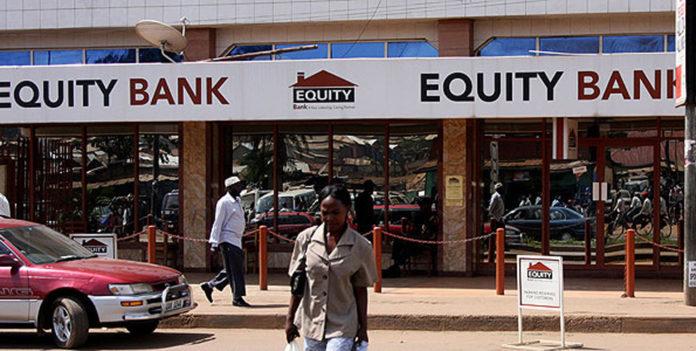
An Equity Bank branch

Kenya’s Equity Group Holdings doubled its rate of profit growth last year and anticipates its subsidiary in Uganda and others in the region to bolster profit this year, its top officer said on Thursday in Nairobi.

Equity Bank, which also operates in Uganda, Tanzania, Rwanda, South Sudan and the Democratic Republic of Congo, had its pre-tax profit rise 8 percent last year, up from 4 percent in 2016. This was attributed to higher commissions from foreign exchange trading and trade finance, CEO James Mwangi said.

Equity Group’s banking business in Kenya, where it is the biggest lender by customers, provides the bulk of profits but figures show subsidiaries outside Kenya are also growing in importance.

The Bank said pre-tax profit rose to Ksh26.88b in 2017 from Ksh24.93b a year earlier.

The group’s regional businesses, its mobile phone-based financial business, insurance agency and investment bank contributed 14 percent of last year’s profit and Mwangi said that would rise to 20-25 percent this year.

“What is driving the growth rate of the loan book in DRC, Rwanda, Tanzania and Uganda is GDP growth rate. They are moving pretty well,” he said as he briefed investors.

The net interest margin dropped to 8.5 percent last year from 11.6 percent a year earlier. Its bad debts fell slightly to 6.3 percent from 6.8 percent the previous year, well below the industry average of 10.6 percent.


Stories Continues after ad
ACP MPs call for strengthened relations with EU

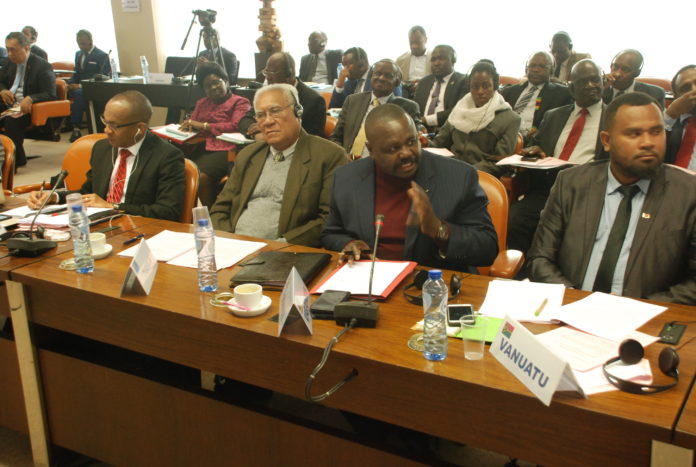
African Caribbean and Pacific (ACP) Members of Parliament during the summit

African Caribbean and Pacific (ACP) Members of Parliament have urged African Presidents to push for unity in the post-Cotonou negotiations, which are aimed at strengthening the relations with the European Union.

In a declaration drafted by the Deputy Speaker of Parliament, Jacob Oulanyah, the ACP Parliamentary Assembly taking place in Brussels, Belgium, Wednesday called for need to take into consideration the Georgetown Agreement that desires that the group enhances their political identity of acting and speaking with a single voice in all international fora and organizations.

“The Heads of States and Government should uphold the unity of the ACP group as indivisible entity of nations, leveraging its combined numerical strength to become a prominent player in matters of international development,” read the declaration in part.

The Deputy Speaker, who is a co-rapporteur on the ACP working group to the negotiations, said that the two meetings of the ACP and the AU taking place concurrently in Brussels and Kigali need to have a common position on the negotiations.

”The purpose of this declaration is to express our solidarity with whatever they are doing in Kigali,” he said adding: “It is important that we generate common ground on how we are going to proceed – the Assembly, the AU, the Pacific forum and all these institutions.”

The Deputy Speaker noted that the negotiating framework proposed by the European Union is pushing for regionalization of the ACP Assembly, which is not beneficial for the group and hence the need for unity and moving as a block.

“As Africa, the big brothers of the ACP, if you express a position on this matter, it will send a stronger signal to the rest of the cooperating parties that we need unity and do not want to be divided in which case we become weaker,” Oulanyah said.

The Assembly chaired by Joseph Owona Kono from Cameroon adopted the declaration with reservations from the representatives from Rwanda and Gambia and added that, “the group is pushing for common ideals of poverty eradication and the attainment of sustainable development goals and that all member states remain committed to these.”

The ACP-EU Partnership Agreement, signed in Cotonou on 23 June 2000, was concluded for a 20-year period from 2000 to 2020.

The fundamental principles of the Cotonou Agreement include equality of partners, global participation, dialogue and regionalization.

The ongoing meetings are in preparation for the negotiations that will see the amendment of the agreement post 2020.

The Cotonou Partnership Agreement (CPA) between the EU and 79 African, Caribbean and Pacific countries (ACP) will expire on 29 February 2020. Negotiations on the ‘post-Cotonou’ partnership shall officially begin before  September 1, 2018.


Stories Continues after ad

Oil and gas: MPs take on companies to produce reports

Petroleum Authority of Uganda Executive Director, Ernest Rubondo

The Public Accounts Committee of Parliament has directed the Petroleum Authority of Uganda Executive Director, Ernest Rubondo, to ensure that oil companies produce reports about their activities in the oil and gas sector.

The MPs were quizzing Rubondo alongside Energy Minister Eng. Irene Mulondo on Wednesday, in respect to the Auditor General’s 2016/2017 report which said oil companies had failed to produce reports on their activities as required of them.

The Auditor General, in his report, wrote that the companies have contravened Section 148 of the Petroleum Exploration, Development and Production Act, which requires companies to produce reports on geological, geochemical and geophysical work carried out, including a summary of drilling activities.

MP Dononzio Kahonda (NRM, Ruhinda) accused the officials of lacking control over the companies.

“From the submissions here, it seems the Ministry is not in charge,” he said, asking Rubondo to clarify why his office was not in possession of the petroleum companies’ reports.

In his response, Rubondo said the documents were available, and that it is an oversight on the part of the Auditor General not to have seen them.  “The reports were submitted. It is possible that the colleagues could just have missed out on the documents,” he said. He was supported by minister Muloni, who acknowledged the availability of the reports.

Uganda is currently described by the World Bank as the ‘hottest inland exploration frontier’ in the world and the country to watch in the oil and gas space due to the commercial discovery of an estimated 6.5 billion barrels of oil, 2.2 billion of which are recoverable.

The Ugandan government plans to build a refinery on a 29 square kilometres piece of land in Kabaale Township, Buseruka Sub-county, Hoima DistrictWestern Region, near the international border with the Democratic Republic of Congo , along the eastern shores of Lake Albert. This will be close to Uganda’s largest oil fields in the Kaiso-Tonya area.

In August 2017, a new consortium led by General Electric of the United States and JK Minerals South Africa agreed to build the US$4 billion refinery and to own 50 percent and JK Minerals Africa to own 10 percent, while the government of Uganda and other investors take up the remaining 40 percent.

Other members in this new consortium are; Yaatra Ventures LLC, Intracontinent Asset Holdings and Saipem SpA of Italy. These firms were competitors during the initial bidding. However, the companies formed an amalgam and formed a special purpose vehicle, the Albertine Graben Refinery Consortium (AGRC), which is expected to design, procure the necessary supplies and build the refinery.

Meanwhile, the construction of the oil pipeline is underway and is expected to be ready by 2020 to deliver crude to the Indian Ocean Coast oil for export. It is planned to cost US$4b.

Analysts say that while Uganda waits for its first drop of oil in 2020, it is under scrutiny over how it will handle the natural resource that is both considered a blessing and a curse in some countries already drilling oil.

They argue that the use of oil money to propel Uganda’s economy to the middle income status by 2020 depends largely on government’s commitment to among other things prioritize national participation, promote environmental sustainability especially in ecologically sensitive exploration areas and the strategies in place to avert the oil curses that has struck other oil rich nations.

The Uganda government expects to earn US$3.6b (about Shs9.378 trn) annually from the oil and gas industry when the country starts production.

Some of the major oil companies involved in exploring oil in Uganda are Total E&P Uganda and and China National Offshore Oil Corporation (CNOOC) Uganda Ltd.


Stories Continues after ad

Iganga’s ‘Panadol’ declared Municipality MP

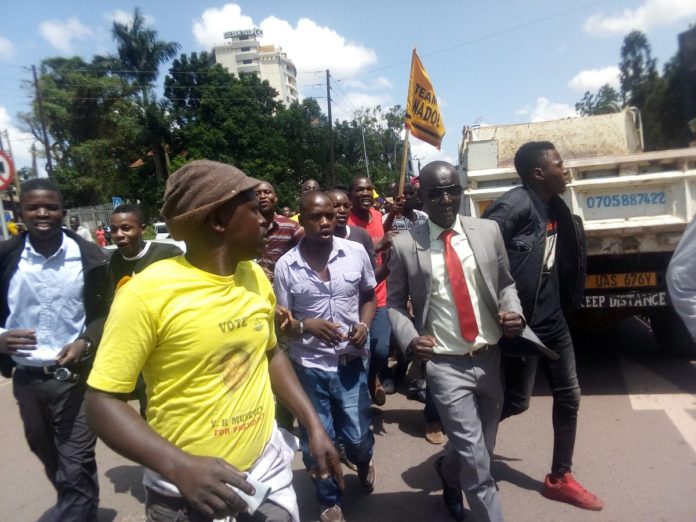
Supporters of Peter mugema aka Panadol jubilate after their 'man' was declared Iganga Municipality MP today.

National Resistance Movement (NRM) candidate Peter Mugema aka Panadol has been declared the Iganga Municipality Member of Parliament.

Announcing the ruling, Court of Appeal judges led by former Deputy Chief Justice Steven Kavuma and Justices Catherine Bamugemereire and Cheborion Barishaki overturned a decision of Jinja High court Judge Margaret Mutonyi, who heard the petition filed by the Forum for Democratic Change (FDC) candidate Abdul Nasser Mudiobole.

She had ruled that ‘Panadol’ bribed the Bethel Healing Church members with Shs300, 000 during the process of elections, but in their ruling today, the Court of Appeal Judges said the complainant failed to produce substantial evidence linking Mugema to voter bribery, ballot stuffing among other alleged electoral irregularities.

“We therefore maintain Peter Mugema as the MP for Iganga municipality,” the CoA judges ruled, and ordered the FDC candidate Mudiobole to pay all costs that Mugema has incurred from the High Court to the Court of Appeal.

“God can never be bribed, they rigged and framed me, and we have won the game,” an overjoyed Panadol, who was represented by lawyers from Kiwanuka and Karugire Advocates, told journalists and supporters outside court.

He added that the nullification of his victory was being driven by malice. “They were witch-hunting me over y my decision of rallying behind and nominating Kampala central legislator Muhamad Nsereko who was vying for deputy speakership of the August house,” he said.

In 2016, Panadol was declared MP for Iganga Municipality by the district returning officer. However, his rival Mudyobole petitioned court challenging his victory.

And in 2017 the Jinja High Court annulled Panadol’s victory on grounds of voter bribery and declared Mudiobole as MP.


Stories Continues after ad