Stanbic Bank
Stanbic Bank
18.2 C
Kampala
Stanbic Bank
Stanbic Bank
Home Blog Page 1618

UIA publishes business guide for Diaspora

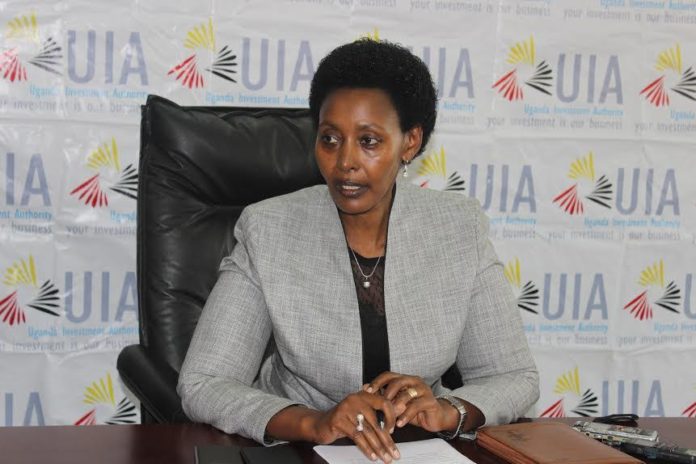
UIA ED, Jolly Kaguhangire .

Ugandans living in the Diaspora now don’t have to struggle finding investment information as the Uganda Investment Authority (UIA) has published a booklet containing details of over 10 sectors for investment.

The publication developed by UIA in partnership with the United Nations Development Programme is dubbed: ‘Compendium of Investment and Business Opportunities Volume 2’. It is under the Diaspora Resource Mobilization and Utilization Project.

The book presents information on the economy and key sectors that present investment business opportunities in agriculture, trade, mining, social, health, tourism, infrastructure, education, works and transport, oil and gas and forestry.

The book presents business ideas that have been identified as most responsive to the priorities in the various sectors, presented as one page summaries to give an insight of the feasibility of their implementation.

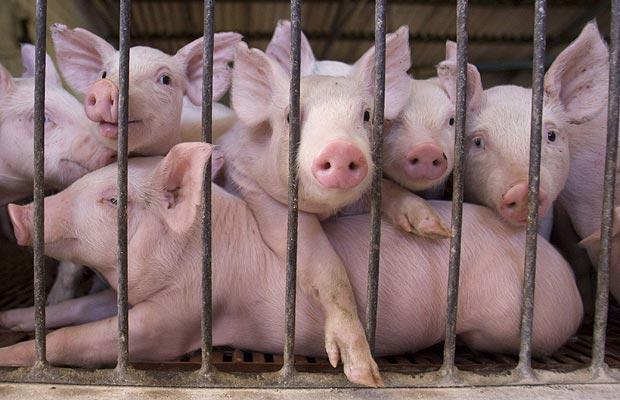
The booklet mentions piggery as a viable business in Uganda

The booklet guides investors on over 200 business start-ups including hatchery, piggery, brick-making, restaurants, mobile food vending, leather purses, bolts and nuts, paint and manufacturing, cheese making, and juice extraction among several others.

The book also shows the scale of investment, production or output volumes, values and profitability as key information in these ideas, believed to be the critical data necessary for making an investment business decision.


Stories Continues after ad

KACITA gives govt ultimatum to reduce taxes, rent

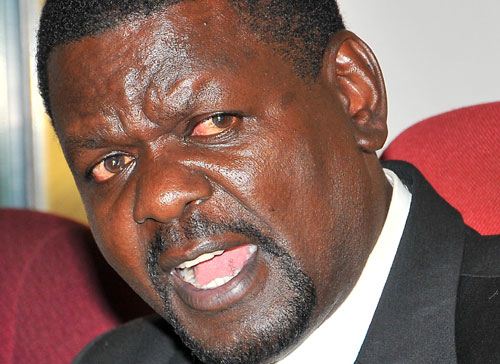
KACITA spokesperson Issa-Sekitto

As leaders of African countries were meeting in Kigali to formally launch the African Continental Free Trade Area Treaty (AfCFTA) which will allow free movement of businessmen, Uganda’s traders under their umbrella body Kampala City Traders Association (KACITA) were also meeting discussing issues affecting them.

Among the issues raised included exorbitant taxes, high rental fees and foreign petty traders.

In a heated meeting at their offices in Kampala, it was pointed out that the three issues were the biggest constraints to business in Kampala, and gave government up to April 10 to address their concerns or hold a peaceful demonstration over what they called ‘unfavorable business environment’.

KACITA spokesperson, Issa Ssekito said they were to march to the Prime Minister’s Office if their concerns are not addressed.

Meanwhile, according to latest reports, the leadership of KACITA has been summoned for a meeting with the Prime Minister.


Stories Continues after ad

New venture events where gility pays big dividends

By Martin Zwilling

Most entrepreneurs are so convinced that they are the disruptive element, they fail to anticipate that unknown facts or events can and will occur to disrupt their own well-laid plans. While it’s true that there is no way of know specifically what might happen, you need to anticipate the worst, and actually build a Plan B. People who haven’t thought about a Plan B often don’t survive the shock.

In my years of mentoring and working with startups, I’ve seen and read about some amazing disruptions, as well as recoveries, and I’m sure each of you could add your own. For example, you probably didn’t realize that both Facebook and YouTube started out intending to be dating sites, but implemented a Plan B when they found dating had become an over-saturated market.

While thinking about the most common surprises that I have seen with startups, and contemplating how to best prepare for them, I found some good guidance in a classic book, “Think Agile,” by successful entrepreneur and startup advisor Taffy Williams. I will key off his list of situations requiring dramatic plan changes, as well as the best ways to plan for these changes:

Indispensable people jump ship at the worst possible time. The surprise departure of a key staff member is inevitable, no matter how strong the financial and passion incentive. Every entrepreneur needs a succession plan early on the top three people, with a reshuffle and replacement strategy. Get to know your headhunter or freelancer.

Your rollout timetable suffers a big setback. You can’t predict big quality problems, funding shortfalls, and viral events that don’t work. You can and should create realistic time ranges around deadlines, and work up “what if” scenarios around your milestones. Don’t succumb to blind optimism, or pressure from investors to go for broke.

A new market opportunity emerges which you can’t ignore. It’s not just undesirable circumstances that require big plan changes. Natural disasters or economic conditions can create new markets, or an offer to partner or merge may materialize suddenly. The agile way to respond is to research for flaws in the opportunity, and test the waters first.

Your biggest or only customer dumps you. This can happen through no fault of your own, or rapid market erosion you didn’t foresee. Your Plan B should always include a diversification plan you can implement quickly, as well as an emergency “right-sizing” plan to weather the gap to some new customers or services.

Another disruptive technology trumps yours. What seemed like a winning technology, like RIM with its Blackberry, can quickly be superseded by a new entrant, such as the iPhone from Apple. Every startup needs to build and monitor their list of top competitive risks, and size the cost of a quick direction shift if the worst case happens.

Each of these initiatives has to be led by an entrepreneur who is willing to manage with an open mind, not only during the formative stages of the business, but also during the growth stages. Most entrepreneurs start losing their agility with that first taste of success. The best ones are often viewed as paranoid, since they proactively look for problems well after the first success.

One of the best ways to increase agility is to focus on specific problems and drive them to resolution, rather than instinctively flailing through several problems at the same time at a high level, hoping that one of your many actions will stick. Scientists have shown that the best creative problem-solving consists of these five-steps:

  1. Learn as much as possible personally about the problem.
  2. Engage a qualified and diverse team, staff, and advisors.
  3. Document the ultimate goal, so people can work backward as well as forward.
  4. Ramp up communication to bring in outliers and spark fresh thinking.
  5. Step back for a while to let the creative juices flow before making a decision.

These are turbulent times, as well as time for great opportunities, for the entrepreneurs that are agile, innovative, and open to change. Don’t get stuck in the past, or let some early success lead you to competitive lethargy or crippling indecisiveness. Those are the diseases of too many big business executives. You didn’t decide to be an entrepreneur to be like them.


Stories Continues after ad

Ratifying AfCFTA: The issues you need to know

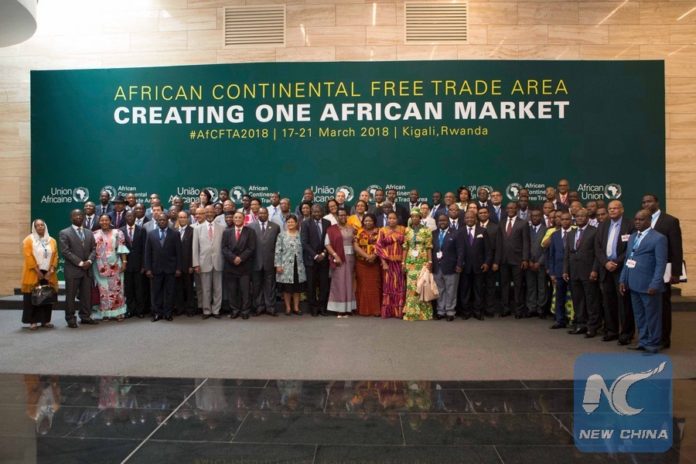
African leaders after signing the landmark AfCFTA agreement

Compiled by George Mangula

Over 40 African countries including Uganda appended signature to an agreement to launch the African Continental Free Trade Area (AFCFTA) in Kigali, Rwanda, on Wednesday, with the expectation that the landmark deal if ratified will boost trade within the countries.

The agreement cast in the mold of the European Union’s version was signed during the 10th Ordinary Session of African Union Heads of State summit.

The UN Economic Commission for Africa (UNECA) believes that if implemented, the agreement could increase intra-African trade by 52 percent by 2022, compared with trade levels in 2010.


That said, here’s what you need to know about the biggest trade agreement signed since the World Trade Organisation (WTO) was established.


What is AFCFTA?

African heads of government agreed to establish a continental free trade area in 2012 and started negotiations in 2015.

The agreement was signed by all 55 member states of thee African Union , bringing together 1.2 billion people with a combined gross domestic product (GDP) of more than US$2trn.

The draft agreement commits countries to removing tariffs on 90 percent of goods, with 10 percent of “sensitive items” to be phased in later.

The agreement will further liberalise services and aims to tackle the non-tariff barriers which hinder trade between African nations. Such barriers include long delays at the border and security checks along the roads.

Eventually, free movement of people and even a single currency could become part of the free trade area.


Single market for Africa!

By creating a single continental market for goods and services, the member states of the African Union hope to boost trade between African countries.

Currently intra-African trade is relatively limited. According to United Nations Commission for Trade and Development (UNCTAD), it made up only 10.2 percent of the continent’s total trade in 2010.


David Luke, coordinator of the African Trade Policy Centre at UNECA, hopes the free trade area will correct this “historical anomaly”.

“Colonialism created a situation where neighbours stopped trading with each other. The main trading route was between African countries and European countries and between African countries and the US,” he says.

Removing barriers to trade is expected to not just grow trade within the continent but also grow “the kind of trade the people need.

According to a UNECA report, between 2010 and 2015, fuels represented more than half of Africa’s exports to non-African countries, while manufactured goods were only 18 percent of exports to the rest of the world. Within Africa, 43 percent of goods traded are manufactured products.

Africa also faces the challenge of commodity prices which are volatile, making economies that rely on their export vulnerable. Moreover, officials say, the export of commodities from Africa tends to be capital- rather than labour-intensive.

“In this kind of economy, young people cannot find jobs. This is why they are trying to get to Europe and Arab countries, says a Ugandan government official who preferred to remain anonymous in this article. He adds that job creation in Africa requires production of goods that everyone consumes.

Leaders hope the free trade area will boost Africa’s competitiveness in the global market. 

The challenges

Despite the signing of the agreement, some African countries are still skeptical about the document, with The Nigeria Labour Congress (NLC) labeling it a “renewed, extremely dangerous and radioactive neo-liberal policy initiative” .This shows that not country is satisfied with the deal.


Some countries fear that the benefits of the free trade area could be unevenly distributed, benefiting more advanced countries on the continent such as South Africa, Egypt.

Some analysts say the treaty mainly tackles cutting tariffs, without sufficient consideration of the varying production capabilities of African countries.

“We need to pay attention to the big economies against the small economies. We need to pay attention to the dominant sectors against the weaker sectors,” says another analyst in Uganda who gave Kenya in East Africa as a dominant force compared to its neighbours who have weak economies and industries.

Other analysts are of the view that domestic policies need to be in place to assist workers and businesses when competition hits up.

With the new trade agreement African Governments, according to economists in this area, will need to develop a more skilled workforce ready to take up demands of the globalisation but also that governments at the same time create social policies for those who will lose jobs due to increased competition.

Three documents were signed including the establishment of Continental Free Trade Area, the Protocol of the Free Movement of People and the Kigali Declaration.

What happens next?

AfCFTA will come into force after it has been ratified by either 15 or 22 countries – a number that has yet to be agreed on.

A second phase of negotiations will be held later to cover investment, competition policy and intellectual property. But there are other details that still need to be ironed out; countries will need to submit which products they consider “sensitive”, thus exempting them from the tariff cut for now. And the African Union Commission will need to establish a secretariat to preside over the agreement.

Stories Continues after ad

COMESA Virtual University Programme to commence in May

Kenyatta University in Kenya will host the first Masters Degree program in regional integration

The admission of the pioneer students of the COMESA Virtual University will commence in May 2018 at the Kenyatta University in Kenya.

According to a media statement, the admission, planned to kick off in September 2017, was delayed to allow the conclusion of administrative procedures of the university education regulatory authority in Kenya.

Kenyatta University was selected to host the first Masters Degree program in regional integration during a consultative forum of the 22 collaborating universities from COMESA Member States.

“At the forum, it was agreed to commence a collaborative masters’ degree programme in regional integration in the medium term, with an objective of establishing a fully-fledged university in the long run,” the statement indicates.

The COMESA Virtual University Masters Degree is a multi-disciplinary program intended to bring together world-class academics, researchers and practitioners from leading institutions around the world to learning centres in participating universities through a virtual platform. The course is a professional course designed for government officials working in departments dealing with trade, integration and cooperation issues and students intending to work as trade officers, trade policy analysts, advisers, researchers and trade attaches.

It also targets the private sector trade practitioners and economic operators; journalists covering trade issues; chambers of commerce, manufacturer and consumer associations, diplomatic missions, development organizations dealing with trade and integration issues, among others. It is also suitable for middle level trade researchers and consultants.

The teaching modules for 30 courses have been developed with financial support from the African Capacity Building Foundation (ACBF). The review process was done by academic experts across the world to ensure good quality of the material and knowledge to be passed to the students.

The program will provide a sound conceptual, policy and practical training on regional integration, but will also help extend access to research opportunities and higher education on regional integration within and outside the COMESA region. The program covers economics, trade, law, political economy, trade and finance, IT and innovation, among others.

Dr Chris Kiptoo, the Principal Secretary in the State Department of International Trade pledged Kenya’s commitment in ensuring the implementation of the programme begins as planned.

In the first Trimester, five core courses will be taught: Economic Research Methodology; Microeconomic Foundations for Trade; International Trade Theory and Policy; International Trade Law and Theory of Regional Integration.

The programme was launched in October 2016 during the COMESA Heads of State Summit in Madagascar as a response to some of the challenges facing regional integration not only in COMESA but Africa at large.

It is believed that the small number of continental institutions offering appropriate, flexible and affordable Regional Integration programs is a contributing factor. The COMESA Virtual University is therefore a response to this situation.


Stories Continues after ad

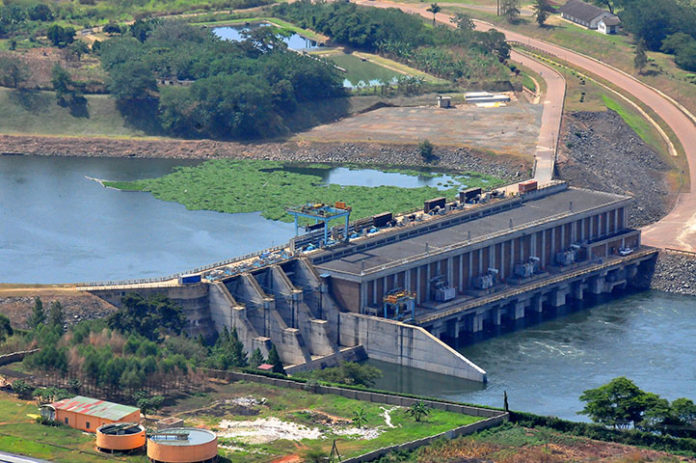
Over US$400m to refinance Bujagali hydropower project

The Bujagali-hydropower-project

The International Finance Corporation (IFC) and Multi Investment Guarantee Agency (MIGA) have approved a new plan to refinance more than US$400m of loans to Bujagali Energy Limited and provide up to US$423m in guarantees in support of the Bujagali hydropower project to help reduce electricity costs in Uganda, where only one in five people have access to electricity.

Bujagali, a run-of-river hydropower project on the Victoria Nile, contributes 45 percent of the country’s annual electricity generation. It also provides clean, reliable base-load energy, and its commissioning in 2012 significantly reduced Uganda’s reliance on the costlier thermal power generation.

The refinancing package approved days ago will extend the tenure of senior and subordinated loans originally provided in 2007 by IFC, the African Development Bank (AfDB), the European Investment Bank (EIB), the Netherlands Development Finance Company (FMO), France’s Agence Francaise de Developpement (AFD) and Proparco, Germany’s DEG and KfW, and four commercial banks (ABSA, BNP Paribas, Nedbank and Standard Chartered Bank).

This extension in tenure will reduce Bujagali Energy Limited’s annual debt-servicing payments and make it possible for the company to reduce the cost of electricity produced by the hydropower plant over the next five years.

In addition, MIGA will provide political risk guarantees of up 20 years for equity investors in Bujagali Energy Limited, helping to shore up investor support and long-term engagement with the project.

An existing partial risk guarantee from the International Development Association (IDA) for two of the project’s commercial lenders remains in place.

The World Bank Group has been a long-term partner in the Ugandan power sector. Through IDA, it continues to engage with the government to support efforts to upgrade the country’s transmission and distribution networks and expand on-grid and off-grid access to electricity, providing connections for homes, schools, and health clinics. IFC is already an investor in Umeme—Uganda’s main distribution company—both as lender and shareholder.

Bujagali’s commissioning in 2012 allowed the government to deactivate more than 100 megawatts of diesel power plants and made it possible to nearly eliminate government subsidies to the electricity sector.

Since 2005, the share of Uganda’s population with access to electricity has increased from 9 percent to 22 percent, with the total number of customers having grown from 292,000 to more than 1.1 million over the same period.

More than 90 percent of Uganda’s electricity is now generated from renewable sources, making the Ugandan power grid one of the cleanest in the world.

Stories Continues after ad
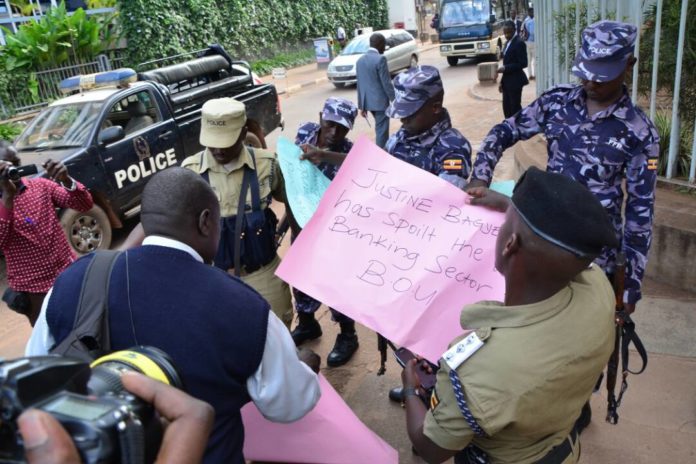
BoU, IGG up in arms over Bagyenda retirement

People protest against former BoU Executive Director of Bank Supervision Justine Bagyenda

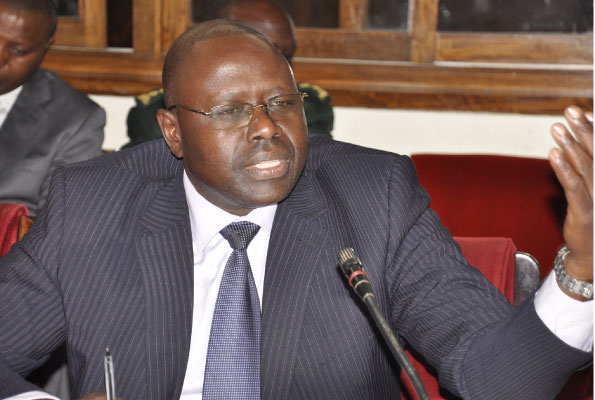
The Bank of Uganda Governor Professor Emmanuel Tumusiime Mutebile has written a terse letter to the Inspector General of Government (IGG) Justice Irene Mulyagonja Kakooza, advising her to stop interfering with the central bank internal operations.

Prof. Mutebile was reacting to a March 12 letter from Justice Mulyagonja, in respect to the early February retirement of former Bank of Uganda Executive Director for Bank Supervision, who had challenged the BoU decision to send her into early retirement, and also refused to hand over office to her successor, Dr. Twinemanzi Tumubweine.

But in his five-page strongly-worded letter that is copied to among others President Yoweri Museveni, Speaker Rebecca Kadaga and Prime Minister Dr. Ruhakana Rugunda and finance minister Matia Kasaija, Prof. Mutebile draws the attention of the IGG to Article 162 (2) of the Constitution that guarantees the independence of the BoU from direction of any authority in the country. Others copied in include the Attorney General, the Auditor General and members of the BoU Board of Directors.

‘In performing its functions, the Bank of Uganda shall conform to this Constitution but shall not be subject to the direction or control of any person or authority,’ the Article states in part.

Mutebile adds: ‘The Article in question is clear, unequivocal and unambigious on the Independence of the Bank of Uganda and the fact that Bank of Uganda is not subject to the direction or control of any person or authority and therefore no outsider, including your office can interfere with the decisions of the Bank of Uganda’.

Further, to reinforce his argument, in the March 19 letter Prof. Mutebile makes reference to judgments on authority made by the courts in respect to the IGG’s directives regarding some financial institutions, pointing out the Bank of Uganda vs COWE Appeal No. 35 of 2007 and MC 303 of 2013 in respect to Uganda Development Bank Board of Directors, its Chief Executive Officer Patricia Ojangole and 4 others vs the Attorney General, both of which upheld the independence of the BoU.

According to Prof. Mutebile, the IGG’s directive in respect to Ms. Bagyenda’s retirement is ‘impugned’ and if effected, will negatively impact on the operations of BoU and the entire banking sector in the country.

Ms. Bagyenda who, in her capacity as ED bank supervision was responsible for overseeing the activities of commercial banks in the country has been on the spot, linked to the closure and subsequent boarding off of Crane Bank.

Her name has also surfaced in financial transactions of whopping sums, raising eyebrows with accountability oversight institutions like Parliament, whose committee on Commission, Statutory Agencies and State Enterprises (COSASE) has ordered the Auditor General John Muwanga to interest himself in Ms. Bagyenda’s finances.

Indeed, Budadiri West MP Nathan Nandala Mafabi, an accountant and lawyer, has dubbed Ms. Bagyenda’s transactions as ‘money laundering’.


Stories Continues after ad

Emirates Certificates go on market

The Emirates-logo

Emirates has successfully executed a US$600 million Islamic finance issuance (Sukuk).

The issuance of the Trust Certificates, in the principal amount of US$600 million will be repaid in an amortizing format over 10 years with legal maturity in March 2028.

The proceeds from the issuance will be used for general corporate purposes including aircraft financing and working capital.

Nirmal Govindadas, Emirates Senior Vice President, Corporate Treasury said:  “We are pleased with the level and quality of interest in this Sukuk issuance. Emirates continues to take a diversified approach to our long-term financing strategy and today’s issuance confirms the confidence of international and regional investors in our strong track record as well as resilient and profitable business model.”

Following investor outreach and marketing efforts commencing 8 March 2018, the Certificates were priced on 15 March 2018 at a profit rate of 4.50%, equivalent to 183.2 basis points over the 5 year USD Mid-swaps.

The Certificates are expected to be issued on 22 March 2018 and admitted into listing and trading on the regulated market of the Irish Stock Exchange and on NASDAQ Dubai.

Citi and Standard Chartered Bank acted as Global Coordinators and Joint Lead Managers, along with Abu Dhabi Islamic Bank, BNP Paribas, Dubai Islamic Bank, Emirates NBD Capital, First Abu Dhabi Bank, HSBC, J.P. Morgan and Noor Bank as Joint Lead Managers.

The airline continues to raise capital via innovative structures, through various geographies and diverse sources of liquidity as part of its corporate funding strategy.


Stories Continues after ad
Museveni suspends Immigration top officials

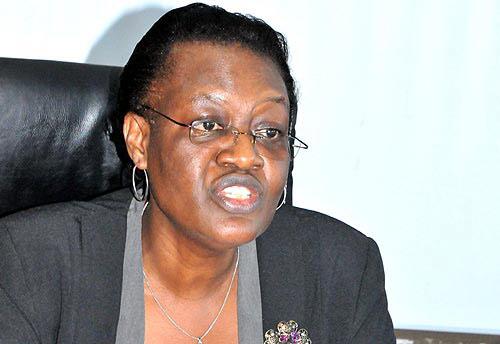
INTERDICTED, Commissioner Namara. Photo credit, NBS TV.

President Yoweri Museveni has suspended two Immigration directorate officials pending investigations by police and Inspectorate of Government
The two are Godfery Sasaga, the Director Immigration and Commissioner Anthony Namara.
In letter to the Minister of Internal Affairs which was copied to the Permanent Secretary in the same ministry, Museveni directed the two to handover office to PS Dr Benon Mutambi Mugisha.
In his letter Museveni says the two should be investigated on the wide range of things stretching to misuse of funds but most important the procurement of E-Passport.
Eagle Online has established that before Museveni’s action, he had sanctioned investigations and they were reportedly being carried out by a Special Forces Command operatives led by a one Musinguzi and another man from the Privatization Unit.

Director Immigrations, Sasaga

The procurement of the E-Passport has reportedly pitted two camps against each other: one is allegedly led by a State Minister in the finance hailing from Western Uganda and in his camp are reportedly a senior powerful civil servant lady around the President and a senior Minister also around the President and hailing from Busoga. The other camp, according to sources, comprises another influential member of the first family in whose camp the two immigration officials were. It is this camp, sources say, that emerged winner of the procurement process.

Further, according to the sources, in one of the meetings held in State House Nakasero, the two camps traded insults before Museveni leading to the investigations. Uganda is in the process of actualizing the E-Passport and the process has been on for the last two years.

Meanwhile, as the two immigration officials are being investigated by the CIID and IGG, the Internal Affairs PS, Dr Mutambi is also reportedly under investigation at IGG in relation to his tenure at Electricity Regulatory Authority (ERA), where he was the Chief Executive Officer. It is alleged that Dr. Mutambi, while at ERA, he and others formed a company which in turn got contracts to supply materials to same agency.

Efforts to get comment from the above officials were futile by press time.

Stories Continues after ad

Bagyenda quizzed by IGG over unexplained wealth

Embattled former Executive Director in charge of Supervision at Bank of Uganda Justine Bagyenda.

The sacked former Executive Director of Supervision of commercial banks at Bank of Uganda Justine Bagyenda yesterday afternoon faced a scorching time as she was grilled by a tough-talking Inspector General of Government(IGG) Irene Mulyagonja over illicit accumulation of wealth and unexplained fat bank accounts.
Bagyenda used the cover of the basement parking to disguise from the prying eyes of the public and gain access to the IGG’s chambers on Jubilee House along Parliament Avenue where she was interrogated for the better part of the afternoon.
A source who saw Bagyenda leaving the IGG’s chambers at around 4:00pm say she was disheveled and fatigued following an afternoon of uncomfortable questions.
Bagyenda was asked to explain how she built condominium plans at Makerere Hill Road and Sunderland Avenue in Bugolobi and bought massive plots of land at Kimera Close and Balikudembe Road but she could not give definitive answers.
Bagyenda was also then asked to explain the source of a staggering wealth in several city banks that is said to be amounting to billions of shillings and millions of dollars that was found stashed on different accounts among the in Diamond Trust Bank and Barclays Bank. However sources at IGG say Bagyenda again could not furnish decisive evidence on the sources of the money.
The IGG also quizzed Bagyenda about a hard-hitting non-compliance report by Uganda Revenue Authority (URA) that indicates that her tax accountabilities could be Shs7 billion. She faces separate charges of tax evasion.
IGG Mulyagonja confirmed to Eagle Online that Bagyenda was quizzed but declined giving details of the next course of action that the inquiry will take.

IGG-Irene-Mulyagonja

Bagyenda, whose contract at BoU was supposed to end June 2018, went on annual leave on January 22, but in a reshuffle announced by BoU Governor Emmanuel Tumusiime Mutebile, she was retired. In her place Mutebile appointed Dr Tumubweine Twinemanzi the new Director in charge of Supervision.
Bagyenda before returning to handover wrote to Prof. Mutebile protesting the manner in which she was laid off. In the letter, the sources said, Ms. Bagyenda told Prof. Mutebile she would return to BoU and continue with her work.
Early this month, we published a series of stories detailing the depths of Ms Bagyenda’s bank accounts she has with the bank, including one about how she has millions sitting on different accounts.
The stories prompted the banks mentioned in the leaked documents to investigate the source of information have reported apologized to Bagyenda confirming that the leaks are true. And the bank leadership claims, their staff were ‘compromised’ and actively participated in leaking account details of their client.

Stories Continues after ad