Stanbic Bank
Stanbic Bank
26.7 C
Kampala
Stanbic Bank
Stanbic Bank
Home Blog Page 1625

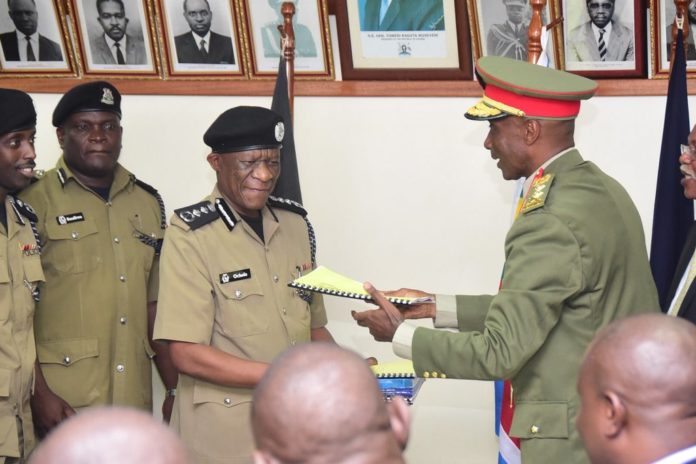
Former IGP Kayihura hands over to Okoth Ochola

Former IGP Kale Kayihura handing over to his sucessor Okoth Ochola. Looking on is new Deputy IGP Brig. sabiti Muzeyi.

Eleven days since he was relieved of his duties as Inspector General of Police (IGP), General Kale Kayihura has today handed over office to his successor Martin Okoth Ochola.

At a function held at Police Headquarters in Naguru, Gen. Kayihura, clad in full military attire, congratulated IGP Okoth Ochola and his deputy, Brigadier Sabiiti Muzeeyi.

“Let me begin by congratulating the new IGP Okoth Ochola who has been the Deputy IGP during my tenure. I want to also congratulate Muzeyi Sabiti,” Gen. Kayihura told those present among them the Minister for Internal Affairs Gen. Abubakar Jeje Odongo and his State Minister Mario Obiga Kania.

According to Gen. Kayihura, he is satisfied with his performance as IGP which, among others, reportedly included a drop in crime rates.

Before the handover ceremony, the four top officials in charge of internal security held a closed door meeting with Gen. Kayihura who has now reportedly been redeployed to the military.

Gen. Kayihura served as IGP from 2005, and will mostly be remembered for his relentless efforts to scuttle the opposition during his 13-year tenure.

Stories Continues after ad

MPs warn against borrowing to complete new Jinja bridge

Syda Namirembe Bbumba, the head of the committee that compiled report

The committee on national economy has recommended that Parliament reconsider the approval of government to borrow Shs 172.165 billion from Japan International Cooperation Agency (JICA) to complete the construction of the new Nile Bridge in Jinja.

According to a report submitted by Nakaseke North County legislator Syda Bbumba Namirembe, in 2O11, Parliament approved concessional financing of Shs 315 billion (JPY 9.198 billion) from JICA for the construction of the bridge that commenced in 2013, but currently only 67 per cent of the money has been disbursed.

However, the report notes that due to substantially higher costs than initial expectation posted by the contractor along with the significant depreciation of the Japanese Yen, the share of financial cost between JICA and government was substantially affected.

But the 35- member committee says the loan will increase the country’s total nominal public debt that is currently at US$ 8.6 billion as by the end of June 2016.

Basing on observations, the committee recommended that UNRA expedites works at the new bridge to exhaust the existing loan disbursements before end of FY 2017/18; and to pave way for additional financing that it required to complete the construction.

‘UNRA should establish a clearance system for government project goods to reduce delays in implementation of projects…’ reads in part of the report.

The MPs also said that Government should develop a strategy on how the commercial aspects of the New Bridge will be managed to include revenue sharing among local governments (in Jinja and Buikwe) and central government from tourism receipts.


Stories Continues after ad

UK to expel 23 Russian diplomats as royal family says they won’t attend world cup

Sergei Skripal, 66, and his daughter Yulia, 33, are in a critical condition in hospital

The UK will expel 23 Russian diplomats after Moscow refused to explain how a Russian-made nerve agent was used on a former spy in Salisbury, the PM says.
Theresa May said the diplomats, who have a week to leave, were identified as “undeclared intelligence officers”.
She also revoked an invitation to Russia’s foreign minister, and said the Royal Family would not attend the Fifa World Cup later this year.
Russia denies being involved in the attempted murder of Sergei Skripal.
The Russian Embassy said the expulsion of 23 diplomats was “unacceptable, unjustified and short-sighted”.
Former spy Mr Skripal, 66, and his daughter, Yulia Skripal, 33, remain critically ill in hospital after being found slumped on a bench on 4 March.
Det Sgt Nick Bailey also fell ill responding to the incident, and is in a serious but stable condition, but is thought to be improving.

Moscow refused to meet Mrs May’s midnight deadline to co-operate in the case, prompting Mrs May to announce a series of measures intended to send a “clear message” to Russia.
Among them are:
 The expulsion of 23 diplomats – who have one week to leave
 Increased checks on private flights, customs and freight
 The freezing of Russian state assets where there is evidence they may be used to threaten the life or property of UK nationals or residents
 Ministers and Royal Family to boycott the Fifa World Cup in Russia later this year
 The suspension of all planned high level bi-lateral contacts between the UK and Russia
 Plans to consider new laws to increase defences against “hostile state activity”
Mrs May told MPs that Russia had provided “no explanation” as to how the nerve agent came to be used in the UK, describing Moscow’s response as one of “sarcasm, contempt and defiance”.
She said the use of a Russian-made nerve agent on UK soil amounted to the “unlawful use of force”.
The PM, who was earlier briefed by senior intelligence chiefs in Downing Street, added there was “no alternative conclusion other than that the Russian state was culpable” for the attempted murder of Mr Skripal and his daughter.
She said it was “tragic” that Russian President Vladimir Putin had “chosen to act in this way”.
The foreign office has updated its advice on travel to Russia, saying “heightened political tensions” mean Britons should “be aware of the possibility of anti-British sentiment or harassment at this time”.

Meanwhile, police and army have sealed off areas of Gillingham, Dorset, as part of the attempted murder investigation.
They have cordoned off an area surrounding a truck, which it is thought recovered Mr Skripal’s car from Salisbury, about 20 miles from Gillingham.
About 180 troops have been deployed to Salisbury to assist with removing vehicles and objects from affected areas, while the Zizzi restaurant and Bishop’s Mill pub where the Skripals visited before falling ill remain closed.
Russian Foreign Minister Sergei Lavrov accused Britain of “playing politics” and ignoring an international agreement on chemical weapons.
He said Moscow would co-operate if it received a formal request for clarification from the UK under the Chemical Weapons Convention, which sets a 10-day time limit for a response.
The UK is to brief the UN Security Council on the investigation at 19:00 GMT, and earlier met Nato’s North Atlantic Council.
At the meeting, Nato allies expressed “deep concern” at the use of a nerve agent and said it was a “clear breach of international norms and agreements”.
Mr Skripal, who came to the UK in 2010 as part of a “spy swap” after he had been convicted by Russia of passing information to MI6, is a British citizen.

Stories Continues after ad

Crane Bank saga: BoU, DFCU officials accused of ‘swallowing’ Shs600bn

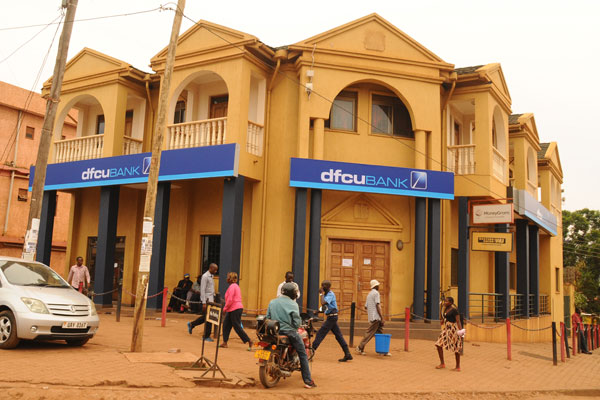
The Former Crane Bank Ntinda branch, which DFCU took over and illegally rebranded in its name, was ordered by the court to vacate and compensate Meera Investments because the property belongs to Meera.

In the second of three part series, the EagleOnline brings you the riveting story of how the Bank of Uganda (BoU) and DFCU officials reportedly connived against the Crane Bank Limited and swept a whopping Shs600 billion under the carpet for their own benefit, at no corresponding cost.

In a 4-page leaked document dubbed: ‘The major contentious issues with the Purchase of Assets and Assumption of Liabilities Agreement entered into between Bank of Uganda and DFCU Bank Limited dated 25th of January 2027’, the shareholders of Crane Bank say that when the BoU was taking over their bank, it classified a set of loans of about Shs600bn as ‘non-performing loans’ and subsequently removed them from the list of assets of the CBL balance sheet.

The document containing the said details was reportedly signed by among others the Governor Professor Emmanuel Tumusiime Mutebile, on behalf of BoU and Juma Kisaame and William Sekabembe, Managing Director and Executive Director respectively, on behalf of DFCU Bank.

By press time it was not possible to get the CBL sale agreement between BoU and DFCU Bank, but according to the shareholders, among them tycoon businessman Sudhir Ruparelia, the officials of the two financial institutions endorsed a fraudulent transaction in which they (shareholders) also lost capital of Shs350 billion (as payment for the loans), as a result.

‘By this arrangement, these non-performing (loans) were no longer the property of CBL, but belonged to the shareholders who had paid for them with their capital contributions,’ the shareholders wrote, adding that they also had to part with about Shs85 billion, reportedly paid to the BoU in three installments of US$8m, US$7.5m and US$8m.

Further, the shareholders point a particular finger at Justine Bagyenda, the immediate former Director Bank Supervision, for being responsible for the mess in which DFCU would later reportedly account for the loans, albeit fraudulently.

‘Justine Bagyenda of Bank of Uganda then gave permission to secretly account for these bad loans on a secret basis outside the official books of DFCU! How can a regulator allow a bank to have secret side books of account?’ the wondered, but not before saying that officials involved in the sale were acting with fraudulent intent.

‘Bank of Uganda did this knowing that although these non-performing loans were classified as worthless for accounting purposes, they were fully secured by valuable securities and a large portion of them were collectable,’ the shareholders wrote.

The shareholders further impute that BoU and DFCU officials shared the spoils accruing from the loans, for which they had already paid over Shs400 billion.

‘Bank of Uganda officials therefore secretly entered into a side accounting arrangement with DFCU bank to collect from these loans and secretly account for and share proceeds of these collections amongst DFCU and BoU officials’, the shareholders charged.

The BoU and DFCU are mute on the new developments which the shareholders say could cost the two financial institutions millions of dollars in litigation costs and compensation.

Stories Continues after ad

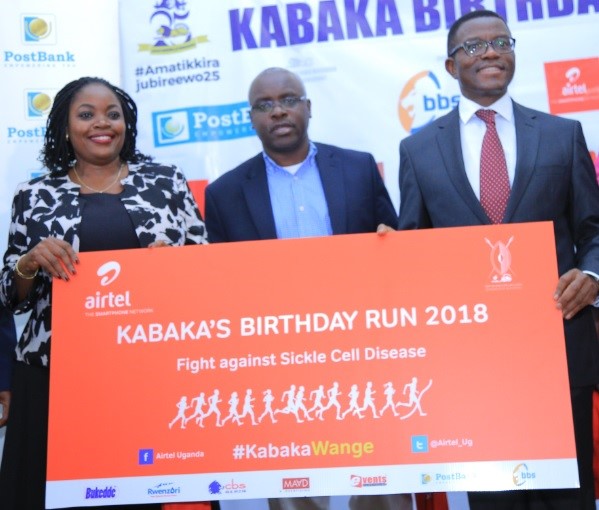
Kabaka Run returns, proceeds to go to sickle cells treatment

Airtel Uganda Head of Brand and Communications, Remmie Kisakye, Vision Group CEO Robert Kabushenga, Katikiro of Buganda KIngdom, Owek, Charles Peter Mayiga launching Kabaka Run 2018 at Bulange Mengo.

Following a highly successful 2017 Kabaka Birthday Run, Airtel Uganda has today announced its sponsorship of the 2018 Kabaka Birthday Run that will be held on Sunday, 8 April 2018 at Bulange in Mengo.

In line with the three – year theme announced last year – Fight against Sickle Cells, proceeds from the run will be directed towards fighting the sickle cells disease in Uganda.

Last year, Airtel Uganda in partnership with the Buganda Kingdom, handed over 60,000 sickle cell testing kits, bought from the proceeds of the Kabaka Birthday Run 2017, to the administration of the Uganda National Health Laboratory Services to carry out conclusive testing for the killer disease. The kits would allow over 120,000 people to test for the sickle cells disease free of charge.

Commenting about the sponsorship, Airtel Uganda Managing Director Mr. V.G. Somasekhar noted that Corporate Social Responsibility is very central to Airtel and is an integral pillar of the business.

“Through our partnership with the Buganda Kingdom, we have been able to change the lives individuals and communities in Uganda. This year, we intend to continue this life changing work by collecting funds that will be used to educate Ugandans about sickle cells, enable proper treatment of patients and fund research into how best we can contain it,” he stated.

Somasekhar added that besides Kabaka Run, Airtel Uganda has been involved in other successful CSR programmes like ‘Together We Can’ which won the Best CSR campaign award 2017 and ‘Adopt A School’ which focuses on the transformation of dilapidated schools to provide a better learning environment.  Various health camps across the country offering free medical services to underprivileged communities have also been held in partnership with the Ministry of Health among other partners.

The Katikkiro of Buganda Charles Peter Mayiga thanked Airtel Uganda and other partners; such as the Ministry of Health in the Central Government and Uganda Sickle Cell Foundation, for their sponsorship, which has brought awareness and funding to illnesses that have dominated Uganda for many years.

“First, we worked together to tackle fistula and now we are focusing on sickle cells. With strategic and consistent partners such as Airtel Uganda, we shall win the fight against these sicknesses that are claiming lives of very many Ugandans,” he commented.

The Kabaka run – an annual event celebrated to mark the King’s birthday – is part of a partnership that the telecommunications giant has with the Buganda Kingdom to sponsor four of their most important activities; the Kabaka’s birthday Run, Kabaka’s birthday celebration, the Kabaka’s coronation as well as Eid El Fitri. Airtel Uganda also sponsors the Masaza Cup – the Buganda kingdom football tournament.

The run will be held on April 8, 2018 and participants will be flagged off in Lubiri Mengo by Kabaka Ronald Muwenda Mutebi for the 5km, 10kms and 21km routes.


Stories Continues after ad

Top police officer in panic over extortion of Shs40m

The Uganda-Police-Force logo with the Motto 'Protect and Serve'.

A senior police officer at the rank of Commissioner of Police (CP) is reportedly in panic mode, thinking the Police Professional Standards Unit (PSU) is likely to re-open a case against him that is linked to the extortion of Shs40 million.

The officer (name withheld) who is under the media docket at CIID and hails from South Western Uganda, is known for harassing journalists but this time it is said he ‘bit a bullet’ by asking an uncooperative man in the city for the Shs40m with a view of ‘helping him have a case dropped’, but the man turned whistle-blower and instead informed the PSU.

Subsequently, the PSU gave the man a go ahead to give the money to the officer. However, as this was being done, PSU operatives stormed the place, handcuffed the officer and took him to Naguru Police Headquarters.

Sources told the EagleOnline that the officer made several calls including to the former police leadership, which prevailed upon the PSU not to shame the wayward officer by parading him before the media or to appear before the police disciplinary committee.

And now with the former police leadership out of office, it is said the officer now lives in fear, thinking the matter might be resurrected.

Recently, President Yoweri Museveni shuffled the police force, firing General Kale Kayihura from the position of Inspector General of Police (IGP), and replaced him with Martin Okoth Ogoola, the former Deputy IGP.

Following Kayihura’s sacking, Mr. Museveni, while addressing people who attended the International Women’s Day celebrations in Mityana said he had removed ‘Kawukumi’ (bean weevils) from the police.


Stories Continues after ad

KCB sponsors 30 SME operators for Germany and Turkey trip

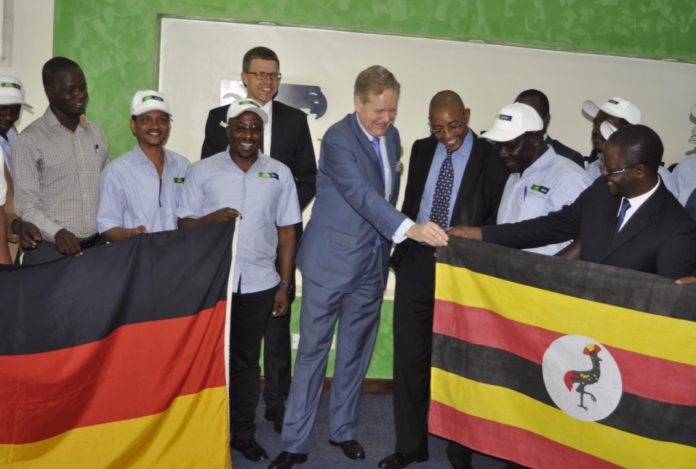
FLASHBACK: KCB SME Business Club members being flagged off for a trip to Germany and Turkey.

KCB Bank Uganda has sponsored thirty local entrepreneurs for an international trip to Germany and Turkey in an effort to support growth of the SME sector in the country.

The bank sent its Business Club members for a 10-day trip that will see the SMEs network with a wider international market as well as provide business linkages for suppliers of goods and services.

Speaking during the flag off, Joram Kiarie, the Managing Director KCB Bank Uganda noted: “At KCB Bank Uganda, we are aware that one of the biggest challenges that our local SMEs face is creating valuable linkages to enhance their businesses, this trip is a step towards facilitating our customers to make these linkages.”

The trip will include visits to construction factories with modern cost saving technology in Germany, firms that sell heavy construction machinery in Ulm, modern health facility installations and medical equipment manufacturing companies, the BMW museum as well as have business-to-business meeting with the Turkish business community to create linkages.

“We are keen to empower and nurture the growth of our home-grown businesses, such business trips are platforms to empower our SMEs as they interact with experts from various sectors” noted Kiarie.

According to statistics, trade volumes between Turkey and Uganda amounted to US$27 million during the first 10 months of 2017. Turkey’s main export products to Uganda are cereals, electronic equipment and rubber while Uganda’s mainly imports machinery and chemical products from Germany.

The Germany Ambassador Dr. Albrecht Conze noted that the trip will help the new generation of entrepreneurs in Uganda to grow their businesses.

“The backbone of German industry is the family businesses, which is the same for Uganda; this is an opportunity for KCB SMEs to learn how to go further, as well as make contacts for opportunities to resell machinery,” Ambassador Conze said.

Charles Ogwel, the Managing Director UMCAT, one of the SMEs benefitting from the trip said: “Germany is known for quality, I hope to improve the quality of the machines in my business, network and make linkages to strengthen my business, I also hope to learn modern ways of doing business.”

The SME sector employs the largest number of people in Uganda and according to Uganda Investment Authority, over 2.5 million people are employed in this sector, where they account for approximately 90% of the entire private sector, generating over 80% of manufactured output.


Stories Continues after ad

Bettinah, the Balemcyaga queen!

One of Bettinah's posts written in broken English

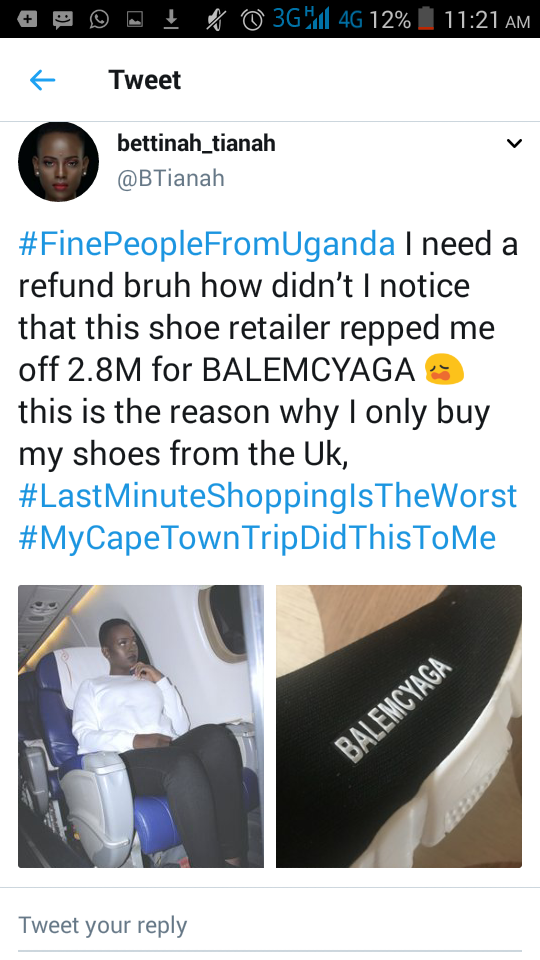
Ugandan socialite Bettinah Nassali was recently on the spot, all for the wrong reasons, when she confidently shared her disappointment over a pair of cheap knock off sneakers that she had been ‘tricked into buying’ during a recent visit to Cape Town.

Indeed, despite the obviously misspelt ‘Balemcyaga’ logo emblazoned on the ‘coveted’ pair of shoes, the socialite parted with the equivalent of a whopping Shs2.8 million in order to get her feet into the Chinese rendition of the original Balenciaga footwear.

The Cavendish University final year student didn’t just stop at posting details of her counterfeit footwear purchase online but also ‘beat the buffalo’ when expressing herself in the English language:  Bettinah typed ‘repped off’ instead of ‘ripped off’, further casting doubt on the credibility of her Alma Mater.

This prompted many to take to social media platforms to express their doubts and discomfiture at the socialite’s brazen attempt at fooling them.

Below are excerpts from the showdown between Bettinah and her fans.

Stories Continues after ad

East Africa best in economic performance – ADB

AfDB-outlook-2018

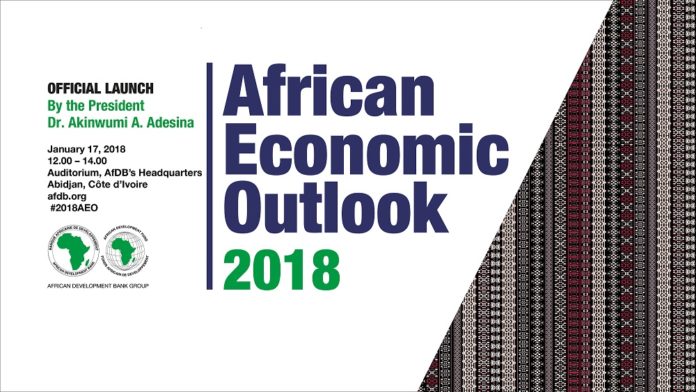
African Development Bank’s Economic Outlook shows decline in regional economies though East Africa emerged the best on the continent.

ADB has expanded its flagship publication, the African Economic Outlook, with five regional reports. The regional economic studies were released in Tunis (North Africa), Abidjan (West and Central Africa), Nairobi (Eastern Africa) and Pretoria (Southern Africa).

“By offering regional approaches for the first time, we want to leverage the Bank’s expertise and give more depth of analysis and relevance to this publication,” said Celestin Monga, Chief Economist and Vice President of the African Development Bank’s Economic Governance and Knowledge Management.

“The integration of specific reports for each region reflects the importance the Bank’s focus on the regional dimensions of development and inclusive growth in Africa,” said Mohamed El Azizi, Director General of the North Africa Region.

East Africa: the best economic performance of the continent

According to Nnena Nwabufo, the Bank’s Deputy Director General for the East Africa Region, the East African Economic Outlook highlights a number of policies that member countries must implement to transform their economies.

East Africa, with thirteen countries, recorded the continent’s best economic performance with a GDP growth rate of 5.9% in 2017 −a rate much higher than the growth recorded by the other regions of the continent, and above the continental average of 3.6%. The good performance of the East African sub region is stimulated by six countries: Ethiopia, Tanzania, Djibouti, Rwanda, Seychelles and Kenya. The outlook remains positive for 2018 and 2019, with growth expected to continue, reaching 5.9% in 2018 and 6.2% in 2019.

North Africa: a positive outlook for 2018 and 2019

North Africa ended 2017 with growth of 4.9 per cent of real GDP, up from 3.3 per cent recorded in 2016. The region’s economic performance is above a 3.6 per cent average for the continent, thanks to higher than expected oil production in Libya and the performance of Morocco, which saw growth rise from 1.2 per cent in 2016 to 4.1 per cent in 2017, on account of increased agricultural productivity. Egypt’s macroeconomic and structural reforms led to a 4 per cent growth in 2017. Overall, growth in the North Africa region was fueled by new high value-added sectors such as electronics and mechanics, as well as private and public consumption. The region’s outlook remains positive for 2018 and 2019, on account of structural reforms. Growth in North Africa is expected to reach 5 per cent and 4.6 per cent respectively in 2018 and 2019.

Southern Africa: economic recovery started, but contrasting growth

Estimated at 1.6 per cent on average in 2017, real GDP growth in Southern Africa is expected to improve to 2 per cent in 2018 and 2.4 per cent in 2019.

Deputy Director General of the Bank for Southern Africa, Josephine Ngure said: “The Southern Africa region has made considerable progress in the fight against poverty and improvements in the quality of life of its inhabitants, through the implementation of policies targeting the acceleration of industrialization and the promotion of growth and job creation.”

However, economic forecasts remain cautious, especially given the very different growth patterns of the region’s economies. The economic “locomotive” of the region, South Africa, shows signs of slow growth, and possibly declining growth, while low-income countries and the economies in transition, such as Madagascar and Mozambique, recorded more important growth.

“High fiscal deficits and rising public debt pose challenges to macroeconomic stability in several southern African countries. Governments should put in place measures to improve the mobilization of domestic resources and funds from the private sector to ensure adequate levels of development spending, stimulate growth and create jobs, especially for young people, “said Stefan Muller, Bank’s Senior Economist for Southern Africa.

West Africa: Progress in a contrasting panorama

After several good years, economic growth in West Africa stagnated at 0.5 per cent in 2016. The decline in the price of raw materials and the unimpressive performance of Nigeria, which alone accounts for about 70 per cent of the sub region’s GDP, were some of the key factors identified as responsible for stagnation. Economic growth in West Africa rebounded to 2.5 per cent in 2017 and is projected to rise to 3.8 per cent in 2018 and 3.9 per cent in 2019. Household consumption and the relative price recovery of certain materials are expected to contribute to this performance.

Marie-Laure Akin-Olugbade, Deputy Director General of the African Development Bank for West Africa, identified job creation, especially for young people as the big challenge for the sub-region.

“The 2018 Regional Economic Outlook for West Africa presents a comprehensive analysis of the economy and the labor market of 15 countries, focusing on macroeconomic stability, employment and poverty of the population living in West Africa. Let us not forget that some of the countries in this sub-region are facing enormous security challenges, “she said.

Central Africa: Better prospects after a modest performance

The Central African region recorded 0.9 per cent real GDP in 2017, the lowest growth rate of the continent, although it represents a relative improvement over growth of 0.1 per cent in 2016. This sub regional performance masks many disparities between countries: relatively good growth for Cameroon and the Central African Republic, and very low growth for Equatorial Guinea and Congo. The economic difficulties in Central Africa are largely due to lower raw material prices, which some countries in the region are heavily dependent on, as well as recurring security threats in others.

The outlook for 2018 and 2019 is more encouraging, fueled by rising world prices for raw materials and domestic demand. According to the Bank’s projections, real GDP growth in Central Africa is expected to reach 2.4 per cent in 2018 and 3 percent in the following year. Other enabling factors include sound macroeconomic management and a more favorable institutional environment.

“With improvements in the economic situations of Congo and Equatorial Guinea, the economic performance of the sub-region is expected to improve in 2018 and 2019. It would be good to include this improvement over time through the diversification of economies of the sub region,” said Racine Kane, Deputy Director General of the African Development Bank for Central Africa.


Stories Continues after ad

AUPL: Express run riot against Soana

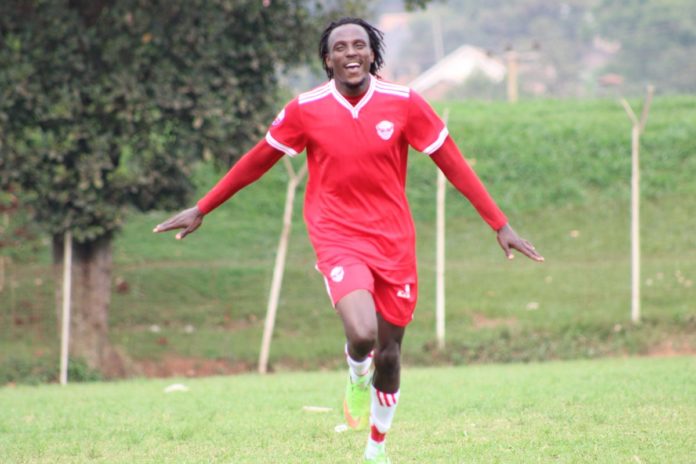
MAN OF THE MATCH: Express FC striker Michael Birungi

Express FC started new life under new manager George ‘Best’ Nsimbe in a battle to survive relegation by thrashing Soana 4-0 in a game played at Mutesa II Stadium, Wankulukuku last evening.

Michael Birungi was the Man of the Match, scoring a brace while Jalilu Zimula and Ayub Kisalita scored the others.

The win moved the Red Eagles from bottom of table to 14th, now on 19 points but ‘Mukwano Gwabangi’ still remain in the relegation zone with 9 league games left to play.

Soana suffered their heaviest defeat of the season, and are now placed 11th with 24 points.

Express visit Vipers SC in the next game at St. Mary’s Stadium on March 31, 2018.

Elsewhere, Bul defeated Police 3-2 in an exciting Azam Uganda Premier League match played in Jinja on Tuesday.

Richard Wandyaka, Douglas Timothy Owori and Faisal Muledho scored for Bul while Albert Mugisha and Ben Ocen netted for the visitors.

Bul remain eighth on 28 points, on level with Police, and are just above them on goal difference.

Bright Stars and Police settled for a goalless draw in Jinja.

Results:

Express 4-0 Soana

Bright Stars FC 0-0 Proline FC

BUL FC 3-2 Police FC


Fixtures today (4:30pm):

SC Villa Vs Masavu – Masaka

Simba Vs Onduparaka – Bombo

URA Vs Vipers SC- Namboole

Maroons Vs Kirinya Jinja SSS – Luzira

Stories Continues after ad