Stanbic Bank
Stanbic Bank
24.8 C
Kampala
Stanbic Bank
Stanbic Bank
Home Blog Page 1626

Reformed former inmates need assistance – Prisons

IMPLORED PARTNERS: Assistant Commissioner of Prisons Frank Baine,

Organisations willing to offer reintegration and reformation services to discharged prisoners have been encouraged to approach the Uganda Prisons Service for guidance and colloboration.

The call was made by Assistant Commissioner of Prisons Frank Baine, while officiating at the graduation of former death row convict Susan Kigula, who graduated with a law degree from the University of London by correspondence.

Recently, Baine said, Uganda Prisons started collaborating with African Prisons Project (APP), TEDx Luzira and the European Union to offer rehabilitation services, skilling, counselling to inmates in a bid to help the reformation process after conviction.

“That is why Uganda Prisons opened its doors to NGOs such as African Prisons Project to unlock justice and rehabilitating inmates through awareness programs,” ACP Baine, the UPS spokesperson, said.

According to Baine, every year the prison receives over 1000 inmates convicted from various courts of law but depending on their sentences, few are released each year.

And speaking to Eagle Online, Baine noted the partnership is beneficial to the rehabilitation of inmates.  “Despite being in prison, the inmates have not been deprived off the rights to learn, with schools established within the premises of the facility and collaboration with the University of London. Inmates have managed to attend classes and many have graduated in various courses including law,” Baine said.

He added: “The justice system runs so fast to punish the crime and forgets the background of the crime and that is why crime will live as long as humanity. All of us, judges and researchers must step up for the causes of crime too be considered in courts of law.”

Meanwhile, in her presentation Kigula, who led the petition that led to halting of death row by hanging in 2009, said prisoners can change if given an opportunity. She also noted that at times prisoners are mistakenly sentenced.

Susan Kigula was in 2002 sentenced to death by hanging after court proved that she murdered her husband.

Her conviction was commuted and she was given a 20-year sentence but later given a remission and released in January 2016 for exhibiting good behavior.

According to Baine, due to the good rehabilitation services, Luzira Prison has for the past three years been ranked number one in Africa and fourth in the whole world.


Stories Continues after ad

NSSF Friends with Benefits competition won by commercial farmer

SMILES OF A WINNER: Hannington Nyakivu receiving the Shs30 million dummy cheque from NSSF Managing Director Richard Byarugaba

Mukono-based commercial farmer Hannington Nkayivu has emerged winner of the National Social Security Fund (NSSF) Friends with Benefits Season 2 competition, walking away with shs30million.

This was announced during the competition’s grand finale held at Kampala Serena Hotel on Thursday, March 22, 2018.

The NSSF Friends with Benefits competition is a financial literacy campaign aimed at promoting a savings culture in Uganda, and profiles NSSF beneficiaries who received their savings and used them to transform their lives, their family or their community.

Nkayivu, who won 35.40% of the total votes, wants to complete construction of his rental houses and hopes  to make at least Shs1.5 million monthly in rent collections.

He says this now will be his alternative retirement package to replace his NSSF savings now that he has already withdrawn all of his pension.

Judith Sheenah Komuhangi receives her dummy cheque


The first runner-up was Judith Sheenah Komuhangi, a cancer survivor turned cancer early testing and treatment activist, who won shs15m and hopes to use the prize money to boost her medi-tourism start up.

Her company helps other people with life threatening illnesses to seek affordable medical care abroad especially in India where she received cancer treatment after cashing out her NSSF benefits.

James Ajal, second-runner up, gets his dummy cheque

James Ajal emerged the second runner up. He walked away with a shs10 million cash prize that he says will help him expand his fruit processing business, expand his livestock business to separate the diary business from the meat/beef business.


The other finalists included; Nabendeh Wamoto, Naikumi Mary, Akula Ssubi, John Byabashaija, Alice Arinaitwe and Boniventure Rwakira.

The Friends with Benefits initiative was started in 2016 to promote a savings and investments culture among Ugandans who statistics have indicated have a bad savings culture or lack good financial discipline. For example, it was established that about 80% of people who take out their NSSF savings have nothing to show for it after just one year because of poor investment decisions or no investment at all.

“The Friends with Benefits show has been a success for the Fund and for the public. Since the show started, we have realized a spike in the number of voluntary savers with NSSF registering over 5,800 individual savers contributing about 5.8 billion shillings in collections,” said NSSF MD Richard Byarugaba adding that as the show picks even more momentum, we shall see more growth in the number of voluntary savers with NSSF and a better savings culture overall for the general public.

The show format saw hundreds of contestants submit stories of how they used their NSSF savings, after which they were vetted and reduced to 16 finalists whose stories were aired on TV, standing a chance to win the 30 million grand prize.

The final 9 contestants were voted by both the public and the show’s judges with the public vote carrying 70% in weight and the judges’ decision accounting for 30%.


Stories Continues after ad

Airtel injects Shs11m in ‘goats for education’ campaign for girls in Karamoja

Pamela Nyamutoka Katooro, IIRR Uganda Country Director, Chairty Bukenya, and Airtel boss V.G Somasekhar

A 2010 report from the United Nations Educational, Scientific and Cultural Organisation (UNESCO) dubbed, ‘School Dropout: Patterns, Causes, Changes and Policies’ indicates that among the major causes of dropping out of school is ‘hidden costs’.

Another report released by Uganda Bureau of Statistics (UBOS) in 2014 after the census indicated that there are 23,154 girls aged 6 to 12 in Moroto, but only 4,786 of them (20.7%) are currently attending school.

From January 2014 to April 2015, according to their head teachers, 445 girls dropped out of school in Moroto and 752 girls dropped out in Kotido and this was attributed to poverty as data collected from 20 schools showed that the main barrier to girls’ education is limited finances, and that struggling parents see their daughters as a vital source of income.

But this could change following the release of Airtel funds towards girl education in Napak and Moroto.

Airtel Uganda’s partnership with the International Institute of Rural Reconstruction (IIRR) through which the two organisations are fundraising to keep young girls in the Karamoja region in school was announced at the former’s head offices in Kampala.

As part of the partnership, the telecom company has handed over Shs11 million for the purchase of 100 goats that will be handed over to girls in Moroto and Napak districts.

“Since goats mature and reproduce very fast, each girl will be handed two goats from which she will obtain income to pay school fees and purchase scholastic material. Upon reproduction, she will be required to give the first two kids to another girl for the process to continue and benefit other girls within the community,” a release states in part.

Speaking during the handover, Airtel Uganda Managing Director Mr. V.G Somasekhar pledged Airtel Uganda’s support to ensure that school-going children in local disadvantaged communities have access to quality education, which will benefit them, their families and their communities.

“Girl child education is not a priority in many local communities across Uganda. At Airtel Uganda, we believe that it is critical for the empowerment of women and are therefore committed to ensuring that girls in the most disadvantaged communities get equal opportunities to access quality education and realize their potential, he noted.”

On why they had chosen to donate goats, Somasekhar noted that the initiative is not only supportive of ensuring that the girls stay in school but also ensures economic empowerment that is much needed to bridge the socioeconomic gaps witnessed across the country.

According to United Nations’ Girls Education Initiative statistics, literacy rates for young females still lag behind that of young boys by five percent, and nearly half of all girls in Uganda are married before the age of 18. In Northern Uganda Karamoja region, girls take on women roles faster because they cannot afford to go to or stay in school due to economic challenges.

Meanwhile, Pamela Nyamutoka Katooro, the IIRR Uganda Country Director, appreciated the partnership with Airtel and stated that this would go a long way in improving education outcomes for disadvantaged girls especially in pastoral communities.

“Since 2015, IIRRs Goats4Girls model has successfully been used to support over 2000 girls to enroll and stay in school.  The initiative inhibits the practice of forced early marriage and empowers girls with not only educational benefits but also economic independence that enhances their self-worth, dignity and confidence, she commented.

For over five years now, Airtel Uganda, as part of their Corporate Social Responsibility efforts, has been working closely with the Ministry of Education and other partners to ensure increased access to education across Uganda.

Through the Adopt-A-School program, Airtel Uganda has refurbished old classroom blocks, built and stocked libraries, provided internet access, built sanitation facilities and counselled students in St. Ponsiano Primary Kyamula School in Makindye, Sseke Primary School in Lwengo District, Ndeeba Church of Uganda Primary School in Kayunga District and Nanfugaki Primary School in Iganga District.


Stories Continues after ad

Gen Sejusa fact-checks Museveni on Commonwealth Games tweet

President Yoweri Museveni handing over the national flag to the Australia-bound Commonwealth Games team.

Controversial General David Sejusa has broken a three-year ‘loud silence’ and challenged President Yoweri Museveni on facts concerning the latter’s tweet about the Commonwealth Games.

Gen Sejusa’s contention is in respect to the President’s tweet written while flagging off the Ugandan team for the 21st Commonwealth Games taking place in Queensland, Australia.

“I started following the Commonwealth Games in 1954 hosted in the city of Melbourne. I was in primary school but I remember seeing the beautiful pictures coming from the Games. One of the earliest pictures was of a higher jumper called Patrick Etolu, who was a higher jumper,” the President wrote.

However, Gen. Sejusa says that by 1954 it was impossible for Museveni to have started following the Commonwealth Games because by then there was no platform through which this could have happened.

In his response to the President’s tweet, Gen. Sejusa further notes that in Uganda radio broadcasting started in 1952 while television broadcasting started in 1963.

#firstradio broadcasting in Uganda started 1952 while Television broadcasting began 1963. Even then, I imagine in Governor’s House Entebbe! 1st newspaper, Munno (Catholic 1911) reached Nyamitanga Parish, Mbarara 1956! Now TVs or newspapers in Kyamate in 1954?” Gen Sejusa tweeted ending with a laughter emoji.

Their followers were quick to get a piece of the exchange with many seeming to be in support of Sejusa, whose tweet comes almost three years of silence.

Ms Alice Ruhindi, who is also former Premier Amama Mbabazi’s sister-in-law said that in 1954, President Museveni was still living deep in the village where radio ownership was for a privileged few.

‘The problem with telling lies is that one gets caught out. The lucky ones listened to radio. Only headmaster, the vicar & Gombolola Chief had radio. Which TV did you watch? Newspapers?’ wonders Ms. Ruhindi.

The Commonwealth Games is an international multi-sport event involving athletes from the Commonwealth of Nations led by Great Britain.

The event was first held in 1930, and has taken place every four years since then, with the exception of 1942 and 1946 Games which were cancelled due to the Second World War.

President Museveni chats with leaders of the Commonwealth Games team that travelled to Queensland, Australia. Looking on is First lady and Education and Sports Minister Janet Museveni.

Meanwhile, the President wished the Ugandan team to Queensland good luck and promised to slaughter the athletes some bulls if they perform well.

He was also impressed with the planning that was done by the team leaders to ensure that team travels on time.

“I am glad there’s better planning this time because issues of logistics were handled early, the President said, and emphasized that sportsmanship is a talent that leads to recognition and fame.

“You have rare talents which you should use and guard jealously because it also brings recognition to your country and promotes tourism,” he encouraged the team members.

He said some sports, like netball and rugby need cooperation the sports men and women to work as a team to excel.

He noted that these are only possible if the atheletes are disciplined, adding that if they drink alcohol and do umalaya (prostitution), they would fail.

He also advised them on strategy, saying for if one is  running the middle and long races, they must have a strategy, especially  knowing  ‘how to conserve energy, where to go slow and where to sprint’.


Stories Continues after ad

Lawyers, Bankers to set up joint dispute resolution center

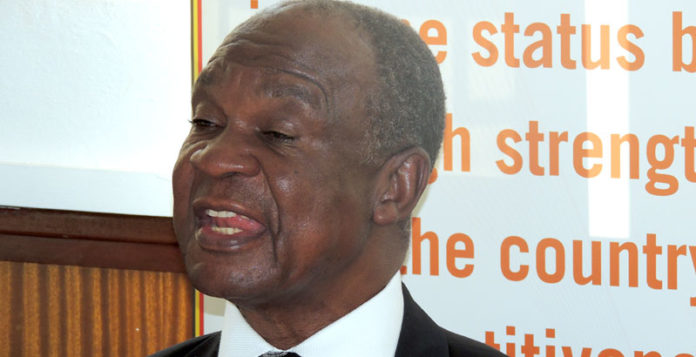
Dr. Louis Kasekende.

The Uganda Law Society (ULS) and the Uganda Bankers Association (UBA) are planning to set up an independent center for dispute arbitration.

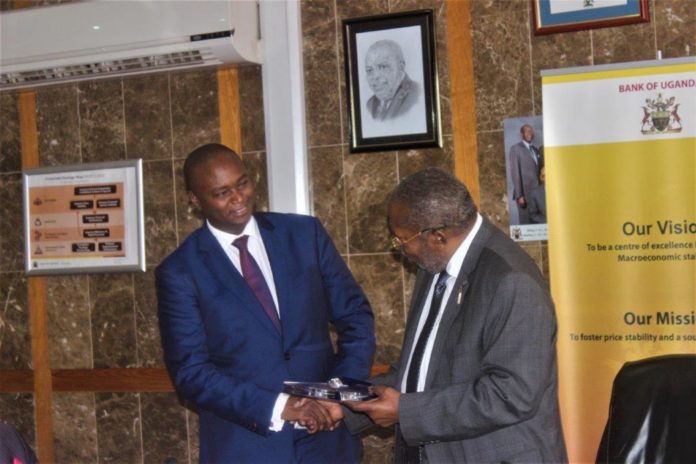
The plan was formally launched today as an Alternative Dispute Resolution Framework for the Banking and Finance Sector by the Deputy Governor of the Bank of Uganda, Dr. Louis Kasekende.

Meeting at Golden Tulip Hotel, the lawyers and bankers agreed that the Arbitration Center will be administered by a board of trustees tasked with steering the center towards a sustainable future.

The Center will have its own well detailed arbitration and mediation rules that will be referenced to when dealing with both domestic and international arbitration cases.

It will also offer adjudication services for the construction and health sectors. In addition, it will also complement the BOU’s newly setup Consumer Empowerment and Complaints Section.

“As a mandate of the center; to promote and maintain a standard of skilled arbitrators in Uganda, the Uganda Law Society Arbitration Center will offer an unrivalled training experience space.”

The proposed Center will source funding from; administration costs, annual nominal subscriptions fees, support from development partners and levying a percentage of the award upon successful arbitration proceedings.

The Uganda Law Society has been tasked to set up its Arbitration Center in the next three months.

Stories Continues after ad

Nalufenya detention facility not closed – Police

Patrick Onyanga, police Spokesperson for Kampala Metropolitan said the police will hunt the criminals down.

Police has refuted media reports that the Inspector General of Police (IGP) Okoth Ochola ordered for immediate closure of the notorious Nalufenya police detention centre.

Deputy Police Spokesperson Patrick Onyango, the police advisory committee discussed about facility near the Source of the Nile in Jinja on Wednesday, but made no conclusive decision.

‘The IGP normally writes his orders and directives, therefore this was not made, and in case the decision is taken then police will communicate via normal procedures,’ indicates a release by Superintendent of Police (SP) Onyango.

The infamous Nalufenya detention facility is known for torture, its most prominent victim being the Kamwenge Mayor Godfrey Byamukama who was arrested in relation to the assassination of the Assistant Inspector General of Police (AIGP) Andrew Felix Kaweesi on March 17, 2017.

Also, several other prominent people have been detained in Nalufenya including opposition icon Dr. Kizza Besigye and Rwenzururu King Charles Wesley Mumbere and most recent police officer, Assistant Superintendent of Police (ASP) Muhammad Kirumira.

Allied Democratic Forces (ADF) commander Jamil Mukulu is also incarcerated at the detention facility.


Stories Continues after ad

Law firm Sebalu, Lule replaces Mpanga and Masembe at BoU

TAKEOVER: Bank of Uganda bullion vans ferry documents from Crane Bank on Kampala Road.

Bank of Uganda has hired Sebalu, Lule and Company Advocates as its new external attorneys, replacing lawyers David Mpanga and Timothy Masembe of AF Mpanga-Bowmans and MMAKS, respectively.

Sources at Bank of Uganda said Lule, Sebalu and Company Advocates were handed the multi-billion Shilling contract yesterday and immediately assumed the duties of representing central bank.

The replacement of the two law firms, the sources further said, was effected by BoU because the two lawyers reportedly ‘leaked’ confidential documents detailing account particulars of the former clients of Crane Bank, for which they had previously acted as counsel.

This, the sources said, was contrary to the ‘confidential clause’ that governs the banking sector and is said to have irked Crane Bank shareholder Mr. Sudhir Ruparelia to the point that he was considering filing another case against BoU and the two law firms and lawyers.

At the time the BoU had paid the two law firms over Shs4 billion in litigation fees’ settlements.

The saga surrounding the closure of Crane Bank is not without incident, and has seen terse exchanges between the parties involved including one that has pitted the BoU Governor Prof. Emmanuel Tumusiime Mutebile and the Inspector General of Government (IGG), in respect to the retirement of former Executive Director of Bank Supervision Justine Bagyenda.

It is pertinent to recall that earlier, in a Notice of Motion filed in court Mr. Ruparelia had said that by representing the BoU and Crane Bank, the two law firms were acting in conflict of interest.

In the ensuing litigation the Commercial Court ruled that the two ‘conflicted’ lawyers, Mpanga and Masembe Kanyerezi, were potential witnesses in the case between Bank of Uganda and Crane Bank Limited.

‘A declaration that the lawyers in the 1st and 2nd Respondents are potential witnesses in HCCS 493 of 2017 and are barred from representing the 3rd and 4th Respondents in the said suit’, the Notice of Motion added.

Sebalu, Lule and Company Advocates is a leading Ugandan business law firm founded in 1980 by lawyers Paulo Sebalu (RIP) and Godfrey Lule.


Stories Continues after ad

Tightening security in Kampala: Govt seeks Shs60b to procure CCTV cameras

Government wants to procure CCTV cameras

Finance State Minister David Bahati has tabled a Shs910b supplementary expenditure budget before Parliament, including among others a Shs60b request to procure CCTV cameras to help the police track criminals.

The move comes in the wake of several murders across the country especially in the capital Kampala, which prompted President Museveni to direct that the spy cameras be installed at all junctions in the city.

But in Parliament yesterday, Butambala DP MP Muhammad Kivumbi tasked minister Bahati to disclose the source of the funds for the supplementary budget.

“The law requires that they show us the source of funding before they proceed,” he said fearing that the ministry might seek to cut the money meant for other budgeted votes.

In response Minister Bahati said government intends to obtain the money through domestic borrowing, prompting the MPs to refer him to the Committee on National Economy for clearance as whether the domestic loan request will be approved.

According to Bahati, already Shs41b of the supplementary budget has been spent but is now before parliament for retrospective approval as provided in Section 25(1) of the Public Finance Management Act which allows the central government to spend up to 3 per cent of the total approved budget, and table a request for retrospective approval within four months.

Bahati also noted that the balance of Shs481b is above the 3 percent provision and therefore requires prior approval by Parliament.

“The Ministry appears to have surpassed the 3 per cent request and this needs prior approval by Parliament,” queried Amos Lugoloobi, the Committee Chairperson.

Meanwhile, Bahati broke down how the supplementary request will be utilized, saying part of the money will finance a Shs49b wage shortfall in ministries, andShs20b will purchase of shares in Atiak Sugar Factory.

Other expenditures are: Shs10b to Uganda Prisons Service for food; Shs250m for recruitment and validation of health workers and Shs190b for the Ministry of Water and Environment’s counterpart funding of farm income enhancement and forestry conservation.

The Ministry of Trade needs Shs9.2b to settle outstanding Common Market for Eastern and Southern Africa ahead of its May summit in Bujumbura, while Shs15.38b is to cater for counterpart funding to the grants for the elderly under Ministry of Gender, Labour and Social Development.

The NAADS Secretariat also needs Shs80b to cater for the procurement of hoes, and Shs1b is to finance the procurement of an online registration system for the Uganda Registration Services Bureau.

The High Commission in Kigali requires Shs377m to cater for rent and mission staff salaries.
The minister said the Finance Ministry itself requires Shs7.7b for operations and investment promotion.

Some will go to compensations in the lands ministry and wages in other ministries.
 

Stories Continues after ad

Uganda’s debt rising – IMF report

The Ntungamo-Mirama Hills road in western Uganda. Government debt has increased to fund such projects

Uganda’s debt has risen significantly, reflecting a renewed investment push financed through increased commercial borrowing, including from domestic borrowing, a new IMF report shows.

The report which does not mention the current debt says Uganda, like neighbouring Kenya, has not reached the debt burden indicators that show elevated risk, which means that Uganda can still borrow to finance projects.

But Government says borrowing will not exceed 41.7 percent nominal debt to GDP, and according to the Budget Speech for the 2017/18 financial year  read by the finance Minister Matia Kasaija, the country’s external and domestic debt has shot up to Shs28 trillion, equivalent to 33.8 per cent of the country’s GDP. The danger level of borrowing is 50 per cent of GDP.

However, according to the report that looks at economic developments and prospects among the world’s low-income countries, borrowing should be for productive projects.

On the other hand, the report says government debt in some of the world’s poorest countries is rising to risky levels. The report also focuses on the shift in the composition of creditors such as BRICS. It urges official creditors led by the World Bank and IMF to work together to find ways to ensure efficient coordination in the event of future debt restructurings for poor countries.

Analysis of the report shows that the drivers of the debt rise vary across countries. They include; shocks such as the sharp drop in commodity prices of 2014, which hit budget revenues in commodity exporters like Uganda, and natural disasters including the Ebola epidemic in West Africa.

Also civil conflict in counties like Somalia, Burundi, as well as high levels of public spending that were not linked to financing productive public investment, are part of the drivers. “Ample global liquidity played an important role in allowing for the rise of debt in low-income countries, by making it easier to borrow,” the report says.

Government debt is rising

“Budget deficits have been rising in most low-income countries during this decade where 70 per cent of low-income countries had higher government deficits in 2017 than during 2010-14. For commodity exporters, falling revenues contributed to higher deficits, whereas higher spending was the more important factor in other countries,” the report says.

The report says the current build-up of public debt comes in the wake of the low debt levels and robust growth that followed the international community’s actions to write off most of the debt of highly indebted poor countries—the Heavily Indebted Poor Countries (HIPC) initiative and Multilateral Debt Relief Initiative , which left countries with more resources to spend on investment and education.

“Higher public deficits and debt levels are not necessarily undesirable. When countries borrow to pay for infrastructure investment, that can boost long-term growth, which in turn generates revenues to service the higher debt,” it says.

Threat of debt crises is soaring

Despite the rise in debt, the report says more than half of low-income countries are still at low or ‘moderate’ risk of defaulting on their debt service obligations. “However, the share of countries at elevated risk of debt distress, for example, Ghana, Lao P.D.R., and Mauritania, … already unable to service their debt fully has almost doubled to 40 per cent since 2013,” it says.

The IMF anticipates some stabilization of the debt build-up in the coming years but says the forecast is predicated in part on countries undertaking fiscal adjustment and carrying out ambitious economic reform programs to deliver stronger economic performance. “It will be very important that countries implement these reforms—otherwise the debt build-up is likely to continue,” the report says.

Borrowers have moved away from traditional official creditors such as multilateral institutions and members of the Paris Club towards non-Paris Club official bilateral creditors, sovereign bond issues, other foreign commercial lenders, and domestic sources, mainly banks, the report says.

But the new forms of private credit often come at shorter maturities and higher interest rates, yielding larger debt service burdens for the borrower countries and higher rollover risks when these debts mature, the report says. It adds: “These creditors, unlike the Paris Club members, do not have ready mechanisms for coordination with other creditors, which is likely to make any needed debt resolution more difficult.”

Several countries like Chad, Mozambique and the Republic of Congo have already fallen into debt distress, with some seeking to restructure their debt.

To help contain debt vulnerabilities in low-income countries, borrower countries, lenders, and the international institutions should all work together, the report says.


Stories Continues after ad

Of Uganda, refugees and donors: a complex ‘troika’

TO BE VERIFIED: Refugees at the Bidibidi Reception Centre in Yumbe, Northern Uganda.

It’s clear the 285,000 people in this sprawling compound known as the second largest refugee camp in the world desperately need aid.

These residents who fled civil wars in South Sudan and the Democratic Republic of Congo and other conflicts now live in tents and ramshackle housing in northern Uganda.

Yet just a month ago, the United States, Britain and other European nations threatened to withhold funding and humanitarian aid from Bidi Bidi, according to the United Nations High Commissioner for Refugees (UNHCR).

At issue: A corruption scandal that has enraged the U.N. and its biggest donors.

Government officials overseeing the camp are accused of vastly inflating the number of refugees they must feed, clothe and shelter. In February, U.N. workers inspected a sector of the camp that Ugandan officials had reported housed 26,000 refugees. The U.N. found only 7,000 people.

“There’s concern that the numbers are not accurate,” UNHCR spokeswoman Teresa Ongalo said last month in Uganda’s capital, Kampala. “What we have received from donors is an indication that until we’re able to verify the numbers, they will withhold funding.”

Afraid of losing more funds, the Ugandan government, with support from the UNHCR and the World Food Program, launched a large-scale biometric data system to verify the identities of refugees in the country.

The system, slated to be completed in September, will collect fingerprints and eye scans of more than 1 million refugees, according to the UNHCR. Refugees will then receive ration cards. Similar systems have already cataloged 4.4 million refugees in 48 other countries, the UNHCR said.

“This is important to us to increase the accountability and transparency not only to the government and UNHCR and partners, but also the donors who are very key in our operation,” said Douglas Asiimwe, Uganda’s refugee protection officer.

This East African nation has received worldwide attention and praise for hosting more than 1.4 million refugees in 14 camps. News about the corruption scandal sparked outrage throughout Uganda and here in Bidi Bidi.

“We are not receiving enough food because some officials are eating money meant for refugees,” said Charles Lujang, a refugee representative at the camp. “They are using our name to enrich themselves. They should be arrested and jailed.”

Sitting outside her tent, Martha Antong, 40, was angry that officials could steal money intended for refugees.

“I’m suffering with my children because of them,” said Antong, a mother of four who fled South Sudan in July. “Many of us will die of hunger due to lack of food as they enrich themselves using the money meant for us.”

The Ugandan government has suspended four camp officials pending an investigation. Investigators are determining whether funding, food and other relief items were sold, used for bribes or involved in trafficking refugee girls.

Ugandan President Yoweri Museveni said he would severely punish anyone found guilty.

“The ones who are stealing refugee money will go to jail,” said Museveni, who has ruled this landlocked nation for more than three decades. “They bring shame to Uganda. To steal what is meant for refugees, what is meant for desperate people, these thieves they will pay.”

Uganda has been noted for being a generous host, giving those granted refugee status plots of land to cultivate, settle and integrate with local communities.

Atong, meanwhile, wanted justice. “Those who are causing these problems should be hanged because they are playing with people’s lives.”


Stories Continues after ad