Stanbic Bank
Stanbic Bank
18.4 C
Kampala
Stanbic Bank
Stanbic Bank
Home Blog Page 1628

Sumbusa singer Barbie Jay arrested for ‘having sex’ in car

IN JAIL: SINGER BARBIE JAY

Last week began on a good note for singer Julius Buyinza popularly known as Barbie Jay when his longtime girlfriend, Winnie Aliba delivered a bouncing baby boy Monday morning.

But in direct contrast, this week has kicked off on a bad note.

This is after the ‘Sumbusa’ hit maker was arrested Saturday in Mengo for allegedly having sex in a car.

Speaking to media, police says that the arrest followed a tip off from concerned citizens who were worried for the occupants of the car parked by the roadside in Mengo near FUFA House, which was ‘shaking like the area was experiencing an earthquake’.

On arrival at the scene, it was found that both occupants were half naked and one of them was easily identified as Barbie Jay.

He was quick to defend their dress code that it was too hot inside thus forcing them to undress as they waited for friends who were to meet them at the spot. Police insisted that he goes with them to record a statement, a request he was hesitant to oblige with but following pressure, the couple was taken to Lubaga Police Station and a case of ‘public nuisance’ was opened up against them.

It’s registered on case File Number – SD/REF;08/10/03/2018.

Barbi Jay is a musician behind songs; Bwerere, Wire, Sumbusa, Kubilowozo, Emergency and Chocolate Girl among others. He is also the founder of Reverb Studio and Barbi Jay petroleum jelly, soap and shampoo.


Stories Continues after ad

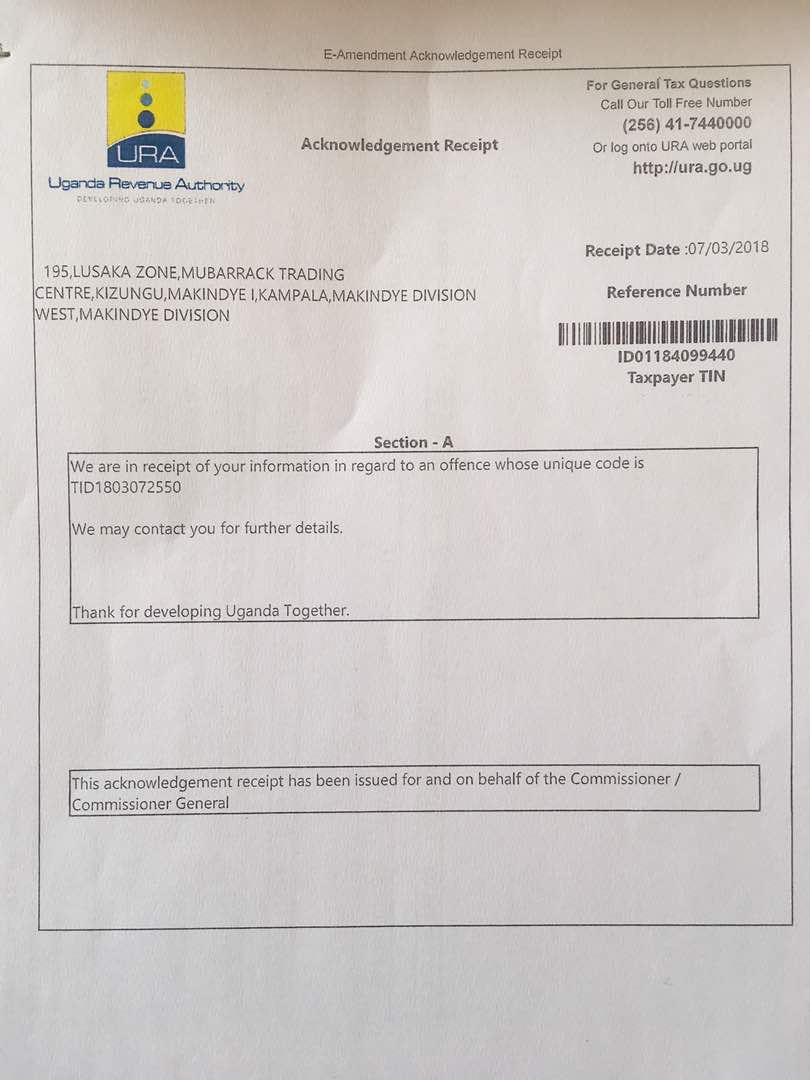
URA starts investigations into Bagyenda over tax evasion as she is kicked out of African banking

Embattled former Executive Director in charge of Supervision at Bank of Uganda Justine Bagyenda.

Uganda Revenue Authority has started investigations into allegations that former Executive Director in charge of Supervision at Bank of Uganda, Justine Bagyenda had evaded paying income tax on her properties.
According to leaked documents,Bagyenda is said to have several houses and plots of land in posh suburbs of Kampala and fat accounts in several banks.
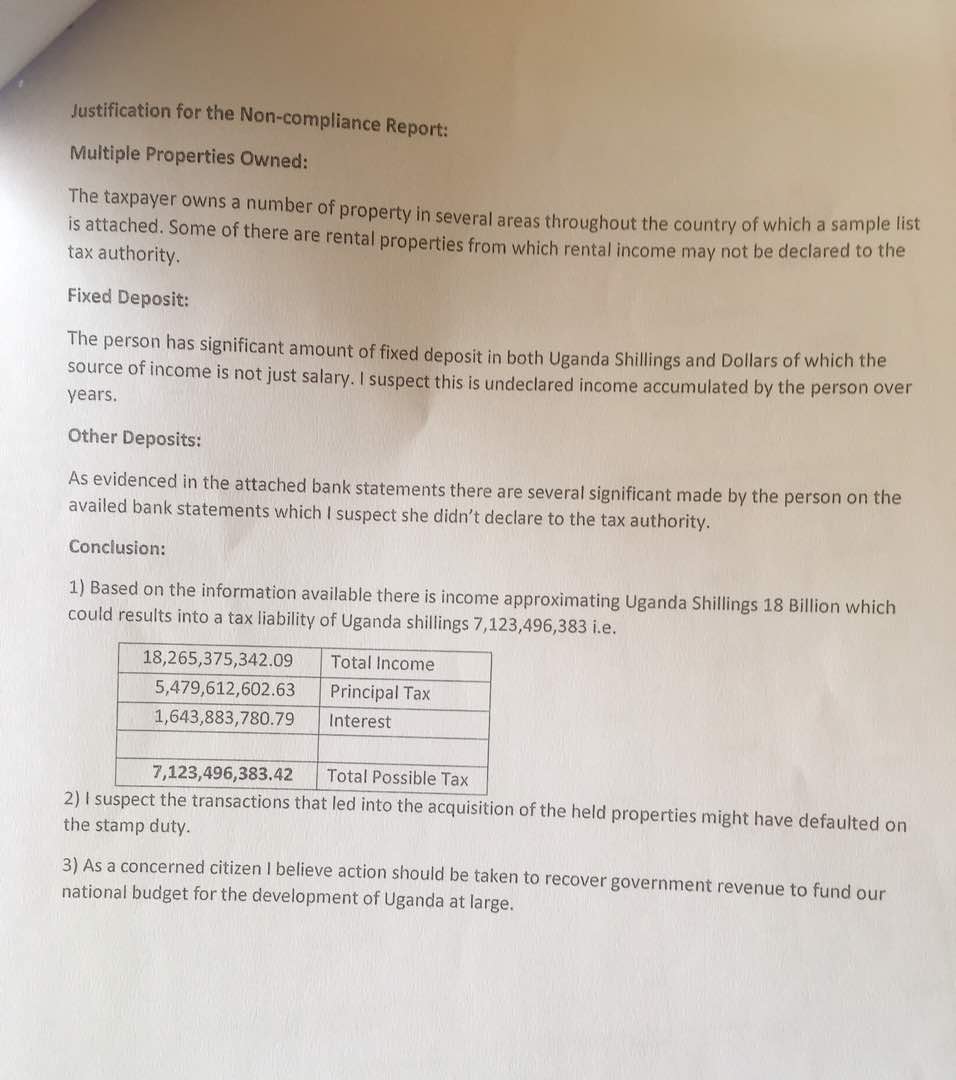
URA has released a non-compliance report that indicates that her tax accountabilities could be Shs7 billion.
“The taxpayer owns a number of property in several areas throughout the country of which a sample list is attached. Some of them are rental properties from which rental income may not be declared to the tax authority. The person has significant amount of fixed deposit in both Uganda Shillings and Dollars of which the source of income is not just salary. I suspect this is under declared income accumulated by the person over years.” The report reads.

URA says based on the information available there is income approximating to Shs18 billion which could result into a tax liability of Shs7.123, 496.
Meanwhile as URA starts probe, Bagyenda has been kicked out of the prestigious African banking committee of central banks on the continent. And by the time of posting this article, she was on plane to South Africa to handover the chairpersonship of the committee. She can no longer remain a member due to her sacking from BoU.
Bagyenda who is refusing to leave office- is not a poor woman. She has a bank balance of Shs19, 302441,183, details of three bank accounts Eagle Online has so far seen reveal. She made all that money in just six years from 2013 to this year.

Well, she was until recently, an Executive Director in Charge of Supervision in an institution where money makes the first stop before the hoi polloi who under the usually hot sun of Uganda get a drop of it. At Bank of Uganda, Ms Bagyenda’s role was to supervise commercial banks to ensure they kept true to government’s regulations and all.

Diamond Trust Bank (DTB) Uganda Limited has apologized to Bagyenda over her leaked bank details.Last week, we published a series of stories detailing the depths of Ms Bagyenda’s bank accounts she has with the bank, including one about how she has a whopping Shs20b sitting on two different accounts.
The stories prompted the bank to investigate the source of information in the bank, and the investigation, reportedly led them to one of their staff who, the Bank leadership claims, was ‘compromised’ and actively participated in leaking account details of their client.

Stories Continues after ad

Ugandan writer wins life-changing Shs600m book prize

Jennifer Nansubuga Makumbi

A Ugandan author based in Manchester whose debut novel was initially rejected by British publishers has won one of the world’s richest literary prizes.
Jennifer Nansubuga Makumbi – who’s from Uganda and moved to the UK 17 years ago – has won one of the Windham Campbell Prizes from Yale University in the US.
She will receive $165,000 (£119,000). Approximately about Shs600 million “I haven’t been earning for a long, long time,” she says.
“I really put everything into writing. So for this to happen is unbelievable.”
The prize money is more than double the amount that the Booker Prize winner gets, and organisers say it’s the richest award dedicated to literature after the Nobel Prize.
Makumbi is one of eight writers to receive Windham Campbell Prizes this year spanning fiction, non-fiction, drama and poetry – and is the only winner to have published just one full-length work.
Two other British writers are also on the list, both for non-fiction – Sarah Bakewelland Olivia Laing.
‘Too African’
The prizes were created by writer Donald Windham and also carry the name of his partner Sandy M Campbell. They were first awarded in 2013 to “provide writers with the opportunity to focus on their work independent of financial concerns”.
Makumbi said news of the award came out of the blue. “It’s American, and normally it’s people who have got so many books [behind them],” she said. “So I’m surprised how I was one of them.”
Makumbi’s debut novel Kintu was first published in Kenya four years ago after British publishers rejected it for being “too African”. It was finally released in the UK this January.
The author said British publishers and readers like to have something they can relate to – be it Western characters or familiar settings and storylines – if they’re reading about Africa.
But she describes Kintu as “proper, proper Africa”.
The book conjures myths and legends to tell the story of a Ugandan family who believe they have been cursed over 250 years.
“I had really locked Europe out,” Makumbi says. “But it was a little bit too much – the language, the way I wrote it – they [Brits] were not used to that kind of writing. But they are beginning now to open up I think.
“Readers are realising, OK, if I want to explore Africa I’d rather be told from an African point of view rather than being told things that I’m expected to want to know.”
‘It’s about getting a paycheque’
Makumbi was a high school teacher before moving to the UK to pursue her dream of a writing career. She began by studying creative writing in Manchester, then wrote Kintu while doing a PhD in Lancaster.
The Windham Campbell Prize will help spread the word about the book – but for Makumbi, for now at least, the prize money will be the thing that changes her life.
“I would like to say it’s more about getting to be known and whatever, but mainly it’s about getting a paycheque,” she admits.
“It’s mainly about [doing] ordinary things that other people do that have a job. I have a partner but he’s not earning much and I’ve not been really pulling my weight.
“I’ve just been taking and taking, and we are a working class family, so it’s huge. And then, of course, now I can go and do research in different countries for my next project.”
‘Shocked’ by British life
She didn’t have to travel far to research a short story collection that will come out next January. It’s title is Love Made in Manchester.
“I write the stories as a way of writing back to Ugandans, informing them what happens to us,” she says. “I’m telling them, ‘You want to come to Britain? Hang on a minute. First read my story.'”
So what impression will Ugandans get of Britain if they do?
“It’s not the world that they’ve been told it is. When you’re in Uganda, Britain is the London Eye, Buckingham Palace, The Savoy, The Ritz – because this is how Britain markets itself.
“You never see the working class. That is what takes you by surprise. It’s just shocking.
“You come here and see the working class and you’re like, I should have paid attention to Dickens!”

Stories Continues after ad

Parliament cordoned off for Museveni film production

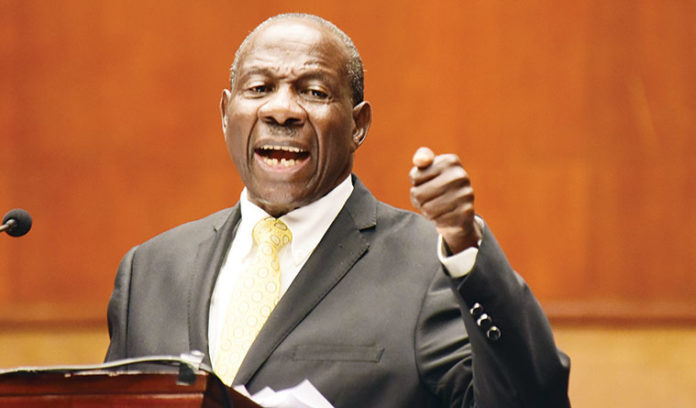
Director of Communication at Parliament, Chris Obore.

Roads leading to and around the parliamentary premises have been on cordoned off to the public for three days due to a film about President Yoweri Museveni’s struggle that is being produced.

The film, ‘27 Guns’ is being shot by a local production company, ‘Isaiah 60’, that is jointly owned by First Daughter Natasha Karugire, and her cousin sister Esteri Akandwanaho, a daughter to General Salim Saleh, President Museveni’s brother.

Isaiah 60 was recently launched at Kololo  by Prime Minister Dr Ruhakana Rugunda and, according to a statement, the company’s two partners Karugire and Akandwanaho were driven by a desire to take part in the unfolding African narrative and thus identity.

Meanwhile, the Director Communications and Public Affairs Chris Obore, said Isaiah 60 has sought permission from relevant authorities including police and Kampala City Council Authority to carry out their activities at Parliament.

He says during the three-day period, there will be increased movement of people along roads near Parliament, coupled with presences of actors in military fatigue and equipment.

The Parliamentary publicist further warns that here will also be stimulus gun sounds as the film crew and actors shoot the film.

“The general public is advised to avoid the roads around parliament as they will be sealed off to any traffic and also remain calm as there is no cause of alarm,” warns Obore.

He explains that the activities taking place at Parliament are entirely meant to facilitate the shooting and subsequent production of the film.


Stories Continues after ad

Kenyatta, Raila agree to work together

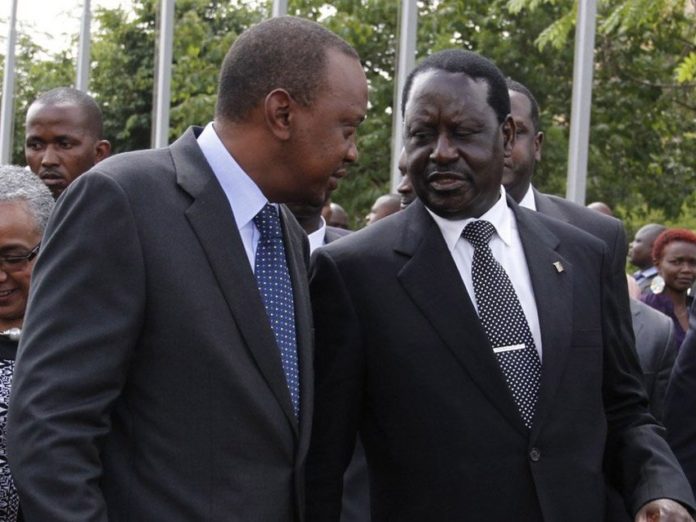
FRIENDS? Kenyan President Uhuru Kenyatta and Raila Odinga

Kenyan President Uhuru Kenyatta and his hitherto political nemesis Raila Amollo Odinga have agree to work together in a bid to foster national unity.

The two fell out after elections last year, which Mr. Odinga claimed he had won, and even held a contentious ‘swearing – in ceremony’ that led to unrest, and also the ‘deportation’ of controversial politician Miguna Miguna to Canada.

However, today Uhuru Kenyatta and Raila agreed on a way forward after zeroing in on a nine-point implementation programme to be coordinated by Ambassador Martin Kimani and Paul Mwangi.

Among the issues of importance singled out by the two leaders is security; corruption; devolution; divisive elections; inclusivity and lack of national ethos. Others are shared prosperity and rights.

‘H.E. President Uhuru Kenyatta and H.E. Raila Odinga have agreed to roll out a programme that will implement their shared objectives. The programme shall establish an office and retain a retinue of advisors to assist in this implementation. They have mandated both Ambassador Martin Kimani and Mr. Paul Mwangi to oversee the establishment of this programme. An official launch shall be held soon,’ a statement, ‘Building bridges to a new Kenyan Nation’ released after the two leaders’ meeting at State House, Nairobi, indicates in part.

Over the past year Kenya has been mired in controversy following the August 8 elections, which were disputed by Raila, who even lodged a petition in the Supreme Court challenging Uhuru Kenyatta’s victory.

The Supreme Court nullified the election and ordered a re-election but Raila opted out of the process. Subsequently, Raila ‘swore-in’ and a stalemate has been obtaining till today when the two leaders met and agreed on a way forward.


Stories Continues after ad

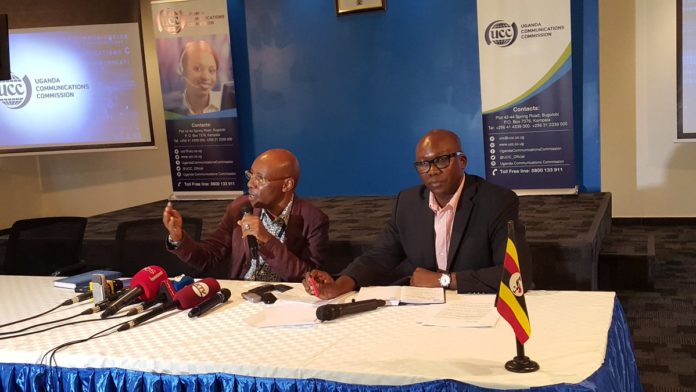
Recall void SIM Cards – UCC orders telecoms

UCC boss Goodfrey Mutabazi (L) with Fred Otunnu today while announcing the new measures

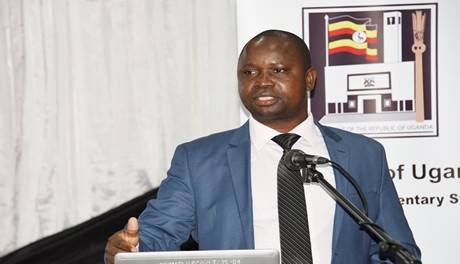
The Uganda Communications Commission (UCC) has directed telecom operators to immediately recall and deactivate all pre-activated and pre-registered SIM cards that are held in stock by street vendors and agents.

These directives come in the wake of the soaring crimes rates in the country with the recent incident of the kidnap and murder of Susan Magara by unknown assailants, who communicated from five  anonymous  locations using unregistered sim cards, while demanding for ransom from the deceased’s family members.

In a press briefing held at UCC headquarters in Bugolobi, UCC Executive Director Godfrey Mutabazi implored Telecom operators to deny access to any subscriber whose equipment doesn’t comply with the Commission’s approval requirements.

“In a bid to curb the increasing crimes, telecom operators must acquire and install Central Equipment Identification Register (CERI) at their service centres to validate National Identity Card information which will instantly be verified against the national database maintained by National Identification and Registration Authority (NIRA),” Eng. Mutabazi said.

Further, he said that communication companies shall obtain approval from UCC for all network equipment used and subscriber terminals or devices sold by respective operators in Uganda.

The UCC boss also implored telecoms to make available facilities on their respective networks through short code 197 to enable the public to verify which numbers are registered using their National Identification Numbers (NIN).

“Telecom companies shall forthwith be liable for any violation of Commission directives by their staff of agents whether such violation is by omission, commission or otherwise,” Mr. Mutabazi said.

Yesterday, all major communication companies issued statements alerting their clients that they ceased the selling new SIM Cards as they work with NIRA and UCC to implement the necessary technical requirements.


Stories Continues after ad

Stanbic Uganda Cup round of 16 draw held

Federation of Uganda Football Associations (FUFA) through the Competitions Department today held draws for the 44th edition of the Uganda Cup for the round of 16 stage.

The ceremony was graced by FUFA Competitions committee Director Hajjati Aisha Nalule, famous legends of the game William Nkemba, Fred ‘Gaaso’ Mukasa and Tom Lwanga. Stanbic Bank’s head of marketing, Daniel Ogong, club coaches and other FUFA officials were also present.

The 16 clubs still in the knockout competition comprise of Azam Uganda Premier league teams, FUFA Big league teams and the regional sides.

The holders, Kampala Capital Authroity City (KCCA), were drawn against Soana, SC Villa will travel to Ndejje University while Vipers SC are up against Kira United. Kitara FC, who eliminated ten time record holders Express, will entertain Seeta United.

The games will be played on March 21 and 22, 2018.

This year’s final will be played during the last weekend of June in Kumi district and the winner represents the country in the CAF Confederation Cup as per the rules of the competition.


Full draw:

Ndejje University Vs SC Villa Jogoo – Ndejje University Main Campus, Luweero

Kitara F.C Vs Seeta United – Boma Play-ground, Hoima

Kira United Vs Vipers Sports Club – Kira Town Council Play ground

Mbarara City Vs Kansai Plascon – Kakyeka Stadium, Mbarara

Busula Football Club Vs Synergy Football Club – Luweero

Soana F.C Vs KCCA – Kavumba Recreational Center

UPDF Vs Proline – Bombo Military Stadium

KJT Vs BUL – Villa Park

Stories Continues after ad

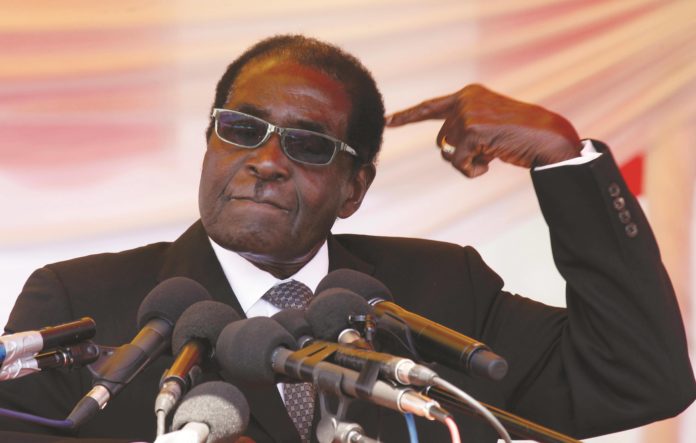
Mugabe, Mnangagwa relations sink

EMBATTLED AND IN TROUBLE? Former Zimbabwe President Robert Mugabe

Relations between Zimbabwean President Emmerson Mnangagwa and his predecessor Robert Mugabe are deteriorating.

This week, the head of state was strongly upset by the alleged support of former President Mugabe to a new political party, the National Patriotic Front (NPF).

The NPF was launched the week before by relatives of former first lady Grace Mugabe, who do not recognize the legitimacy of Emmerson Mnangagwa’s government.

And Mnangagwa openly expressed dissatisfaction with Zimbabwe’s ex-strongman. ”We will look into the problem,” he told a meeting of the ruling party, adding: “And if these allegations are true, we will take action.”

In Zimbabwe, a photo of Robert Mugabe posing with the head of a new formation, a retired ex-military General Ambrose Mutinhiri, is controversial. Notably because Mutinhiri has already announced that he will challenge the legitimacy of Emmerson Mnangagwa’s government in the Constitutional Court.

The photo was widely interpreted as support from the former president to the NPF, and especially an attack on the Mnangagwa government.

Mugabe’s return to the public arena and his apparent support for a new party falls just months before new elections, and at a time President Mnangagwa is under pressure to quickly transform his country or lose the support of the street.

In February, during a meeting with the chairman of the African Union Commission Moussa Faki, the former head of state complained that he was deposed through a coup d’etat.


Stories Continues after ad

East African Ministers share African Development Bank’s vision for the continent

Finance Minister: Matia Kasaija.

In a historic first, East African Governors of the African Development Bank met with the President Akinwumi Adesina and Executives to discuss economic challenges, opportunities and successes in the continent’s fast-growing powerhouse region.
On the agenda: closing the US $170 billion infrastructure gap across the continent, keeping pace with the region’s booming youth population, creating jobs and safeguarding peace and security.
President Adesina assured the gathering that the bank intends to make the strategic regional consultations an annual event to allow for more open dialogue, constructive feedback and the acceleration of development reforms.
“We have 12 years left to the SDGs. It is an alarm bell because if Africa does not achieve the SDGs, the world won’t achieve them. The African Development Bank is accelerating development across Africa through the High 5s,” he stressed. “We are leveraging more resources for Africa’s development and the impact of our interventions is being felt.”
The Governors – chiefly Finance Ministers and Ministers of Economic Planning representing Burundi, Comoros, Djibouti, Ethiopia, Kenya, Rwanda, Somalia, South Sudan, Sudan and Tanzania and Uganda – shared the sentiments.
“The High 5s are what Africa needs now,” said Henry Rotich, Kenyan Minister of Finance. “The Bank has financed one of our key interventions, the Last Mile Project, thanks to which 70 percent of Kenyans now have access to power in rural areas. You know what that means? It means more people can work, shop, study and create jobs. If we implement the High 5s successfully, we can address some of the key challenges we face. ”
Similarly, Tanzania’s Minister for Finance and Planning, Isdor Mpang, noted that his country has aligned its own development priorities with the High 5s of the Bank.
“We want to be a middle income country,” he said. “How do you do that? These are exactly the five points that you need to work on.”
Somalia’s Finance Minister, Abdirahman Beileh, described the Bank’s unique role in his country’s transition.
“With the Bank’s support, Somalia has evolved from a failed to a fragile state,” he said. “The African Development Bank has been with us throughout.”
President Adesina highlighted some of the Bank’s achievements over the last seven years. Approximately 27 million Africans have benefitted from new electricity connections, while 49 million enjoyed improvements in agriculture. Some 35 million gained better access to water and sanitation, and nearly a million small businesses have been provided with financial services. Over the same period, 23 million women saw improvements in agriculture and 10 million were able to take advantage of investee projects.
Lending to low-income countries increased seventeenfold, from $434 million in 2010 to US $7.5 billion in 2016. Lending to middle income countries doubled. The Bank’s active portfolio rose from $15 billion in 2010 to US $30 billion in 2016.
President Adesina noted that the Bank leveraged US $9.73 billion from the capital markets for African countries last year and achieved its highest annual disbursement ever in its history, at US $7.67 billion.
Djibouti Finance Minister Hmadou Ibrahim asked the Bank to ensure that infrastructure projects being financed in neighbouring countries are extended to his country, emphasizing the importance of regional integration through rail and roads.
“For a country like mine, regional integration is a survival issue,” he said. “Without regional integration, Djibouti, this link between Africa and Asia, would not exist. As a result, all our investments bear the mark of regional integration to our environment.”
Hassatou N’Sele, the Bank’s Treasurer and acting Finance Vice President, highlighted the Bank’s outstanding private sector portfolio in low-income countries, with close to US $2.4 billion funding in 2017. More than 458 companies have been financed by the Bank in these countries.
With a substantive capital increase, the African Development will be able to deliver on its robust pipeline of operations (15bn in 2018 alone). Prospects for 2018-2020 are bright, with 50.3 million people projected to benefit from improved access to transport as against 14 million in 2017. More than 35 million people stand to gain new or improved electricity connections, as against 4.4 million delivered in 2017.
Matia Kasaijja, Uganda’s Minister of Finance and Economic Planning, expressed strong support for a general capital increase to enable the Bank to accelerate Africa’s social and economic development. He noted that the Bank has retained its AAA rating during challenging economic headwinds when many institutions and countries have been downgraded.
Sudan Minister of Finance and Economic Planning, Mohammed Osman Al-Rikabi, said, “Most of our partners have focused on humanitarian support. But the African Development Bank has worked hand in hand with the Government to address macroeconomic issues and development projects. As we battle to recover our economy, the African Development Bank is providing support.”
President Adesina thanked the Governors for their acknowledgement of the Bank’s work in their respective countries.
“Your support and confidence in the Bank are uplifting; they mean a lot to us,” he told them. “You are the wind in our sails.”

Stories Continues after ad

A Long way still to achieving gender equality: International Women’s Day

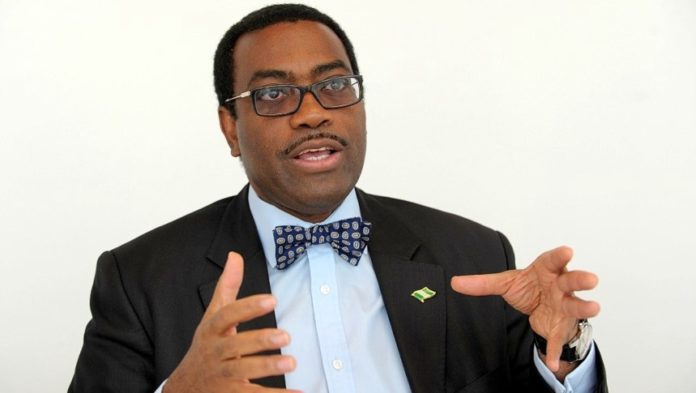
Dr Akinwumi-Adesina

By Akinwumi A. Adesina
International Women’s Day is a call to celebrate the extraordinary achievements of women and a reminder that globally, we are a long way from achieving gender equality.
Today, women in Africa lag behind men politically, socially and economically, even though they make up half of the continent’s population. I have always stated that a bird can only fly with two wings. For too long, an Africa dominated by men is the proverbial one-winged bird. For Africa to soar and flourish, it can only do so with the active and equal participation of women.
There are many encouraging signs of progress. Liberia’s Ellen Johnson Sirleaf, for example, did a brilliant job as Africa’s first female elected Head of State, and is to be congratulated for her crucial role in transitioning her country out of conflict, and her exemplary behaviour as she calmly handed power to her successor George Weah, following his victory in the country’s Presidential election in 2017. She deserves all the accolades on winning the Ibrahim Prize for African leadership, the first woman, of course, to do so. As Mo Ibrahim himself said, the award sent a “strong message to all African women and African girls that they could help to change the continent”.
And women are starting to do just that. In politics, the number of women elected to African parliaments has increased substantially. From 2005 to 2015, 85 per cent of African nations increased their female legislative representation. Whether in small steps or great leaps, society will always benefit when there are more females in government or parliament to balance the male-weighted scales of political debate and decision-making.
Women are the backbone of Africa’s economies. They are primary producers and processors of food in Africa’s agriculture and rural economies. More than half of economically active women in Africa earn their livelihoods in agriculture, and they account for the majority of small and medium-sized businesses. Yet, they constitute a meagre 15 per cent of land use rights and just 1 per cent of land ownership. They receive only 5 per cent of agriculture extension services and less than 10 per cent of available financial credit.
This state of affairs cannot and should not continue. For reasons of human rights, justice and equity, as well as financial common sense, the African Development Bank advocates for policies that encourage women to work, set up businesses and participate in market development as consumers, producers and entrepreneurs. Significant economic potential is wasted when women are deprived of such opportunities.
We recently commissioned market research to identify the wasted potential in the women’s market. The findings were astonishing, showing an estimated US $42 billion gap between men’s and women’s access to finance across business value chains. The financing gap for women in agriculture alone is US $15.6 billion!
If women farmers have the same access to productive resources as men, they could increase yields on their farms by 20-30 per cent, lifting 100-150 million people out of hunger. Closing the gender gap could also help increase food security and improve livelihoods for Africa’s growing population.
Gender equality is a key component of our High five strategy, a critical area of focus for the Bank’s operations and policies, and a prerequisite for achieving the Bank’s development objectives. As part of our organizational culture and structure, we are mainstreaming gender in all our operations. We also continue to support reforms for gender equality in member countries across Africa. Significantly, a Gender Marker system is being introduced and gender specialists have been deployed in the Bank’s operating regions.
The African Development Bank is also scaling up the production of country gender profiles, as well as developing an online gender portal to obtain, report and share data on gender indicators. The Bank will also launch the first Africa Gender Index in 2018; the first Africa Gender Scorecard; and host the 2018 Multilateral Development Bank Gender summit.
Our Bank’s investments are focused on supporting women and helping to lift them out of poverty. We have developed the Affirmative Finance Action for Women in Africa (AFAWA), which aims to raise US $300 million in phase I of the program, and leverage up to US $3 billion for financial and nonfinancial services to women in business by 2025. The African Development Bank will also publish AFAWA bank ratings based on the quality of lending to women, and to incentivize good lending practices.
There is a long way to go and still much to do, and change must be a collaborative process that cuts across every sphere of society. Each of these strategic measures will help create parity with men and lift millions of women out of poverty and into wealth.
Ultimately, when women are supported, they deliver. When women win, Africa wins. And that is something to work for and celebrate, not just once a year, but every single day.
Dr. Akinwumi A. Adesina is President of the African Development Bank.

Stories Continues after ad