Stanbic Bank
Stanbic Bank
19.4 C
Kampala
Stanbic Bank
Stanbic Bank
Home Blog Page 1685

Periodically review health workforce requirement to accelerate Universal Health Coverage

Tonny Odokonyero

By Tonny Odokonyero

For any country to accelerate Universal Health Coverage (UHC), policy efforts must tackle three key dimensions. First is “who is covered” in terms of healthcare – which is about coverage of the population. Second is “what is covered” – which relates to the package of healthcare or benefits. Third is “how much of the cost is covered” – this addresses the issue of financial risk protection.

Besides political will and good governance, addressing all the three UHC dimensions require concerted efforts to adequately invest in necessary inputs and resource distribution in an efficient, equitable, and sustainable manner to match the healthcare need of the populace. Among the necessary inputs, Human Resources for Health (HRH) is of central importance.

This article pays particular attention to HRH (health workforce), as it is a critical input needed for healthcare service delivery for realizing universal coverage. Indeed HRH is a health system ingredient that is paramount to the country’s response to challenges related to figuring out how best progress towards UHC has to be accelerated.

It is only through the health workforce that the health system expected to yield UHC is designed and managed, in order to deliver the healthcare services needed for accelerating UHC. Without a corresponding investment or serious attention paid to governance and management of HRH including its stock, relevance, distribution, skill mix, quality and productivity; the goal of accelerating UHC progress will be unattainable. Admittedly, the cornerstone for making any UHC progress is supply of proficient and motivated HRH that match the population’s need for healthcare.

In Uganda however, the daunting task that remains is building and motivating this “cornerstone”. Health sector staffing is below optimal level. The country still has a huge job ahead, to build this cornerstone, due to glaring gaps in HRH. Given the country’s “big dream” of attaining UHC, it is now that the government must deal with the problems of HRH head-on. It is the time to start looking at HRH as an investment rather than viewing it purely as liabilities that the government has to periodically spend on.

Because the health workforce is not deemed as an investment, the conspicuous healthcare (medical) staffing gaps that still exist is to the tune of about 40 to 50 percent (particularly district level staffing) depending on the region, benchmarked against staffing norms set by the health ministry. This indicates a critical shortage of health workers, to the extent that only about half of the health workers (such as midwives, nurses, and medical doctors) required to attend to the healthcare need of the population are available in the country, out of the total number that is required, which ultimately translates to too few health workers who are overburdened and suffering from occupational burnout. It is a country-wide problem, but more striking in rural and/or hard-to-reach areas.

Also, considering health facility tiers, inequities in health workforce distribution is large, with lower level facilities such as Health Centers (III and II) experiencing the widest staffing gaps, and yet these are the facilities that serve most rural, poor and vulnerable people. With all these, the population can hardly receive the minimum healthcare package required to meet their healthcare need, which presents a substantial challenge for delivering UHC.

However, looking at this gap at face value when contemplating solutions may be misleading – it is not enough for generating a concrete solution to the problem. For example, one may think that just recruiting more health workers to fill existing vacant positions is adequate solution. But it is not the case – recruiting more health workers, as it is currently being championed by the health service commission, is just a necessary but not sufficient action.

Exploring the hurdle from another angle, the health workforce density is very low nationally and across regions. It is below the standard that can catalyze attainment of UHC. This indicator (density) accounts for the country’s population when analyzing HRH requirements, and somewhat reflects the extent to which the entire population is covered in terms of the health workforce.

The World Health Organization (WHO) recommends a density of about 2.28 health workers per 1,000 people in order to make good progress towards UHC, implying that about 23 health workers should be made available at all times to serve 10,000 people. However, Uganda’s density is low to the extent that less than 10 health workers exist to serve 10,000 people, even before accounting for common challenges such as absenteeism and demotivation.

The country still does not meet the required density even when the private sector is considered. Furthermore and most importantly, a critical diagnostic of the problem shows that even if the staffing norm set by the Ministry of Health is met (i.e. 100% staffing as per set norms), the health workforce density will still fall short of the density required to accelerate UHC progress – i.e. at less than half of the recommended standard.

Consequently, even when all the current medical staffing gaps are filled through recruitment to match the set staffing norms, the total health workforce will still not be in a position to provide full healthcare coverage to the population, hence a higher likelihood of failure to expand population-based healthcare services, which poses a major threat to UHC.

This situation suggests that the existing medical staffing norms set by the ministry is much lower than what the country actually needs. The plausible flaw with the set norm is that inter alia, factors such as; healthcare demand and/or population, health workload and changes in healthcare services might have not been adequately accounted for, thereby requiring a great deal of careful consideration.

Besides other interventions prescribed in the HRH strategic plan such as; continuous capacity building for HRH training & development to boost supply of adequate skilled health workers, resource mobilization for HRH, establishing functional incentive mechanisms to enhance health workforce motivation and retention; it is crucial that staffing (medical) norms set by the health ministry are periodically reviewed.

This can be scheduled in annual, medium or long term reviews of the HRH plan, and the medical staffing norm revisions must adequately reflect periodic changes in the population and demand for healthcare services (including workload-based staffing), and alignment to the standard or threshold staffing density required to deliver Universal Health Coverage.

Tonny Odokonyero is a Researcher at the Economic Policy Research Centre – SPEED for Universal Health Coverage


Stories Continues after ad

Suspended MPs drag Kadaga to court, denied entry to Parliament

The six suspended MPs

The six legislators suspended on Monday by the Speaker of Parliament Rebecca Kadaga have today petitioned High Court seeking redress against her decision as the house debates the controversial age limit bill.

However, in contravention of the resultant court order compelling Kadaga and the Attorney General to appear before court at 2pm today, security at Parliament denied the six together with their lawyer Erias Lukwago, entry in order to serve the Speaker.

The six, Jonathan Odur (Erute South), Allan Ssewanyana (Makindye West), Ibrahim Ssemujju Nganda (Kira Municipality), Gerald Karuhanga (Ntungamo Municipality), Anthony Akol (Kilak North) and Mubarak Munyagwa (Kawempe South), who are now expected to miss the next six plenary sittings, want court to stop the Speaker from suspending opposition MPs without ‘clear reasons’.

And according to their lawyer Lukwago, Kadaga’s decision was a gross violation of parliamentary rules of procedure because she first adjourned the house then suspended his clients.

“Their suspension was illegal because she was not a Speaker after adjourning the house,” Lukwago argued.

The opposition MPS were on Monday suspended following chaos that broke out in the plenary sitting during the reading of a report drafted by the parliamentary and legal affairs committee in respect to the controversial age limit bill that seeks to have the 75-year constitutional cap expunged.

Meanwhile, Kadaga has adjourned the house for 30 minutes, after which MPs will return to the chambers to vote on the Bill that was tabled by Igara West legislator Raphael Magyezi.


Stories Continues after ad
Rebecca Garang wants South Sudan President Salva Kiir ousted

WANTS PRESIDENT KIIR OUT: Rebecca-Nyandeng-Garang

Rebecca Nyandeng, widow of South Sudan’s founding father John Garang, has said that President Salva Kiir’s government is ineffective and should be replaced.

“If you are afraid to say it, I am saying it, because there is nothing they are delivering. “Three weeks ago, hundreds of people died. How many people do we need to die in order for us to see this government [is] not delivering? Mrs Garang said at the ongoing talks in Addis Ababa, sponsored by Intergovernmental Authority on Development, that are aimed at revitalizing a 2015 peace deal.

She added: “The way forward is for the government in Juba to go, because there is nothing that they can deliver and they will never change. Dr. John used to say the government in Khartoum is too deformed to be reformed. It is this government in Juba which is too deformed to be reformed.”

Meanwhile, more than 100 members of the many South Sudan warring factions gathered at the Addis forum hope to work out a cease-fire as soon as Friday, with representatives of both armed and unarmed groups meeting Tuesday at the African Union headquarters to discuss a draft permanent cease-fire.

The atmosphere at the talks was tense, with various parties holding side meetings to discuss specific parts of a cease-fire agreement, including security arrangements and unfettered access of humanitarian agencies operating in South Sudan.

However, civil society groups at the forum said the warring parties should first silence their guns. Clashes between government forces and rebel fighters loyal to Riek Machar were still being reported in Lasu, Kajo Keji in Yei River state and Lol state.

Edmond Yakani of the Community Empowerment Network said that warring parties were positioning themselves to gain territory on the ground before signing a cease-fire.

“We are heading to dry season,” when fighting typically flares up. “And that is why we called for the armed groups, for the sake of the lives of the citizens of South Sudan,” to stop fighting for at least a week, Yakani said.

South Sudanese gender activist Rita Lopidia said the fighting has taken a heavy toll on women and girls.

“The suffering of the women and girls in the republic of South Sudan has surpassed all levels of carnage,” she said, adding: “The massive displacement, the deteriorating economy, lack of protection, fear, insecurity, hunger, disease and poverty, the sexual violence committed with impunity must not be tolerated.”

Stories Continues after ad

Minister Kyambadde assures UK of continued trade partnership despite Brexit

ASSURED UK OF CONTINUED TRADE: The Minister of Trade and Cooperatives,

Uganda’s Trade Minister Amelia Kyambadde has assured the United Kingdom (UK) of continued trade relations despite the former’s decision to exit the European Union.

Kyambadde made the remarks during the Trade and Sustainable Development Symposium organised by the International Centre for Trade and Sustainable Development (ICTSD) on the sidelines of the 11th WTO Ministerial conference in Buenos Aires, Argentina.

The symposium organized under the theme ‘Getting the future Africa-UK trade partnership right’ was premised on the significant implications for Britain’s trade policy relationship with Africa following UK’s decision to exit the European Union. The symposium discussed the opportunities and challenges Brexit presents for African countries.

On March 29, 2017, the UK triggered Article 50 of Lisbon Treaty which formally started its process of exiting the EU, and the country is currently on the move to establish the foundations of a strong and mutually beneficial long-term relationship that will provide continuity in the trade relationship between her and Africa.

Minister Kyambadde said that Uganda has a long relationship with the UK and would like to explore the huge untapped trade potential between the two countries. She said the bilateral trade between Uganda and UK demonstrates that there is a huge potential for Africa to increase its trade with the UK.

Uganda’s exports to the UK have tremendously dwindled from USD 58 million in 2012 to US$ 16.5 million in 2016 while the imports have also reduced from USD 127 million in 2012 to US$ 74.4 million in 2016.

Minister Kyambadde attributed the decline in trade to the shift of trade to the Middle East and Asia, the shift in domestic policies from the export of raw commodities to value addition that the UK market has not yet fully adjusted to, increasing oil prices after the Arab spring and the uncertainty about the Brexit processes.

Kyambadde said that the new policy after Brexit should not roll back the gains African countries like Uganda already had with UK while it was in EU and should have commercially meaningful duty free, quota free market access, at least for all Least Developed Countries.

She added that the policy should include all products of export interest to African countries.

“The policy should be demand driven rather than supply driven and the list of the products to enjoy preference in whatever scheme UK comes up with should come from us”, explained Kyambadde.

She advised that the Africa- UK trade relationship after Brexit should encourage and support industrialisation and value addition. It must move Africa away from donation of value when our products are exported raw with little or no value addition. She added that the scheme should ensure that rules of origin and simple and not unnecessarily stringent.

“The future Africa trade relations should include a strong commitment to remove Non Tariff Barriers (NTBS) that deny African countries the opportunity to benefit from preferential market access opportunities”, said Kyambadde.

On the Economic Partnership Agreement (EPAs) that EAC is negotiating with the EU, Kyambadde suggested that the two parties consider a negotiated trade arrangement that goes beyond the few challenges we had with EPAs. She said despite the Brexit, Uganda is still committed to sign the EPAs but is still negotiating with other member States so that EAC signs as a bloc.


Stories Continues after ad

Nigerian music star gets Ugandans to unwind at Ciroc party

Ciroc Brand Manager Roger Agamba,Skales, event promoter Mz Shan and Skales Manager Kollertunz

Nigerian rapper Skales, best known for his Booty Language hit, will ease Kampala’s revellers into the Christmas break this Friday, December 22 as the headline act at the Ciroc Frost and Pineapple Pool Party.

Nigerian rapper Skales with his team 

The Nigerian star, real name Raoul John Njeng-Njeng, will be one of a broad roster of outstanding musicians lined up to perform at the event which kicks off midday at Silver Springs Hotel in Bugolobi.

The show which has been put together by UK-based events promoter Mz Shan in partnership with Ciroc will give Ugandans a first live taste of Skales, whose other hits include ‘I am for Real’, ‘Shake Body’, and ‘My Baby’.

Mz Shan boasts of international exposure, having organised a number of events in the UK in the recent past.

The Friday event gives Kampala’s party goers the perfect opportunity for early Christmas celebrations that will start at noon with various Ugandan artistes performing and go into the late night, sipping on Ciroc cocktails by the poolside while being treated to great music all through.

“The Ciroc Frost and Pineapple Pool Party is about getting everyone to wind down after a long year of hard work, and there isn’t a better way to do that than with a great celebration drink, lots of fun people and fantastic music all by the poolside, said Roger Agamba, UBLs Reserve and IPS Manager.


Stories Continues after ad
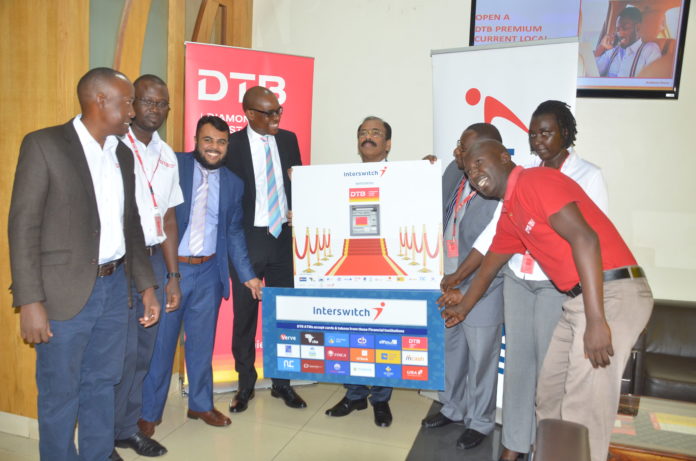
Murder case file against former CPS boss Baguma goes missing

CLEARED OF MURDER CHARGES: Former CPS DPC Aaron Baguma

The police file of a murder case against the former Central Police Station (CPS) District Police Commander (DPC) Aron Baguma is missing.

This revelation was made by State Prosecutor Fatuma Nakafeero to Justice Flavia Anglin Ssenoga, the judicial officer in charge of the case.

Nakafeero thus asked for more time to be granted to the DPP so that he can trace for the police file.

Against that background, Justice Ssenoga adjourned the case to next year – 10th January, 2018 for hearing.

Baguma, together with a one Mohammed Ssebufu, the owner of Pine Car Bond, are accused of murdering city businesswoman Donah Betty Katushabe in 2015.

It is alleged that Baguma, the co-accused and others still at large on October 21, 2015 at Pine Car Bond on Lumumba Avenue in Kampala, killed Betty Donah Katusabe over an accumulated Shs9 million debt arising from a car purchase from the bond.

Last year Sebuwufu was granted bail and still awaits the full trial.


Stories Continues after ad
Age limit saga: ‘Strangers’ in Parliament upset Kadaga

Aruu County MP Samuel Odonga Otto 'consults' with his colleagues

The alleged presence of another group of unauthorized security personnel in Parliament has caused a ruckus, prompting the Speaker Rebecca Kadaga to order for an inquiry into the matter.

According to the Speaker, following the chaos in Parliament in October in which opposition MPs were injured during a forceful eviction carried out by officers of the Special Forces Command (SFC), she ordered that the parliamentary police be the only force to secure the precincts of Parliament.

And today, the issue of ‘strangers’ came to light after Amuru Woman MP Lucy Akello told the house that there were security personnel occupying the Catholic Chapel at Parliament, and that they had used the place for their upkeep and also destroyed music equipment.

This prompted the Speaker to suspend proceedings this morning, and order for an investigation in the matter.

“I issued security guidelines; I said only Parliamentary Police should be securing this police. Any other deployment must be communicated to my office. In the course of the recess, I also received complaints that there were people in Anglican chaplaincy, plates in both. So I want to know who those people there are. I want you to explain who they are. I told you I want peace, if they are Parliamentary Police, why should there be plates. I want an explanation who was in those two chaplaincies? I want to know before we proceed,” Kadaga told the house that also had in attendance the Minister of Internal Affairs General Abubaker Jeje Odong.

In response Gen. Jeje Odong admitted the reported presence of ‘strangers’ but hastened to add that they were not using the chaplainces.

“It is true it was reported that there were unknown individuals in the precepts (precincts) of Parliament. When we broke for the lunch break I asked the Sergeant at Arms who keeps the keys to the chapel. The keys are kept by the leadership of the faith,” he said.

He added: “I also went to verify whether there were people other than the authorized policemen; there were policemen eating but not in the Chapel. Indeed, there were utensils that had been used by the policemen but the utensils were in the corridors, not in the chapel. So it isn’t true that the chapel was used as eating places.”

Earlier, Buyaga County MP Barnabas Tinkasimiire, who described himself as a staunch Catholic, had also protested the ‘strangers’ reported presence in the chapel.

“For avoidance of doubt, the biggest priority I hold dearly is my heavenly father. The person who guides me to keep on lane is the Catholic Church. The Catholic Church has instruments that they use. One of them is this rosary that the. We picked hundreds of plates cups when we reached, we were intercepted but we overpowered the policemen and he lost three buttons,” Tinkasimiire said, emphasising: “I want to tell you that I have priorities in life and the fundamental one is my heavenly father.”

And in response Kadaga said: “What we are talking about is extremely serious. If indeed there were people in chaplaincy, we would like to know why, did they sleep there? It is unfortunate that the matter happened here. If they were living here, that’s dangerous.”

Government Chief Whip also weighed in, promising to get to the bottom of the matter.

“I entirely agree and appreciate the point raised by Akello that it is something we have to find out. It just happened few hours ago, you haven’t had time to investigate. The Minister has given a statement, some MPs aren’t satisified. Whether we don’t give ourselves time, this matter has to be thoroughly investigated and I don’t think at this particular moment, we shall find out the truth,” she said.

To soothe the embers that were beginning to smoke, security minister Lt. Gen. Henry Tumukunde said his colleague Gen. Odong had offered an explanation.

“The Minister of Internal Affairs said that the keys to these rooms of worship are kept by respective members. If we say there are strangers that accessed the people who keep the keys must explain,” Lt. Gen. Tumukunde said, prompting Speaker Kadaga to direct the clerk to avail Parliament with a report on the custody of the keys.


Stories Continues after ad
OWC-sponsored fete sees famous Kadongokamu artiste win Shs50m

Artistes perform at Kololo Independence Grounds

The much-awaited fete to determine Uganda’s best ‘Country Music’ (Kadongokamu) singer came to a climax on Saturday, December 16, with renowned musician Lord Fred Ssebatta winning the overall prize of 50 million Uganda shillings.

The year-long search, the brainchild of Operation Wealth Creation (OWC) Supremo General Caleb Akandwanaho aka Gen. Salim Saleh, was graced by several Kadongokamu singers, encouraged by thousands of fans who braved the mid-morning heat at the Kololo Independence Grounds.

A cross-section of the multitudes that thronged Kololo Independence Grounds for the OWC fete

The OWC is an arm of the Uganda People’s Defense Forces (UPDF), which promotes a number of wealth-generating opportunities and resources through sensitization and skills equipment.

“By putting up these Kadongokamu competitions we offer other service providers such as security, ushers, ticketing and caterers with job opportunities, not just the artistes competing in it,” Gen. Salim Saleh, the OWC Chief Coordinator, said during the last competitions.

Some of the beaus that turned up for the fete

According to Salim Saleh, a Four-Star General, OWC zeroed in on the entertainment industry because it is a very fertile sector in Uganda’s economy in terms of raw talent and outreach.

OWC Deputy Chief Coordinator Lt. Gen. Charles Angina addresses those who turned up for the fete

And, despite the absence of Gen. Salim Saleh, his second in command at OWC Lieutenant General Angina ably presided over the event, urging the people to work hand in hand with the army to ensure that poverty is completely eradicated from the country.

“Thank God, first and foremost, because we would not be here today if it wasn’t for Him. I also want you to thank General Salim Saleh, who came up with the idea of Operation Wealth Creation and organized this event today,” Lt. Gen. Angina said as he walked the crowd through a military-style handclap that resonated across the Kololo Grounds.

Indeed, at Kololo one was met with vendors of all types of merchandise and promoters of various businesses, most of who were beneficiaries of the OWC initiative.

There were a number of vendors offering services

But while many made money through vending, the others took solace in the free food provided to make merry at the fete that came just about a week to Christmas.

Indeed, Boda Boda cyclist Ismail Mutabazi, couldn’t help but appreciate the inclusiveness and overwhelming hospitality the UPDF extended as they catered for the thousands who thronged the venue, getting culinary entertainment including refreshments and food.

“I ate a lot of food and there was still a lot left; I couldn’t throw away the meat so I packed it in a polythene bag and took to my colleagues at the stage,” Mutabazi said.

The author Isaiah Mwebaze (L) poses for a photo op with singers Radio and Weasel

Meanwhile, on the entertainment scene many singers vying for the attractive prizes gave the crowds more reason to cheer as several big names in the local music industry including YKbenda, Radio and Weasel as well as Winnie Nwagi, took to the stage with a number of energetic performances that left the revellers yearning for more.

Inspector General of Police (IGP) Gen. Kale Kayihura, OWC Deputy Chief Coordinator Lt. Gen. Charles Angina and other top security officers at the fete

The event went on till late with the Inspector General of Police (IGP) Gen. Kale Kayihura making an appearance and addressing the crowds, urging them to invest in their various talents and to use the gifts to create a better and safer environment for all Ugandans.

Similarly, the KandongoKamu genre that was promoted throughout this year’s campaign carried with it a theme of specific historical context that many Ugandans could allude to.

Loosely translated as the ‘single-small guitar’, Kandongokamu, a cocktail of  oral literature, tales of history and legends past, is passed down from one generation to another, and originally came at a time when the country now known as Uganda was still virgin.

The Kadongokamu genre, regarded an educative and enlightening form of entertainment for most rural inhabitants today, was also instrumental in rallying Ugandans attain Independence in 1962.

And it is against such a background that the OWC chose to not only use it as a marketing avenue but also as an educational tool.

Meanwhile, the several jaw-dropping performances during the Kololo fete was further lit by the presence of the Speaker of Parliament Rebecca Kadaga, who later on awarded the four winners of the Kandongokamu contest.

One of the ensembles that performed at the OWC fete

And finally, after a tight race, Lord Fred Ssebatta emerged the overall winner of the Shs50 million Grand Prize, followed by an equally happy Vincent Seggawa, who took home Shs25 million.

However, the downside to the otherwise successful OWC-sponsored event was that some people seem not to appreciate that the Kadongokamu competitions/galas are the best options in efforts to curb the poverty levels obtaining in Uganda.

Stories Continues after ad

Ugandan Ssimbwa voted best coach at SJ Kenyan Premier League Awards

Coach Sam Ssimbwa

Sofapaka coach Sam Ssimbwa was voted the best coach in the SJAK-Football awards ahead of Kariobangi Sharks’ William Muluya and Mike Mururi of Kakamega Homeboyz.

The Ugandan had a fairytale run last season guiding Sofapaka to second place and making them title challengers, losing out on the title to Gor Mahia. This was just a season after Sofapaka survived relegation in 2016.

Another Ugandan, Godfrey Walusimbi missed out on the best defender of the season award after his teammate and Captain Muhammad Musa won the accolade.

Gor Mahia’s Ugandan-born Rwandan forward Meddie Kagere won the 2017 SJAK Most Valuable Player award after piping his challengers, midfielder George Odhiambo and Masoud Juma, to claim the top gong.

Winners in each category were awarded with a DSTV compact decoder and a 49- inch LG TV set.

The Sport Journalists of Kenya Association (SJAK) Kenyan Premier League (KPL) Awards gala was held on Monday night at the Louis Leakey Auditorium, National Museum in Nairobi.


Winners:

Coach of the Year Award; Sam Ssimbwa – Sofapaka FC

Most Valuable Player; Meddie Kagere – Gor Mahia

Golden Boot Award; Masoud Juma – Kariobangi Sharks

Midfielder of the Year; George ‘Blackberry’ Odhiambo – Gor Mahia

Defender of the year; Musa Mohammed – Gor Mahia

Golden Glove; John Oyemba – Kariobangi Sharks

New/Young Player; Nicholas Kipkirui – Zoo FC

SJAK Female MVP Award; Esse Akida – Starlet

Stories Continues after ad

Red Pepper journos granted bail

PARDONED: Red Pepper Directors and Editors in the dock. Their case was adjourned to February 14.

Five Directors and three Editors of the Red Pepper Publications who were arrested in November after allegedly publishing a story indicating the Ugandan President Yoweri Museveni was hatching plans to oust the government of his Rwandan counterpart Paul Kagame, have been granted bail by the Buganda Road Chief Magistrate’s Court.

The ruling to release the eight who have since been charged with among other crimes, publication of information prejudicial to national security and ‘disturbing the peace’ of President Museveni, his brother General Caleb Akandwanaho aka Salim Salem, and Security Minister Lt. Gen. Henry Tumukunde, was made by Grade One Magistrate Samuel Kagoda, who said he had instructions from the Buganda Road Court Chief Magistrate James Eremye Mawanda.

The Red Pepper Publications officials released today include Arinaitwe Rugyendo, Richard Kintu, James Mujuni, Patrick Mugumya, Richard Tusiime, Johnson Musingunzi , Ben Byarabaha and Francis Tumusiime.


Stories Continues after ad