Stanbic Bank
Stanbic Bank
18.5 C
Kampala
Stanbic Bank
Stanbic Bank
Home Blog Page 1686

Government to take over two private varsities

President Yoweri Museveni has been urged to retire by Mr. Barnabas Talemwa who is a member of the first family.

President Yoweri Museveni has directed the Minister of Education Janet Museveni to start the process that will lead to the takeover of two private universities.

In the, the President directed Mrs. Museveni to ensure Mountains of the Moon and Busoga University become public higher learning institutions.

“I am writing to direct you to take over two private universities which some of our people acting in good faith, started many years ago. The two universities are Mountains of the Moon and Busoga University,” Museveni’s letter to the education minister, reads in part.

According to Mr. Museveni the takeover of the two universities will boost higher learning opportunities in the country.

‘We have already started public universities in West Nile Acholi, Lango, Teso,Ankole, Bukedi, Kabale and Kampala. This covers 10 of the 18 zones. Taking on the Mountains of the Moon and. Busoga University would increase the coverage to 12. Of course we already have Namasagali as a breach of Busitema. Therefore, in the new effort, we would have to link Namasagali with the Busoga University,’ the President wrote.

However, the President expressed dismay at the way the private universities have been operating, blaming some of them for admitting inadequately qualified first year students.

‘I heard of the talk that some of the private universities admit unqualified entrants into first year and that they contract unqualified debts. The debts should be audited by the Auditor General. The unqualified entrants should never have been allowed even when the universities were private,’ he said.

Mr. Museveni added: ‘Neither public nor private institutions are allowed to admit under qualified entrants. This is the job for Council for Higher Education. If necessary, we shall seek a supplementary budget to cope with this issue’.


Stories Continues after ad

Monitor sacks editors, entire sales department as restructuring take shape

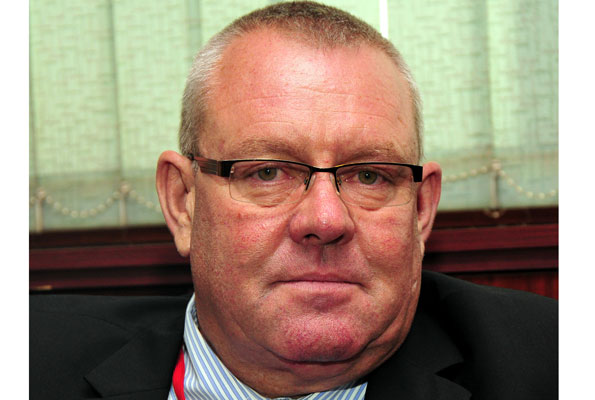
Tony Glencross, the Nation Media Group (NMG) MD for Uganda.

Monitor Publications Limited, the publishers of Daily Monitor under the Nation Media Group (NMG) has started its restructuring process, with three Editors sacked today.

One of the three is Mr. William Lubulwa, the Trade and Finance Editor who was reportedly demoted to a lesser position but has offered to resign and leave the company.

The others include Edna Kyokunzire, a Sub-Editor on business desk, and

a senior editor whom we cannot reveal but who had stints with New Times in Rwanda, who leaves the editorial department with experience of over eight years.

Meanwhile, sources at the Namuwongo-based newsroom reveal that the sales department is most affected by the layoffs, with almost all staff there sacked.  The sources further revealed that the axe is now focused on reporters in the paper and the two radio stations before moving onto senior managers.

Last week the Nation Media Group made changes in the two companies, naming Anthony Craig Glencross as the overall group Managing Director in Uganda, heading both Monitor and NTV.

AS Group MD for Uganda Glencross will oversee the entire NMG platform in the country, while NTV’s outgoing Managing Director Johnson Omollo has been named as a General Manager in charge of television.

The NMG also named three other General Managers among them Daniel Kalinaki for Daily Monitor Editorial, Moses Ssesanga, former Monitor Manager for Human Resources who was elevated to General Manager for Human Resources and Sam Barata, who was  appointed General Manager Sales and Advertising.


Stories Continues after ad

Improve Uganda’s budget execution in works and transport sector financial year 2018/19

UDN Director of Programmes Julius Kapwepwe

By Julius Kapwepwe

The National Budget Framework Paper (NBFP) FY 2018/19 was formally released recently by the Ministry of Finance and Economic Development in compliance with Section 13 (2) of the Public Finance Management (PFM) Act 2015. The NBFP stipulates that government is to run a budget of about Shs 29.274 trillions of which only Shs12.744 trillion (43.5%) will be available for service delivery excluding budget and project support, debt repayments and domestic refinancing.

The Auditor General report 2016/17 shows that Government has Shs2.908 trillion as outstanding commitments by the end of June 2017. Of this Shs27.755bn was not supported with adequate information as such a possible leakage onto which IGG needs to swing into action.

The key strategic objective for the Works and Transport Sector is to: “Promote Adequate, Safe and Well Maintained Works and Transport Infrastructure and Services for Social Economic Development of the Country. The sector has 3 strategic outcomes:  improving the condition of the road network (both paved and unpaved), ensuring safe and efficient construction works and ensuring safe, efficient and effective transport infrastructure and services for the people of Uganda.

The sectoral allocations are projected to reach Shs6 trillion in FY 2018/19 representing 24% nominal increase in the allocations from FY 2017/18. UNRA continues to account for the last share (63%) of the works and transport sector with the projected allocations of Shs3, 820.28 billion for FY 2018/19. The fastest nominal increment is to the Works and Transport vote reflecting the increased allocations to Standard Gauge Railway, airport development and capacity enhancement as well as increased undertakings on Bukasa and Port Bell ports.

The coverage of paved national roads increased by 100kms in 2016/17 reaching 4,257km compared to 3,264kms in FY2010/11. However, the added kilometers (KMs) in 2016/17 are less than the average annual KMs over the last 4 years, not commensurate to the increases in allocations to the sector for road network. The proportion of paved national roads and for unpaved roads in fair to good condition respectively reached the targeted 80% and 70% in FY 2016/17.

Road maintenance budget was increased to UGX 417.4 billion compared to FY 2016/17 outturn of Shs 343.7 billion and is expected to continue increasing however, the road maintenance backlog continued to grow in excess of USD 1 billion. The sector met the target on routine maintenance of unpaved roads (mechanized) and 160km of the paved roads were rehabilitated to reinstate their service ability continued to grow in excess of USD 1 Billion.

While the transport sector predominates as the largest share of the budget, absorption and implementation challenges continue to prevail. Despite not fully spending less than Shs3 trillion in FY 2016/17, the sector budget is expected to reach Shs 6 trillion. The key challenge will remain on the effective utilization of the increased allocations which are externally financed.

Absorption of loans signed over the last decade for the sector is only at 40%. Local content remains a challenge and the NBFP is not explicit on the modes of addressing this challenge. The front loading of projects exacerbates the sub -optimal absorption of resources but also raises question on the economic viability of the key infrastructural projects in the short term for example the undertaking of both the Bukasa and Port Bell in land ports.

The revival of the national carrier requires holistic stakeholder engagement. The passing of the draft roads bill that provides for the collection of road tolls will be imperative. The NBFP makes no mention of road safety yet the fatalities are on the increase.

The works and transport sector is one of the well-funded sectors in Uganda, however, there is need to increase efficiency and effectiveness to address leakages in the financial flow within the sector. Weak public investment management, particularly with project preparation, underscores the need for sequencing of projects based on the readiness.


The Writer is Director of Programmes, Uganda Debt Network

Stories Continues after ad

CHAN 2018: Cranes seek to finish on a high

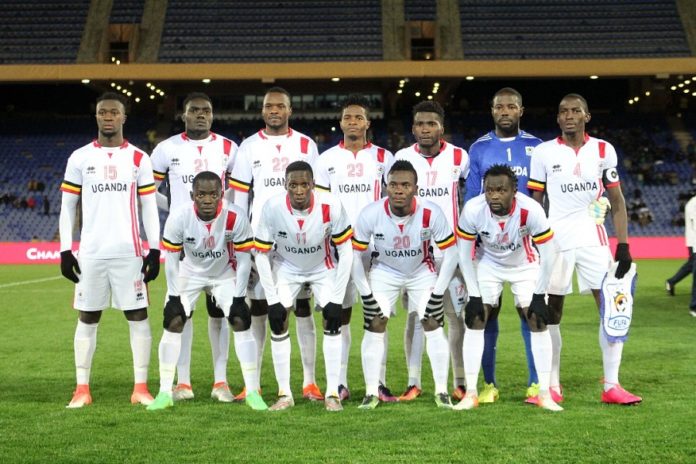
The Uganda-Cranes

Uganda Cranes play Ivory Coast in the last match of the group B TOTAL CHAN 2018 championship taking place in Morocco.

Both countries failed to qualify from the group but the Cranes look forward to finishing on a high and securing the third spot in the group.

“The game against Cote D’Ivoire is not a friendly match. We need every player to give in 100 percent commitment to make sure Uganda finishes third in the group. The evaluation of players continues and with the football exhibited in the first two matches, this will be a good stepping stone to continue with the team,” Sebastian Desabre said in the pre-match conference.

Uganda lost to Namibia 1-0 and 3-1 to Zambia while like Ivory Coast lost 1-0 and 2-0 to same opposition respectively.

“We are demanding the same positive energy from the players like in the earlier two games at CHAN 2018 as we finish up the group games on Monday.” He added

Cranes go into the match without central defender Timothy Awany due to suspension while Muhammad Shaban returns from injury. Goalkeeper Saidi Keni remains a doubt for the game due to illness.

Uganda has finished third in the previous two CHAN tournaments held in South Africa and Sudan but finished bottom of the group in their first ever edition in Sudan.

Zambia and Namibia, who are also in the same group, will face off at the same time to find out who tops the group.


January 22, 2018

Uganda Vs Ivory Coast

Stade de Marrakech (10 pm)

Stories Continues after ad

Shs75 m raised for Albino centre in Uganda

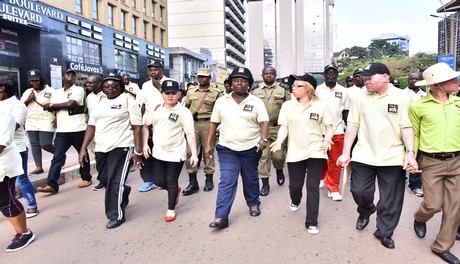
Speaker Rebecca Kadaga (middle in blue trousers) leads other participants during the charity walk

Parliament Week 2018 kicked off Sunday with an estimated Shs 75 million raised in cash and pledges towards the establishment of a centre for people living with albinism in Uganda.

The funds were raised during the Charity walk flagged off by the Speaker of Parliament, Rebecca Kadaga, on Sunday.

The charity walk was part of the several activities to mark this year’s Parliament Week which runs from January 21-25, 2018. Participants including Members of Parliament and the general public were led by the Speaker and the Leader of the Opposition, Winifred Kiiza. They walked from Parliament Building into the city centre and back to the starting point.

Kadaga urged MPs to prioritise the debate on Albinism when House resumes. She noted that although the Constitution clearly states the right to health, there is no enabling law that addresses the issue of people living with albinism.

“The time is now to stand up for those who have no voice, let us be their voice and ensure that we have that debate, and come up with resolutions,” she said.

She directed the Clerk to Parliament to ensure that relevant ministries including that of Health, Justice and Constitutional Affairs and Education and Sports participate in next year’s charity walk, arguing that they play an important role in addressing the issues of People living with albinism.

The Speaker also revealed that the Parliamentary Commission will be implementing a decision to employ people living with albinism.

“I am happy to report that last year, I made a pledge that we shall employ people living with albinism; this year, we shall employ at least one person living with albinism in Parliament,” Kadaga said.

The People living with Albinism applauded Parliament for providing them with a platform to address their grievances.

The Executive Director of the Association of People Living with Albinism, Jude Ssebyanzi appealed to Kadaga as Speaker of Parliament to ensure that skin cancer and sunscreen are included in the current draft Cancer Policy. He said that due to the omission of sunscreen in the Cancer Policy, it is categorised under cosmetics, making it costly.

“The current Cancer Policy is worse than Ebola for people living with albinism because it doesn’t mention skin cancer which is affecting persons with albinism, as a result, people with albinism are dying of skin cancer,” said Ssebyanzi.

He said that the Universal Primary Education, Universal Secondary Education and Special Needs programs are discriminatory.

“These programs do not cater for people with albinism and as a result, teachers do not know how to handle us and this has led to high school drop out of people with albinism,” said Ssebyanzi.

There are 375,000 people living with albinism in Uganda. As such, Parliament started a Charity walk last year to fundraise for establishment of a centre for people living with albinism which saw Shs 35 million raised. The plan to establish the centre for persons living with albinism is a five year project.

Ofificials from the Office of the Prime Minister, Foreign Affairs and Health. Government Departments and Agencies were also represented and these included; Uganda National Bureau of Standards, National Housing Corporation, Bank of Uganda, Kampala Capital City Authority and National Forestry Authority attended the function.

Represented of UMEME, Barclays Bank, Centenary Bank, Bank of Baroda, Diamond Trust Bank, Bank of India, Tropical Bank, ABC Bank, Bank of Baroda, Equity Bank, GTBank, Jomayi Housing Estates, AAR insurance and UAP insurance participated.

Uganda Joint Christian Council also participated in the charity walk as well as the media. Four universities-Makerere University, Kyambogo University, Uganda Christian University, Victorious University and the East African University also participated.

An ecumenical thanksgiving service is slated for today and departments in the Parliamentary Service Commission will be exhibiting their services in the Parliament South Wing.


Stories Continues after ad

Security vows to crash criminal gangs

Ugandan security agencies have today vowed to continue with joint operations following the arrest of Boda Boda 2010 group members who have been arresting and terrorizing fellow motorcyclists in the city.

Over the weekend the joint force of the police, Uganda People’s Defence Forces (UPDF) and Internal Security Organization (ISO) conducted an operation that led to arrest over 30 Boda Boda 2010 members including their leader Abdallah Kitata. The suspected thugs are currently held at CMI headquarters, while security officers are recovering motorcycles which were reportedly confiscated from other cyclists.

In a press briefing held at Uganda Media Centre, UPDF Deputy Spokesperson Lt. Col. Deo Akiiki said security agencies, working on precise intelligence, joined hands to bring the criminal activities of Boda Boda 2010 to an end.

“We are continuing with operations, some people are still at large but we assure you we shall get them no matter who they are as long as they are still living,” Lt. Col. Akiki said.

He added: “In this operation, there were attempts to interfere with the arresting officers, by a group of some people tried to obstruct the arrest of these suspects, closing roads, using the media to call people to act against the security forces.”

In a related development, police has arrested Kitata’s brother in an operation linked to the death of Francis Ekalungar, a former employee of Case Clinic who was kidnapped and later murdered on Tuesday January 2, 2018. Mr. Ekalungar body, found by Kajjansi police, was burnt beyond recognition. His car was later to be found at the home of one of the suspected Boda Boda 2010 members.

Meanwhile, police has this morning dispersed Century Boda Boda group members who were jubilating the arrest of Kitata over the weekend. Jubilations saw the burning of Boda Boda 2010 at different offices in Bukesa and Wakaliga.

Century Boda Boda claim Kitata’s group has been conducting various arrests of other boda boda cyclists, detaining and torturing them in ungazetted places.

“They pledged to stand as witness in case they are produced before court, they have killed, tortured confiscated our motorcycles and caused grievance harm to most of our fellow cyclists,” the jubilating cyclists said.

As a result police spokesperson Emilian Kayima has asked Ugandans to be vigilant to ensure peace and stability

‘’Unfortunately, some people are taking the law in their hands destroying property of  Boda Boda 2010; we ask Ugandans to respect rule of law and let the law work,” Kayima said.


Stories Continues after ad
UNBS warns against contaminated infant milk products

The product ranges of contaminated Lactalis milk

The Uganda National Bureau of Standards (UNBS) has warned the Ugandan public that Lactalis Group, a French firm dealing in processing of dairy products, has notified its customers about a recall of its products believed to be contaminated with Salmonela, an organism which can cause fatal infections.

The brands mostly affected include Picot, Milumel, and Celi powered infant milk. “UNBS would like to advise consumers to avoid buying the mentioned brand until the product recall has been completed,” says a notice.

UNBS says it is carrying out market surveillance inspections to ensure that affected products are removed from the market.

‘All UNBS imports inspectors at border points have been notified to withhold consignments with dairy products from Lactalis Group until such a time when we are satisfied that the product recall has been completed’, adds that notice.

The notice also indicates that UNBS will continue to perform its mandate of enforcing standards to protect consumer health and safety and the environment against dangerous and sub-standard products.

Lactalis Group says about 7,000 tonnes of formula may have been contaminated and the company thinks the salmonella outbreak can be traced to an evaporation tower – used to dry out the milk – at a factory in the town of Craon in northwest France.

Health officials confirmed 26 children in France have become sick and have ordered a recall in Britain, China, Pakistan, Bangladesh and Sudan.

Lactalis is one of the world’s biggest producers of dairy products and is marketed globally under a host of brand names, including Milumel, Picot and Celi.


Stories Continues after ad

Uganda’s ‘struggling economy’ threatens delivery of middle income status

CCEDU Cordinator Crispin Kaheru

With two years remaining to 2020 when Uganda expects to attain a middle income status, Uganda’s civil society now says the country is unlikely to achieve that milestone.

“With oscillating growth target of below 4%, the aspiration of reaching a middle-income country by 2020 may not be achieved when close to 50% of the Shs 29.274 trillion annual budget projection for FY 2018/19 is being funded by external financing and largely loans whose absorption rate is languishing below 40%,” members of the civil society say in a New Year message, titled, ‘Transcending Despair and Restoring Dignity: Ugandans on a People-Driven Path to Progress’.


The NGOs further say that institutional dysfunction and corruption have seen Crucial sectors of education and healthcare suffer the impact of funding shortages and the wanton theft of public resources.

“It is highly imperative to note that while the country boasts of robust anti-corruption laws and institutions, the gap between the form and function of these institutions remains wanting,” they say.

They add that the continued leakages in school examinations, non-action on the Auditor General’s Reports, emergence of new high profile cases of corruption and stagnation of major projects are all a manifestation of the institutional weakness that have to be fixed immediately.

They also want government to pay attention to regulation of the agricultural and livestock sector: and put up mitigation measures to curb the challenge of farmers planting infected seeds which led to low productivity and hunger.

They urge government to pay attention to climate change, saying Uganda’s weather patterns changed as reflected in the unpredictable rainfall patterns characterized by a mosaic of extended droughts and heavy storms that have led to loss of assets and livelihoods in 2017.

“In order to cope with these fast changes in the short and medium term, the Government of Uganda needs to fast track the delayed implementation of the National Climate Change Policy, advance mainstreaming of climate change in the district development planning process as well as the district environment action planning process,” they say.

Further, according to the civil society groups, in order to address the increasing vulnerability of the majority poor on one side and in line with the Paris Agreement, the country needs to expeditiously formulate the National Adaptation Plan through a multi-stakeholder consultative process.

In a related development Crispin Kaheru, the Coordinator, Citizens’ Coalition for Electoral Democracy in Uganda (CCEDU), which is one of the active civil society groups in Uganda, says the government needs to rethink its approaches and come up with innovative measures to redeem the country’s inclusive growth prospects and achieve a better life for all Ugandans.

According to Kaheru, since 2010 Uganda’s economic growth has been more unpredictable ranging from a high of 6.8% during the financial year 2010/11 to a low of 3.9% in the financial year 2016/17.

He adds that the sluggish and uneven growth resulted in government failing to meet its desired 7.2% annual growth rate which was the target for the National Development Plan I (NDP I) over the five-year period 2010/11 to 2015/16. “Growth in FY 2016/17 was only 3.9%, which is lower than the 5% growth that was initially projected,” he quotes government reports.


Stories Continues after ad

Kiir in South Africa for talks on Machar

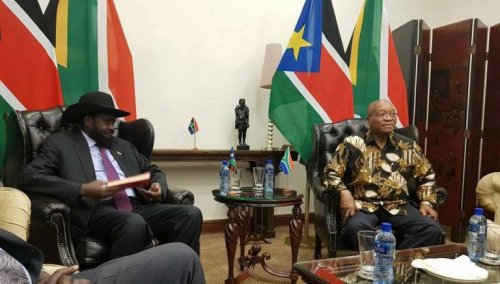
Presidents Jacob Zuma and Salva Kiir hold talks in Pretoria yesterday. Agencies Photo.

South Sudan President Salva Kiir, is currently visiting South Africa in a bid to advocate for maintaining in confinement his main political rival and the leader of the armed opposition Riek Machar and to exclude him personally from future interim arrangements.

President Kiir is accompanied on the trip by the Minister of Defence, Kuol Manyang, the Minister in the Office of the President, Mayiik Ayii Deng, and Minister of Petroleum, Ezekiel Lul.

“The president is visiting South Africa for two main reasons. One he is going to deliver a unified message of the transitional government of National Unity that Riek Machar should continue to remain outside the country during the interim period of the revitalized peace agreement,” a presidential aide said on Sunday.

The official who preferred anonymity stressed that the implementation of the peace agreement needs cooperation and this was lacking from Machar.

“Now his Excellency is cooperating well with the First Vice President Gen Taban Deng Gai and because of this cooperation, there has been a significant improvement and in the working relations and progress in the implementation of the peace agreement has been made,” he further said from Pretoria where he is part of the presidential delegation.

In October 2016 Machar left Khartoum to Pretoria officially for medical treatment. But in fact, his travel had been decided in a common agreement between the IGAD countries, South Africa and Washington was involved in the decision.

One month later, the former first vice-president successfully escaped his residence in Pretoria and reached Khartoum and Addis Abba. But he was forced to return to South Africa as the Sudanese and Ethiopian authorities refused to allow him to enter into their territories.

The South Sudanese presidential aide said the other message Kiir has delivered to President Jacob Zuma, for his government and the leadership of the African National Congress is to continue to talk to Machar to denounce violence.

He further said that President Kiir and the transitional government of national unity accept the representation of Machar’s faction in future arrangements but not himself.

In June 2017, Machar called on the UN Security Council to end an order his forced exile in South Africa and to allow him to engage in a peaceful settlement of the conflict.

Juba government believes that Machar should be kept far from the country during the reviltalization process and the end of the peace agreement implementation in a way that he can only run for the presidential election.


Stories Continues after ad

New venture deliverables put you ahead of the crowd


By Martin Zwilling

As a mentor to startups and new entrepreneurs, I continue to hear the refrain that business plans are no longer required for a new startup, since investors never read them anyway. People cite sources like this recent Inc.com article ‘5 reasons why you don’t need a Business Plan’ or my own blog discussion on this subject, ‘ Situations where a Business Plan does not add value’.

Let me be clear – business plans are never “required,” they should never be written “just for investors,” and if you sold your last startup for $800 million, most investors will not ask for a written plan for the next. On the other hand, if you are a first-time entrepreneur, the discipline of building a business plan will dramatically improve your success odds, and your odds of finding an investor.

For aspiring entrepreneurs, or if your last startup failed, it’s all about standing out above the crowd of others like you, and demonstrating your readiness. There is no crowd of successful entrepreneurs. Here is my outline of key deliverables that could convince me that you are a cut above the “average” entrepreneur that approaches me with nothing but a dream and a prayer:

Personal video introduction with elevator pitch. Successful startups are all about the right people with the right stuff. In a two-minute video clip, you can introduce yourself, show your passion and the engaging personality you need to win over customers, partners, and employees. Net out the problem and your solution in the first 30 seconds.

Executive summary glossy. For the more traditional investor, or for that chance meeting in a real elevator or meeting, you need a two-page brochure (two-sided page). The challenge here is not to see how many words you can get onto each side, but how you can make this so engaging in layout and content that an investor will ask for more.

Investor and strategic partner pitch. A perfect size is ten slides, with the right content, that can be covered in ten minutes. Even if you have an hour booked, the advice is the same. I’ve seen a lot of startup presentations, and I’ve never seen one that was too short – maybe short on content, but not short on pages. Pitch your company, not your product.

Written business plan.  Disciplining yourself to write down the plan is actually the best way to make sure you actually understand it yourself. Would you try to build a new house without a plan, if you have never done it before? In simple terms, it is a 20-page document which describes all the what, when, where, and how of your new business.

Financial model.  Most new entrepreneurs tend to avoid the financials of the business, and as a result are badly surprised by cost realities, and can’t answer investor questions. I suggest a simple Excel spread sheet loaded with your revenue, cost, and margin targets covering the first five years of your business. Investors will expect it for due diligence.

Thus you see the business plan is only one of five elements of a package that every aspiring entrepreneur needs to build to stand above the crowd, in your own level of understanding of your business. You need it for communicating to your team, finding strategic partners, or soliciting investor funding from friends and family, angel investors, VCs, and crowd funding.

The ability to communicate effectively is critical to standing above the crowd. Good communication is not talking louder and longer than others, but practicing active listening, and providing a package of other elements to effectively to back up your words. Make yourself unforgettable, in a good way. This means adding value before, during, and after every interaction.

Believe it or not, there are many people in the entrepreneur crowd with outstanding ideas, but building a business is more about execution. If you have built a successful business before, you don’t need all the components above to convince anyone, including yourself, that you can do it again.

Even including repeat entrepreneurs, statistics continue to show that the overall failure rate for startups within the first five years is greater than 50 percent. The real objective of “standing above the crowd” is to give you as an aspiring entrepreneur every chance to end up in the winning group, rather than the crowd of losers.

Starting without any written plan elements may seem easier, but is not the way to win.


Stories Continues after ad