Stanbic Bank
Stanbic Bank
17.7 C
Kampala
Stanbic Bank
Stanbic Bank
Home Blog Page 1691

‘Socialite’ Bryan White arrested over shooting

Brian Kirumira aka Bryan White

City socialite Brian Kirumira aka Bryan White was this morning arrested for allegedly shooting one Victor Bitwire at his home in Buziga at 2am.

Sources said Bryan White has been detained at Kabalagala Police Station on charges of attempted murder.

Bryan White after his arrest early today

This is the second shooting at Bryan White’s home, as he was attacked while entering his gate.

Stories Continues after ad

Record number of journalists jailed in 2017

Journalists insist there is need to respect their profession

For the second year in a row, the number of journalists imprisoned for their work hit a historical high, as the U.S. and other Western powers failed to pressure the world’s worst jailers–Turkey, China, and Egypt–into improving the bleak climate for press freedom, the Committee to Protect Journalists found.

As of December 1, 2017, CPJ found 262 journalists behind bars around the world in relation to their work, an increase on last year’s historical high of 259. Turkey is again the worst jailer, with 73 journalists imprisoned for their work as the country continues its press freedom crackdown. China and Egypt again take the second and third spot, with 41 and 20 cases respectively. The worst three jailers are responsible for jailing 134–or 51 percent–of the total.

“In a just society, no journalist should ever be imprisoned for their work and reporting critically, but 262 are paying that price,” said CPJ Executive Director Joel Simon. “It is shameful that for the second year in a row, a record number of journalists are behind bars. Countries that jail journalists for what they publish are violating international law and must be held accountable. The fact that repressive governments are not paying a price for throwing journalists in jail represents a failure of the international community.”

According to CPJ’s census 194 journalists, or 74 percent, are imprisoned on anti-state charges, many under broad or vague terror laws. In Turkey, every journalist on the census is either accused of or charged with anti-state crimes. Although many journalists cover multiple beats, politics was the most dangerous, covered by 87 percent of those jailed. Nearly all the jailed journalists are local and the percentage of freelancers is higher this year, accounting for 29 percent of cases.

Other leading jailers of journalists in 2017 are Eritrea, with 15 cases, and Azerbaijan and Vietnam, with 10 cases each.

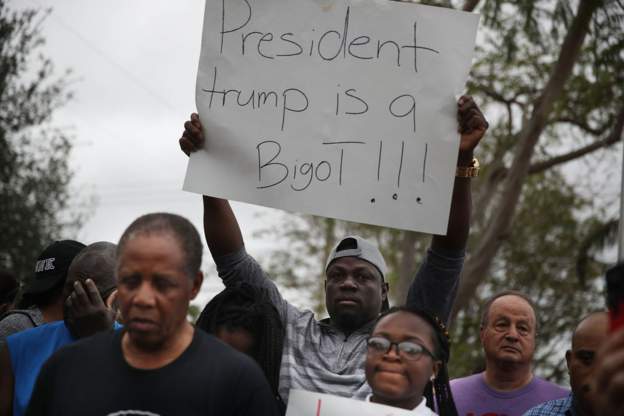
The international community has done little to isolate repressive countries and U.S. President Donald Trump’s nationalistic rhetoric and insistence on labeling critical media ‘fake news’ serves to reinforce the framework of accusations and legal charges that allow such leaders to preside over the jailing of journalists. CPJ’s 2017 census found the number of journalists jailed for “false news” doubled this year, to 21 cases.

Poor prison conditions is another issue this year, with two journalists jailed in China, including Nobel laureate Liu Xiabo, dying just weeks after being released on medical parole, and several others seriously ill. In Egypt, CPJ found over half of the jailed journalists have health conditions.

The prison census accounts only for journalists in government custody and does not include those who have disappeared or are held captive by non-state groups, such as several Yemeni journalists CPJ believes to be held by the Ansar Allah movement, known as the Houthis. These cases are classified as ‘missing’ or ‘abducted’.

CPJ has been conducting an annual survey of journalists in jail since the early 1990s, and they remain on CPJ’s list until the organization determines with reasonable certainty that they have been released or have died in custody.


Stories Continues after ad

Rights bodies urge UCC to use written communication with media

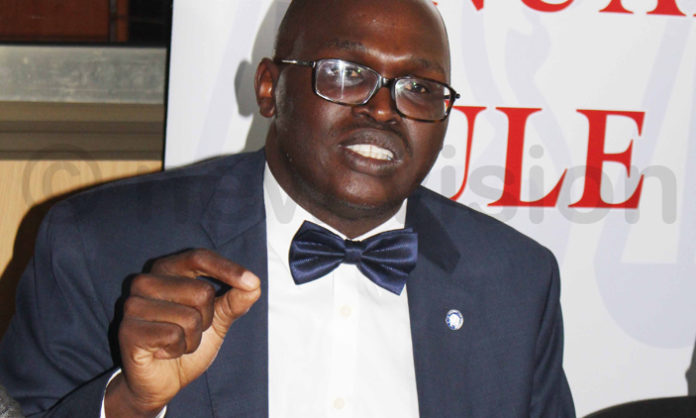
UCC ED Godfrey Mutabazi regulates communications sector

Rather than issuing written communication to media, the Uganda Communications Commission (UCC) is using phone calls as a way of evading evidence and accountability, rights organisations meeting in Kampala have said.

“All instructions and guidance from the UCC must be made in writing or will not be treated by the media as a legitimate communication,” warned a group of nine civil society organisations that had gathered to discuss the current prickly relationship between government and the media.

The group of civil society organisation (CSOs) want UCC to adjust its definition of minimum broadcasting standards, saying the current definition is not clear. “The UCC has a responsibility to clearly articulate a definition of what constitutes ‘minimum broadcasting standards’ a term so used against media houses in the country,” they say.

The NGOs that gathered were Human Rights Network for Journalists-Uganda, Foundation for Human Rights Initiative, Human Rights Network Uganda, Human Rights Centre Uganda, Uganda and Media Women Association.

Others were Centre for Public Litigation, Hub for Investigative Media, Legal Aid Service Providers Network , Chapter Four Uganda, Uganda Parliamentary Press Association and Foreign Correspondents’ Association of Uganda.

They noted emphasized that the UCC should bear in mind that court pronounced itself on the matter of ‘false news’.

“The courts have decided that there is no offence of publishing false news, therefore, the UCC cannot include publishing false news as part of the definition,” they argued.

The participants at the meeting also were concerned that media houses, particularly outside Kampala, have been pressured not to host dissenting voices.

“Every media house must be free to interview any public figure whatever their political stance, without reprisals,” they said, calling upon the government to uphold its commitments under the national, regional and international human rights instruments that guarantee press freedoms

The CSOs urged that the continued persecution and oppression of journalists is a violation of press freedom. “The government should amend laws that continue to criminalize the work of journalists,” they said, adding that human rights are entitlements and not given by the State and so must be upheld.

They also want UCC to work for the promotion and growth of the media rather than control and curtail its freedoms.

The struggle to defend and promote media freedom should spread across to the civil society as the media serves the public, they said.


Stories Continues after ad

Energy ministry launches awards

Energy-minister-Irene-Muloni-showing-oil-field

Business will never be the same in the energy sector as the line ministry – the Ministry of Energy and Mineral Development – has come up with a plan to reward companies that have excelled in the efficient use of energy, achieving substantial savings within their facilities.

Known as the Energy Management Awards (EMAs) 2018, the awards categorized into five are: Best Champion of the Year, Best Energy Management Practices, Electricity Savings Award (Industrial Large, Industrial Medium and Industrial Small), Fuel Savings Award (Industrial Large, Industrial Medium and Industrial Small) and Service Sector Award that will include hotels, universities and commercial buildings.

The awards, the first of the kind in the country, come via a partnership between the energy ministry, GIZ Promotion of Renewable Energy and Energy Efficient Programme (PREEEP), the Sustainable Use of Natural Resources Energy Finance (SUNREF) and the Uganda Manufacturers Association (UMA).

The annual awards to place in April 2018 will have participants meet the December 31, 2017 deadline for registration.

‘A technical committee at the Ministry of Energy and Mineral Development will evaluate the Express of Interest and inform the companies which will have qualified to participate in the Awards’, reads part of the statement.

The organisers will hold an award gala where winners and runners-up will receive their accolades.

It is expected that the launch of the energy management awards will entice both small and big industries to efficiently use energy in their production processes.

In the past years the Ministry of Energy has been holding the ‘Energy Week’ aimed at sensitizing the public about the advantages of using the available energy efficiently in view of the fact that the country is still developing energy plants like hydro-power dams to provide enough power for use in domestic and industrial establishments.

Stories Continues after ad

FGM must stop – regional activists agree

Dora Byamukama

Anti-Female Genital Mutilation (FGM) experts and activists from the region have called for a complete end to the practice of cutting girls private parts, saying the vice is detrimental to the victims’ health, keeps them out of school and affects their marriage prospects.

Speaking at the two-day regional consensus communique on FGM, the activists and experts said that although some countries in the region have enacted laws to criminalize the abominable act, many communities have not stopped the practice.

“We must come out with a clear and strong call to say enough is enough. She has suffered enough and FGM must stop,” a participant from Eritrea told the meeting.

The meeting was organized by Law Uganda, an NGO headed by former EALA legislator Dora Byamukama, with support from Amplify Change, also an NGO, and was attended by Anti-FGM activists and experts from Eritrea, Ethiopia, South Sudan, The Sudan, Tanzania and Uganda.

The regional players had converged to deliberate on how they can work together to end the vice.

They agreed that on top of pushing for the laws to be implemented, all anti-FGM crusaders need to appreciate the cultures of the communities they carry out their campaigns.

“And in case they don’t, they should always to meet people with someone who understands the language and is known in the community,” the activists argued.

They also underscored the need to encourage community whistle blowing, identifying and training beneficiairies in information gathering and management.

Participants from Kenya shared the experience of having an FGM board which they has is trying to place civil society at the center of the fight.

“The board monitors that the law is being implemented and that any programs that government wants to put in place to end FGM, the Board has to advise,” they said.

They added: “There’s engagement of the youth through the girl generation which has a commitment to end FGM in one generation and we formed a youth network in Kenya in communities where FGM is practiced to help have the youth lead participate in sanitization against the vice.”

From Tanzania, Ms Edola Sanga said poverty is a precursor to Gender Based Violence including FGM.

“If you do not give these women activities for income generation then you will not help them survive,” she said adding that the law alone are not a panacea and praise that the regional meeting in Kampala will create avenues for accessing donor funds to help fight the vice.

“This meeting here in Uganda has come at an opportune time because when we talk about resources, all donors talk about collaboration at a regional level.

“We need to make these people understand but we also need to talk to the girls. We need to ensure that schools are given proper infrastructure and to empower the girls to say no to the practice,” she said.

Speaking at the opening of the meeting, Ms Byamukama said: “We are here to meet as a team to start a regional conversation on the subject.

“If we give a regional dimension and share the best practices and look at the challenges and the emerging trends then we can have the best approach and tactic toward ending FGM.”

She added: “We need to create a team of brotherhood and sisterhood to start having a coordinated action to eliminate FGM. Law and advocacy Uganda went to court challenging FGM that it is against the constitution arguing that it is discriminatory and we won.”

The meeting resolved to among other things develop a communication strategy to help in guiding the campaigns and information sharing.


Stories Continues after ad

Uganda gets ready to host coffee conference

FLASHBACK: Delegates at the 15th African fine Coffee Conference & Exhibition, Feb 15-17 2017, Addis Ababa, Ethiopia last year

Uganda is ready to host the 16th African Fine Coffee Conference and Exhibition in Kampala on February 14-16, 2018, organisers have said.

The event, a trade platform of the African Fine Coffee Association (AFCA) that brings over 2000 regional and international coffee roasters, traders, producers, professionals and connoisseurs under one roof, will be held at the Kampala Serena Hotel will be held under the theme, ‘Sustainable Coffee Industry for Social Economic Transformation’.

Uganda is one of Africa’s specialty coffee producing countries, leading in the export of the crop, statistics show and dealers here are expected to participate in the conference and exhibition which is also expected to host participants from countries such as Kenya, Tanzania, Burundi, Rwanda, Ethiopia, Malawi, Cameroon, DRC, South Africa, Zambia and Zimbabwe.

“The event will have a line-up of international and regional internationally acclaimed speakers, spouse programs, coffee field visits and recreational activities,” says the latest AFCA statement.

The AFCA conference comes at the time when Uganda has launched an ambitious Coffee Roadmap whereby government hopes the country will be able to export 20 million bags of coffee and an additional US$1.5 billion in export earnings per year in the period 2025-2030. Currently the country exports just about four million bags per year.

The coffee road is to be supported by the Coffee Policy in place and the Coffee Law, whose bill awaits parliamentary approval. All the initiatives are expected to boost coffee production in Uganda.

Organisers at the AFCA Secretariat, say the exhibition area has increasingly been regarded as pivotal in providing a unique opportunity to exhibitors showcasing the best coffees and affiliated services providing ample opportunity to network with coffee luminaries from all over the world.

“This will be the perfect platform for gathering valuable coffee information, building trade relations and buyer and seller interaction,” organisers add.

There will be a full program of exciting social activities including spouse programs, Coffee Field Visits and recreational activities such as golf to be played at the Uganda Golf Club.

There will also be an organized pre-conference Uganda coffee field visit trips from February 11-13 to both the eastern (Arabica coffee growing region) and western routes (Robusta coffee growing region).

Coffee production in Uganda is managed by the Uganda Coffee Development Authority (UCDA) which has created over 100,000 high quality, high disposable income jobs along the coffee value chain, contributed more than $500 million a year in exports and raised the image of Uganda by earning many laurels abroad.

“It has trained the value chain actors including farmers, nursery operators, processors, traders, quality controllers, Q and R graders, roasters, baristas and café operators,” UCDA officials note.

The coffee sector has generated approximately 20-30% of our foreign exchange over the past years and contributes to the income of millions of rural households. Currently coffee is the third most important income earner after tourism and remittances from abroad and over 1.7 million families derive their livelihood from coffee.

The UCDA, in its report for October, indicates that a total of 109,789,863 coffee seedlings have so far been planted in 102 coffee growing districts compared to 157,063,064 available coffee seedlings in the nurseries.

Nonetheless, the coffee subsector has faced many challenges including the volatility of the international market and the outbreak of pests and diseases notably the coffee wilt disease which nearly decimated the coffee industry, severely affecting coffee production and exports.

Stories Continues after ad

Its ‘Xmas come early’ for over 100 institutions exempted from WT in 2018

Some of the government agencies and private businesses to benefit from the WT exemption

With less than two weeks to the end of the year, over one hundred government agencies and private businesses entities are to benefit from a whirlpool tax incentive by the Uganda Revenue Authority (URA) worth billions of shillings, over the first half of 2018.

According to a release by URA, 129 institutions, businesses and organisations including government agencies like Uganda National Roads Authority (UNRA); the National Medical Stores (NMS) and private businesses like the Aga Khan Foundation and Hariss International, the manufacturers of Riham soft drinks and biscuits, will not remit the 6% Withholding Tax for the first six months between January and June next year.

Stories Continues after ad

MPs want Kutesa to explain US$500,000 bribery allegations

ASKED TO EXPLAIN US$500, 000 BRIBERY ALLEGATIONS: Foreign Minister Sam Kutesa

Opposition legislators have today directed the Minister for Foreign Affairs Sam Kutesa to appear before Parliament to explain the Shs2 billion bribery accusations linking him to some ‘Chinese investors’ interested in various business deals in Uganda.

In November, the US criminal justice system linked Kutesa to the multi-million bribery case involving Patrick Ho, a senior official of a Chinese multi-billion conglomerate called Energy Company, who reportedly paid Kutesa US$500, 000, while seeking business advantages to get oil and energy deals.

At the time in 2015, Kutesa served as the United Nations General Assembly (UNGA) President and US Special Prosecutor Paul McNulty says he used his UN offices in New York to procure the bribe, in contravention of the law.

And in today’s plenary chaired by Speaker Rebecca Kadaga, Ntungamo Municipality MP Gerald Karuhanga  said Ugandans need to know more about the developments, and reminded the House that previously the same Kutesa had been accused of bribery at an international level.

“In the 9th Parliament we raised issues of oil,” Karuhanga said, adding that before the appointment of Kutesa as UNGA President, they questioned his credibility.

“We asked that another credible men and women be given the chance to represent Uganda at an international level instead and Kutesa was endorsed,” Karuhanga said, adding: “I request him to make a personal statement about the bribery scandal.”

Lwemiyaga MP Theodore Ssekikubo said “it is only fair that Minister Sam Kutesa comes to this house to make a statement about the bribery accusation.”

He added: “One minister was arrested for Shs 5million as a bribe, but we have a shark who no one is touching.”

However, Deputy Attorney General Mwesigwa Rukutana responded, arguing his colleagues not to ‘trust media reports making accusations about the Foreign Minister Kuteesa.’

“I put this house on notice that tomorrow I will be moving a motion, and I hope that the Attorney General (Mwesigwa Rukutana) who was on the same charge sheet during Commonwealth Heads of Government Meeting (CHOGM) appreciates this motion,” said Kira Municipality MP Semujju Nganda.

In response Speaker Kadaga said she will scrutinise all the documents regartding the bribery allegations against Minister Kutesa and make a ruling.


Stories Continues after ad

UDB to reward best agricultural innovator with Shs50m

Members at the UDB meeting

Agricultural production in Uganda is mainly dominated by smallholder farmers engaged in food and industrial crops, forestry, horticulture, fishing and livestock farming.

The country is one of the leading producers of coffee and bananas in the world. It is also a major producer of tea, cotton, tobacco, cereals, livestock and fishing products among many others.

However, the agriculture sector experiences challenges such as adverse climate variability and most communities depend on subsistence agriculture.

But this will likely change following a partnership between Resilient Africa Network (RANLab) and Uganda Development Bank (UDB), who have rolled out an initiative aimed at supporting individuals to grow and expand their start-up enterprises in all sectors, by providing Shs50 million as incentive to develop and pilot the solution towards scaling in addition to linkages to potential investors and financiers.

This year, the Accelerator will focus on the agriculture and manufacturing sectors under the theme: ‘Towards a Smart and Sustainable Agricultural and Manufacturing Sector’.

The UDB i-growth Accelerator will identify, recognize and accelerate outstanding innovative start-ups in line with the proposed theme and will support them to commercialization.

According to UNDP, 2007, Uganda’s agricultural yields are meager and non-diversified.

The multiple stresses have risen from current climatic hazards, poverty and unequal access to resources, food insecurity, globalization trends (including impact of global financial crisis).

Due to unpredictable rain patterns, floods, prolonged dry spells, drought the agricultural methods employed are usually not effective to grow sufficient crops and raise livestock.

Value addition to produce is low since communities are stuck in a cycle of low productivity and skewed markets in which they have limited leverage.

This has resulted into low income, pervasive poverty and no growth.

“We need to disrupt the status quo, and introduce creative and modern methods of farming, open markets for produce and promote bulking and value addition technologies,” said UDB Executive Director Patricia Adongo Ojangole, at the signing of the partnership at the bank’s head offices on Rwenzori Towers.

The initiative is open to interested applicants from diverse backgrounds who propose brilliant projects in relation to the theme.

Submissions can be done in teams or individuals, while projects should suggest transformative interventions or solutions.

Applicants should note carefully that the suggested projects could be in form of ‘technologies’ or ‘approaches’. It should be a project with demonstrable proof of concept for the solution to an existing enterprise with at least 1 or 2 years of existence.

Successful teams and individuals will be included into the UDB i-Growth Acceleration Program, where teams will receive among other things technical support, Mentorship and Business Coaching.

All applicants are required to apply online by filling the application template that can be accessed via: http://grants.ranlab.org

Application closes on January 25, 2018.

Stories Continues after ad

Kadaga sets tough conditions for deployments at Parliament

Chaos at Uganda Parliament

Speaker Rebecca Kadaga has laid new terms for those involved with security operations at Parliament, ordering all plain-clothed operatives, both police and military, off the precincts of the August House.

In her Communication to the House during the plenary sitting, the Speaker first gave orders to Sergeant-at-Arms, who is charged with manning security at Parliament, to seal all ‘illegal entrances’ to august house.

She pointed out the access on the fourth floor of the Parliament building as well as the entrance from the Office of the President where one can reach the lobby without going through the security checkpoints.

“This poses a danger to the premises. I am now instructing the Sergeant at Arms to seal that place on the Parliament side,” Kadaga ordered.

Yet still, Kadaga gave new instructions on how Police, which has a full directorate at Parliament, will operate.

“I am further instructing that all staff of Parliament Police must henceforth wear uniform and they must have name tags,” she said.

The new instructions have also called for the Clerk to Parliament Jane Kibirige to ensure that the names and the ranks of police officers deployed at Parliament are submitted in writing to the Speaker.

Following public criticism of what her critiques termed as ‘surrendering Parliament powers to plain clothed security operatives’, Kadaga also issued new orders on the non-uniformed security operatives, ordering them off the precincts of Parliament.

“Parliament is a civilian institution; all other security organs if they are here should withdraw and go to where they are supposed to go,” Kadaga said.

It should be recalled that in September, police boss General Kale Kayihura admitted ordering plain-clothed Special Forces Command (SFC) soldiers to raid the parliamentary chambers and evict opposition MPs who were protesting against the removal of age limit clause from the Constitution.

At the time several opposition MPs including Angelina Osegge, Betty Nambooze and Fred Butebi Zaake were injured.


Stories Continues after ad