Stanbic Bank
Stanbic Bank
17.6 C
Kampala
Stanbic Bank
Stanbic Bank
Home Blog Page 1692

Age limit: DP’s Mao arrested

DP President Nobert Mao being arrested by police

Democratic Party (DP) President Norbert Mao has this afternoon been arrested by police as he went to Parliament, anticipating the legal and parliamentary affairs committee would table the age limit report.

Mao being pushed into a waiting police car

Earlier before being arrested, police led by Assistant Superintendent of Police (ASP) Joseph Bakaleke sieged DP headquarters as Mao addressed party weekly media briefing, where he vowed to continue with the struggle against the removal of presidential age limit.

Mao under arrest

Meanwhile, before his arrest, Mao asked the arresting police officers to identify themselves and in the ensuing scuffle in which other DP leaders were also arrested, ASP Bakaleke responded by saying he is there ‘to take Mao to Central Police Station for safety’.

‘’Wherever you come here, you always say am here to avail you with security, don’t take me to police instead lead me to Parliament’’ Mao said.

He was however, taken to unknown destination.


Stories Continues after ad
Isimba dam works near completion as first turbine is lowered

First Isimba dam turbine being lowered in its place

The first turbine unit at the Isimba 183 Megawatt hydropower project has been lowered in its position, another milestone in the development of the flagship hydropower project.

The lowering of the turbine signifies one step closer to completion of this project, experts say. It took place amidst salute and jubilation from other technical members not directly involved in the turbine installation works. For the contractor, it was a nail biting experience that ended all too well.

The Isimba 183MW) Hydropower Project shall have four turbines each with an installed capacity of 45.8MW. Three turbines remain to be lowered and the last one is expected in July, 2018. The turbines were manufactured by ZHEFU CO.Ltd from Hangzhou, China. ZHEFU is a renowned and certified hydropower mechanical equipment manufacturer with first class international standards.

The dam’s civil structure has a life span of 100 years and 50-years for the hydro mechanical equipment, respectively. The contractor has got a 2-year defect liability period after undertaking of the project. Compared to other dam facilities across Africa, this turbine unit at Isimba was a better deal for the country for its runner shafts are made of stainless steel.

The Uganda Electricity Generation Company Limited (UEGCL) maintains that this project is on schedule and will be completed in the coming year 2018.


Stories Continues after ad

Makindye MP ‘disappointed’ as Parliament postpones age limit report debate

'DISAPPOINTED": Makindye MP Allan Sewanyana

Ugandans waiting to hear the contents and debate on the report on the highly anticipated Constitutional Amendment No.2 Bill, have had their hearts broken after Parliament postponed the debate.

Allan Sewanyana

Among the ‘disappointed’ Ugandans are people like Allan Ssewanyana, the Makindye MP, who came clad in red overall emblazoned with the words ‘Tulibanyivu’, literally meaning ‘we are angry’, written at the back.

He explained his choice of attire saying: “Last time they tore my suit, so I can’t keep on buying suits when they are going to be torn by people I don’t know. As MPs we thought Parliament is the safest place for a member, but I was wrong. So I am not sure if the Speaker will allow me in the chamber with this dress.”

The postponement came to light as the ‘Order Paper’ was circulated to MPs and journalists, indicating the debate had been pushed to ‘next business to follow’.

According to the order paper, the August House is expected to receive a report of the Ugandan delegation to the World Young Leaders Assembly in the USA from 7th-17th August 2017.

The other business set to be handled is receiving reports for both the Education Service Commission and   Health Service Commission annual reports for financial year 2016/2017.

Other Bills to be handled today, include the Anti-Counterfeiting Goods Bill, 2015 and the Biofuels Bill, 2016.

Additionally, a number of motions have been lined up for consideration by MPs like the motion for a resolution of Parliament for alteration of the boundaries of Butebo and Pallisa districts.

The second option is a motion for a resolution of Parliament urging government to formulate specific interventions towards the improvement of education standards in districts that consistently perform poorly in national examinations in Uganda.

The report by the Public Accounts Committee on the acquisition and utilisation of US$200 million loan from the PTA Bank has finally been lined up for consideration after spending months on waiting list without it coming on the floor for debate, in spite of its completion four months back.


Stories Continues after ad
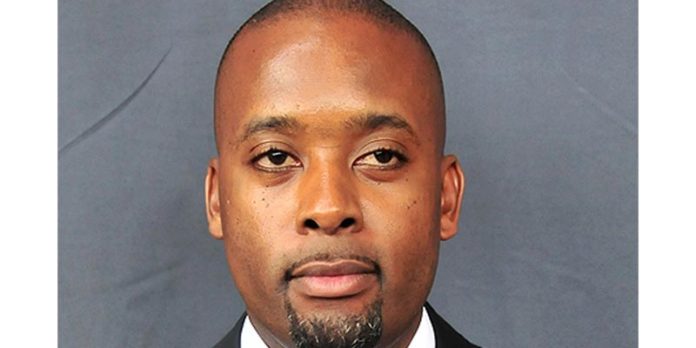
Museveni’s 50-year Uganda rule finalised – Baryamureeba

Prof-Venansius-Baryamureeba

Former Presidential candidate Venansius Baryamureeba has said that President Yoweri Museveni’s plan to be the longest serving national leader will be realized after his plans to rule Uganda for 50 years are effected.

Writing on his official Facebook Account, the academician noted that in 2021, President Museveni will have ruled Uganda for 35 years and the that the constitutional amendment being sought by Igara West MP Raphael Magyezi will push his plans further.

“With the constitutional amendment of removing age limit and re-introducing two 7 year terms for a President, he will be able to have another 14 years making it 49 years in 2035,” the former Makerere University Vice Chancellor argued, adding that by that time the President will be 91 years old.

To make his 50-year rule come to reality, Prof. Baryamureeba added: “In 2035, President Museveni will push for a transitional government/ government of national unity of 2 years to bring onboard all political actors to come up with constitutional and electoral reform and level the ground for Presidential Elections before holding the Presidential election.”

According to the former presidential candidate, the reforms to be spearheaded by Museveni will last one year and the other year will be for conducting the Presidential Election and then handing over office to the next President.

“In 2037, when President plans to handover to another President will be 93 years old and he will have been President of Uganda for 51 years, and he will have broken the record of the longest serving President in the whole world with the exception of the Queen of England,” Baryamureeba wrote.

He warned Ugandans to ‘tighten their seat belts as the road ahead is going to be very bumpy in the next 19 years of President Museveni rule’.


Stories Continues after ad
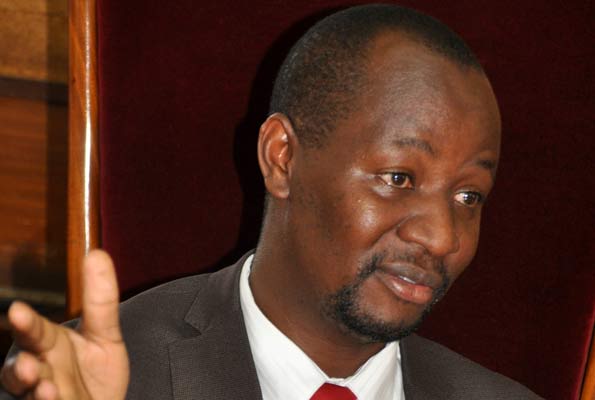
DP’s Mao warns pro-age limit removal MPs

Democratic Party President Norbert Mao addresses his members before flagging off the Kogikwatako week of protests'

Democratic Party (DP) President Norbert Mao has said the parliamentary vote for or against the lifting of presidential age limit is a new momentum to ensure that those who have ‘betrayed the will of the people’ pay a political price in future.

Mao made the remarks early today, as the Legal and Parliamentary Affairs committee chaired by Jacob Oboth Oboth is set to table age limit report before legislators for debate and voting to remove or maintain presidential age limit that was set at 75 years, as enshrined in the 1995 Constitution.

‘’We remain focused and united; our togetherness is our greatest power, whatever happens in parliament is the beginning of the end of Museveni’s regime,” Mao said at DP headquarters before declaring the ‘K’ogikwatako protest week’.


The K’ogikwatako protest week against the removal of presidential age limit begins today, with protagonists insisting on among others restoration of presidential term limits, maintaining presidential age limit and having in place an independent Electoral Commission.

“Protection of the independence of the judiciary, shared power among the people of Uganda, freedom of association and guarantees of civil liberties, and maintain the status quo on citizens owning land and prior compensation by government before it takes over citizen’s land are among the motives of the struggle,” Mao, a vociferous critic of the amendment of Article 102 (b), declared, adding: Government should see an opportunity and take the lead and creatively respond to the citizens’ grievances for peaceful transfer of power.”

According to Mao, during the ‘protest week’ the DP will, through public lectures, issuance of car stickers and flyers, reach out to all Ugandans and mobilize against the lifting of presidential age limit.

Meanwhile, by press time it was reported that Mao and his team had been locked up inside the DP headquarters.


Stories Continues after ad
Incorporate the growing population rates in national budget allocations

Richard Sempala

By Richard Ssempala

Uganda is one of the countries with the fastest population growth in the world. Estimates show that the population has grown to about 40 million in 2017 from just 5.1 million in 1950.

However, out of this population, children below the age of 15 account for about 48 percent, adults between 15 and 65 years of age account for 49 percent, and about 3 percent are more than 65 years old.  Moreover, the largest population resides in rural areas and their primary source of income is agriculture which is burdened by low productivity and low budget allocations.

It should be our concern whether the growing population is of importance to our economy. From the theoretical analyses, some authors clearly argue that high population growth creates pressures on limited natural resources, reduces private and public capital formation, and diverts additions to capital resources to maintaining rather than increasing the stock of capital per worker. This has already manifested its self in Uganda especially in many cases where citizens have encroached on reserved areas like forests and swamps, among others.

From a different perspective, population growth is good for the economy to the extent that people are empowered economically enough to create demand for the produced commodities. Also high populations increase economies of scale and allow for specialization at work.

In the Ugandan case the highest proportion of her population comprises of young people who are dependents. Most of these youths do not have adequate education and those who are fortunate to have an education lack appropriate employable skills. This clearly increases the burden on a few working population and on the scarce available resources.

With this state of affairs, it is important that authorities incorporate appropriate policies in Uganda’s development agenda to unlock the population dividend. This can be done by increasing budgetary expenditures in sectors with high multiplier effects, including but not limited to: agriculture; tourism; and science, technology and innovation which might absorb the seemingly growing and young population.

Richard Ssempala is a Research Associate with Uganda Debt Network


Stories Continues after ad

Does Uganda civil society have a response to narrowing space? 

Apollo Kakaire

 By Apollo Kakaire

The Uganda civil society, especially the non-governmental organisations, are at crossroads as government continues narrowing their operational space through restriction and control. While stifling the CSO space is not new, the levels are clearly being cranked up.

In September 2017, police cordoned off offices of three NGOs; the Great Lakes Institute for Social Studies (GLISS), Action Aid Uganda and Uhuru Institute. A statement issued by Police accused the NGOs of ‘involving themselves in subversive activities’. According to police, Action Aid and GLISS were suspected to have received funding from foreign elements to facilitate protests against the proposed constitutional amendments to remove the 75-year presidential age limit. The amendment is widely viewed as a step towards ensuring that incumbent President Yoweri Museveni, 73, and in power since 1986, contests for the presidency again in 2021.

Subsequently, the bank accounts of Action Aid Uganda and GLISS, as well as personal bank accounts of some staff members, were frozen, in effect crippling the work of the organisations and individuals.

Several local organisations openly condemned the government action and called for the unconditional unfreezing of the bank accounts. These voices of support however went silent as soon as government issued a letter to 25 other NGOs, demanding their bank account details. A quick review of this list shows that they are some of the most vocal organisations in Uganda.

Historically, when the state of Uganda was the main provider of social services, CSOs consisted majorly of trade associations and cooperatives. During the colonial era, they mainly engaged in political activism and the fight against colonialism. After Independence, the state took over cooperatives and trade associations hence subsuming the relationship between the state, private sector and civil society. During the repressive regime of Idi Amin, CSOs were confined to the traditional field of service delivery especially the health sector, to fill the gap left by government. After 1986, the relative freedom and space ushered in by the NRM government saw the exponential growth of CSOs. Presently, there are about 13,000 registered NGOs according to records at the NGO Registration Bureau.

The role of NGOs has, during the current regime, grown from offering humanitarian services following the end of the Joseph Kony-led Lord’s Resistance Army war in northern Uganda, to the now stickier business of pushing for pro-democracy practices, holding government and leaders accountable and ensuring efficient and equitable service delivery.

In his book, ‘Comparative Experiences of NGO Regulatory Frameworks: Eastern and Southern Africa’, Dr. Livingstone Sewanyana notes that NGOs in East Africa “account for the most critical voices against the state. NGOs continue to play a lead role in the struggle to open up political space, advancing the cause of human rights and holding the state accountable for its actions”.

However, these activism and advocacy have been met with restrictive laws by government such as the Public Order Management Act, the amended NGO Act, the Anti-Terrorism Act; name calling and branding of NGOs as supporters of homosexuality, agents of foreign interests, and enemies of national security.

The media, a key pillar in these struggles have not been spared either. On September 26, 2017, the Uganda Communications Commission banned all live broadcasts of Parliamentary debate over the controversial motion to delete Article 102 (b) from the Constitution. The UCC Executive Director Godfrey Mutabazi claimed that live broadcasts of such events were “inciting the public, discriminating, stirring up hatred, promoting a culture of violence amongst the viewers and are likely to create public insecurity or violence.” He said any further breach would result in suspension and revocation of licenses. Indeed, some radio stations were closed down for alleged breach of ‘minimum broadcast standards’ and journalists suspended over the same.

The key question to ponder is how Uganda civil society will respond to these excesses. They have the option of sticking to ‘soft’ interventions that keep government criticism at bay, but that places a dilemma on what becomes of their visions, missions and the much need interventions in promoting democracy, education, health and good governance, among other mandates.

Perhaps there are some lessons to be learned from the industrial action by medical workers under the Uganda Medical Association. One of its key strategies has been to debunk government narrative that striking workers are unpatriotic and enemies of development as they want to divert money earmarked for infrastructural development to higher salary demands. The striking doctors in their latest November strike, reiterated that they deserve better pay, consistent stock of drugs and supply of medical supplies to effectively carry out their work. They have made headway, to a large extent.

CSOs must speak out and mobilise all possible allies to add their voices to the condemnation of these transgressions by government. They must work together by creating sector wide networks to avoid being isolated and becoming easy targets. Embracing opportunities that social media provides as a tool for mobilisation, and information dissemination is also key in protecting the precious CSO space.

Further, CSOs should deepen the ownership of their work by the communities they serve. This way, those communities can put pressure on government whenever it clamps down on an organization in their locality. However, the communities should be helped to appreciate the need to protect the whole CSO sector. Relatedly, urgent means should be devised to help local communities understand their civic rights, responsibilities and value in demanding and protecting them. This way, citizens can offer some level of protection to these organizations from highhanded government institutions and officials.

Most importantly, CSOs must explore other funding models that allow them to continue doing their work without being restricted on who can fund them, how much they can receive and what activities they can undertake. Some of those funding sources are locally available but can only be mobilised if the CSOs clearly articulate their causes. The successes of  several fundraisers for the treatment of cancer patients over the last couple of years, is evidence that for the right cause and right messaging, support can be locally and quickly secured.

While the shrinking space for CSOs is a worldwide concern, deliberations must continue on how to confront this growing cancer. As Doug Rutzen, head of the International Centre for Not-for-Profit Law recently noted, since January 2012, more than 140 laws have been proposed or enacted by governments in 65 countries around the world to restrict the registration, operation, and funding of NGOs.

The stakes have been raised and short of a strategic response, Ugandan NGOs and civil society generally, will continue to concede invaluable space to an increasingly ‘suppressive’ regime.

Mr Kakaire is ACME’s Communication and Advocacy Manager


Stories Continues after ad

INTERPOL boss warns Ugandans on acquiring ‘certificate of good conduct’

INTERPOL BOSS: AIGP Fred Yiga

The Uganda Police Director of INTERPOL and International Relations Assistant Inspector General of Police (AIGP) Fred Yiga, has advised Ugandans seeking the ‘certificate of good conduct’ to get foreign employment to avoid using middle men.

According to Dr. Yiga, the middlemen issue fake certificates and cause trouble to receipients who at the end of the day are intercepted while trying to board planes. The certificate of good conduct is required by foreign governments before they can allow an alien to work in their countries.

He said that a ‘Certificate of good conduct’ costs Shs64000 and is issued by INTERPOL after obtaining finger prints of the applicant.

“Once we have identified that you don’t have any criminal record, we take you through a process of acquiring that document called a certificate of good conduct valid for only six months,” Dr. Yiga says.

He says that this certificate is only issued by the Inspector General of Police through INTERPOL and is presented when one is going to look for jobs, especially abroad.

Dr Yiga also urged those intending to hire or employ house maids in families to bring such employees for verification by INTERPOL before taking them up.

Stories Continues after ad
NMG’s Joe Muganda appointed VIVO Energy Kenya new MD

Joe Muganda

Vivo Energy, the company that distributes and markets Shell-branded fuels and lubricants in Africa, has appointed Joe Muganda as Managing Director Vivo Energy Kenya. Mr Muganda will take up his new role with effective from 1st February 1, 2018.

Mr Muganda will join Vivo Energy Kenya from Nation Media Group where he has been the Managing Director since July 2015 covering Kenya, Uganda, Tanzania and Rwanda. Mr Muganda, brings a wealth of experience from this and various other roles, primarily within the FMCG sector.

These include Kenya Breweries Ltd. where he was the Managing Director and British American Tobacco (BAT) where he held a number of different roles including General Manager for the Southern Africa Markets, Head of Corporate Affairs, Regional Manager – Africa and the Middle East, and senior marketing and brand roles. Before BAT he previously worked in Barclays and Unilever.

Mr Muganda holds a Bachelor’s degree in Accounting and Financial Management from the University of Buckingham and an MBA from the University of Leicester, both in the UK.

Commenting on the appointment, David Mureithi, Executive Vice President, Vivo Energy East and South Region, said: “I am delighted to welcome Mr Muganda as the new Managing Director of Vivo Energy Kenya. When he joins in February his vast experience will bring great added value to Vivo Energy Kenya, allowing the company to build on its previous success, as he steers the company to meet its ambitious goals.”

With a vision to become Africa’s most respected energy business Vivo Energy Kenya, the company that distributes and markets Shell-branded fuels and lubricants, was established in 2012. The Shell brand has been in Kenya since 1900.

Vivo Energy Kenya has a fuels storage capacity of 87,625 m³ and 178 service stations, with many offering Shell Cards and convenience retail stores.

Vivo Energy operates and markets its products in countries across North, West, East and Southern Africa. The Group has a network of over 1,800 service stations in 15 countries and exports lubricants to a number of other African countries. Its retail offering includes fuels, lubricants, card services, shops and other non-fuel services (e.g. oil change and car wash).

Stories Continues after ad
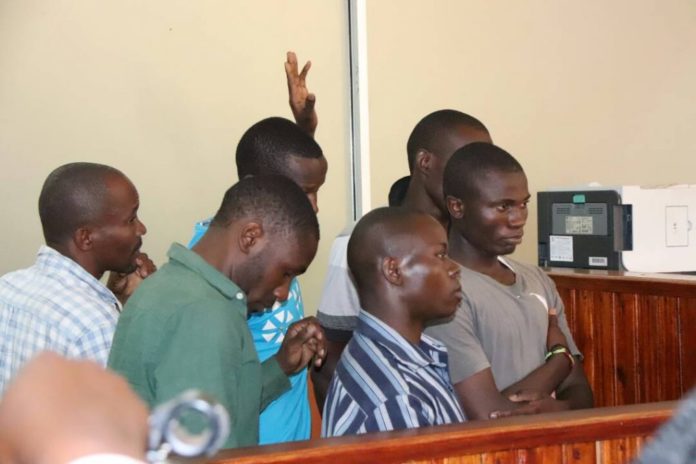
Tensions high as Uganda anticipates tabling of Age Limit report

Chaos at Uganda Parliament

With only a few hours left for the much awaited tabling of the Constitutional Amendment No.2 Bill 2017, tensions have heightened both within parliament and country at large.
The Members of the Legal and Parliamentary Affairs Committee who were camped at Serena Hotel Kigo finalized their report writing and all left is having it scheduled on the order paper for the Bill’s second reading.
Information coming from the Legal Committee indicates that the legislators tasked with scrutunising the Bill that was tabled by Igara West MP Raphael Magezi voted to have the upper and lower 75 and 37 year cap lifted from the constitution.
However, the camp opposed to the lifting of the Presidential Age Limit snubbed the reporting session on grounds that parliament declined to avail funds to the Committee to carry out country wide consultations on the proposed amendment.
A number of activities have been taking place at parliament where the security chiefs Kale Kayihura (Inspector General of Police) and David Muhoozi Commander of Land Forces, Frank Mwesigwa Kampala Metropolitan Police Commander alongside top police officers held a closed door meeting with Speaker Rebecca Kadaga.
Kadaga is expected to preside over the plenary sitting tomorrow, after her Deputy Jacob Oulanyah declined to preside over the lifting of presidential term limits.
The group is said to have discussed matters regarding security deployment both within and outside parliament and the move is intended to avoid the September 27th like drama.
This is in response to threats by Opposition to hold protests outside parliament as MPs drive inside parliament premises ahead of the much anticipated debate and vote on the amendment.
However, after getting wind of news that Kadaga had met with Security Chiefs, MPs opposed to lifting of Presidential Age Limit issued warning to the Speaker not to allow any security operatives inside Parliament Chambers during tabling of the report.
“We want to call upon all those negative elements, all those people who are against the rule of constitutionalism in this country that let them not dare to invade parliament again,” Theodore Sekikuubo Lwemiyaga County MP said.
He made the remarks today during a joint press briefing held between Opposition MPs and NRM ‘rebel’ MPs, where they were updating the public ahead of the report tabling.
Ssekikubo added; “We do not expect to see the mambas surrounding this parliament because this is not a blockade entrenchment. It’s a parliament for all Ugandans to witness how all members will be speaking to the constitution amendments.”
Speaking to journalists after his meeting with the Speaker, Kayihura told journalists that his meeting followed complaints aired by Kadaga that she felt insecure at parliament following threats from her troops about the security at parliament.
This according to the IGP prompted him to intervene and discuss ways in which to secure the parliament premises.
A section of MPs who were forcefully evicted out of the chambers in September following their suspension by the Speaker were seen matching to her office, demanding an explanation and identity of the plain clothed security operatives that carried them out of the House on the fateful day.
On the ruling side, legislators subscribing to the NRM have been summoned for an urgent caucus meeting tomorrow at 9:00am ahead of tabling of the report in the afternoon.

Additionally, the MPs opposed to the controversial constitutional amendment have vowed to present a minority report to the floor of Parliament tomorrow.
The meeting was also attended by; Muhammad Nsereko, Monica Amoding, William Nzoghu, Robina Ssentongo, Sam Lyomoki, John Baptist Nambeshe, Roland Mugume, Theodore Sekikuubo, Ann Ebaju Adeke, Felix Okot, Francis Mwijukye and Patrick Nsamba.
Wilfred Niwagaba, Shadow Attorney General who is also a member of the Legal Committee faulted the Committee for abdicating its own duties, saying that despite the fact that the Committee was mandated to do the consultative process with the people of Uganda and seek people’s views on the Bill, the Committee only met few individuals within the premises of Parliament.
Muhammad Nsereko, Kampala Central MP Nsereko who was the champion of drafting the minority report called on Ugandans not to lose hope but continue calling their individual MPs to warn them against associating themselves with the Constitutional Amendment.
Nsereko baptized the minority report as ‘Wise men and women’s report” vis-à-vis the report of those that want to stampede the nation.
He explained that 120 MPs confirmed to vote NO, while the undecided are 25 stating: “We shall not unfold the content of the minority report because it is contrary to our rules of parliament, but the justifications are clear there in. We shall continue persuading those that are at the borderline, those for NO are a big number, those that are still un decided are also a big number and those that are PRO are also a big number but we can say that by the end of this week all options are still on table.”
Another ‘rebel’ MP, Monica Amoding (Kumi Woman MP) called on Ugandans to keep their ears and eyes on TV, watching and listening to all proceedings and witness how the people they voted betray their own nation.

Stories Continues after ad