Stanbic Bank
Stanbic Bank
17.6 C
Kampala
Stanbic Bank
Stanbic Bank
Home Blog Page 1696

Wizkid Steal’s Star Times ‘show’, gives away US$5000

Wizkid performs for the crowds

Following a two year wait, Wizkid finally performed in Kampala Thursday, and gave away US$5,000 (Shs18m) to a ‘double lucky winner’ who had earlier been announced winner of Shs10 million courtesy of show sponsors Star Times.

To be precise, the show was worth the long wait, but a reasonable number of Wizkid’s fans were mad at his decision to cancel last year’s show, which was supposed to be in celebration of the digital TV provider, Star Times ‘6th Birthday’ in Uganda.

And thrue to form, before Wizkid performed his last song, Ojuelegba, Star Times Uganda Executive Vice President, Aldrine Nsubuga took to the stage to reward a winner in their ongoing campaign. A one Kankunda had won Shs10m.

“Can we have The Star Boy officially hand over this prize of Shs10m to our winner… ” Nsubuga invited Wizkid.

Wizkid received the microphone and all he said was: “Congratulations. But that’s what they have given to you. From myself, I will give you $5,000 (about Shs18million),” he announced leaving Nsubuga speechless and attracting ululations from the audience.

But earlier some people in this same audience had expressed disappointment via social media posts – not surprising that all Wizkid managed to attract was just a ‘fair turn-up’, comprising of mainly holiday makers.

The show kicked off at 7pm with curtain raisers among whom included Vinka, Bennie Gunter, Levixone, Exodus, Fille, Vampino, Winnie Nwagi, Nina Roz and Fik Famaica, all of who put up amazing performances save for Vinka who seemed to have vocal problems.

The long awaited artiste, Wizkid backed by his band finally hit the stage at 10:30pm with one of his hits, ‘Caro’ amidst screams from the crowd which seemed to know almost all the lyrics.

This was followed by another hit, ‘On Top your matter’ further hyping the mood at the venue.

This was followed by his other hits like; Closer, Tease Me, Holla at Your Boy, In my Bed, Baba Nla, Show you The Money and what has come to be known as the African anthem, Ojuelegba.

“It was a hit after hit show. Though he never performed all his songs, I’m satisfied with what he has served,” remarked a fan after the show.

Indeed due to time constraints, he never got to perform many of his songs as the show ended at exactly midnight.

But without a doubt, his performance was worth the fee fans parted with to access the venue. By the end of the show, almost everyone’s impression of the musician had changed.

More to that, he had even apologised. “Uganda, I am really very sorry for not making it here last time. I am very sorry and I mean it. To make it up for the missed show, I am going to return for a free show,” he apologised mid-way his performance.

Though, the biggest highlight of the when was when he completely consolidated his show when the organisers attempted to ‘steal’ it away from him.


What a show it was!


Stories Continues after ad

Jerusalem: Trump move protests leave 16 Palestinians wounded

LAS KAMM/AFP/Getty Images)

At least 16 Palestinians have been wounded in clashes in the occupied West Bank, during protests against US President Donald Trump’s recognition of Jerusalem as Israel’s capital.
Reports suggest the injuries are mostly from tear gas and rubber bullets, but at least one was hurt by live fire.
Israel has deployed hundreds of extra troops in the West Bank.
Mr Trump’s announcement – met with worldwide dismay – reversed decades of US policy on the sensitive issue.
Palestinians in the both the West Bank and the Gaza Strip have gone on strike and taken to the streets in protest.
Many of Washington’s closest allies have said they disagree with the move, and both the UN Security Council and the Arab League will meet in the coming days to decide their response.
There are fears the announcement could lead to a renewed outbreak of violence. The Palestinian Islamist group Hamas has already called for a new intifada, or uprising.
Why did Trump reverse US policy?
The US president said on Wednesday that he had “determined it is time to officially recognise Jerusalem as the capital of Israel”.
“I’ve judged this course of action to be in the best interests of the United States of America and the pursuit of peace between Israel and the Palestinians,” he said.
He said he was directing the US state department to begin preparations to move the US embassy from Tel Aviv to Jerusalem.

Despite warnings of regional unrest over any such move, the decision fulfils a campaign promise and appeals to Mr Trump’s right-wing base.
Recognising Jerusalem as Israel’s capital was “nothing more or less than a recognition of reality”, he added. “It is also the right thing to do.”
 Trump’s speech in full
 Media reacts to ‘slap of the century’
 Five key takeaways from speech
 How are capital cities chosen?
Mr Trump said the US would support a two-state solution – shorthand for a final settlement that would see the creation of an independent Palestinian state within pre-1967 ceasefire lines in the West Bank, Gaza Strip and East Jerusalem, living peacefully alongside Israel – “if agreed to by both sides”.
The president also refrained from using Israel’s description of Jerusalem as its “eternal and undivided capital”. The Palestinians want East Jerusalem to be the capital of any future Palestinian state.
What has been the reaction?
Israeli Prime Minister Benjamin Netanyahu said Israel was profoundly grateful to Mr Trump, who had “bound himself forever with the history of the capital”.
He also said Israel was “in touch with other countries to follow suit. I have no doubt other embassies will move to Jerusalem – the time has come”. He did not name any of these countries, although the Philippines and the Czech Republic have been mentioned in Israeli media.
The mood has been very different on the Palestinian side.
Ismail Haniyeh, the leader of Hamas which runs the Gaza Strip, has called for a “day of rage” on Friday and said it should “be the first day of the intifada against the occupier”.
“We have given instructions to all Hamas members and to all its wings to be fully ready for any new instructions or orders that may be given to confront this strategic danger,” he said in a speech in Gaza.
Meanwhile, Palestinian President Mahmoud Abbas’ rival Fatah movement is seeking to protest through diplomatic means, by filing a complaint to the UN Security Council and pushing for a strong stance by the Arab League.
“We are going to declare the United States disqualified as co-sponsor of any peace process or political process,” spokesman Dr Nasser Al-Kidwa said. “In our mind, it has lost its ability to do or perform any efforts in this regard.”
 Which countries condemned Trump’s move?
There has also been widespread condemnation across the Arab and wider Muslim world, with Turkey’s President Recep Tayyip Erdogan warning Mr Trump that he was “throwing the region into a ring of fire”.
The leaders of the UK, France and Europe have all said they disagree with the US announcement. French President Emmanuel Macron said it contravened international law and UN Security Council resolutions.
Why is the announcement significant?
Jerusalem is of huge importance to both Israel and the Palestinians. It contains sites sacred to the three major monotheistic faiths – Judaism, Islam and Christianity.
Israeli sovereignty over Jerusalem has never been recognised internationally, and all countries maintain their embassies in Tel Aviv.
 What are the alternatives to a two-state solution?
 Why settlement issue is so difficult
East Jerusalem, which includes the Old City, was annexed by Israel after the Six Day War of 1967, but before now it has not been internationally recognised as part of Israel.
According to the 1993 Israel-Palestinian peace accords, the final status of Jerusalem is meant to be discussed in the latter stages of peace talks.

Stories Continues after ad

Africa’s richest man on world’s most expensive advertising space

Aliko Dangote on the Nasdaq Tower in Times Square, New York

Aliko Dangote, Africa’s richest man is the only African on the Bloomberg 50 list of this year’s most influential people, and his photo was displayed on Wednesday on the Nasdaq Tower in Times Square, New York the selection.

The NASDAQ Tower is considered the most visible LED video display in Times Square and is one of the most valuable advertising spaces in the world. It’s the largest continuous sign in Times Square and has close to 9,000 square feet of display space — about a quarter of an acre.

Stories Continues after ad
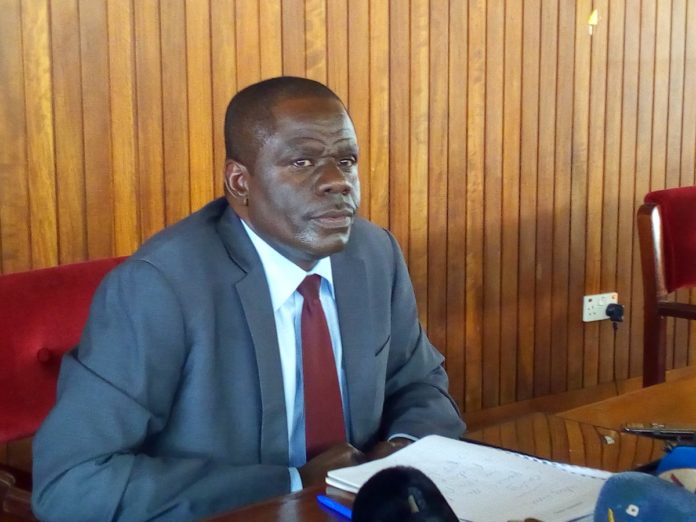
Tumwebaze launches e-tax system for local governments

Gender, Labour Minister Frank Tumwebaze.

The Minister for Information and Communication Technology (ICT) Frank Tumwebaze has today launched an automated revenue collection system dubbed the e-logRev that is aimed at increasing revenue collections and efficiency gains in local tax administration.

The E-logRev is an online tool for local tax payers’ registration, payment assessments, e-payment, reconciliation, enforcement, reporting and integration with other government agencies.

During the launch at Hotel Africana, Tumwebaze said the system will reduce on dependency on the central government in transferring of data and funds and also improve transparency in revenue management “since there is no person required to collect money on behalf of revenue collection body.”

The ICT Minister also lauded the Ministry of Local Government for embracing technology, noting that an increase of online services leads to the lowering of broadband costs.

“Few people consuming internet has led to high costs of data. I will encourage communication companies to increase on the connectivity of reliable internet to the remotest village in this country,” he said.

“You can’t know what ICT requires unless when expose it to a problem for solution; technology is unavoidable, you will resist it but one day it will disrupt or harass you, embrace the trend,” Tumwebaze added.

Speaking at the same function local government state minister Jennifer Namuyangu Kacha, said the e-collection of taxes is an effective tool, noting that since the Uganda Revenue Authority launched the E-payment system in 2009, the tax body had increased local revenue collection from Shs 4.4b to Shs 6.6b.

Stories Continues after ad

Popular food dishes across Africa

Today we explore the popular foods in different regions in Africa. This information was retrieved from a survey done by  Jumia Travel and Jumia Food. Find out if any of your top dishes appears on this list below;


Waakye
This is a rice and beans combination which is both delicious and nutritious. This dish is popular in Ghana


Thieboudienn

Popular in Senegal, Thieboudienn is a traditional dish made from fish, rice, tomato sauce and other vegetables.

The Ndole
Just like the Cameroon flag, it is revered by children and worshipped by adults. The Ndole is a mixture of spinach, fresh peanut paste, crayfish, shrimp and beef.

Ofada rice
A specially made delicacy with a unique aroma and original flavor in Nigeria. It’s rich brown colour and exotic taste make it the perfect combination of sweet and saucy.


Nyama Choma
Nyama Choma means “barbecued meat” in Kiswahilli. Usually eaten with hands in Kenya it has side dishes which include kachumbari salad and ugali.

The Rolex
This dish has nothing to do with the watches, it is a favourite snack in Uganda. The name is derived from rolling an egg into a chapatti.

Injera with Doro
Doro is a thick spicy stew served with boiled eggs, served with Injera that is made out of fermented teff flour, commonly eaten in Ethiopia. The stew is put on top of the bread allowing it to soak up the tasty juices.


Garba
Garba is the slang name for Attieko in Ivory Coast. It is a popular dish and consists of Attieko in a couscous shape and pieces of fried salted tunas.

Chips Mayai
Popular in Tanzania, this meal consists of French fries and eggs (omelet)

Couscous
Couscous is a North African dish made of semolina and is traditionally served with various meats and vegetables.

Cachupa Rica
This is a famous dish from the Cape Verde islands. It is a slow cooked stew of corn, beans, cassava, sweet potato, fish or meat. Each island has it own regional variation.

Bitlong
Bitlong is a variety of dried, cured that originated in South Africa. Various are used to produce it ranging from beef and game meats.

Stories Continues after ad

Opposition launches massive anti-age limit removal campaign

RED BRIGADE: LoP Winnie Kiiza and Shadow Internal Affairs Minister Muwanga Kivumbi, all dressed in red, address a press conference

As the time draws close for the tabling of the Constitutional Amendment No.2 Bill 2017, the Opposition MPs have launched a massive anti-Age Limit removal campaign, warning police chief General Kale Kayihura of a restive week ahead.

Addressing journalists at Parliament this morning, Muwanga Kivumbi (Democratic Party, Butambala County MP) revealed that the new campaign kicks off today and will run for seven days ahead of tabling of the report by the Legal and Parliamentary Affairs Committee.

Among the activities lined up for the campaign are calls for the electorate to persistently call their MPs and warn them against lifting of presidential age limit, visits to MPs homes, and all people opposed to the move asked to dress in red attire from head to toe.

“This country is going to be painted red and General Kale Kayihura (Inspector General of Police) can’t stop the wind that is going to blow in the country,” said Muwanga Kivumbi, who is also the shadow minister for internal affairs.

On Tuesday, December 12, 2017, when the Committee is expected to table its report, the Opposition has vowed to organize a parade along Parliament Avenue where MPs headed to Parliament will be met with a crowd of voters ahead of the anticipated meeting.

Meanwhile, the Opposition MPs have also accused their NRM counterparts of fronting support for the controversial Bill in order to have their tenure extended by two years, and Kivumbi termed the latest move by the ruling party as diversionary.

“These people are simply being diversionary. These are cheats because none of them consulted their voters on having their term extended. They have realized their ground can’t hold; they are simply realizing they are going to lose. Let them be truthful to their voters,” the outspoken MP said.

The proposal to extend the term of office for MPs was raised by controversial Arua Municipality MP Abraham Abiriga, who said that the current five year term isn’t enough for the MPs to perform their duties in the constituency, as they spend the two years paying off debts they accumulated during campaigns.

He even informed journalists since taking over office close to two years back, he has been paying off debts and is currently left with a debt of Shs41 million.

Abiriga said the plans are in final stages to have the Bill tabled and the proposal has received overwhelming support from all MPs from across the political divide.

“When we sit in secret meetings, they are happy with the proposal. Even those who are saying they oppose, they aren’t seriously opposing at all because everyone is going to benefit. It gives me enough time to deliver because the first year, there is a lot of debts,” Abiriga, a leading protagonist for the removal of the 75-year presidential age limit that was tabled by Igara West MP Raphael Magyezi, said.

Antagonists of the Bill like Muwanga Kivumbi say that the removal of age limits is aimed at paving the way for a ‘Museveni life presidency’.

But two days ago, while addressing the MPs on the Legal and Parliamentary Affairs Committee, President Yoweri Museveni said the 75-year cap under the current constitutional dispensation is ‘discriminatory’ and contradicts Article 1 of the Constitution.


Stories Continues after ad

Shaban fires Hippos to a winning start

U20 star striker Muhammad Shaban moves in for a tackle

Uganda Hippos stunned hosts and defending champions Zambia in the opening match of the 2017 COSAFA U20 tournament.

Two second half goals from KCCA striker Muhammad Shaban within a space of three minutes were enough for Uganda to cruise past the Young Chipolopolo stars in a perfect start.

In the other fixture in Group A, Malawi edged Swaziland in a five-goal thriller with a 3-2 victory.

Uganda is now top of group A with a better goal difference over Malawi.

Uganda’s next game is against Swaziland on Friday at the Arthur Davis Stadium in Kitwe.

In a related development, North African guests Egypt got their tournament off to a winning start in a hard-fought 1-0 success over Mozambique.

Hussein Abdelkader grabbed the only goal of the game four minutes from time for what turned out to be a deserved victory for the Young Pharaohs.

Only the top team in each pool and the best runner-up advance to the semifinals that will be played on December 14.

Elsewhere, spirits are high in the Uganda Cranes camp with a day left to their second group B fixture against South Sudan in the CECAFA Senior challenge cup 2017 in Kenya.

Cranes kicked off their title defence on low note with a goalless draw against a resilient Burundi side at Bukhungu Stadium in Kakamega on Monday afternoon.


Uganda U-20 XI: Saidi Keni (G.K), Fred Okot, Mustapha Kizza (Victor Matovu), Geofrey Wasswa, Mustapha Mujjuzi, Abubakar Kasule, Julius Poloto, Frank Tumwesigye (Shafiq Kuchi Kagimu), Muhammed Shaban, Steven Mukwala, Pius Obuya (Allan  Okello)

Subs Not Used: Ali Mwerusi (G.K), Eric Kibowa (G.K), Andrew Isiagi Okiring, Mujahid Ogama, Hamisi Tibita, David Owori


Stories Continues after ad

Trends that generate huge data and startup opportunities

By Martin Zwilling

A tidal wave of valuable data is surging from the Internet and connected devices today, and the volume is growing exponentially each year. It’s enough to drown any business which tries to fight it or ignore it, and it’s an opportunity to ride higher and faster than even the successes of Google and Facebook, for those startups that use it as their driving force.

Per the latest study by networking giant Cisco, the world’s yearly mobile data traffic has grown 18-fold over the past 5 years, reaching 7.2 exabytes per month at the end of 2016, of which half was video. According to the classic book “Data Crush,” by Christopher Surdak, data in all formats will soon be the largest source of new opportunities for startups, or death.

According to what I see, as outlined by Surdak, this data surge is being driven by the following six technological and social trends:

Mobility: smartphones, tablets, and the “Internet of things.” Smartphone penetration in the U.S. exceeds 80 percent, and these generate far more data from their non-phone functions than voice. In addition, more people in the world now own cell phones than tooth-brushes. All devices are becoming self-aware, user-aware, and Internet connected.

Virtual living: the rise and growing dominance of social media. Facebook has created an environment where millions of people can hold billions of conversations with people and companies, transforming how people expect to interact with each other and the world. For startups, this is an engagement opportunity worth billions of dollars.

Digital commerce: infinite options for buying goods and services online. Data-enabled shopping has completely changed our purchasing experience, has undermined some of the greatest brand names, and has created some new brands, like Amazon, that now dominate. There is still infinite room for new startup sales modes and models.

Online entertainment: millions of channels, billions of actors. With the adoption of the Internet, digital entertainment has rocketed across the world, changing how people entertain themselves. YouTube is now the 800-pound gorilla of entertainment. Online gaming has moved from the geeks to the mainstream. The audience is now the actors.

Cloud computing: the death of dedicated infrastructure. More and more company and personal services are being virtualized to the Cloud. Many companies are already seeing their computing costs drop by thirty percent as they move in this direction, providing new startup opportunities with the Everything as a Service (EaaS) trend.

“Big data:” learning from the flood. Big data is mining the storage for knowledge. This gives rise to the personalization and customization that we all want. Analytics will soon drive nearly all business decisions for any company that wants to remain relevant to its customers. Startups are in the best position to provide the analytics, and use them first.

As an entrepreneur, what steps can you take to help your business not only survive the data hurricane, but to thrive under these new and challenging conditions? Surdak emphasizes that the goal is to either mitigate some of the pressure caused by data growth or to put that pressure to work for you in growing your startup and remaining competitive:

Focus: play to your strengths. Determine your core business strategy and resolve to remain true to it. Make strategic versus opportunistic decisions.

Accelerate: speed is life in this new world. Look for and reward quantum changes, like cutting cycle time in half, in your processes, products, and services.

Data enable: use metrics and measurements. Extend data metrics into non-traditional channels, such as email, internal social media, and customer collaboration platforms.

Quantification: big data, bigger results, and controls. Startups should seek to continually improve performance through statistical analysis and predictive monitoring.

Gamify: engagement to get what you pay for. Use internal collaboration platforms, then extend to online customers through your website, blogs, and social media.

Crowdsource: putting your audience to work beyond customers. Look beyond today’s requirements for entire new market opportunities.

You need to start now to understand the trends and specifics of the information tidal wave that is building up in front of us. Use the steps outlined here to stay ahead of it, and use its power to propel your startup into the future, ahead of your competition. The possibilities are endless, but the downside will be painful.

Stories Continues after ad

Africa Trade and Investment Global Summit for June 2018

Africa Trade and Investment Global Summit

The 2018 edition of Africa Trade and Investment Summit (ATIGS) is scheduled for June 24-26, in Washington DC, USA, organisers say, with Uganda which has discovered oil and is set to start drilling by 2020 being among the African countries expected to attend.

ATIGS is a high-level conference and trade platform designed specifically to promote and facilitate international trade and foreign direct investment in Africa, with attendance projection of over 2,000 participants from more than 70 countries meeting for a three-day networking, marketing, matchmaking and deal making among others.

The conference covers 16 economic and natural resources sectors such as energy, minerals, telecommunications, finance, agro-processing among others.

The event will have the participation of more than 150 speakers, over 160 exhibitors, high-level government delegations, project developers, business leaders, trade promotional organizations and investment promotion agencies from various African countries, and over 350 global investors including pension funds, sovereign wealth funds, private equity and asset management firms.

The event will feature African countries’ pavilions with representative companies sourcing for international partners and investments, and government agencies showcasing the wide range of trade and investment opportunities that are available in their respective countries.

“There will also be Middle East, Europe, USA, Canada, and Asia exhibition/pavilions representing companies and government agencies with interests to engage with Africa,” indicates a recent brief statement.

The event is sponsored by Africa Global Chamber of Commerce, The Africa Society, International Trade Council, World Trade Centre, Capital Consulting and Energy and Environment Partnership among other global institutions.

Prominent global figures like Julian Roberts CEO, Old Mutual and African businessmen like Africa’s richest man, Aliko Dangote, President and CEO Dangote Group and Co-Chair of the World Economic Forum on Africa; and billionaire businessman Tony Elumelu, Chairman of Heirs Holdings are expected to grace the event more so to speak about the opportunities that the resource-rich continent offers.

African political leaders argue that trade and investments, rather than aid, will spur the continent’s development much faster.


Stories Continues after ad

Climate change affects Uganda’s coffee production – EPRC

Mature coffee beans ready for picking

Coffee is Uganda’s most valuable agricultural export commodity, contributing US$ 544 million in 2016/17, about 20 percent of total export earnings.  Furthermore, the crop, employs over 3.5 million households.

However, despite such rosy status, a recent study by the Economic Policy Research Centre (EPRC), shows that the advent of climate change is a double blow to the technologically constrained coffee production system in Uganda.

‘Between 2007 and 2016, Uganda lost coffee seedlings worth US$ 10 million. In 2015/2016 alone, seedlings worth US $ 3 million did not germinate due to drought’, the EPRC Policy Brief indicates in part.

According to EPRC, predictions demonstrate that climate change is likely to stifle the coffee development program in Uganda at three levels: by reducing survival rate of coffee seedlings to expand coffee acreage, exacerbate productivity challenges in an inherently constrained rain-fed low input coffee production system.

It is also likely to contribute to reduction in quality of coffee beans leading to low export earnings. ‘This is likely to slow down the low middle-income status by 2020 target of exporting 20 million (60 Kg bags) annually’, warns the Brief.

Further, the evaluation report by the Operation Wealth Creation together with the President’s Office shows that because of drought, the survival rate of 93 million coffee seedlings planted during the first season of 2016 was only 42 percent, with 39 million seedlings surviving.

Rising temperatures, the Brief notes, are expected to render certain low altitude areas less suitable or even completely unsuitable for Robusta coffee growing, implying that fewer parts of Uganda will be suitable for coffee production.     “With an increase in temperature of only 20C, there would be a dramatic decrease in amount of land suitable for growing Robusta coffee in Uganda. As suitable Robusta coffee growing areas reduce, some farmers will try to push further up the mountains. This will bring coffee into conflict with other land uses and driving migration out of coffee-producing areas to sustain production,” it adds.

The Brief further notes that expanding acreage has been the main option pursued by government to get to the 20 million bags of coffee target by 2020. ‘It is apparent that since early 2000s till 2015, Uganda has by and large promoted coffee acreage expansion from about 320 to about 402 thousand hectares, while paying minimal attention to improving productivity’, it says.

Authors of the Brief note that an average threshold of 600 kilograms per hectare has been maintained in Uganda-under ‘rain-fed’ production farming system. “As a consequence, this has had limited impact on output-which has remained stuck at 3.5 million bags,” they say.

They say that countries such as Vietnam aggressively adopted both extensive planting and irrigation intensification to raise yield per hectare to 2,100 kgs. ‘For Vietnam, this approach led to steady progress in increasing coffee production and export and by 2015, the country had attained annual export volumes of 23.4 million bags of coffee’, they note in the Brief.

Given the devastating effects of climate change on coffee, the Brief says farmers will have to cope with additional farm investments required to adapt to climate change. One of the avenues, the Brief says, is allowing farmers have a fair share of profit margins that accrue deeper along the value chain as proposed and practiced by the National Union of Coffee Agribusinesses and Farm Enterprises (NUCAFE).

But most coffee farmers in Uganda are ill prepared to tackle climate change, and are unlikely able to invest in small innovation strategies to cope with climate change, the Brief notes, calling for strong and effective institutional arrangements that guarantees stability in incomes from coffee and hence high returns on coffee farm investment. The farmer ownership model now provides a sustainable value chain adaptation strategy the Uganda Coffee Development Authority (UCDA) should scale up for more efficient climate smart agriculture, it says.

NUCAFE, estimates that if Uganda were to roast and package all coffee beans exported as raw green beans worth US $ 400 million, the export earnings could more than quadruple to US$ 2 billion.


Stories Continues after ad