Stanbic Bank
Stanbic Bank
22.9 C
Kampala
Stanbic Bank
Stanbic Bank
Home Blog Page 1695

‘Broke Rich Gang’ members call off party

CANCELLED: The Rich Gang Party

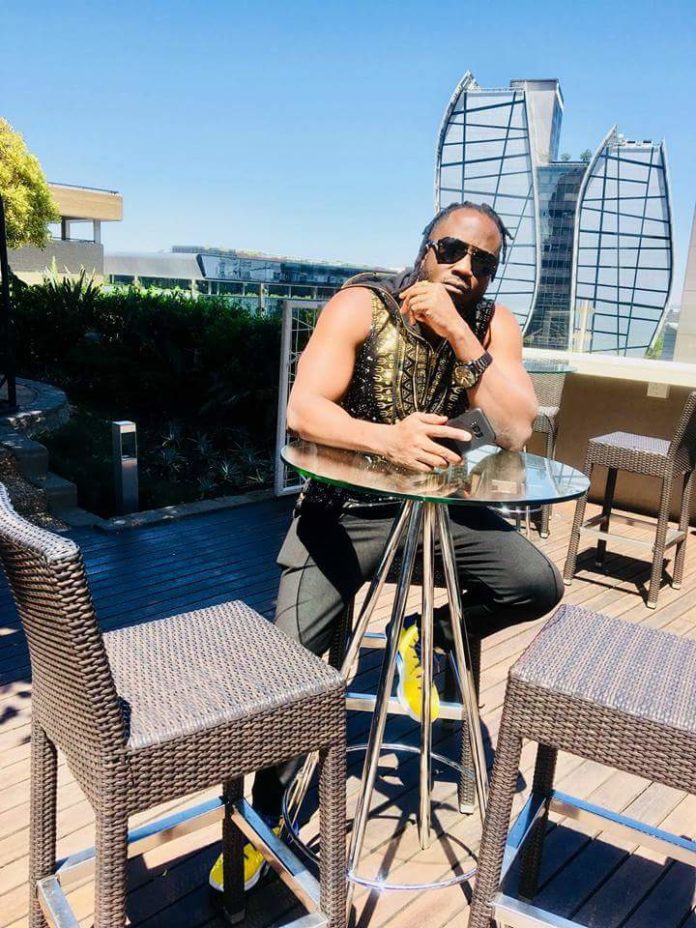
Tycoon Ivan Ssemwanga’s death in May could also have signalled the ‘death’ of the annual ‘Rich Gang Party’ and even when his associates Eddie Cheune, King Lawrence and Prince MJ tried their all best to circumvent this fact they have finally been humbled by life.

Without giving any reason, they have reportedly called off this year’s party, which was earlier scheduled for December 19 and according to a source close to the trio this is because of financial constraints.

Apparently, Cheune tried to solicit for a loan from socialite Sulaiman Kabangala (SK) Mbuga but his efforts didn’t bear any fruit. Cheune currently lives in Dubai with Mbuga.

“Breaking news: The rich gang members have decided to cancel the ug don memorial party this year due to some reasons we can’t state at the moment. Sorry for the inconvenience until next year,” Prince MJ confirmed.

However, a friend to King Lawrence said that the party had been called off over immigration issues, following the reported confiscation of King Lawrence’s passport over fraud related charges. The passport is reportedly still being held by immigration officials.

And sources said it’s the reason why King Lawrence never buried his cousin Ssemwanga, only to arrive in the country days later by road.


Stories Continues after ad

MPs issue ultimatum on government on downsizing agencies

NRM's Silwanyi at a past press conference at Parliament of Uganda

A section of MPs have issued a thirty day ultimatum to Government to merge, scrap and downsize public Ministries, Departments and Agencies (MDAs) to curtail duplication and stop wastage of tax payers’ money.

The MPS told journalists during a press briefing at Parliament that failure by the Executive to come up with a concrete plan to curb the expenditure will leave them with no option, other than table a Private Member’s Bill to have all the 119 agencies reviewed.

The proviso by the MPs follows a November 17, 2017 report by the Internal Security Organization (ISO) conducted between July and November 2017 that called for merging of public agencies after discovering a series of wasteful expenditures within the public sector.

Solomon Silwanyi, Bukooli Central MP, pointed specific accusing finger at the Uganda National Roads Authority (UNRA) and wondered why the Authority’s Executive Director Allen Kagina hasn’t vacated the institution following the unveiling of the report, which implicated the agency in a raft of miscreant acts.

“By now Kagina should be packing her luggage, because UNRA is the most extravagant agency. They use tax payer’s money for outings, dance halls, taking girlfriends on trips. In fact UNRA is the worst spender on entertainment according to last year’s budget,” Silwanyi said. The legislator also called for UNRA to be restructured and taken back under the Ministry of Works and Transport.

Silwanyi, who doubles as Vice Chairperson NRM Parliamentary Caucus, further demanded for the review of all the 119 agencies, saying not much has been achieved, with many of the agencies instead increasing government expenditure.

David Abala, the Ngora County MP, questioned why with all the evidence of poor performance and corruption marring the Government agencies, recommendations to have their existence reviewed has remained just on paper, without any implementation.

He termed as ‘absurd’ the expenditure of billions of funds in terms of wages, amidst the tough economic challenges the country is facing.

Julie Mukoda, the Mayuge district Woman MP also weighed in the matter, wondering how the Executive would sit with their hands folded as the agencies spent Shs151 billion on fuel consumption, despite the poor services the Agencies are rendering to citizens.

Herbert Kinobere, the Kibuku County MP, blamed the wastage on lack of coordination amongst mother Ministries that are meant to supervise these agencies.

Kinobero pointed out that it is within public knowledge that the agencies have a bigger budget compared to their mother Ministries and called on the Executive to merge the agencies, if they wish to have service delivery trickle down to the masses at the grassroots.

Kasozi Mayombo, the Bukoto Mid-West MP, noted that the move by MPs shouldn’t be interpreted as witch-hunt of the Authorities but as means to improve service delivery.

The MPs argued that for the case of a few agencies performing well like Uganda Heart Institute and Uganda Cancer Institute will have their autonomy guarded, and new guidelines on how to conduct their business will be issued.

The debate on the ‘bloated’ government gained public attention following a July 17, 2017 letter authored by President Yoweri Museveni in which he called for an investigation to be carried to forge ways in which administrative units in the country would be downsized.

The President’s orders to scale down on government authorities, commissions and para-statals were given to Matia Kasaija, Minister Of Finance, Planning and Economic Development, Muruli Mukasa, the Minister of Public Service, Esther Mbayo, the Minister for the Presidency, John Mitala, the Secretary to Cabinet and Chairman National Planning Authority.

“I want efficiency with no further delays. You have up to December 20th 2017 to propose a plan to Cabinet,” The President wrote in his stern letter, titled ‘Mushrooming Agencies or Authorities’.

Subsequently, the ISO produced a report indicating that a number of Government agencies were spending billions of shillings on fuel, foreign travel, consultancies and salaries, compared to their counterparts in Ministries.

As if that isn’t enough, the Security report also indicated that the public Agencies spend a lot of their monies on workshop and advertisements.

The ISO Director Political Affairs Lt. Col Joseph Aliganyira, revealed that their investigation revealed that some of the said Agencies and Ministries are fond of inflating their budgets to create avenues for siphoning public funds.


Stories Continues after ad

Coca-Cola signs plastics recycling deal in western region

Simon Kaheru

Plastic Recycling Industries (PRI), an affiliate arm of Coca-Cola Beverages Africa (CCBA) Uganda in Nakawa, Kampala, has signed a Memorandum of Understanding (MoU) with Plastics Collection Centre in Masaka to collect plastics for recycling from Western Uganda.

The PRI factory has processed more than 2,000 tonnes of plastic waste so far this year alone.

Signing on behalf of the Masaka Collection Centre, Director Andrew Bownds, pledged that the Centre would collect fifteen (15) tonnes of plastic waste a month for the first six months, and would increase collection to twenty (20) tonnes of plastic waste a month thereafter, with a future target of 50 tonnes.

“We are happy with the partnership we have with Coca-Cola Beverages Africa. In Masaka, we are operating the Collection Centre in partnership with the Masaka Diocese, who have provided the land, and we are grateful to Father James Sendege for the support,” Mr. Bownds said.

He thanked Coca-Cola Beverages Africa for enabling the Masaka Collection Centre to create 50 direct jobs.

“We are happy that this project has provided employment to youth and women in Masaka, and to the disabled. We work with the Masaka Disability Union who on their own deliver up to eight (8) tonnes a month to the Masaka Collection Centre using their network mobile collection points,” he said.

Norah Odwesso, Group Public Affairs and Communications and Executive Director for Coca-Cola Beverages Africa (CCBA), said the Group was excited with the progress Uganda has made with recycling and environmental conservation through the collection.

“Packaging is a valuable resource for economies around the world. Our global commitment as the Coca-Cola system is to ensure packaging continues to provide great value to our consumers. While doing so, we should ensure we continue to conserve resources and protect the environment – which Uganda is doing very well at Plastic Recycling Industries as a global shining example,” she said.

Ms. Odwesso also thanked the Kampala Capital City Authority (KCCA) which is in partnership with Coca-Cola Beverages Africa in running collection centres in Kampala.

Simon Kaheru, Public Affairs and Communications Director at CCBA Uganda, welcomed the partnership with the Masaka Collection Centre and encouraged more partners in other parts of Uganda to join in collecting and recycling plastic waste.

“We all have a responsibility to conserve our environment by getting rid of plastic waste. Coca-Cola Beverages Africa is taking leadership through Plastic Recycling Industries but we must work through partnerships such as the one with Masaka Collection Centre, and more,” Mr. Kaheru said.

The Recycling sector provides income for youth and women in Kampala, and now in Masaka and western Uganda, but we would like to see more of these initiatives so that we take more plastic waste out of the environment and turn it into valuable items and incomes for Ugandans,” he said.

PRI buys the plastic waste and recycles it into flake for export to foreign markets that have included China and India.

Stories Continues after ad

Health ministry declares Uganda Marburg-free

ENGAGED IN HOT ARGUMENT: Health State Minister Sarah Opendi

The Ministry of Health has officially declared Uganda free from the Marburg Viral Disease (MVD). This follows a 42-day MVD surveillance period for contacts of the last confirmed case.

In October the Minister of Health Dr. Jane Ruth Aceng confirmed the outbreak of Marburg in the eastern districts of Kween and Kapchorwa following laboratory tests conducted on October 19 by Uganda Virus Institute (UVRI), which confirmed that a 50-year old female from Chemuron village, Moyok Parish in Kween district had died of the dreaded viral disease.

But addressing journalists today at the Uganda Media Centre, the State Minister for Health for General Duties Sarah Opendi said after the elapse of the MVD circle, results indicated that the virus had been contained.

According to Minister Opendi, after the reported death, the health ministry deployed a rapid response team of highly trained Epidemiologists and infection control experts to Kween and Kapchorwa district who have so far spent Shs3.5 billion since the reported Marburg outbreak.

She disclosed that 311 people were closely monitored, 81 in Kween and 230 in Kapchorwa, following their contact with the confirmed victim.

According to results from UVRI, of those under surveillance 18 developed symptoms similar to MVD but they tested negative, the Minister said.

‘’We are extremely grateful to all our partners who have supported us in response to the Marburg Outbreak in Eastern Uganda’’ Ms. Opendi said.


Stories Continues after ad

Mixed results as Robusta coffee boosts Uganda’s export earnings

Uganda’s export earnings dropped by two percent to US$ 254.8 million in September 2017 from US$ 259.9 million recorded in August 2017, largely on account of a decline in the volume of coffee, cotton and gold exports.

However, according to the monthly Performance the Economy Report for October, on an annual basis the export receipts grew by 11.8 percent to US$254.8 million in September from US$ 227.9 million in September, largely on account of an increase in the volume of Robusta coffee exports.

“The increment in the volume of coffee exports is credited to yielding of newly planted Robusta coffee, consequently growing Robusta exports by 98.9 per cent on an annual basis,” the report states.

According to the report the East African Community (EAC) remained the major destination for Uganda’s exports, in September, followed  by the  Rest  of  Africa, the European  Union  (EU)  and  the  Middle  East. Kenya was the biggest export destination in the EAC region (52.2 per cent) while United Arab Emirates accounted for 90.1 per cent of the exports to the Middle East.

On a monthly basis, exports to the EAC and the Rest of Africa grew by 10.5 per cent and 55.6 per cent, respectively while exports to the Middle East and European Union declined by 16.9 per cent and 18.3 per cent, respectively.

Compared to the same month last year, exports to the European Union, Rest of Africa and EAC increased by 60.7 per cent, 17.1 per cent and 5.6 per cent, respectively while exports to the Middle East declined by 34.1 per cent.

Imports

Total merchandise imports amounted to US$ 467.0 million in September 2017, a 17.1 per cent increment from US$ 398.7 million recorded in August 2017, largely on account of an increase in government project imports related to Hydro Power Projects.  Total private sector imports registered an increase of 6.5 per cent to US$ 402.0 million in September 2017, from US$ 377.6 million in August 2017, supported by a rise in both oil and non-oil imports.

Compared to the same period last year, merchandise imports increased by 7.1 percent, driven by an increase in oil and non-oil private sector imports.

Asia was the largest source of imports for Uganda in September, accounting for 51.6 per cent of the total imports. Middle East and EAC accounted for 15.6 per cent and 14.4 per cent, respectively making them the second and third largest sources of imports. Imports from Asia were mainly from China (29.1 per cent), India (28.0 per cent) and Japan (18.8 per cent). Kenya and Tanzania accounted for 67.3 per cent and 13.7 per cent of the total imports from EAC region, respectively.

The analysis of the export and import figures for September shows that Uganda continues to experience unfavoruable balance of trade whereby the country imports more in value than it exports.


Stories Continues after ad

How to make the dreaded investor due diligence process less stressful and more successful

By Martin Zwilling

In my activities as an angel investor, and my work with new ventures seeking investment, I find the ‘due diligence’ stage to be fraught with the most risk. Usually this stage only really starts after an investor has expressed serious interest, or already informally agreed to invest.

Most founders consider the story already told and the deal pending, so they aren’t sure what more then can do.

Others schedule long and exhaustive practice and coaching sessions for everyone on the team, including showcase customers, to make sure that everyone tells the most positive and consistent story.

Trying to stack the deck probably won’t work, but some effort makes sense, since I have personally seen more than one deal fall apart due to key team members being totally out of sync.

My best advice is to put some structure and discipline into your due diligence preparation, including the following steps:

Schedule a team meeting to bring everyone up to date.  This meeting should include the CEO giving the investor pitch to the whole organization, and distributing the current business plan document to everyone. Since due diligence will include one or more visits from investors, everyone needs to be on the same page, with no surprises.

Identify and resolve any pending personnel situations. You need to brief the investor early if there are organizational or people changes that are in process, or conflicts that may become apparent during the due diligence visits. Make sure everyone accurately posts their role with your startup on social media profiles, resumes, and references.

Set up an interview room, stocked with current documents. The right preparation–including the latest business plan, organizational charts, process documentation, and an assigned executive other than yourself who can explain all of them–will go a long way in speeding up the process and creating a professional impression. Be prepared to follow-up as required.

Ask each of your leads to prepare for an interview. Investors or their consultants will expect to talk to several key personnel, looking for an update on how the business really works, depth of skills, culture, traction, and action plans.

It’s fair for you to ask for a few slides from each in advance, and make sure the overall story is complete and consistent.

Update reference customers, partners, and vendors. Use this opportunity to validate their satisfaction and support for your company and your solution. If you find open issues that can’t be immediately resolved, be sure to proactively communicate these to investors, with an action plan, rather than try to hide or gloss over them.

The key theme for a successful due diligence is full disclosure and no surprises before or after the commitment. If more potential marriages were subjected to the same rigor, the divorce rate would likely not be in the current 50 percent range.

In business as in other relationships, people on the team have to be above reproach, committed, and working on the same goals and values.

Startup equity investments imply a long-term business relationship, lasting five years or longer.  During that period, it is very difficult for either party to get out of the deal, since there is no public market for the stock, and business divorces normally mean bankruptcy.

It’s worth your time to do a little extra work here, and make the honeymoon phase a win-win one for both sides.

You need to remember that investor meetings up to this point have been primarily off-site, with staged demos, and managed personally by the CEO or one or two executives.  Due diligence reverses this process to include on-site visits and informal discussions with any or all members of the team, vendors, and good customers as well as bad.

Based on the size of the investment, and the runway available, the due diligence process can take several weeks, or even a couple of months to complete. Of course, it’s always appropriate to concurrently and openly reverse the process on your potential investor.

A relationship as important as this one should never be a one-way street. Make it work for your new venture.


Stories Continues after ad
Opposition parties join protests against lifting age limit

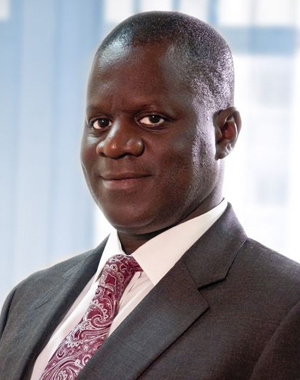
DONT GET EXCITED BY GEN. MUNTU'S eXIST: Patrick Amuriat Oboi.

Opposition political parties have today declared a week of sporadic protests against lifting the presidential age limit that, according to the 1995 Constitution, is capped at 75 years.

The group including leaders of the Democratic Party (DP), Forum for Democratic Change (FDC) and Justice and Equality Movement (JEEMA) joins opposition MPs, who yesterday also launched a similar campaign.

The developments come in the wake of the legal and parliamentary affairs committee preparing to deliver a report constituting ‘people’s views’ about age limit Bill that was tabled by Igara West MP Raphael Magyezi.

In the joint press briefing held at Parliament, the opposition party presidents vowed to lead voters to the august house to ‘instruct’ their representatives to vote against removal of the age limit that has met stiff resistance from many sections of Ugandans who argue that it is aimed at keeping President Yoweri Museveni in power perpetually.

“I call upon the other parts of the country to join the population in Kampala on the day when this bill is to be tabled; we call upon all people to assemble at Parliament,” the newly-elected FDC president Patrick Amuriat Obol, said.

According Amuriat, protestors will be clad in red attire and do not expect any interference from the security agencies.

“We believe the security forces will cooperate with us in whatever we shall do,” he said.

He added: “We will never relent when Museveni is pushing the age limit bill down the throats of Ugandans; the removal of Article 102 (b) will lead to anarchy in this country.”

Democtaric Party boss Norbert Mao urged Ugandans to “stand firm against president Museveni’s despotic ambitions” saying that this is “the beginning of the end of the Museveni regime.”

“We don’t hate president Museveni; we don’t want him to experience what happened to Mugabe, we are just helping him so that the country can test Article 102 (b), because the term limits were not tested,” Mr Mao said.

And JEEMA President Asuman Basalirwa appealed to Speaker Rebecca Kadaga, her deputy Jacob Oulanyah and the Attorney General not to resume discussions about the bill due to pending court injunctions filed at the East African Court of Justice and the High Court of Uganda.


Stories Continues after ad
Umeme customers now scale the one million mark

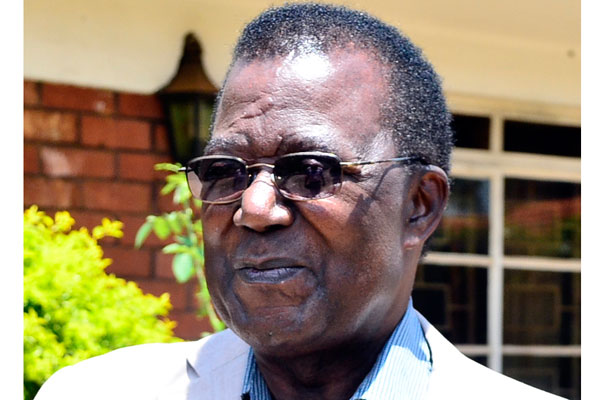
Umeme Deputy Managing Director Sam Zimbe addresses stakeholders

The electricity distribution in Uganda under Umeme has grown from 250,000 customers in March 2005 to over 1,000,000 as of June 30, 2017 with the connections at an average of 13% per annum.

According to Umeme Deputy Managing Director, Sam Zimbe, the company targets to increase electricity penetration to 40 per cent by 2020.

Speaking during the 2018 Tariff Review Public Hearing at Imperial Royale Hotel, Mr. Zimbe also proposed the need to have a  uniform tariff for domestic customers, following several complaints of variation in computation of Yaka tokens by the public.

“The regulatory needs to review the lifeline tariff for all Domestic customers (Yaka user) and set a uniform standing charges” Mr. Zimbe said, adding this will help reduce end user tariffs. Introduction of energy rebate is also key especially for industrial customers, he added.

Further, Mr. Zimbe disclosed that the company had injected about US$ 1.5m in automated metering so as to improve metering and revenue cycle efficiency and, in terms of prepayment metering US$ 30m has been injected in new connections while US$ 10m has been chanelled to post-paid customer conversion.

“The prepayment has helped the company improve its revenue collection to 99% from 80% in 2005 hence reducing energy losses to 17.5% compared to 38% in 2005 when it took over the management of the distribution network,” Mr Zimbe said.

According to Mr. Zimbe, Umeme’s focus will continue to be on growth and efficiency related projects in readiness for the upcoming generation capacity.

Indeed, officials say that since Umeme won a 20-year concession to run and manage the electricity distribution network in 2005, there has been a huge turn round on the quality of service across the divide, a key indicator of the largely successful Public-Private Partnerships.

Umeme has also largely focused on capital investment, expansion of the grid, reduction in energy losses, rollout of prepaid metering, connections of new customers to the grid, and improved public safety.

Meanwhile, by mid-2017, US$99m had been invested in the network, and some of the key projects that were executed include the construction of a 40 MVA Moniko substation in Lugazi and Mbalala; the completion of Namugongo integration lines; the GetFit mini hydro project integration lines, the upgrade of Lugogo – Kibuli lines, and the refurbishment of lines in Kabale, Mukono and Pallisa. Others are the rollout of prepaid metering and upgrading Namanve Industrial Park; conversion of Government accounts to prepaid metering and the upgrade of power transformers across the country.


Stories Continues after ad
Home is Best summit set for Jinja

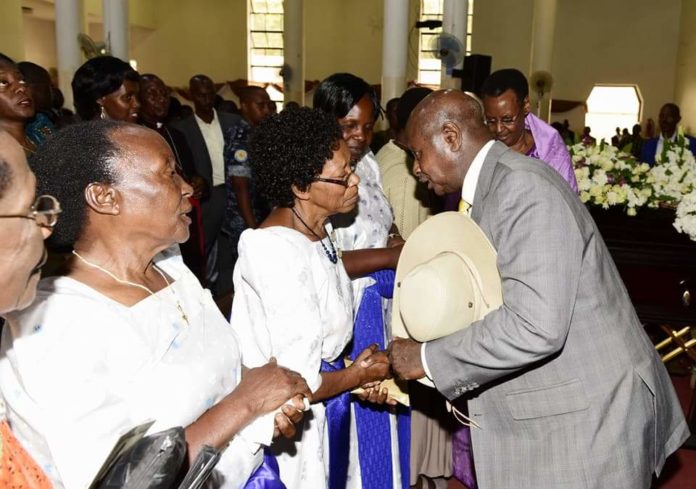
UIA Eexecutive Director Ms Jolly-Kaguhangire

The 2017 edition of the annual Home is Best Summit will take place on December 20 at Jinja, the Uganda Investment Authority (UIA), the organisers of the event, have announced.

UIA is mandated to promote investments in Uganda, and in a statement indicates that the one-day summit will be held under the theme, ‘Rethinking Small and Medium Enterprises Financing’. The event is organised during the traditional December home coming season by Ugandans in the Diaspora, and about 250 participants are expected to attend the Summit.

“These will include Uganda’s business community, especially those based in Jinja, Ugandans living in the Diaspora, business development services providers, and investment financiers, among others,” the statement indicates in part.

According to UIA, the Summit now is on a rotational basis and take places in different regions of Uganda. The last meetings took place in Gulu, Masaka and Kampala in 2014, 2015 and 2016 respectively, with the emphasis being on the appropriation of the Diaspora Remittances to indigenous for home welfare and development.

“This year, the summit is planned to be held in Jinja, according to the UIA Strategic Plan 2016-21,” a statement says in part.

During this year’s Summit the UIA seeks to strengthen the linkages between SMEs in the priority sectors of agro processing, tourism, ICT and mineral beneficiation, as well as services, and organized Diaspora funds and investment clubs/groups.

“This will provide a platform for the enhancement of SMEs and a viable ‘soft landing’ for Diaspora remittances,” reads the statement.

The summit will also be an opportunity for the Ugandans in the Diaspora to engage with the existing service providers and producers of goods that they can take advantage of while still in the Diaspora and when setting up their business.

Main sponsors of the Summit include the Ministry of Foreign Affairs, Bank of Uganda and the Private Sector Foundation Uganda. Other  Summit stakeholders are the Busoga Kingdom, Members of Parliament, Local Governments and the Private sector with leading industrialists like BIDCO, Kakira Sugar Works and Nile Agro, also taking participating.

Government will use the occasion to sensitise Ugandans in the Diaspora to know about their tax obligations, incentives. The Summit will also act a link between Ugandans living abroad and the existing business community but also can use the event to set up joint venture partnerships.

The Home is Best Summit coincides with the annual Diaspora Social Networking Gala and Business Breakfast organized by the Uganda Diaspora Network, a forum that brings together Ugandans who live and work abroad. They use the platform to celebrate their contributions overseas and also use it to share their time, talents, ideas and expertise whilst inspiring the next generation of Ugandan leaders.

The Summit seeks to mainly reaffirm the Diaspora commitment to participate in the National Development Plans at all levels and evaluate the Diaspora achievements in investments.

Among others, the Summit seeks to further strengthen the Uganda Diaspora partnership through investment and trade, get Diaspora’s direct involvement in the re-industrialization of Eastern Uganda in general and Jinja in particular and exploit the expert knowledge the people in the Diaspora have acquired to create jobs in Uganda.

Delegates at the Summit will focus on financial inclusion and the impact Diaspora can have on the development of the economy, small and medium investment opportunities, the regulatory environment, Diaspora engagement and support, business to business networking sessions

There will also be SME and government service delivery exhibition. The delegates will enjoy side events like a networking cocktail as well as excursions and tours around the sights and sounds of the Jinja area.

The 2016 Home is the Best Summit was held in Kampala at the Hotel Africana under the theme ‘Diaspora Investment –Bridge to Vision 2040 ’.

The core objective of the summit was to strengthen the Uganda Diaspora partnership with private sector through trade, investment and transfer of expertise and technology, as well as interaction with the public sector.

Government takes partnership with people in Diaspora as very critical to the country’s economic growth and development and as evidenced recently, migrant remittances to Uganda surpassed earnings from her major traditional export, coffee, growing from US$0.81 billion in 2011 to US$1 billion in 2016.


Stories Continues after ad

Israel raid on Entebbe a binding factor with Uganda – Kadaga

The Deputy Speaker of the Knesset Hon. Yehiel Hilik Bar hands a gift to the Speaker Rebecca Kadaga at the African Speakers seminar in Jerusalem

The Speaker of Parliament, Rebecca Kadaga, has said  that the raid on Entebbe Airport in 1976 by Israel to rescue their hijacked people should be a vehicle for unity between Uganda, Israel and Africa.

Kadaga made the remarks while speaking at a seminar for Heads of African Parliaments that is taking place at the Knesset (Israel Parliament) in Jerusalem.

Highlighting the hijacking of the plane and the subsequent rescue of the passengers by the Israeli Defence Forces, Kadaga said that the terrorist attack binds the two countries and that cooperation should grow.

“One of the things we share are attacks by terrorists. The subsequent rescue of the passengers, which resulted into the death of the brother of the current Prime Minister Benjamin Netanyahu should bind us together as one people,” she said.

Terrorists under the Popular Front for the Liberation of Palestine hijacked the plane carrying 248 passengers, which had set off from Israel for Paris. The hijackers diverted the plane to Entebbe Airport, where they held Israeli passengers hostage, prompting the attack that was led by Lieutenant Colonel Jonathan (Yoni) Netanyahu (RIP), a brother of current Israeli Prime Minister Benjamin (Bibi) Netanyahu.

The Speaker said that prior to the terrorist incident, Israel was supporting Uganda in all forms of development. She was therefore optimistic that relations can be enhanced for the benefit of both Uganda and Israel.

” A lot of collaboration had taken place in capacity building, you had provided scholarships to the people of Uganda; many of the roads in Uganda were built by Israeli companies and you had established a citrus scheme in my constituency. I am glad that after several years, our relations have been re-established and we are benefitting from much cooperation,” she added.

Kadaga, who is accompanied by the Finance State Minister David Bahati and MP Lucy Akello, called for Israeli investment in agriculture, manufacturing and the mining sector which she said is still underexploited.

” Uganda has over 60% arable land and we are not using it well; I want to invite your support to improve agriculture in our country. There is also need to create investments so that we generate employment by establishing more industries and infrastructure,” she said.

Kadaga also welcomed Israelis to visit Uganda for general and religious tourism highlighting the Uganda Martyrs in reciprocation of the visits by Ugandans to the Holy Sites in Israel.

The Speaker of the Israel Parliament, Hon. Yuli Yoel Edelstein, said given the history between the two countries, there is need for more cooperation.

Edelstein revealed that they have launched a special caucus for relations with African Parliaments and that they have signed cooperation agreements with Rwanda, Tanzania and Uganda.

“We believe that we can help forge warmer ties through mutually beneficial partnerships between our parliaments and peoples in various areas for shared interest,” Edelstein said.

The Seminar brought together Speakers from South Sudan, Tanzania, Ghana and Rwanda.


Stories Continues after ad