Stanbic Bank
Stanbic Bank
19 C
Kampala
Stanbic Bank
Stanbic Bank
Home Blog Page 1701

Parliament approves Shs190b loan for Kapchorwa-Eldoret corridor

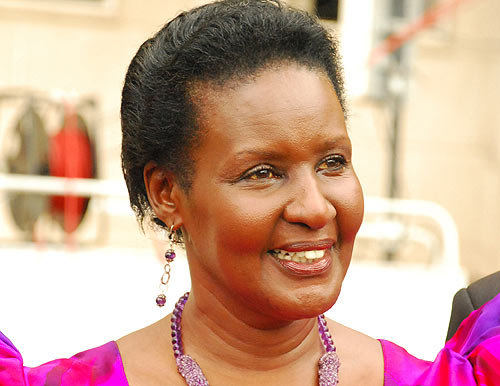
Syda Namirembe Bbumba, the head of the committee that compiled report

Parliament has approved government’s request to borrow Shs 140.6 billion from the African Development Bank (AfDB) and Shs 151.7 billion from African Development Fund (ADF) for upgrading Kapchorwa- Suam- Kitale road and Eldoret bypass roads.

Early in 2010, both Uganda and Kenya sought to upgrade that corridor, seeking funds from the World Bank and Danish International Development Agency (DANIDA), however, the request was not granted.

Despite the failure to meet required standards, both governments did not relent; in 2014 they embarked on getting funds from ADB and ADF to develop the road corridor to enhance trade in the region.

The ADB loan is expected to be paid in 25 years including eight years grace period, while the ADF loan is expected to be cleared in a period of 40 years including a 10-year grace period.

In a report compiled by committee of national economy headed by Nakaseke North MP Syda Bbumba Namirembe, it was recommended that the country borrows to finance the Kapchorwa – Eldoret road project.

‘The Ministry of East Africa Affairs should represent Uganda in the joint committee and coordinates regional projects since it is a multi-sectoral and multinational project,’ part of the committee report states.

Currently, Uganda’s external debt stands at US$5.2 billion, contributing 50.2 per cent of the total nominal public debt, while domestic debt stands at US$3.4 billion.

Stories Continues after ad

Stanbic lowers prime lending rate

Sam Mwogeza, the Chief Financial Officer Stanbic Bank

In response to the October monetary policy statement by the Bank of Uganda (BoU), Stanbic Bank has reduced its Prime Lending Rate (PLR) from 18% to 17.5%.

As a result, Stanbic now has the lowest PLR of all commercial banks on the Ugandan market and, in line with BOU regulations which require banks to give a one month’s notice before any upward or downward adjustment of interest rates, Stanbic’s new PLR rate of 17.5% for new and existing loans will be applicable from January, 1 2018.

“We are firm believers in maintaining transparency in our pricing to our clients. For this reason, we have consistently matched the movements of the CBR each time the Central Bank has made an adjustment. Stanbic Bank has now reduced its PLR eight times since the easing of the monetary policy was started 18 months ago,” Sam Mwogeza, the Chief Financial Officer Stanbic Bank, said while announcing the new PLRs.

BOU initiated easing of the monetary policy in a bid to boost economic activity through private sector driven credit after interest rates peaked at a four year high of 28% in Q1 2016, reducing the appetite for risk and borrowing.

The policy has so far yielded mixed results, with inflation coming under control, though demand for credit has remained sluggish prompting BOU to act once again.

At the recent BOU monetary policy statement reading in October, Emmanuel Mutebile, the Governor Bank of Uganda said: “Given that annual core inflation is forecast to remain around the medium term target of 5% and economic activity  is  slowly gaining momentum,  a  cautious  easing  of monetary  policy  is  warranted  to  boost private sector  credit  growth  and  to  strengthen economic  growth.”


Stories Continues after ad

Ghana plans bids for hosting two international rugby tournaments

The Ghana National Men’s Sevens Rugby team that managed to get Ghana Rugby on the Africa Rugby ranking table in Kampala in October 2017 for the first time

The Ghana Rugby Football Union (GRFU) has indicated that it plans to submit tenders to host two international rugby tournaments in 2018.

The Africa Rugby tournament schedules for 2018 was announced last week and Ghana has been included in the Men’s 15s Bronze Cup in April 2018 as well as in the Men’s 7s Tournament in October 2018.

In addition to the Africa Rugby tournaments, Ghana Rugby also intends to host an international men’s 7s tournament between eight nations that will primarily include West African Rugby Unions. A date for this tournament is yet to be finalised.

The inclusion of Ghana Rugby in the Africa Rugby tournaments followed the achievements by Ghana Rugby over the past three years and specifically the approval of the Union as full member of World Rugby.

Mr. Herbert Mensah, President and Board Chairman of Ghana Rugby,

According to the President and Board Chairman of Ghana Rugby, Mr. Herbert Mensah, the hosting of international tournaments by Ghana Rugby goes beyond just rugby.

“The hosting of international tournaments is indeed a national issue and as such should be regarded as an investment by the country to promote Ghana as country and as event destination,” Mensah said.

Mensah continued to say that such international sports tournaments provide the ideal platform to fly Ghana’s flag high to the global community, to instill pride in Ghanaians to be a Ghanaian, to promote Ghana as international hosting destination, to support economic activity in Ghana, and to improve Ghana’s chance at success to win the event.

Mensah added: “A good example is the Africa Rugby Bronze Cup in April where Mauritius will be competing. In quarter three of 2016, Mauritius had the largest investments values in Ghana with a Foreign Direct Investment (FDI) value of US$178 million. Hosting that tournament in Ghana will obviously have a very good image impact on a very important segment of investors.”

The Africa Rugby Men’s 15s Bronze Cup is scheduled for 16 to 21 April 2018 and Ghana, Lesotho, Mauritius and Rwanda will compete for the spoils of promotion to the 2019 Africa Rugby Silver Cup.

Twelve nations will compete in the October 2018 Africa Rugby Men’s Sevens Tournament including Kenya, Uganda, Madagascar, Morocco, Zambia, Tunisia, Botswana, Zimbabwe, Senegal, Mauritius, Ghana and one other Union.

Mensah said that, although successful bidders are given a grant for the hosting of such tournaments, the grants always fall well short of the total funds required to professionally host such important national events.

“Rugby, as all other sports, is dependent on the support from the Government of Ghana and from corporate and other sponsors to fly Ghana’s flag high and proud and to make us all proud to be Ghanaians,” he said.

Stories Continues after ad

Seven rules for innovations that produce dominant players

By Martin Zwilling

Innovation doesn’t always make you a winner in business. In my role as an angel investor in startups, almost every pitch I see highlights some real innovation in technology, business model, or market opportunity. Yet only a few of these get funded, and even fewer become dominant players in their chosen space. The rest fail quickly, or struggle for years to get real traction.

But don’t get me wrong. Innovation is necessary to get you into the game, but even a disruptive technology won’t assure you business success. These days, it’s all about harnessing your innovation to get an advantage in a business. Or as Steven S. Hoffman asserts in his new book, you have to ‘Make Elephants Fly’ and that requires getting outside of conventional thinking.

Hoffman should know, as an icon in the Silicon Valley, having educated and trained hundreds of startup founders as the CEO of ‘Founders Space’ designated by Inc.com as one of the top ten incubators and accelerators in the world. I like his list of Seven Unfair Advantages, at least one of which is required to make you a dominant player in your space, which he calls radical innovation:

  1. Offer a solution that is exponentially better than any other.If it’s not an order of magnitude better or cheaper, customers usually conclude that the risk and cost of change are simply not worth the potential payback over what they have today. You may attract early adopters, who love everything new, but the mainstream market will be elusive.
  2. Create an entirely new market space or new category.If your product or service is so unique and compelling that it’s able to define a whole new category, then you are the winner by default. This isn’t easy to do, but it happens. Just look at Nest, who is leading the IoT wave, and Oculus Rift, the company that put virtual reality on the map.
  3. Be the first to disrupt an existing market space.Being first is always important. It’s amazing how many proposals I see that are “me too” with only slight or abstract differentiation from other social media sites, ride sharing, or collaboration tools. Examples of being first include Netflix for movies and TV and Redfin for real estate.
  4. Ride the network effect to more users than anyone. The network effect is where the value of your business increases exponentially as your user count goes up. Look at competition for the numbers to beat, but in the consumer space, it usually takes millions to be the dominant player. Users can be advertisers, consumers, sellers, or passengers.
  5. Establish exclusivity as a high barrier to entry.Prove exclusivity with whatever methods and relationships you can use, including patents, distribution channels, government support, or name-brand customer contracts. A startup with innovation and high entry barriers is the most attractive candidate for investors and acquisition partners.
  6. Lock in customers with loyalty and high cost of change.Billion-dollar businesses are seldom about a single transaction with any customer. They’re about building long-term relationships, where the longer the customers use the product, the harder it is for them to leave. Great companies tend to build great ecosystems to provide added value.
  7. Find a pent-up need and build a strong brand early.Brand building is costly and difficult, but making your brand a household name has the power to differentiate your product from everyone else’s. If there is a real need, people pay more for a brand-name, and perceive a higher level of trust and value, as well as an emotional attachment.

The message here is that just because you have an innovative new technology doesn’t mean it will rise above the competition and make money. You have to analyze each innovation early and continuously with a critical eye. Hoffman’s seven rules, paraphrased here, will tell you if you are likely to be become a dominant player. If not, it may pay to pivot now before your money and energy are gone.


Stories Continues after ad

Developing Africa’s financial markets: Priorities to attract greater foreign investment

Ms. Danae Kyriakopoulou is Chief Economist and Head of Research at OMFIF.

By Danae Kyriakopoulou

Between 2005-15 economies in Africa expanded by 50%, more than double the global average for the period, according to International Monetary Fund data. This supported the popular ‘Africa rising’ narrative, the belief in the continent’s unstoppable development; reality did not oblige.

The 2014-15 downturn in global commodity prices weighed heavily on the net-commodity-exporting region. Declining export revenues led to widening fiscal imbalances, currency depreciation and deteriorating capital inflows, exposing the risks of a lack of diversification in sources of economic growth. Cases of poor governance and unstable politics have further tested the continent. Although countries have made significant advances in recent years, challenges persist, as last week’s developments in Zimbabwe highlight.

According to its latest World Economic Outlook, published last month, the IMF forecasts an acceleration in the rate of GDP growth across sub-Saharan Africa to 2.6% in 2017 and 3.4% in 2018, up from 1.4% in 2016. While this is a welcome improvement, the 2017 rate is substantially lower than the average in emerging and developing (4.6%) markets overall. This is despite Africa’s faster rate of population growth, suggesting an even wider disparity in core economic performance.

Policy-makers should prioritise strengthening economic governance, improving the sustainability of fiscal positions and diversifying sources of economic growth in Africa. Another essential but often overlooked consideration for the next stage of Africa’s development is the expansion of its financial markets. This should enable governments to achieve their objectives by providing additional sources of funding for domestic corporations.

The Barclays Africa Group Financial Markets Index, prepared by OMFIF, evaluates the state of financial market development in 17 countries across the continent according to six pillars: market depth; access to foreign exchange; market transparency and the tax and regulatory environment; the capacity of local investors; underlying macroeconomic opportunity; and the legality and enforceability of financial contracts, collateral positions and insolvency frameworks.

Africa’s financial markets have grown significantly over the last few decades. The continent is home to 30 stock exchanges, a six-fold increase from the 1980s. The total amount of issued sovereign bond markets has increased to more than $200bn in 2016 from $28bn in 2000. However, the index highlights that markets remain fragmented and shallow, allowing great room for development across most economies.

Deep financial markets are crucial for translating economic opportunity into investment inflows by enhancing the opportunities for foreign investors to access the market. Ethiopia, while projected to be the fastest growing economy among those tracked by the index, comes last in the overall ranking because of its underdeveloped financial markets. Out of the 17 countries tracked, it is the only one without a securities exchange.

The opposing scenario is problematic as well. Sophisticated financial market infrastructure is a necessary but not sufficient condition for attracting investment. Economic prospects matter too. South Africa, the continent’s largest and most developed economy, leads the index with a score of 92 out of 100, topping the list in all six pillars. Its worst performance is in the area of ‘macroeconomic opportunity’, owing to weak growth prospects and slow progress on macroeconomic reforms. Such challenges motivated rating agency Standard & Poor’s decision to downgrade South Africa’s local currency credit rating from BBB to BB+ non-investment grade or ‘junk’ status, and to lower the rating on the country’s international debt to BB.

Policy-makers should aim to achieve a combination of improving macroeconomic prospects and deepening financial markets, seeing the two as necessary complementary forces to attract foreign investment and facilitate development. The index, which will be updated on an annual basis, is intended to be a practical tool to facilitate these objectives, for policy-makers and investors alike.

Ms. Kyriakopoulou is Chief Economist and Head of Research at OMFIF.


Stories Continues after ad

Speke Resort Munyonyo offers friendly Christmas rates

The Speak Resort Christmas Offers leaflet

Speke Resort Munyonyo, Uganda’s topmost hotel has given its esteemed clients cheaper accommodation rates to enjoy the Christmas season to the fullest, with the bookings at 10 percent discount ending November 30, 2017.

The management at the hotel have provided two rates: Special Festive Season Rate and Executive Christmas Offer.

The Special Festive Rate offers are valid from December 15-23, 2017 and December 26-January 7, 2018.

The rates range from US$139 for one person occupying a Single Deluxe Room to US$684 for four guests who want to enjoy the comfort of sleeping in a Presidential Suit. An extra person is provided with a mattress on full board basis for US$68 per night.

The rates for the Executive Christmas Offers range from US$176 for a single Deluxe Room for one to US$832 for a Presidential Suit for four guests. The offer is valid for December 24-25. An extra person is provided with a mattress on full board basis for US$105 per night.

Details can be obtained on the uploaded hotel leaflet for your choice meant to make you and your loved one celebrate Christmas away from home.

All details can be obtained on the uploaded hotel leaflet for your choice, but the rates are inclusive of taxes and are on full board basis covering your breakfast, lunch and dinner but exclude drinks.

The offer comes with 30 minutes boat ride and 10 minutes pony ride for kids.

Resident guests will also enjoy access to the swimming pool, gymnasium, steam and sauna.


Stories Continues after ad

KCB trains top notch entrepreneurs

Customers at the KCB main branch in Uganda

In a bid to improve the skills of local entrepreneurs, the Kenya Commercial Bank (KCB) has held a business training workshop for members of the KCB Business Club.

The training held under the theme: ‘stretching your business success’ was aimed at helping local small and medium enterprises (SMEs) grow their businesses.

According to Laban Mawungwe, a marketing consultant, most of the SMEs do not have written down goals, which means that they cannot move their enterprises from one level to another.

The SMEs, he says, also do not share their business goals with employees.

“As an entrepreneur you must share the company’s goals with your team, make it repetitive so that every employee knows what they are working towards,” Mr. Mawungwe said.

Speaking during the training Godfrey Ssenteza, the KCB Bank Uganda Head of SME noted that the quarterly training workshops are a way of enabling KCB Business Club members get the requisite skills to run their businesses effectively.

“We are up-skilling our customers; every quarter we hold themed business training workshops with experts in various fields to enable our customers gain knowledge and skills to enable them resiliently stay in business and push on to the next level,” noted Ssenteza.

The SME sector employs the largest number of people in Uganda and according to Uganda Investment Authority (UIA), over 2.5 million people are employed in the sector, accounting for approximately 90% of the entire private sector and generating over 80% output.


Stories Continues after ad

Uganda’s banking sector stable – BOU Deputy Governor

The Deputy Governor, Bank of Uganda Dr. Louis Kasekende

The Deputy Governor, Bank of Uganda Dr. Louis Kasekende has said the local banking industry is not close to suffering a systemic crisis.

“Bank failures have been few in number and that, when banks have failed; prompt regulatory intervention has protected their deposits from losses,” he said Wednesday at the Seventh Annual International Leadership Conference organized by Makerere University Business School at Entebbe.

According to Kasekende, the Ugandan banking industry has debt liabilities, mainly deposits, which are almost five times larger than its equity and reserves. “This means that if a bank fails, the consequences in terms of losses to its creditors are likely to be much greater than would be the case if a non-financial business were to fail,” he said.

He said the local banking industry is by far the most important component of the financial markets in Uganda, with commercial banks accounting for around 80 percent of the total assets of the financial system.

Uganda’s financial system includes commercial banks and other deposit taking financial institutions, insurance companies, the capital markets and the pension sector.

According to Dr. Kasekende, to protect depositors, banks operating in Uganda must hold total capital which is at least 12 percent of their risk weighted assets.

“The purpose of these capital adequacy requirements is to ensure that banks hold a buffer which can absorb losses and thus protect their deposits,” he said, adding that if a bank suffers losses for example, bad loans, these losses are first absorbed by the bank’s capital.

“It is only if the losses exceed the bank’s capital that the bank’s depositors or other creditors will incur losses,” he added.

According to Dr. Kasekende, sound economic reasons exist for subjecting the financial sector to greater regulation than other sectors of the economy.

“But I would argue that there is no compelling evidence to suggest that the banking sector is overregulated in Uganda,” he noted.


Stories Continues after ad

Sugar prices to go below Shs4, 500 – Kyambadde

ACCUSED FINANCE MINISTRY OFFICIALS OF CREATING GHOSTS: Minister of Trade and Cooperatives Amelia Kyambadde.

As Ugandans begin the Christmas season shopping, the average price for a kilogram of sugar in Uganda currently stands at Shs4, 500 and is expected to go down further as the year comes to a close, Trade Minister Amelia Kyambadde has said.


“Sugar prices have steadily reduced from average UGX 8,500 in May 2017, to currently UGX 4,500 with expectations to reduce even further,” Minister Kyambadde says, adding that local sugar millers have sufficient stock of sugar to meet the current domestic demand.

Further, the minister says government will not enforce the reduction of sugar price per kilo and will also not reduce taxes on imported sugar, as reported in the local media earlier.

She also says Government cannot import duty free sugar since the country has enough stocks.

“My Ministry will continue to monitor the sugar situation to ensure adequate supply and affordable prices for the citizenry,” she says.

As of May 2017 Uganda was the largest producer of granular brown sugar in the East African Community, accounting for about 500,000 metric tonnes annually.

But the country’s big sugar millers lack of enough cane due to competition from small factories that have encroached on sugar cane supplied by out growers.

Uganda’s big sugar manufacturers include Kakira Sugar Works, Kinyara Sugar Works and the Sugar Corporation of Uganda Limited (SCOUL).


Stories Continues after ad

UDN to launch Corruption Dossier on health sector

FOCUS ON HEALTH SECTOR: Nurses at Mulago Teaching Hospital on strike

To commemorate the Anti-corruption campaign 2017, the Uganda Debt Network (UDN) will mid-December hold a public dialogue at Kayabwe to launch the Corruption Dossier on Uganda’s health sector.

The Dossier is expected to reveal some of the rot in the health sector especially at the time when health workers in public hospitals are demanding for higher salaries.

‘Due to the importance of the health sector, UDN has documented cases of corruption in the health sector and compiled them into the 2017 Corruption Dossier,’ says a statement for UDN.

The Corruption Dossier will be launched at the public dialogue that will take place on December 14 at the Equator Line Prayer Altar for Nations and Camping site.

According to UDN, corruption in the health sector affects the marginalized groups especially women and children.

Every year, a special week is set aside in Uganda in respect of the fight against corruption. During the Week, the anti-corruption Agencies like the Inspectorate of Government (IG), Office of the Auditor General (OAG), Public Procurement and Disposal of Public Assets Authority (PPDA), the Justice Law and Order Sector (JLOS) and Directorate of Ethics and Integrity (DEI) come together to form a ‘syndicate of anti-corruption agencies’ to counter syndicate corruption and all other forms of corruption.

This year, the celebrations are being marked under the theme; ‘Restoring Integrity in Public Service, Regaining Citizens’ Trust in the Anti-corruption Fight’. The official launch which was held on  November 28, 2017 was presided over by the Second Deputy Prime Minister and Minister for East African Community Affairs, Ali Kirunda Kivejinja at CHOGM grounds in Kampala.

During that launch, materials such as the Dossier on Corruption in Uganda, Reversing the tide against misuse of Government Vehicles and poor state of Health Services in Uganda, The Uganda Public Service Standing Orders (Section F) among other policy documents; as well as Posters and Placards were exhibited to widely popularize anti-corruption advocacy.

The 2016 Corruption Perception Indices produced by Transparency International Uganda ranked 151.


Stories Continues after ad