Kampala International University (KIU), winners of the inaugural Black Bell Beer Olympics, on Sunday December 10, 2017 finally to got to savour their victory.
The Kansanga-based team humbled other universities during the games in October and November 2017 to emerge victors and, as a result of their exploits, were rewarded a cash prize of Shs1million and also promised a ‘mega’ party fully sponsored by Black Bell at a venue of their choice.
The team opted for the KIU Parking Lot and that’s where the plot was on Sunday and by 6:30pm, the venue, including the nearby basketball court had been filled by students in jovial mood.
In true ‘Olympic Solidarity’, the KIU team had extended a free invite to students from other universities as well as the general public and it wasn’t surprising that the venue became a beehive of activity hours before the event kicked off.
AND THE BEAT GOES ON! Revellers enjoy a DJ’s vibe
Entertainment was provided by a host of DJs and upcoming artistes, some of who were students and later on at around 9pm, the tempo was upped with the introduction of the silky-voiced Bruno K.
His Nkooye Okulowooza hit sent ladies into a frenzy as they tried to outcompete each in singing along to the chorus.
The hit which got warmest reception was Bruno K’s award winning single ‘One for the road,’ a song which praises the prowess of beer.
In this case, we are not very sure whether the students were excited because the song spoke to them or because the melody was groovy. All we know is that it really ‘touched’ them.
As soon as he exited the stage, in came Vamposs (Vampino) and as expected, the area next to the stage is where everyone wanted to be.
Vampino’s energy is captivating and he seems to pass it on to whoever comes closer to him. At least that’s what we observed.
He kicked off his performance with hits from back in the day; ‘I love you,’ a duet he did with Radio and Weasel, quickly following it up with Kwekunyakunya, another hit from his earlier days.
Vampino then upped the ante with Linda then A wah do dem before wrapping up his performance with Smart Wire; he had to redo Smart Wire a number of times because the crowd kept on asking for more.
As they danced, the students consumed all the Black Bell beer that had been brought to the venue.
Perhaps they were rewarding themselves for successfully concluding their exams. Another stock had to be brought in to quench their thirst.
Paul Rwandekeye, the Innovations Manager at Uganda Breweries Limited, said that the victory party at KIU would be followed by an end of semester party at The Hive in Mukono and then conclude with another fete at ‘Your’ Hostel in Nkozi on December 15, 2017.
‘Babes’ do ‘their thing’
He also disclosed that during these parties, new games and activities will be unveiled so as to give consumers an idea of what they should expect in the next edition of the Black Bell Olympics tournament.
The games that were played during the just concluded Black Bell Beer Olympics included Beer Checkers, Beer Pong and Take the Shot, and in all games participants played by their own rules.
Even after many years mentoring entrepreneurs and advising businesses, I continue to be surprised by the primary focus on products and processes, and the often incidental attention to hiring and nurturing the right people. Employees are still too often thought of as a commodity, to be acquired “just in time” for the lowest cost, and managed as a disposable asset.
All this despite continuing evidence that the right people make a business succeed, rather than the other way around. Further, according to more recent surveys, businesses that use data and tools in their people management, rather than traditional manual processes, see a 79% higher return than other organizations, suggesting the time is ripe for relying on data and analytics.
With the latest advances in software technology, it’s no longer cost-prohibitive for business entrepreneurs, who can’t yet afford a human resources department, to take advantage of analytics tools. Almost any startup can start with Excel, and move to open-source data analysis tools, including Python or RStudio. Bigger organizations should invest in the new “big data” tools.
For a hands-on guide in developing data-driven people strategies, I found some practical techniques in a new book, ‘The Data Driven Leader’ by Jenny Dearborn and David Swanson. Based on many years of HR leadership at SAP and elsewhere, these authors start by highlighting the risks of not leveraging data analytics. I have added my own observations to theirs as follows:
People decision making by gut, more than data. Common sense and emotionally driven decisions are sub- optimal in assessing team members. Data, however, removes guesswork, biases, and anecdotal reasoning that can throw decision efforts off course. It’s the same for customers and products, where analytics have long proven their value.
Working on the wrong problem or assumption. Data helps avoid predetermined (and often erroneous) approaches to solving your people problems. Don’t let one incident, observation, rumor, or misunderstanding cause a rush to judgement, or hiring mistake. Make sure subjective feedback is buttressed by objective data before making decisions.
Measuring efficiency rather than effectiveness. Efficiency in the workplace is the time it takes to do something, but it can ignore work quality and customer impact. Employees are often ineffective because they don’t care about their work or because they don’t possess the skills to contribute. Use data analysis and metrics to measure for results.
Subjectively measuring employee engagement. Manually assessing engagement clearly isn’t working. According to Gallup’s most recent global engagement survey, only 13 percent of workers are now fully engaged in their job, which is hugely expensive in productivity. With data and analytics, you can gauge employee engagement accurately.
Underestimating absenteeism and accident costs. Many businesses still ignore the magnitude of the problem of employee absenteeism and accidents. They look only at historical data, and lump it all under “the cost of doing business.” The best leaders use data and analytics to identify key offenders to continually reduce these problems.
Failure to factor in new employee ‘time-to-performance’. According to data from recent statistics, it typically takes eight months for a newly hired employee to reach full productivity, and that doesn’t include hiring. Through analytics on current employees, you will be able to predict re-training requirements and minimize employee turnover.
Waiting to hire until the business is in crisis mode. It’s easy for entrepreneurs to fall into the trap of focusing only on what’s urgent and leaving aside what seems merely important. The solution is to plan ahead by using data analysis tools with predictive indicators. Trying to hurry the hiring process is a key reason for bad hires in business.
Most companies I know will claim to be busy collecting and analyzing data, but very few actually use it to drive people management. Integrating the analytics of people management with business results is key to driving a winning strategy and long-term sustainability in today’s competitive and rapidly changing environment. These should not be seen as two separate efforts.
I often have to remind entrepreneurs that good products are built with the best technology, but good businesses are built with the best people. Great business leaders have figured out how to apply the right attention, time, and tools to both. Where are you along this spectrum?
Uganda plans to construct a pipeline that will transport its crude oil to the international market through the Tanzanian coastal port of Tanga. The pipeline, is expected to be completed by the year 2020, when the country is scheduled to start oil production.
In fact, Uganda’s President, Yoweri Museveni and his Tanzanian counterpart recently commissioned the construction of the East African Crude Oil Pipeline. The two leaders laid mark stones for the crude oil pipeline in Mutukula, Kyotera district and Kabaale in Hoima district.
Total E&P Uganda, a subsidiary of French oil giant, Total S.A, is spearheading the construction of the crude oil pipeline on behalf of the joint venture partners. Adewale Fayemi, the general manager, Total E&P Uganda says discussions are ongoing to discuss on the formalities of how the pipeline will be run.
Already, an agreement has been reached that the East African Crude Oil Pipeline (EACOP) will be run and managed by a Special Purpose Vehicle (SPV) – private pipeline company. This means that a private company will be incorporated with joint venture partners – Tullow Uganda, Cnooc Uganda Ltd and Total E&P Uganda, and the governments of Uganda and Tanzania as shareholders in the company.
Minister of Energy and Mineral Development, Eng. Irene Muloni, recently said that the National Pipeline Company (U) Ltd – a subsidiary of the Uganda National Oil Company (UNOC) will own shares in the pipeline company (Special Purpose Vehicle), on behalf of the government of Uganda. As of now, the pipeline company (Special Purpose Vehicle) is yet to be incorporated.
“Negotiations are underway for the setup and corporate structure of the proposed company, that will run EACOP”, Samantha Muhwezi, the Legal Advisor EACOP at Total E&P Uganda explains. The pipeline company, will build, own and operate the crude oil pipeline project.
Muloni said that there is a possibility of bringing on board investors into EACOP in addition to the governments of Uganda, Tanzania and the Joint Venture partners. Once the pipeline company is incorporated, another sticky issue that will have to be ironed out is how the company will meet its tax obligations both in Uganda and Tanzania. However, at the moment there is already commitment to exempt it from tax.
“There will be no pay transit tax, no Value Added Tax, no corporate income tax. The government of Tanzania gave us 20 years depreciation tax holiday, granted us a free corridor where the pipe line passes and promised to buy shares in the pipe line,” President Museveni said, while laying a mark stone for EACOP at Mutukula, Kyotera district.
Financing of project
Another issue under consideration is the financing of the pipeline project. At least $ 3.5 billion dollars is needed to finance EACOP. Accordingly, to preliminary information, the funds will be raised through debt and equity from joint venture partners and national oil companies of Uganda and Tanzania. Already, Total E&P Uganda, Tanzania and Uganda have appointed three companies as financial advisors for the pipeline. A consortium of South African based Standard Bank, Imperial Bank of China (IBC) and Sumitomo Mitsui Banking Corporation Europe Ltd, were recently appointed as the financial transactional advisors for EACOP.
“They are advising us on how to structure the project to enable lenders to be able to finance the project,” Muhwezi said. Sources indicate that IBC is expected to advise CNOOC Uganda Ltd while SMBC will work with Total E&P Uganda, the lead joint venture partner on the crude oil export pipeline. The special purpose vehicle will also charge $12.2 dollars for every barrel of oil that will be transported in the pipeline, making Uganda’s crude oil profitable even at today’s rate of $50 per barrel.
Uganda’ crude oil has low Sulphur content and therefore, waxy and solidifies at room temperature. This requires heating of the pipeline to at least 50 degrees Celsius to make the crude flow. This means it will require a lot of electricity to heat the pipeline. It will have eight main pumping stations and five heating stations.
“We might use solar energy to reduce on the power to heat the pipeline,”. Muhwezi said. Once completed, at 1,445 kilometers, the East African Crude Oil Pipeline, will be the longest electrically – heated pipeline in the world. Uganda will host 296kms of the pipeline, while the remaining 1,149kms will be in Tanzania.
In Uganda, the 24-inch diameter, heated pipeline, will go through the districts of Hoima, Kakumiro, Kyankwanzi, Mubende, Gomba, Ssembabule, Lwengo, Rakai. In Tanzania, it will go through eight regions and 24 districts. It will be a buried pipeline, with an estimated 1-2 meters buried underground and planned to have a daily flow rate of 216,000 barrels per day. It will be designed to add volumes of crude from other countries like Tanzania, South Sudan or Democratic Republic of Congo, incase, they want to use it. During construction, EACOP is expected to generate between 10,000 to 15,000 direct jobs and 30,000 temporary jobs at peak.
While in Uganda recently, Tanzania’s President, John Pombe Magufuli pledged Tanzania would now buy crude oil from Uganda instead of incurring high expenses of importing from the Arab world. The Hoima-Tanga route was selected because it offered the least cost route for the transportation of crude oil from Uganda to the East African Coast. Minister Muloni explains that the Front End Engineering Design (FEED) report for EACOP and environmental social impact assessment (ESIA) studies, are expected to be completed next February.
Under-Secretary-General for Peacekeeping Operations Jean-Pierre Lacroix meets injured Tanzanian peacekeepers at the Nakasero Hospital in Kampala, Uganda. Photo Credit/ UN Regional Service Centre Entebbe/Sunil Thapa
Tanzanian United Nations (UN) peacekeepers who were injured in a December 7 attack by suspected Allied Democratic Front (ADF) rebels while on duty in the Democratic Republic of Congo (DRC) are hospitalized at Nakasero Hospital in Uganda.
According to the UN, the head of peacekeeping operations Jean Pierre Lacroix visited the injured soldiers yesterday.
“Thank you very much for your service. I wish you well,” Jean-Pierre Lacroix, the Under-Secretary-General for Peacekeeping Operations, told each service member, at their bedsides.
At least 14 peacekeepers were killed when a UN Stabilization Mission (MONUSCO) Company Operating Base at Semuliki in Beni territory, in DRC’s restive eastern North Kivu province, was attacked by suspected Allied Democratic Forces (ADF) elements. It was the worst on UN ‘blue helmets’ in recent history, and the UN Secretary General António Guterres said that the attack constitutes a war crime.
Meanwhile, Mr. Lacroix will visit Tanzania later this week and meet with families of those killed.
Their bodies were repatriated with honours on Monday, and received by Tanzanian defence and military officials.
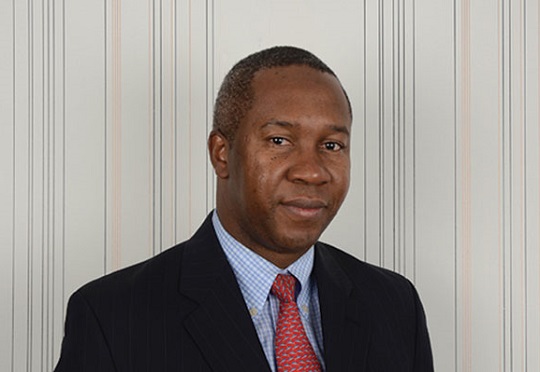
The IFC Director for Sub-Saharan Africa, Oumar Seydi
Uganda is one of the countries in Sub-Saharan Africa that stand to benefit from a new World Bank financing facility that aims at supporting private sector access more affordable capital for investment.
The new facility is spearheaded by the World Bank Group’s private sector lending arm, the International Finance Corporation (IFC) and the Multilateral Investment Guarantee Agency (MIGA) which offers political risk insurance and credit enhancement guarantees to help companies’ access credit.
Speaking in Kampala during a workshop to brief the private sector companies and Government of Uganda officials about the development, the IFC Director for Sub-Saharan Africa Oumar Seydi said that the Private Sector Window is intended to help private companies access more affordable capital for investment by providing additional guarantees to insure against risks, particularly for countries that are affected by conflict or are politically unstable.
“Many projects in emerging markets that need capital are unable to access financing because the risks are too high and the returns are not commensurate with the level of risk. The use of blended finance allows us to fill this financing gap by addressing market barriers and attract private sector investments to areas of strategic importance with high development impact,” Mr. Seydi said.
The blended finance involves the use of relatively small amounts of concessional donor funds to offset specific investment risks. The donor funds are structured as co-investments, with a probability of reflows for future investments or other uses. Several of these investments are pioneer projects which, when successful, pave the way for other investors and help create markets in high impact sectors.
Private sector investments declined by 2.5 percent in the financial year 2016/2017, a sharp contrast to the growth of 11 percent recorded the previous year, according to the 10th Uganda Economic Update released by the World Bank December 5, 2017. The decline was a result of high interest rates on loans and the uncertainty in the financial sector. In the period from June 2016 to August 2017, the weighted average commercial bank lending rate declined from 23.9 percent to 20.9 percent.
However, this rate later increased again to 22 percent. Commercial banks significantly increased their deposits, with their holdings of securities declining with the declining return. In contrast, the total value of credit extended to the private sector increased modestly, by 5.7 percent, following a strong recovery during the second half of FY 2016/17. With these developments, the ratio of private credit to GDP declined to 13.3 percent, down from 13.7 percent in financial year 2015/16.
With the new IDA18 private sector window, the World Bank Group will channel its support to companies that are interested in investing in power production and distribution, and to financial institutions to help improve access to finance, including credit lines, housing finance and SME finance. Agribusinesses are also a priority under the sub-window, with financing targeted towards increasing agricultural productivity, improving food security and increase incomes of small farmers.
“We are proud of what we have achieved in the past in Uganda, but we recognize that we must do more to have the impact that we want. To that end, we hope that IFC’s renewed strategy along with blended finance tools, including the Private Sector Window, can create conditions where we can work with a larger number of companies and across a range of sectors,” Seydi said.
Secretary to the Treasury, Keith Muhakanizi.
Speaking on behalf of Government, the Permanent Secretary in the Ministry of Finance and Secretary to the Treasury Keith Muhakanizi, recognisedcknowledged the role of the private sector in driving development, and noted that there is need to join hands with government to finance public investments, including infrastructure which is critical to spur economic growth and boost shared prosperity. He also commended the WB Group for its continued support to Uganda.
Over the past years, the World Bank Group has extended both financial and technical assistance to make it easier to do business in Uganda. Under the ongoing Competitiveness and Enterprise Development Project (CEDP), a 3-year project implemented by the Private Sector Foundation of Uganda, the World Bank is supporting reforms geared towards improving the business environment, lowering the costs of doing business and improving competitiveness of the selected high impact sectors, particularly tourism.
On average, it takes four hours to register a business if one has all the required documents, compared to 33 days about two years ago. Land records are being ditigised following the roll-out of the Land Information System (LIS) by the Ministry of Lands, Housing and Urban Development, and to date, nine ministry zonal offices are operational bringing services nearer to the people.
Under the Matching Grant Facility, 418 enterprises have benefited from the project and 50% of these are female owned. Results are starting to manifest through improved performance of enterprises in terms of, increased productivity, income and employment as well as a catalysed access to markets.
In tourism, the World Bank’s interventions have been targeted at increasing the supply of trained tourism workforce capable of delivering competitive hospitality services. Some of the support is towards revamping curricula and training facilities at the Uganda Hotel and Tourism Institute to improve training for the pool of local staff for the hospitality, leisure, and tourism industries.
A publicity campaign in key source markets has had £1.2 million worth of media coverage in the UK market, Euro 2 million in other markets, and reached an audience of 991 million in North America.
With the new Private Sector Window under IDA18, IFC’s Advisory Services project preparation and other capacity-building activities will be harnessed to ensure that companies are in good shape to increase their chances of qualifying for funding.
The World Bank Group’s current investment portfolio in Uganda is primarily financed from IDA, which provides interest free “credits” and grants on concessional terms, attracting only an administrative service charge of 0.75% on the disbursed credit amount. Loan repayments are stretched over 38 years, including a six-year grace period.
As of September 2017, the Bank’s portfolio stood at $2.6 billion (IDA credits and grants) in net commitment for national and regional operations. Around two thirds is supporting sustainable development, including 46% to infrastructure development (energy, roads, urban, and ICT), followed by agriculture (14%), and water (7%).
Close to 30% is supporting human development (health 11%, education 9%, and social protection 7%); and the private sector and trade (5%).
The Uganda National Bureau of Standards (UNBS) has approved 254 national standards, and another 76 have been recommended to the Minister of Trade for consideration as compulsory standards because they are of safety concerns for the consumers and environment.
Speaking at the press briefing, the UNBS Executive Director Ben Manyindo said: “A number of standards being approved are important for BUBU and support top government priorities such as Oil and Gas as well as in the area of Construction procurement, Agro inputs and Inspection of used motor vehicles.”
He added that all these initiatives are aimed at building and encouraging the consumption of local content and the capacity of local manufacturers to ensure that their products meet international standards.
Of the approved standards, 48 of them cover management; 111 cover chemicals and consumer products; 52 are for engineering and 43 are for products in the food and agriculture sectors.
UNBS is mandated to formulate national standards. Standards are developed through Technical Committees composed of experts drawn from academia, government, industry, consumer groups and civil society. Technical Committees are responsible for recommending Final Draft Uganda Standards (FDUS) to the National Standards Council (NSC) for approval and declaration as Uganda Standards.
Section 15 of the UNBS Act (Cap 327, as amended) provides that the NSC may declare standard specifications or codes of practices as national standards for use in Uganda. The NSC may also amend or revoke (withdraw) such declarations. In addition, Section 18 of the UNBS Act (Cap 327, as amended) provides that the NSC may recommend certain national standards for declaration as compulsory by the Minister responsible for trade.
The standards come at a time when Uganda is promoting locally manufactured products under the Buy Uganda, Build Uganda Policy (BUBU). Under the policy, the UNBS is supporting Micro, Small and Medium Scale Enterprises (MSMEs) to ensure that they meet the required standards.
PARDONED: Red Pepper Directors and Editors in the dock. Their case was adjourned to February 14.
Legislators have this afternoon demand that government releases the jailed editors of Red Pepper publication.
MPs across the political divide took on government for what they termed as intentioned crack on the media by government and its agencies like Uganda Communication Commission.
Buhweju legislator Francis Mwijukye raised this as matter of national importance and said that about a month ago the Red Pepper publication was raided, directors arrested, radio station was also closed.
“The attack on Red Pepper can’t be seen as an isolated case as if it is limited to Red Pepper, as we talk now; the editor of Monitor is out on bail Charles Bichachi, the Editor of New Vision (Felix Osike) is out on bail. Top Radio has just issued a statement that they can’t host anybody critical of government specifically the Opposition”
He further revealed that when they raided Red Pepper, 370 phones were taken from staff, 100 computers confiscated, over 5000 people lost jobs and the case they were charged with is that they annoyed Generals Salim Saleh, Henry Tumukunde and Yoweri Museveni
“They were taken to Nalufenya for a week and from Nalufenya, they were taken to court and have been remanded for three weeks”.
Busia Municipality Geoffrey Macho MP linked the closure to chocking of the media warning that it indicates hard times ahead.
“This is suffocation of the media, we may think that this is limited to Red Pepper but as I talk now, the radio station in Kanungu was closed the other day” Mr Macho said.
He added “I wanted to know whether it is in order for this August House that is before courts of law”.
Busiro East legislator Medard Ssegona told the house that the matter at hand is critical, “we don’t want to talk about the matter in court. There is a high level of impunity that we are allowing to be implemented amongst government institutions”.
Ssegona also revealed that UCC has refused to renew licenses of almost all media houses in the country and that one is used as a method of gagging them when it comes to critical issues.
“The impunity amongst government institutions in this case UCC is denying government revenue, they don’t want to renew licenses in the process they keep these media houses guessing whether they will survive or not until the following day”.
UCC Executive Director, Eng. Geoffrey Mutabazi wasn’t available for a comment on allegations leveled against his agency.
However, Speaker Rebecca Kadaga directed the house to debate the matter so that a resolution would be directed at those concerned.
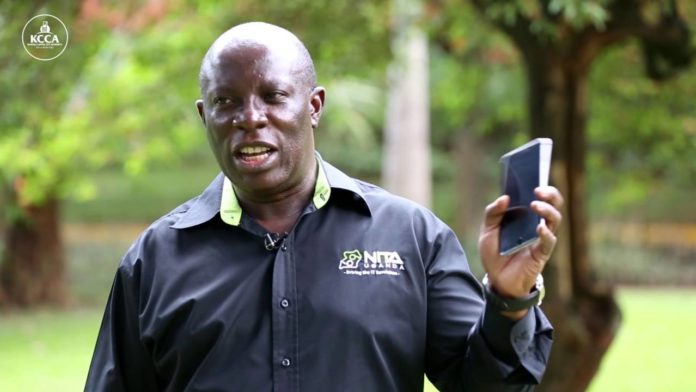
TO EXECUTE PRESIDENTIAL DIRECTIVE: NITA-U Executive Director James Saaka
President Yoweri Museveni has commended the National Information Authority Uganda (NITA-U) and the Ministry of ICT and National Guidance, for the decision to procure internet bandwidth in bulk.
Speaking at the Fifth Phase of Presidential Investors’ Round Table (PIRT) at State House, Mr. Museveni noted that with the reduction in the cost of internet connectivity, from $1200 per Mbps in 2011 to the current $70 per Mbps in 2017, connectivity across government agencies is now effortless, translating into greater efficiency across the board.
On their part officials from NITA-U and the ICT ministry observed that this is expected to go lower in July 2018, putting the new price point of $50 per Mbps for all Ministries, Departments and Agencies (MDAs).
Bagiire Vincent Waiswa, Permanent Secretary, the Ministry of ICT and National Guidance
‘With robust infrastructure in place, bespoke eGovernment services, are the next frontier in digitizing Uganda. With our partners, both Private and Public Sector, we remain committed to driving the IT revolution in the nation, our roadmap is rich and Ugandan citizens can be confident that they will start to conveniently access a number of services in the near future,’ said Vincent Bagiire Waiswa, the Permanent Secretary, the Ministry of ICT and National Guidance.
‘NITA-U has ensured that a number of online Government services have been rolled out as part of eGovernment services roadmap,’ NITA-U officials added.
Some of the e-government services rolled out by NITA-U
e-Log Rev System: This is an online system that has been developed to help local governments to efficiently correct revenue in their districts to support service delivery.
Government ePayment Gateway: A Government e-Payment gateway that will facilitate electronic payments for Government services in a bid to make service delivery more efficient and responsive to the needs of the citizens and as well promote online business.
Electronic Government Procurement: A web-based system that covers the full procurement lifecycle, all procurement modalities, and keeps a record and audit trail of all procurement activities. This will ease & automate the government procurement process
Unified Messaging and Collaboration System: A system that will provide Email, Voice, Video, Social and Instant Messaging services to government offices. This will promote collaboration among Government Departments and Local Governments.
Government SMS Gateway: The Government SMS Gateway will allow government entities to push SMS notifications to citizens through its various eservices and applications. This will allow for a rich online experience.
Electronic Voucher (eVoucher): Already being piloted in Kalungu, Iganga, Ntungamo and Amuru, the eVoucher provides farmers in the a specific cluster with subsidized farm inputs, improved agricultural infrastructure, post-harvest handling technologies and competitive price for inputs and outputs.
Government System Integration: This Integration of all Government systems will ensure simplicity, efficiency of access to Government services in a secure environment.
Using a single User ID (National Identification Number), citizens will have easy access to Government services. Additionally, this will promote transparency for Government as data sharing across agencies will be seamless and digitized.
President Yoweri Museveni has been urged to retire by Mr. Barnabas Talemwa who is a member of the first family.
President Yoweri Museveni is expected to be Chief Guest at the 2017
Bamasaba Convention and Festival to be held in Mbale Town on December 15-16, Senior Presidential Press Secretary Don Wanyama has confirmed.
According to Mr. Wanyama, the President was invited for the two-day event that is organised by the North America Masaba Cultural Association (NAMCA) in conjunction with the Bamasaba cultural institution, the Inzu Ya Masaba, by the Minister of Energy Irene Muloni in her capacity as a Minister and daughter of the soil.
The event which includes a five-kilometre run will take place at Mbale Resort Hotel and Malukhu grounds.
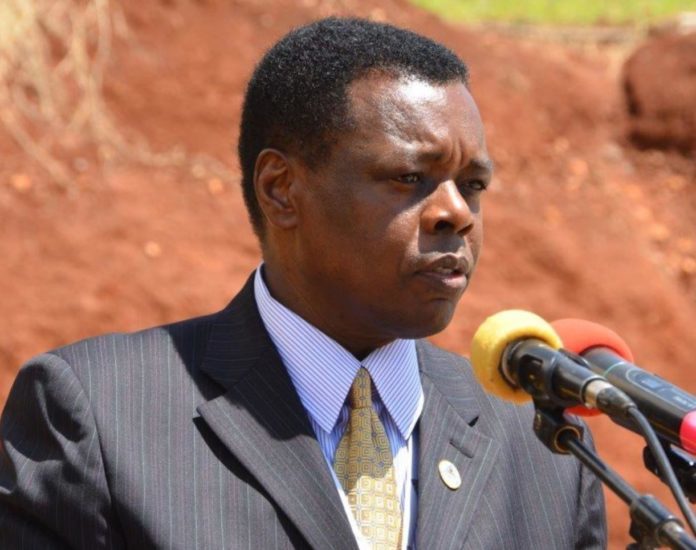
ONE OF THE ORGANISERS: Dr. Moses Khisa
“December 15 will be for leaders and stakeholders deliberations on key development issues in the sub-region and a fundraising dinner. And on December 16, we shall have a run and cultural festival to climax the activities,” says Nicholas Wakou, chairman of the organizing committee.
“The convention and festival seek to bridge the gap between the interests and aspirations of Bamasaba at home and those in the Diaspora to create greater cooperation and foster a sense of common purpose,” he added.
According to Wakou, the festival is intended to raise funds for the construction of an educational resource centre and to showcase the Bamasaba culture including art, food and history.
President Museveni is expected to launch the construction of the 10-storeyed resource centre in Mbale Town. The facility will house a library, a vocational centre, museum, auditorium and health facility.
Under the theme: ‘Empowering Bamasaba through Unity and Development: Local and Diaspora Efforts’, the runners will be flagged off by the Umukuka (Chief Elder) of the Bamasaba, Bob Mushikori.
The Convention and Festival will be held in partnership with the Bamasaba in Kenya and will bring together Bamasaba from all over world and backgrounds including business, government, and nonprofit organizations to deliberate on key development issues and celebrate the richness of our culture and the values of our heritage.
“We plan to have an array of cultural entertainment extravaganza with traditional music and dance, showcasing of art, design, food and other festival activities,” Wakou says.
NAMCA is registered in the USA as a cultural non-profit organization and in Uganda as a Non-Government Organization (NGO). It was founded in 2001, and is one of the oldest Ugandan Diaspora organizations that seeks to promote culture abroad and to advance development at home.
In the past, NAMCA donated computers and scholastic materials to improve the quality of education in Bugisu; pediatric mattresses to Bududa Hospital; a high-speed duplicating machine to Manafwa district; and sewing machines to women’s entrepreneurial groups in Sironko district.
NAMCA and the Diaspora Bamasaba are well positioned to lend support in attracting both investment and charity initiatives to Uganda and especially to Bugisu sub-region.
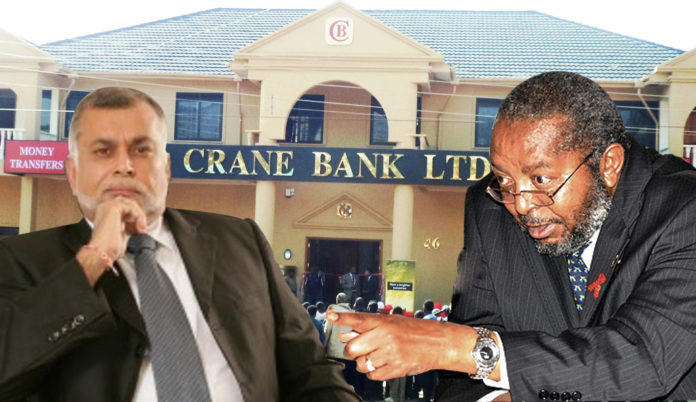
A photo montage of BoU Governor Emmanuel Tumusiime Mutebile, businessman Sudhir Ruparelia and Crane Bank
The High Court has set December 21, 2017 as date to make a ruling on the suit in which Kampala businessman Sudhir Ruparelia wants law firms MMAKS Advocates and AF Mpanga Advocates, to be kicked out of the case he is embroiled in with Bank of Uganda.
The two firms represent the Bank of Uganda but Mr. Ruparelia argues that both are acting in conflict of interest as they have represented him and his companies for over a decade and, should therefore act as witnesses in Uganda’s biggest commercial case.
The head of the Commercial Court Justice David Wangutusi heard the application of tycoon Ruparelia, seeking to restrain lawyers David Mpanga of AF Mpanga Advocates and Timothy Kanyerezi Masembe of MMAKS Advocates from representing Bank of Uganda and Crane Bank in the 400bn case.
Mr. Ruparelia was represented by a legal team from Kampala Associated Advocates led by Peter Kabatsi who informed court that lawyers Masembe and Mpanga have a conflict of interest as they have been listed by the businessman as his witnesses to testify in his favour against Bank of Uganda allegations that he caused financial loss to the defunct Crane Bank.
While pleading his case, the businessman’s lawyers revealed that Masembe and Mpanga have been the businessman’s lawyers for over 12 years and that they are privy to confidential information that could be prejudicial to his case.
Lawyer Bruce Musinguzi adduced evidence of numerous transactions to court, in which Masembe and Mpanga represented Crane Bank, Sudhir Ruparelia and Meera investments.
Sudhir’s lawyers further argue that the lawyers’ actions violate the advocate-client relationship and the professional conduct regulations.
However, in their defense, both Masembe and Mpanga insist they want to go on with the case, arguing that they did not represent Sudhir as an individual.
The High Court Registrar, in a letter dated December 12,2017, has urged both parties to send in their legal representatives in case they won’t be available or else the suit will be determined in their absence.