Stanbic Bank
Stanbic Bank
21.9 C
Kampala
Stanbic Bank
Stanbic Bank
Home Blog Page 1724

Uganda to host regional agribusiness conference in Nov

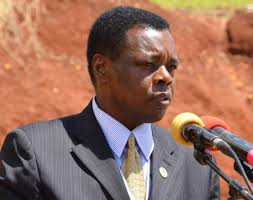
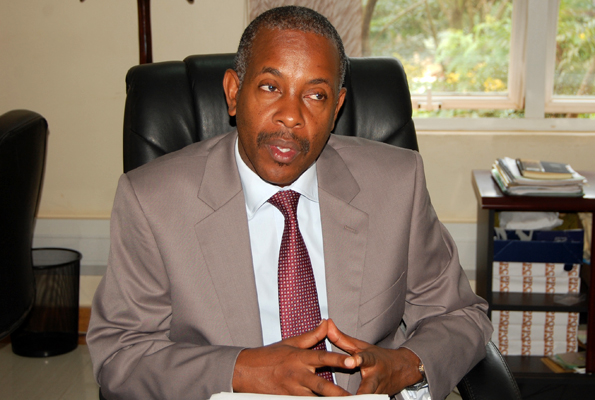
TGCU Chairman Chris Kaijuka

Uganda will host a two-day Agribusiness Congress East Africa conference and exhibition, the Chairman of the Grain Council of Uganda (TGCU), Chris Kaijuka, has said.

The event will be held under the theme, ‘Identifying East Africa’s investment trends and outlooks for 2018’, with participants sharing knowledge aimed at addressing the pertinent issues that are hindering the EA community from growing into an agribusiness hub.

Organisers say the exhibition will help show case modern technology in form of machines like tractors and seeds among others to the farmers who are the targeted beneficiaries of the event.

Mr. Kaijuka says TGCU is the official host partner of the regional farming event, which will feature more than 1000 agribusiness participants, free training workshops and agronomy consultations, round-table discussions as well as live demonstrations and crop trials.

:  “My vision for the agri-sector is a national grain sector that supplies the region and is the preferred source of high-quality grain. There are opportunities in agriculture with our two seasons and a fast-growing population,” Mr. Kaijuka said of his role as chairman of TGCU.

He adds that the TGCU is pursuing affordable financing for infrastructure development and working capital for members.

“We look forward to the launch of the electronic trading on the Uganda National Commodity Exchange where we are shareholders,” he says.

The TGCG Chairman says Uganda has evolved into the new frontier for food and grain production and the region’s food basket. What is left, he says, is cooperation between players.

“We need to come together and take action to move the industry forward. We urge all industry players with a stake in agriculture to take advantage of this golden opportunity to meet with suppliers, buyers and technocrats and contribute to the development debate,” Mr. Kaijuka says.

Meanwhile, Tomson Okot, senior programme director at Farm Concern International, an Africa-wide agri-market development agency with keen interest in value chain analysis and market access, says there will be a panel discussion on identifying East Africa’s investment trends and outlooks for 2018.

“With an enormous potential of fertile soils and favourable climate, East Africa has a comparative advantage to produce several agricultural products, process and export as a food basket of the EAC-COMESA region,” he says.

Despite its potential, intra-East African Community trade is about US$5.63 billion, representing only 10 percent of the total trade on the continent.

Okot says East African exports of goods and services to the COMESA region and other countries is still low, citing limited market-led incentives, low commercialisation and subsistence agriculture in East Africa as barriers to trade.

“Access to competitive markets remains one of the major challenges facing smallholder farmers in East Africa. Specifically, smallholder farmers are constrained by the low level of commercialisation, multiple layers of predatory market players that reduce gross margins and limited access to market information,” Mr. Okot says.



Stories Continues after ad

DRC must hold elections in 2018 – US envoy

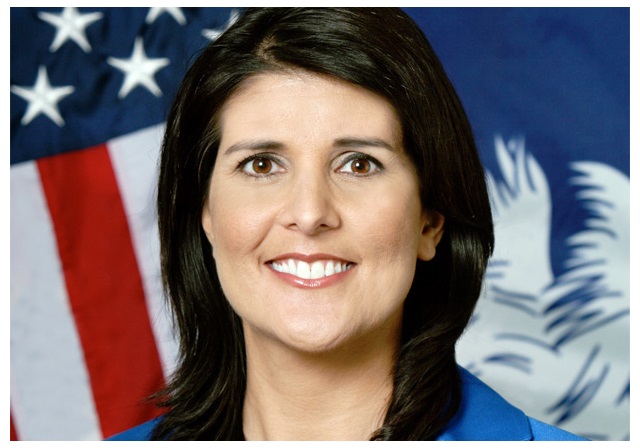
MET AFRICAN ENVOYS ACCREDITED TO THE UN: US Ambassador to the UN Nikki Haley

The Democratic Republic of Congo will not have the help of the international community if elections are not held in 2018, the U.S. ambassador to the United Nations said as she neared the end of a three-nation Africa visit.

Ambassador Nikki Haley’s remarks came after her meeting with the president of Congo’s election commission in Kinshasa.

“If the elections are not organized in 2018, the DRC cannot count on the international community. It is important that the elections be held in 2018,” she said, referring to the country’s full name of the Democratic Republic of Congo..

Haley was expected to repeat the message during a meeting with President Joseph Kabila before returning to the US.

Congo has seen widespread anger over Kabila’s stay in power after his mandate ended in December and the election was delayed.

The head of Congo’s election commission has said the presidential vote cannot take place until 2019 despite a deal struck with the opposition that it would occur this year. He cited deadly violence in central Congo’s Kasai region for the delay.

Haley came to Africa to see US and United Nations involvement in Ethiopia, South Sudan and DR Congo.


Stories Continues after ad

UNBS urges urban authorities to embrace international standards on ‘smart cities’

UNBS Executive Director Dr. Ben Manyindo

The Uganda National Bureau of Standards (UNBS) has called upon urban authorities to adopt international standards on smart cities to provide quality life to their citizens.

According to UNBS Executive Director, Dr. Ben Manyindo, urban authorities should provide utilities like adequate water and energy for the citizens that live there.

“Urban authorities should strive for sufficient fresh water, universal access to cleaner energy, the ability to travel efficiently, a sense of safety and security to provide a decent quality of life to their citizens,” Dr. Manyindo said.

The world commemorated the World Standards Day on October 14 under the theme: ‘Standards make cities smarter’, with a leading call for collaborative efforts of experts worldwide to develop the voluntary technical agreements that are published as International Standards.

With expanding urban areas expected to host up to 70 Per cent of the total world population by 2050, adopting international standards form smart cities has become a necessity, Dr Manyindo noted.

“Standards contain expert knowledge and best practices, and are essential enablers in ensuring quality and performance of products and services. Without benchmarking on International Standards, cities will struggle to run safe and smooth services,” he added.

Manyindo urged the government ministries, departments, and agencies represented to constitute a technical committee to discuss and implement the standards for smart cities.

The KCCA Director Physical Planning, Mr. Moses Atwine, said days ago that the authority had developed a ‘smart city’ roadmap.

“As KCCA, we have embraced the concept of smart cities and we undertaking a number of initiatives to implement standards for smart cities,” Mr. Atwine said.

The World Standards Day is an initiative of the International Electrotechnical Commission (IEC), the International Organization for Standardization (ISO) and the International Telecommunication Union (ITU), three leading developers of International Standards.


Stories Continues after ad

Age limit debate: Katwe police commander blocks consultative meeting

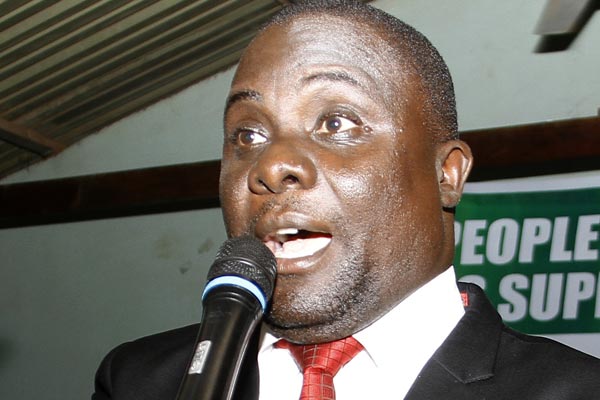
WANTS OWC DISBANDED: Muwanga Kivumbi

Harassment of Ugandans opposed to the removal of age limit in the constitution continues.

The latest is that Kampala South Metropolitan police on Friday blocked a consultative meeting organised by MPs under the umbrella of parliamentary forum on human rights and civil society.

The Police officers, commanded by Katwe division police commander, Frantile Lwamusai, cordoned off Muganzirwazza plaza owned by Buganda kingdom and where the meeting had been planned to take place Friday.

Lwamusai said that the meeting was illegal since the organizers had not sought clearance from the office of the Inspector General of Police, Gen Kale Kayihura, currently unsettled by the instabilities within the force.

“The procedure is that you have to present a clearance from IGP and we provide you with security,” he said.

Some of the organisers-Butambala Member of Parliament Muwanga Kivumbi and Fida executive director, Ms Irene Ovonji Odida, said they had notified the police as required by public order management act to hold the indoor consultations.

Mr Kivumbi said they wrote to Gen Kale Kayihura and his office acknowledged receipt of their notification letter which they also served Kampala Metropolitan police. “We notified the office of the IGP,” he said. Public management Act requires organisers of political events to notify police for clearance and security purposes.

Ms Odida said they would continue with consultations without police clearance. “We shall go ahead with our consultations. Being a civil society doesn’t mean we should not consult,” she said.


Stories Continues after ad

Gen. Kayihura grilled by CMI for three hours

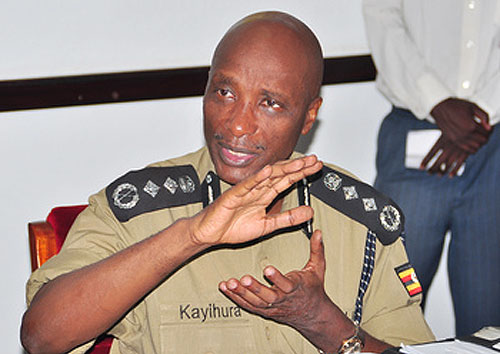
Gen.Kale Kayihura

The Inspector General of Police Gen. Kale Kayihura has been grilled by Chieftaincy of Military Intelligence at their headquarters in Mbuya in the ongoing crackdown on senior police officers.

Gen. Kayihura becomes the highest police official to be grilled by CMI in the operation that has seen several of his officers charged with Espionage and kidnap.

Security sources say that contrary to the denials by the army, Gen. Kayihura’s home was searched and a domestic worker was picked last night for questioning.

Senior police officers interrogated by the Chieftaincy of Military Intelligence (CMI) during the week, Commissioner of Police (CP) Joel Aguma, the head of the Police Standards Unit (PSU) and Senior Superintendent of Police (SSP) Nixon Agasiirwe Karuhanga of the Special Operations, are currently at the Makindye General Court Martial (GCM), where they have been charged before Chairman Lt. Gen. Andrew Gutti with the kidnap of Lieutenant Joel Mutabazi, a former bodyguard to Rwandan President Paul Kagame.

At least 12 police officers were arrested by military intelligence on orders of President Museveni on Monday  and this website understand that the arrests  are in connection to the revelation by  a woman  known as Christine Mbabazi Muhoza who claims she was a close friend of Kaweesi and could have had information to the killing of Kaweesi.

This woman is at the centre of investigations as she made both police’s flying squad and army that were deployed by Director General of Internal Security Organisation clash at her home. Both the army and police were subsequently withdrawn and replaced by Special Forces Command guards.


Stories Continues after ad

MTN announces judges for innovation awards

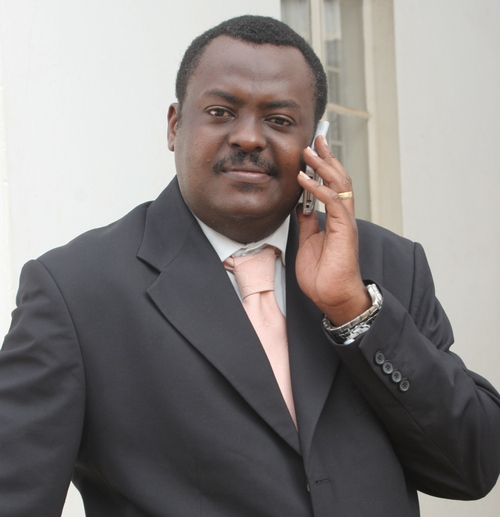
Simon Kaheru

MTN Uganda has announced a panel of five judges that will decide the winners of the second edition of the MTN Innovation Awards 2017.

According to a release, the judges were selected on the basis of their experience in understanding technology and potential to offer an objective assessment of the submissions made by the finalists.

Those selected review the soon-to-be shortlisted nominees include TMS Ruge – the founder and CEO of Raintree Farms, Suzan Kizito-East Africa Regional Manager for CSquared, Simon Kaheru – Coca Cola Beverages Africa Public Affairs and Communications Director for Uganda, Vivian Ddambya – Director Technical Services at the National Information Technology Authority and Badru Ntege – Chairman of the ICT sector at the Private Sector Foundation Uganda.

The judges will review each of the 45 shortlisted submissions at a workshop and exhibition to be hosted at the Shoprite Lugogo Mall parking lot tomorrow, Saturday, October 28, 2017.

The exhibition will be open to the public for viewing of the mobile and web-based applications. The first awards were first held in 2015, with 8 projects being awarded for their outstanding contribution to society.

“The contribution to society is measured by impact especially in the long-term. Additionally, we are looking at positioning Uganda as having the innovation space and skilled individuals that can compete on the global stage,” says Olivier Prentout the Chief Marketing Officer, MTN Uganda.

The winners will be recognized at an Awards Gala to be held on November 8, 2017.  MTN has increased the prize money from us$1000 given to each category winner in 2015 to US$3000.

In 2015, the winners included, ClinicMaster, BrainShare, Yo! Payments Gateway, Intelligent Works, Outbox, Fezah, Lyndsay Handler of ReadyPay – Outstanding Woman in Innovation and Solomon King of FundiBots – the Innovation achiever of the year.


Stories Continues after ad

Age limit debacle: MP Kyagulanyi returns Shs29m ‘bribe’

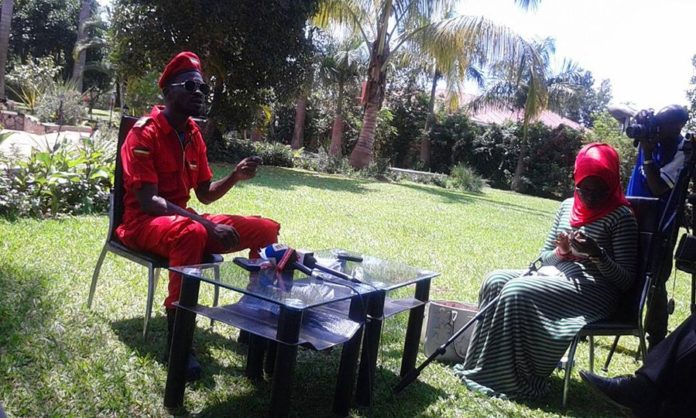
Kyadondo East MP Robert Kyagulanyi aka Bobi Wine talks to the media at his home.

Kyadondo East legislator Robert Kyagulanyi aka Bobi Wine has today directed his bankers to return the Shs29 million ‘facilitation for consultations’ that was credited on his account by the Parliamentary Commission on October 24.

On Tuesday parliament received Shs13 billion from the ministry of finance, and started disbursing the money to every legislator’s account to facilitate the consultative meetings in respect to the now controversial private members bill that is aimed at removal of presidential age limit that is capped at 75 years.

In a letter dated October 27, Kagulanyi ordered Barclays Bank, Acacia Mall branch, to return the Shs 29m back to the creditors. Consequently, the bank did as directed. “As per your request to refund the 29m sent to your account by parliamentary commission, we have reversed it off account,” the branch manager wrote back in a letter on the same day.

Later, while addressing a pressing briefing at his home MP Kyagulanyi said they are always facilitated with Shs 1.4 million per month to go back to their constituencies.

“The money wired onto our accounts was too much and could have temporarily solved some few problems that the country faces,” he said, adding: “We did not budget for these funds this financial year, and we could be charged for misappropriation of government funds, that is why I have chosen to be on the right side of the law.”

Describing the money as a ‘bribe to influence their mindset about the bill’ that is being fronted by Igara West MP Raphael Magyezi, Kyagulanyi said: “I don’t know why the government is insisting on the bill that is leading to loss of tax payers’ money; many MPs have always been coming up with other bills but I wonder why they are interested in the Magyezi bill the will lead us in chaos.”

Critics of the Magyezi bill like Kyagulanyi aver that it is aimed at paving the way for President Yoweri Museveni, who has now ruled Uganda for 31 years, to rule for life.

And. looking back to 2005 when MPs in the Eight Parliament voted to lift the term limits after bagging Shs5 million, Kyagulanyi those responsible have not recovered from the embarrassment.

On Wednesday Rubaga north MP Moses Kasibante, Soroti woman MP Angelina Osege, Muwanga Kivumbi (Butambala), Medard Lubega Ssegona, William Nzoghu (Busongora) Robinah Ssentongo (Kyotera Woman) and Opposition Chief Whip Ibrahim Semujju Nganda (Kira Municipality) also returned the Shs29 million  to the Parliamentary Commission.

Stories Continues after ad

Local insurers pay 109b in claims, want VAT scrapped

Ms Miriam Magala, CEO-Uganda-Insurers-Association.

The Uganda Insurers Association (UIA) has announced a 12 percent growth in the industry’s gross premium in the first half of 2017 compared to the same period in 2016, paying over Shs109 billion in claims.

The industry players also announced plans to improve the business environment, calling upon government to ensure a positive tax regime that favours their business, particularly removing Value Added Tax (VAT) imposed on basic premiums.

Further, the insurers say they are lobbying government to for the remove Value Added Tax (VAT) on premiums and stamp duty on agriculture insurance and a reduction in stamp duty on Motor Third Party, micro insurance and individual lines.

“We are therefore lobbying to remove VAT and reinstate the original stamp duty (Shs5, 000) to ensure that every Ugandan can enjoy the benefits that insurance provides,” UIA Chairman Deepak Pandey said.

He added: “In addition to paying the basic premium, our customers pay an additional 18% in VAT and UGX 35,000 which has further fuelled the misconception that insurance is expensive,” they say. This situation, the insurers say, is accentuated by the fact that individuals who purchase insurance for themselves are unable to claim VAT.

Pandey said the 12 percent growth is a result of aggressive consumer awareness programs as well as streamlining of business practice to provide better service, noting that there was significant growth in the personal accident, individual life and medical insurance categories, signifying improved financial literacy.

“The public is beginning to pay more attention to circumstances that will impact not only themselves as individuals but their families,” he said, adding that notable growth was registered in bonds, public liability and engineering.

According to the report, personal accident, individual lie, medical, bonds, public liability and engineering grew 47%, 40%, 17%, 74%, 45% and 22% respectively.

“As the industry and economy continue to grow, we continue to receive queries regarding our capacity to cover large and specialist risks such as oil and gas as well as government projects. The industry as a whole has in place mechanisms to absorb any size of risk,” he said.

“Local capacity has further been evidenced by the market’s capacity to establish a national reinsurance company-Uganda Re- which also shares in other international risks. The growth we see in premium coupled with the payment of genuine claims speak to our capacity and commitment to paying genuine claims, “Ms. Miriam Magala, Chief Executive Officer, UIA, said.

Over the past five years, insurers have paid over UGX 950 billion in claims, growing at an average of 14% every year. In the first half of 2017, over UGX 109BN was paid in claims. 36% of this was paid in motor insurance, 31% in medical insurance claims and 7% in personal accident claims.

The UIA officials say in the periods under review, there has been a significant decrease in the number of claims for theft and burglary, public liability and group life.

“A decline in group life payments is actually positive as it means that policyholders are living longer and can make better investment, protection and savings decisions,” they add.

The Association notes that progress has been made since the inception of the insurance subsidy under the Uganda Agriculture Insurance Scheme (UAIS) which was approved in the budget for financial year 2016/17.

By the end of June 2017, UGX 1.5 billion had been written in premium with an end year projection of Shs4 billion.

The Association also announced they had given out Shs760 million provided by government under the Uganda Agriculture Insurance Scheme (UAIS) as at 30th June 2017. It is projected to hit Shs 2.1 billion   by end of December.

“The subsidy currently covers 26,892 farmers and we expect to insure 50,000 farmers by year end and there are plans to provide agriculture insurance embedded products through NAADS/OWC programs and MAAIF. It is also the intention to persuade the financial institutions to do the same and have all their agriculture credit products insured,” Pandey said.

“The uptake of the subsidy has been distributed throughout the country with the average region being 12 billion in exposure and covers crops, livestock and fisheries. The current notified claims as at August 2107 amounted to Shs 1.2 billion,” he said.

The industry still faces challenges particularly, insurance fraud and tax, which affects not only the affordability of services but the turnaround time on claims as well.

“Insurance fraud is a malpractice which affects turnaround time as due care must be taken to weed the fraudulent from the genuine claims. As a result, insurers are forced to introduce more stringent measures to ensure that fraud; money laundering and other vices are dealt with, “said Ms. Magala.

“To improve on this and ensure that our clients are not unnecessarily inconvenienced, we have partnered with the Insurance Regulatory Authority of Uganda (IRA) to, among others, ensure the sharing of information on fraud, the blacklisting of individuals/companies where fraud has been proven as well as the establishment of an insurance fraud desk. This desk will be manned by specialised police officers who will investigate suspected and detected insurance fraud cases,” she added.

According to the KPMG East Africa Insurance Fraud Risk Survey 2015, detected fraud is estimated about $10,000 (Shs36m) while total fraud in the sector at $500,000 (Shs1.7b) annually. The report also notes that fraud in the sector is still rampant with at least 12 per cent of all insurance players in Uganda confirming that they are exposed to insurance fraud.


Stories Continues after ad

Uganda coffee earnings rise 66.71 percent

Uganda’s year-on-year coffee earnings jumped 66.71 percent to reach US$544.59 million in the year 2016/17 compared to US$326.68 million the country earned in 2015/16, the Uganda Coffee Development Authority (UCDA), says in the latest report.

According to the report, Uganda exported 4.6 million 60-kilo bags in 2016/17 compared to 3.3 million 60 kilo bags in 2015/16, representing a 38.90 percent drop.

On a monthly basis, the report shows that Uganda’s coffee exports plummeted to 341, 839 60-kilo bags in September compared to 418,340 60-kilo bags exported in the month of August. September is the last month of the coffee calendar 2017.

The month of September exports earned the country US$38.58 million, which was less than US$47.06 million earned in August.

The report analysis shows that Uganda exports more of Robusta coffee compared to Arabica. For instance the country exported 3.62 million 60-kilo bags of Robusta coffee in 2016/17 compared to 986.52 million 60-kilo bags of Arabica type.

The report shows that of the 37 coffee exporting companies in Uganda, Kyagalanyi Coffee Factory, Ugacof, Olam Uganda and Export Trading Company exported more coffee in September, taking 21.6%, 11.80%, 10.20%, 9.14% and 7.45% of the market share respectively.

The report indicates that Uganda’s coffee in September was consumed more in the European Union, Sudan, India, Morocco and Algeria, each making 63.62%, 15.70%, 7.87%, 3.12% and 2.5% respectively. Uganda’s coffee exports according to the latest report, go 19 destinations.

Arabica grows well on the slopes of Mount Elgon while Robusta does well in low plains in the central and western regons of the country.

Arabica fetches higher prices on the world coffee market compared to Robusta because of its sweet aroma.

Producing both Arabica and Robusta coffee types, Uganda is Africa’s number one exporter of coffee. Ethiopia, Africa’s number one producer of coffee, consumes most of its coffee domestically, leaving less for export.


Stories Continues after ad

Works Minister lauds progress on Entebbe Airport expansion

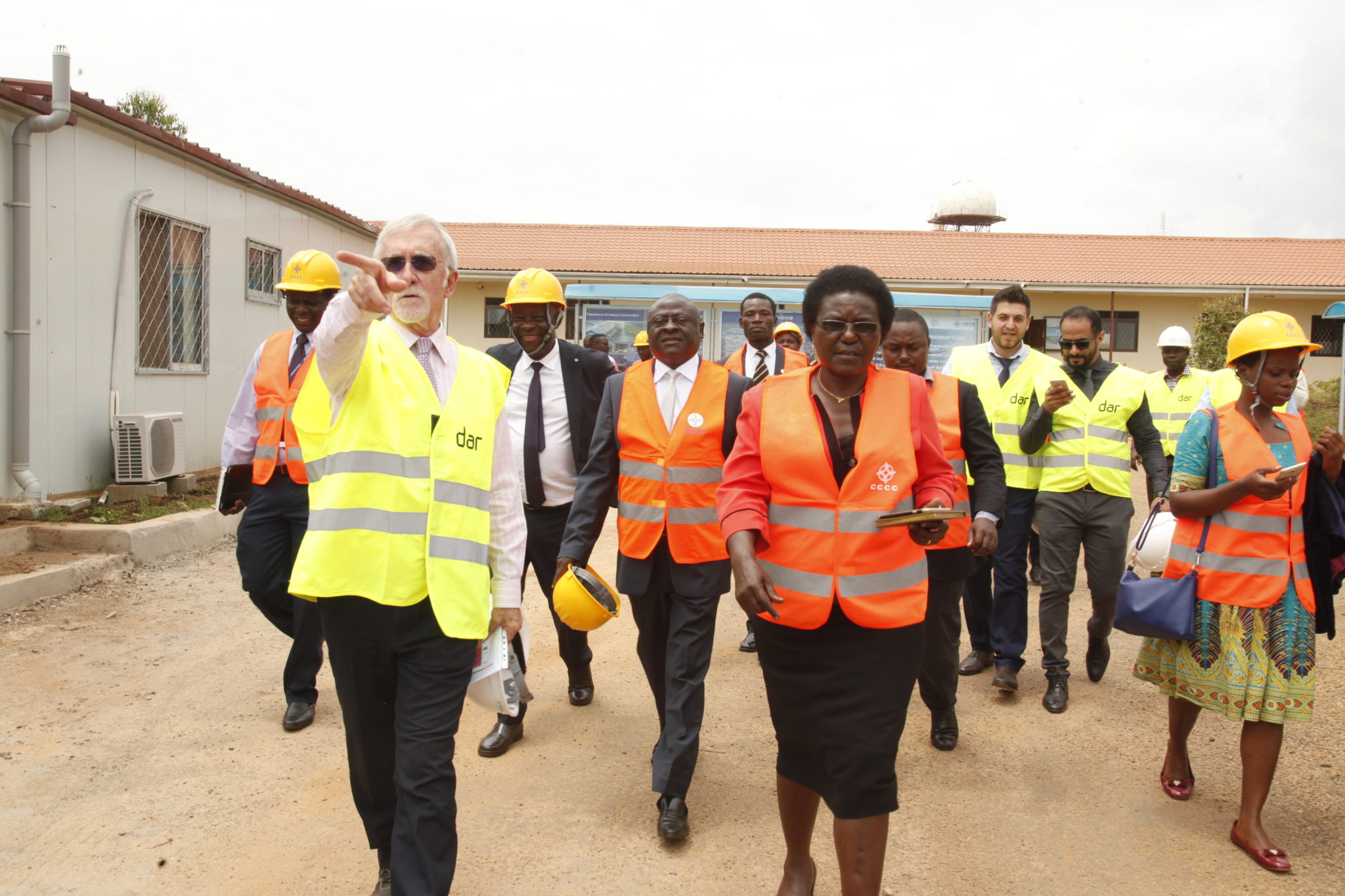
The Minister of Works and Transport, Monica Azuba Ntege (C) during the tour, standing next to her on the right is CAA Chairman Edward Ndawula

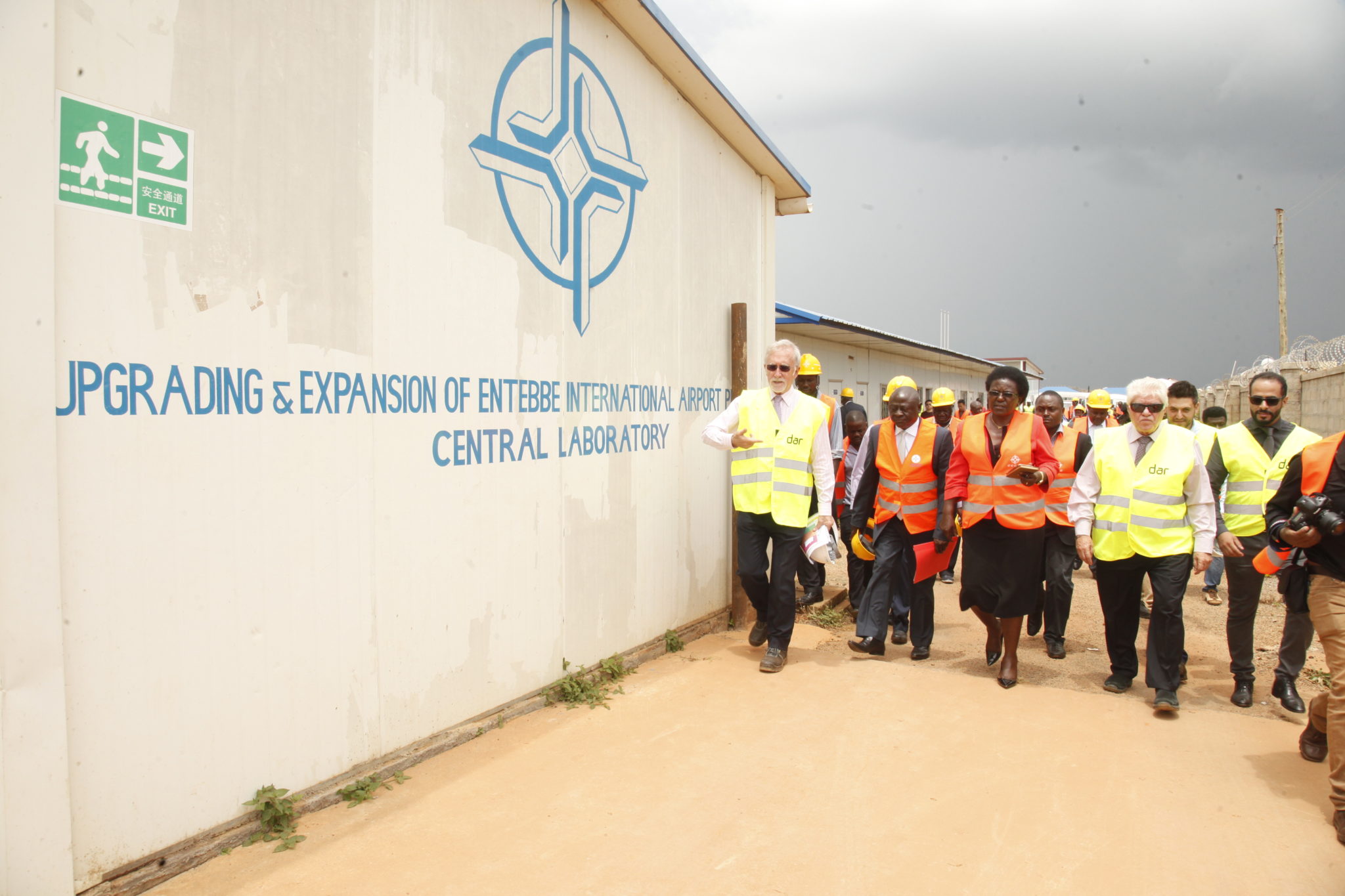
Though the upgrade and expansion of the Entebbe Airport by China Communications and Construction Company (CCCC) is still four years from completion, the Minister of Works and Transport, Monica Azuba Ntege has applauded the work that has already been done.

Works Minister Ntege Azuba being taken on a guided tour of the Airport

Minister Ntege Azuba made the remarks after taking a tour of the site together with other government officials from the Uganda Police, Civil Aviation Authority and the Ministry of Works and Transport among others.

Minister of works and Transport, Hon. Monica Azuba Ntege, tours the site with Kampala Metropolitan Police Commander Frank Mwesigwa and other officials

“The airport is one of the sites that are the faces of the country, when this project is complete it will boost tourism, economic development and also ensure that the tickets are cheaper,” the Minister noted.

She added that although CCCC is facing some challenges in the upgrading and expansion of the airport, they have managed to stay on track with the project. “They (CCCC) are facing some difficulties but even with that, they have not slowed down and have assured me that they will be able to beat the deadline of completion,” Minister Ntege Azuba said.

One of the biggest challenges that CCCC is facing is the lack of enough granite that is used for the construction of the aeroplane runways.

“There are various quarries in the country but most of them don’t have the quality of granite that we need. So, this has made us struggle and increased on our expenditure,” Zheng Biao, the CCCC Country Manager, said.

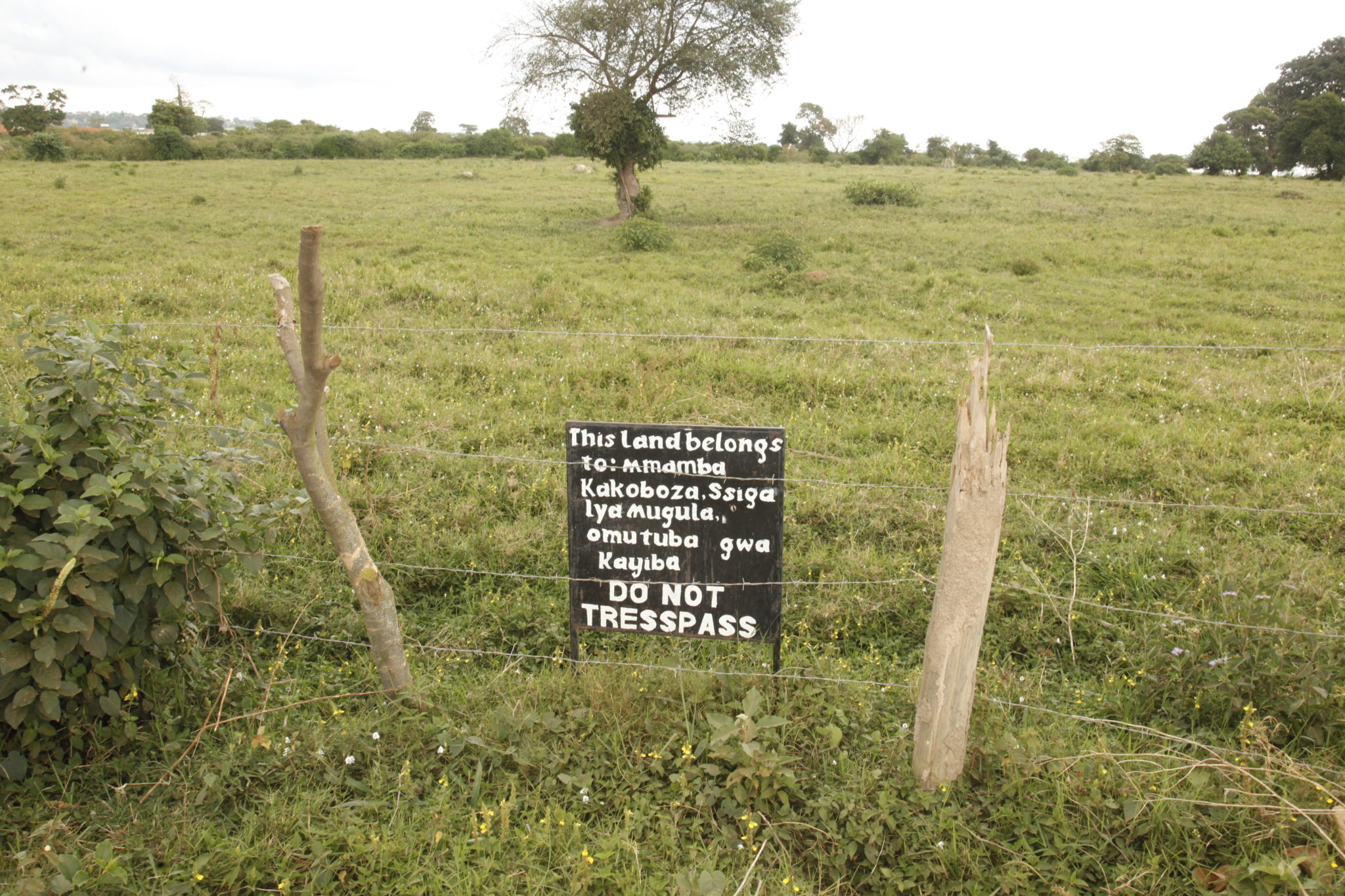
Another challenge the Minister noted, is the Civil Aviation Authority disagreement with the Mamba clan of Buganda, which claims the piece of land the CAA had earmarked for a fuelling site is home to their heritage.

Both parties are yet to come to an understanding on the matter. “We are going to engage them and see how we can come to solution where everyone is comfortable,” Minister Ntege Azuba said.

Stories Continues after ad