Stanbic Bank
Stanbic Bank
27.6 C
Kampala
Stanbic Bank
Stanbic Bank
Home Blog Page 1726

The obscure imprints of the German elections

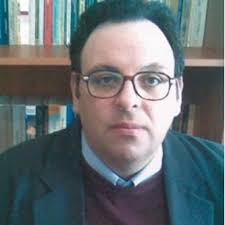
Isidoros Karderinis

By Isidoros Karderinis

The German elections of September 24, 2017, due to the country’s specific political, financial and historical strength, have undoubtedly been at the center of international and European interest.Their results were marked by the winning of the Christian Union CDU / CSU led by Chancellor Angela Merkel, even with a lower percent, -33 per cent, while in the Federal elections of 2013 it obtained 41, 5 per cent -, the contraction – 20, 5 per cent from 25.7 per cent in 2013 – of the Social Democratic Party (SPD) of Martin Schulz, but also by the entry in the Federal Parliament of the AfD party, the most dangerous far- right one in Europe, due to the size of Germany and to the dramatic historical events that changed the course of the 20th century.

Germans, – it is more than obvious-, are grateful to Chancellor Merkel for their well-being, their high standard of living compared with that of other European peoples, for combating unemployment effectively, (the unemployment rate is at historically low levels, ie only 3.9 per cent of the workforce) and of course for  the budget surpluses. So, for all these reasons, they gave her a fourth term in the Chancellery, something succeeded only by Konrad Adenauer, the reformer of postwar Germany and Helmut Kohl, the father of the reunification of Germany.

On the other side, Chancellor Merkel’s victoryand the formation of a government with potential partners -whoever they may be- obviously implies the continuation of the policy of extreme austerity and faithful implementation of the “sacred” rules of budgetary discipline, since it serves Germany in a very visible way.However, the implementation of this policy for years now, has already strained and overstretched the Southern European countriesand especially Greece and therefore, along the road, it will lead,- with mathematical precision- the entire European project  to a serious risk of collapse.

At the same time the historically high percent – 12.6 per cent – of the far-right xenophobicand anti-immigrantAfD,which for the first time achieved not only to enter the Bundestag but also to become the third largest partyin Germany as a whole and the second largest one in the eastern federal states, is a particularly obscure imprint of the German electionsand considerably enhances the right-wing populists and extremists across the continent.It is the first time afterthe Second World War and the collapse of the Nazi regime in 1945 that such a thing happens, a fact that undoubtedly constitutes a negative milestone in German history.

At this point it should be noted that in the elections ofSeptember 2013, the party “Alternative for Germany” (AfD), which was born in the same year from the reaction of a part of the Germans against the Southern European countries,took a 4.7 per cent of the votes and did not enter the Parliament.However, with its current entry, the hardcore far-right and xenophobic members of AfD, -for many people considered authentic heirs of the Nazis-,are bound to exert strong pressure on Chancellor Merkel to change the liberal democratic face she showed on immigration, terrorism and security matters, -for example the open borders policy which resulted to the entry of many refugees and migrants in Germany in September 2015. Of course, in reality, this policy is not motivated by philanthropic feelings  but it is based on Germany’s interest, as every year the country needs half a million immigrants in order to continue its existence as an economic power and in order to effectively support its social system.

The statement made by the co -chairman of AfD party Frauke Petry during a speech in Stuttgart, where she compared a society incorporating migrants to a “compost heap”, her approach on surveillance of the border by German guards who will shoot any refugee or immigrant attempting to pass illegally, but also the statement of the other co-chairman of AfD Alexander Gauland a few days before the 2016 Euro regarding the great black German-Ghanaian player of Bayern and of the German National Football Team Jerome Boateng, -“People consider him a good player, but they would not want him as their neighbor”- indicate in the clearest way that this party has indeed inherited the loathsome traditions of  the assault battalions of the National Socialist German Workers’ Party of Adolf Hitler in the decade of 1930, regarding the Aryan race.

What is the reason, however, of the frantic rise of this racist political formation, who wants among other things to change the attitude of Germany in order to stop the manifestation of remorse for the horrible Nazi crimes? Definitely a key cause is the refugee and migration crisis which nowadays has assumed gigantic proportions and which overstretches the European countries and of course Germany. On this ground of the ongoing refugee and migration flows, instead of the building by the developed world of a democratic and progressive refugee and immigration policy showing compassion and solidarity, the spiky flowers of evil grow, and inhuman, fascist policies and hatred rhetoric emerge triumphant against persecuted and unfortunate people who fled their homes under the most tragic circumstances seeking light far from the horrible, deadly darkness of war and extreme poverty, and hope for a better and more peaceful future.

Moreover, another important reason for the rapid rise of the far-right AfD is the full use -by the officials of this political formation- of the Islamic terrorist incidents and of the criminal events who connect them to the influx of refugees and immigrants from Islamic countries.So, during the election period, they did not fail to remind the massacre in the Christmas market in Berlin and the sexual attacks against young German women by Arab immigrants in the New Year 2016 in Cologne.

Finally, the seed of the extreme and xenophobic views is much better incubated as the new “snake egg” in the prosperous societies of the North that feel threatened by the “poor people” of the South, -to whom they have attributed various negative stereotypes-, and of course, by the refugees and the immigrants. This trend is also confirmed by the victory in the Austrian elections of October 15, 2017, of the People’s Party of Sebastian Kurz, which has an extreme anti-immigration agenda, as well as by the rise in the rates of the neo-Nazi Freedom Party of Heinz Christian Strache from 20.5 per cent in the elections of 2013 to 26 per cent in the current elections.

In conclusion, the imprints of the German elections are obscure for both the poorer Southern Europe countries in difficulty, -since the German policy of austerity is not going to change not even a little- and for the democratic citizens of Germany and of the whole Europe who watch with horror the nightmarish onslaught of the fascist, racist and xenophobic political entities.

Curriculum vitae

Isidoros Karderinis was born in Athens in 1967. He is a novelist, poet and columnist. He has studied economics and has completed postgraduate studies in the tourism economy. Articles of his have been republished in newspapers, magazines and sites worldwide. His poems have been translated into English, French and Spanish and published in literary magazines and literary sections of newspapers. He has published seven poetry books and two novels. His novels and three of his poetry books have been published in USA and Great Britain.

Email: skarderinis@hotmail.gr             

Facebook: Karderinis Isidoros

Twitter: isidoros karderinis


Stories Continues after ad

AfDB approves US$100m loan to KCB

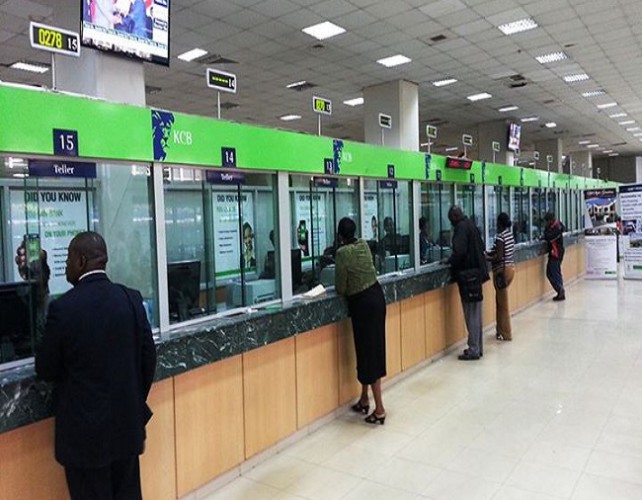
Customers inside the banking hall of KCB in Kampala. Some commercial banks have reduced their PLR

The African Development Bank (AfDB) has approved a US$100 million loan to Kenya Commercial Bank Limited (KCB) to enhance job creation as well as facilitating financial access to businesses.

According to a statement released by the Bank, the line of credit resources will also provide the much-needed liquidity support for the development of infrastructure and energy projects as well as support value-addition in manufacturing.

“Availability of requisitely priced funds at matching tenors is therefore a key ingredient towards assisting these enterprises to thrive sustainably and eventually contribute towards economic development,” the AfDB statement reads in part.

Part of the statement says the provision of the loan to KCB is well aligned with AfDB’s Ten Year Strategy, 2013-2022, as well as one of the Bank’s ‘High Five’ strategic priorities of improving the living conditions of Africans.

The KCB, with branches in the EAC bloc, is one of pioneers in alternative service channels including agency and mobile banking that promote financial inclusion


Stories Continues after ad

Museveni directs UNRA to reinstate contract of Chinese company

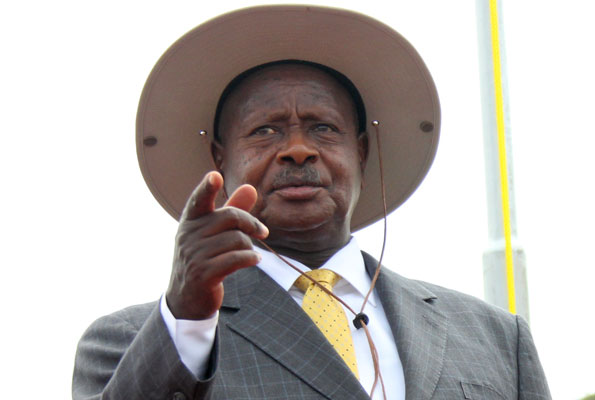
President Museveni

President Yoweri Museveni directed the Attorney General William Byaruhanga and the Executive Director of Uganda Roads Authority (UNRA), Allen Kagina, to reverse the termination of a contract awarded to M/S China Railway 18th Bureau (Group) Limited to upgrade the Musita-Lumino-Busia-Majanji Road.

In June, UNRA terminated the contract accusing the company of incompetence and abuse of contractual standards. The company also had failed to mobilise resource and equipment to ensure that the work was done in time and persistent lack of efforts to show commitment to the job. At the cancellation of the contract, the company had reportedly only achieved 12 percent of the Shs207 billion project.

But in a letter dated August 15,2017 and seen by the EagleOnline,  Museveni said hiring a new contractor to finish the road would be costly in terms of costs and time. He also said he held several meetings with concerned officials among them AG Byaruhanga, Speaker Rebecca Kadaga, the Minister of Works and Transport Monica Azuba and UNRA ED Kagina before arriving at his recommendation.

“In my view M/S China Railway 18th Bureau (Group) Limited should be allowed to conclude the upgrading of this road. This is in consideration of the costs and time to implement the project, if we were to hire another contractor to work on the road,” Museveni wrote in the letter copied to the Minister of Works and Transport.

Further, according to Museveni,  his decision was also partly informed by pleas from the officials of the company, Speaker Kadaga and the recommendations of the local leaders on the 104 kilometer road project.

“I have been informed by the politicians from the area that the project was going on well, save for some technical shortcomings,” he wrote.

Museveni, however, said that the process reinstate the contract must be done in accordance with the laws of Uganda. “The technical officers must ensure that the new guidelines are strictly followed,” he said.


Stories Continues after ad

US envoy evacuated as South Sudanese protest against President Kiir

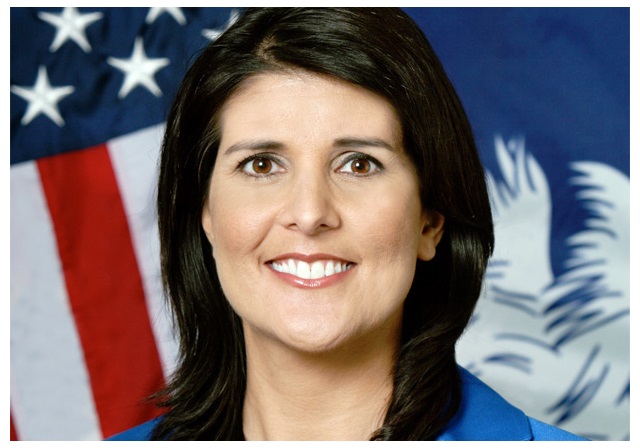
MET AFRICAN ENVOYS ACCREDITED TO THE UN: US Ambassador to the UN Nikki Haley

A visit by  Nikki Haley the U.S. ambassador to the United Nations, to a UN camp in South Sudan was cut short after hundreds of people protesting against South Sudan’s president descended on the event she was attending, a spokesman for the US mission to the United Nations, has said.

Haley was meeting with civilians impacted by the South Sudan conflict when a group of several hundred people demonstrating against President Salva Kiir approached the event, the spokesman said.

Haley’s security team determined it was not safe and escorted her away, ‘cutting the event short by a few minutes’, the spokesman said.

The demonstrators were pro-American and supported Haley, according to the spokesman.

“The situation just got a little out of hand and our security colleagues decided it was better to be safe and depart a little early,” the spokesman said.

Haley continued with the rest of her schedule elsewhere in the country before flying out of the capital, Juba, as scheduled, the spokesman said. She is now in Kinshasa, the Democratic Republic of the Congo, according to the spokesman.

Haley met with Kiir earlier in the day, but the President was not at the event at the UN camp. After the meeting, Haley said that her conversation with Kiir was ‘very frank’ and that the United States had lost trust in South Sudan’s government, according to the UN mission.


Stories Continues after ad

Stanbic Bank granted Uganda’s first ‘Bancassurance’ license

IRA CEO Alhaj Ibrahim Kaddunabbi Lubega handing over licence to Stanbic official

Stanbic is the first commercial bank in Uganda to be granted a license by the Bank of Uganda (BOU) to provide ‘Bancassurance’ as a product on the local market.

The award of the licence to Stanbic follows the passing of the Financial Institutions Amendment (FIA) bill 2016 which included a provision for Bancassurance and the subsequent approval of the regulatory guidelines by the BOU.

The Financial Institutions Act 2016 specifies that the Insurance Regulatory Authority of Uganda (IRAU) is responsible for receiving applications from financial institutions for licensing to conduct Bancassurance business, subject however to prior written authorisation from the Central Bank.

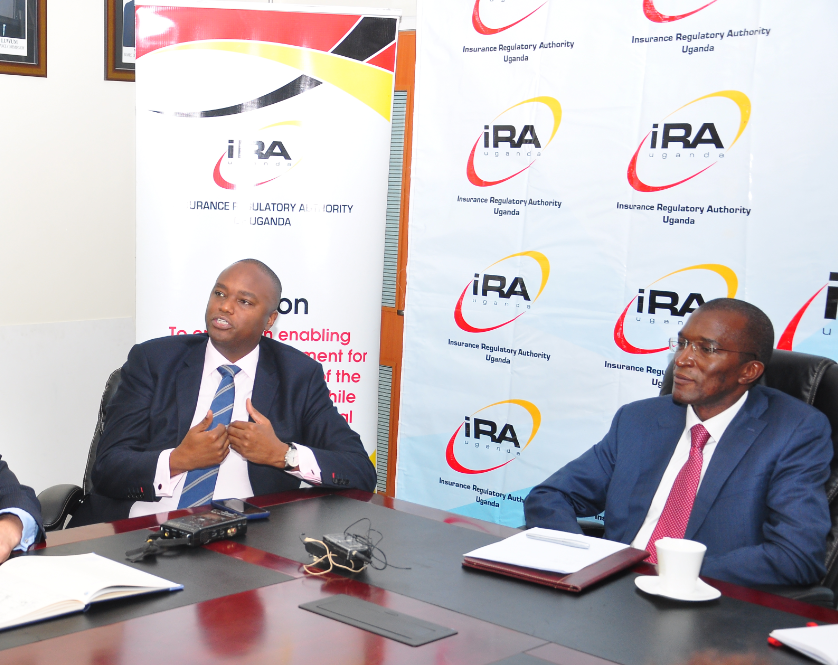
IRAU CEO Alhaj Ibrahim Kaddunabbi Lubega, and the Stanbic Bank boss Patrick Mweheire

Handing over the license at ceremony held at the IRAU headquarters in Kampala yesterday, Alhaj Ibrahim Kaddunabbi Lubega, the IRAU CEO said: “As an industry we are extremely pleased that Bancassurance in Uganda has finally become a reality.”

Mr. Lubega noted that the 0.8% insurance penetration in Uganda was still unacceptably low.  “Selling insurance through alternative channels such as banks will undoubtedly make a huge difference,” he noted.

Receiving the license, Patrick Mweheire, the Chief Executive of Stanbic Bank, said: “We are extremely proud to be the first commercial bank in Uganda to offer Bancassurance.”

Mr. Mweheire said Stanbic had invested significantly in training staff, signing partnerships and putting in place the technology and infrastructure needed to roll out the product smoothly.

He said the success of the project also would involve raising public knowledge and awareness about the various benefits and types of insurance products available through banks. “To that end, we look forward to working with the regulator and other industry players to run effective communications and stakeholder initiatives that will ensure this happens,” he said.

Talking about the benefits of selling Bancassurance Lydia Kayonde, the Head of Bancassurance at Stanbic Bank said the product will provide customers with a one-stop-shop solution which offers greater convenience, savings and choice.

“In addition, the premium prices will be better negotiated and product turnaround times will inevitably improve. Bancassurance is an efficient distribution channel with higher productivity and lower costs to serve than traditional sales channels,” Ms. Kayonde said.


Stories Continues after ad

The Arena Mall: Understanding the secret behind East Africa’s biggest shopping centre

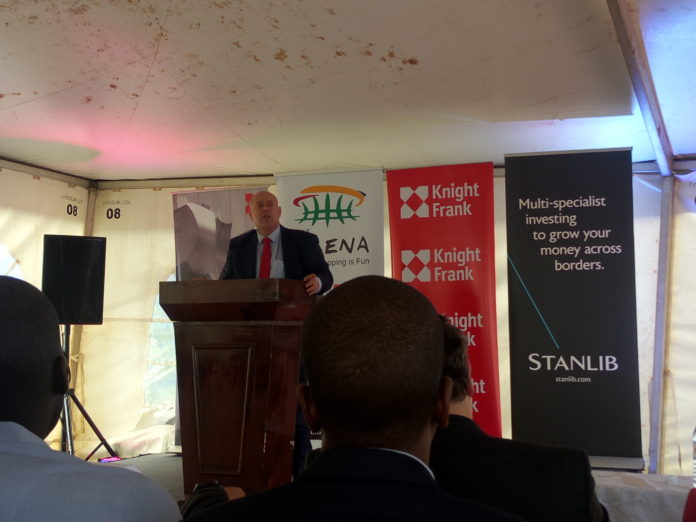
An official of the STANLIB at the launch

Representatives from STANLIB Asset Management Limited, South Africa, gathered in Kampala for the ground-breaking ceremony of East Africa’s biggest mall, the 14, 000 square metre The Arena Mall.

Located at the intersection of two major thoroughfares – Kibuli and Nsambya Roads, the mall is STANLIB’s first property development venture in Uganda, and is designed with two levels of enclosed shopping space and a rooftop cinema, entertainment and restaurant space atop two levels of structured basement parking.

Situated barely three kilometres south of the city’s central business district, on a steeply rising slope, The Arena Mall will offer breath-taking panoramic views of the city scape and surrounding Nakasero.

The Arena Mall site is easily accessible from the CBD through Kibuli Road on the north, Nsambya Road to the west, and Gaba Road from various southern suburbs.

In close proximity of the site are the American embassy, Nsambya Hospital, the Kampala International University, Uganda Military Police Barracks, and a number of prominent schools, public offices, shopping and entertainment centres.

The Mall should be a welcome addition to the south-east suburbs, which are largely underserved by formal retail and leisure facilities.

Over 87,000 households and 334,000 people reside within a 1km radius of the site, but there exists a dearth of quality, formal retail offerings in the catchment area, despite the annual population growth rate of 3.6% and a concentration of middle income households in this region.

The Arena Mall will be anchored by Shoprite, and will have a wide variety of shops such as Cafesserie, Aristoc Booklex, Timberland, and Century Cinemax.

Knight Frank Uganda is leading the leasing efforts, with over 50% of the lettable space in the Mall pre-let. The Mall opening is expected by September 2019.

“Today is an exciting and historic day for our organization as a whole, marking STANLIB’s first property development project in Uganda,” said Byrd, Principal at STANLIB.

STANLIB believes The Arena Mall offers a chance for good investment return, geographical diversification for the Fund, as well as an opportunity to contribute to the economic development and viability of a key urban node.

The primary objective of STANLIB’s Fund is to achieve long-term capital appreciation through investments in a diversified portfolio of quality property developments projects.

The Arena Mall will be Kampala’s first environmentally sustainable building, and will have a 4-Star rating by the Green Building Council South Africa (GBCSA)-Uganda.

STANLIB is pleased to be investing in a project that provides benefits for the tenants, environment and investors, and is also a proponent of innovation and learnings in the market.

STANLIB is working in partnership with a local partner, Charles Odere of Chestnut Uganda Limited, and reputable local and international development professionals.

Seyani Brothers (Uganda) Limited is the main contractor, and the development and construction will be managed by Betts Townsend.


Stories Continues after ad

dfcu to fund Uganda’s co-operative unions

Representatives from dfcu Bank, The Agriculture Development Center in Lira District during the announcment of the partnership with Rabobank which will support Farmer Based Organisations across the country

dfcu Bank has announced a partnership with the Agriculture Development Centre and Rabobank in an effort to support farmer -based organisations and cooperative unions across the country become self-sufficient, an effective tool to transform the agricultural sector in Uganda.

The announcement was made at an event in Lira that was attended by various stakeholders and farmers from the region.

Speaking at the event, dfcu Bank’s Head of Corporate and Institutional Banking, Godfrey Mundua said the partnership between ADC, Rabobank and dfcu Bank is aimed at supporting farmer organizations become profitable, sustainable and ultimately bankable.

“The agricultural sector of Uganda is the backbone of our country. By proving employment for millions of Ugandans, it directly grows our economy.

“dfcu Bank has always committed to the empowerment and growth of the agricultural sector in Uganda. Besides providing financial banking to our farmer clients, we have developed products that are tailor-made to meet the needs of their businesses- both as individuals and groups,” Mr. Mundua said.

The Agriculture Development Center will equip Cooperatives and Farmer Based Organizations (FBOs) with agribusiness skills through trainings in governance, financial management, financial literacy and marketing skills.

Mundua also emphasized the value of the partnership. “By partnering with The Agriculture Development Center and Rabobank, we will provide farmer based organizations in the region with the necessary skills that will eventually make them eligible for credit financing from commercial banks.

“By providing training skills in governance, financial management, financial literacy and marketing, we believe that the Farmer Based Operations will continue to grow their operations in ways that are of benefit to both them and the wider communities,” he added.

The Executive Director of The Agriculture Development Centre Anja de Feijter commented on the positive impact the partnership will have on farming communities across the country.

“ADC envisions promoting self-sufficiency as an effective tool to transform the agricultural sector in Uganda. This can be achieved by strengthening Farmer Based Organizations in respect of efficiency and creating economies of scale, in order to make them profitable, sustainable and bankable enterprises that are able to provide efficient and effective services to their farmers,” he said.

The Agriculture Development Center started its operations in October 2017 in Eastern, Western, and Northern Uganda.

Lira is the first district whose Farmer Based Organizations received a two-day training on various agribusiness skills including; governance, financial management, financial literacy and marketing expertise.


Stories Continues after ad

NGO urges gov’t to expand tax base

Finance minister Matia Kasaija

The Uganda Debt Network (UDN) has urged the government to establish simpler registration procedures to formalise the informal sector, expand the country’s revenue base and reduce public debt.

According to UDN, a national civil society organization which tracks how government manages the public debt wants the government to balance between public investment especially infrastructure and macroeconomic stability in light of increased domestic borrowing on exchange rate and debt.

“Increase linkages between public infrastructural investment and rapid growth areas like Agriculture to expand productive capacity of Uganda’s economy,” UDN says, and adds that the Ministry of Finance has so far released sh4.1 trillion for debt repayment for the first half of the financial year.

To reduce debt accumulation, UDN wants government to scale down annual budget sizes for instance by slashing recurrent sector budgets, reversal of wasteful expenditure and rationalization of the  run-away cost of public administration.

The NGO says that much as government is committed to paying debts, the country’s debt levels still remain high.

‘In March 2011, Uganda’s debt was US$4.29bn and it is expected to increase beyond US$ 13bn in FY 2017/18 hence raising debt costs,’ it says.

A report by Bank of Uganda in June, 2016, UDN says, showed that public debt stock stood at Shs46.1 trillion (US$13billion) by April 2016, which was about 52% of GDP, already beyond the 50% threshold and is pushing the country into another debt trap. UDN warns the level of sustainability notwithstanding is unhealthy for an economy aspiring to reach mid-income status by 2020 with a debt position that is more than half of its GDP.

UDN is one of the civil society organizations that have over the years called upon the government to have a more transparent approach to budget policies, public particularly have urged the Finance ministry to improve access to the details entailed in the national budget document.

The NGO has urged the public to pay more attention to the money that has been allocated to various entities and ensure its properly utilized. “The public should also demand for accountability since close to 70% of the National Budget is funded domestically and mainly by taxes that citizen’s pay,” it says.

Meanwhile, in an attempt to simplify the details of the national budget for ordinary Ugandans as way of promoting transparency and accountability, the finance ministry mid-October published a guide that the various stakeholders can use to follow the budget.

The guide, known as ‘Know Your Budget citizen’s guide to the 2017/18 budget’ was launched by Finance minister Matia Kasaija in Kampala.

The booklet spells out the country’s economic performance and outlook, revenue and tax measures, expenditures and interventions in key sectors like agriculture, energy and mineral development, works and transport, education, health, water and environment, social development, security and policy initiatives.

The citizens’ guide aims to enrich and enable government clients, civil society organisations, development partners and the general public to understand government plans by highlighting the strategic objectivities of the FY2017/18 Budget and provide understanding of new tax measures and reasons behind the resource allocations to key sectors.


Stories Continues after ad

Age limit debate: UCC closes Masindi radio

Outgoing UCC ED Executive Director Godfrey Mutabazi.

The Uganda Communications Commission has closed Radio Kitara in Masindi ahead of today’s planned live coverage of the Masindi District Council, which allegedly wants to pass a resolution not to amend Article 102 (b) of the Constitution.

Annet Najemba, the programs director at Radio Kitara, said she received a call from a one Medi Kagwa, who said he was a UCC official, telling her the Commission switched off the radio due to ‘some technical issues’.

“The relay of the district council meeting was halted due to the switched off station. We may not relay the council meeting because we need prior preparation; our earlier preparation has been affected by UCC,” Ms. Najjemba said.

She emphasized that switching off the radio station without prior notice had greatly affected their listeners and advertisers, a development which will compel the station to refund money to their clients.

She however, said the management of the station is sorting out ‘technical issues with UCC and immediately they are done, the station will be on air’.

Of recent the UCC has taken to shutting down media outlets it deems might air programmes that are contrary to government’s position regarding the age limit removal, attracting blame from some quarters including the US embassy.

On October 21, UCC shut down a private radio station, Kanungu Broadcasting Services Ltd. (KBS) on allegations it had breached the ‘minimum broadcasting standards’.

The KBS Radio Director, Mr. Charles Byaruhanga at the time said UCC give them the exact reason for the closure.

Also, two weeks ago, UCC banned live coverage of events in Parliament after MPs engaged in fistfights that ended up with the Speaker Rebecca Kadaga suspending 25 legislators including State Minister for Water Resources Ronald Kibuule, who allegedly sneaked a gun into the parliamentary chambers.


Stories Continues after ad

LC 1 elections: compilation of village registers starts tomorrow

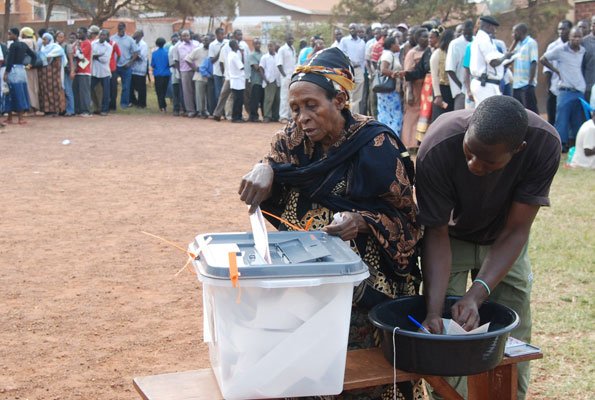
Voters line up to cast their ballot

For the first time in 16 years Ugandans are going to elect their village council representatives in an exercise that will see voters line up behind their preferred candidates on November 21.

LC I elections were last conducted in 2001 and since then the government failed to conduct three electoral cycles in 2006, 2011 and 2016, reportedly due to lack of funds.

And, updating the media about the Local Council elections today, the Chairman of the Independent Electoral Commission Justice Simon Byabakama said the exercise will cover about 59,200 villages in Uganda.

Justice Mugenyi disclosed that the compilation will be followed by two days of voter register display, and urged voters to turn up in big numbers, with the relevant documents entitling them to participate in the exercise.

“The registration, display of voter’s registers, nomination and registration of voters are aimed at enabling all willing village residents have a chance to participate in the elections,” Justice Mugenyi said at the Commission headquarters today.

In August this year the IEC received Shs 15.7 billion from the ministry of finance to organise the LC 1, 2 and Women Council elections all over Uganda.

However, the exercise that entails lining up has been criticised by political activists, who say it is against the principles of liberal democracy.


Stories Continues after ad