Stanbic Bank
Stanbic Bank
18.9 C
Kampala
Stanbic Bank
Stanbic Bank
Home Blog Page 173

What Donald Trump’s Re-election Means for U.S. Engagement with Africa?

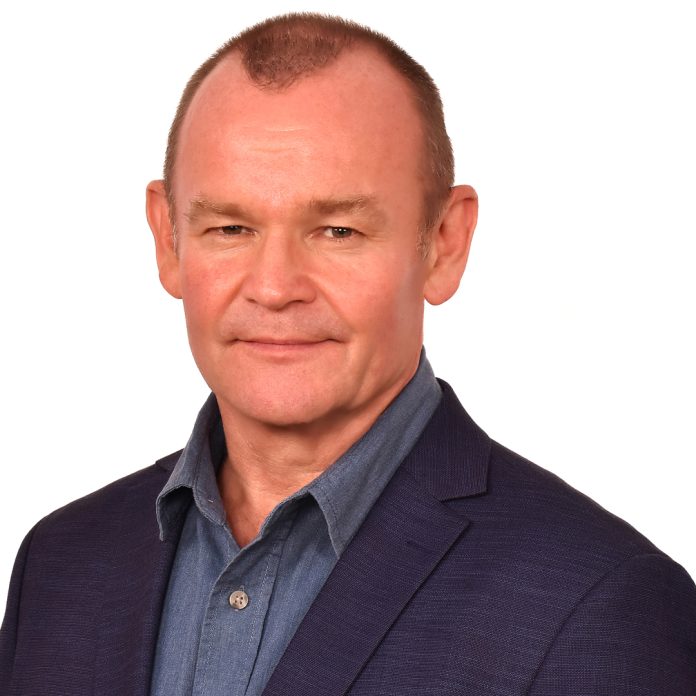
Christopher Burke.

By Christopher Burke

With Donald Trump’s re-election on November 6, 2024 coupled with a strengthened Republican majority in the Senate and additional seats in the House of Representatives there is renewed curiosity and speculation over how U.S. foreign policy, particularly towards Africa, might shift. Trump’s previous administration, characterized by an “America First” doctrine placed emphasis on a transactional approach to international engagement seeking to maximize short-term U.S. interests over longer-term strategic alliances and aid commitments. With a reinforced mandate, Trump’s Africa policy can be expected to mirror or intensify these themes with significant implications across trade, foreign aid, security and diplomatic relations.

A key uncertainty under Trump’s renewed leadership is the fate of the African Growth and Opportunity Act (AGOA) that provides eligible African nations with duty-free access to the U.S. market. AGOA is set to expire in 2025.  While the Biden administration had laid groundwork for its renewal, a Trump administration may view it less favorably. Previous trade tensions and tariffs imposed by Trump’s administration on trading partners suggest a possible renegotiation or even a reduction of AGOA benefits aligned with his stance on “reciprocal trade.”  African economies heavily reliant on AGOA such as Kenya, Ethiopia and South Africa could see a loss of export revenue and hindered economic growth pressing African countries to seek alternative trade partnerships.

A second Trump term could provide an opportunity for targeted trade policies that focus on mutually beneficial investments. Trump’s administration may support trade agreements that boost specific U.S. industries, especially natural resource sectors where Africa has vast potential. Trump’s administration could explore “energy partnerships” where American companies secure oil, gas and mineral rights to aid U.S. industry and provide African governments with lucrative contracts. This approach would emphasize short-term profits for U.S. companies and possibly downplay broader considerations such as fair labour practices, environmental sustainability and community development.

Under Trump’s initial tenure, foreign aid experienced proposed cuts and the narrative around U.S. assistance shifted toward prioritizing American interests. A second term could cement this transactional nature potentially reducing aid for African initiatives in health, education and infrastructure. Programs championed by past administrations such as the President’s Emergency Plan for AIDS Relief (PEPFAR) and the Feed the Future initiative might see reduced funding, impacting Africa’s capacity to address health crises and food security.

Trump’s administration may promote more privatized aid, favoring projects where American companies lead development efforts and create business opportunities for U.S. firms under the guise of aid. This shift may reduce the volume of grant-based assistance replaced with financing structures that prioritize profit-making enterprises. This could possibly result in more sustainable and business-oriented aid that enable African economies to develop autonomous funding mechanisms for essential services.

Security cooperation between the U.S. and African nations has been a longstanding pillar of U.S.-Africa relations especially in regions grappling with violent extremism. During Trump’s first term, U.S. troop levels in Africa decreased most notably in areas combating groups such as Boko Haram, Al-Shabaab and ISIS affiliates. The approach prioritized cost-saving measures aligned with Trump’s skepticism of prolonged overseas military engagements.

With a reinforced political mandate, Trump’s second term could see further reductions in U.S. military presence that shifts more responsibility to African-led missions. Alternatively, the U.S. may increase reliance on airstrikes and intelligence sharing bolstered by drone technology and partnerships with local African forces. This approach minimizes American troop exposure, but possibly compromise the effectiveness of on-the-ground operations against well-entrenched militant groups. A reduced military engagement could create a security vacuum providing openings for other powers such as Russia and China to further expand their influence through security deals and military support to African nations.

The Trump administration’s diplomatic stance on Africa was, at times, marred by derogatory comments that strained relations with African leaders. In a second term, Trump’s administration might seek to repair some of this damage to prevent losing further ground to China that has made significant inroads in Africa through the Belt and Road Initiative (BRI). China’s investment in African infrastructure, resource extraction and technology sectors has positioned it as a vital source of support, offering African nations an alternative to continued dependence on traditional partners.

To counterbalance China’s growing influence, Trump may adopt a “strategic diplomacy” model to selective engage African nations based on their strategic relevance to U.S. interests. In this framework, resource-rich countries or those with military bases would receive greater diplomatic attention, while other nations might experience less frequent engagement. Such an approach, risks alienating nations that are less strategically relevant, but still important to U.S.-Africa relationships. A reduced focus on soft power diplomacy could also weaken the U.S. position as a stable, values-based partner and cede even more influence to China’s model of development without democratic strings attached.

Trump’s approach to Africa has often sidelined discussions on human rights, democracy and governance in favor of economic and security concerns. While past U.S. administrations emphasized democratic values and governance reforms, Trump’s tenure could deprioritize these issues creating mixed signals for African leaders on governance. A reduced emphasis on human rights may lead to increased freedom for some authoritarian regimes to suppress dissent potentially undermining Africa’s progress in democratic reforms.

Trump’s preference for bilateral relations could provide African leaders with greater flexibility to negotiate terms tailored to their own development priorities and avoid the constraints of broader, multilateral policy frameworks that emphasize governance standards. A stronger emphasis on one-on-one agreements may also enable African leaders to assert their agendas more directly in negotiations and overlook or deprioritize democratic standards in favor of expedient agreements.

Donald Trump’s re-election marks a critical juncture for U.S.-Africa relations. With a reinforced mandate, Trump’s policies towards Africa are likely to prioritize economic and security interests with less emphasis on traditional aid and democratic values. While this approach may provide African nations with short-term economic opportunities, it raises questions associated with the long-term implications for Africa’s sovereignty, security and democratic governance.

The focus on short-term, transactional engagements combined with a reduced U.S. military presence and potentially reduced aid could shift Africa’s reliance towards other global powers such as China and Russia. In this evolving landscape, African nations need to navigate a complex array of international partnerships to protect their own interests. Trump’s second term will likely demand greater self-reliance and strategic diplomacy from African leaders as they negotiate their place within a shifting global order.

Christopher Burke is a senior advisor at WMC Africa, a communications and advisory agency located in Kampala, Uganda. With nearly 30 years of experience, Christopher has worked extensively on social, political and economic development issues focused on governance, communications, international relations and peace-building in Asia and Africa.

Stories Continues after ad

COP 29: Uganda advocates for operationalising the loss and damage fund

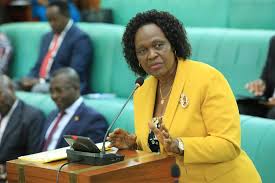
Minister Beatrice Anywar.

Uganda has called for the operationalising of the Loss and Damage Fund ahead of the 29th Conference of the Parties (COP) to the United Nations Framework Convention on Climate Change.

The conference will kick off on November 11 in Azerbaijan’s capital, Baku. Convening for two weeks, the meeting will have crucial negotiations, dynamic discussions, and global collaboration, all focused on tackling the climate crisis with urgency and ambition. 

The Loss and Damage Fund was established during COP 28, which happened last year in Dubai, United Arab Emirates. During the conference, several developed nations pledging substantial commitments.

“For Uganda, where the impacts of climate change are immediate and intense, this fund is not merely financial relief—it is the acknowledgement of a historical responsibility,” Beatrice Anywar, the Minister of State for Environment, said.

She said the fund must be fully operationalised and accessible, with streamlined mechanisms for vulnerable nations. Uganda will advocate for this fund to not only provide relief but to empower communities in rebuilding their futures. At COP29, we will advocate for the full activation and accessibility of this fund.

Anywar revealed that Uganda has finalised the National Climate Change Mechanisms Regulations to guide carbon trading and investments. Ugandan negotiators will press the case for COP29 to approve the rules, modalities, methodologies, and frameworks for countries to participate in carbon market mechanisms.

“Uganda will also call the attention of the world to emerging issues associated with climate change, especially the problem of climate change-induced migration in Africa. The number of affected people, particularly women and children, who are displaced within and across national borders is consistently on the rise with devastating consequences,” she said.

The current climate finance agreement, set in 2009 and 2015, aims to mobilise $100 billion annually for mitigation and adaptation in developing countries until 2025. At COP29, a new climate finance target, the New Collective Quantified Goal (NCQG), is expected to be set to exceed $100 billion, focusing on the needs of developing nations.

Recognising that climate finance is a key enabler of climate action, especially in developing countries, Uganda looks up to COP29 to set a New Collective Quantified Goal (NCQG) on climate finance that takes into consideration the unique circumstances of Least Developing Countries (LDCs) and Small Island Developing States (SIDs) in dealing with the disproportionate impacts, losses, and damage that these countries have to continue to suffer in the face of climate variability and climate change.

Stories Continues after ad

UNRA, Road Fund era ends as rationalization policy gains momentum

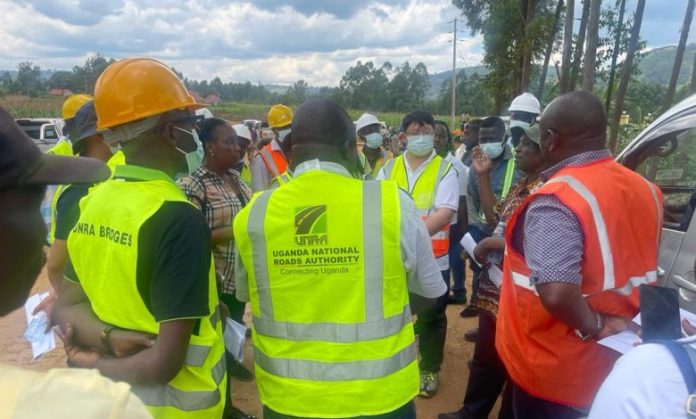
UNRA engineers interact with road contractors at one of the sites.

The Uganda National Roads Authority and the Uganda Road Fund have been dissolved and their functions returned to the Ministry of Works and Transport.

This follows the repealing of the Uganda Road Fund Act, 2008 and the Uganda National Roads Authority Act 2006 which created both agencies. The development follows the passing of the Uganda Road Fund (Amendment), Bill, 2024 and Uganda National Roads Authority (Amendment), Bill 2024 by Parliament chaired by Speaker Anita Among on Wednesday, November 6, 2024.

The two Bills, once assented to, will operationalise the 2021 government policy on rationalization, which aims at reducing duplication of mandates, and minimizing government expenditure while ensuring quality service delivery.

The Minister for Works and Transport, Gen. Katumba Wamala justified the move to transfer the two agencies to his ministry saying the creation of the agencies was in the first place ill-advised.

“I do not know where the concept of creating agencies came from. It looks like the idea was to weaken the central government. Now that government has woken up, you are going to hold us accountable and we will deliver,” said Katumba Wamala.

Katumba Wamala assured Parliament that his ministry will welcome staff of the defunct agencies saying that no one will be disenfranchised.

“We are not going to create unemployment; we are going to validate all workers of UNRA and those who are willing to work under the public service arrangement are welcome,” he said.

The State Minister for Works, Musa Ecweru said that government will ensure continuity of functions of the repealed agencies, citing the District Road Committees created under Uganda Road Fund which will be maintained to oversee road works in local governments.

The Chairperson of the Committee on Physical Infrastructure, Dan Kimosho who presented the committee’s reports on the two agencies, prayed that government ensures that funds are availed for road maintenance in local governments, as it was the arrangement under the Uganda Road Fund.

He expressed concerns that coordination of the functions of the Road Fund might frustrate service delivery, since its functions will be spread across government bodies.

By dissolving the Uganda Road Fund, he said that government will save administrative expenses worth Shs3.8 billion, wage of Shs2.6 billion while a budget of over Shs395 billion will be mainstreamed for road maintenance under the ministry.

On the ongoing projects under UNRA, Kimosho asked government to ensure minimal disruption, conduct thorough contract reviews to identify restrictive clauses, renegotiate contracts and make plans to mitigate potential projects suspension and penalties.

“The committee observed that some of the existing contracts contain clauses that bind government to a specific implementing agency, notably UNRA. Any deviation from the contractual terms, including transfer of projects to alternative agencies could trigger severe consequences such as partial or full suspension of the project,” he said.

He singled out the loan agreement between government and African Development Bank for Laropi-Moyo-Afoji and Katuna-Muko-Kamuganguzi roads as some of the contracts that must be followed up diligently.

The committee asked for a transitional management period of three years to ensure seamless transfer of UNRA’s functions to the ministry, noting that it will enable the ministry to absorb UNRA’s responsibilities, mitigate potential disruptions, and guarantee uninterrupted road development and maintenance.

Stories Continues after ad

Museveni appoints Prof. Muhwezi as MUBS Principal

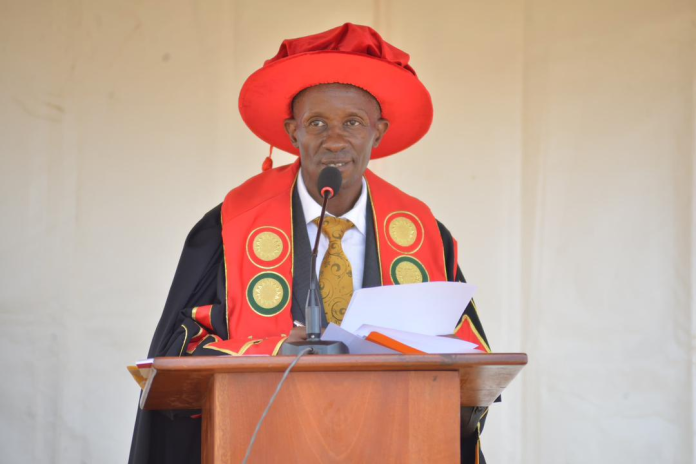
Prof. Moses Muhwezi.

President Yoweri Kaguta Tibuhaburwa Museveni has appointed Professor Moses Muhwezi Moses as the new Principal of Makerere University Business School (MUBS).

The appointment, formalized through an Instrument of Appointment, was made under Article 172(1) of the Constitution of the Republic of Uganda, 1995 and it takes immediate effect.

According to the letter signed by Museveni dated November 3, 2024, Professor Muhwezi will serve as Principal on a five-year local contract.

This new leadership role charges him with overseeing the institution’s business studies, producing skilled graduates in order to boost the nation’s economic and entrepreneurial sectors.

The appointment is expected to bring fresh energy and direction to MUBS, with stakeholders optimistic that Professor Muhwezi’s leadership will inspire positive changes, especially in areas of academic excellence, governance, and student support services.

MUBS is a constituent college of Makerere University and has, over the years, become a hub for business education in East Africa.

Professor Muhwezi, who has been serving as interim leader since Professor Wasswa Balunywa’s contract expired.

He holds a PhD in Public Procurement, an MBA in Accounting and Finance, and a degree in Bachelor of Commerce.

Before becoming the Principal of MUBS, Professor Muhwezi served as the Dean of the Faculty of Entrepreneurship and Business Administration and Deputy Principal of MUBS.

Stories Continues after ad

Anti-corruption unit recovers Shs10m PDM funds in Sheema District

Arrested Robert Nkwemereire, District Speaker.

State House Anti-Corruption Unit in collaboration with the Uganda Police and local leaders have revealed mismanagement of Parish Development Model (PDM) funds and so far, recovered Shs10 million in Sheema District.

“So far over Shs10 million has been recovered and more is expected to be recovered,” revealed the Anti-corruption Unit.

The probe was initiated after complaints surfaced about funds being allocated to unqualified beneficiaries in Kabwohe, Sheema District.

Among the irregular recipients were teachers and local leaders who were not intended to benefit from the program.

Notably, three key district officials are now suspects in the case; Nkwemereire Robert, District Speaker, Winson Asasira Kafurembe, District Commercial Officer, and Robert Masiko, Councilor for Masheruka Town Council and Secretary for Production.

Investigations have unveiled a scheme involving SACCO leaders who, in collusion with the District Commercial Officer, bypassed the Parish Development Committees (PDCs). These committees are responsible for verifying the legitimacy of beneficiaries but were disregarded in favor of a bribery scheme. Allegedly, those who could pay bribes were fraudulently marked as eligible for the funds, leading to a series of unlawful payments.

“Investigations have so far revealed that some SACCO leaders connived with the Commercial Officer to make irregular payments of the funds by disregarding the Parish Development Committees (PDC), which are charged with the responsibility of verifying rightful beneficiaries,” added in statement.

The misuse of PDM funds meant to empower communities at the parish level has sparked outrage, with calls for stricter accountability and punishment for those involved.

The recovery efforts, led by the Anti-Corruption Unit, are ongoing as authorities work to hold the perpetrators accountable and restore integrity to the fund distribution process.

Stories Continues after ad

Trump has won, sanctions on me are gone –Speaker Among celebrates

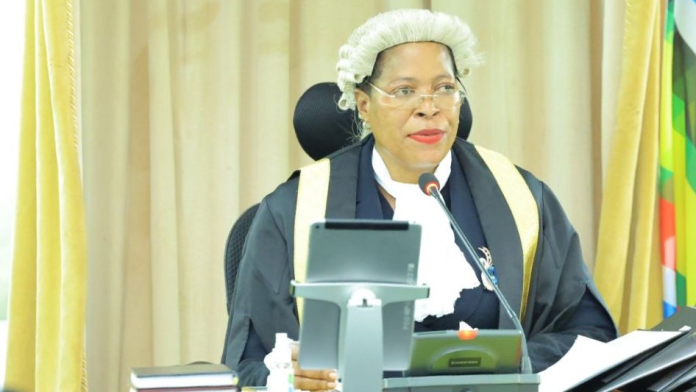
Speaker Anitah Among.

Speaker of Uganda’s Parliament, Anita Among has declared that the recent U.S. presidential election victory of Donald Trump will result in the lifting of sanctions imposed on her by the outgoing Joe Biden administration.

Among, who was sanctioned by the Biden administration over allegations of corruption, expressed confidence that Trump’s win signaled a shift in U.S.-Uganda relations that would be to her advantage.

“…now that Trump has won, the sanctions are gone,” said Among.     

While chairing the plenary, Among dismissed doubts or criticisms surrounding her position and resilience in the face of the sanctions against her.

“When we are debating in this House, let us debate with logic, not politics. I want to assure members; no amount of intimidation can ever move me from where I am. I will remain the smiling me,” she said.

Among’s statement on lifting the sanctions stirs conversation both domestically and internationally whether the U.S system is run without clear procedures.

On May 30, 2024, Speaker Among together with former Minister of Karamoja Affairs Mary Goretti Kitutu and former State Minister for Karamoja Affairs Agnes Nandutu were sanctioned by the United States government over involvement in significant corruption or gross violations of human rights.

In a statement by Matthew Miller, US spokesperson stated that Speaker of Parliament Anita Among was designated due to involvement in significant corruption tied to her leadership of Uganda’s Parliament.

Stories Continues after ad

Pressure piles on Dfuc as London court blocks application to deposit security of costs in Crane bank case

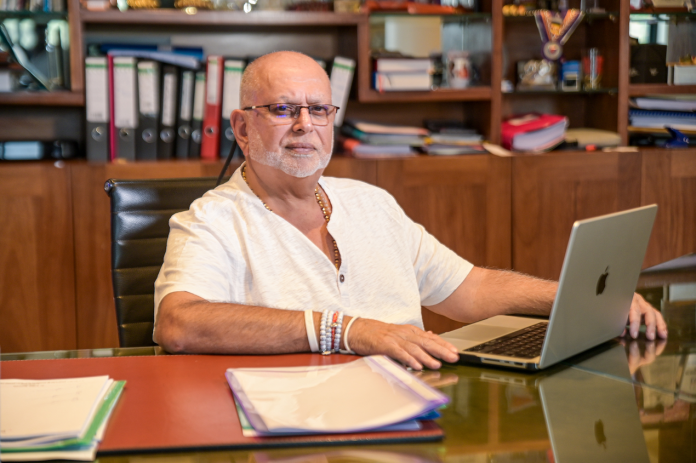
Business tycoon Sudhir Ruparelia dragged Dfcu and shareholders to London Court.

The High Court of Justice Business and Property has dismissed an application by Dfcu bank for the deposit of security for costs.

Dfcu bank wanted Crane bank to deposit the security of costs in the case they (Dfcu) lost in London of about Shs825 billion.

Justice Stephen Hofmeyr KC ruled that Crane bank and its stakeholders including city tycoon, Sudhir Ruparelia had demonstrated to court their financial ability to pay the costs in case they lost the case to Dfcu bank, thus no need to direct them to first deposit security of costs in court.

“It is theoretically true that there is no certainty as to the future value of his assets (Ruparelia’s), the same could be said of any party and any assets. Given the extent of the second claimant’s wealth, it would be in extraordinary circumstances that his assets would be depleted by the end of these proceedings that he would not be in a position promptly to pay any costs order made against him at the end of trial,” Justice Homfmeyr ruled.

He added that it contends that the second claimant’s assets are inaccessible because some are illiquid and some are co-owned.

“On the evidence before me, I do not find the submission compelling. The evidence satisfies me that there is good reason to believe that the second claimant (Mr. Ruparelia) will be able to pay the defendants’ costs promptly if ordered to do so. None of these six contentions undermine the conclusion to which I have come based on the totality of the evidence. I remain satisfied that if a costs order were to be made against the claimants, the second claimant (Ruparelia) would be able to pay it promptly. For the reasons I have given, the applications for the security are dismissed,” he ordered.

Court is now set to hear the main case at a later date in London.

Ruparelia, chairman of the Ruparelia Group, reported that Bank of Uganda officials conspired with Dfcu bank and its directors to seize Crane Bank and sell its assets at a gross undervalue.

The lawsuit claims unlawful means of conspiracy against Dfcu bank, its executives, and four development finance institutions.

Crane bank was one of Uganda’s largest commercial banks until 2016, when Bank of Uganda placed it under receivership citing financial instability. Dfcu bank subsequently acquired Crane bank’s assets.

Stories Continues after ad

Speaker Among suspends 10 MPs as Zaake is beaten again

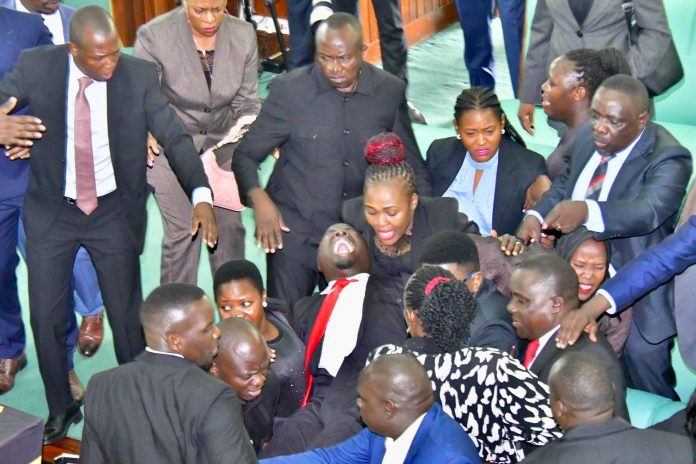
Speaker of Parliament, Anita Among, has suspended ten Members of Parliament following the chaos that left Mityana Municipality MP Francis Zaake beaten.

Earlier today, Parliament convened to debate a number of rationalization bills. The bills, which include the National Coffee Amendment Bill, are aimed at cutting government’s expenditure and minimizing duplications in government ministries.

MP Zaake, who sparked off the chaos, was seen kicking the Kalik North legislator Anthony Akol, asking him to extend a bit so that he could sit; however, Akol responded with a number of blows. 

The suspended lawmakers include Francis Zaake, Anthony Akol, Shamim Malende, Wakayima Musoke, Aloysius Mukasa, and Charles Tebandeke.

Others are Isiah Sassaga and Asinansi Nyakato, Frank Kabuye, Evans Kanyike, and Susan Mugabi.

During the fracas, the Speaker was evacuated and later returned and apologized for the chaotic scenes and announced the names of suspended MPs.

“I want to register my apology for what happened to our colleague sincerely; that wasn’t called for. What happened to Zaake wasn’t called for,” she said.

“Following what transpired to Zaake this morning in the House, I will refer to Rule 89, which states that if the Speaker considers that the conduct of the member can’t be adequately dealt with, he/she may name the members,” said Among.

“I am proceeding to name the MPs and suspend these members for three consecutive sittings from this House. The Members are suspended with immediate effect from the House. I am also evoking Rule 88(2) to order the above MPs to withdraw immediately from the House and, according to the order of the Sergeant at Arms, to vacate the chambers and therefore, suspend the House for 15 minutes,” she added.

Stories Continues after ad

We support gov’t merging consumptive agencies and entities, but not on UCDA -FDC  

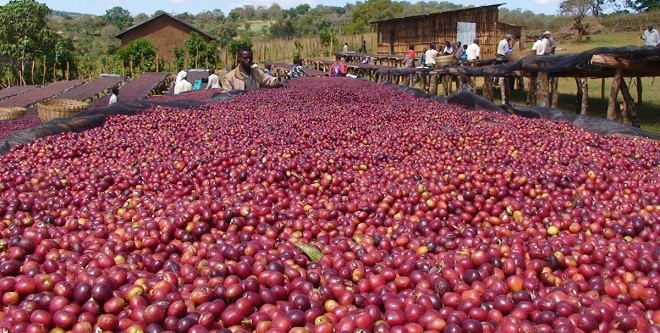
Coffee beans

The Forum for Democratic Change (FDC) has voiced strong opposition to the government’s proposal to merge the Uganda Coffee Development Authority (UCDA) into the Ministry of Agriculture, Animal Industry, and Fisheries (MAAIF).

While the FDC supports efforts to streamline government functions, they warn that this particular merger risks undermining one of Uganda’s most successful industries and its vital contributions to the national economy.

In a statement, the FDC argued that merging UCDA with MAAIF would reduce it “to a mere desk within the ministry,” potentially sidelining the specialized agency’s years of expertise in coffee production and export management.

The party urged the government to “prioritize the interests of coffee farmers and stakeholders” and consider the track record UCDA has built, particularly in raising coffee exports to a record-breaking $1.14 billion, or roughly Shs6 trillion.

The FDC cited examples of alleged mismanagement in other agricultural sectors as a reason for their concern about the Ministry of Agriculture’s ability to manage the coffee industry effectively.

“The fishing industry has suffered from maladministration, prompting the President to deploy the UPDF to oversee it,” they said.

The statement further highlighted issues in the animal husbandry sector, where “allegations of embezzling funds meant for foot-and-mouth disease vaccines” have raised doubts about MAAIF’s capacity to handle specialized sectors like coffee.

The opposition to the UCDA merger rests on several core principles:

Autonomy and Expertise: UCDA’s focused work in coffee development, regulation, and quality improvement has given Uganda a competitive edge in the international coffee market. The agency’s independence has allowed it to work closely with farmers on critical issues like planting techniques, harvesting, and storage. The FDC fears that merging UCDA into MAAIF would “dilute this expertise” and hinder its effectiveness.

Farmer Interests: UCDA has introduced programs that ensure fair practices for farmers, such as registration, geo-location, and traceability, essential for both quality control and market access. The FDC argued, “We believe that MAAIF lacks the technical competence and capacity to handle these critical tasks,” urging that these efforts continue without disruption.

Economic Benefits: Coffee exports form the backbone of Uganda’s agricultural economy, and UCDA’s focused efforts have driven substantial growth despite challenges like underfunding. The FDC warns that placing UCDA under the Ministry of Agriculture could restrict its resources and capacity to manage this valuable sector. “UCDA’s track record warrants greater funding, not a reduction in its mandate,” they asserted.

The FDC outlined an alternative proposal, advocating for UCDA to retain its autonomy while enhancing partnerships with the Ministry of Agriculture and other stakeholders. This approach, they argue, would improve coordination and ensure that the agency remains a force for Uganda’s coffee sector without compromising its effectiveness.

They also called for “farmer-centric policies that ensure fair prices, improved quality, and sustainable production practices,” emphasizing that coffee farmers must remain central to any decisions impacting the industry.

FDC encouraged Uganda’s coffee farmers to remain steadfast in their production efforts and assured them of continued advocacy for the industry’s future.

“By adopting a thoughtful and inclusive approach, the government can balance rationalization needs with the interests of coffee stakeholders and Uganda’s economic growth.”

Stories Continues after ad

Over 300 inmates across Uganda’s prisons sit for PLE

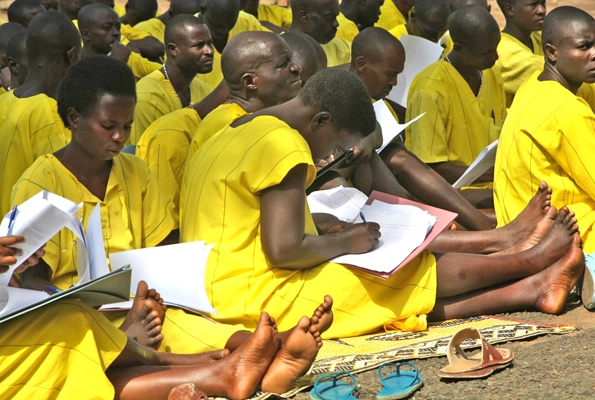
Prisoners undergoing lessons.

The Uganda Prisons Service (UPS) has announced its readiness to facilitate the Primary Leaving Examinations (PLE) for 323 inmates this year.

Scheduled for November 6-7, 2024, the exams will be conducted across 18 designated prison centers nationwide, showcasing UPS’s dedication to supporting the personal growth and future prospects of those under its care.

The prison centers hosting the exams span the country, from Ndorwa and Mbarara in the west to Jinja and Soroti in the east and include renowned facilities like the Upper Maximum-Security Prison in Luzira. This initiative allows inmates at diverse institutions, such as Kitayla Mini Max, Masaka Main Prison, and Moroto Main Prison, a unique opportunity to complete their primary education and open doors to further learning.

Frank Baine Mayanja, Senior Commissioner of Prisons and spokesperson for UPS commended the candidates’ courage, perseverance, and commitment.

“The journey of education is one of self-improvement and growth, and we are proud of these individuals for taking this courageous step forward,” he said.

He extended best wishes on behalf of the entire Uganda Prisons Service, acknowledging the challenges the candidates have overcome to reach this milestone.

This effort highlights Uganda’s progressive approach to rehabilitation, emphasizing that prison is not merely a place of confinement but a space for reform and re-entry preparation.

The UPS’s initiative aligns with the broader vision of fostering positive societal contributions among former inmates, breaking cycles of re-offense, and emphasizing the potential for change.

Stories Continues after ad